
News
Nigeria, Guinea-Bissau, Sierra Leone Move to Overhaul Waste Management Frameworks


Nigeria, Guinea-Bissau, Sierra Leone Move to Overhaul Waste Management Frameworks
…UNEP-backed project seeks stronger laws, institutional oversight, protection for informal waste workers
By: Michael Mike
Nigeria, Guinea-Bissau and Sierra Leone are moving to overhaul their waste management frameworks, with stakeholders in the three countries calling for stronger laws, better institutional coordination and the integration of informal waste workers into systems designed to protect public health and the environment.
The move followed the conclusion of a UNEP-supported project aimed at developing environmentally sounder and safer waste management frameworks across the three countries, amid growing pressure on governments to address the environmental and social consequences of poorly managed waste.

At a two-day Final Regional Closing Workshop hosted by the Nigeria’s National Environmental Standards and Regulations Enforcement Agency (NESREA), stakeholders reviewed and validated the project’s findings, legislative proposals and recommendations, setting out pathways for implementation, resource mobilisation and long-term sustainability.
The workshop also placed emphasis on gender inclusion, the protection of children’s rights and the need to recognise the contribution of the informal waste sector, whose activities are often central to waste collection, sorting and recovery but may not be adequately covered by formal regulatory systems.
Declaring that the project had provided a basis for addressing persistent weaknesses in waste governance, the Director-General of NESREA, Prof. Innocent Barikor, said the next challenge was to translate its outcomes into concrete reforms.
He said the participating countries would develop a post-project implementation and sustainability roadmap to guide policy and legislative changes, strengthen institutional capacity and improve waste management outcomes.
“Together we shall produce a set of concrete post-project implementation and sustainability roadmap that will inform policy and legislative reforms, strengthen institutional capacity, ensure gender inclusion, protect the rights of the children and improve overall waste management outcomes,” Barikor pledged.
The NESREA Director General said the initiative was particularly relevant to Nigeria’s drive towards a circular economy and resource efficiency, linking improved waste management to economic growth and environmental protection.
The circular economy approach seeks to reduce waste by keeping materials and products in use for as long as possible through prevention, reuse, recycling and recovery, rather than relying primarily on disposal. For countries facing increasing volumes of waste, the approach also offers an opportunity to recover economic value from materials that would otherwise be discarded.
However, stakeholders at the workshop stressed that achieving such a transition would require more than policy declarations. They called for clearer legal responsibilities, stronger technical capacity, effective enforcement and sustained financing to ensure that waste management reforms are implemented beyond the life of the project.
The Deputy Minister of Environment of Sierra Leone, Hon. Mima Yema Mimi Sobba-Stephens, said the changing nature of waste streams had made comprehensive regulation increasingly urgent.
She identified plastics, healthcare waste, electronic waste, used oils, chemicals and mining-related waste among the emerging and hazardous waste streams requiring clearer rules, stronger technical capacity and more effective oversight.
“Through consultation and technical review, we have identified the need for a comprehensive and harmonised legal framework that addresses the full waste hierarchy: prevention, reduction, reuse, recycling, recovery and, only as a last resort, environmentally sound disposal,” she said.
Her remarks underscored the need for waste management systems to move beyond the traditional focus on collection and disposal to a hierarchy that prioritises prevention and reduction, followed by reuse, recycling and recovery, with disposal reserved as a last resort.
For Guinea-Bissau, the project also provided an opportunity to address the role of workers operating outside formal waste management structures.
The Director of Chemical Product Waste Service in the country, Per Infali Cassama, said the initiative had enabled Guinea-Bissau to recognise the contribution of the informal sector and created a platform for engagement among stakeholders at different levels.
The inclusion of the informal sector is significant because waste pickers and other informal operators often contribute to the recovery of recyclable materials, even where formal systems remain limited. Stakeholders said future frameworks must therefore combine environmental safeguards with measures that recognise and protect the people whose livelihoods depend on waste recovery.
Representing Nigeria’s Minister of Environment, Balarabe Lawal, the Director of Pollution Control and Environmental Health, Mrs Omotunde Adeola, described the workshop as the beginning of implementation rather than the conclusion of the reform process.
“These initiatives are essential for improving waste management practices, strengthening environmental compliance, and delivering tangible benefits to communities across Nigeria,” she said.
Also speaking, Valentina Ricca of the UNEP Law Division said the project, which commenced in 2023, was designed to strengthen waste management frameworks while supporting the inclusion and protection of the informal waste sector.
The closing workshop therefore marked the transition from technical reviews and stakeholder consultations to the more difficult task of implementing the proposed reforms. Its recommendations are expected to guide legislative and institutional action in the three countries, with the broader objective of establishing waste management systems that are safer, more coordinated and better equipped to respond to changing waste streams.
For Nigeria, the process comes as the country seeks to align environmental regulation with resource efficiency and circular economy principles, making the effectiveness of the proposed reforms dependent on the ability of institutions to enforce standards, mobilise resources and sustain collaboration beyond the project’s formal completion.
Nigeria, Guinea-Bissau, Sierra Leone Move to Overhaul Waste Management Frameworks







Two Worlds, Two Leaders, One Lesson
By Abiodun Adigun
In London, the Mayor Sadiq Khan just announced: “Due to high cost of living, Londoners will receive £15.45 per hour to reflect the current economic realities.”
15 pounds 45 pence per hour. That is the new London Living Wage.
Not because election is coming. Not because people protested. But because the price of fuel went up, rent went up, food went up, and government said, we must adjust wages to reflect reality. That is what responsible countries do when fuel becomes expensive, they increase what workers earn so workers can survive.
In other countries, when fuel price shocks hit, they give energy support, they cap electricity bills, they give transport palliatives, they reduce taxes for the poor. They understand that high fuel cost without higher income is equal to death for the masses.
Now come to Nigeria.
In Nigeria, the President Bola Tinubu says: “I understand the pains Nigerians are going through, but there is no other way out of the sufferings.”
No other way? There is always another way.
London found another way. America found another way. Even Ghana found another way.
But in Nigeria, there is no other way except for the people to suffer.
How can you say there is no other way when you and other politicians are spending billions every day to campaign for re-election in 2027?
Billboards everywhere, jingles everywhere, defection ceremonies everywhere, billions that could have been used to pay workers or subsidise food.
How can you say there is no other way when you travel abroad for holidays with a large entourage, when you buy a new presidential jet worth over N150 billion, when National Assembly members buy N160 million SUVs each?
You understand the pains, but you don’t feel the pains.
If you felt the pains, you would not increase your own comfort while telling people to be patient in suffering.
In London, when cost of living goes up, wages go up.
In Nigeria, when cost of living goes up, taxes go up. Fuel up, electricity tariff up, VAT up, gas price up.
Everything up except salary and compassion.
London’s Mayor is not more intelligent than Nigerian leaders. He is just more humane.
He knows that leadership is not about telling people to endure hardship you created.
Leadership is about cushioning hardship.
The painful part is this: Nigerians are working harder than Londoners.
A Lagos bus driver wakes by 4am and closes by 11pm.
A market woman sits in sun from morning till night.
But their work can no longer feed them because government removed subsidy without any living wage adjustment.
Minimum wage is N70,000, that is less than 30 pounds a month. London’s hourly wage is almost half of Nigeria’s monthly minimum.
May Nigerians not remain foolish indeed.
Stupid to clap for politicians who tell us to be patient while they live in luxury.
Stupid to vote again for people who said “If we reduce the purchasing power of the people, we can further slow down the economy, let’s widen the tax net” and they actually did it.
Stupid to think there is no other way when other countries have shown us the other way.
There is always another way: cut cost of governance, stop profligacy, increase wages to reflect realities, and stop punishing the people for your reforms.
Two Worlds, Two Leaders, One Lesson
Gombe, UNICEF train 104 health workers to curb newborn deaths
By Elizabeth Ogunjobi
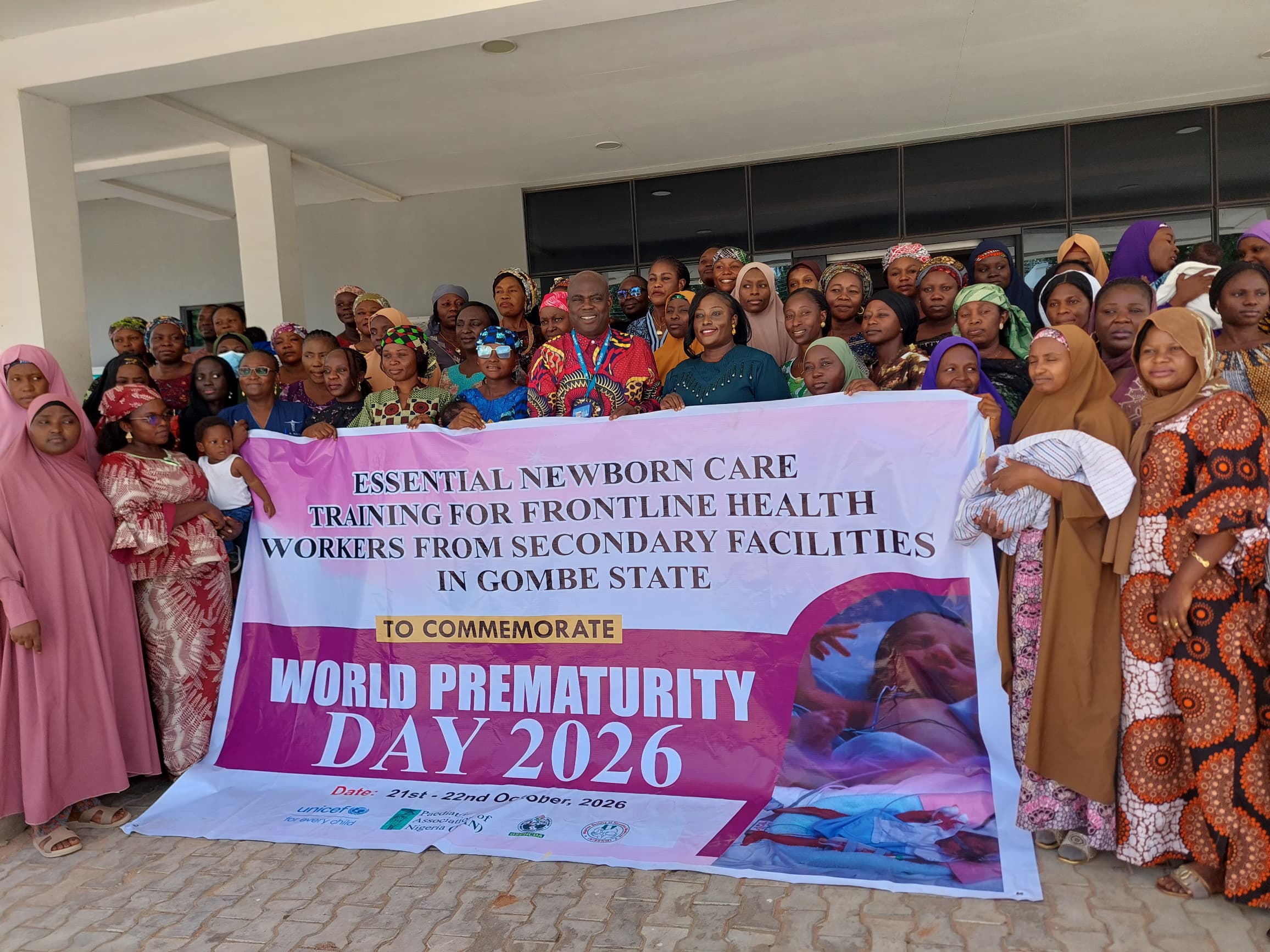
The Gombe government and UNICEF have trained 104 frontline health workers to improve newborn survival amid persistently high neonatal mortality across northern Nigeria.
The two-day training covered 48 workers from secondary healthcare facilities, following a separate programme for 56 primary healthcare workers.
Dr Abdulrahman Shuaibu, Executive Secretary of the Gombe State Primary Health Care Development Agency, said strengthening newborn care was critical to reducing preventable deaths.
Speaking in Gombe on Thursday, Shuaibu said many babies were born in communities before being referred to secondary facilities for specialised care.
“Therefore, it is important to strengthen the capacity of healthcare workers at these facilities to provide appropriate care for newborns,” he said.
He said neonatal and infant mortality remained high in the state, requiring coordinated efforts by government, healthcare providers and development partners.
“It is our hope and prayer that this training will contribute to a significant decline in neonatal mortality across our communities,” he said.
Shuaibu urged participants to share their knowledge with colleagues who did not attend, ensuring that more facilities could deliver effective newborn care.
He said the programme complemented government efforts to upgrade primary and secondary healthcare facilities, while commending UNICEF and other development partners for their support.
Mr Oluseyi Olosunde, a UNICEF health officer at its Bauchi Field Office, said the training was organised to commemorate the 2026 World Prematurity Day.
Olosunde said the initiative focused on improving the quality of care provided to newborns, particularly premature babies and those requiring specialised attention.
“Every child deserves to live, and to make every child enjoy this right to life, the quality of care is important,” he said.
He said the training targeted nurses, midwives and doctors involved in caring for women during pregnancy, childbirth and the postnatal period.
“We are training them to ensure that the mother survives, every woman survives, and every child survives,” he said.
Olosunde described newborn deaths as unacceptably high in many northern states, stressing the importance of strengthening healthcare workers’ skills.
He urged participants to apply their knowledge to improve services and protect the lives of mothers and babies under their care.
Dr Raymond Mercy, a consultant paediatrician at the Federal Teaching Hospital, Gombe, also urged healthcare workers to prioritise proper newborn care.
Mercy, a member of the Paediatric Association of Nigeria and the Nigerian Society of Neonatal Medicine, said Nigeria’s neonatal mortality rate stood between 34 and 41 deaths per 1,000 live births.
She said Nigeria had the world’s second-highest burden of neonatal mortality, underscoring the urgency of improving newborn healthcare nationwide.
Gombe, UNICEF train 104 health workers to curb newborn deaths
NHRC Orders Probe into Alleged Misconduct at Uyo Office
By: Michael Mike
The National Human Rights Commission (NHRC) has ordered an immediate investigation into allegations of unprofessional conduct by its personnel at the Akwa Ibom State office in Uyo following a video circulating on social media.
The Commission said the allegations were being treated with serious concern, stressing that its personnel were expected to uphold the highest standards of professionalism and respect for the rights and dignity of complainants, irrespective of provocation.
In a statement issued on Thursday by its Director of Corporate Affairs and External Linkages, Fatimah Agwai Mohammed, the NHRC said its Executive Secretary, Chief Tony Ojukwu, had directed an immediate investigation to establish the facts surrounding the incident.
It said appropriate administrative action would be taken in accordance with existing rules if any infraction was established.
The Commission emphasised that its responsibility to protect human rights must begin with the treatment of people who approach its offices for assistance, adding that every complainant deserved to be treated with dignity, respect and professionalism.
“Our professional training is that at no point in time should a complainant be charged against even if there is provocation,” the statement said.
The NHRC reiterated its commitment to ensuring accessible, free, timely and accountable service delivery, urging members of the public experiencing difficulties in accessing its offices to report such cases through its toll-free line, 6472.
The Commission’s response follows the circulation of the video alleging misconduct at its Uyo office, with the investigation expected to establish the circumstances surrounding the incident and determine whether any disciplinary action is warranted.
NHRC Orders Probe into Alleged Misconduct at Uyo Office

Two Worlds, Two Leaders, One Lesson

Gombe, UNICEF train 104 health workers to curb newborn deaths

Plateau Indigenous Youths Defend DSS, Demand Probe of Alleged Security Leaks

Roger Federer’s Shock as DNA Results Reveal Myla and Charlene Are Not His Biological Children

THE PLIGHT OF FARIDA

FAILED COUP IN BURKINA FASO: HOW TRAORÉ NARROWLY ESCAPED ASSASSINATION PLOT AMID FOREIGN INTERFERENCE CLAIMS
-
 News3 years ago
Roger Federer’s Shock as DNA Results Reveal Myla and Charlene Are Not His Biological Children
-
Opinions5 years ago
THE PLIGHT OF FARIDA
-
 News2 years ago
FAILED COUP IN BURKINA FASO: HOW TRAORÉ NARROWLY ESCAPED ASSASSINATION PLOT AMID FOREIGN INTERFERENCE CLAIMS
-
 Opinions5 years ago
POLICE CHARGE ROOMS, A MINTING PRESS
-

 News3 years ago
EYN: Rev. Billi, Distortion of History, and The Living Tamarind Tree
-

 ACADEMICS3 years ago
A History of Biu” (2015) and The Lingering Bura-Pabir Question (1)
-

 Columns3 years ago
Army University Biu: There is certain interest, but certainly not from Borno.
-

 Politics1 year ago
2027: Why Hon. Midala Balami Must Go, as Youths in Hawul and Asikira/Uba Federal Constituency Reject ₦500,000 as Sallah Gift
