
News
Nigeria, Seven Other Countries Get $1.96 million from ECOWAS to Tackle VVF


Nigeria, Seven Other Countries Get $1.96 million from ECOWAS to Tackle VVF
By: Michael Mike
Nigeria and seven other member countries of Economic Community of West African States (ECOWAS) have received $1.96 million from the ECOWAS Gender Development Centre to tackle cases of fistula disorder (Vesicovaginal fistula).
All the eight countries got $245,000 each. The other countries are Togo, Benin, Guinea Bissau, Ghana, Cote D’Ivoire, Gambia, and Liberia.
The presentation of cheques to the beneficiaries were one of the highlights at the 91st Ordinary Session of the ECOWAS Council of Ministers held in Abuja.
Speaking at the event, the Minister of Foreign Affairs, and Chairman ECOWAS Council of Ministers, Amb. Yusuf Tuggar revealed that the Council would deliberate on the Community budget for the 2024 fiscal year while lamenting the current economic challenges affecting the region’s Gross Domestic Product and revenue generation.
The Nigeria’s Minister of Foreign Affairs noted that: “We must be mindful of the prevailing economic and financial challenges confronting our sub-region, such as inflation, high food prices, and currency devaluation, which have adversely affected our economies.”
He lamented that: “These challenges have impacted on our gross domestic product, revenue generation, and in particular our mobilization of the Community Levy, due to devaluation of some of our major currencies, particularly Cedi and Naira
against the US Dollar.”
Tuggar urged Council Ministers to support the recommendations of the Administration and Finance Committee on enhancing prudence, as well as the efforts of the President of the Commission and other Heads of the Institutions on blocking leakages to ensure judicious use of the meagre resources.
Also, the President of the ECOWAS Commission, Omar Touray, decried that member states under sanctions have stopped remitting levies, adding that ECOWAS need enough financial resources to tackle the challenges bedeviling the region.
Touray said: “For some time now, the levy collection has been a challenge. The amount of 0.5% ECOWAS levy on imports from outside the Community has been collected by member states on behalf of ECOWAS.
“However, the deposit of these funds into the ECOWAS bank accounts at the country level and access to the funds have been a challenge. This has led to low resource mobilization.
“The situation is more critical now that our member states under sanctions have stopped remitting the levy. As the financial situation gets more difficult, the tasks for ECOWAS are growing.”
He however urged the Council of Ministers to “mobilise the levy fully to be able to implement our community work programme and keep up with the successes of ECOWAS.”
Nigeria, Seven Other Countries Get $1.96 million from ECOWAS to Tackle VVF


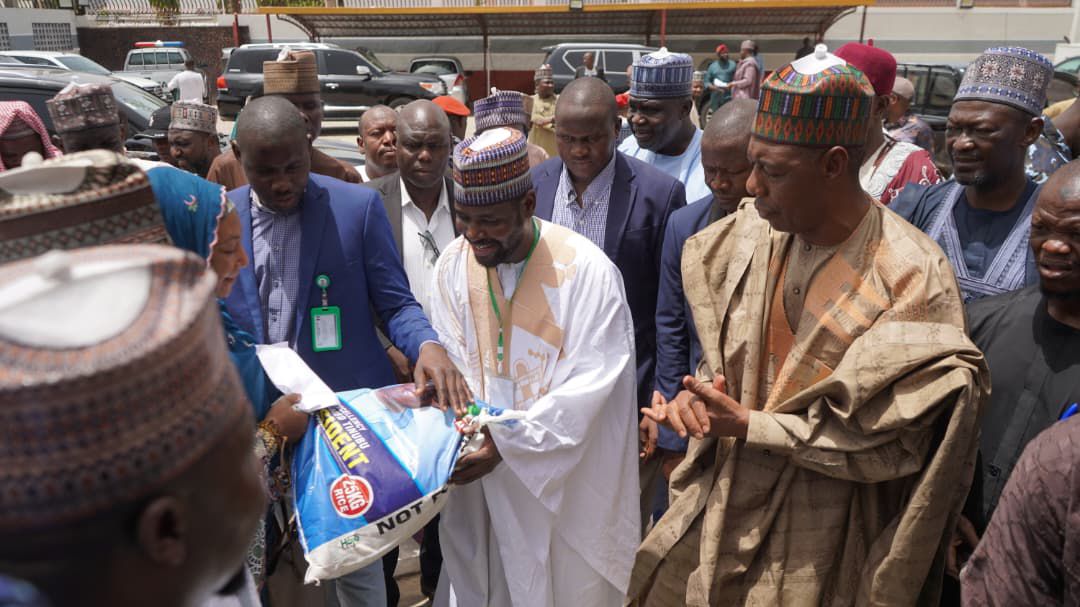
Zulum Flags off Distribution of Renewed Hope Sallah Palliative
By: Our Reporter
Borno State Governor, Professor Babagana Umara Zulum, has flagged off the distribution of palliatives under the Renewed Hope Initiative to vulnerable residents across the state ahead of the Eid al-Adha celebration.
The governor launched the exercise at the Conference Hall of Prime Lodge in Maiduguri.
Governor Zulum commended Nigeria’s First Lady, Senator Oluremi Tinubu, for supporting widows, orphans, internally displaced persons (IDPs), and other vulnerable groups through the Renewed Hope Initiative.
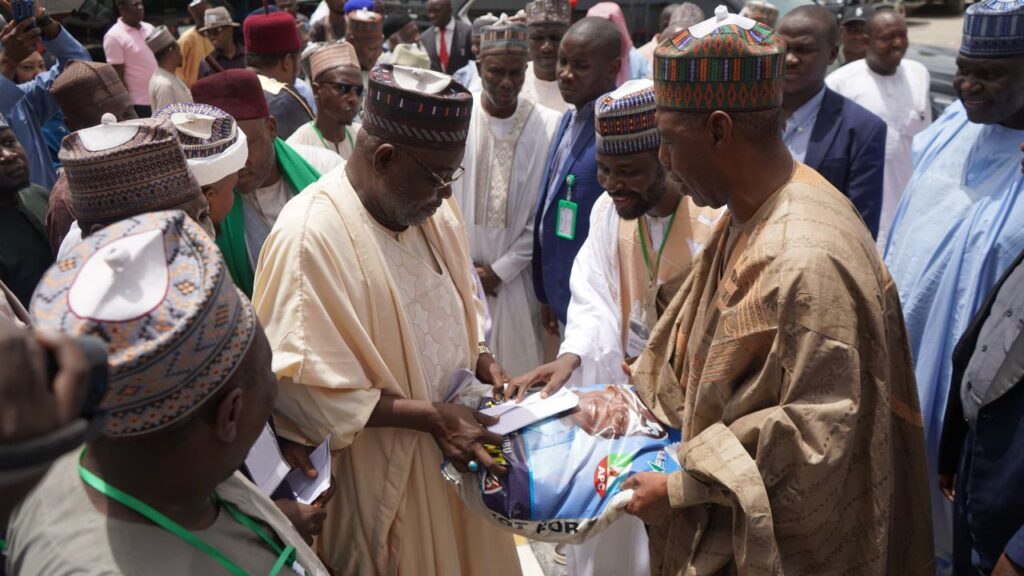
“On behalf of the Government and good people of Borno State, I sincerely appreciate Her Excellency, Senator Oluremi Tinubu, CON, First Lady of the Federal Republic of Nigeria and Founder of the Renewed Hope Initiative, for this compassionate intervention aimed at supporting vulnerable Nigerians and restoring hope to families facing economic hardship,” Zulum said.
The governor also praised the resilience and patience of the people of Borno despite years of insurgency and insecurity, reaffirming his administration’s commitment to improving the welfare of citizens through people-oriented policies and programmes.
“Despite the challenges our state has faced over the years, our people have continued to demonstrate resilience, patience, and courage. As a government, we remain committed to implementing programmes and policies that directly improve the lives of our citizens,” he stated.
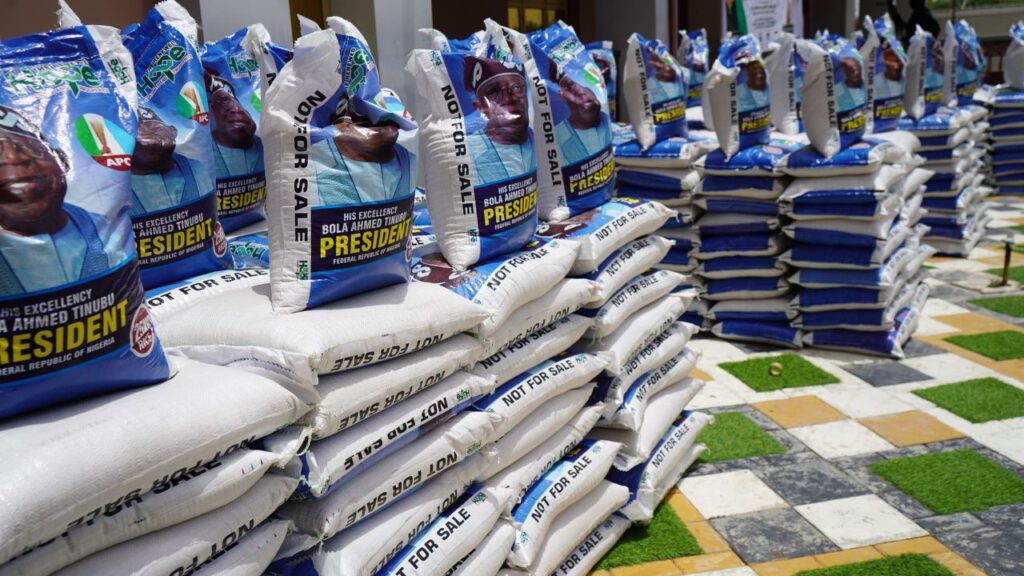
Zulum noted that the distribution exercise forms part of the federal and state governments broader social support programme aimed at cushioning economic hardship and strengthening community resilience.
“The distribution exercise we are flagging off today is therefore part of our broader social support programme designed to cushion economic difficulties and strengthen community resilience. I commend members of the Distribution Committee for their efforts and urge them to ensure transparency, fairness, and accountability throughout the exercise so that the support will reach the rightful beneficiaries,” he added.
The governor urged beneficiaries to make proper use of the items distributed while also appreciating security agencies, traditional rulers, religious leaders, and development partners for their continued support towards peacebuilding and humanitarian interventions in the state.
Earlier in his remarks, Chairman of the Distribution Committee, Dr Abba Bashir Dankellori, expressed gratitude to Senator Oluremi Tinubu for the timely intervention, describing it as a relief that would enable many Muslim families to celebrate the forthcoming Sallah with ease.
“I wish to, on behalf of the committee, thank the First Lady Senator Oluremi Tinubu for the kind gesture. We also appreciate Borno State Governor, Professor Babagana Umara Zulum, for the selfless leadership, commitment and service to the people of the state,” Dankellori stated.
According to him, beneficiaries of the intervention include Qur’anic and Sangaya school teachers, as well as religious organisations that contribute to the moral upbringing of society.
Governor Zulum was accompanied to the event by the Secretary to the State Government, Bukar Tijani; Acting Chief of Staff, Dr Babagana Mustapha Malumbe; Coordinator of Renewed Hope Ambassadors, Engr Baba Bukar Gujbawu; Permanent Secretary, Government House, Barr. Mustapha Busuguma, among other top government officials.
Zulum Flags off Distribution of Renewed Hope Sallah Palliative
Security forces Conduct Show of Force In Jos, Bukuru During Church Services
By: Zagazola Makama
Joint Security forced in Plateau State on Sunday conducted a joint show of force across major flashpoints within Jos metropolis and the Bukuru general area to ensure peaceful church services and strengthen public confidence.
The operation involved troops of Operation Enduring Peace, personnel of the Nigerian Air Force 551 Station, Operation Keystone, the Nigeria Security and Civil Defence Corps (NSCDC), and other security agencies.
Security sources said the exercise commenced at about 7:30 a.m. and was aimed at denying criminal elements freedom of action while providing adequate security coverage during church services.
The coordinated patrols and visibility operations covered identified vulnerable areas and strategic locations within Jos and Bukuru.
According to the sources, the operation was conducted without any security breach or incident, while religious activities across the affected areas remained peaceful.
The security agencies reaffirmed their commitment to sustaining collaborative operations aimed at maintaining law and order as well as protecting lives and property in Plateau State.
Security forces Conduct Show of Force In Jos, Bukuru During Church Services
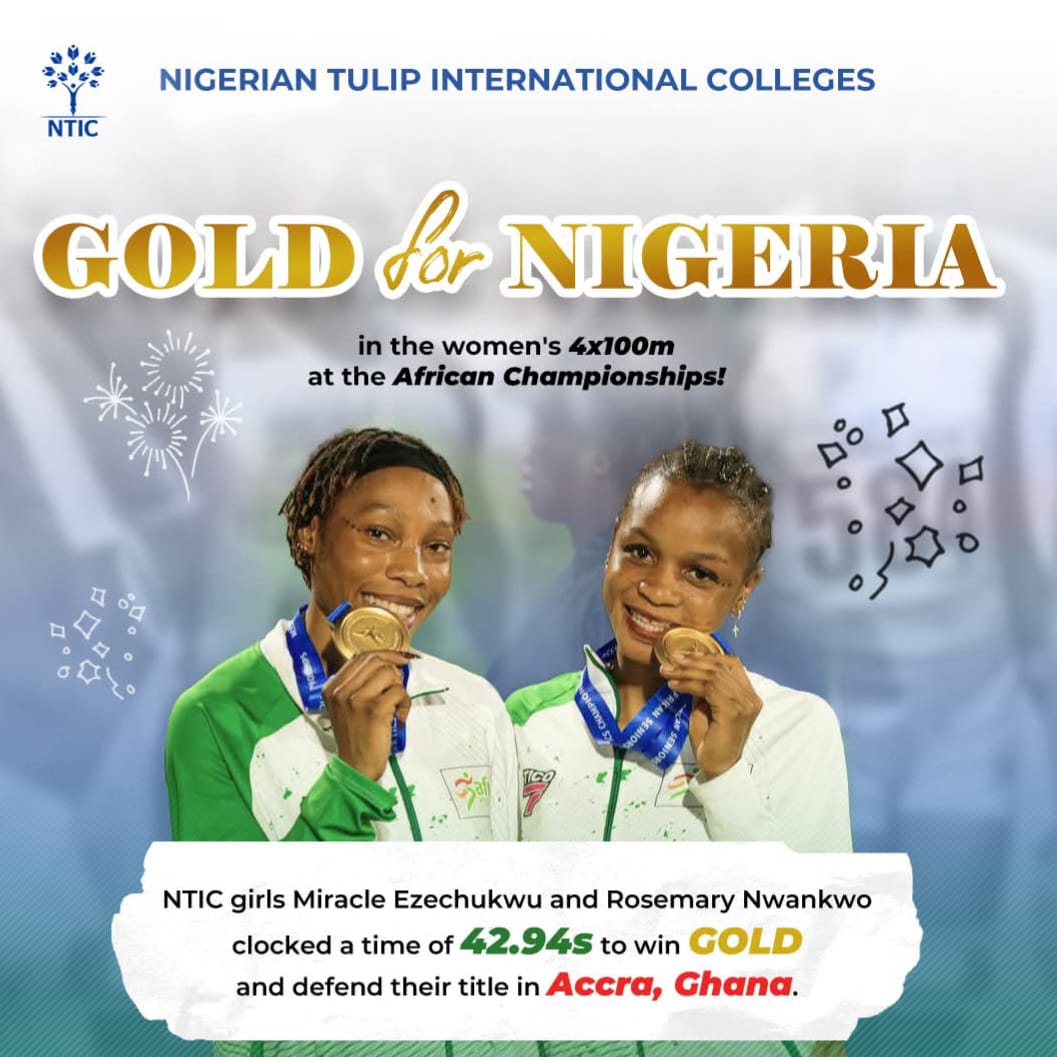
Teenage Sensations Rosemary, Miracle Win Gold for Nigeria, Secure World Championship Spot
Nigeria recorded a major triumph at the 24th CAA Senior Athletics Championship in Accra, Ghana, as teenage athletes Rosemary and Miracle delivered a stunning performance to win gold for the country in the women’s 4x100m relay event.
The young stars, both students of NTIC Secondary School, helped Team Nigeria clinch the gold medal with an impressive time of 42.94 seconds, further underlining the country’s growing strength in athletics.
Their victory also secured Nigeria a ticket to the World Championships in Gaborone, while guaranteeing qualification for the 2027 World Championship in China.
The feat was particularly remarkable for Rosemary, who was making her senior debut for Nigeria at the continental championship.
Sports enthusiasts have since praised the duo for proving that age is no barrier to excellence, with many describing their performance as a glimpse into the bright future of Nigerian athletics.
Teenage Sensations Rosemary, Miracle Win Gold for Nigeria, Secure World Championship Spot

Zulum Flags off Distribution of Renewed Hope Sallah Palliative

2027: When Tinubu’s endorsement of Vice President Kashim Shettima’s unwavering support speaks volumes

Troops Arrest Suspected Security Impersonator In Plateau

Roger Federer’s Shock as DNA Results Reveal Myla and Charlene Are Not His Biological Children

THE PLIGHT OF FARIDA

FAILED COUP IN BURKINA FASO: HOW TRAORÉ NARROWLY ESCAPED ASSASSINATION PLOT AMID FOREIGN INTERFERENCE CLAIMS
-
 News2 years ago
Roger Federer’s Shock as DNA Results Reveal Myla and Charlene Are Not His Biological Children
-
Opinions4 years ago
THE PLIGHT OF FARIDA
-
 News1 year ago
FAILED COUP IN BURKINA FASO: HOW TRAORÉ NARROWLY ESCAPED ASSASSINATION PLOT AMID FOREIGN INTERFERENCE CLAIMS
-

 News2 years ago
EYN: Rev. Billi, Distortion of History, and The Living Tamarind Tree
-
 Opinions4 years ago
POLICE CHARGE ROOMS, A MINTING PRESS
-

 ACADEMICS2 years ago
A History of Biu” (2015) and The Lingering Bura-Pabir Question (1)
-

 Columns2 years ago
Army University Biu: There is certain interest, but certainly not from Borno.
-

 Politics12 months ago
2027: Why Hon. Midala Balami Must Go, as Youths in Hawul and Asikira/Uba Federal Constituency Reject ₦500,000 as Sallah Gift
