
News
Nigerian Army troops recover arms, dismantles refining sites, and seizes stolen oil in Niger Delta

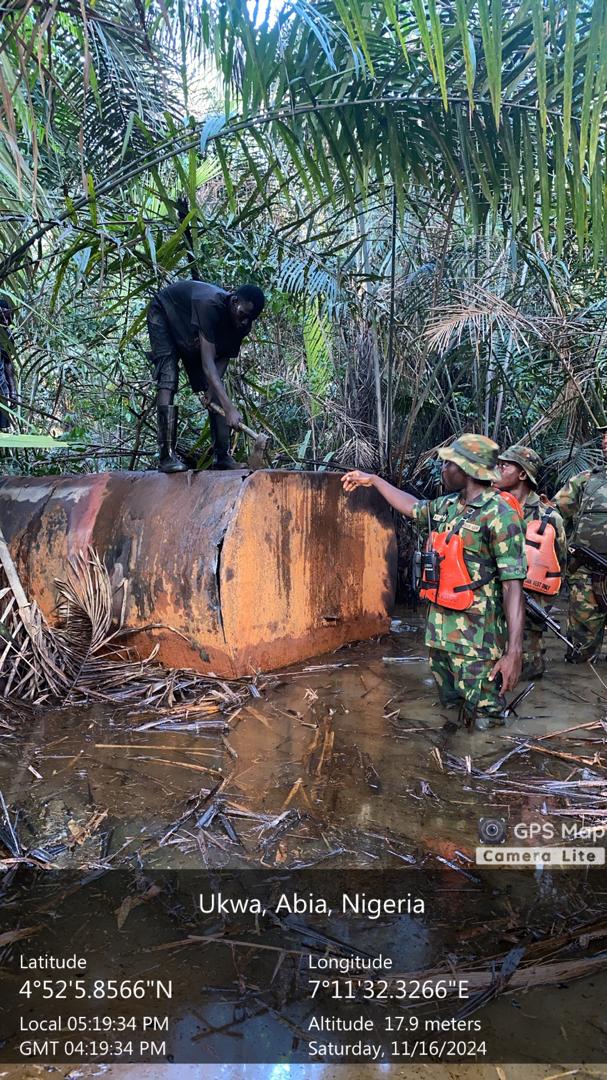
Nigerian Army troops recover arms, dismantles refining sites, and seizes stolen oil in Niger Delta
By: Michael Mike
Troops of the Nigerian Army’s 6 Division, in collaboration with other security agencies, have intensified anti-oil theft and illegal refining operations across the Niger Delta.
In a statement Acting Deputy Director, Army Public Relations 6 Division Lieut. Col. Danjuma Jonah Danjuma said between November 11 and 17, 2024, the forces recorded significant successes, including the deactivation of 46 illegal refining sites, the seizure of 47 boats used for transporting stolen oil, and the recovery of over 95,000 litres of stolen petroleum products. Twenty-eight suspected oil thieves were also apprehended.
He said in Rivers State, troops acted on intelligence regarding vandalism along the Oando pipeline in Ogba/Egbema/Ndoni Local Government Area (ONELGA). Armed vandals exchanged fire with the troops but fled after being overwhelmed. Soldiers recovered an AK-47 rifle, a loaded magazine, and additional ammunition.
Danjuma said in Obiafu-Ndoni, a major bust intercepted wooden boat carrying 28,320 litres of stolen crude oil. Seven suspects were arrested. Operations in Buguma, Asari Toru LGA, dismantled illegal refining sites, confiscating 9,500 litres of stolen products.
He said further efforts in Degema LGA, including Tuma and Krakrama areas, led to the destruction of numerous wooden and fibre boats and the recovery of 10,500 litres of stolen Automotive Gas Oil (AGO). In Bille, a wooden boat with 2,500 litres of stolen products was intercepted, while in Obiafu Oil Field and along the Imo River stretch, troops dismantled illegal refining sites, destroying 16 boats and recovering over 19,000 litres of stolen petroleum products.
In Bayelsa, operations in Ekeremor and Nembe LGAs resulted in the deactivation of illegal refining sites and the recovery of over 12,500 litres of stolen oil. Danjuma said A significant seizure included 600 vandalized Shell Petroleum Development Company pipes.
In Delta troops intercepted a Sienna bus carrying stolen condensates near Oyede in Isoko South LGA. The driver abandoned the vehicle upon sighting troops. A pipeline breach in Afiesere, Ughelli North LGA, was also reported and secured.
In Akwa Ibom, several vehicles carrying 2,160 litres of stolen AGO were intercepted in Ikot Abasi LGA, leading to the arrest of five suspects.
Major General Jamal Abdussalam, General Officer Commanding 6 Division, reaffirmed the Army’s commitment to safeguarding critical infrastructure and dismantling criminal networks. He assured the public that operations would persist to bolster oil output and secure national assets.
Nigerian Army troops recover arms, dismantles refining sites, and seizes stolen oil in Niger Delta


Military
Mutiny: Presidential Guard Tightens Security Around Niger Presidency Amid Reports of Military Protest
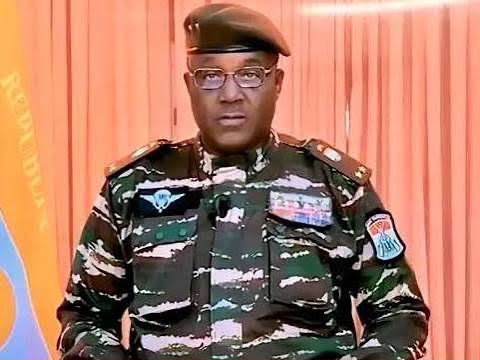
Mutiny: Presidential Guard Tightens Security Around Niger Presidency Amid Reports of Military Protest
By Zagazola Makama
Security was significantly reinforced around Niger’s Presidential Palace in Niamey following reports of unrest involving elements of the country’s armed forces, security sources told Zagazola Makama.
According to multiple security sources, the heightened deployment of the Presidential Guard, supported by armoured vehicles around the Presidential Palace on the night of July 3 and into July 4, followed what was described as a limited protest by personnel of an armoured unit within the Niger Armed Forces (FAN).
The sources said some soldiers reportedly declined deployment to frontline positions in northern Tillabéri Region, particularly around Inatès and Chinagodrar, citing inadequate heavy equipment and insufficient operational resources to confront the growing security threats in the area.
The protest was described by one source as a “small mutiny,” although there has been no official confirmation from the Nigerien authorities.
Security sources said the development triggered concern within the country’s leadership, prompting the reinforcement of security around the Presidential Palace and temporary restrictions on movement in the surrounding area as a precautionary measure.
The Tillabéri Region remains one of Niger’s most volatile security zones, with recurrent attacks by armed extremist groups, including factions linked to the so-called Islamic State in the Greater Sahara (ISGS).
As of the time of filing this report, the Nigerien government and military authorities had not issued any official statement regarding the reported protest or the increased security presence around the Presidency.
The situation remains under close observation.
Mutiny: Presidential Guard Tightens Security Around Niger Presidency Amid Reports of Military Protest

Two suspected criminals arrested during patrol in Plateau
By: Zagazola Makama
Troops of Sector 1 under Operation Enduring Peace have arrested two suspected criminals during a routine patrol in Jos East Local Government Area of Plateau.
Security sources disclosed that the suspects, identified as Azi Ezekiel, 21, and Ajiji Emmanuel, 19, were apprehended at about 10:30 a.m. on Saturday along the road leading to Forbur Village.
The sources said the suspects were intercepted by troops of Sector 1, Sub-Sector 12, while conducting a routine patrol in the area.
According to the sources, the two suspects have been handed over to the Keystone Police Station in Forbur for further investigation and possible prosecution.
The arrest forms part of ongoing security operations aimed at combating criminal activities and enhancing safety across Plateau State.
Two suspected criminals arrested during patrol in Plateau
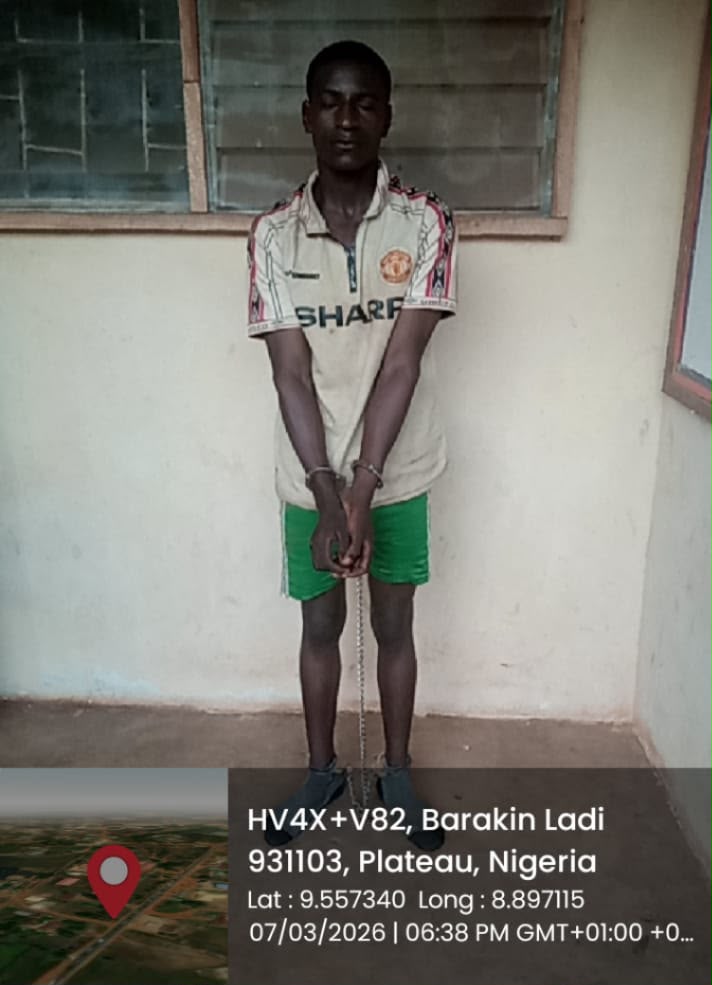
Troops arrest suspected kidnapper in Plateau community
By: Zagazola Makama
Troops of Sector 4 of Operation Enduring Peace have arrested a suspected kidnapper during a security operation in Barkin Ladi Local Government Area of Plateau.
Security sources said the suspect, identified as Mohamdu Surajo, 29, was arrested at about 6:45 p.m. on Friday at Sabon Layi Village following sustained security operations in the area.
The sources disclosed that the suspect is currently in military custody and is undergoing preliminary interrogation to aid ongoing investigations.
They added that the arrest is part of continued efforts by security forces to dismantle criminal networks and enhance security across Plateau State.
Troops arrest suspected kidnapper in Plateau community

President Tinubu Flags Off the Construction of Dikwa–Gamboru Ngala, Bama–Banki International Road Projects

Mutiny: Presidential Guard Tightens Security Around Niger Presidency Amid Reports of Military Protest

Troops Arrest Two Suspected Berom Militia Linked to NIPSS Attack as Security Sources Say Investigation Supports Earlier Leads

Roger Federer’s Shock as DNA Results Reveal Myla and Charlene Are Not His Biological Children

THE PLIGHT OF FARIDA

FAILED COUP IN BURKINA FASO: HOW TRAORÉ NARROWLY ESCAPED ASSASSINATION PLOT AMID FOREIGN INTERFERENCE CLAIMS
-
 News2 years ago
Roger Federer’s Shock as DNA Results Reveal Myla and Charlene Are Not His Biological Children
-
Opinions4 years ago
THE PLIGHT OF FARIDA
-
 News1 year ago
FAILED COUP IN BURKINA FASO: HOW TRAORÉ NARROWLY ESCAPED ASSASSINATION PLOT AMID FOREIGN INTERFERENCE CLAIMS
-

 News2 years ago
EYN: Rev. Billi, Distortion of History, and The Living Tamarind Tree
-
 Opinions5 years ago
POLICE CHARGE ROOMS, A MINTING PRESS
-

 ACADEMICS2 years ago
A History of Biu” (2015) and The Lingering Bura-Pabir Question (1)
-

 Columns2 years ago
Army University Biu: There is certain interest, but certainly not from Borno.
-

 Politics1 year ago
2027: Why Hon. Midala Balami Must Go, as Youths in Hawul and Asikira/Uba Federal Constituency Reject ₦500,000 as Sallah Gift
