
News
Niger’s Shifting Accusations on Pipeline Sabotage – From Nigeria to China

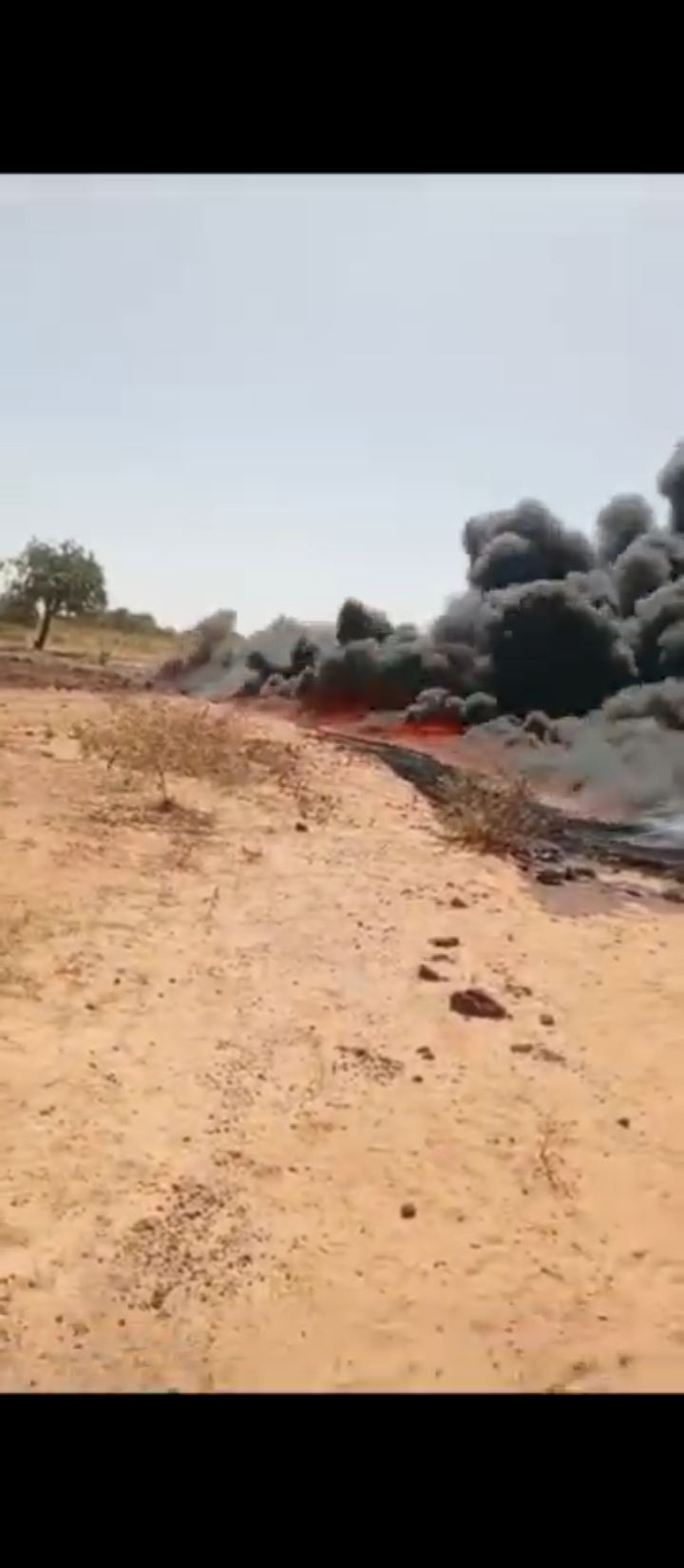
Niger’s Shifting Accusations on Pipeline Sabotage – From Nigeria to China
By: Zagazola Makama
The mystery surrounding the wave of pipeline explosions in Niger Republic has taken a new twist, as authorities in Niamey shift blame from Nigeria and its allies to China, raising more questions than answers about the actors and motives behind these attacks.
Since the first reported sabotage on June 16, 2024, a series of large-scale explosions have rocked key oil infrastructure, severely disrupting crude oil transportation and exportation. While the Nigerien government initially accused Nigeria, France, and Benin, recent developments suggest a new diplomatic blame game, with China now at the center of the controversy.
For months, Nigerien authorities, particularly elements within the ruling military junta, accused regional and international actors of orchestrating attacks on its pipelines to exert economic and political pressure. The pipeline running from Niger’s Agadem oil field to the Benin coast has been a flashpoint in diplomatic tensions, especially after Benin refused to allow oil shipments over a political dispute with Niamey.
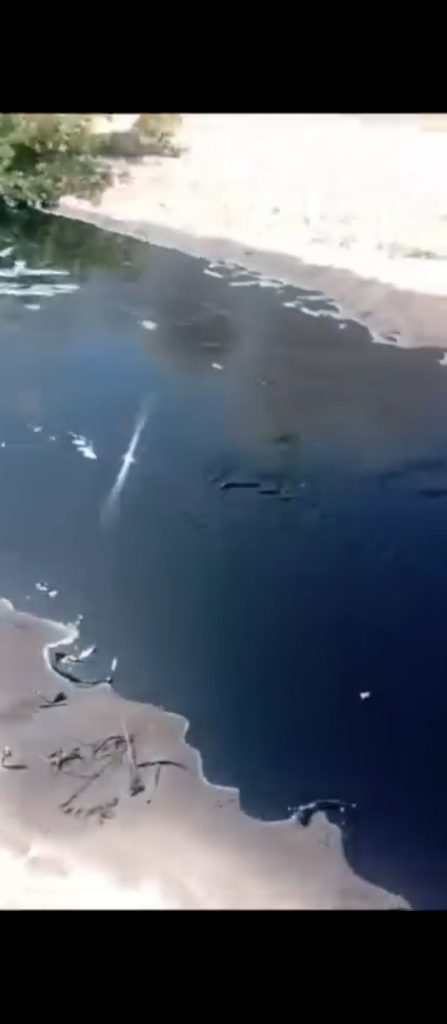
Initially, the First Peoples of the Liberation (FPL) claimed responsibility for the first explosion but have since remained silent on subsequent attacks. This led Niger’s junta to direct its accusations at neighboring countries, alleging that foreign backed sabotage aimed to destabilize its oil dependent economy.
However, in a recent confidential letter, Nigerien officials allegedly, accused China of secretly collaborating with Nigerien rebels to justify a halt in oil production, adding a new dimension to the crisis.
Why China?
China has been a major investor in Niger’s oil industry, funding the construction of the 2,000km-long Niger-Benin pipeline through the China National Petroleum Corporation (CNPC). With exports projected at 90,000 barrels per day, Beijing has significant stakes in Niger’s oil sector.
However, sources within Nigerien intelligence claim that Chinese interests could be benefiting from the attacks, using them as a pretext to renegotiate contracts or pressure Niamey into granting more favorable terms. Others speculate that factions within the Nigerien government could be pushing this narrative to shift public attention away from internal instability and economic hardship.

On the other hand, Chinese diplomatic sources have reportedly dismissed the allegations, suggesting instead that the so-called “petro-kidnappers” a term used for those controlling Niger’s oil resources could be staging these attacks to strengthen their bargaining power in contract negotiations.
Unanswered Questions
Beyond the accusations, several troubling questions remain: Why has no group claimed responsibility for the recent attacks?
How have the attackers managed to strike without being caught or leaving behind suspects? If China is involved, what does it stand to gain by sabotaging infrastructure it helped build? If the accusations against Nigeria and Benin were false, what was the motive behind Niger’s initial claims?
Another major mystery surrounds the Lakurawas, a shadowy group rumored to be involved in the attacks. Despite being frequently mentioned in official circles, the group has never issued a statement or made any demands, raising doubts about its very existence.
Analysts believe the real actors behind the sabotage could be operating from within Niger itself, using the attacks to advance personal or political agendas. By constantly shifting blame from Nigeria to France, Benin, and now China Niger’s junta may be obscuring the true source of the crisis.
Meanwhile, with no arrests, no confirmed perpetrators, and no resolution in sight, the pipeline fires remain a silent riddle, burning through Niger’s economic potential and regional diplomatic ties.
Until the real masterminds are identified, the only certainty is that ordinary Nigeriens remain the biggest victims of this unfolding crisis.
Niger’s Shifting Accusations on Pipeline Sabotage – From Nigeria to China



Centre lauds Kaduna Govt over life skills, gender education policies approval
By Aisha Gambo
The Centre for Girls’ Education (CGE) has commended the Kaduna State Executive Council for approving the Kaduna State Life Skills Policy and the State Policy on Gender in Education (SPGE 2026–2030).
The Executive Director of the organisation, Habiba Mohammed, made this known in a statement issued on Wednesday in Kaduna.
She said the approval marked a transition from donor-supported, time-bound interventions to a sustainable, government-led framework for delivering life skills education and promoting gender equity in schools.
According to her, the Life Skills Policy will equip young people with the knowledge, skills, attitudes and values required to succeed in education, employment and life, while the Gender in Education Policy providzbves a framework to promote equity, inclusion, participation, retention, completion and improved learning outcomes.
“The approval moves life skills and gender equity from the margins of the classroom into the core of Kaduna State’s education system,” she said.
Mohammed said CGE contributed to the development and validation of the policies through its system-strengthening project supported by Co-Impact, OASIS Initiative and the Malala Fund, in collaboration with the Adolescent Girls Initiative for Learning and Empowerment (AGILE) and the Kaduna State Ministry of Education.
She said the policies built on more than 18 years of the organisation’s Safe Space model, which independent evaluations showed had helped reduce child marriage, increase school enrolment and delay early marriage.
According to her, the AGILE programme in Kaduna has reached more than 127,319 girls and 6,250 boys between the ages of 14 and 18, while over 1,400 female and male teachers have been trained as mentors.
She added that institutionalising the model through public policy would ensure that life skills education became a permanent component of the state’s education system.
Mohammed said the policies would address barriers to school access, retention and completion, particularly for girls and other vulnerable learners.
She added that they would also institutionalise life skills as a co-curricular programme, strengthen evidence-based decision-making across the state’s 23 local government areas and guarantee continuity beyond donor-funded programmes.
The executive director commended Gov. Uba Sani for providing the leadership that made the policy approval possible.
She also appreciated the Commissioner for Education, Prof. Abubakar Sani Sambo, the Kaduna State Ministry of Education, the AGILE State Project Implementation Unit, the World Bank and other stakeholders for their contributions to the process.
Mohammed reaffirmed CGE’s commitment to supporting the Kaduna State Government with technical assistance during the implementation phase, including teacher training, gender-responsive education sector budgeting and monitoring.
She said the ultimate goal was to ensure that every girl and boy in Kaduna State had the opportunity to learn, develop and thrive.
Centre lauds Kaduna Govt over life skills, gender education policies approval
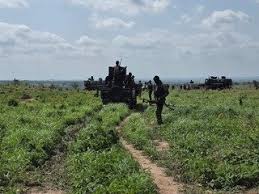
Troops Kill Six ISWAP Fighters, Wound Seven in Failed Attack on Borno Military Base
By: Zagazola Makama
Six fighters of the Islamic State West Africa Province (ISWAP) were reportedly killed and seven others seriously wounded during a failed attack on a Forward Operating Base (FOB) at Logomani in Borno State, credible intelligence sources have disclosed.
The sources told Zagazola Makama that the terrorists launched the attack on the military position in the early hours of July 7 but suffered significant casualties after troops mounted a fierce resistance.
According to the intelligence assessment, the attackers had assembled at Garal before advancing on the military base.
Following the failed assault, surviving insurgents were reportedly seen regrouping at Chukun Gudu, where they buried six of their fighters killed during the encounter.
Among those reportedly buried was a senior fighter identified as Munzir, also known as Ba Alayi, who was said to be an indigene of Wulgo.
The development comes as troops of Operation HADIN KAI continue sustained clearance operations aimed at dismantling terrorist enclaves and disrupting insurgents’ logistics and mobility across the Lake Chad region.
Troops Kill Six ISWAP Fighters, Wound Seven in Failed Attack on Borno Military Base
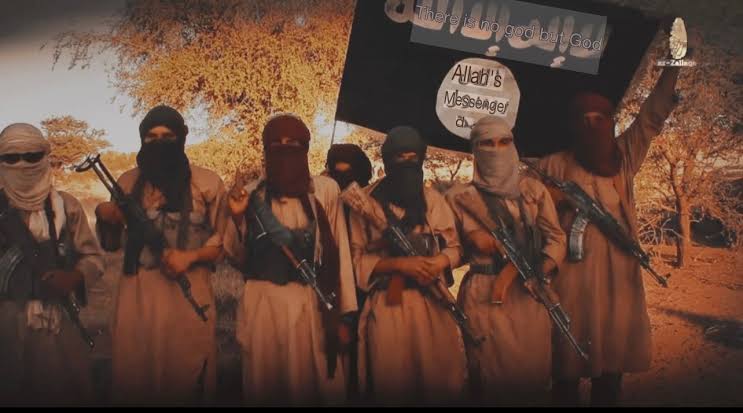
Cholera Outbreak Kills Nine ISWAP Terrorists in Timbuktu Triangle
By: Zagazola Makama
A cholera outbreak has reportedly claimed the lives of nine fighters of the Islamic State West Africa Province (ISWAP) in the Timbuktu Triangle, a known terrorist stronghold in Borno State, intelligence sources have disclosed.
The sources told the News Agency of Nigeria (NAN) that the outbreak had spread through the group’s enclaves, highlighting deteriorating sanitary conditions and limited access to medical care within the insurgents’ camps.
According to the intelligence, two additional ISWAP fighters infected with the disease were allegedly executed by fellow terrorists after attempts to manage their condition at Kimba village proved unsuccessful.
The sources said the development pointed to the worsening health conditions within the terrorist hideouts, where sustained military pressure has disrupted logistics, including access to medicines and treatment facilities.
The sources added that commanders had also been urged to intensify efforts to intercept medical supplies and pharmaceuticals intended for terrorist camps in order to further degrade ISWAP’s treatment capability and operational resilience.
The reported outbreak comes amid sustained offensives by troops of Operation HADIN KAI, who continue to target terrorist enclaves and logistics networks across the Lake Chad region in a bid to degrade the insurgents’ fighting capacity.
Cholera Outbreak Kills Nine ISWAP Terrorists in Timbuktu Triangle

Centre lauds Kaduna Govt over life skills, gender education policies approval

Troops Kill Six ISWAP Fighters, Wound Seven in Failed Attack on Borno Military Base

Cholera Outbreak Kills Nine ISWAP Terrorists in Timbuktu Triangle

Roger Federer’s Shock as DNA Results Reveal Myla and Charlene Are Not His Biological Children

THE PLIGHT OF FARIDA

FAILED COUP IN BURKINA FASO: HOW TRAORÉ NARROWLY ESCAPED ASSASSINATION PLOT AMID FOREIGN INTERFERENCE CLAIMS
-
 News2 years ago
Roger Federer’s Shock as DNA Results Reveal Myla and Charlene Are Not His Biological Children
-
Opinions4 years ago
THE PLIGHT OF FARIDA
-
 News1 year ago
FAILED COUP IN BURKINA FASO: HOW TRAORÉ NARROWLY ESCAPED ASSASSINATION PLOT AMID FOREIGN INTERFERENCE CLAIMS
-

 News2 years ago
EYN: Rev. Billi, Distortion of History, and The Living Tamarind Tree
-
 Opinions5 years ago
POLICE CHARGE ROOMS, A MINTING PRESS
-

 ACADEMICS2 years ago
A History of Biu” (2015) and The Lingering Bura-Pabir Question (1)
-

 Columns2 years ago
Army University Biu: There is certain interest, but certainly not from Borno.
-

 Politics1 year ago
2027: Why Hon. Midala Balami Must Go, as Youths in Hawul and Asikira/Uba Federal Constituency Reject ₦500,000 as Sallah Gift
