
Uncategorized
Nok Varsity Now Federal University Of Applied Sciences As President Tinubu Orders Immediate Takeover

Nok Varsity Now Federal University Of Applied Sciences As President Tinubu Orders Immediate Takeover
** Directs education minister to capture institution in 2025 budget for September take-off
By: Our Reporter
President Bola Ahmed Tinubu has ordered the Federal Government to take over Nok University, Kachia, Kaduna State, and transform it into a Federal University.
Following the President’s directive which is coming after a Federal High Court in Abuja had ordered the final forfeiture of the privately-owned NOK University to the Federal Government, the private institution is now named Federal University of Applied Sciences, Kachia, Kaduna State in fulfillment of a promise made to the people of Southern Kaduna.
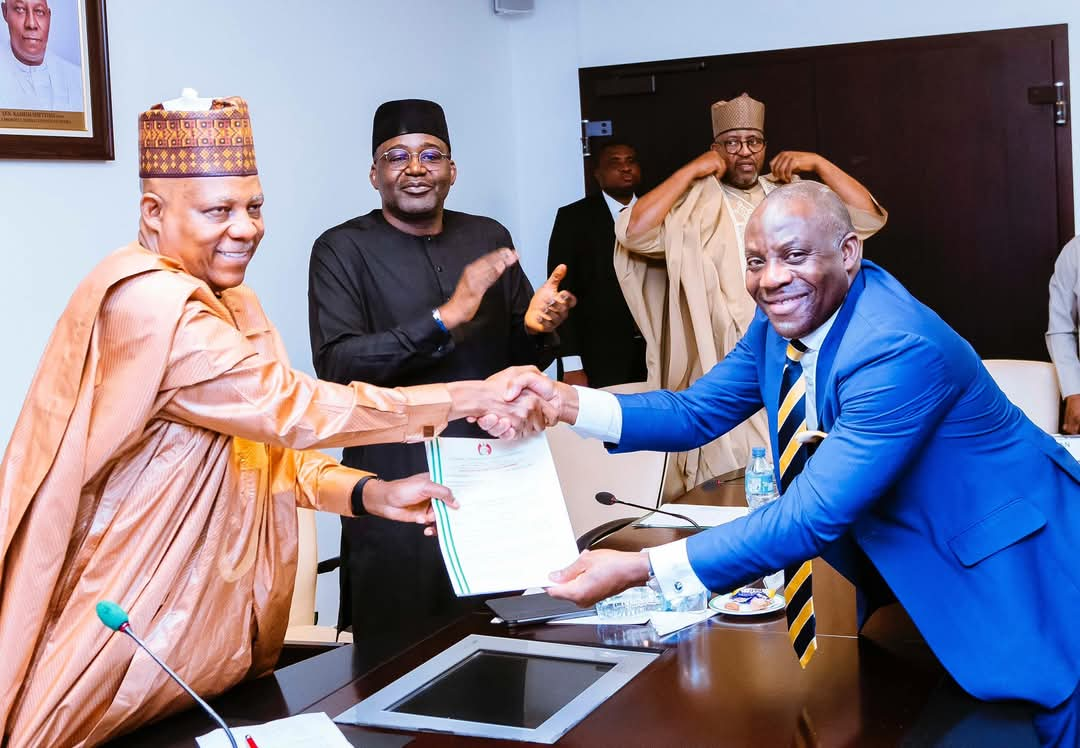
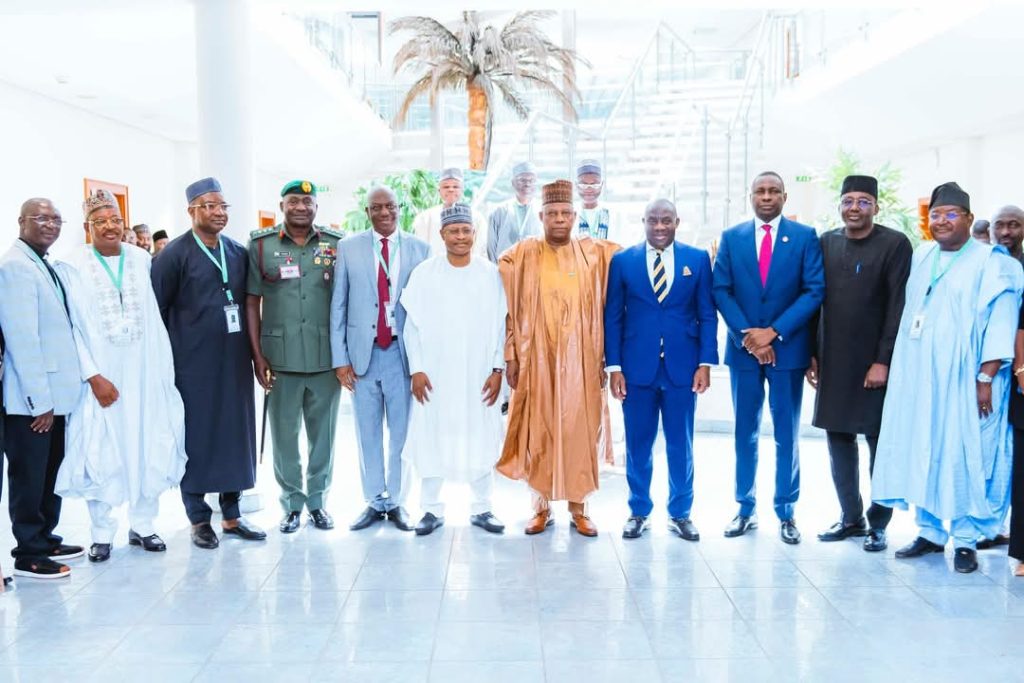
Speaking during the formal handover of the institution’s property and assets to the Federal Government by the Economic and Financial Crimes Commission (EFCC) at the Presidential Villa, Vice President Kashim Shettima said the event signifies the administration’s commitment to inclusivity and national development.
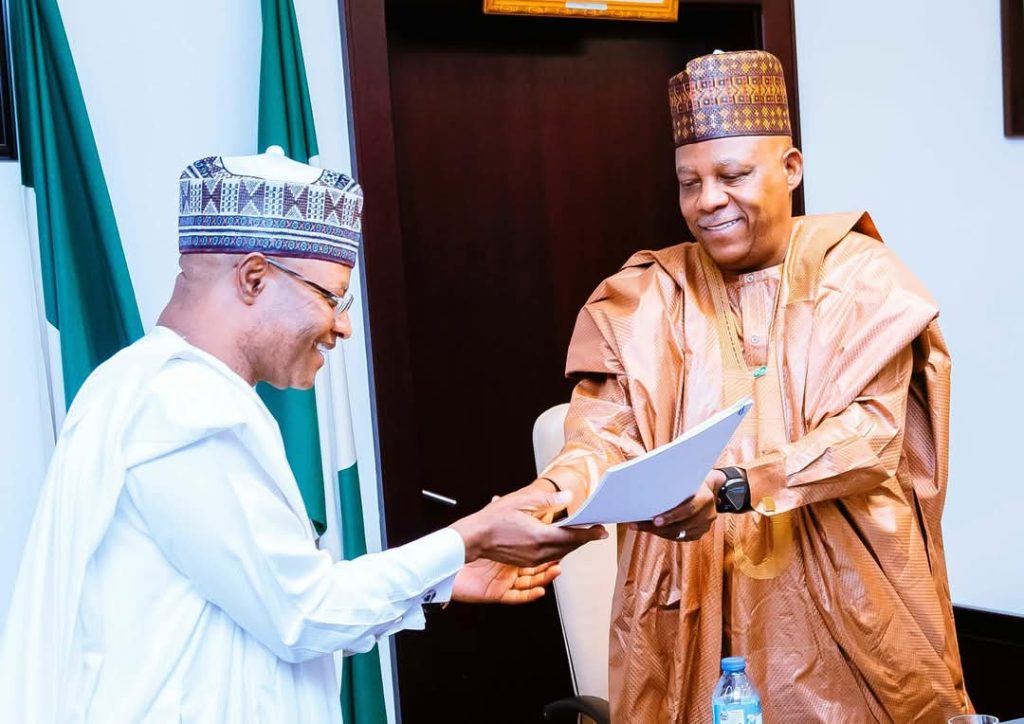
He said, “This is a great day for the country and for Kaduna State. The greater credit should go to President Bola Ahmed Tinubu for driving the process and making it the first item on the agenda of the Federal Executive Council.
“General Martin Luther Agwai (rtd) quoted Martin Luther King Jr. as saying, ‘People fail to get along because they fear each other; they fear each other because they don’t know each other; they don’t know each other because they have not communicated with each other.’ I dare to add another quote by the same Martin Luther King Jr. where he said: ‘We must either learn to live together as brothers, or we are going to die together as fools.’
“We must either learn to live together as brothers, or we are going to die together as fools.”
The Vice President also paid tribute to those instrumental in the transition process, including General Martin Luther Agwai (rtd), Bishop Matthew Hassan Kukah, Justice Kumai Bayang Akaahs, and Senator Sunday Marshall.
“I want to particularly appreciate my Lord, Bishop Matthew Hassan Kukah, who has been unwavering in his commitment to fostering peace and progress in this region. The engagements we had with General Agwai, Justice Akaahs, and Senator Marshall were all geared towards making this a reality. Today, we celebrate the outcome of those efforts,” he said.

Assuring of the immediate commencement of the institution’s operations, VP Shettima said, “The President has already directed the Minister of Education to ensure that the university is captured in the 2025 budget so that by September, it can admit its first set of students.”
Beyond education, VP Shettima reaffirmed the administration’s commitment to infrastructure development in Southern Kaduna, particularly in road construction.
“The governor is already making significant progress in reconstructing key roads in the region. However, President Bola Ahmed Tinubu has promised to complete the efforts of the governor by awarding contracts for the construction of some of the major roads in the region,” he added.
On his part, Kaduna State Governor, Senator Uba Sani, thanked President Tinubu for the realisation of the dream to establish the Federal University of Applied Sciences in Southern Kaduna, describing the signing ceremony and handover of property for the takeoff of the institution as a great day for the people of the state and Nigerians at large.
Governor Sani reserved special commendations for Vice President Shettima, whom he described as a strong pillar of support for his administration and the people of Kaduna, particularly for the actualisation of the Federal University of Applied Sciences project.
He said the peaceful coexistence enjoyed across Kaduna and environs, and the inclusion of all interests in the state is entrenched as a deliberate policy of his administration, assuring that “we will continue to run Kaduna in an inclusive manner where the interest of all are taken into consideration”.
Also speaking, the Senator representing Kaduna South senatorial district, Senator Sunday Marshall Katung thanked President Tinubu for assenting to the establishment of the institution, saying “the positive impact of the decision will benefit millions in our region, the country and the world for generations to come.”
Senator Katung who presented the bill for the establishment of the university in the Senate said, “We are excited that our vision for a world-class institution of higher learning in Southern Kaduna has been recognised and endorsed. We are eager to embark on this journey that has eluded us for decades.
“This university will not only provide access to quality education but will also create jobs, stimulate local economic growth, and contribute to the social and cultural fabric of our community. This is the vision that Mr. President has set in motion today, and we look forward to working collaboratively with all stakeholders to bring it to life.”
On his part, the Minister of Education, Dr. Tunji Alausa, described the establishment of the university as a demonstration of President Tinubu’s dedication towards expanding the nation’s human capital and capacity development.
He said, “Today demonstrates another evidence of President Bola Ahmed Tinubu and the Vice President, Senator Kashim Shettima’s benevolent belief in quickly expanding Nigeria’s human capacity development in the area of education, health and social welfare protection.”
For his part, the Chairman of the Economic and Financial Crimes Commission (EFCC), Ola Olukayode, said that in pursuit of their mandate, the court had granted the institution a judgment for the final forfeiture of the entire assets of the university, comprising academic buildings, a water factory, an international hotel, and an event centre.
“We are here pursuant to the resolution of the Federal Executive Council on February 4, 2025, to hand over the property of the university for the use of the newly established Federal University of Applied Sciences, Kachia,” he added.
In his remarks, the Chief of Defence Staff, Gen. Christopher Musa, said the day is “a very special day to say thank you to President Bola Ahmed Tinubu for the great honour done to the people of Southern Kaduna.”
According to him, the President has repeatedly shown love and commitment to the region and the country at large. “This is a Nigerian project, it is not only for the people of Kaduna; the University will enhance the capacity of all Nigerians. We are all excited; everybody in Kaduna State is excited about this great feat. This is an idea that will bring peace to the region,” he stated.
Also speaking, Gen. Martin Luther Agwai (rtd) said it is one of the greatest days of joy for some of them who have retired and from that geographical region of the country – Southern Kaduna.
He noted that the Southern Kaduna people had waited for a long time, and have eventually gotten the best with a science-based university that will uplift the value of life in that area.
Others present at the meeting included member representing Jema’a/Sanga Federal constituency, Hon. Daniel Amos; former Supreme Court Justice, Kumai Bayang Akaahs; former Chairman of the Kaduna State chapter of Christian Association of Nigeria (CAN), Rev. John Joseph Hayab; Chief Anthony Hassan; member representing Jema’a State Constituency Ali Kalat; Dr Abdulamalik Durunguwa; Charity Shekari; Deborah Usman; Andrew Yakubu among others.
Nok Varsity Now Federal University Of Applied Sciences As President Tinubu Orders Immediate Takeover


Netherlands Donates Equipment to Boost Nigeria Immigration’s Hostmanship Programme
By: Michael Mike
The Kingdom of the Netherlands has donated specialised equipment to the Nigeria Immigration Service (NIS) to strengthen its Hostmanship Unit, deepening more than two decades of bilateral cooperation aimed at improving migration management and customer service delivery.
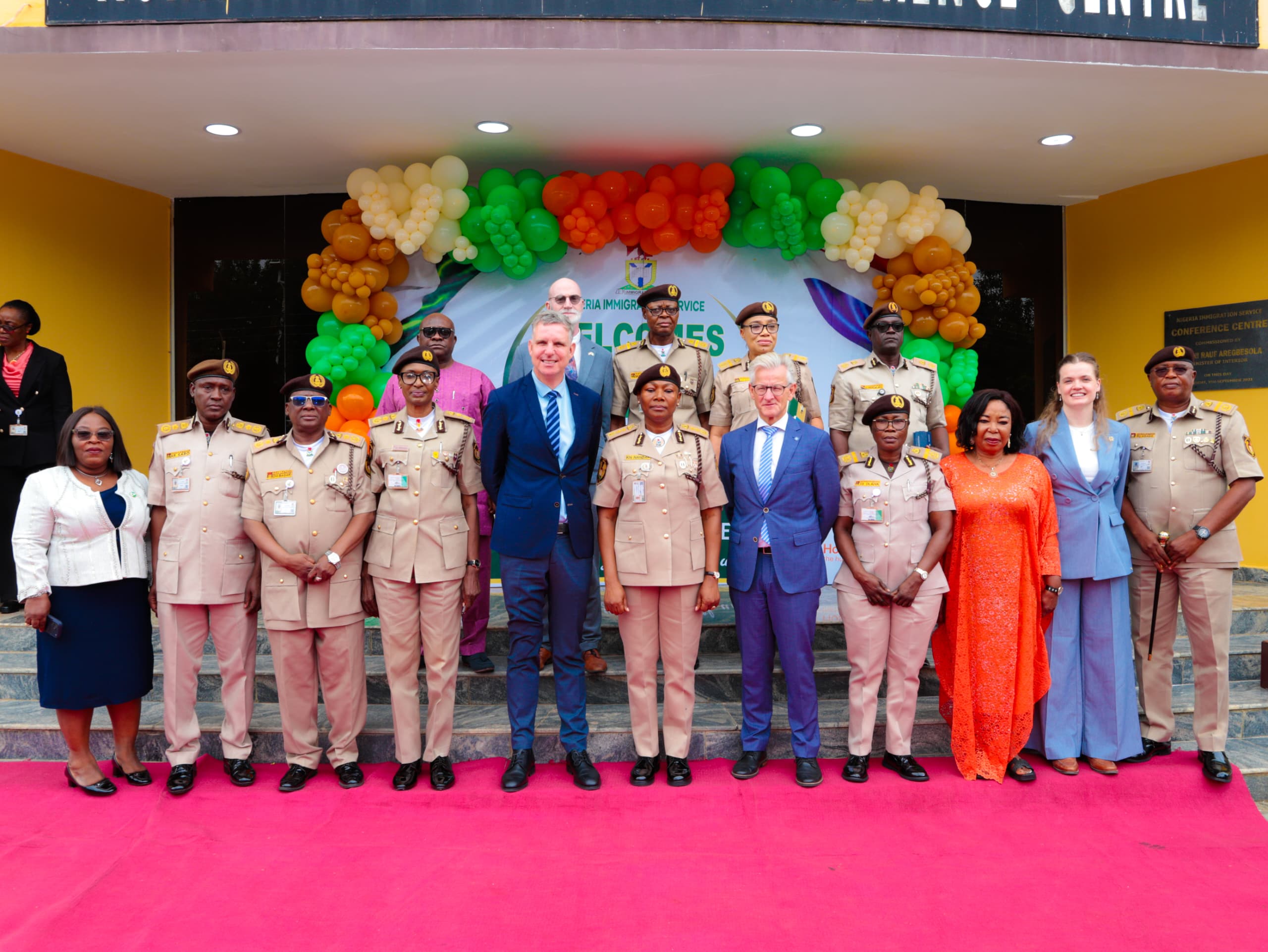
The equipment was presented by the Repatriation and Departure Service (R&DS) of the Dutch Ministry of Justice and Security during a ceremony at the NIS Headquarters in Abuja on Monday.

Receiving the donation, the Comptroller-General of Immigration, Kemi Nandap, described the gesture as a significant milestone in the long-standing partnership between the Nigeria Immigration Service and the Netherlands, noting that it would bolster institutional professionalism and improve service delivery.
Nandap said the equipment represents a strategic investment in institutional excellence and would enhance the Hostmanship Unit’s training capacity and operational efficiency.
She explained that the initiative is designed to entrench the philosophy of hostmanship across the Service, encouraging immigration officers to ensure that members of the public are treated with courtesy, empathy and professionalism at every point of contact.
“The equipment will further strengthen our capacity to institutionalise the Hostmanship philosophy, where every officer is inspired to make people feel welcomed, respected and valued,” she said.
The Chargé d’Affaires of the Embassy of the Kingdom of the Netherlands in Abuja, Mr. Ronald Sonnemans, described the collaboration with the Nigeria Immigration Service as a model of sustained international partnership.
He reaffirmed the Dutch government’s commitment to supporting initiatives that enhance migration management, institutional capacity and public service delivery in Nigeria.
The Nigeria Immigration Service disclosed that the partnership has already produced tangible results, including the training of hundreds of immigration officers, the establishment of a dedicated Hostmanship Unit and sustained capacity-building programmes under the European Union-funded Capacity Building and Relationship Management (CBR) Project.
According to the Service, the latest donation underscores the commitment of both countries to strengthening migration governance through innovation, knowledge sharing and institutional reforms that enhance public confidence in immigration services.
The Service expressed appreciation to the Government of the Kingdom of the Netherlands and the Repatriation and Departure Service for their continued support, pledging to ensure the donated equipment is effectively utilised in advancing ongoing reforms.
The Nigeria Immigration Service has in recent years intensified reforms aimed at modernising border management, improving service delivery and enhancing the professionalism of its personnel. A key component of these reforms is the Hostmanship programme, a customer service philosophy developed in Sweden that focuses on creating positive service experiences by treating every individual with respect, courtesy and empathy.
The Netherlands has remained one of Nigeria’s key international partners in migration governance, supporting capacity-building initiatives through bilateral cooperation and European Union-funded programmes. The collaboration has focused on improving migration management, combating irregular migration, strengthening institutional capacity and promoting international best practices in public service delivery.
The latest donation is expected to further consolidate these reforms as the Nigeria Immigration Service seeks to build a more citizen-focused and globally competitive immigration system.
Netherlands Donates Equipment to Boost Nigeria Immigration’s Hostmanship Programme
Uncategorized
Troops neutralised key bandit leaders, restored confidence along Gusau- Funtua highway
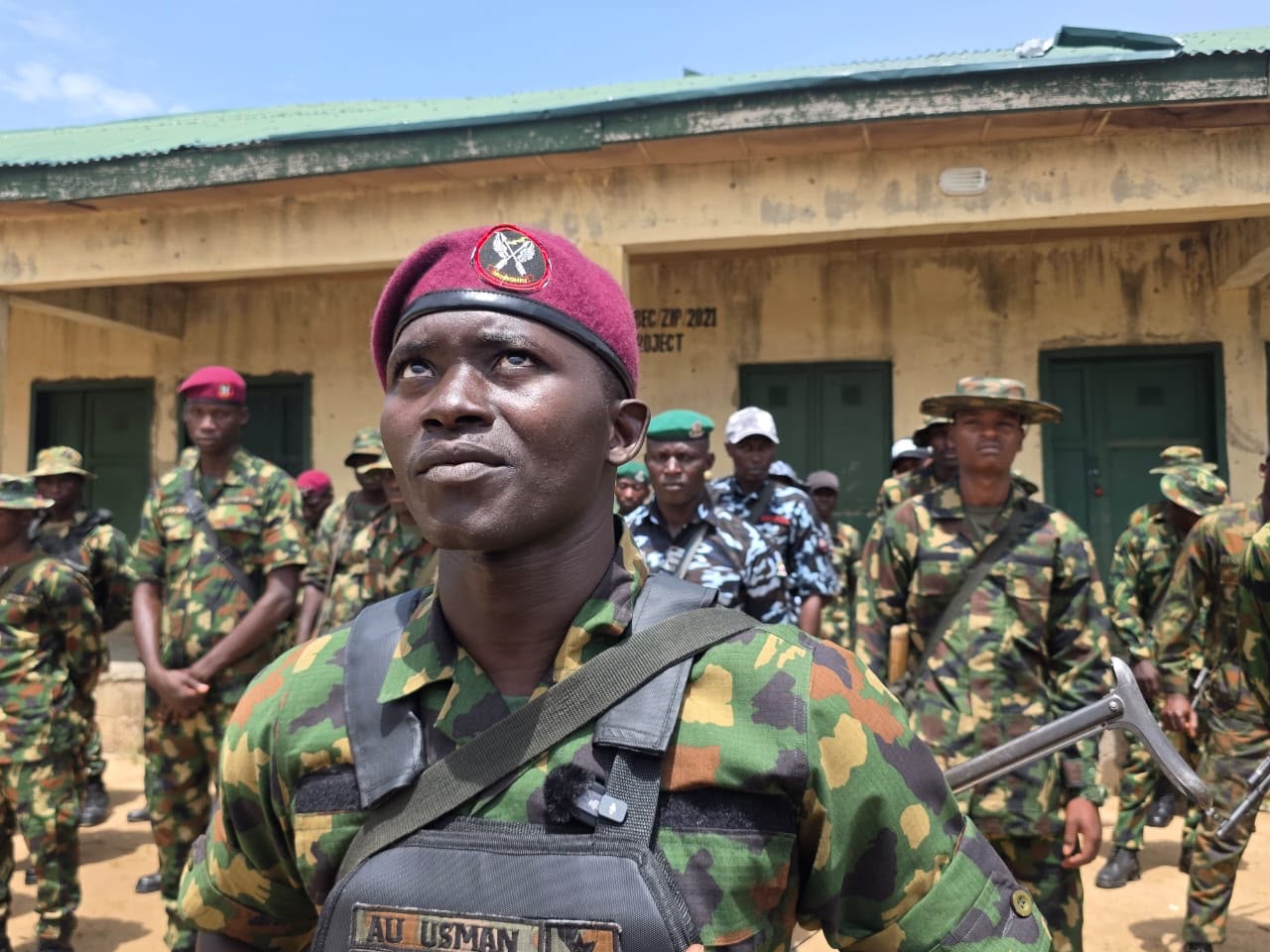
Troops neutralised key bandit leaders, restored confidence along Gusau- Funtua highway
By Zagazola Makama
The Commander of Combat Team 7 under Operation FANSAN YAMMA, Capt. A.U. Usman, has disclosed that troops have recorded significant operational successes over the past six months, including the elimination of several notorious bandit kingpins and the restoration of security along the strategic Funtua–Tsafe–Gusau highway.
Speaking on Saturday during a visit by Defense Correspondents at the unit’s operational base in Tsafe, Zamfara State, the commander said sustained offensive operations and strategic deployment of troops at identified bandit crossing points had drastically reduced attacks on commuters and boosted public confidence.
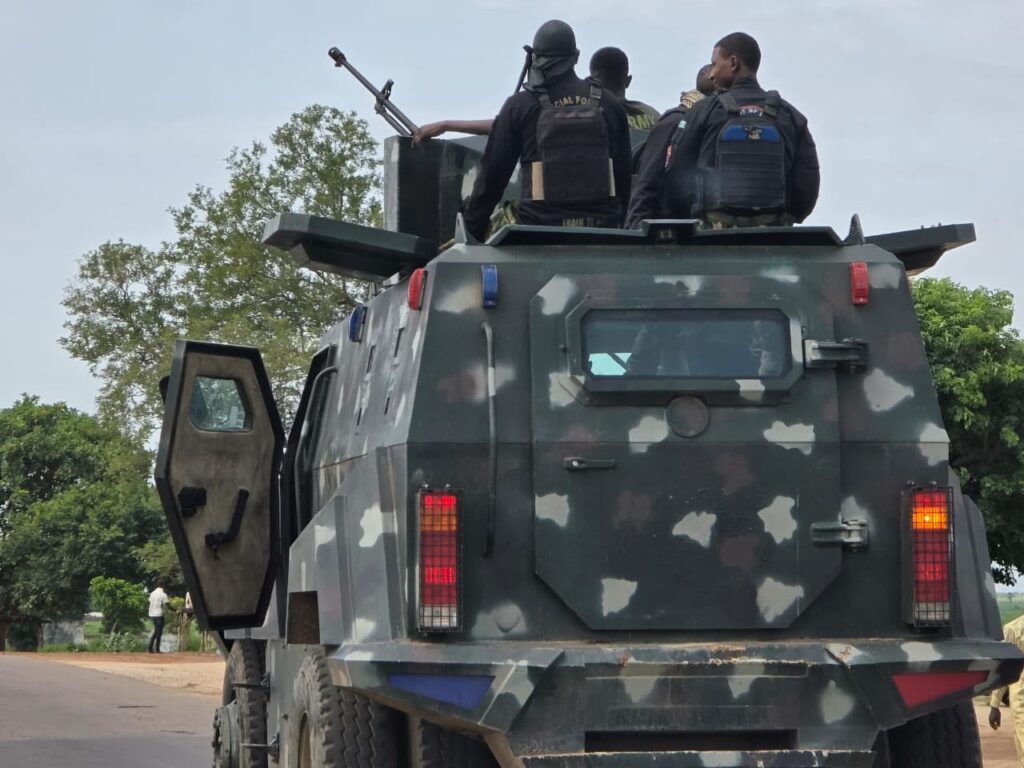
“During the period under review, Combat Team 7 has recorded some significant successes,” Usman said.
He revealed that on Jan. 14, troops neutralised notorious bandit commanders, including Kachalla Dan Agwal and Baban Baby, alongside several of their fighters during intelligence-led operations.
“Combat Team 7 was able to neutralise the likes of Kachalla Dan Agwal, Baban Baby and many others. These successes came through carefully planned operations and the deployment of our troops to strategic locations,” he said.
According to the commander, the unit established numerous pickets along the Funtua–Tsafe–Gusau road, particularly at known bandit crossing points frequently used to ambush travellers.
“If you are driving along the Katsina–Funtua–Tsafe–Gusau road today, you will notice several military pickets. Those soldiers are strategically deployed at identified bandit crossing routes,” he explained.
He noted that the deployment had significantly curtailed the activities of armed groups that previously terrorised motorists through kidnappings and violent attacks.
“These bandits were the ones repeatedly disturbing this road. Before now, commuters could not move freely the way they do today. They stopped vehicles, abducted passengers and created fear among the people,” he said.
“Today, because of the strategic deployment of troops and the equipment made available to us, civilians are moving freely without fear. The picketing has restored confidence among road users.”
Capt. Usman further disclosed that another major breakthrough was recorded on Feb. 15 when troops neutralised additional notorious bandits, including Yunusa Dogon Ahmad, during sustained clearance operations along the same corridor.
“On Feb. 15, we were able to neutralise Yunusa Dogon Ahmad and some other key bandits who had been terrorising this route,” he said.
Beyond securing highways, the commander said the military had also created a safer environment for farming activities across communities within its Area of Responsibility (AOR).
According to him, Combat Team 7 currently operates from about 13 operational locations, including Lilo, Mada, Wanzamai, Keta, FOB Railway, Gidan Giye, Keware and several blocking positions established to deny criminals freedom of movement.
“Our troops conduct daily foot patrols from these locations into surrounding farmlands and communities to ensure that farmers carry out their activities without interference from criminal elements,” he said.
“The same pattern is replicated across our entire Area of Responsibility. Whether in Mada, Wanzamai or other locations, our troops are constantly patrolling to provide security for farmers.”
The commander acknowledged that improvised explosive devices (IEDs) remained one of the challenges confronting troops during operations, especially on rural access routes.
“There are places where movement is still affected because of the threat of IEDs,” he said.
“However, with support from the theatre headquarters, Explosive Ordnance Disposal (EOD) teams have now been deployed, and we no longer move on roads without conducting proper scanning to detect possible IED threats.”
On civil-military relations, Capt. Usman described cooperation from residents as encouraging but said more support was needed to deny criminals access to information.
“The locals are cooperating to some extent, but there is still room for improvement,” he said.
“Without informants, terrorists cannot operate effectively. Unfortunately, there are still a few bad elements within some communities who pass information about our movements and activities to the criminals.”
Despite the challenge, he commended the majority of residents for their support and expressed confidence that stronger collaboration between security forces and communities would further weaken the activities of bandits across the region.
The commander reaffirmed the commitment of Combat Team 7 and Operation FANSAN YAMMA to sustaining offensive operations and ensuring that communities, farmers and travellers continue to enjoy improved security across Zamfara and adjoining areas.
Troops neutralised key bandit leaders, restored confidence along Gusau- Funtua highway
Uncategorized
Operation FANSAN YAMMA to Deploy Dedicated Drones as Theatre Commander Unveils New Force Protection Measures
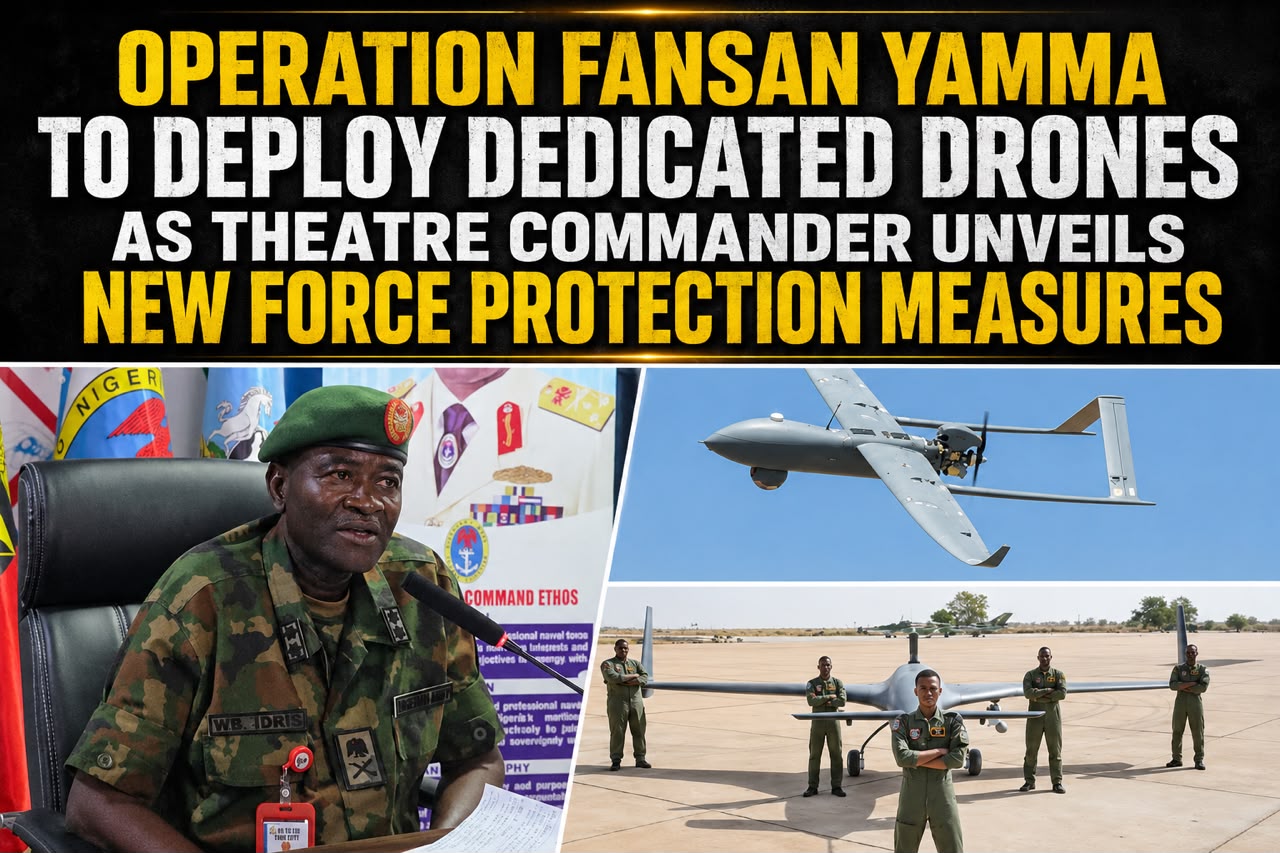
Operation FANSAN YAMMA to Deploy Dedicated Drones as Theatre Commander Unveils New Force Protection Measures
By Zagazola Makama
The Theatre Commander, Joint Task Force North West, Operation FANSAN YAMMA (JTF NW OPFY), Major General W.B. Idris, has disclosed that the theatre will soon receive its own dedicated fleet of unmanned aerial vehicles (UAVs) as part of an ongoing military modernisation programme aimed at strengthening force protection, intelligence gathering and offensive operations against terrorists across the North-West.
Major General Idris made the disclosure on Thursday during an interactive session with defence correspondents in Gusau, Zamfara State, while responding to questions following a comprehensive operational briefing on the activities of Operation FANSAN YAMMA.
The announcement came in response to a question from Defence Correspondent who sought clarification on measures being adopted by the military to improve force protection, particularly in view of the growing use of sophisticated Improvised Explosive Devices (IEDs) by terrorist groups operating within the North-West and the wider Sahel region.
The Theatre Commander acknowledged that the threat posed by IEDs has continued to evolve, requiring corresponding improvements in surveillance, intelligence and technological capabilities.
According to him, the Nigerian Armed Forces have already commenced a major expansion of their unmanned aerial capability, with Defence Headquarters and the Service Headquarters investing heavily in drones designed to enhance reconnaissance, surveillance and operational response across all theatres of operation.
“It still comes down to the answer I gave earlier,” the commander said.
“The military hierarchy is doing a lot. We have commenced the acquisition of drones, and we are aware that the Chief of Defence Staff, the Chief of Army Staff and the Honourable Minister of Defence are doing everything possible to provide drones with wider operational coverage across the country.”
He explained that the acquisition programme forms part of a broader effort to integrate modern technology into military operations, enabling commanders to detect threats earlier, improve situational awareness and respond rapidly to terrorist activities in difficult terrain.
Major General Idris disclosed that several operational theatres have already begun receiving unmanned aerial systems, while Operation FANSAN YAMMA is expected to receive its own dedicated drone capability immediately after the completion of the construction of its operational hangar.
“As it stands today, Operation FANSAN YAMMA is awaiting the completion of the construction of our hangar before our own drones are deployed for more efficient conduct of operations,” he said.
The commander noted that the deployment of dedicated drones would significantly improve the command’s ability to monitor vast forest corridors, detect terrorist movements, identify IED threats and support troops engaged in offensive operations.
He explained that the North-West theatre presents unique operational challenges because of its expansive forests, mountainous terrain and remote settlements that are often inaccessible to conventional ground patrols, particularly during the rainy season.
According to him, unmanned aerial platforms will bridge those operational gaps by providing persistent surveillance over difficult terrain while supporting intelligence-driven operations against terrorist enclaves.
He further stated that drones would complement existing air assets by providing commanders with real-time intelligence before, during and after military operations.
The Theatre Commander noted that the growing sophistication of terrorist tactics—including the increasing deployment of improvised explosive devices, ambushes and hit-and-run attacks—requires equally sophisticated technological responses.
He said the Armed Forces have therefore prioritised investments in intelligence, surveillance and reconnaissance capabilities as part of broader efforts to reduce casualties and enhance operational effectiveness.
“Our objective is not only to attack terrorists but also to ensure the safety of our personnel during operations. Modern technology is becoming increasingly important in achieving that objective,” he said.
Major General Idris commended the leadership of the Armed Forces, particularly the Chief of Defence Staff, General Olufemi Oluyede; the Chief of Army Staff, Lieutenant General Waidi Shaibu; and the Honourable Minister of Defence for their continued commitment to equipping frontline formations with modern capabilities.
He observed that the support being provided by Defence Headquarters has already translated into significant improvements in operational performance across various theatres.
According to him, enhanced surveillance capabilities, improved intelligence gathering and the increasing deployment of modern equipment have enabled troops to sustain pressure on terrorist groups while reducing their freedom of movement.
The commander explained that force protection remains one of the command’s highest priorities, stressing that every available technological solution is being explored to minimise operational risks to personnel.
He added that the military’s ongoing investment in drones is expected to transform operations by improving early warning, target acquisition, battle damage assessment and operational coordination between ground and air forces.
He also reiterated that the introduction of dedicated UAV capability would further strengthen the command’s ability to dominate remote forests where terrorists have increasingly sought refuge after being pushed away from major highways through sustained military offensives.
“The terrorists are constantly adapting, and we must remain ahead of them. Technology gives us that advantage. With improved drone capability, better intelligence and continued support from the military high command, we will further deny them freedom of movement and make the operational environment even more hostile for criminal elements,” he said.
Major General Idris reaffirmed that Operation FANSAN YAMMA would continue to combine modern technology with intelligence-led operations, long-range patrols and coordinated inter-agency collaboration to protect communities, secure critical infrastructure and dismantle terrorist networks across the North-West.
He assured Nigerians that the command remains committed to enhancing force protection, improving operational efficiency and sustaining the momentum of ongoing operations until lasting peace and security are restored throughout the theatre.
Operation FANSAN YAMMA to Deploy Dedicated Drones as Theatre Commander Unveils New Force Protection Measures

NDLEA Intercepts Cocaine Hidden in Mortar, Backpack Bound for China, Italy; Arrests Suspected Drug Dealers Nationwide

ECOWAS Chief Bids Benin Farewell with Unity Message on 66th Independence Anniversary

Nigeria’s Budget Should Build Lives, Not Fund Luxury – ActionAid

Roger Federer’s Shock as DNA Results Reveal Myla and Charlene Are Not His Biological Children

THE PLIGHT OF FARIDA

FAILED COUP IN BURKINA FASO: HOW TRAORÉ NARROWLY ESCAPED ASSASSINATION PLOT AMID FOREIGN INTERFERENCE CLAIMS
-
 News2 years ago
Roger Federer’s Shock as DNA Results Reveal Myla and Charlene Are Not His Biological Children
-
Opinions4 years ago
THE PLIGHT OF FARIDA
-
 News1 year ago
FAILED COUP IN BURKINA FASO: HOW TRAORÉ NARROWLY ESCAPED ASSASSINATION PLOT AMID FOREIGN INTERFERENCE CLAIMS
-

 News2 years ago
EYN: Rev. Billi, Distortion of History, and The Living Tamarind Tree
-
 Opinions5 years ago
POLICE CHARGE ROOMS, A MINTING PRESS
-

 ACADEMICS2 years ago
A History of Biu” (2015) and The Lingering Bura-Pabir Question (1)
-

 Columns2 years ago
Army University Biu: There is certain interest, but certainly not from Borno.
-

 Politics1 year ago
2027: Why Hon. Midala Balami Must Go, as Youths in Hawul and Asikira/Uba Federal Constituency Reject ₦500,000 as Sallah Gift
