
News
NRM Presidential Aspirant Faduri Declares 2027 Ambition, Vows To Rescue Nigeria From ‘Political Elites’

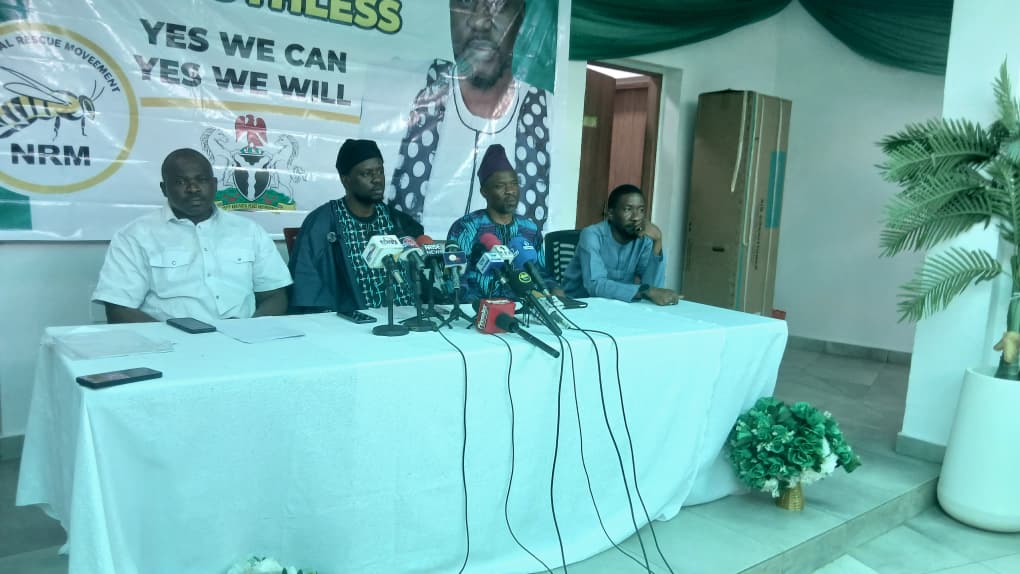
NRM Presidential Aspirant Faduri Declares 2027 Ambition, Vows To Rescue Nigeria From ‘Political Elites’
By: Our Reporter
Faduri Oluwadare Joseph, popularly known as Fadojoe, has formally declared his intention to contest the 2027 presidential election under the platform of the National Rescue Movement (NRM), promising what he described as “people-first leadership” to pull Nigeria back from economic decline and insecurity.
In a speech announcing his ambitionnon Wednesday, the sociologist and US-based healthcare executive said Nigeria was “bleeding” and required urgent rescue from years of corruption, mismanagement and what he called recycled political leadership.
Faduri, who hails from Ipetu-Ijesha in Osun State, recounted his early life struggles, revealing that he lost his father at the age of four and his mother at fourteen.
A graduate of Ambrose Alli University, Ekpoma, Edo State, Faduri also stated that he is a licensed nurse in New York, United States, and currently serves as CEO of F Planet Group USA, with interests spanning healthcare, consulting, foundation work and film production.
Referencing Nigeria’s founding leaders—Nnamdi Azikiwe, Abubakar Tafawa Balewa and Obafemi Awolowo—the presidential hopeful said the country had drifted far from the ideals of a true republic envisioned at independence.
According to him, Nigeria has degenerated into a nation where poverty, youth unemployment, insecurity and currency depreciation have replaced the prosperity and unity of earlier decades.
Faduri blamed Nigeria’s challenges on systemic corruption and leadership failure, arguing that personal interests have consistently been placed above national interest.
He questioned the continued dysfunction of state assets such as refineries and the Ajaokuta Steel project, asking why thousands of workers are still paid in non-functional institutions while the country depends heavily on private interests and foreign services.
The NRM aspirant disclosed that he previously joined the Labour Party ahead of the 2023 elections and contributed to building the platform that produced Mr. Peter Obi as presidential candidate, but stepped down in the interest of unity.
Quoting American civil rights leader Martin Luther King Jr., he said leadership must be measured by courage in times of crisis, insisting that Nigeria now needs decisive and people-driven governance.
Faduri said he would contest under the National Rescue Movement, symbolised by the honeybee, adding that it was time to return Nigeria “to her honey days.”
If elected, he promised to prioritise economic stability, strengthen the naira, revive local refining capacity, and address energy costs. He also pledged to make primary and secondary education compulsory, strengthen vocational training, and ensure lecturers’ salaries are paid promptly.
He further promised to rebuild public hospitals to world-class standards and vowed that no government official, including himself, would seek medical treatment abroad at public expense.
Other priorities listed include decentralising electricity supply, reforming and strengthening the military and police, and promoting local manufacturing, including the use of locally produced vehicles for official purposes.
Framing the 2027 election as “the people versus the political class,” Faduri called on Nigerians at home and in the diaspora to join what he termed a “rescue mission” to rebuild the country.
The statement reads in part; “When the founding fathers of this nation came together in the struggle for independence—great leaders like Nnamdi Azikiwe, Abubakar Tafawa Balewa, and Obafemi Awolowo—they fought for a Republic. A true Republic—if we can keep it.
“A Republic where government would be kind to its people. A Republic where life would be dignified, where food would be affordable, where citizens would love one another, and where love of country would supersede love of self. A Republic where leaders would create an enabling environment for prosperity through the proper use of our vast human and natural resources.
“A Republic where citizens would collaborate with government to build a society we can all be proud of. A Republic where morality, decency, and the fear of God would guide leadership. Above all, a Republic where people would feel safe in their own land. Today, my fellow Nigerians, we must admit that what we have falls far short of that vision.
“We now live in a nation that resembles a jungle—where survival of the fittest has replaced shared prosperity. A nation plunged into poverty by leaders who once enjoyed the best of Nigeria in their youth but have failed to preserve it for future generations.
“While the rest of the world is discussing artificial intelligence and technological breakthroughs, we are still campaigning with rice, noodles, onions, and ₦42,000 handouts on election day. What a tragedy.
“There was a time when the Nigerian passport was among the most respected in the world. Our naira was strong. Education was free and qualitative. Jobs awaited graduates even before graduation. Housing schemes met population growth. Hospitals functioned. Rural health centres served communities. You could travel safely from Lagos to Sokoto or from Port Harcourt to Maiduguri without fear.
“We lived as brothers and sisters—hopeful, united, and prosperous. But what do we have today? One of the highest youth unemployment rates in the world. Rising insecurity. A struggling economy. A free-falling currency. A passport that no longer commands respect. A nation once united now divided by suspicion and fear. A country once flowing with opportunity now burdened by poverty, hunger, kidnapping, and corruption.
“My fellow Nigerians, how did we get here? How did we descend to this level where our citizens flee daily as though escaping a war zone? We got here through years of systemic corruption, mismanagement, and policies that moved our country from boom to doom. We got here because leaders placed personal interest above national interest.
“Even those in the diaspora, who struggle daily abroad, still carry the burden of families back home. Many of our health workers abroad—once undervalued here—now treat Nigerian leaders overseas for ailments that should be handled in our own hospitals. Enough is enough.
“It is time to fight for the soul of our nation. I am not here merely to recount our problems. I am here to declare that Nigeria is fixable. It is not rocket science. What we have lacked is sincere, courageous, and people-centred leadership. What happened to our refineries? What happened to Ajaokuta Steel? Why do we continue to pay thousands of workers in non-functional institutions? Why must we depend on private individuals for what government should provide?
“Corruption has become normalized. Public funds meant for national development are diverted. Absurd excuses are given for missing money, yet there are no consequences. Poverty has no tribe. Hunger has no ethnicity. Insecurity affects us all. If we fail to rescue Nigeria now, we risk becoming slaves in our own land—not chained by colonial masters, but controlled by political elites who care only for themselves. This is why I offer myself for service.
In 2022, ahead of the 2023 presidential election, I joined the Labour Party and contributed to building the LP that produced Mr. Peter Obi. I stepped down in the interest of unity. However, leadership must be measured by resilience and responsibility, especially in times of crisis. As Martin Luther King Jr. once said, “The ultimate measure of a man is not where he stands in moments of comfort, but where he stands at times of challenge and controversy.
“Nigeria needs resolute, decisive, and people-driven leadership—not desperation or recycled political coalitions. The 2027 election will be the people versus the political class. And the people’s coalition shall prevail. I will be contesting under the National Rescue Movement (NRM), symbolized by the honeybee. It is time to return Nigeria to her honey days. If given the mandate, our government will be People First. Nation First.
“We will prioritize: Restoring economic stability and strengthening the naira; Revitalizing local refining capacity and addressing energy costs; Investing massively in education—making primary and secondary education compulsory and strengthening technical and vocational training; Ensuring lecturers’ salaries are never delayed.
“Rebuilding and equipping our hospitals to world-class standards. No government official—including myself—will seek medical treatment abroad at public expense. Decentralizing and stabilizing electricity supply. Reforming and strengthening the military and police to restore law and order.
“Encouraging local manufacturing, including the use of locally produced vehicles for official purposes. We will build a nation of law and order—a nation of reward and accountability. This is a generational call—a call for a shift from recycled leadership to visionary leadership. It is not a time for convenience. It is time to rebuild Nigeria.
“Our slogan says it clearly: “A Nation That Has Everything, Yet Lacks Everything.” Together, we will change that narrative. Join me in this rescue mission. Let us combine the best of Nigerians at home and abroad to build a new Republic—one we can keep,” the statement added.
NRM Presidential Aspirant Faduri Declares 2027 Ambition, Vows To Rescue Nigeria From ‘Political Elites’


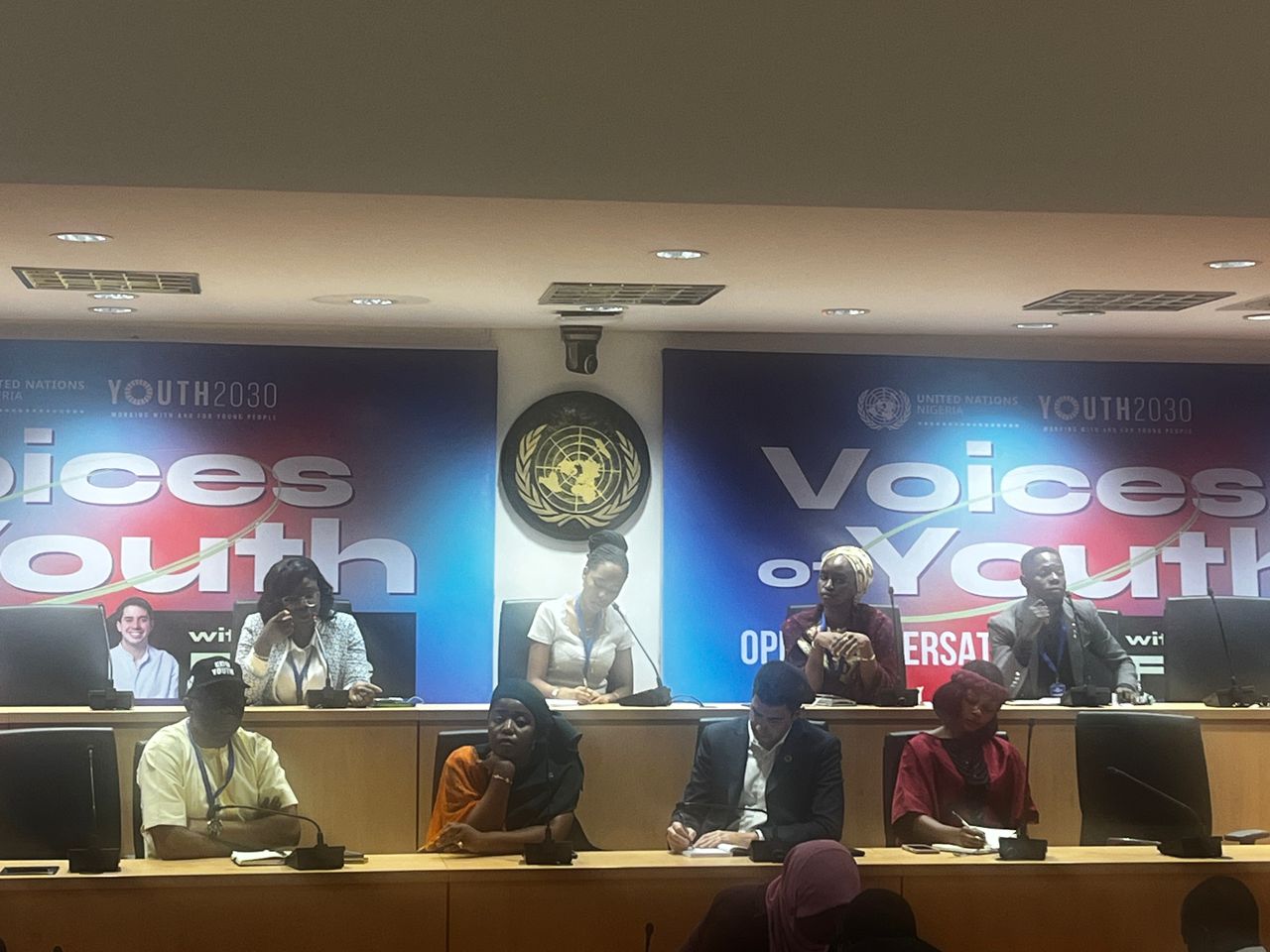
Youth Exclusion Could Derail Development Goals, UN Issues Urgent Warning
By: Michael Mike
A senior United Nations official has issued a strong warning that governments and institutions risk deepening instability and policy failure if they continue to sideline young people, insisting that meaningful youth inclusion is now a critical condition for peace, stability, and sustainable development.
Speaking in Abuja at an interactive session with youth, the United Nations Assistant Secretary General for Youth Affairs and Head of UN Youth Affairs, who is currently on an official visit to Nigeria, Mr. Felipe Paullier, said global institutions are failing to evolve at the pace required to match today’s rapidly changing realities, particularly the demographic shift driven by an unprecedented youth population.
The event, themed “Open-Door Youth Engagement,” convened youth-led organizations, young women’s groups, youth peacebuilders, innovators, students, young professionals, persons with disabilities, and underserved youth communities for an interactive dialogue with representatives of the Government and the United Nations.
According to Paullier, young people now represent the largest, most educated, and most interconnected generation in history, especially in developing countries like Nigeria. However, this demographic advantage is being undermined by persistent gaps in access to quality education and limited opportunities for meaningful participation in governance.
He noted that: “Engaging young people in policy is not just an option—it is a condition if we want to achieve peace, stability, and effective solutions.”
He said the UN acknowledged a growing disconnect between policy formulation and real-world impact, describing the process of closing this gap as complex but urgent.
He admitted that while global frameworks exist, including the United Nations Sustainable Development Goals (SDGs) and youth-focused strategies, implementation at the national level remains inconsistent.
LHe emphasized that governments must move beyond rhetoric and adopt clear, actionable commitments that integrate youth voices into decision-making processes.
He said central to this effort is the UN’s broader development roadmap, which includes commitments to embed youth participation not only at global levels but also within country-level governance and policy execution.
Addressing concerns over the sustainability of policies, he warned that many initiatives fail because they are not designed to endure or adapt over time. The solution, the official argued, lies in institutionalizing youth engagement rather than treating it as a temporary or symbolic exercise.
He noted that nearly half of the world’s population under 30, and significantly higher percentages across Africa, the stakes are even higher for countries on African continent.
He said: “Youth engagement should not be seen as a project—it must be embedded at the heart of governance, financing, and development planning.”
The UN also called for increased investment in youth-driven innovation, noting that young Nigerians are already transforming sectors such as agriculture, technology, and the creative economy through ingenuity and entrepreneurship.
Youth Exclusion Could Derail Development Goals, UN Issues Urgent Warning
News
Nigeria’s Skills Crisis Deepens as Government, Experts Push Urgent Overhaul of Technical Education
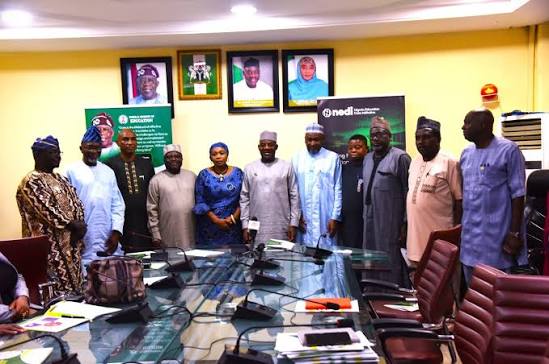
Nigeria’s Skills Crisis Deepens as Government, Experts Push Urgent Overhaul of Technical Education
By: Michael Mike
Growing concerns over Nigeria’s widening skills gap took centre stage in Abuja on Wednesday, as education stakeholders warned that the country risks undermining its industrial ambitions without a radical overhaul of its technical training system.
At a high-level session of the BEAR III Programme convened by United Nations Educational, Scientific and Cultural Organisation (UNESCO), the Federal Ministry of Education Nigeria acknowledged that current training models are failing to keep pace with the rapidly evolving demands of industry—particularly in agro-processing, a sector seen as critical to job creation and economic diversification.
Director of Technology and Science Education, Mrs. Patricia Ogungbemi,, delivered a blunt assessment: Nigeria is producing graduates who are increasingly disconnected from the realities of modern workplaces.
While investments in infrastructure and technology have grown, she warned that the human capacity needed to drive those systems remains weak.
“There is a dangerous mismatch between what is taught and what is required,” she said. “Machines are evolving, industries are advancing, but the workforce is not keeping up at the same speed.”
Ogungbemi pointed to emerging trends such as automation, smart packaging, and sustainable production systems, noting that many Technical and Vocational Education and Training (TVET) institutions have yet to integrate these realities into their curricula.
She described the ongoing Labour Market Analysis (LMA) as a critical diagnostic tool, but stressed that data alone would not solve the problem without decisive policy action and sustained funding.
“What we are confronting is not just a training issue—it is a structural challenge that affects productivity, competitiveness, and national growth,” she added.
The warning comes amid rising youth unemployment and growing frustration among employers who say graduates often lack practical, job-ready skills.
Stakeholders at the event argued that unless Nigeria urgently retools its education system to prioritise hands-on, industry-driven learning, sectors like agro-processing—despite their vast potential—may struggle to absorb the millions entering the labour market each year.
Kano State Commissioner for Education, Ali Makoda, reinforced the urgency, describing work-based learning as a “non-negotiable pathway” to addressing the crisis.
According to him, states are beginning to recognise that traditional classroom models alone cannot solve unemployment challenges.
“We must embed learning within the workplace,” he said. “The future of education is not just in classrooms, but in factories, farms, and production lines.”
Makoda said Kano State is scaling up partnerships with industry players to ensure students gain real-world experience before graduation, aligning training with both national development goals and global standards.
Despite these commitments, participants acknowledged persistent obstacles, including underfunded institutions, outdated equipment, and weak collaboration between academia and industry.
They also stressed the need for stronger private sector involvement, arguing that employers must play a more active role in shaping curricula and offering apprenticeship opportunities.
With support from international partners, including the Government of the Republic of Korea, the BEAR III initiative is expected to drive reforms in skills development, particularly in agriculture-linked industries.
However, observers said the success of such programmes will ultimately depend on Nigeria’s willingness to translate policy discussions into concrete, system-wide change.
As deliberations continue, one message remains clear: without a skilled workforce aligned to industry needs, Nigeria’s economic aspirations may remain out of reach.
Nigeria’s Skills Crisis Deepens as Government, Experts Push Urgent Overhaul of Technical Education
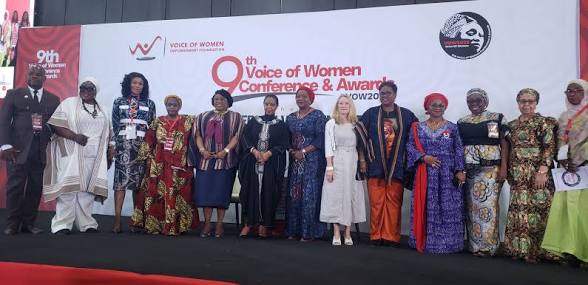
FG Vows to Amplify Women’s Voices, Push for Gender Equality in Leadership
By: Michael Mike
The Federal Government has renewed its pledge to safeguard women’s and girls’ rights, promising to expand their influence in Nigeria’s leadership and development sectors.
Speaking at the annual Renewed Women’s Voice and Leadership (RWVL) planning meeting, organized by ActionAid Nigeria in partnership with Global Affairs Canada, Minister of Women Affairs, Imaan Sulaiman-Ibrahim, emphasized that the government will intensify collaborative efforts to ensure women gain greater access to leadership roles, productive assets, and socio-economic opportunities.
Represented by Ebele Obiefuna, the Minister lauded ActionAid’s role in strengthening women’s organizations and driving empowerment programs nationwide. “We value this partnership and reaffirm our commitment to initiatives that create lasting impact for women across Nigeria,” she said.
Highlighting government support, Minister of Budget and Economic Planning Abubakar Bagudu, represented by Mrs. Tonia Okangbe, assured participants that ministries would back programs advancing women’s leadership and rights.
ActionAid Nigeria Country Director, Dr. Andrew Mamedu, revealed that RWVL is entering its second phase, building on successes that have strengthened women’s political participation, advocacy, and socio-economic influence. He stressed that the initiative is designed to ensure that women’s voices are not only heard but shape decision-making processes at all levels.
“This is about more than programmes,” Mamedu said. “It’s about creating a future where women’s leadership is visible, respected, and transformative for communities across Nigeria.”
The meeting signals a renewed focus on closing gender gaps in leadership, empowering women economically, and ensuring that their contributions to governance and society are recognized and amplified.
FG Vows to Amplify Women’s Voices, Push for Gender Equality in Leadership

Youth Exclusion Could Derail Development Goals, UN Issues Urgent Warning

West Africa’s Child Protection Laws Under Scrutiny as ECOWAS Lawmakers Confront “Implementation Failure”

Nigeria’s Skills Crisis Deepens as Government, Experts Push Urgent Overhaul of Technical Education

Roger Federer’s Shock as DNA Results Reveal Myla and Charlene Are Not His Biological Children

THE PLIGHT OF FARIDA

FAILED COUP IN BURKINA FASO: HOW TRAORÉ NARROWLY ESCAPED ASSASSINATION PLOT AMID FOREIGN INTERFERENCE CLAIMS
-
 News2 years ago
Roger Federer’s Shock as DNA Results Reveal Myla and Charlene Are Not His Biological Children
-
Opinions4 years ago
THE PLIGHT OF FARIDA
-
 News12 months ago
FAILED COUP IN BURKINA FASO: HOW TRAORÉ NARROWLY ESCAPED ASSASSINATION PLOT AMID FOREIGN INTERFERENCE CLAIMS
-

 News2 years ago
EYN: Rev. Billi, Distortion of History, and The Living Tamarind Tree
-
 Opinions4 years ago
POLICE CHARGE ROOMS, A MINTING PRESS
-

 ACADEMICS2 years ago
A History of Biu” (2015) and The Lingering Bura-Pabir Question (1)
-

 Columns2 years ago
Army University Biu: There is certain interest, but certainly not from Borno.
-

 Opinions2 years ago
Tinubu,Shettima: The epidemic of economic, insecurity in Nigeria
