
Politics
OF ZULUM, SHETTIMA AND CONFLICT THEORISTS

OF ZULUM, SHETTIMA AND CONFLICT THEORISTS
By: Inuwa Bwala
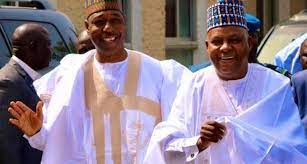
I had to cause to write about the seeming unbreakable bond between Borno State Governor, Professor Babagana Umara Zulum and his predecessor, Senator Kashim Shettima before, in which I cited their relationship as a reference for others to copy. I did that knowing as a matter of fact that Professor Zulum and Senator Shettima have come a long way.
Theirs’ is a relationship that transcends politics. It was a virtual bond, built on trust and confidence, mutual respect, commonality of interest and a commonly defined goal. Very often, they acknowledge the fact of their existential bond. Nothing in their actions or utterances indicates otherwise, that there is a departure.
I was surprised reading on a particular platform, authored by one saleh mari Maina, that there is a brewing crisis of confidence between the duo, to the effect that Senator Shettima is plotting to thwart his compatriots, professor Zulum’s second term bid.

Whatever was the author’s source of information, I dare say that, it must have come from the depth of hell fire, as nothing could be further from the truth. I know as a matter of fact that, the relationship has made others so envious, to the effect that outsider political jobbers are being deployed and fifth columnists being recruited to create a façade in semblance of conflict.
It is common knowledge in the political cyle that, Zulum and Shettima are on the same page as far as the leadership of the APC is concerned and have a common focus on political permutations. I consider it most uncharitable for Saleh to leave his his base in Kaduna, only to come and be theorizing on a nonexistent political conflict.
Also Read: Cricket: Joe Root steps down as England test captain
Kashim Shettima acknowledges Professor Zulum as the leader of the party in the state, which has never been in doubt, and zulum reciprocates acknowledging Shettima as his benefactor. These facts have never been controverted. I know Mari as a good writer, but he cannot pass as a good investigative journalist, because, he often cannot conceal his biases and prejudices. His theory of a brewing crisis is at best the outpourings of his mischievous calculations, in which he hopes to take one side as a hatchet man to feed.
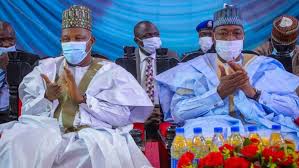
I wish to state on authority, that, Professor Zulum’s second term bid is not under any threat whatsoever, neither is senator Shettima’s quest to return to the red chamber. There are no issues over control of the party machinery, neither has there ever been claims nor counter claims over party control. The history he hopes to recreate is a farfetched dream, which is at total variance with what obtains in the current circumstance.
I was hoping all citizens will rally round the duo of Shettima and Zulum, who are united in trying to redefine the focus of governance and give citizens hopes. Our immediate experiences leave us with little or no luxury for political bickering. Where there are no conflicts, we should not try to create one and where there is peace, we should try to engender it.
OF ZULUM, SHETTIMA AND CONFLICT THEORISTS



Delta Community Endorses Chukwuyenim for 2027 Assembly Election
By: Michael Mike
A community in Delta State has endorsed Labour Party aspirant, Mr Ossamulu Chukwuyenim, for the Ndokwa/Ukwuani Federal Constituency seat in the House of Representatives ahead of the 2027 general election.
The endorsement was announced on Thursday during a virtual ceremony led by a community leader, Mr Ossai Nzekwe, popularly known as Okpala Uju of Umom from Unuaghulu, who called for leadership anchored on humility, respect for elders and commitment to community development.
The ceremony, held at Okpia Umuagulu in Ndokwa East Constituency, attracted stakeholders from Isitu, Umuagulu, Obeze, Ashaka, Ibusu, Ngwekaba and Umuedem villages.

Nzekwe said the endorsement reflected the community’s confidence in Chukwuyenim’s capacity to provide responsible leadership and effective representation at the National Assembly.
“Our blessings upon Chukwuyenim reaffirm the importance of leadership rooted in humility, respect for our elders and a genuine commitment to the development of our community,” he said.
He described the endorsement as an expression of community support for the aspirant, adding that it was intended to promote effective representation in the 2027 elections.
Responding, Chukwuyenim thanked Nzekwe and other participants for their support, saying the endorsement reinforced his commitment to peace, unity and sustainable development across the constituency.
“Our vision is centred on a Ndokwa/Ukwuani where every community is habitable, inclusive and peaceful, with opportunities for our people to thrive,” he said.
He pledged to prioritise infrastructure, potable water, improved road networks, security, youth development and agricultural reforms if elected.
According to him, the proposed initiatives would strengthen social cohesion, improve living conditions and expand opportunities for residents across the constituency.
Chukwuyenim also pledged to uphold community values and pursue development programmes aimed at improving the welfare of his constituents.
The ceremony featured goodwill messages from traditional leaders and prayers for divine guidance, strength and success for the aspirant.
Delta Community Endorses Chukwuyenim for 2027 Assembly Election
Politics
2027: APC Deploys Diaspora Network to Fight Anti-Tinubu Narratives, Mobilise Re-election Support

2027: APC Deploys Diaspora Network to Fight Anti-Tinubu Narratives, Mobilise Re-election Support
By: Michael Mike
The All Progressives Congress (APC) has unveiled an international mobilisation and media offensive to defend President Bola Tinubu’s economic policies, counter negative narratives about his administration and rally support for his re-election in 2027, targeting Nigerians living across major countries in Africa, Europe, Asia, the Middle East and North America.
Under the plan, the party intends to activate its overseas chapters, deploy coordinated digital advocacy, establish a rapid-response mechanism to challenge misinformation, mobilise diaspora funding and encourage voter participation at home as it seeks to shape public perception of Tinubu’s first term ahead of the presidential election.
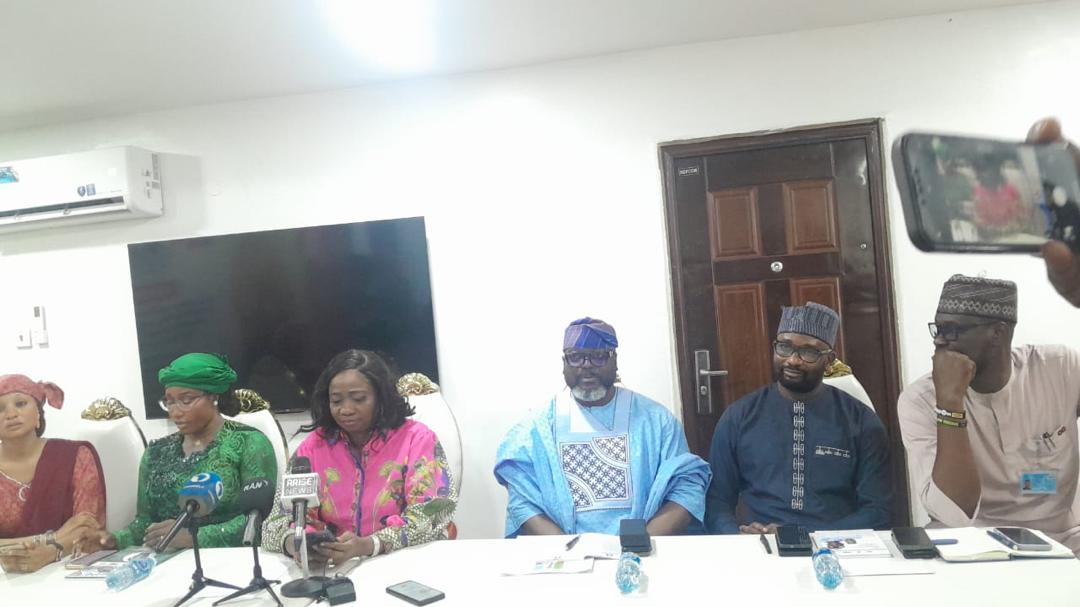
The Director of the PBAT/APC 2027 Presidential Campaign Council (PCC) Directorate of Diaspora Mobilisation, Hon. Abike Dabiri-Erewa, unveiled the strategy at a press briefing in Abuja, describing Nigerians abroad as an influential constituency whose financial contributions, professional expertise and international networks could be harnessed to support the administration.
The initiative signals the APC’s determination to make the diaspora an organised component of its re-election campaign, using Nigerians’ connections with relatives, communities and professional networks abroad to communicate the government’s position on its economic reforms and development agenda.
Dabiri-Erewa said the directorate would not limit its mobilisation to party members, but would also reach out to Nigerians abroad who were willing to participate in the campaign.
“Nigerians abroad are not outsiders. They are stakeholders. They are our doctors, nurses, engineers, students, traders, innovators and community leaders, who send over $20 billion annually back home in remittances,” she said.
She identified the mobilisation of APC diaspora chapters in the United States, United Kingdom, Canada, South Africa, the United Arab Emirates, Saudi Arabia, France, Germany, Australia, Turkey, India and Kazakhstan as a priority, alongside engagement with diaspora associations and community leaders.
At the centre of the strategy is a digital advocacy campaign tagged Operation Tell Your Story, through which supporters would receive short videos, infographics and other communication materials promoting the administration’s policies and achievements.
The campaign would address the foreign exchange reforms, foreign reserves, support for small businesses, housing programmes and opportunities for students, while seeking to counter claims the directorate considers misleading.
Dabiri-Erewa also announced plans for a rapid-response hub to provide data, fact-check claims and promote what she described as credible information about Nigeria’s investment climate, economic stabilisation and prospects under Tinubu.
“Our directorate will serve as a rapid-response hub in case of misinformation about Nigeria and the administration. We will provide credible data, fact-check and positive narratives about Nigeria’s investment climate, stabilisation of the economy and the future under President Tinubu,” she said.
The move comes amid continuing public debate over the administration’s economic reforms, particularly the removal of the petrol subsidy and changes to the foreign exchange system, which have had significant implications for households and businesses.
Dabiri-Erewa acknowledged the hardship associated with the subsidy removal but defended the policy as a necessary intervention to address structural weaknesses in the economy.
“President Bola Ahmed Tinubu has decided not to manage our feelings, but to fix the system. And it takes a bold leader to do that,” she said.
She argued that Nigerians living abroad could help explain the rationale behind the reforms to their families and communities, particularly because of their understanding of the challenges associated with the previous foreign exchange arrangements.
However, the directorate’s strategy will face the challenge of persuading voters at home that the administration’s policies are delivering sufficient benefits to justify the economic sacrifices they have experienced. The effectiveness of the campaign will therefore depend not only on the reach of its messaging but also on the credibility of its claims and the administration’s record against measurable economic outcomes.
Beyond digital advocacy, the APC plans to mobilise diaspora contributions through structured fundraising platforms to finance campaign activities, voter education materials, town hall meetings and grassroots mobilisation.
Dabiri-Erewa said the proposed fundraising arrangements would emphasise transparency and accountability, but did not disclose the amount the directorate hopes to raise or provide details of the proposed platforms.
The fourth strand of the strategy would focus on voter education and homecoming mobilisation, with diaspora Nigerians encouraged to remind eligible relatives and community members to register, collect their Permanent Voter Cards and participate in the election.
The directorate also intends to use its overseas networks to encourage Nigerians abroad to return home, engage their communities and take part in the political process.
In a related appeal, Dabiri-Erewa called on the National Assembly to consider constitutional amendments that would allow Nigerians living abroad to vote in Nigerian elections.
She acknowledged that diaspora voting remained a subject of debate but expressed hope that lawmakers would address the issue, potentially expanding the formal participation of Nigerians abroad in the country’s electoral process.
Dabiri-Erewa, who also heads the Nigerians in Diaspora Commission (NiDCOM), said the commission had established a portal for registering Nigerians living outside the country and put the estimated diaspora population at more than 17 million.
She also urged Nigerians to monitor how state and local governments utilise increased allocations following the removal of the petrol subsidy, arguing that greater public revenue should be accompanied by accountability in spending.
Other members of the directorate backed the administration’s economic policies, acknowledging the hardship associated with the reforms while arguing that the intended benefits would take time to materialise. They highlighted investment, skills transfer, business partnerships and collaboration with government institutions as additional ways diaspora Nigerians could contribute to national development.
Dabiri-Erewa urged the media to support the directorate’s communication efforts, saying the campaign would focus on continuity, national development and Tinubu’s stated ambition to move Nigeria from reforms to prosperity.
With the 2027 election approaching, the APC’s strategy places diaspora mobilisation, digital communication and the battle over the interpretation of the administration’s economic record at the heart of its re-election effort. Whether the initiative translates into broader electoral support will ultimately depend on how Nigerians judge the government’s performance and whether the campaign can substantiate its claims with credible
2027: APC Deploys Diaspora Network to Fight Anti-Tinubu Narratives, Mobilise Re-election Support

2027: Nwankwo Warns INEC Against Unclear AI Use, Urges Credible Elections
PLAC director says electoral body must win public trust, calls on parties to focus on issues as JFCN warns Nigerians against taking democracy for granted
By: Michael Mike
The Independent National Electoral Commission (INEC) must not introduce artificial intelligence into Nigeria’s electoral process without clear, transparent and verifiable procedures, the Executive Director of the Policy and Legal Advocacy Centre (PLAC), Dr Clement Nwankwo, has warned.
Nwankwo said any deployment of technology in elections must strengthen transparency and protect the will of voters, cautioning that an unfamiliar or poorly explained system could undermine public confidence in the electoral process ahead of the 2027 general elections.
He also urged Nigerians dissatisfied with governance or the conduct of elections to participate actively in the democratic process rather than withdraw from voting, insisting that credible elections required responsibility from the electoral umpire, political parties and citizens.
Nwankwo spoke in Abuja on Tuesday at the eighth annual public lecture of the Just Friends Club of Nigeria (JFCN), themed “From Concern to Action: Making Our Votes Count in the 2027 General Elections.”
The event examined the challenges confronting Nigeria’s democracy, including economic hardship, insecurity, declining civic participation and the need to strengthen public confidence in elections.
Addressing questions on the proposed use of artificial intelligence in elections, Nwankwo said the legal framework and operational details must be clear to voters and other stakeholders before any new technology was introduced.
He maintained that the electoral process must remain anchored in procedures prescribed by law, warning against technological innovations that citizens and political parties could neither understand nor independently verify.
“INEC needs to be careful that its so-called use of AI in elections does not result in use of technology to circumvent the vote of the people,” he said.
Nwankwo argued that the electoral commission needed to explain precisely what it meant by using artificial intelligence and how the technology would interact with existing procedures for voting, counting and collating results.
He said technology could be useful to political parties in independently checking results announced by INEC, but warned that the commission should not introduce systems that lacked public understanding and verifiability.
“For the collation of results, for the parties, yes, the use of AI in collated results, so they can cross-check what INEC is doing, is going to be so very important,” he said.
“But INEC should not introduce a system that people do not understand. People cannot verify for use in elections in this country,” he added.
His comments come amid wider concerns about how electoral technology is deployed, explained and scrutinised, with stakeholders seeking assurances that innovations will improve the credibility of elections rather than create additional uncertainty.
Nwankwo stressed that public trust must be earned at every stage of the electoral process, particularly by the body responsible for managing elections.
“Citizens have to trust the electoral process, trust the election management body, and the election management body has to, at every stage, convince Nigerians that it is doing the right job,” he said.
He urged political parties to demonstrate what they could offer Nigerians through issue-based campaigns rather than allowing electoral contests to be dominated by recriminations and accusations.
He also called for increased voter participation, arguing that citizens who were angry with the electoral process or dissatisfied with governance should use their votes to express their concerns.
For INEC, he said, the responsibility was to demonstrate that it was conducting credible elections, warning that Nigerians would not accept a poorly managed process.
The chairman of the event, Hussaini Abdu, Country Director of CARE Nigeria, also underscored the importance of protecting democracy and ensuring that citizens understood their responsibility in sustaining democratic governance.
Abdu said the annual lecture series was established to address topical issues affecting Nigerians and contribute to national development. He noted that the club’s decision to focus this year’s edition on the 2027 elections reflected the importance of citizen participation at a critical moment for the country.
He cautioned that Nigerians, particularly younger people who did not experience military rule, risked taking democracy for granted without appreciating the struggles that secured the country’s return to civil rule.
Democracy, he argued, was a precious legacy that must be preserved and passed on to future generations. Losing it could expose younger Nigerians to the same struggles endured by those who fought for democratic governance.
Abdu said the club had therefore brought experts and political stakeholders together to discuss practical ways of improving the democratic process.
He also stressed that institutions involved in elections, including INEC and security agencies, must not only be transparent but must be seen by the public to be transparent and independent.
According to him, citizens’ confidence in the electoral process depends significantly on whether the institutions responsible for managing and protecting elections are perceived as impartial and accountable.
The President of JFCN, Amaechi C. Aloke, said the lecture’s theme was deliberately selected to challenge Nigerians to turn their concerns about governance into meaningful participation.
Aloke observed that Nigerians regularly complain about insecurity, unemployment, corruption, infrastructure deficits, the cost of living and the quality of public services, but insisted that expressing dissatisfaction alone would not transform the country.
“What do we do with that concern? Concern, by itself, does not change a country. It must become knowledge. Knowledge must become participation. Participation must become responsible citizenship. And responsible citizenship must extend beyond Election Day,” he said.
The discussion also highlighted concerns about the apparent weakening of the middle class and its declining willingness to organise around shared interests.
Speakers argued that many relatively affluent Nigerians increasingly rely on private alternatives to compensate for failing public services, including generators and solar systems for electricity, private schools and hospitals, and medical treatment abroad.
Although such measures may provide individual relief, the speakers warned that they could also reduce collective pressure on government to improve public services.
They cited an example from an affluent Abuja neighbourhood where residents reportedly complained through a WhatsApp group about levies imposed by local authorities but failed to translate their grievances into coordinated action.
The discussion questioned whether such private coping mechanisms and fragmented responses to shared problems were weakening the ability of citizens to demand accountability from public institutions.
The speakers also raised concerns about voter apathy, particularly among eligible voters in affluent communities who reportedly stayed away from polling units instead of participating in elections.
They urged Nigerians to move beyond private complaints and social media exchanges by voting, monitoring electoral processes, protecting their ballots and documenting results at polling units.
The JFCN, established in 2013, began its annual public lecture series in 2014. Its previous speakers have addressed subjects ranging from economic reform and public debt to national security, electoral politics and the cost of governance.
At the seventh edition in 2025, retired Lieutenant-General Abdulrahman Dambazau delivered a lecture on Nigeria’s security challenges and national cohesion, emphasising a people-centred approach to security and investment in human development.
Beyond the lecture series, Aloke said the club also undertook philanthropic activities, including visits to homes for older people and orphanages, support for children with disabilities, career guidance in public schools and sponsorship for eight indigent secondary school students in Abuja.
As the 2027 elections approach, the speakers’ message was that protecting democracy requires more than periodic voting. It demands trusted electoral institutions, transparent procedures, issue-based political campaigns and citizens prepared to participate actively and hold those in power accountable.
For Nwankwo, the credibility of the next election will depend in part on whether INEC can demonstrate that its procedures are lawful, transparent and capable of being independently understood and verified by the people whose votes determine the outcome.
2027: Nwankwo Warns INEC Against Unclear AI Use, Urges Credible Elections

UNFPA, Kaduna Polo Club Use All-Female Match to Champion Girls’ Rights

VP Shettima: Why Kashim Ibrahim Teaching Hospital Is Key to Borno’s Future

Zulum Targets End to Medical Tourism as Shettima Commissions 400-Bed Teaching Hospital

Roger Federer’s Shock as DNA Results Reveal Myla and Charlene Are Not His Biological Children

THE PLIGHT OF FARIDA

FAILED COUP IN BURKINA FASO: HOW TRAORÉ NARROWLY ESCAPED ASSASSINATION PLOT AMID FOREIGN INTERFERENCE CLAIMS
-
 News3 years ago
Roger Federer’s Shock as DNA Results Reveal Myla and Charlene Are Not His Biological Children
-
Opinions5 years ago
THE PLIGHT OF FARIDA
-
 News2 years ago
FAILED COUP IN BURKINA FASO: HOW TRAORÉ NARROWLY ESCAPED ASSASSINATION PLOT AMID FOREIGN INTERFERENCE CLAIMS
-
 Opinions5 years ago
POLICE CHARGE ROOMS, A MINTING PRESS
-

 News3 years ago
EYN: Rev. Billi, Distortion of History, and The Living Tamarind Tree
-

 ACADEMICS3 years ago
A History of Biu” (2015) and The Lingering Bura-Pabir Question (1)
-

 Columns3 years ago
Army University Biu: There is certain interest, but certainly not from Borno.
-

 Politics1 year ago
2027: Why Hon. Midala Balami Must Go, as Youths in Hawul and Asikira/Uba Federal Constituency Reject ₦500,000 as Sallah Gift
