
News
Over 4,000 Civil Servants Undergo Screening Nationwide for Promotion

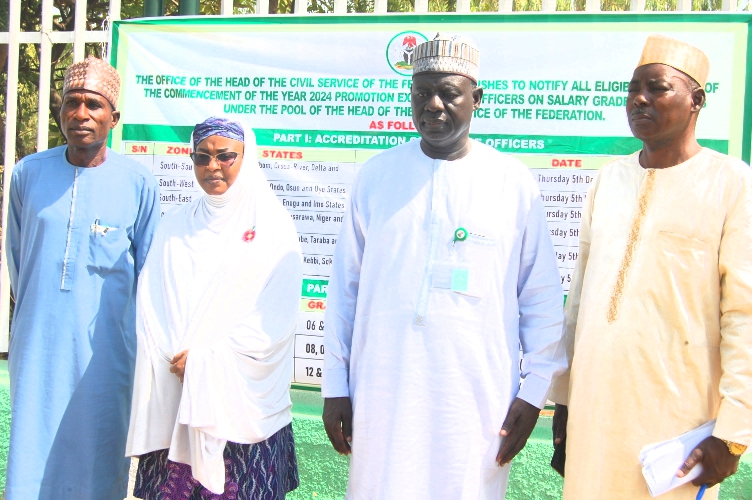
Over 4,000 Civil Servants Undergo Screening Nationwide for Promotion
By: Michael Mike
In line with Federal Government avowed commitment to uplift the welfare of public servants in the country, it has interviewed and screened over 4000 staff all over the country as part of its 2024 promotional examination
The 2024 promotional examination cater for 14 different cadres, which includes Planning Officers, Executive Officers, Confidential Secretary, Adminstrative, Store Officers, Stock Verifiers, Program/System analysts and Computer engineering
It also includes Liberians, Library Officers, Procurement officers, Statistical officers, Statistician officers and Data Processing Officer.
Speaking with the journalists at the programme, the Permanent Secretary Career Management Office, Office of the Head of Civil Service of the Federation, Mrs. Fatima Sugra-Mahmoud, reaffirmed the Federal government effort to promote the welfare of the Civil Servants.
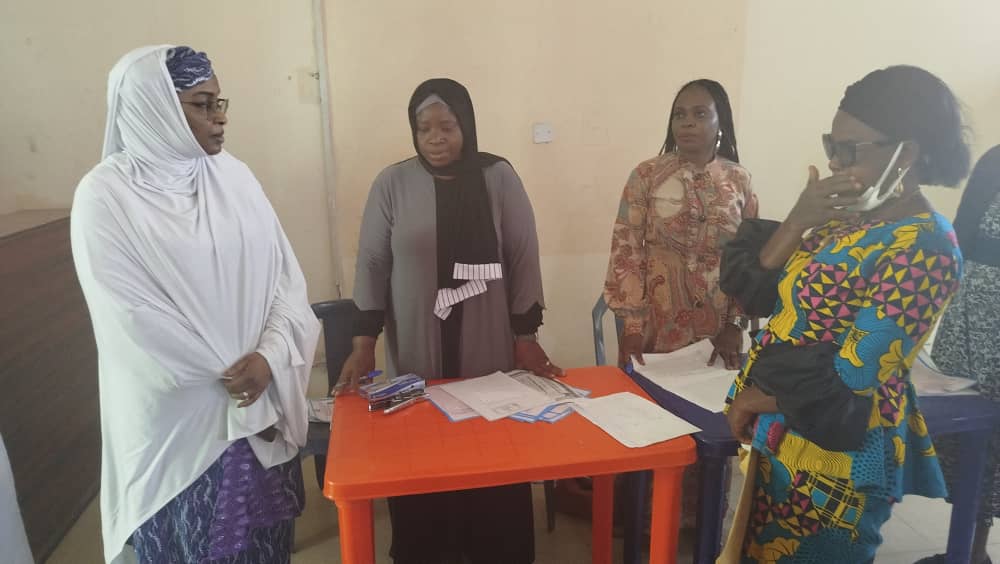
She started: “The head of civil service is passionate about uplifting the welfare of public servants and has made staff welfare a top priority. This includes ensuring that motivated staff can improve productivity and providing opportunities for career advancement. By prioritizing staff welfare, the government aims to create a positive and supportive work environment that encourages employees to excel.
“The government has implemented various measures to support civil servants, including the introduction of computer-based tests and the expansion of digital infrastructure. These efforts aim to improve the overall efficiency and effectiveness of the civil service. By leveraging technology and investing in employee development, the government is confident that it can create a more efficient and effective civil service.
“The transition to a digital economy will require continued effort and investment. However, with a commitment to upskilling the workforce and providing opportunities for career advancement, the government is confident that it can create a more efficient and effective civil service. This, in turn, will enable the government to better serve citizens and drive economic growth.”
She also disclosed that: “As the government continues to implement its digital transformation strategy, it is essential to recognize the progress made so far. The introduction of computer-based tests, the expansion of digital infrastructure, and the prioritization of staff welfare are all significant steps towards creating a more efficient and effective civil service.
“Looking ahead, the government will continue to invest in digital infrastructure and employee development. This will enable the civil service to better serve citizens and drive economic growth. By working together, the government, civil servants, and citizens can create a brighter future for all.”
She noted that “the government’s efforts to transition to a digital economy are underway. While there are challenges to be addressed, the government is committed to investing in digital infrastructure and employee development. By working together, we can create a more efficient and effective civil service that better serves citizens and drives economic growth”
Over 4,000 Civil Servants Undergo Screening Nationwide for Promotion


News
Cuba Blames U.S. Sanctions for Deepening Energy Crisis, Responds Cautiously to Reported $100m Aid Offer
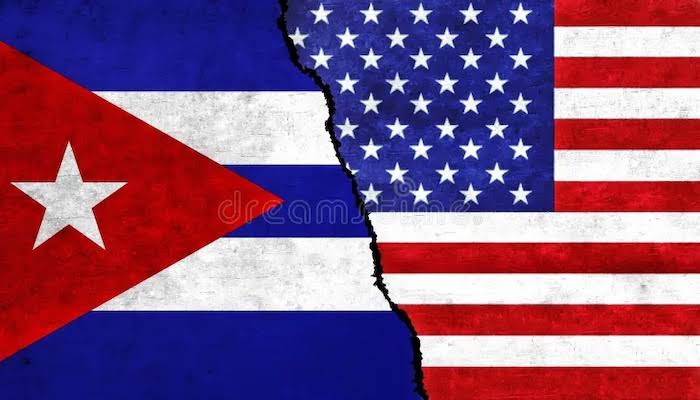
Cuba Blames U.S. Sanctions for Deepening Energy Crisis, Responds Cautiously to Reported $100m Aid Offer
By: Michael Mike
The government of Cuba has intensified accusations against the United States over the island’s worsening electricity and economic crisis, while cautiously welcoming reports of a proposed $100 million American aid package amid growing humanitarian concerns.
In separate statements issued this week, Cuban President Miguel Díaz-Canel and government officials argued that the country’s severe power shortages, fuel scarcity, and economic hardship are direct consequences of decades-long U.S. sanctions and what Havana described as an increasingly aggressive “energy blockade.”
The latest developments come as Cuba experiences one of its most difficult periods in recent years, marked by prolonged blackouts, shortages of food and medicine, rising inflation, and mounting public frustration.
Díaz-Canel said the situation affecting Cuba’s National Power System had become “especially tense,” with authorities forecasting a deficit of more than 2,000 megawatts during peak evening demand.
According to the Cuban leader, fuel shortages alone were responsible for preventing the generation of at least 1,100 megawatts of electricity, significantly worsening blackouts across the country.
He accused Washington of deliberately obstructing fuel supplies to Cuba by threatening sanctions and punitive measures against countries and companies willing to trade with Havana.
“This dramatic worsening has a single cause: the genocidal energy blockade that the U.S. has imposed on our country,” Díaz-Canel declared.
The Cuban president argued that recent improvements in electricity supply during April demonstrated the direct relationship between fuel imports and power generation capacity.
He noted that the arrival of a single fuel tanker — out of the eight Cuba reportedly requires monthly — temporarily reduced electricity deficits and mitigated blackouts, though outages did not disappear entirely.
Díaz-Canel further accused sections of the U.S. media and political establishment of attempting to portray Cuba’s economic crisis as solely the result of government mismanagement while ignoring the impact of sanctions and economic restrictions.
According to him, neither the decades-old U.S. embargo nor the additional sanctions imposed during the administration of former President Donald Trump had succeeded in overthrowing the Cuban Revolution.
He alleged that more recent executive measures targeting fuel supplies, foreign trade, and investment in Cuba were specifically designed to increase suffering among ordinary citizens and provoke unrest against the government.
Despite the criticism, Havana has also reacted cautiously to reports that the United States Department of State had formally proposed an aid package valued at $100 million for Cuba.
In a separate government statement, Cuban authorities said it remained unclear whether the proposed assistance would come in the form of direct financial support or material aid such as fuel, food, or medicine.
The Cuban government said it was prepared to consider foreign aid offered in good faith and expressed openness to working with the Catholic Church in implementing humanitarian support efforts.
“We are willing to hear the details of the offer and how it would be implemented,” the statement said, while warning against any attempt to use humanitarian assistance for political leverage.
Havana maintained that the most meaningful support Washington could provide would be the easing of economic, commercial, financial, and energy restrictions imposed on the island.
Cuban officials argued that sanctions had intensified “as never before” in recent months, severely affecting nearly every sector of the economy and worsening living conditions for millions of citizens.
The latest exchange reflects the complicated and often confrontational relationship between Havana and Washington, which has remained strained for more than six decades despite intermittent attempts at diplomatic rapprochement.
While Cuba insists that U.S. sanctions are the central driver of its current crisis, critics of the Cuban government continue to point to structural inefficiencies, state control of the economy, and policy failures as major contributors to the country’s prolonged economic difficulties.
Nevertheless, the apparent willingness of both sides to discuss humanitarian assistance suggests a potentially significant, though cautious, opening for limited engagement amid escalating hardship on the island.
Cuba Blames U.S. Sanctions for Deepening Energy Crisis, Responds Cautiously to Reported $100m Aid Offer
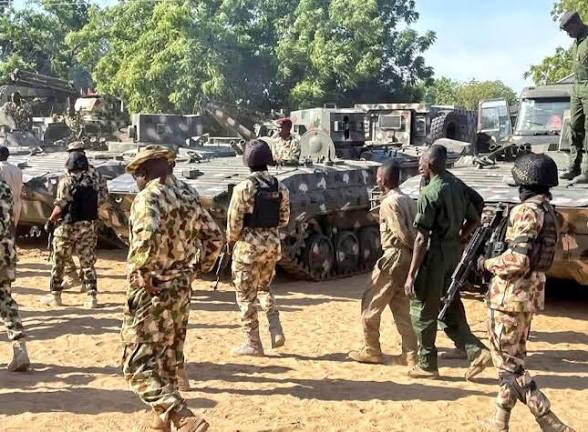
Troops Arrest Suspected Gunrunner in Taraba State
By: Zagazola Makama
Troops of Operation Whirl Stroke (OPWS), in collaboration with Defence Intelligence Agency operatives and local vigilantes, have arrested a suspected gunrunner in Ardo-Kola Local Government Area of Taraba State.
Security sources said the arrest was made at about 7:45 a.m. on May 13 during an intelligence-led operation at Iware community in the area.
The suspect was reportedly apprehended following credible intelligence linking him to arms trafficking activities within the Amaseyo general area.
Preliminary interrogation revealed that the suspect was allegedly involved in illegal arms dealing, prompting his immediate arrest by the joint security team.
The suspect is currently in custody and undergoing further investigation, while security agencies say efforts are ongoing to dismantle arms trafficking networks operating within the state and surrounding areas.
Troops Arrest Suspected Gunrunner in Taraba State
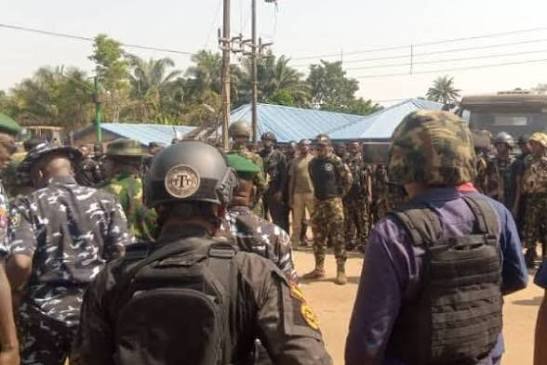
Troops Rescue Kidnap Victim During Patrol in Kogi
By: Zagazola Makama
Troops of the Nigerian Army under Operation MESA have rescued a kidnap victim abandoned by suspected terrorists along the Obajana–Jakura–Tajimi axis in Lokoja Local Government Area of Kogi State.
Security sources said the rescue operation was carried out at about 9:00 a.m. on May 13 by troops of 12 Brigade during a fighting patrol along the old Obajana–Jakura–Tajimi road.
According to the report, the troops discovered the victim after suspected kidnappers abandoned him while fleeing from the advancing security personnel.
The rescued victim was subsequently reunited with his family after the operation.
Security patrols and clearance operations have continued along the route and adjoining communities as part of ongoing efforts to combat kidnapping and other criminal activities in the area.

Cuba Blames U.S. Sanctions for Deepening Energy Crisis, Responds Cautiously to Reported $100m Aid Offer

Troops Neutralise Two Terrorists During Clearance Operations in Borno

Governor Buni moves to appeal to guber aspirants to step down for Wali in Yobe

Roger Federer’s Shock as DNA Results Reveal Myla and Charlene Are Not His Biological Children

THE PLIGHT OF FARIDA

FAILED COUP IN BURKINA FASO: HOW TRAORÉ NARROWLY ESCAPED ASSASSINATION PLOT AMID FOREIGN INTERFERENCE CLAIMS
-
 News2 years ago
Roger Federer’s Shock as DNA Results Reveal Myla and Charlene Are Not His Biological Children
-
Opinions4 years ago
THE PLIGHT OF FARIDA
-
 News1 year ago
FAILED COUP IN BURKINA FASO: HOW TRAORÉ NARROWLY ESCAPED ASSASSINATION PLOT AMID FOREIGN INTERFERENCE CLAIMS
-

 News2 years ago
EYN: Rev. Billi, Distortion of History, and The Living Tamarind Tree
-
 Opinions4 years ago
POLICE CHARGE ROOMS, A MINTING PRESS
-

 ACADEMICS2 years ago
A History of Biu” (2015) and The Lingering Bura-Pabir Question (1)
-

 Columns2 years ago
Army University Biu: There is certain interest, but certainly not from Borno.
-

 Opinions2 years ago
Tinubu,Shettima: The epidemic of economic, insecurity in Nigeria
