
National News
Panel to Probe Human Rights Violations in Ongoing Counter-Insurgency Operations in North-East Inaugurated

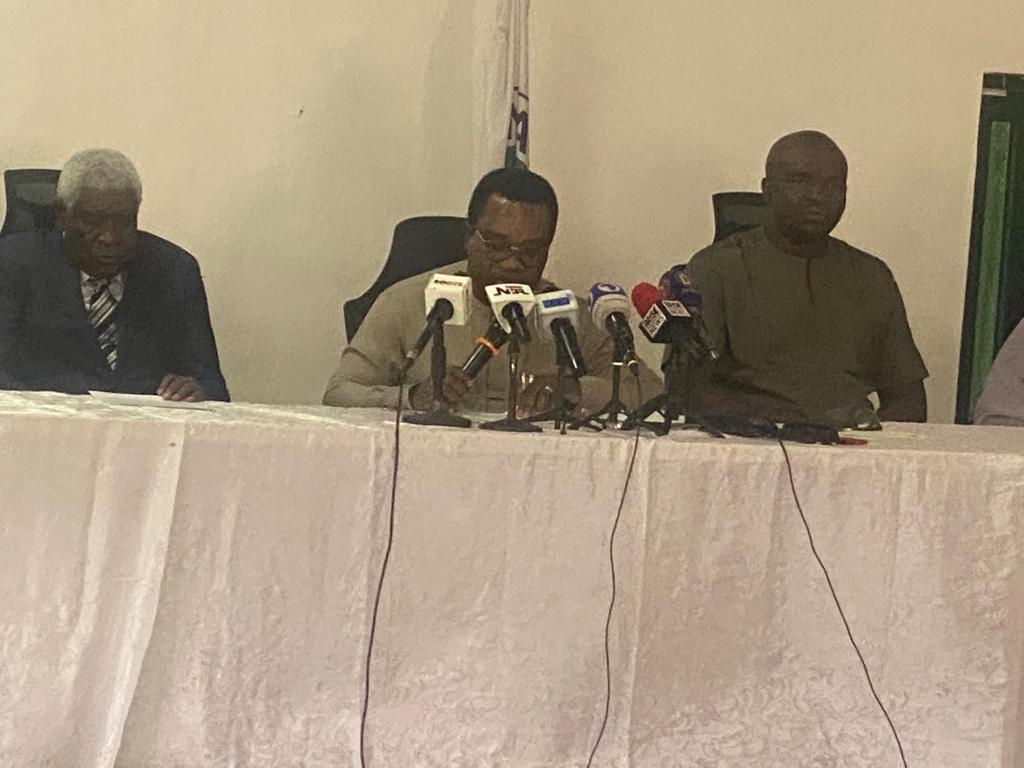
Panel to Probe Human Rights Violations in Ongoing Counter-Insurgency Operations in North-East Inaugurated
By Michael Mike
The Special Independent Investigative Panel on Human Rights Violations in Counter-Insurgency Operations in North-East Nigeria (SIIP North East) has been inaugurated to probe the alleged allegations by the military in the ongoing operations in the region.
The panel is headed by a retired Justice of the Supreme Court, Justice Abdu Aboki, other members include Kemi Okenyodo, Azubuike Nwankenta, Maj. Gen. Letam Wiwa (Rtd.) Dr. Maisaratu Bakari, Dr. Fatima Akilu, Halima Nuradeen and Hilary Ogbonna as the secretary.
Inaugurating the panel at the National Human Rights Commission (NHRC) Headquarters in Abuja, the Executive Secretary of the Commission, Chief Tony Ojukwu said the decision for the inauguration followed the allegations of gross human rights violations contained in the three-part report published in December 2022 on military operations in the north east by media group Reuters.
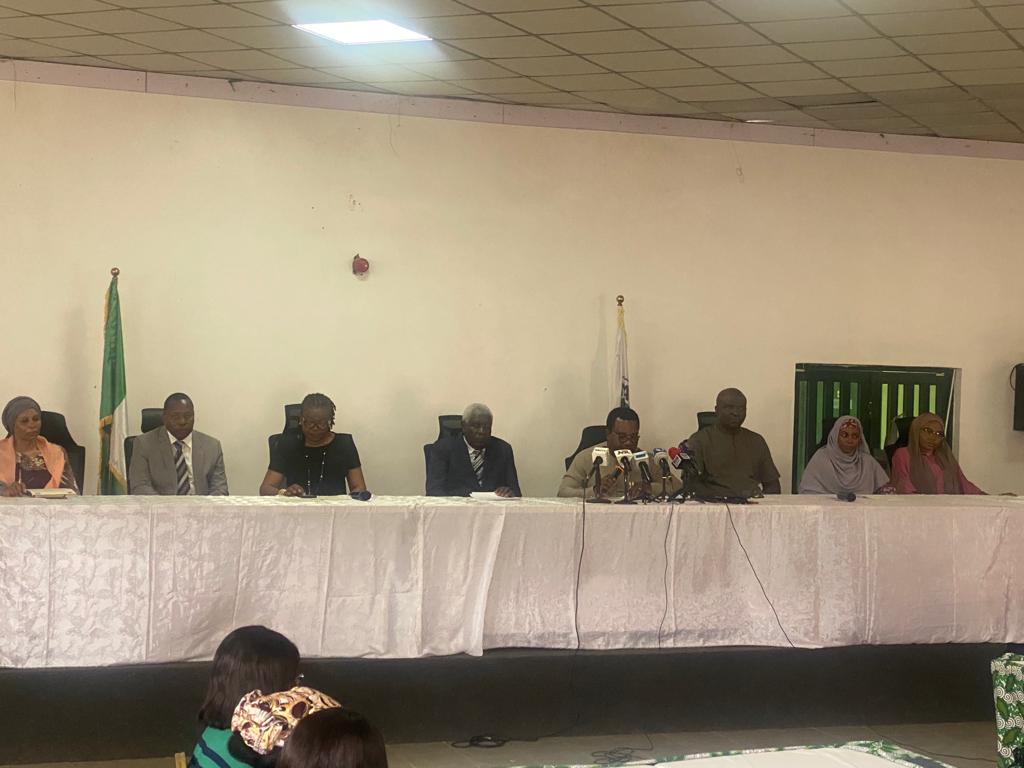
He said the National Human Rights Commission has invoked its inherent, express and incidental powers as contained in sections 5 and 6 of the NHRC Act as amended to constitute a special independent investigative panel.
He noted that the terms of reference include: Investigate allegations of gross violations of national and international human rights laws/principles alleged against the Nigerian Armed Forces in the three reports by Reuters. (Sections 5(a)(b)(j) and 6(1)(a) of the NHRC Act, 2010);
Receive memorandum from individuals and organisations with interest in the subject matter of the mandate of the SIIP North-East, especially human rights, security and humanitarian organisations working in the North-East; Make appropriate determinations as to culpability of individuals or institutions as may be deemed necessary in each circumstance. (Section 5(j) of the NHRC Act 2010).
Others include to make determination as to the damages or compensation payable in relation to any violation of human rights where it deems this necessary in the circumstances of the case (sec. 6(e) of the NHRC Act, 2010); Refer any matter of human rights violations requiring prosecution to the Attorney General of the Federation or of a State, as the case may be. (Section 5(p) of the NHRC Act, 2010); and to make recommendations to government on Institutional, Policy and Regulatory measures to be taken to integrate human rights principles and practices into military and counter-insurgency operations; Propose Remedial steps that may enhance the professional conduct of military personnel in counter-insurgency operations; and any other related issues that the SIIP North-East may be considered appropriate.
He disclosed that the SIIP North-East shall operate under the mandate of the National Human Rights Commission and shall enjoy its express and incidental powers under section 6(1) and (2) of the NHRC Act.
Ojukwu noted that membership of the panel was drawn from major professional backgrounds relating to the allegations contained in the report, which includes law and human rights, medicine and psychology, military intelligence and humanitarian affairs.
He said: “The National Human Rights Commission is honoured that these eminent Nigerians have agreed to share their time, talents and wealth of experience with the Commission. We are indeed grateful for your generosity. We want to thank the Nigerian Bar Association and the Nigerian Medical Association whose members are represented in the panel.
He added that “the allegations contained in the aforementioned reports are grievous and present a major concern to all of us in the human rights field. As I inaugurate this panel today, it is the hope of the Commission and indeed every Nigerian that this panel will work hard with all the human and other resources at your disposal to investigate and unravel the truth behind these allegations and ensure that justice is done in all appropriate cases. The Commission has given you the mandate and all necessary incidental powers to achieve the terms of reference and objectives for the establishment of this Panel. We are convinced that we have chosen the right team for this work.”
He appealed for cooperation from the state governments, the Nigerian Military, the United Nations System, international and local non-governmental organisations and the traditional and religious institutions in the North East and welcomed the pledge by the Chief of Defence Staff that the military institution will cooperate with this investigation and the subsequent deployment of a Military Liaison to the secretariat of the Panel.
He said that: “To protect human rights and ensure accountability for violations is a sacred duty which all of us as the human family have a mission to uphold.”
Responding, the Chairman of the Panel, Justice Abdu Aboki (Rtd.), expressed thanks on behalf of the members for their appointment to serve.
He said: “Protecting human rights and ensuring accountability and remedies for violations are cardinal principle of every democracy and civilised society. Human rights are God’s gift to humanity. They confer dignity to humankind and make us special beings. Their violations by any person or institutions, should be treated with all sense of justice and accountability.”
He promised that: “Our Panel will endeavour in every respect to abide by the rules of natural justice. We will be fair and just to all manner of persons who appear before us as victims, witness, respondent, Officer, Counsel and citizens. This panel has been constituted to bring justice to investigate human rights violations and bring justice to victims where appropriate. We will be guided by this throughout our sittings and will strive to do substantial justice devoid of technicalities.”
Panel to Probe Human Rights Violations in Ongoing Counter-Insurgency Operations in North-East Inaugurated


National News
Tinubu orders full investigation into deaths of suspected illegal miners in NSCDC custody
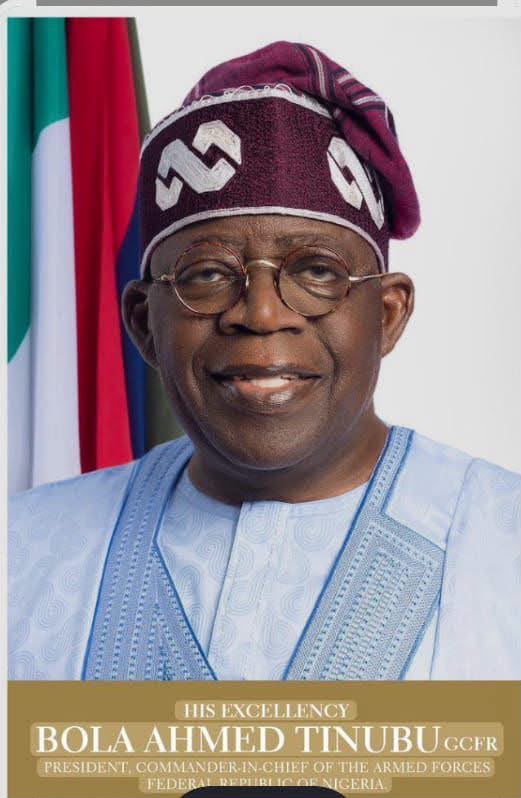
Tinubu orders full investigation into deaths of suspected illegal miners in NSCDC custody
By: Our Reporter
President Bola Tinubu has ordered a full, transparent and unhindered investigation into the deaths of suspected illegal miners detained by the Nigeria Security and Civil Defence Corps (NSCDC) following enforcement operations around the Lt. General Mohammed Inuwa Wushishi Estate in Minna, Niger State.
In a statement issued by the Special Adviser to the President on Information and Strategy, Bayo Onanuga, the President said the life of every Nigerian matters and that no citizen should lose their life while in government custody as a result of negligence, abuse, inhumane treatment or dereliction of duty.
Tinubu expressed deep concern over the reported deaths, describing the development as a grave matter requiring urgent investigation and accountability.
He said while the Federal Government would continue to combat illegal mining and other criminal activities across the country, enforcement operations must be conducted strictly within the law and with full respect for the dignity and fundamental rights of persons in custody.
The President stressed that the fact that the victims were suspected of illegal mining did not remove their right to life, dignity and humane treatment while in government custody.
He warned that the government would not tolerate mass deaths arising from official negligence, dereliction of duty or failure by public officials to protect people placed under their care.
“Where the investigation establishes that any official, through action, abuse or negligence, contributed to these deaths, such an officer must be arrested and prosecuted in accordance with the law. There must be accountability,” Tinubu said.
The President directed relevant authorities to ensure that the investigation is comprehensive, transparent and unhindered, covering the circumstances of the arrests, the conditions under which the detainees were held, the events leading to their deaths and the conduct of all officials involved.
The directive comes as the Niger State Government has also constituted a Committee of Inquiry to establish the circumstances surrounding the deaths, with Deputy Governor Yakubu Garba as Chairman and Commissioner for Homeland Security Maurice Magaji as Secretary.
The Niger State Government said forensic examinations and autopsies would be conducted to establish the exact cause of death, while the NSCDC Commandant General has suspended the Niger State Commandant, Suberu Siyaka Aniviye, and members of his team to allow investigations to proceed.
Tinubu orders full investigation into deaths of suspected illegal miners in NSCDC custody
National News
Breaking: NSCDC launches probe as 30 suspected illegal miners die in Commands custody in Niger
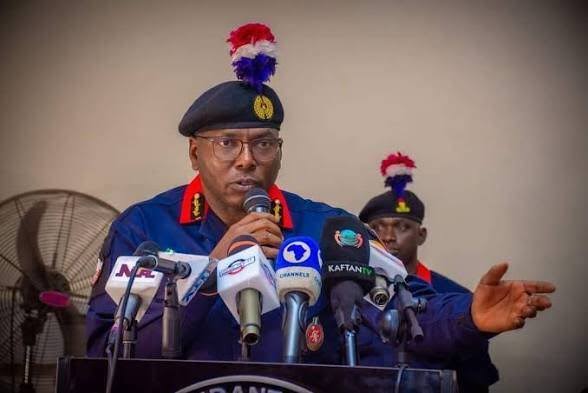
Breaking: NSCDC launches probe as 30 suspected illegal miners die in Commands custody in Niger
By Zagazola Makama
The Nigeria Security and Civil Defence Corps (NSCDC) has ordered an investigation into the deaths of several suspected illegal miners arrested during an enforcement operation in Niger State.
The suspects were apprehended on Sept. 15 and 16, 2026, during a joint operation targeting illegal mining activities around the M.I. Wushishi/Lukoto axis of the state.
The NSCDC Niger State Command initially reported that scores of detainees were found dead in the early hours of Sept. 17 following what was described as a suspected disease outbreak.
The remains have since been evacuated to the General Hospital, Minna, where medical examinations are expected to determine the actual cause of death.
The development has generated concern among relatives of some of the detainees, with family members alleging that more than 30 people died while in custody.
However, the NSCDC has cautioned against attributing the deaths to any particular disease before medical and laboratory examinations are concluded.
In a statement issued by the Corps’ National Public Relations Officer, Assistant Commandant of Corps Babawale Afolabi, the Commandant General, Prof. Ahmed Abubakar Audi, directed the immediate constitution of a high-powered investigative team.
The team, headed by the Deputy Commandant General responsible for Intelligence and Investigation, is expected to establish what happened before and after the suspects were taken into custody.
Investigators are to examine the physical condition of the detainees at the point of arrest, the duration of their detention, conditions inside the facility, medical care provided to them and other circumstances that could have contributed to the deaths.
The Corps said it was also working with health authorities and other security agencies to implement appropriate medical and public-health measures.
It further directed that the health and welfare of suspects still in custody be given immediate priority, while personnel who may have come into contact with the affected detainees are also protected.
The NSCDC said the incident would be addressed strictly on the basis of verified medical and investigative findings.
The Corps also reiterated that its campaign against illegal mining would continue, stressing that the enforcement of the law must be carried out alongside respect for the dignity and fundamental rights of persons in custody.
The Commandant General expressed condolences to the families of those who died and assured them that the circumstances surrounding the incident would be thoroughly investigated.
The Corps appealed to the public to remain calm while the medical and investigative processes are concluded, promising to release further information as verified facts become available.
The incident has meanwhile raised questions about the health status and detention conditions of the arrested miners, with the pending medical examination expected to provide critical answers on what caused the deaths.
Breaking: NSCDC launches probe as 30 suspected illegal miners die in Commands custody in Niger

VP SHETTIMA CLARIFIES REMARKS ON NORTHERN GOVERNORS’ SUPPORT FOR PRESIDENT TINUBU
By: Our Reporter
The Office of the Vice President wishes to clarify remarks by Vice President Kashim Shettima concerning the support President Bola Ahmed Tinubu received from northern governors in the build-up to his emergence as the presidential candidate of the All Progressives Congress (APC).
The Vice President’s reference to six northern governors who believed in and supported President Tinubu was specifically about political consultations and alignments preceding the APC presidential primary in June 2022.
It was not a comment on the position of northern APC governors following President Tinubu’s emergence as the party’s candidate, nor was it intended to question their support during the 2023 presidential election.
Following the presidential primary, APC governors in the North rallied around the party’s candidate and played important roles in the campaign and electoral efforts that culminated in President Tinubu’s victory in the 2023 general election. Indeed, it is worthy of note that it was after the declaration of President Tinubu as winner of the 2023 presidential primaries that all other governors across the country rallied round and followed suit. That declaration by the northern governors hence became the aligning moment across all political divides in the quest for power shift.
VP Shettima holds the northern governors and other leaders of the APC in high regard and recognises their individual and collective contributions to the success of the party and the emergence of President Tinubu.
The Vice President regrets any interpretation of his remarks that may have suggested otherwise and hopes this clarification places the comments in their proper context.
VP Shettima also appreciates the Nigerian media for its longstanding professionalism and constructive engagement with his office and urges continued accuracy and context in the reporting of public remarks as the country approaches another political season.
VP SHETTIMA CLARIFIES REMARKS ON NORTHERN GOVERNORS’ SUPPORT FOR PRESIDENT TINUBU

Digital Identity Becomes New Battleground for Nigeria’s Economic Transformation — eTranzact

2027: Tinubu’s trip to America puts an end to the chatter about his supposed inability to enter the United States.

Troops arrest two suspects, recover suspected stolen goods in Plateau

Roger Federer’s Shock as DNA Results Reveal Myla and Charlene Are Not His Biological Children

THE PLIGHT OF FARIDA

FAILED COUP IN BURKINA FASO: HOW TRAORÉ NARROWLY ESCAPED ASSASSINATION PLOT AMID FOREIGN INTERFERENCE CLAIMS
-
 News3 years ago
Roger Federer’s Shock as DNA Results Reveal Myla and Charlene Are Not His Biological Children
-
Opinions5 years ago
THE PLIGHT OF FARIDA
-
 News1 year ago
FAILED COUP IN BURKINA FASO: HOW TRAORÉ NARROWLY ESCAPED ASSASSINATION PLOT AMID FOREIGN INTERFERENCE CLAIMS
-

 News3 years ago
EYN: Rev. Billi, Distortion of History, and The Living Tamarind Tree
-
 Opinions5 years ago
POLICE CHARGE ROOMS, A MINTING PRESS
-

 ACADEMICS3 years ago
A History of Biu” (2015) and The Lingering Bura-Pabir Question (1)
-

 Columns3 years ago
Army University Biu: There is certain interest, but certainly not from Borno.
-

 Politics1 year ago
2027: Why Hon. Midala Balami Must Go, as Youths in Hawul and Asikira/Uba Federal Constituency Reject ₦500,000 as Sallah Gift
