
Politics
PCC: Malam Bashir’s pace, determination, and commitment to repositioning the Commission


PCC: Malam Bashir’s pace, determination, and commitment to repositioning the Commission
By: Dr. James Bwala
The Public Complaints Commission (PCC) is at a pivotal point in its history as it approaches its 51st anniversary celebration on Thursday, October 15, 2026. Established to provide citizens with an avenue for seeking redress against administrative injustice, abuse of office, unfair treatment, and poor service delivery, the Commission has remained a significant institution in Nigeria’s democratic development. However, like every public organization, the PCC has experienced periods of difficulty, internal tension, and institutional uncertainty.
According to the Federal Commissioner representing Borno State, Hon. Yusuf Adamu, the Commission is now witnessing a major transformation under the leadership of its Hon. Chief Commissioner, Malam Bashir Abubakar. Adamu’s assessment carries special significance due to his personal experience. Having served during an earlier term as Federal Commissioner and returned for a second term, he has observed the Commission under different leadership circumstances. His account presents a compelling argument that mature, experienced, and people-oriented leadership can make a decisive difference in the performance and stability of a public institution.
Reflecting on the final phase of his first tenure, Hon. Adamu recalled a disturbing period in which the relationship among the staff union, state commissioners, and the leadership of the Commission deteriorated considerably. The situation, he explained, was characterized by disagreements, demonstrations, threats to down tools, and a general atmosphere of mistrust. Rather than working together toward the fulfillment of the Commission’s mandate, important stakeholders had become embroiled in conflict.
Such a situation is damaging to any organization, but it is particularly harmful to an institution whose primary responsibility is to protect citizens from injustice and maladministration. Fairness, mutual respect, consultation, and accountability must guide an agency established to promote fairness. When staff and leadership are in constant confrontation, the consequences inevitably extend beyond the organization. Administrative processes become slower, morale declines, and members of the public who depend on the institution may be denied timely assistance.
It was against this background that the return of Hon. Yusuf Adamu to the Commission coincided with the emergence of Malam Bashir Abubakar as Hon. Chief Commissioner. Adamu said the difference has been clear. He described the new leadership as a blessing to the PCC and emphasized that the progress recorded so far reflects the value of placing a mature and seasoned administrator at the head of an important government institution.
Leadership in a public organization requires more than occupying an office. It demands the ability to listen, understand competing interests, manage disagreements, inspire confidence, and translate institutional goals into practical results. It also requires patience and emotional intelligence. A leader who understands the importance of consultation is more likely to build cooperation, while a leader who appreciates the needs of workers can create an environment in which employees are motivated to give their best.
According to Hon. Adamu, Malam Bashir Abubakar has demonstrated these qualities since assuming office. One of the most notable improvements, he said, is the provision of essential materials and resources to state commissioners. This development has enabled commissioners to perform their duties more effectively and has strengthened their capacity to serve the public. Without the tools necessary to carry out official responsibilities, even the most committed public servant will struggle to produce meaningful results.
The importance of this intervention cannot be overstated. State commissioners are central to the operations of the PCC across the country. They engage with complainants, investigate cases, interact with government institutions, and represent the Commission within their respective jurisdictions. Their effectiveness depends not only on personal dedication but also on institutional support. By ensuring that commissioners have access to the materials required for their work, the current leadership has shown that administrative efficiency is not merely a slogan but a practical responsibility.
Hon. Adamu further observed that staff members are now happier and more confident because of the changes introduced under Malam Bashir Abubakar. This renewed morale is one of the strongest indicators of institutional recovery. Employees who feel valued and supported are more likely to approach their duties with commitment and dignity. They are also more willing to take responsibility, contribute ideas, and defend the reputation of the organization.
Staff welfare is not a luxury in public administration. It is a critical component of productivity and organizational stability. Workers who are constantly anxious about their future, neglected in the workplace, or treated without respect may become discouraged and disengaged. By contrast, an organization that gives its staff hope and a sense of belonging creates the conditions for better service delivery.
Adamu’s comments suggest that Malam Bashir Abubakar has begun to restore that sense of hope within the PCC. He noted that the future of staff now appears more secure and that employees are better positioned to carry out their responsibilities with pride. Although the Chief Commissioner is still working to fulfill all the promises made to the staff and the Commission, Adamu maintained that the achievements recorded so far speak loudly about the kind of leadership currently in place.
This point deserves emphasis. No leader can solve every institutional problem overnight. Public agencies often face complex challenges involving funding, personnel, infrastructure, policy, and public expectations. What matters is the direction of leadership, the seriousness of its intentions, and the consistency of its actions. A leader who recognizes existing problems and takes practical steps toward solving them deserves encouragement and support.
The progress at the PCC should therefore be understood as an ongoing process rather than a completed project. The Commission still has important work to do in improving its structures, strengthening its investigative procedures, enhancing public awareness, and ensuring that complaints are handled promptly and fairly. However, the restoration of trust among staff, commissioners, and management provides a strong foundation for addressing these challenges.
Hon. Adamu is optimistic that the Commission will soon rank among the most respected government agencies in Nigeria. His confidence is based on what he describes as Malam Bashir’s pace, determination, and commitment to repositioning the institution. The goal, he explained, is for the PCC to stand shoulder to shoulder with other leading government agencies and for its employees to stop looking elsewhere when comparing institutional standards.
This ambition is both reasonable and necessary. The Public Complaints Commission performs a unique constitutional and democratic function. It serves as an avenue through which ordinary citizens can challenge administrative wrongdoing without necessarily resorting to lengthy and expensive litigation. It also helps government institutions identify weaknesses in their operations and encourages better standards of public service.
For the PCC to fulfill this role effectively, it must itself be strong, independent, professional, and properly equipped. Its staff must have confidence in the leadership, while citizens must trust that their complaints will be taken seriously. The Commission must also continue to build partnerships with ministries, departments, agencies, state governments, civil society organizations, and the media. These relationships can enhance public awareness and encourage government institutions to respond more responsibly to complaints.
The leadership style described by Hon. Adamu offers a useful lesson for public administration in Nigeria. Institutions do not become successful simply because they are created by law. They succeed when their leaders combine vision with competence, authority with humility, and ambition with a genuine concern for people. A mature administrator understands that an organization’s greatest asset is its people and that institutional progress must include both improved performance and improved working conditions.
Malam Bashir’s reported achievements also demonstrate the importance of continuity. Meaningful reform often requires time. An incoming leader may begin a process of change, but sustainable transformation depends on the opportunity to consolidate reforms and implement long-term plans. This explains Hon. Adamu’s confidence that, if Malam Bashir serves another term, the PCC could become an even stronger and more attractive institution.
His prediction that workers will no longer regard agencies such as the Central Bank of Nigeria, the Nigerian National Petroleum Corporation, or other prominent government institutions as better alternatives reflects a larger aspiration: the creation of a public service in which every agency offers dignity, career growth, professional fulfillment, and a sense of purpose. While such a transformation will require continued effort, it is a goal worth pursuing.
As the PCC approaches its 51st anniversary, the Commission should celebrate not only its history but also the promise of its future. The anniversary provides an opportunity to recognize past contributions, evaluate present realities, and renew commitment to the citizens it was created to serve. It is also an occasion to acknowledge the importance of effective leadership in determining whether an institution stagnates or advances.
The testimony of Hon. Yusuf Adamu is therefore more than a personal commendation of Malam Bashir Abubakar. It is an affirmation that the PCC is experiencing a period of renewal in the renewed hope agenda of President Bola Ahmed Tinubu and the vice president, Kashim Shettima, led administration. The improved relationship among management, commissioners, staff, and the union suggests that the Commission is gradually moving away from confrontation and toward cooperation. The provision of work materials, attention to staff welfare, and commitment to institutional development are all signs of a leadership determined to produce results.
Nevertheless, the gains already made must be protected and expanded. The leadership should continue to engage staff and commissioners openly, communicate clearly, and maintain fairness in decision-making. Promises should be followed by measurable action, while achievements should be supported by transparent systems that will outlast individual officeholders. In this way, the progress attributed to Malam Bashir Abubakar can become a lasting institutional culture rather than a temporary phase.
The Nigerian public deserves a Public Complaints Commission that is responsive, efficient, independent, and credible. Citizens who approach the Commission should feel confident that they will be heard and treated fairly. Public servants should also work in an environment that recognizes their value and equips them to perform effectively. These objectives are connected: a well-managed and motivated workforce is better able to protect the rights and interests of citizens.
The PCC has come a long way, but it is also moving toward a greater future. Under Malam Bashir’s leadership, and with the cooperation of state commissioners, staff, unions, and other stakeholders, the Commission can become one of Nigeria’s most respected public institutions. As Hon. Yusuf Adamu has noted, the changes already recorded provide strong evidence of what determined and experienced leadership can achieve.
- James Bwala, PhD, writes from Abuja.
- PCC: Malam Bashir’s pace, determination, and commitment to repositioning the Commission






Borno 2027: The General’s Charge and How Zulum Unleashes Borno’s Heavyweight Political Squad
By Abubakar M. Kareto
In Nigerian politics, elections are rarely won on auditorium stages; they are decided in the quiet corridors of rural wards and the long queues of remote polling units.
The formal inauguration of the Borno State All Progressives Congress (APC) Campaign Council at the Government House followed by a massive, open-air campaign flag-off at the Sports Centre in Maiduguri represents a calculated departure from routine rally-making toward micro-targeted grassroots mobilization.
By commanding party stalwarts to abandon executive comfort and embed themselves directly within their local communities, Governor Babagana Umara Zulum is deploying a bottom-up doctrine aimed at locking down political legitimacy where it matters most.
At the heart of this strategy is the critical task of maintaining party cohesion after intense internal primaries. Zulum’s explicit instruction for victorious candidates to reach out and heal rifts with aggrieved aspirants reflects a realistic understanding of political arithmetic: internal resentment erodes turnout faster than any opposition campaign. By coupling reconciliation with firm warnings against subversion, the leadership is attempting to forge an unbreakable front out of potentially volatile factions.
The sheer scale of political unity displayed in Maiduguri underscores the formidable nature of this campaign structure. Bringing together political titans including former Governors Senator Maina Ma’aji Lawan and Senator Ali Modu Sheriff, alongside APC Deputy National Chairman Ali Bukar Dalori and the state’s complete senatorial delegation demonstrates an unprecedented level of internal alignment.
This public display of solidarity among historical heavyweights signals organizational stability, minimizing space for opposition inroads while keeping rank-and-file members firmly aligned.
Beyond local dynamics, Borno State occupies a unique position on the national political chessboard as the home state of Vice President Senator Kashim Shettima. In this high-stakes arena, sheer victory is insufficient; the turnout margin itself serves as a barometer of political influence.
Delivering a massive vote tally is therefore both a local objective and a strategic demonstration of national strength, cementing the state’s leverage within the governing alliance.
To turn political influence into actual votes, the campaign relies heavily on record-based persuasion and visible governance dividends. By grounding the campaign pitch in key developmental gains achieved despite severe security challenges and highlighting major federal institutions acquired in Gwoza, Bama, and Azare canvassers are equipped with a tangible policy narrative. Framing voter turnout for President Bola Ahmed Tinubu, gubernatorial candidate Engr. Mustapha Gubio, and all legislative candidates as a direct return on investment gives party workers a clear, evidence-backed story for every doorstep across the state’s 27 local government areas.
A vital strength of this expanded outreach is the deliberate inclusion of women and youth as core engines of voter mobilization. The strong presence of the women’s delegation led by Borno First Lady Dr. Falmata Babagana Umara Zulum alongside the wife of the Deputy Governor and the wives of party candidates highlights an organized effort to engage families and community networks directly. Demanding structured participation across all demographics ensures that campaign directives actively translate into voter registration and turnout.
Deputy Governor Umar Usman Kadafur’s commitment to an issue-based, unit-by-unit campaign outlines the operational mechanics needed to execute this vision. Requiring regular field reports creates a system of measurable accountability across every precinct. In a vast state with complex logistics, such systematic tracking ensures that high-level strategy is actively carried out at every single polling station.
Lastly, the Maiduguri launch demonstrates how strategic discipline, elite reconciliation, and precinct-level focus converge to shape electoral outcomes. In an increasingly competitive political landscape, the Borno APC has laid out a clear blueprint: harness the full weight of a unified leadership squad, but win the election one polling unit at a time.
About the Author
Abubakar M. Kareto is a Public Affairs Analyst and Communications Strategist focusing on governance, policies, economy, and institutional reforms across Nigeria and Africa. He can be reached on X @amkareto and via email at amkareto@gmail.com.
Borno 2027: The General’s Charge and How Zulum Unleashes Borno’s Heavyweight Political Squad
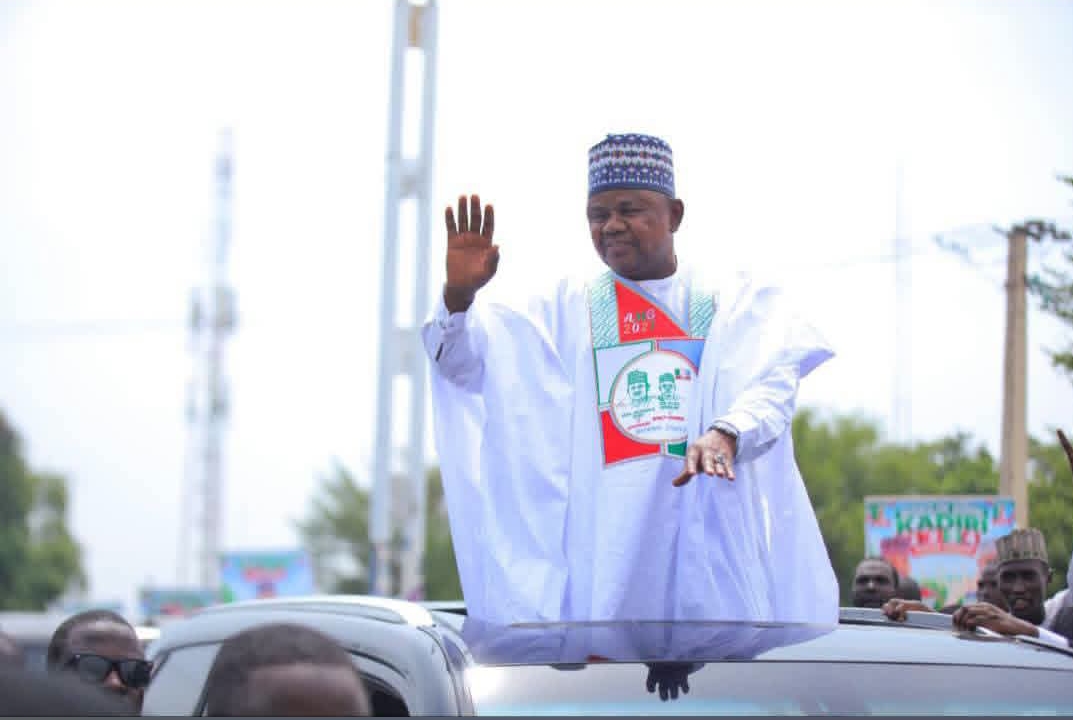
FROM A SILVER SPOON TO A GREATER BORNO: THE GUBIO RISE
By: Dr James Bwala
In politics, no one grows in isolation. Leadership is not developed in a vacuum; it is shaped by mentorship, experience, relationships, and a sincere commitment to the people. This truth is reflected in the words of the APC gubernatorial candidate and prospective governor of Borno State, Engr. Mustapha Gubio, who acknowledged the influential roles of His Excellency, Vice President Kashim Shettima, and His Excellency, Professor Babagana Umara Zulum, in his political and leadership journey. Describing the vice president as a grandfather and Governor Zulum as a father, Engr. Gubio recognised the strong pillars upon which he is learning the art of governance and the politics of peace.
This statement is more than an expression of personal gratitude. It represents a philosophy of leadership founded on continuity, mentorship, humility, and service. Borno State requires leaders who understand its history, appreciate its challenges, and are prepared to build on the progress already achieved. Engr. Mustapha Gubio’s close association with two of the state’s most important political figures provides him with a valuable foundation. Through their experience, he has been exposed to the complexities of governance, the importance of stability, and the responsibilities that come with public office.
Borno has faced challenges that demand more than political slogans. For many years, the state has contended with insecurity, displacement, economic hardship, destroyed infrastructure, disrupted education, and the painful consequences of conflict. Yet, despite these difficulties, Borno has also demonstrated remarkable courage and resilience. Its people have continued to hope, rebuild, work, and support initiatives aimed at restoring peace and development. Therefore, the state needs a leader who will protect the gains made so far while introducing practical and sustainable solutions to its remaining problems.
Engr. Gubio’s political outlook appears to be rooted in this understanding. By recognising that no politician develops alone, he acknowledges the value of experience and collective wisdom. This is especially important in governance, where decisions affect millions of lives and where errors can carry serious consequences. A leader who learns from experienced mentors is more likely to appreciate the complexity of public administration, understand the need for consultation, and avoid the dangers of arrogance and isolation.
Vice President Kashim Shettima’s political career offers an important example of commitment to public service. Before becoming vice president of Nigeria, he served as governor of Borno State and played a significant role during one of the most difficult periods in the state’s history. His experience in managing security challenges, coordinating development efforts, and maintaining public confidence gives him a profound understanding of Borno’s needs. His influence on the next generation of leaders is therefore significant. As a political grandfather, in Engr. Gubio’s words, he represents institutional memory, wisdom, and the continuity of a political tradition focused on service.
Similarly, Governor Babagana Umara Zulum has become widely associated with compassion, courage, and purposeful leadership. His administration has worked to address insecurity, rebuild communities, support displaced individuals, improve education, strengthen healthcare, and expand infrastructure. Although challenges remain, his government has demonstrated that effective leadership requires both vision and personal commitment. Governor Zulum’s regular presence in affected communities and his willingness to engage directly with citizens have strengthened public confidence in government.
To describe Governor Zulum as a father is to recognise the value of guidance and practical mentorship. A father does not merely provide instructions; he teaches through example, corrects with wisdom, encourages growth, and prepares the next generation to assume responsibility. In this context, Engr. Gubio’s relationship with Governor Zulum suggests that he is not seeking office without preparation. Rather, he is learning from a leader who understands the burdens of governance and the importance of placing the interests of the people above personal ambition.
The most compelling aspect of Engr. Gubio’s statement is about his emphasis on the politics of peace. For Borno, peace is not a decorative political phrase. It is the foundation upon which every other form of development depends. Without peace, schools cannot function properly, farmers cannot cultivate their land safely, businesses cannot grow, healthcare services cannot reach vulnerable communities, and investors will remain cautious. Peace is therefore not simply the absence of violence; it is the presence of security, justice, opportunity, and social trust.
A politics of peace requires a leader who is willing to build bridges rather than deepen divisions. Borno is a diverse state with different communities, ethnic groups, religious identities, social interests, and political opinions. Responsible leadership must recognise this diversity as a strength. It must promote fairness, inclusion, and mutual respect. The government must ensure that every community feels seen, heard, and protected. Engr. Mustapha Gubio’s stated commitment to peace offers an encouraging indication that his administration, if elected as governor of Borno State, would seek to unite the people.
However, peace must be supported by development. A young person without access to education, employment, or productive opportunities can easily become vulnerable to manipulation and criminality. Communities that lack roads, electricity, clean water, healthcare, and economic support may lose confidence in government. For this reason, a successful administration must link security with human development. The restoration of peace must be accompanied by investments in education, agriculture, entrepreneurship, public health, and social protection.
Borno has enormous potential in agriculture, trade, livestock, solid minerals, culture, and human capital. A government that creates the right environment can transform these resources into opportunities for its people. Farmers need improved access to seeds, fertilisers, irrigation, storage, markets, and security. Small businesses need affordable credit, reliable electricity, skills training, and simplified regulations. Young people need education that combines academic knowledge with vocational and technological skills. Women need greater access to economic opportunities and support systems. These measures would not only reduce poverty but also strengthen peace by giving citizens a meaningful stake in the future.
Another important responsibility of the next administration will be the continued rehabilitation and reintegration of displaced individuals and communities affected by conflict. Rebuilding homes and infrastructure is essential, but recovery must also include emotional healing, access to livelihoods, education for children, and support for families that have suffered loss. The process must be transparent, inclusive, and sensitive to local realities. Citizens should not merely be recipients of government policies; they should be active participants in designing and implementing them.
Engr. Gubio’s background and political relationships may help him understand the importance of continuity. Every new administration should introduce fresh ideas, but it should not abandon successful programmes simply because they were initiated by a previous government. Good governance requires the ability to preserve what works, correct what does not, and improve policies through innovation. Continuity does not mean refusing change. Instead, it means building responsibly on existing foundations while responding to new realities.
His statement also reveals a sense of humility that is essential in public office. A politician who recognises the contributions of others is more likely to respect institutions, listen to advisers, and value teamwork. Governance is not a personal possession. It is a public trust involving civil servants, traditional rulers, religious leaders, security agencies, community organisations, businesses, development partners, and ordinary citizens. No governor can succeed alone. The ability to unite these groups around a common vision will be critical to the future of Borno State.
At the same time, mentorship must be accompanied by independent judgement. While Engr. Gubio can draw wisdom from Vice President Shettima and Governor Zulum, he must also be prepared to respond to the unique challenges of his own time. Every administration inherits both achievements and unfinished tasks. The next governor will need to make decisions based on evidence, consultation, and the changing needs of the people. Political loyalty should never replace accountability, and continuity should never become an excuse for complacency.
The people of Borno will rightly expect measurable results. They will want to see safer communities, improved schools, functional hospitals, better roads, expanded employment, stronger agricultural production, and transparent public finances. They will expect leaders to communicate openly and to explain the reasons behind major policies. They will also expect justice and fairness in the distribution of projects and opportunities. The success of any administration should ultimately be judged by the improvement it brings to the lives of ordinary citizens.
For this reason, Engr. Gubio’s message must be transformed into a clear social contract with the people. His commitment to peace should be reflected in policies that address the roots of conflict. His respect for mentorship should be reflected in a government that values competence and experience. His promise of development should be demonstrated through realistic programmes with clear timelines and measurable outcomes. Above all, his leadership should remain centred on service rather than personal prestige.
Borno stands at an important point in its history. The state has endured tremendous suffering, but it has also shown extraordinary strength. With the right leadership, it can move from recovery to sustainable prosperity. The next phase will require patience, discipline, courage, and cooperation. It will require leaders who understand that political office is not a reward but a responsibility.
Engr. Mustapha Gubio’s recognition of Vice President Kashim Shettima as a grandfather and Governor Babagana Umara Zulum as a father presents him as a candidate who values experience, guidance, and continuity. More importantly, his commitment to the politics of peace speaks directly to the central aspiration of the people of Borno. If translated into inclusive policies, accountable governance, and practical development initiatives, this vision can help move the state towards a more secure and prosperous future.
Indeed, Borno needs a leader who will inherit the wisdom of the past, respond intelligently to the challenges of the present, and prepare the state for the opportunities of the future. A leader who understands that peace is the beginning of progress, that development must include every community, and that governance is most meaningful when it improves the lives of the people is that leadership that Borno is aspiring for and Engr. Mustapha Gubio is standing tall and positioned in a square peck.
* James Bwala, PhD, writes from Maiduguri.
FROM A SILVER SPOON TO A GREATER BORNO: THE GUBIO RISE
Politics
Beyond Politics: The Betara Leadership Question – An Independent Assessment of Hon. Muktari Betara Aliyu

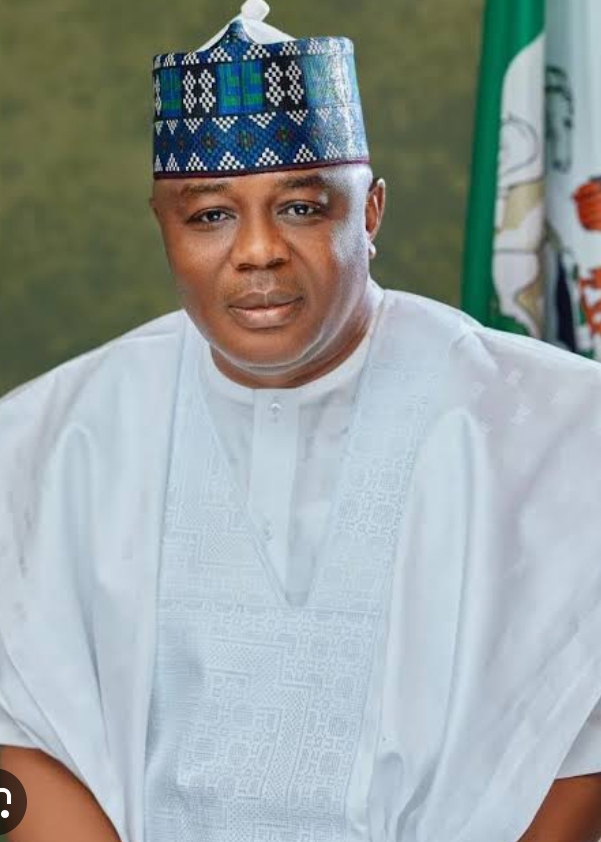
Beyond Politics: The Betara Leadership Question – An Independent Assessment of Hon. Muktari Betara Aliyu
By: Dr. James Bwala
Habib Mohammed Biu’s open letter to Rt. Hon. Muktari Aliyu Betara appears genuine at first reading. Its concerns seem to emerge from a citizen’s desire to draw attention to issues affecting the people of Biu, Kwaya-Kusar, Bayo, and Shani Federal Constituency. Such interventions are important in a democracy because elected representatives must remain accountable to the people they serve. Citizens have the right to question priorities, demand explanations, and express disappointment when they believe their needs are not being adequately addressed.
However, when the letter is examined more critically, it appears to reflect a misplaced priority and an incomplete understanding of the responsibilities of a leader operating at the national level. Habib’s position seems to be that of an ordinary citizen thinking through immediate community concerns, while Hon. Betara’s approach is necessarily broader, more strategic, and more complex. The difference between the two perspectives is substantial. One focuses primarily on what is visible and immediately desired by the people; the other must consider competing demands across local governments, the state, and the nation.
This distinction is essential to a fair assessment of Hon. Muktari Aliyu Betara. He should not be reduced to the identity of a local champion whose value is measured only by how quickly he responds to every local appeal. He has become a national figure, particularly because of his contributions and influence across different levels of governance. His responsibilities extend beyond a single constituency, even though the constituency remains central to his political mandate. A leader in his position must simultaneously respond to local needs, participate in national decision-making, support colleagues, manage political relationships, and contribute to broader developmental efforts. Judging him exclusively through the narrow lens of immediate constituency expectations risks producing an unfair conclusion.
Hon. Betara is widely regarded as one of the busiest politicians from Borno State today. His schedule, responsibilities, and political engagements reflect the demands of his position. It is easy for citizens to see only the outcomes they desire, but leadership involves dealing with numerous challenges that may not be visible to the public. A leader has many problems to confront, but he is also expected to provide solutions to many of them. This dual responsibility requires time, resources, patience, and political judgment.
The public often assumes that a prominent politician has unlimited capacity. Because a leader has influence, people expect him to intervene in every matter, assist every individual, and respond to every appeal. Yet no politician, however powerful or generous, can see all things or do all things for the people. The fact that a leader does not respond to one demand does not necessarily mean that he is indifferent. It may indicate that he is dealing with a more urgent matter, working through institutional channels or balancing several competing priorities.
This is why criticisms of Hon. Betara should be constructive and proportionate. Accountability is necessary, but it should not be confused with condemnation. A politician can have weaknesses, make mistakes, or fail to meet certain expectations without being judged as a complete failure. Leadership should be assessed in its totality. The failure to accomplish one task does not erase the achievements recorded in other areas. A balanced evaluation must recognize both shortcomings and contributions.
It is therefore encouraging that Malam Habib Mohammed Biu acknowledged Hon. Betara’s intervention in the Joint Admissions and Matriculation Board registration process. That intervention reportedly benefited many people on whose behalf Habib was appealing. This acknowledgement is significant because it demonstrates that Betara has responded to real needs within the constituency. Educational support, especially assistance with examination registration, can make a meaningful difference in the lives of young people. For families facing financial hardship, such support may determine whether a student is able to participate in an important stage of his or her education.
However, Hon. Betara is not the only politician representing the people of that constituency. Responsibility for development and public welfare must be shared among elected officials, political leaders, community organizations, and citizens. It would be unfair to place every expectation on one individual. Other representatives and stakeholders should also be encouraged to contribute. If one politician is doing something beneficial, the appropriate response should be recognition and encouragement, while others are urged to do more.
Political leadership is not a one-man assignment. Members of the National Assembly, state officials, local government authorities, and community leaders all have distinct responsibilities. Constituents should demand performance from everyone, not focus exclusively on a single prominent figure. When citizens expect only one politician to solve every problem, they unintentionally weaken democratic accountability by allowing others to escape scrutiny.
There is also a need to understand the relationship between a leader and the people who support him during difficult times. The funds Hon. Betara has recently provided to colleagues and musicians may raise questions, especially when public needs remain pressing. Such expenditures may appear to some observers as misplaced when compared with the urgent demands of ordinary citizens. Nonetheless, they require context and clarification rather than immediate condemnation.
Political colleagues can serve as important pillars during periods of difficulty. Politics is a demanding and often unpredictable enterprise. Leaders depend on alliances, relationships, and networks of support, particularly when facing political crises or challenging assignments. Supporting colleagues may be part of maintaining those relationships, securing cooperation, and ensuring the continuation of political work. While such spending should not be above scrutiny, it cannot automatically be dismissed as meaningless or irresponsible.
Similarly, musicians and praise singers often occupy a distinctive place in Nigerian political culture. Their performances can encourage public figures, celebrate achievements, and create an atmosphere that motivates leaders to act. In some cases, their influence may stir a politician to respond to appeals, make donations, or support people in need. The relationship between political leaders and cultural figures is therefore more complex than it may appear. It may involve recognition, social influence, encouragement, and mobilization.
This does not mean that every financial gesture should be accepted without questions. Public officeholders must be transparent, disciplined, and conscious of the difference between personal resources and public funds. Any concern about the use of public resources deserves proper examination. But criticism must be based on facts, not assumptions. Before concluding that a leader’s expenditure is wasteful, the public should seek to understand the source of the funds, the purpose of the spending, and its relationship to the leader’s broader responsibilities.
The central issue, therefore, is not whether Hon. Betara is perfect. He is not. No leader is. The more important question is whether his overall contribution demonstrates commitment to the people and to public service. Based on the interventions attributed to him, including support for JAMB registration, it is clear that he has made efforts to assist members of his constituency. Those efforts should not be ignored simply because there are areas where he has not met expectations.
A fair political culture must learn to combine criticism with appreciation. In many communities, public figures are praised only when they provide immediate financial assistance but condemned when they are unable to meet every demand. This creates an unhealthy environment in which leaders are encouraged to pursue popularity rather than sustainable development. It also reduces public service to personal distribution of money instead of legislation, policy influence, education, infrastructure, and institutional development.
Hon. Betara’s responsibilities as a national figure should be evaluated through a broader framework. His role includes representing constituents, contributing to national lawmaking, influencing policy, engaging with government institutions, and maintaining relationships that can benefit his people. Some of these responsibilities may not produce instant or visible results. Nevertheless, they may have long-term effects on the constituency and the state.
At the same time, describing Betara as a national figure should not place him beyond criticism. National relevance must be accompanied by transparency and responsiveness. His constituents should continue to ask questions, present their concerns, and demand explanations where necessary. The appropriate response is not to silence criticism but to ensure that it is informed, fair, and directed toward improvement. A leader who has accomplished much can still be encouraged to do more.
The open letter by Habib Mohammed Biu should therefore be viewed as part of a wider democratic conversation. It may contain valid concerns, but its judgment of Hon. Betara appears too limited if it overlooks the complexity of his political responsibilities and previous contributions. The fact that one issue remains unresolved does not justify the conclusion that the representative has failed entirely. Nor should a leader’s support for colleagues or musicians automatically be interpreted as proof that he has abandoned his constituency.
What is required is balance. Constituents should acknowledge what Hon. Betara has done, identify what remains to be done, and encourage him to address those gaps. Hon. Betara, for his part, should continue to listen to his people, communicate more clearly, and ensure that his national responsibilities do not weaken his connection to the constituency. Other politicians in the area should also be reminded that they have obligations to the people and cannot leave all responsibilities to one individual.
Ultimately, leadership should be judged by both intention and impact, both visible achievements and long-term influence. Hon. Muktari Aliyu Betara may have his errors and shortcomings, but those limitations do not cancel his contributions. A leader can fail in one area and still succeed in several others. The proper response is not to reduce him to a local champion or portray him as incapable of leadership, but to recognize his wider role while demanding continued improvement.
For this reason, Hon. Betara deserves respect, constructive criticism, and encouragement. He should not be expected to do everything, but he should be urged to do more where genuine needs exist. His accomplishments should be acknowledged, his weaknesses should be addressed, and his actions should remain open to public scrutiny. That is the essence of responsible citizenship and effective leadership.
- James Bwala, PhD, writes from Maiduguri.
Beyond Politics: The Betara Leadership Question – An Independent Assessment of Hon. Muktari Betara Aliyu

UNFPA, Signify partner to illuminate 10,000 healthcare facilities in seven states

Nigeria, India Sign Human Rights Agreement as Fagbemi Pledges Support for Implementation

19 Nigerian Pension Funds Express Interest in Proposed $750m Infrastructure Fund

Roger Federer’s Shock as DNA Results Reveal Myla and Charlene Are Not His Biological Children

THE PLIGHT OF FARIDA

FAILED COUP IN BURKINA FASO: HOW TRAORÉ NARROWLY ESCAPED ASSASSINATION PLOT AMID FOREIGN INTERFERENCE CLAIMS
-
 News3 years ago
Roger Federer’s Shock as DNA Results Reveal Myla and Charlene Are Not His Biological Children
-
Opinions5 years ago
THE PLIGHT OF FARIDA
-
 News2 years ago
FAILED COUP IN BURKINA FASO: HOW TRAORÉ NARROWLY ESCAPED ASSASSINATION PLOT AMID FOREIGN INTERFERENCE CLAIMS
-
 Opinions5 years ago
POLICE CHARGE ROOMS, A MINTING PRESS
-

 News3 years ago
EYN: Rev. Billi, Distortion of History, and The Living Tamarind Tree
-

 ACADEMICS3 years ago
A History of Biu” (2015) and The Lingering Bura-Pabir Question (1)
-

 Columns3 years ago
Army University Biu: There is certain interest, but certainly not from Borno.
-

 Politics1 year ago
2027: Why Hon. Midala Balami Must Go, as Youths in Hawul and Asikira/Uba Federal Constituency Reject ₦500,000 as Sallah Gift
