
News
Petition Seeks Probe of NEPC CEO Over Alleged Financial Misconduct, Abuse of Office, Nepotism


Petition Seeks Probe of NEPC CEO Over Alleged Financial Misconduct, Abuse of Office, Nepotism
…As New Allegations Add to Earlier Auditor-General Query Over N230.5 Million Foreign Travel Expenditure….
By Zagazola Makama
A petition has called on Nigeria’s anti-corruption, oversight and law enforcement agencies, ICPC, EFCC to launch an independent, impartial and comprehensive investigation into a series of allegations involving the Executive Director/Chief Executive Officer of the Nigerian Export Promotion Council (NEPC), Mrs. Nonye Ayeni.
The latest petition adds to earlier public concerns surrounding the NEPC boss following an audit query by the Office of the Auditor-General of the Federation (OAGF), details of which were previously reported by SaharaReporters, alleging breaches of Federal Government directives regulating official foreign travel amounting to N230.5 Million.
Despite undergoing investigations at various Nigeria’s anti graft agencies, corruption and abuse of office had persisted in the NEPC.
The latest petition, which stressed that all allegations should be investigated strictly in accordance with due process and the rule of law, urged investigators to determine the facts solely on the basis of credible evidence while ensuring that any individual against whom the allegations are not substantiated is fully exonerated.
According to the petition, the allegations relate to financial misconduct, abuse of office, administrative irregularities, nepotism, violations of the Public Service Rules and other actions allegedly affecting the administration of the Council.
One of the central allegations concerns the suspected diversion of approximately ₦500 million, said to represent about 20 per cent of the Council’s quarterly subvention intended to support Nigeria’s non-oil export sector.
The petition alleged that the funds were diverted through a coordinated arrangement involving certain Directors and State Coordinators, with portions of allocations to state offices allegedly transferred through a Bureau de Change operator for conversion into United States dollars before being remitted through an official in the Accounts Department.
It called on investigators to conduct a comprehensive forensic audit of the Council’s finances, including bank records, payment vouchers, electronic transactions, communication records and other financial documents, to establish whether such transactions occurred.
The petition also raised allegations of falsification of official service records, claiming that several Directors who ought to have retired from the Federal Public Service remained in office after their personnel records, including dates of birth, were allegedly altered.
It requested investigators to compare current personnel records with original employment documents, nominal rolls and historical service records to determine whether any unlawful alterations were made.
Another issue highlighted in the petition concerns the alleged irregular engagement of retired officers on contract appointments.
According to the petition, retired members of staff were allegedly re-engaged without transparent procedures and contrary to established Federal Public Service guidelines, with claims that some appointments were intended to favour individuals perceived to be loyal to the current management.
The petition requested a detailed review of all contract appointments involving retired officers to determine whether they complied with existing laws, regulations and Federal Government policies.
The petition further alleged that the NEPC Chief Executive sought blanket approval from the Honourable Minister of Industry, Trade and Investment to appoint External Directors of her choice.
According to the allegations, the approval was intended to facilitate the appointment or return of certain retired loyalists into strategic positions within the Council.
The petition urged investigators to examine all correspondence relating to the request and determine whether the process complied with applicable legal and administrative procedures.
The petition also alleged widespread nepotism and abuse of administrative authority, claiming that professionally qualified officers had been removed from positions consistent with their expertise and replaced by individuals allegedly selected on the basis of personal loyalty or ethnic affiliation rather than merit.
Among the examples cited was the alleged transfer of a professionally certified ICAN accountant from the Internal Audit Department to an operational unit unrelated to his professional qualifications, while another officer was reportedly appointed in his place.
It also alleged that the Council’s certified Procurement Officer was redeployed from the Procurement Unit to a state office and replaced by an officer who allegedly lacked the required professional procurement certification.
According to the petition, if established, such actions could amount to violations of the Public Service Rules and undermine merit-based administration.
The petition equally alleged that several substantive Directors had been denied office accommodation and administrative privileges ordinarily associated with their positions.
It claimed the affected Directors were perceived as outspoken officers who consistently advised management to comply with due process in the administration of Council affairs. Investigators were urged to determine whether such actions amounted to victimisation, abuse of administrative authority or unfair labour practices.
The petition also questioned the management of official foreign travel and estacode payments.
It alleged that estacode and other travel allowances were approved and paid to certain officials regarded as loyal to management for overseas trips they allegedly never undertook.
The petition requested investigators to examine travel approvals, immigration records, airline tickets, boarding records, passport entry and exit stamps, estacode payments and other related expenditure documents to verify whether public funds were improperly disbursed.
It also raised concerns over what it described as unusually high expenditure during official foreign trips, including alleged excessive spending on shopping and related expenses.
According to the petition, investigators should review travel approvals, estacode payments, procurement records, receipts and expenditure documents to determine whether public funds were properly utilised and whether all spending complied with financial regulations.
The petition further alleged that management frequently failed to properly delegate authority to appropriate Directors whenever the Chief Executive embarked on official domestic or international engagements.
According to the petition, this practice allegedly disrupted efficient administration and should be examined to determine compliance with established administrative procedures.
On staff welfare and workplace culture, the petition alleged that employees had complained of intimidation, abusive language, victimisation and an unwillingness by management to accept professional advice. It stated that the alleged conduct had created a hostile working environment that negatively affected staff morale and institutional performance.
The petition recommended that investigators independently verify these claims through interviews with serving and former members of staff. It also alleged inadequate engagement between the Council’s leadership and exporters, saying many stakeholders reportedly found it difficult to secure official meetings with the Chief Executive despite the Council’s statutory responsibility to support Nigeria’s export sector.
According to the petition, investigators should assess whether stakeholder engagement practices were consistent with the Council’s mandate and principles of good public administration. Another allegation contained in the petition was that the Chief Executive allegedly claimed that proceeds from the alleged financial misconduct were used to influence or obtain protection from certain public officials.
The petition urged investigators to independently determine whether such statements were made and, where necessary, investigate any individuals who may be implicated while ensuring due process.
As part of the requested investigation, the petition called for a forensic audit of the Council’s finances; examination of bank records, payment trails and electronic transactions; verification of personnel files, retirement records and nominal rolls; review of contract appointments involving retired officers; examination of procurement processes and foreign travel expenditures; verification of estacode payments against actual travel records; review of correspondence relating to appointments and approvals; interviews with staff, whistleblowers, exporters and other stakeholders; and assessment of compliance with the Public Service Rules, Financial Regulations, the Public Procurement Act and other applicable laws.
The petition stated that its objective was to promote transparency, accountability, integrity and the prudent management of public resources entrusted to the Nigerian Export Promotion Council for the development of Nigeria’s non-oil export sector.
It emphasised that all findings should be based solely on credible evidence, due process and the rule of law, adding that anyone found culpable should be held accountable in accordance with the law, while any person against whom the allegations were not substantiated should be fully exonerated.
Earlier Auditor-General Query
The fresh petition comes months after the Office of the Auditor-General of the Federation reportedly issued an audit query against Mrs. Ayeni over her official foreign travel expenditure during the 2024 fiscal year.
According to a report by SaharaReporters, the audit alleged that Mrs. Ayeni embarked on numerous international trips in 2024 at a total cost of ₦230,540,843, contrary to Federal Government directives aimed at reducing public expenditure.
The report said auditors found that the NEPC chief undertook four international trips in the first quarter of 2024, two trips in the second quarter, two in the third quarter and seven international trips in the fourth quarter.
The Auditor-General’s report reportedly cited Circular No. PRS080/ADM/GEN/I dated Sept. 18, 2023, and another directive dated Feb. 21, 2024, both issued by the Secretary to the Government of the Federation, which restricted publicly funded international travel by government officials to a maximum of two trips per quarter.
The audit also reportedly referred to the March 12, 2024 circular signed by the Chief of Staff to the President, Mr. Femi Gbajabiamila, which suspended publicly funded foreign trips from April 1, 2024, except where expressly approved.
According to SaharaReporters, the audit alleged that Mrs. Ayeni continued embarking on numerous foreign trips despite the restrictions and questioned whether several of the journeys met the test of necessity or relevance to the statutory mandate of the NEPC.
Among the examples cited was an alleged payment of ₦16.8 million for airfare and estacode to attend the opening of a Zenith Bank branch in Paris, France, an event which the auditors reportedly questioned on the grounds that it was allegedly unrelated to the Council’s official mandate.
The audit also reportedly raised concerns over overlapping travel schedules involving trips to Las Vegas, Abu Dhabi, Ghana and Qatar within closely connected dates, questioning whether all the events could have been attended as claimed and whether excess estacode, if any, was refunded.
According to SaharaReporters, the Office of the Auditor-General recommended that the entire ₦230.54 million spent on the disputed foreign trips be recovered and refunded to government coffers, describing the expenditure as inconsistent with government financial regulations and fiscal discipline measures introduced by the Tinubu administration.
Though the spokesperson for the Nigerian Export Promotion Council, Mr. Aliu Seidu Sadiq, denied the previous allegations and disputed the claim that the Chief Executive undertook foreign trips amounting to the figure stated in the audit report, the matter was still under investigation.
Mrs. Ayeni and the Nigerian Export Promotion Council had not publicly responded to the latest allegations contained in the petition at the time of filing this report while efforts to obtain comments from Mrs. Nonye Ayeni and the NEPC before publication were unsuccessful.
Zagazola Media Network



Troops recover five cattle rustle by Berom Militia in Plateau
By Zagazola Makama
Troops of Sector 5, Operation ENDURING PEACE, have recovered five cattle rustled by Berom Militia from a resident of Tenti Ratatat Village in Forop District, Bokkos Local Government Area of Plateau State.
The troops responded at about 0230 hours on Aug. 28 following a report that five cattle belonging to one Mallam Karimu had been stolen by suspected cattle rustlers.
According to sources, the troops immediately commenced search-and-rescue operations within the general area to track the perpetrators and recover the stolen livestock.
The operation led to the successful recovery of all five rustled cattle, which were subsequently handed over to the owner. Efforts are ongoing to apprehend the perpetrators, who reportedly fled before the arrival of the troops.
The recovery forms part of ongoing operations by Operation ENDURING PEACE to protect rural communities and livestock owners and prevent criminal elements from exploiting vulnerable farming and pastoralist settlements in Plateau State.
Troops have continued to intensify patrols and surveillance across the Bokkos axis to deny cattle rustlers and other criminal elements freedom of action.
Troops recover five cattle rustle by Berom Militia in Plateau

UPDATE: Heavy gunfire, explosions rock Niamey as reports of military mutiny emerge
By Zagazola Makama
Heavy gunfire and explosions rocked Niger’s capital, Niamey, from the early hours of Saturday, with intense clashes reportedly continuing around the Diori Hammani International Airport, the 101 Airbase and areas around the Presidential Palace.
The situation, according to security reports monitored by Zagazola, began at about 0230 hours local time and continued until around 0600 hours, although tension remained high in several parts of the capital thereafter.
Mortar fire and explosions were reportedly heard in the vicinity of the Presidential Palace, while electricity was cut in parts of the city. Security forces were also said to have blocked access routes leading to the Presidential Palace and the International Airport as they responded to the incident.
Reports indicated that reinforcements from Operation ALMAHAOU moved into Niamey from the direction of Ouallam, while other security formations were mobilised within the capital.
The most intense exchanges were reportedly concentrated around the 101 Airbase and the International Airport, both strategically important military and aviation facilities.
Conflicting accounts
The exact nature of the incident remained unclear as of Saturday, with conflicting accounts circulating on social media and among local sources. Some reports described the incident as a possible terrorist attack, while others suggested an internal military confrontation involving junior soldiers.
There were also unverified claims that the incident could represent an attempted counter-coup against the military authorities governing Niger under the National Council for the Safeguard of the Homeland (CNSP).
However, there was no independent confirmation that a coup or counter-coup had taken place.
Major international and regional news organisations had not, at the time of filing, independently corroborated claims of a military takeover or an organised attempt to overthrow the CNSP. Similarly, Nigerien authorities had yet to issue an official statement establishing the cause of the fighting, identifying those involved or providing casualty figures.
A prominent Hausa-language broadcaster in Niger, Mu Duba Mu Gani, however, reported that the incident was not a terrorist attack but an uprising involving young members of Niger’s Defence and Security Forces (FDS).
In a commentary circulated on social media, the broadcaster claimed that the young soldiers had rebelled against what they described as worsening insecurity, corruption, nepotism and poor treatment of Nigeriens under the CNSP administration.
According to the account, the soldiers were allegedly demanding changes in the way the country was being governed and had moved into parts of Niamey, resulting in heavy fighting.
The broadcaster further questioned whether the development could mark the beginning of the end of the CNSP’s rule, while acknowledging that it remained unclear whether the alleged mutineers had taken control of any strategic locations.
The claims, however, could not be independently verified by Zagazola News.
Strategic locations under security lockdown
The reported closure of routes around the Presidential Palace and Diori Hammani International Airport suggests that security forces were treating the incident as a major threat to strategic national installations.
The movement of reinforcements from Ouallam into Niamey also points to a significant mobilisation by the authorities to contain the situation. The reported fighting around the 101 Airbase is particularly significant because the area forms part of the capital’s broader military-security infrastructure and has previously featured in Niger’s counter-terrorism operations.
The airport area has also previously come under attack amid the worsening jihadist insurgency affecting Niger and the wider Sahel.
Niger facing mounting security pressure
The latest development comes as Niger continues to face significant security challenges from jihadist groups operating across the country’s western and southern regions.
The country has also experienced increasing political and diplomatic tensions since the military takeover of July 2023, which removed President Mohamed Bazoum from power.
The CNSP, led by Gen. Abdourahamane Tiani, has since consolidated its control over the country while withdrawing from several regional security and political arrangements and deepening cooperation with fellow Alliance of Sahel States members Mali and Burkina Faso.
The military authorities have repeatedly presented their administration as necessary to restore national sovereignty and defeat armed groups. However, persistent attacks and casualties among security personnel have continued to place pressure on the junta.
Situation remains fluid
Security assessments circulating following Saturday’s fighting have raised concerns about possible internal divisions within Niger’s security establishment. Nevertheless, claims of an imminent collapse of the CNSP or an approaching civil war remain speculative at this stage.
There is currently no verified evidence establishing that the reported clashes constitute a coordinated military coup, a counter-coup, or a broader armed uprising. Likewise, there has been no confirmed casualty figure or credible claim of responsibility for the explosions and gunfire.
The immediate priority for authorities is expected to be securing the Presidential Palace, airport, airbase and other strategic installations while determining the identity and objectives of those involved.
Any prolonged confrontation between rival elements of the security forces could have serious implications for Niger’s already fragile security environment and potentially affect neighbouring countries, particularly those sharing borders with Niger. For now, Niamey remains tense, with security forces deployed across key parts of the capital and access restrictions reported around strategic installations.
Zagazola News will continue to monitor the situation and provide updates as credible information emerges.
UPDATE: Heavy gunfire, explosions rock Niamey as reports of military mutiny emerge
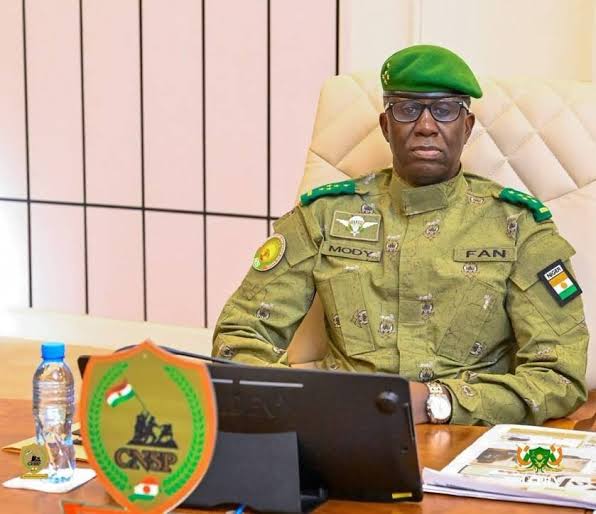
Niger: Mutiny tensions reportedly deepen within military in Niamey
By Zagazola Makama
Tensions have reportedly escalated within Niger’s military in the capital, Niamey, amid growing anger over heavy losses suffered by troops during recent operations.
According to security information obtained by Zagazola News, what initially began as a protest movement among some military personnel has reportedly evolved into a mutiny, leaving elements of the armed forces in a state of uncertainty.
The development is said to have created heightened tension around strategic locations in Niamey, including the airport area.
Sources said the Presidential Guard, reportedly acting on the orders of Niger’s military leader, Gen. Abdourahamane Tiani, is considering a response against military personnel in the airport area.
The reported standoff has raised concerns over the possibility of confrontation between members of the Nigerien armed forces.
The development comes amid continued security challenges facing Niger, particularly militant attacks and heavy casualties among government forces operating in parts of the country.
The situation in Niamey remains fluid, and details surrounding the reported mutiny, the number of personnel involved and the immediate cause of the confrontation could not be independently verified as of the time of filing this report.
Zagazola News will continue to monitor developments and provide updates as credible information emerges.
Niger: Mutiny tensions reportedly deepen within military in Niamey

Troops foil kidnapping attempt, rescue two victims in Plateau

Troops recover five cattle rustle by Berom Militia in Plateau

Troops investigate suspected Malicious poisoning of cattle in Plateau

Roger Federer’s Shock as DNA Results Reveal Myla and Charlene Are Not His Biological Children

THE PLIGHT OF FARIDA

FAILED COUP IN BURKINA FASO: HOW TRAORÉ NARROWLY ESCAPED ASSASSINATION PLOT AMID FOREIGN INTERFERENCE CLAIMS
-
 News2 years ago
Roger Federer’s Shock as DNA Results Reveal Myla and Charlene Are Not His Biological Children
-
Opinions5 years ago
THE PLIGHT OF FARIDA
-
 News1 year ago
FAILED COUP IN BURKINA FASO: HOW TRAORÉ NARROWLY ESCAPED ASSASSINATION PLOT AMID FOREIGN INTERFERENCE CLAIMS
-

 News2 years ago
EYN: Rev. Billi, Distortion of History, and The Living Tamarind Tree
-
 Opinions5 years ago
POLICE CHARGE ROOMS, A MINTING PRESS
-

 ACADEMICS3 years ago
A History of Biu” (2015) and The Lingering Bura-Pabir Question (1)
-

 Columns2 years ago
Army University Biu: There is certain interest, but certainly not from Borno.
-

 Politics1 year ago
2027: Why Hon. Midala Balami Must Go, as Youths in Hawul and Asikira/Uba Federal Constituency Reject ₦500,000 as Sallah Gift
