
News
Piracy, Armed Robbery in Gulf of Guinea Has Reduced- Touray


Piracy, Armed Robbery in Gulf of Guinea Has Reduced- Touray
By: Michael Mike
The President of the ECOWAS Commission, Dr Omar Touray has said that the Gulf of Guinea has continued to witness a downward trend in piracy and armed robbery attacks over the year.
He noted that this was achieved through the efforts of the Inter-regional Coordination Centre, ICC, insisting that its achievements in maritime security in the Gulf of Guinea is quite commendable.
Touray made this known at the 4th Annual Meeting of the Heads of Institution (HOI) of the ICC, at the ECOWAS Commission Headquarters in Abuja, on Thursday.
ICC was created in September 2014 by ECOWAS, the Economic Community of Central African States (ECCAS) and the Gulf of Guinea Commission (GGC) with the mission of serving as the Coordination Centre on maritime security in the Gulf of Guinea following the 2013 Yaoundé Summit of ECOWAS, ECCAS and GGC Heads of State and Government.
Touray in his address on Thursday, said: “Since the Political Declaration of our Heads of State, substantial progress has been made in our maritime community.
”This included the adoption of National Maritime Strategies and the deployment of critical maritime infrastructure that has improved maritime situational awareness.
“With regards to our MoU, some progress has been achieved by the governing body on inter-institutional coordination.
”The Coordination Centre receives funding, and its annual Work Plan and Budget are approved, including the operations of Maritime Operational Centres.”
Touray added that the importance ICC for global maritime security and safety cannot be wished away, noting that it attracted the interest of many development partners.
He listed them to include the G77++ Friends of the Gulf of Guinea, the European Union, the German Federal Government and the Chinese Government for their different support and assistance.
He said: “Their assistance has contributed to our success in establishing the ECOWAS Regional Maritime Security Centre (CRESMAO) in Abidjan, with three Multinational Maritime Coordination Centres (MMCC) in Cotonou (Zone E), in Accra (Zone F), and in Praia (Zone G).
“Similarly, the ECCAS Maritime Security Architecture established a Regional Centre for Maritime Security in Central Africa (CRESMAC) in Pointe Noire, as well as Multinational Maritime Coordination Centres in Douala (Zone D) and in Luanda (Zone A).
“The establishment of maritime information sharing networks between ECOWAS and ECCAS have improved information sharing and situational awareness.”
Touray while noting that the Gulf of Guinea has continued to witness a downward trend in piracy and armed robbery attacks, added that: “According to the International Maritime Bureau (IMB), actual and attempted piracy and sea robbery incidents saw a downturn trend from 31 in 2015, 18 in 2021 to 15 in 2022.
“Incidences of piracy and armed robbery further declined to 6 attacks in the first quarter of 2024 in the Gulf of Guinea. This is thanks to our institutional actions and collective responses.”
Touray, however, stated that in spite of such laudable progress, the ICC had serious challenges, which included non-recruitment of key staff, irregular funding, and breakdown of essential services.
He said that there was still a need for regular review of the progress and challenges on the level of implementation of the Declaration, stressing that it was important to take concrete steps to address the challenges.
“The Code of Conduct on the Prevention and Suppression of Acts of Piracy, Armed Robbery Against Ships and Illicit Maritime Activities in West and Central Africa was supposed to be turned into a legally binding Agreement three years after its adoption in Yaoundé in 2013.
“Thus far, we have not achieved this after the 10th Year Anniversary of the Yaoundé process. It is therefore important that we critically appraise our institutional responses on the Code of Conduct,” he said.
Touray urged the ICC governing body, which comprises the Presidents of the Commissions of ECOWAS and ECCAS, and the Executive Secretary of the GGC, to review a new EU project, ‘Safe Seas’ for the region and the Yaoundé Architecture Regional Information Sharing (YARIS) tool.
He also called on member states to streamline development corporations and partnerships to ensure that ICC provided the necessary oversight to guide the Coordination Centre.
Also speaking, the Executive Secretary, Gulf of Guinea Commission, Jose Abeso, said the region was still facing the challenges of maritime insecurity, stressing that the objective was to eliminate all forms of criminality in the domain.
He said that the law on criminal activities in the maritime sector in the Gulf of Guinea should be harmonized to act as effective detriments against committing such crimes.
“Our maritime domain is the next destination for the sustainable economic development of our countries.
”Our governments cannot or should not leave the running of institutions meant to patrol this area, to ensure that security and safety of activities is not left to third parties,” Abeso said.
Participants at the event included the President of the Commission of the Economic Community of Central African States (ECCAS), Gilberto Verissimo.
Others were the representative of the UN Office for West Africa and Sahel (UNOWAS) and that of the UN Regional Office for Central Africa (UNOCA).
Piracy, Armed Robbery in Gulf of Guinea Has Reduced- Touray


Troops foil attack on Rim community, three killed in Gwarim, Plateau
By: Zagazola Makama
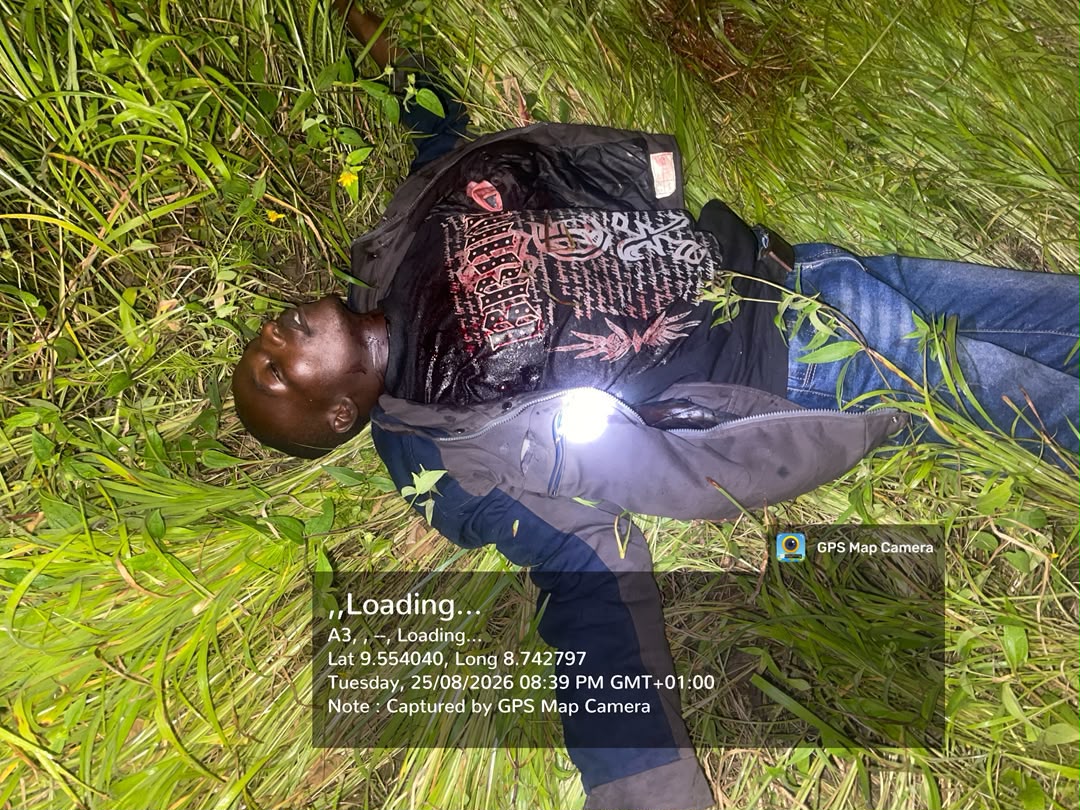
Nigerian troops have foiled an attack on Rim community in Riyom Local Government Area of Plateau State, while three residents were reportedly killed in a separate incident at nearby Gwarim community.
Security sources told Zagazola Makama that the incident occurred on Tuesday, Aug. 25, when troops deployed in the area responded to an attack on Rim community at about 6:08 p.m.
The troops engaged the attackers and successfully repelled the assault without any casualty among the personnel or members of the community.
However, at about 6:46 p.m., the troops responded to another report of gunfire at Gwarim community, also in Riyom LGA.
On arrival at the location, the troops discovered the bodies of three residents who had been killed while reportedly keeping watch in the bush outside the community.
The corpses of the victims were recovered and subsequently handed over to members of the community for further necessary action.
The troops have since intensified patrols and are dominating the area in an effort to locate and apprehend the perpetrators.
The latest incidents come amid heightened security concerns in parts of Plateau State, particularly communities around Riyom and neighbouring areas.
Troops foil attack on Rim community, three killed in Gwarim, Plateau
Operation Savannah Shield troops foil attempted kidnapping of farmers in Niger
By: Zagazola Makama
Troops of Operation Savannah Shield have foiled an attempt by suspected terrorists to kidnap farmers at their farmlands in Tudun Harara village, Mariga Local Government Area of Niger State.
The incident occurred at about 11:30 a.m. on Aug. 25, 2026, when troops of the NATRAC Administrative Battalion, Forward Operating Base (FOB) Kotonkoro, responded to a distress report on the attempted abduction.
Security sources told Zagazola Makama that the troops engaged the terrorists upon arrival, forcing them to withdraw into the surrounding forest.
During the encounter, the fleeing terrorists abandoned a motorcycle, which was recovered by the troops.
The operation is part of ongoing efforts by security forces to protect farming communities and deny criminal elements freedom of action across Niger State.
Operation Savannah Shield troops foil attempted kidnapping of farmers in Niger
Operation Fansan Yamma troops foil ransom exchange, rescue kidnapped woman in Kebbi
By: Zagazola Makama
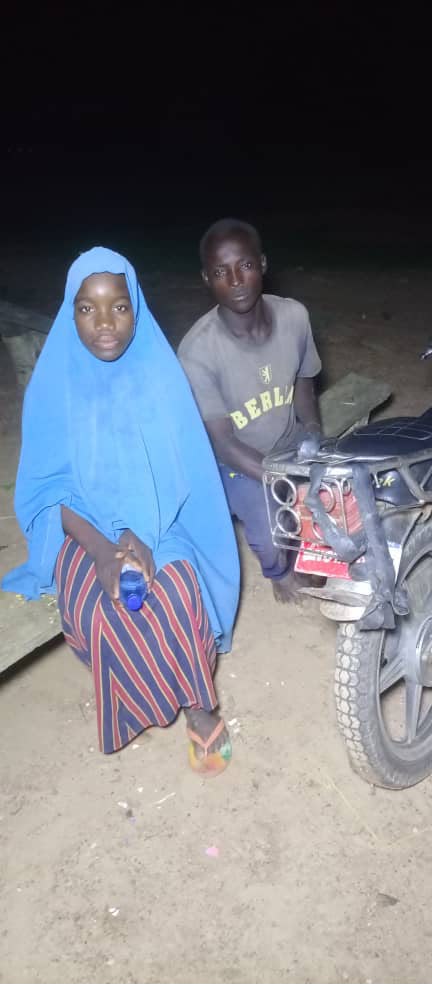
Troops of Sector 2, Operation Fansan Yamma, have rescued a kidnapped woman and disrupted a planned ransom exchange in Danko-Wasagu Local Government Area of Kebbi State.
The troops, conducting counter-terrorism and anti-banditry operations in the state, carried out the successful operation on Aug. 26, 2026, following credible intelligence on the planned ransom payment.
Zagazola Makama gathered from security sources that the victim had been abducted from her farm sometime last month, while the criminals were preparing to collect ransom in exchange for her release.
Acting on the intelligence, the troops swiftly mobilised to intercept the transaction.
Sources said the criminals attempted to engage the advancing troops after sighting them but were overwhelmed by the troops’ superior firepower.
The bandits subsequently fled in disarray, abandoning the hostage, who was immediately secured by the troops.
The victim was found unharmed and later transported to safety before being reunited with her family in Danko-Wasagu LGA.
Following the rescue, the troops conducted a thorough exploitation of the withdrawal route to ensure that the area was fully secured before returning to base.
In a related operation, the troops also conducted clearance and dominance patrols in Ngaski Local Government Area as part of efforts to maintain peace and deny criminal elements freedom of movement.
The patrols were completed without incident, further strengthening security presence and reassuring residents in the affected communities.
Operation Fansan Yamma troops foil ransom exchange, rescue kidnapped woman in Kebbi

Troops foil attack on Rim community, three killed in Gwarim, Plateau

Operation Savannah Shield troops foil attempted kidnapping of farmers in Niger

Army troops recover 97 rustled livestock, hand them over to owners in Kano

Roger Federer’s Shock as DNA Results Reveal Myla and Charlene Are Not His Biological Children

THE PLIGHT OF FARIDA

FAILED COUP IN BURKINA FASO: HOW TRAORÉ NARROWLY ESCAPED ASSASSINATION PLOT AMID FOREIGN INTERFERENCE CLAIMS
-
 News2 years ago
Roger Federer’s Shock as DNA Results Reveal Myla and Charlene Are Not His Biological Children
-
Opinions5 years ago
THE PLIGHT OF FARIDA
-
 News1 year ago
FAILED COUP IN BURKINA FASO: HOW TRAORÉ NARROWLY ESCAPED ASSASSINATION PLOT AMID FOREIGN INTERFERENCE CLAIMS
-

 News2 years ago
EYN: Rev. Billi, Distortion of History, and The Living Tamarind Tree
-
 Opinions5 years ago
POLICE CHARGE ROOMS, A MINTING PRESS
-

 ACADEMICS2 years ago
A History of Biu” (2015) and The Lingering Bura-Pabir Question (1)
-

 Columns2 years ago
Army University Biu: There is certain interest, but certainly not from Borno.
-

 Politics1 year ago
2027: Why Hon. Midala Balami Must Go, as Youths in Hawul and Asikira/Uba Federal Constituency Reject ₦500,000 as Sallah Gift
