
News
Planned Okada ban: ActionAid calls for safety net to alleviate deepening poverty

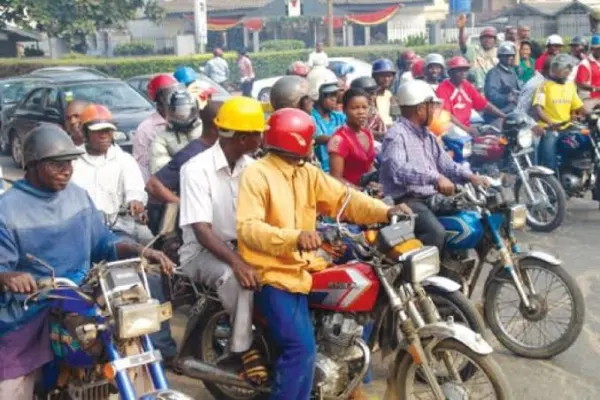
Planned Okada ban: ActionAid calls for safety net to alleviate deepening poverty
ActionAid Nigeria (AAN) has urged the Federal Government to consider an alternative safety net to buffer the impact of the planned ban ‘Okada’ on the affected population before taking such action.
This is contained in a statement by Lola Ayanda, Communications coordinator for ActionAid Nigeria in Kaduna.
The News Agency of Nigeria (NAN) reports that on July 21, the federal government said it was considering a nationwide ban on commercial motorcycles, popularly known as okada, as well as mining activities in a bid to stem the rising insecurity across the country.
Malam Abubakar Malami, Attorney-General of the Federation, made this known after a national security council meeting at the presidential villa, Abuja.
The NGO said that the ban on Okada and illegal mining activities by the Federal Government as hinted by Malami, will stem the rising insecurity across the country but it will undoubtedly further deepen the national multi-dimensional poverty index if measures are not taken to address the population involved.
As a way out, the NGO urged the government to encourage investments and job creation to engage those that will lose their livelihoods.
“ActionAid Nigeria agrees that placing a ban on the use of motorcycles and mining activities may cut the supply of logistics and source of funds for the purchase of arms to the terrorists, but while this is being contemplated in the national interest to combat insecurity, there must be well thought-out alternatives to lessen the effects of the attendant loss of livelihoods on the people that will be affected.”
The NGO noted that the ban must be implemented in a way that it must be implemented in a way that will not further worsen the country’s dire economic situation.”
According to the NGO, the number of people using Okada represents a significant segment of the population whose condition will be worsened as a result of food inflation, rising unemployment, the rising cost of living among other economic challenges, and other issues that are responsible for why more people are falling into the poverty net.
The AAN also emphasized the need for government to invest in the agriculture value-chain, especially girl child education.
It also urged the government to prioritise the healthcare of its citizenry and enhance economic opportunities while embracing technology to improve economic productivity and opportunities for the citizens.
AAN also expressed willingness to join other development partners available to work with the government at all levels to create a sustainable alternative for this population.
The News Agency of Nigeria (NAN) reports that on Sept. 15, 2021, President Muhammadu Buhari said 1.6 million poor and vulnerable households, comprising more than eight million individuals were currently benefiting from the Conditional Cash Transfer programme, while N300 billion has been disbursed to farmers.
Speaking virtually at the opening ceremony of the 14th Annual Banking and Finance Conference of Chartered Institute of Bankers of Nigeria, the President said the National Social Register of Poor and Vulnerable Nigerians had 32.6 million persons from seven million poor and vulnerable households identified.
”From this number, 1.6 million poor and vulnerable households, comprising more than eight million individuals are currently benefiting from the Conditional Cash Transfer program, which pays a bi-monthly stipend of N10, 000 per household,” he said.
Buhari said the National Social Investment Programme is the biggest in Sub-Saharan Africa and one of the largest in the world.
Planned Okada ban: ActionAid calls for safety net to alleviate deepening poverty




News
Nigeria, EU Strengthen Strategic Alliance with New Investments, Security and Climate Cooperation
Nigeria, EU Strengthen Strategic Alliance with New Investments, Security and Climate Cooperation
By: Michael Mike
Nigeria and the European Union have reaffirmed their strategic partnership and announced new areas of cooperation spanning trade, security, climate action, digital transformation and development investments following the Eighth Nigeria–EU Ministerial Dialogue held in Abuja.
The high-level meeting was co-chaired by Nigeria’s Minister of Foreign Affairs, Yusuf Maitama Tuggar, and the EU High Representative for Foreign Affairs and Security Policy, Kaja Kallas.
In a joint communiqué issued after the dialogue, both sides described the meeting as an important opportunity to consolidate longstanding relations built on friendship, mutual respect and shared values, particularly at a time of global geopolitical uncertainty.
They reaffirmed their commitment to expanding cooperation in ways that deliver tangible benefits to citizens while contributing to a more stable, prosperous and sustainable international order.
Nigeria and the EU reiterated their support for multilateral cooperation, democracy, human rights and the rule of law, stressing the need to protect fundamental freedoms including gender equality, freedom of expression, freedom of religion and protection against discrimination.
The EU also reaffirmed its support for reforming the United Nations Security Council to make it more inclusive, transparent and representative, particularly by strengthening the voice of African countries.
Both parties expressed support for peaceful resolutions to conflicts around the world, including in Ukraine, the Middle East, Sudan, South Sudan, Democratic Republic of the Congo, the Sahel and Somalia, emphasizing the importance of respecting international law, sovereignty and territorial integrity.
Both sides reaffirmed their commitment to implementing the Paris Agreement on Climate Change and advancing climate action through stronger cooperation on renewable energy and energy transition.
Discussions highlighted Nigeria’s strong potential for solar, wind and clean hydrogen energy, with both partners agreeing to enhance investments and collaboration in these sectors.
They also pledged to strengthen climate resilience and adaptation efforts for vulnerable communities, particularly those affected by environmental pressures in the Lake Chad Basin.
On Regional Security and West Africa, the
EU acknowledged Nigeria’s critical leadership role in promoting democracy, peace and stability in West Africa. Both sides agreed to strengthen cooperation on regional security challenges, particularly threats emanating from the Sahel.
The dialogue also emphasized deeper collaboration in counter-terrorism, intelligence sharing, capacity building and efforts to prevent terrorism financing, while supporting regional mechanisms such as the Economic Community of West African States security architecture.
On Trade and Investment Relations, the
EU remains Nigeria’s largest trading and investment partner, with Nigeria benefiting from preferential access to European markets under the Generalised Scheme of Preferences (GSP).
Both sides welcomed progress following the first Nigeria–EU Senior Officials’ Trade and Investment Dialogue held in Abuja in September 2025, which aims to facilitate trade, diversify exports and attract new investments.
They also discussed the importance of implementing Rules of Origin under the GSP framework and welcomed Nigeria’s progress toward adopting legislation on Geographical Indications, which could help protect and promote Nigerian products internationally.
Looking ahead, both parties confirmed that the 10th Nigeria–EU Business Forum will take place in Lagos on June 25, 2026.
A major highlight of the dialogue was the EU’s continued investment in Nigeria through the Global Gateway strategy, which supports sustainable infrastructure, digital transformation and economic development.
In 2025 alone, the EU committed €73 million in grants for projects including digital infrastructure, democracy support and the fight against gender-based violence.
In addition, €555 million in loans from the European Investment Bank were mobilised to support small and medium enterprises in sectors such as healthcare, digital services and agri-food value chains.
One flagship initiative highlighted was the Omi-Eko electric waterways transportation project in Lagos, which received €361 million in funding from the EU, the European Investment Bank and France under the Team Europe approach.
New initiatives announced during the meeting include €50 million in European Investment Bank financing to support healthcare manufacturing, €85 million for agricultural value chains focused on dairy and cocoa, and €108 million for a nationwide fibre-optic expansion project to strengthen Nigeria’s digital infrastructure.
Both sides also welcomed the launch of negotiations toward a Nigeria–EU Science, Technology and Innovation Agreement, which will expand research collaboration under the EU’s Horizon Europe programme.
Educational cooperation is also expanding through Erasmus+ and the Intra-African Mobility Scheme, with Nigeria ranking first in Africa for the number of students receiving Erasmus Mundus joint master’s scholarships.
In the digital sector, both partners agreed to deepen cooperation under the EU–Nigeria Digital Economy Package, focusing on digital infrastructure, cybersecurity, e-governance, data exchange, space technologies and digital entrepreneurship.
Both sides agreed to continue holding annual ministerial dialogues, with the ninth Nigeria–EU Ministerial Dialogue scheduled to take place in Brussels in 2027.
The EU delegation also expressed appreciation to the Nigerian government for hosting the meeting and reaffirmed its commitment to strengthening the strategic partnership with Nigeria across political, economic and technological sectors.
Nigeria, EU Strengthen Strategic Alliance with New Investments, Security and Climate Cooperation
ECOWAS, AU Push Green Ports Agenda to Cut Maritime Emissions in Africa
By: Michael Mike
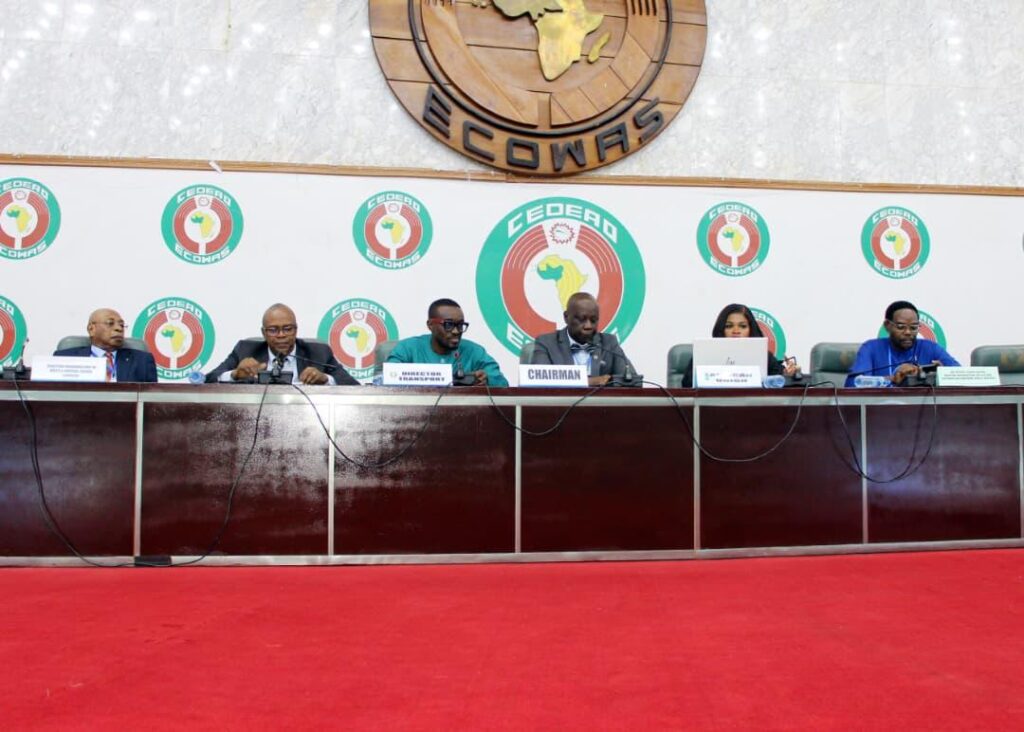
The Economic Community of West African States (ECOWAS) and the African Union have stepped up efforts to drive Africa’s transition to sustainable maritime systems, convening a high-level continental workshop in Abuja to align strategies on green ports development and maritime decarbonization.
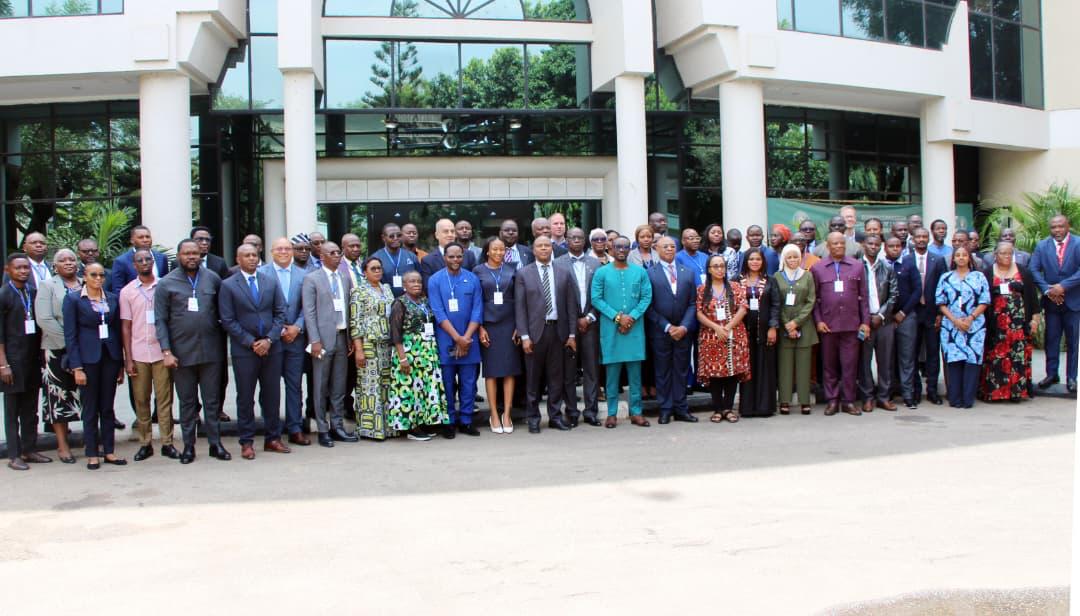
The two-day Continental Validation Workshop on Green Ports Guidelines and Maritime Greenhouse Gas Emissions Reduction brought together senior policymakers, maritime institutions and technical experts from across Africa at the ECOWAS headquarters to deliberate on the implementation of the Revised African Maritime Transport Charter and strengthen the continent’s response to climate challenges in the maritime sector.
Opening the session, ECOWAS Director of Transport Chris Appiah stressed the need for Africa’s maritime industry to adapt to global sustainability trends without compromising trade efficiency and development priorities.
“Efficiency, operational capacity and trade facilitation must remain at the core of Africa’s response, even as the continent advances towards greener maritime systems,” he said while speaking on behalf of the President of the ECOWAS Commission, Omar Alieu Touray.
Appiah reaffirmed ECOWAS’ commitment to strengthening maritime governance, upgrading port infrastructure and supporting member states in building resilient and competitive transport systems.
From the continental perspective, the Head of Maritime Transport at the African Union Commission, Raissa‑Julie Ada Allogo, called for stronger coordination among African countries to ensure the continent speaks with one voice in global maritime negotiations.
“This is the time for Africa to speak with one voice to ensure that the transition towards decarbonization remains inclusive, realistic and aligned with the capacities of our Member States,” she said.
Allogo highlighted the importance of the Revised African Maritime Transport Charter, describing it as a key instrument for modernising maritime governance and strengthening cooperation across African maritime institutions.
Regional maritime organisations also weighed in on the discussions. The Secretary-General of the Maritime Organisation of West and Central Africa (MOWCA), Paul Adalikwu, said green port development should be seen not only as an environmental necessity but also as a strategic investment that could enhance efficiency and competitiveness across African ports.
Similarly, the Secretary-General of the Maritime Organisation for Eastern, Southern and Northern Africa (MOESNA), Kassim Kaziba Mpaata, urged African countries to strengthen maritime capacity in order to reduce dependency on external systems and better withstand global disruptions.
Adding a regulatory perspective, the Secretary-General of the Abuja Memorandum of Understanding on Port State Control, Sunday M. Umoren, stressed that adherence to international maritime standards is critical to maintaining Africa’s role in global shipping networks and avoiding higher operational costs.
Development partners also reaffirmed support for the initiative. Speaking on behalf of the German Agency for International Cooperation (GIZ), Bekele Essete Abebe described ports as the backbone of global supply chains and emphasised that investments in sustainable and resilient port infrastructure are essential for Africa’s economic transformation.
“Ports remain the backbone of global supply chains, and investing in sustainable and resilient port infrastructure is central to Africa’s economic transformation and climate response,” she said.
Technical sessions during the workshop focused on validating a Handbook and Guidelines on Green Ports in Africa, developed through consultations across member states. The framework identifies priority actions including renewable energy integration, electrification of port operations, digitalisation, emissions monitoring, climate resilience and adoption of cleaner fuels.
Experts noted that the transition to green ports should be viewed not simply as an environmental initiative but as a broader economic and operational transformation that can improve efficiency, strengthen trade competitiveness and enhance resilience across African maritime systems.
The workshop continued with working sessions aimed at consolidating member states’ inputs and developing a coordinated roadmap for implementing the guidelines across the continent.
Officials said the outcome of the meeting is expected to strengthen Africa’s maritime governance framework, improve port performance and position the continent as a proactive actor in the global shift toward sustainable and decarbonised maritime transport.
ECOWAS, AU Push Green Ports Agenda to Cut Maritime Emissions in Africa
ECOWAS Deploys Long-Term Election Observers to Benin Ahead of Presidential Poll
By: Michael Mike
The Economic Community of West African States (ECOWAS) has deployed a Long-Term Election Observation Mission (LTEOM) to the Benin ahead of the country’s presidential election scheduled for April 12, 2026, as part of efforts to support a credible and peaceful electoral process.
The deployment was authorised by the President of the ECOWAS Commission, Omar Alieu Touray, in line with regional legal instruments guiding democratic governance and election monitoring within the West African bloc.
According to a statement issued by ECOWAS’ Directorate of Communication in Abuja, 15 election experts drawn from ECOWAS member states will remain in Benin from March 22 to April 18, 2026, observing key phases of the electoral process before, during and after the vote.
The observers possess expertise in constitutional law, diplomacy, electoral operations, political affairs, media, conflict prevention, gender and inclusion, and security, enabling them to conduct a comprehensive assessment of the electoral environment.
ECOWAS said the long-term observers will monitor developments across all regions of Benin, providing early analysis and recommendations aimed at preventing tensions and strengthening public confidence in the electoral process.
“Their analyses will serve as early-warning and rapid-response mechanisms to help prevent and manage any conflict linked to the elections,” the regional body said.
As part of the mission’s operational structure, ECOWAS will establish a situation room to track political and security developments nationwide and provide daily updates to the ECOWAS Commission. The mechanism will also support coordination ahead of the deployment of a Short-Term Election Observation Mission, which is expected to include about 100 observers closer to election day.
The mission is being deployed in line with key regional instruments including the 1993 Revised ECOWAS Treaty, the 1999 Mechanism for Conflict Prevention, Management and Resolution, and the 2001 Additional Protocol on Democracy and Good Governance, which guide the bloc’s role in supporting democratic processes across West Africa.
ECOWAS noted that the long-term observation mission follows a pre-election fact-finding mission that visited Benin from January 7 to 17, 2026, where delegates engaged government officials, political parties, civil society organisations and the country’s electoral management body, the Autonomous National Electoral Commission of Benin (CENA).
The findings of that mission were submitted to the ECOWAS Commission to guide preparations for the broader observation effort.
By deploying the mission, ECOWAS said it was reaffirming its commitment to supporting transparent, credible and peaceful elections in Benin while promoting democracy, good governance, peace and stability across West Africa.
Founded in 1975, the Economic Community of West African States is a regional bloc of 12 member states, working to promote economic integration, political stability and development across the region. The organisation also plays a key role in election observation, mediation and conflict prevention as part of its mandate to safeguard democratic governance in West Africa
ECOWAS Deploys Long-Term Election Observers to Benin Ahead of Presidential Poll

State Police: Group Commends Tinubu, Urges Accelerated Action

Nigeria, EU Strengthen Strategic Alliance with New Investments, Security and Climate Cooperation

ECOWAS, AU Push Green Ports Agenda to Cut Maritime Emissions in Africa

Roger Federer’s Shock as DNA Results Reveal Myla and Charlene Are Not His Biological Children

THE PLIGHT OF FARIDA

FAILED COUP IN BURKINA FASO: HOW TRAORÉ NARROWLY ESCAPED ASSASSINATION PLOT AMID FOREIGN INTERFERENCE CLAIMS
-
 News2 years ago
Roger Federer’s Shock as DNA Results Reveal Myla and Charlene Are Not His Biological Children
-
Opinions4 years ago
THE PLIGHT OF FARIDA
-
 News11 months ago
FAILED COUP IN BURKINA FASO: HOW TRAORÉ NARROWLY ESCAPED ASSASSINATION PLOT AMID FOREIGN INTERFERENCE CLAIMS
-

 News2 years ago
EYN: Rev. Billi, Distortion of History, and The Living Tamarind Tree
-
 Opinions4 years ago
POLICE CHARGE ROOMS, A MINTING PRESS
-

 ACADEMICS2 years ago
A History of Biu” (2015) and The Lingering Bura-Pabir Question (1)
-

 Columns2 years ago
Army University Biu: There is certain interest, but certainly not from Borno.
-

 Opinions2 years ago
Tinubu,Shettima: The epidemic of economic, insecurity in Nigeria
