
News
Police exhume seven bodies over Yelwata killings, as part of the Presidential Medical Delegation Investigation in Benue


Police exhume seven bodies over Yelwata killings, as part of the Presidential Medical Delegation Investigation in Benue
By: Zagazola Makama
The Police in Benue have exhumed seven in connection with the 2025 Yelwata killings as part of ongoing investigations by the Presidential Medical Delegation as part of efforts to ensure justice for victims of what he described as a brutal assault.
Zagazola learnt that the exhumation was carried out on Feb. 24 by federal investigators led by the Intelligence Response Team (IRT) following an earlier situation report on the exercise.
According to the sources, the bodies were exhumed for inquest, adding that the exercise would continue at a later date.
“Seven corpses have been exhumed by the IRT-led federal investigators for inquest. The exercise will continue, and further development will be communicated,” police sources said.
Forensic pathologists from the Federal Ministry of Justice have arrived in Benue State to investigate the June 13, 2025, attack on Yelwata, a community in the Guma Local Government Area of the state.
The Presidential Medical Delegation on Monday visited Yelwata in Guma Local Government Area to inspect graves of victims of the June 2025 attack on the community.
Security sources said the delegation visited the burial site where victims of the attack were interred, and the graves were identified as part of ongoing investigative and medical review processes.
The deployment follows proceedings at the Federal High Court in Abuja, where nine suspects were arraigned on 2 February 2026 before Justice Joyce Abdulmalik in connection with the Yelwata attack.
The court stressed the importance of forensic evidence to ensure a fair trial and proper determination of culpability.
The sources added that adequate security measures were put in place to ensure a peaceful and hitch-free exercise.
The Guma Local government Yelwata attack of June 13, 2025, resulted in the deaths of several residents and forced many others to flee their homes.
Police exhume seven bodies over Yelwata killings, as part of the Presidential Medical Delegation Investigation in Benue


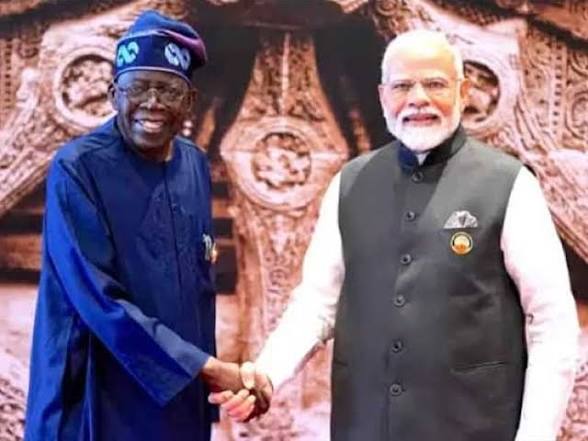
India-Nigeria Trade Hits $9bn as Abuja, New Delhi Deepen Strategic Partnership
By: Michael Mike
India and Nigeria are deepening their strategic partnership across trade, investment, defence, energy, healthcare, agriculture and technology, with bilateral trade climbing to about $9 billion in the 2025–26 financial year, the Indian High Commissioner to Nigeria, Abhishek Singh, has disclosed.
Singh made the disclosure during a media briefing in Abuja, where he outlined the expanding relationship between the two countries and identified new opportunities for stronger economic and strategic cooperation.
The latest trade figure represents a substantial increase from the $7.13 billion recorded in 2024–25, reinforcing the growing importance of economic relations between Africa’s largest economy and one of the world’s major emerging powers.
According to the envoy, India-Nigeria relations have evolved significantly from their traditional foundations of historical goodwill and oil trade into a broad-based strategic partnership covering security, technology, food security, healthcare, agriculture and global governance.
“India-Nigeria relations are no longer defined only by historical goodwill or oil trade,” Singh said, stressing that the partnership was increasingly becoming multidimensional.
Over 200 Indian companies operating in Nigeria
Singh disclosed that more than 200 Indian companies are currently active in Nigeria, with investments covering pharmaceuticals, manufacturing, power, construction, consumer goods, healthcare and services.
He said many of the companies were not simply importing products into Nigeria but had established factories and production facilities in the country.
The investments, he added, have resulted in employment for close to 100,000 Nigerians, making Indian companies collectively one of the country’s largest private-sector employers.
The High Commissioner said the growing presence of Indian businesses reflected the confidence of investors from his country in Nigeria’s market and its long-term economic prospects.
Energy security takes centre stage
Energy security, he said, remains a critical pillar of the strategic relationship, with crude oil and liquefied natural gas continuing to play important roles.
But cooperation, according to Singh, is expanding beyond traditional oil trade to include Indian investments in Nigeria’s oil and gas industry, pipeline security, compressed natural gas conversion and liquefied petroleum gas infrastructure.
He stressed that India’s population of about 1.4 billion and Nigeria’s population of more than 230 million create enormous energy demand in both countries.
“This is all the more reason that the two great democracies, India and Nigeria, should cooperate more in the field of energy security,” he said.
Defence partnership gains momentum
The High Commissioner described defence and maritime security as another important pillar of the relationship, noting that cooperation between the two countries dates back several decades.
India, he said, supported Nigeria in establishing the National Defence Academy in Kaduna as well as the Naval College in Port Harcourt.
The two countries also face common security challenges, including terrorism, violent extremism, piracy, organised crime and illicit trafficking.
Singh said cooperation therefore covers intelligence sharing, counter-terrorism, defence training and maritime security, particularly in the Gulf of Guinea.
He disclosed that a Nigerian naval delegation was scheduled to travel to India for bilateral discussions, describing the continuing engagement as evidence of the depth of defence relations between the two countries.
Defence equipment and sales, he added, also remain areas of collaboration.
India extends $395m credit to Nigeria
The High Commissioner said India’s development partnership with Nigeria had also produced tangible results, including $395 million in concessional lines of credit.
He said India had further provided extensive technical and professional training to Nigerians through the Indian Technical and Economic Cooperation (ITEC) programme.
Nigerians have benefited from ITEC training in areas including auditing, teaching, rural development, electrification and other specialised fields, while members of the Nigerian Armed Forces have continued to receive training at leading Indian defence institutions.
Singh said India’s development assistance was based on sharing its strengths in areas that correspond with Nigeria’s own development priorities.
Among the areas identified are affordable medicines, Digital Public Infrastructure, agriculture, skills development, food security, climate-resilient development and space applications.
Pharmaceuticals, technology and agriculture emerging as growth areas
Healthcare is another major area of bilateral cooperation.
Singh pointed to India’s strength in pharmaceutical manufacturing, noting that the country is widely recognised as a major global supplier of medicines and remains one of the largest exporters of pharmaceutical products to Nigeria.
He said cooperation was also expanding into Digital Public Infrastructure, space applications, agricultural mechanisation, food security and climate-resilient development.
These, he said, represent some of the new frontiers of India-Nigeria cooperation.
Tinubu, Modi visits elevated ties
The High Commissioner traced the recent momentum in bilateral relations to increased high-level political engagement.
He recalled President Bola Ahmed Tinubu’s visit to India in September 2023 during India’s G20 presidency.
The visit was particularly significant, he said, because it coincided with the formal admission of the African Union as a full member of the G20.
The engagement was followed by Indian Prime Minister Narendra Modi’s state visit to Nigeria in November 2024—the first visit by an Indian prime minister to Nigeria in about 17 years.
During the visit, Modi held extensive discussions with President Tinubu on trade and investment, defence, energy, agriculture, healthcare, education, technology and security.
The significance attached to the relationship was further demonstrated when Nigeria conferred its highest national honour, the Grand Commander of the Order of the Niger (GCON), on the Indian Prime Minister.
Singh also recalled other high-level engagements, including the participation of India’s Defence Minister, Rajnath Singh, at President Tinubu’s inauguration in May 2023 and the visit of India’s External Affairs Minister, S. Jaishankar, to Abuja for the Sixth India-Nigeria Joint Commission Meeting in January 2024.
Tinubu invited to BRICS summit
Looking ahead, India is seeking stronger Nigerian participation in global economic and political platforms, particularly BRICS.
Singh disclosed that President Tinubu has been invited to the BRICS Leaders’ Summit scheduled for September 12–13, 2026, in New Delhi.
He expressed hope that the Nigerian President would lead a high-powered delegation to the summit.
The envoy said Nigeria’s participation was important because of its position as Africa’s largest economy and one of the world’s most populous nations.
India assumed the BRICS chairmanship in 2026, with the summit expected to focus on pressing global challenges, economic cooperation and outreach to partner countries.
India backs Nigeria’s UN Security Council bid
The two countries are also backing each other’s aspirations at the United Nations.
Singh disclosed that Nigeria has conveyed its support for India’s campaign for a non-permanent seat on the UN Security Council, while India has also conveyed its support for Nigeria’s candidacy.
India’s campaign is being promoted under the banner “SHANTI” — Securing Holistic Advancement through Norms, Trust and Integrity.
According to Singh, the campaign represents India’s vision of a peaceful, inclusive and reformed global order.
He reiterated India’s position that reform of the UN Security Council should involve expansion of both permanent and non-permanent membership categories.
60,000 Indians form bridge between both countries
Singh also highlighted the contribution of the Indian community in Nigeria, estimating that about 60,000 Indians live in the country.
Many, he said, are second- and third-generation Indians who are now deeply rooted in Nigerian society.
He expressed appreciation to the Nigerian government and people for providing the Indian community with the space and opportunities to thrive.
According to him, the community has become an important bridge between both countries in education, healthcare, culture and commerce.
He said many members of the community regard India as their motherland while also considering Nigeria their fatherland.
From 1958 liaison office to strategic partnership
India established its Liaison Office in Lagos in 1958, two years before Nigeria’s independence, marking an early foundation for the relationship between the two countries.
The relationship was elevated to a Strategic Partnership in October 2007, signalling a shift towards broader political, economic and security cooperation.
Nearly two decades later, Singh said the partnership had grown into a multidimensional relationship with significant implications for both countries and the wider Global South.
With bilateral trade now approaching $10 billion, more than 200 Indian companies operating in Nigeria, nearly 100,000 Nigerians employed by Indian firms and cooperation expanding across defence, energy, healthcare, agriculture and technology, the relationship between Abuja and New Delhi appears poised for an even deeper phase.
For India, Nigeria is no longer merely a major African trading partner. It is increasingly being positioned as a strategic partner in shaping the future of Africa, the Global South and the emerging multipolar world.
India-Nigeria Trade Hits $9bn as Abuja, New Delhi Deepen Strategic Partnership

Migration Routes Grow Deadlier Despite Sharp Drop in Arrivals – IOM
By: Michael Mike
Migrant journeys have become significantly deadlier in several major migration corridors despite a sharp decline in the number of people arriving in Europe, according to new data released by the International Organisation for Migration (IOM).
IOM’s Global Overview of Migration Routes (January–April 2026) found that deaths and disappearances along the Central Mediterranean Route more than doubled during the first four months of 2026 compared with the same period last year.
A total of 821 migrants died or went missing along the route, representing a 111 per cent increase, while arrivals fell by 46 per cent to 8,577.
More than half of the deaths — 430 — were recorded in January, when Cyclone Harry struck the region.
The situation was also significantly worse along the Eastern Mediterranean Route, where 244 people died, an increase of 259 per cent. IOM said many of the deaths were linked to sea crossings that ended in disasters near Crete.
“Fewer arrivals do not mean safer journeys,” IOM Deputy Director General Ugochi Daniels said, stressing that saving lives at sea and on land remains a shared responsibility.
The Western African Atlantic Route recorded the steepest decline in arrivals to Europe, with arrivals in Spain falling by 78 per cent to 2,276. IOM said departure points have shifted further south along the West African coast, resulting in longer and more dangerous sea journeys.
However, migration increased on some routes. Arrivals in Spain through the Western Mediterranean Route rose by 66 per cent to 5,647, largely due to a threefold increase in land crossings into Ceuta and Melilla.
Along the Horn of Africa Eastern Route, arrivals in Yemen increased by 9 per cent to 70,200, consistent with seasonal migration patterns.
In contrast, northbound migration through Panama’s Darién region almost came to a halt, with only 135 transits recorded during the reporting period.
IOM also reported that the escalation of hostilities in the Middle East from late February affected migration and displacement patterns. Large-scale displacement was recorded in Lebanon, while cross-border returns to Syria increased during March and April. Labour migration and remittance flows across South Asia, the Middle East and Africa also came under pressure.
Daniels noted that migration is not limited to movement towards Europe, pointing out that nearly half of the world’s 304 million international migrants live within their own regions, moving for employment, family, education and safety.
The IOM report draws on data from the organisation’s Displacement Tracking Matrix (DTM), Missing Migrants Project, Regional Data Hubs and government partners to provide an overview of migration trends across major routes between January and April 2026.
The findings underscore a growing concern among migration experts: a reduction in migrant arrivals does not necessarily indicate safer migration. In some cases, it may mean that journeys have become longer, more clandestine and more dangerous.
Migration Routes Grow Deadlier Despite Sharp Drop in Arrivals – IOM
News
ECOWAS Targets $294bn Climate Finance Gap, Moves to Unlock West Africa’s Carbon Market Potential
ECOWAS Targets $294bn Climate Finance Gap, Moves to Unlock West Africa’s Carbon Market Potential
By: Michael Mike
The Economic Community of West African States (ECOWAS) has stepped up efforts to establish a regional carbon market platform as the bloc seeks to bridge a $294 billion climate-finance gap and unlock West Africa’s vast potential in international carbon markets.
The move took centre stage in Abuja on Wednesday at a three-day regional workshop convened to validate the framework for establishing the platform, bringing together representatives of ECOWAS Member States, regional and international organisations, technical and financial partners and climate experts.
Speaking on behalf of the ECOWAS Commission leadership, a representative of the Commission, the Director for Environment and Natural Resources, Mr. Christophe Deguenon, conveyed greetings from the President of the ECOWAS Commission, Omar Alieu Touray, and the Commissioner for Economic Affairs and Agriculture, Kalilou Sylla, while expressing appreciation to Nigeria for its continued support for regional climate initiatives.
The ECOWAS representative said the urgency of the initiative was underscored by the growing vulnerability of West Africa to climate change, warning that rising temperatures, climate-induced displacement and environmental degradation were threatening livelihoods and economic development across the region.
According to the ECOWAS presentation, temperatures in West Africa could rise by between 1.5°C and 3°C by 2050, based on projections by the Intergovernmental Panel on Climate Change (IPCC).
The World Bank, it added, estimates that nearly 32 million people could be forced into internal displacement as a result of climate impacts.
The representative noted that, in response to the crisis and the global goal of limiting temperature increases to 1.5°C, ECOWAS Member States had adopted Nationally Determined Contributions (NDCs), progressively increasing their climate-mitigation ambitions through successive reporting cycles.
But as national ambitions increase, so too does the amount of financing required to implement them.
The ECOWAS representative disclosed that the bloc’s Regional Strategy for Access to and Mobilization of Climate Finance, adopted in 2022, had estimated the region’s financing requirements at $294 billion, based on conditional needs contained in the Member States’ second-generation NDCs.
“Four years later, with the submission of NDCs 3.0, these needs have significantly increased,” the representative said, attributing the rise to stronger national climate ambitions and the growing urgency to mobilise climate finance at scale.
The regional climate-finance strategy had identified the establishment of a regional framework for the operationalisation of Article 6 of the Paris Agreement as one avenue for addressing the financing deficit.
The ECOWAS representative said the framework would help West African countries leverage their enormous environmental assets through carbon markets and attract additional resources for climate action.
West Africa, according to the Commission, possesses significant natural capital capable of generating high-integrity environmental and social carbon credits.
This includes more than 350 million hectares of agricultural land, major forest blocks and mangrove ecosystems, as well as enormous opportunities for restoring degraded landscapes.
The Commission, however, acknowledged that the region has yet to fully exploit these opportunities.
Despite its considerable carbon-market potential, West Africa remains insufficiently active in international carbon markets, with regulatory weaknesses, limited technical capacity, inadequate tracking systems and certification challenges continuing to constrain participation.
It was against this backdrop that the ECOWAS Commission launched an ambitious regional process in 2024 to develop a harmonised framework for establishing a regional carbon market platform.
The initiative is aligned with the ECOWAS Vision 2050 and the African Union’s Agenda 2063.
The proposed platform will be built around four key principles: transparency, environmental integrity, inclusive governance and the valuation of Member States’ climate efforts.
Meanwhile, in his opening remarks, Nigeria’s Minister of Environment, Balarabe Lawal, said the regional initiative was both timely and strategic, stressing that climate change posed serious threats to the economies, ecosystems, food security and livelihoods of West Africans.
Lawal, who was represent by a director in the ministry, Mrs. Iniagbon Abiola-Awe, said Nigeria was committed to working with ECOWAS, Member States and development partners to transform the proposed platform into a practical mechanism capable of delivering tangible benefits to the region.
He disclosed that Nigeria had launched its Carbon Market Framework at COP30, while its national carbon-market registry was under development.
The minister said a regional platform would complement national initiatives by enabling Member States to share information, facilitate peer-to-peer learning and showcase the carbon-market potential of West Africa.
According to him, a well-designed regional carbon market could help Member States attract climate investment, promote nature-based solutions, increase private-sector participation and create green jobs.
The Abuja workshop is expected to subject the draft regional framework to rigorous technical and legal scrutiny before its adoption.
The ECOWAS representative challenged experts and Member States to use the three-day exercise to strengthen the document and establish a credible mechanism capable of attracting investors and supporting national climate ambitions.
The representative disclosed that the draft framework was developed by consulting firm AETS, with support from partners including BDO Carbon and S&P Global, among others.
The Commission also acknowledged contributions made during carbon-market engagements in Paris and at the UN climate conferences in Dubai and Baku.
The regional platform, the ECOWAS representative stressed, should not be viewed merely as another institutional mechanism but as an instrument of regional cooperation.
It is expected to facilitate the pooling of expertise and experience, reduce transaction costs, strengthen the capacity of Member States and improve West Africa’s visibility in international carbon markets.
The Commission called on participants to prioritise dialogue, consensus-building and the broader interests of the region as they deliberate on the framework.
The ECOWAS representative expressed confidence that the workshop would produce a “solid, consensual and sufficiently ambitious” regional framework capable of ushering in a new era of climate finance in West Africa.
For Nigeria, the initiative represents an opportunity to position the region not merely as a victim of climate change but as a significant participant in the emerging global carbon economy.
The workshop is expected to culminate in the validation of the framework, incorporation of technical and legal recommendations, approval of governance arrangements and adoption of a regional implementation roadmap.
ECOWAS Targets $294bn Climate Finance Gap, Moves to Unlock West Africa’s Carbon Market Potential

India-Nigeria Trade Hits $9bn as Abuja, New Delhi Deepen Strategic Partnership

Migration Routes Grow Deadlier Despite Sharp Drop in Arrivals – IOM
ECOWAS Targets $294bn Climate Finance Gap, Moves to Unlock West Africa’s Carbon Market Potential

Roger Federer’s Shock as DNA Results Reveal Myla and Charlene Are Not His Biological Children

THE PLIGHT OF FARIDA

FAILED COUP IN BURKINA FASO: HOW TRAORÉ NARROWLY ESCAPED ASSASSINATION PLOT AMID FOREIGN INTERFERENCE CLAIMS
-
 News2 years ago
Roger Federer’s Shock as DNA Results Reveal Myla and Charlene Are Not His Biological Children
-
Opinions4 years ago
THE PLIGHT OF FARIDA
-
 News1 year ago
FAILED COUP IN BURKINA FASO: HOW TRAORÉ NARROWLY ESCAPED ASSASSINATION PLOT AMID FOREIGN INTERFERENCE CLAIMS
-

 News2 years ago
EYN: Rev. Billi, Distortion of History, and The Living Tamarind Tree
-
 Opinions5 years ago
POLICE CHARGE ROOMS, A MINTING PRESS
-

 ACADEMICS2 years ago
A History of Biu” (2015) and The Lingering Bura-Pabir Question (1)
-

 Columns2 years ago
Army University Biu: There is certain interest, but certainly not from Borno.
-

 Politics1 year ago
2027: Why Hon. Midala Balami Must Go, as Youths in Hawul and Asikira/Uba Federal Constituency Reject ₦500,000 as Sallah Gift
