
News
Police, NSCDC Have Clear Roles Under the Constitution- Tunji-Ojo

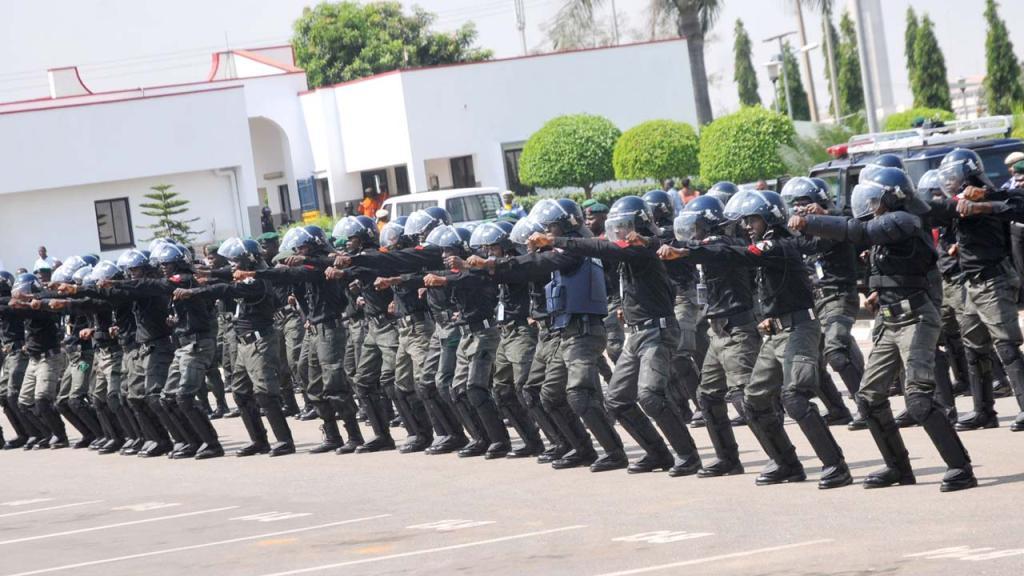
Police, NSCDC Have Clear Roles Under the Constitution- Tunji-Ojo
By: Michael Mike
Minister of Interior, Hon. Olubunmi Tunji-Ojo has said the Nigeria Security and Civil Defence Corps (NSCDC) should brace up to perform its constitutional given role, insisting that the constitution was clear on the role of the Corps which are to secure the nation’s critical infrastructure.
Speaking at the celebration of the World Civil Defence Day in Abuja on Friday, the Minister said there is distinct roles in the constitution for both the Nigeria Police Force and the NSCDC and there was no reason for a clash in roles.
He said that the members of Civil Defence Corps have no reason to perform the role of the police as they have a duty to ensure that the nation’s oil pipelines are not vandalized and oil theft is a thing of the past.
He equally said they have the duty of ensuring that a stop is put to illegal mining and that lives and property at mining sites are protection.
He said though they have done so much but much more need to be done in ensuring that Nigeria’s natural resources is not stolen by vandals and that public infrastructure are protected.
The Minister said: “I have not come here to commend you but rather to tell you to brace up as there is much more that needed to be done.”
He however called for collaboration between all security apparatus in the country to stem the tide of insecurity in the country.
The Commandant General, Nigeria Security and Civil Defence Corps (NSCDC), Dr. Ahmed Audi said the
Corps has intensified patrol, monitoring, surveillance and have emplaced adequate security measures to ensure protection of Critical National Assets and Infrastructure (CNAI) in all its formations across the Country including the Federal Capital Territory to prevent violent attacks, willful damage, vandalization and sabotage.
He said: “The Corps’ Anti-Vandal Squad and the Commandant General’s Special Intelligence Squad has continued to wage relentless war against vandals of Critical National Assets and Infrastructure and oil thieves among others.
“The sudden upsurge in the vandalization of railway tracks and sleepers is also being critically addressed as the Corps has begun an onslaught on these criminal elements/economic saboteurs. This renewed war has led to several arrests and seizures in the past one year.”
He revealed that between January and February 2024 alone, the Corps has made significant impact in the war against vandalization and oil theft where over 57 suspects have been arrested. A greater percentage of the arrested vandals are those involved in the vandalization of railway tracks and sleepers.
He said: “Similarly, on 11th January, 2024 at about 0057hrs, the Corps in conjunction with the Tantita Security Services Nigeria Limited also arrested a vessel, MT KALI suspected to have been involved in oil theft at the sea in Beneti, Bayelsa State.
“The Vessel was arrested with about 119 metric tons of crude oil already loaded. Twelve (12) crew members and eleven (11) community members on board were arrested and are undergoing investigation.”
Audi, who is also celebrating three years as CG, said parta of the achievements recorded from March, 2021 to date include
1,421 arrests, 933 prosecutions, 488 convictions and 233 destroyed illegal refineries.
Police, NSCDC Have Clear Roles Under the Constitution- Tunji-Ojo


News
U.S. Backs LNG Project to Boost Energy Access in Northern Nigeria, Open Market for American Firms

U.S. Backs LNG Project to Boost Energy Access in Northern Nigeria, Open Market for American Firms
By: Michael Mike
The United States government is backing a new liquefied natural gas (LNG) project aimed at improving energy access across northern Nigeria, with the initiative expected to expand industrial activity, support remote communities and create new opportunities for American energy technology companies.
The U.S. Trade and Development Agency (USTDA) announced on Friday that it has signed an agreement with Powergas Nigeria Ltd to fund a feasibility study for a proposed small-scale LNG plant in southern Nigeria. The facility will process natural gas into LNG for transportation by road to northern parts of the country that lack conventional gas pipeline infrastructure.
The project is designed to strengthen energy security in northern Nigeria, where expanding industrial activities continue to face challenges from inadequate energy infrastructure. Instead of relying on traditional gas pipelines, the LNG will be transported through “virtual pipeline” trucking networks to factories, businesses and underserved communities.
USTDA Deputy Director Thomas Hardy said the initiative demonstrates the agency’s commitment to promoting private sector-led growth through American energy technology while addressing infrastructure gaps in strategic markets.
“USTDA is helping catalyse private sector-led growth through the use of innovative U.S. energy technology,” Hardy said. “This project will help address critical energy security needs in a region where underinvestment in infrastructure has impeded economic opportunity.”
He added that the project would also create commercial opportunities for American LNG technology providers by positioning U.S. companies to supply liquefaction systems, electrical controls, engineering services and other critical infrastructure for the project.
According to USTDA, the feasibility study will evaluate the technical and financial viability of the proposed LNG plant, develop an implementation roadmap and identify suitable U.S. suppliers for key equipment and services. The study is also expected to lay the groundwork for attracting financing needed to move the project into implementation.
Powergas Nigeria described the initiative as a major step in expanding its footprint beyond compressed natural gas into LNG distribution.
The company’s Head of Strategy, Abiodun Oseni, said Powergas had established itself as a leading player in Nigeria’s compressed natural gas value chain and viewed LNG as the next phase of its expansion strategy.
He noted that LNG would enable the company to extend cleaner and more reliable energy supplies to industries and communities in remote parts of the country, adding that USTDA’s support would reduce investment risks and improve the project’s bankability.
Oseni said the company intends to evaluate and adopt American engineering expertise and liquefaction technology to ensure international standards in project delivery.
Nigeria possesses one of Africa’s largest proven natural gas reserves, yet millions of households and industries continue to face unreliable energy supplies due to inadequate gas transportation infrastructure. Small-scale LNG projects, coupled with virtual pipeline networks, are increasingly being promoted as a practical solution for delivering natural gas to off-grid industrial clusters and communities where conventional pipelines are uneconomical.
The initiative also aligns with growing efforts to deepen U.S.-Nigeria commercial cooperation in the energy sector while supporting cleaner-burning natural gas as a transition fuel for industrial development.
U.S. Backs LNG Project to Boost Energy Access in Northern Nigeria, Open Market for American Firms
Troops foil multiple ISWAP infiltration attempts in Maiduguri, Buratai axis
By Zagazola Makama
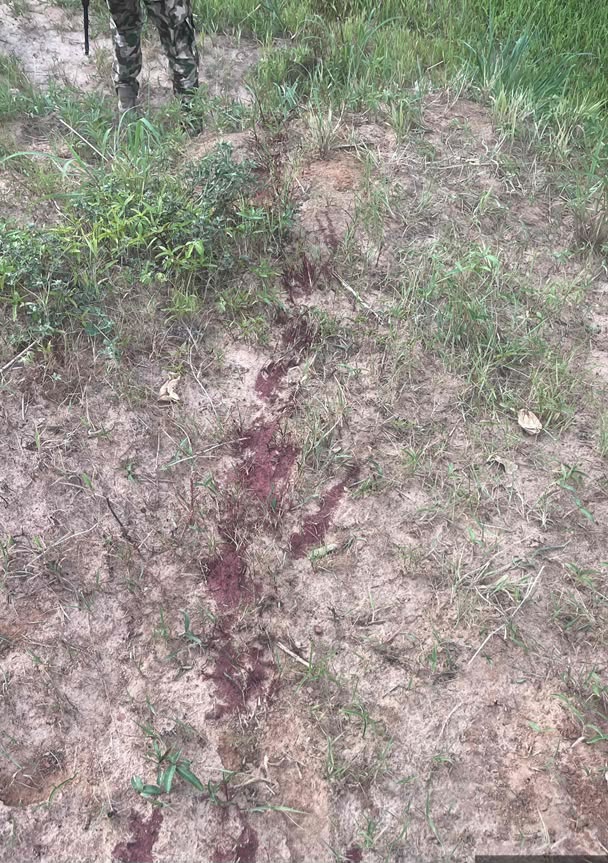
Troops of the Joint Task Force North East, Operation HADIN KAI (OPHK), have foiled coordinated infiltration attempts by suspected ISWAP terrorists targeting parts of Maiduguri and Buratai axis of Borno State, forcing the insurgents to retreat after intense engagements.
The attempted attacks occurred between 12:20 a.m. and 2:30 a.m. on Friday, when the terrorists simultaneously advanced toward Muna Garage, Shuwari Village and the Ajilari Cross area in an apparent bid to gain access into the Maiduguri metropolis.
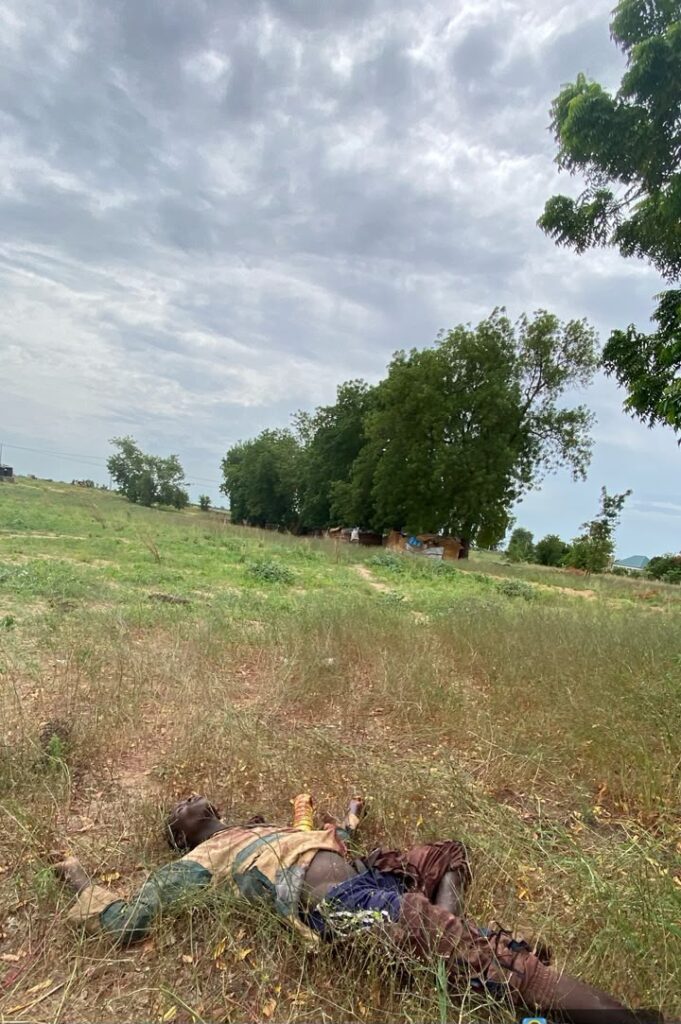
Military sources told Zagazola Makama that the troops, supported by an effective early warning system, detected the movement of the insurgents and engaged them from multiple directions with heavy and accurate fire, disrupting the coordinated assault before the terrorists could penetrate the city.
The sources said the terrorists, overwhelmed by the troops’ swift tactical response, abandoned their mission and fled in disarray.
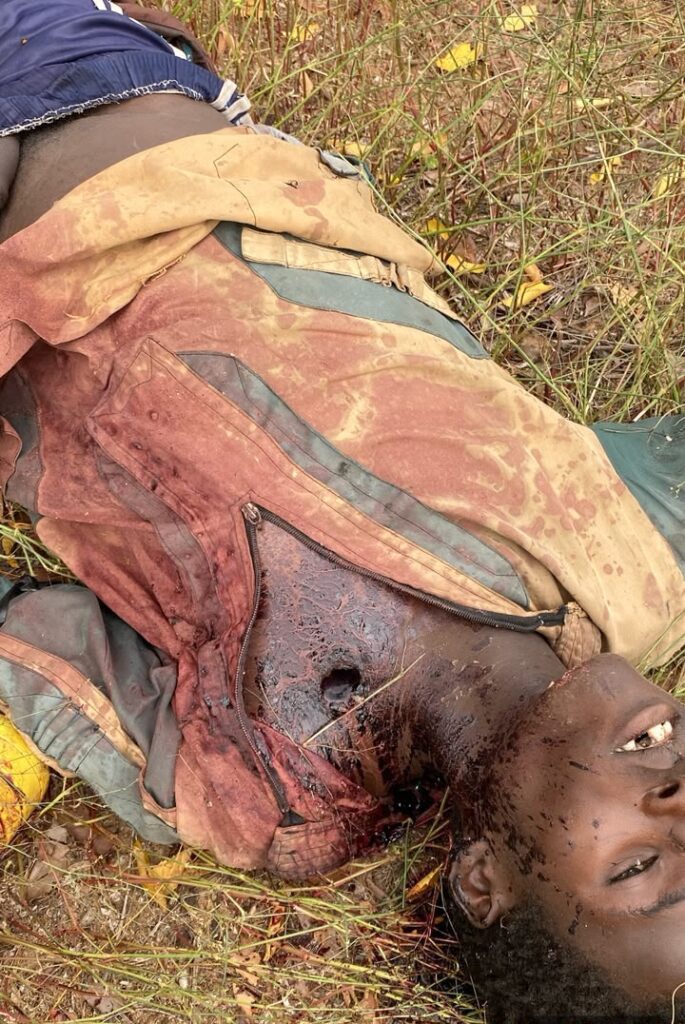
In related operations, troops also repelled separate infiltration attempts by the insurgents at Miringa and Dutsen Kura in the Buratai area of Borno State.
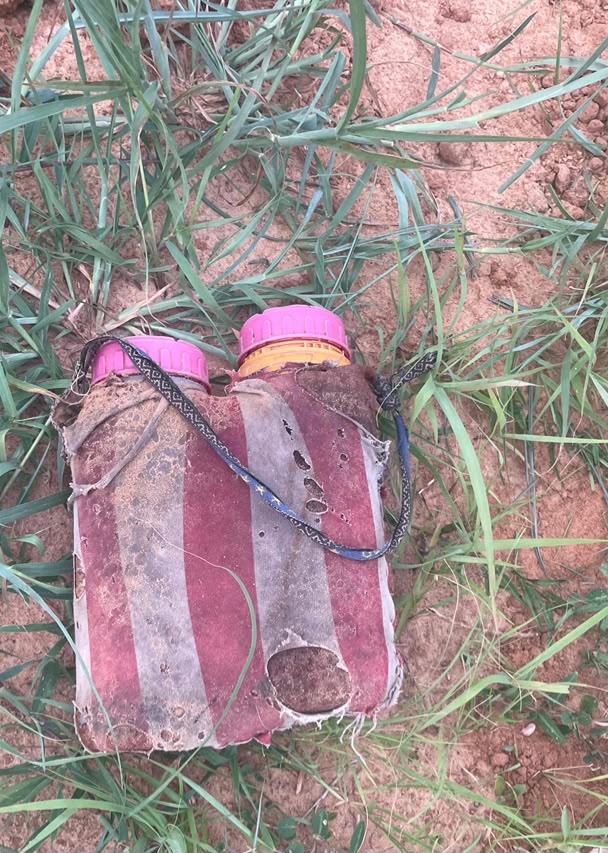
During the pursuit of the fleeing terrorists at Miringa, a Mine-Resistant Ambush Protected (MRAP) vehicle activated an Improvised Explosive Device (IED). However, no casualty was recorded among the troops, and the operational situation remained stable.
Security sources said clearance and exploitation operations are ongoing across the affected areas to track down the fleeing terrorists, recover possible abandoned equipment and prevent any further threat to nearby communities.
The military reaffirmed that Operation HADIN KAI would continue sustained offensive operations aimed at denying terrorist groups freedom of movement and safeguarding lives and property across the North-East.
Residents were also urged to remain vigilant and continue providing credible and timely intelligence to security agencies to support ongoing counter-terrorism operations.
Troops foil multiple ISWAP infiltration attempts in Maiduguri, Buratai axis
News
CCS Supports Objective Security Reporting, Rejects Ethnic Double Standards in Addressing Criminality

PRESS STATEMENT
CCS Supports Objective Security Reporting, Rejects Ethnic Double Standards in Addressing Criminality
July 8, 2026
The Centre for Contemporary Studies (CCS), Abuja, expresses its support for the position articulated by security analyst and conflict reporter Zagazola Makama on the imperative of objective, fact-based reporting of criminal activities, irrespective of the ethnic, religious, or political identity of those involved.
CCS believes that the fight against insecurity in Nigeria can only succeed when the same standards of accountability are applied to all offenders without exception. Criminality does not become acceptable because it is committed by a member of one’s ethnic group, nor does violence become justifiable because it is wrapped in the language of communal defence.
The controversy generated by the identification of a suspected attacker involved in the attempted assault on the National Institute for Policy and Strategic Studies (NIPSS), Kuru, highlights a deeper national challenge: the tendency of some individuals and groups to support transparency only when it exposes those they consider opponents, while resisting the same transparency when facts implicate members of their own communities.
CCS maintains that objective reporting is not ethnic profiling. Where credible facts establish the identity, affiliation, or operational background of criminal actors, journalists and security analysts should not be intimidated into suppressing such information merely because it is politically inconvenient or socially uncomfortable. Selective outrage and selective accountability only deepen mistrust and prolong conflict.
For years, Nigerians have demanded that security reports accurately identify perpetrators of violence. That demand must remain consistent. Whether the perpetrators are Fulani bandits, Berom militias, Irigwe militias, Mwaghavul militias, or any other armed criminal group, the truth must be reported and the law must take its course.
The Centre also commends the professionalism and courage of security personnel who successfully repelled the attempted attack on NIPSS and continue to defend strategic national institutions under difficult circumstances. Their sacrifices deserve public recognition and support.
CCS wishes to emphasize that no community in Nigeria possesses a monopoly on either victimhood or criminality. Across the country, millions of law-abiding citizens from every ethnic and religious background desire peace, security, and justice. Equally, criminal elements exist across communities and must be confronted without bias or sentiment.
Nigeria cannot defeat insecurity if citizens judge crimes based on the identity of the perpetrator rather than the nature of the offence. A criminal remains a criminal regardless of ethnicity. An armed attacker remains an armed attacker regardless of religion. A murderer does not become a hero because he belongs to a particular community.
The Centre therefore calls on the media, civil society organisations, community leaders, and the general public to uphold a single standard of justice and accountability. The protection of criminals through ethnic, religious, or political narratives undermines national security and weakens efforts to build lasting peace.
CCS stands firmly for truth, accountability, and equal justice under the law. We support all responsible efforts to expose criminality wherever it exists and reject every attempt to shield offenders from scrutiny because of their identity.
There must be no sacred cows in the fight against insecurity. There must be no shielding of criminals. Justice must remain blind to ethnicity, religion, and politics.
Yusuf Musa
Chief Executive Officer (CEO)
Centre for Contemporary Studies (CCS), Abuja &
Capt. Kabir Aminu (Rtd.)
Director, Security and Strategic Studies
Centre for Contemporary Studies (CCS), Abuja
CCS Supports Objective Security Reporting, Rejects Ethnic Double Standards in Addressing Criminality

U.S. Backs LNG Project to Boost Energy Access in Northern Nigeria, Open Market for American Firms

NIMC, NIPOST Integrate Identity, Digital Address Systems to Revolutionise Public Service Delivery

Troops foil multiple ISWAP infiltration attempts in Maiduguri, Buratai axis

Roger Federer’s Shock as DNA Results Reveal Myla and Charlene Are Not His Biological Children

THE PLIGHT OF FARIDA

FAILED COUP IN BURKINA FASO: HOW TRAORÉ NARROWLY ESCAPED ASSASSINATION PLOT AMID FOREIGN INTERFERENCE CLAIMS
-
 News2 years ago
Roger Federer’s Shock as DNA Results Reveal Myla and Charlene Are Not His Biological Children
-
Opinions4 years ago
THE PLIGHT OF FARIDA
-
 News1 year ago
FAILED COUP IN BURKINA FASO: HOW TRAORÉ NARROWLY ESCAPED ASSASSINATION PLOT AMID FOREIGN INTERFERENCE CLAIMS
-

 News2 years ago
EYN: Rev. Billi, Distortion of History, and The Living Tamarind Tree
-
 Opinions5 years ago
POLICE CHARGE ROOMS, A MINTING PRESS
-

 ACADEMICS2 years ago
A History of Biu” (2015) and The Lingering Bura-Pabir Question (1)
-

 Columns2 years ago
Army University Biu: There is certain interest, but certainly not from Borno.
-

 Politics1 year ago
2027: Why Hon. Midala Balami Must Go, as Youths in Hawul and Asikira/Uba Federal Constituency Reject ₦500,000 as Sallah Gift
