
News
Political Failure Fuels Global Environmental Crime, EIA Warns

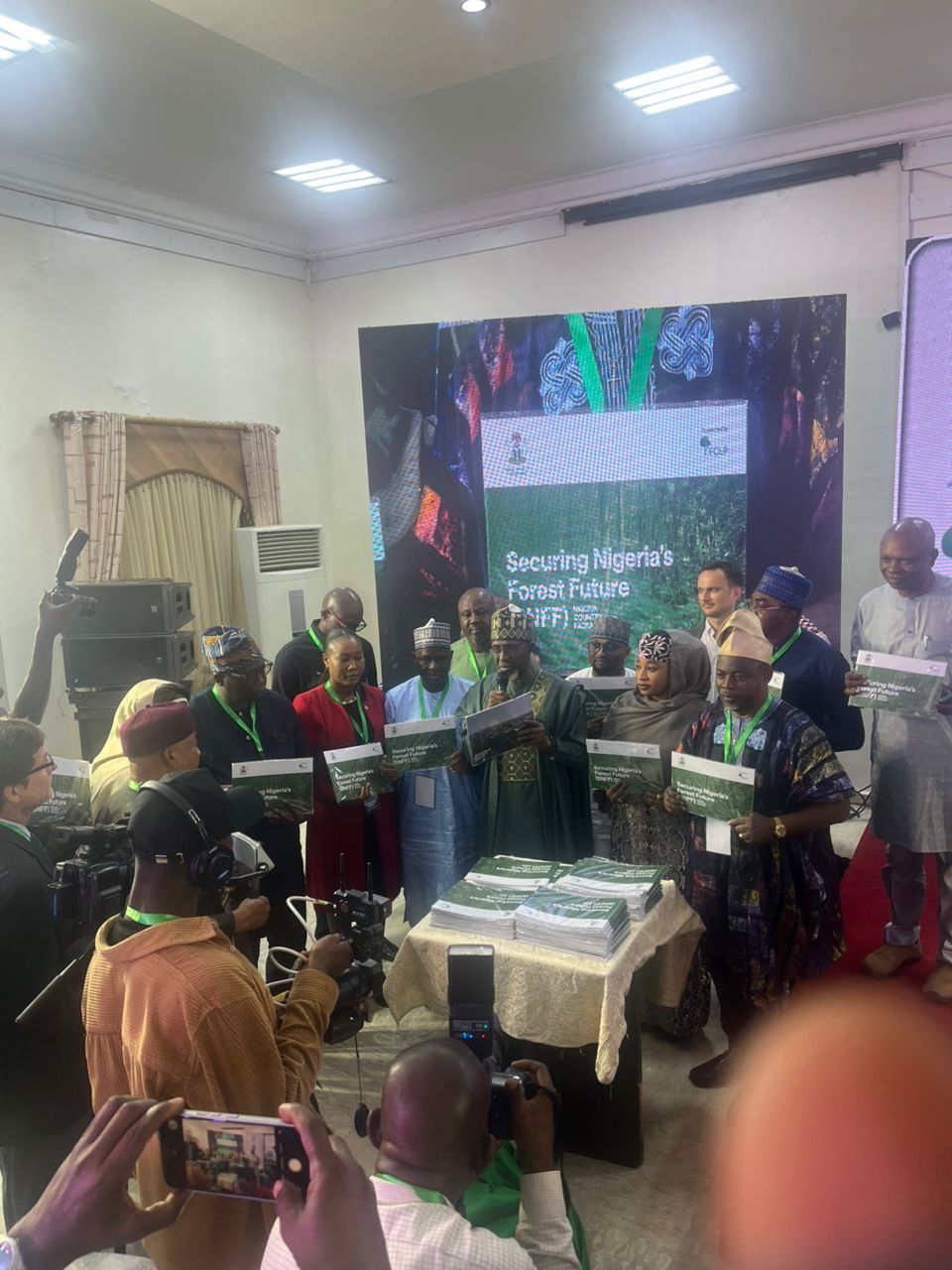
Political Failure Fuels Global Environmental Crime, EIA Warns
By: Michael Mike
Environmental crimes have become more sophisticated, profitable and destructive over the past 18 years because governments have failed to muster the political will, resources and coordination needed to tackle them, the Environmental Investigation Agency (EIA) has warned.
In a new report, Crimes that Affect the Environment – Still a Critical Threat to Our Future, released on Tuesday, the London-based organisation said environmental crime should no longer be treated as a collection of isolated regulatory violations but as a major form of transnational organised crime driving climate change, pollution and biodiversity loss.
The warning comes 18 years after EIA’s landmark 2008 report, Environmental Crime – A Threat to Our Future, which called for a coordinated international response to the growing threat.
According to the agency, many of the weaknesses identified in 2008 — including fragmented laws, weak deterrence, inadequate cross-border cooperation and insufficient political commitment — remain largely unresolved.
EIA Securing Criminal Justice Programme Lead, Justin Gosling, said the situation had become more serious because criminals had continued to innovate while enforcement systems remained inadequate.
“Many of the structural weaknesses identified in 2008 — fragmented legislation, weak deterrence, limited cross-border cooperation and insufficient political will — persist today,” Gosling said.
He warned that the consequences of continued inaction were becoming increasingly difficult, and in some cases impossible, to reverse.
The report identifies climate, pollution, waste, forest, fisheries and wildlife crimes as interconnected activities increasingly driven by organised criminal networks.
It said illegal trade in hydrofluorocarbon refrigerant gases alone costs European governments an estimated €77 million annually in lost VAT, while legitimate industry suffered more than €400 million in losses in 2020.
Waste crime, described as one of the fastest-growing forms of environmental crime, includes fraudulent recycling operations and the illegal shipment of plastic waste to countries where it is falsely declared recyclable before being processed in unlicensed facilities.
The agency also highlighted illegal logging, forest conversion and illicit mining as major drivers of deforestation and environmental destruction, warning that criminal mining operations are increasingly associated with mercury contamination, corruption and violence against forest-dependent communities.
Illegal fishing was similarly identified as a multibillion-dollar criminal enterprise, accounting for an estimated 15 to 30 per cent of global annual catches and generating up to $23.5 billion annually.
Beyond depriving coastal countries of revenue, EIA said illegal fishing fuels other crimes, including labour exploitation and human trafficking, while destructive bycatch threatens already endangered marine species.
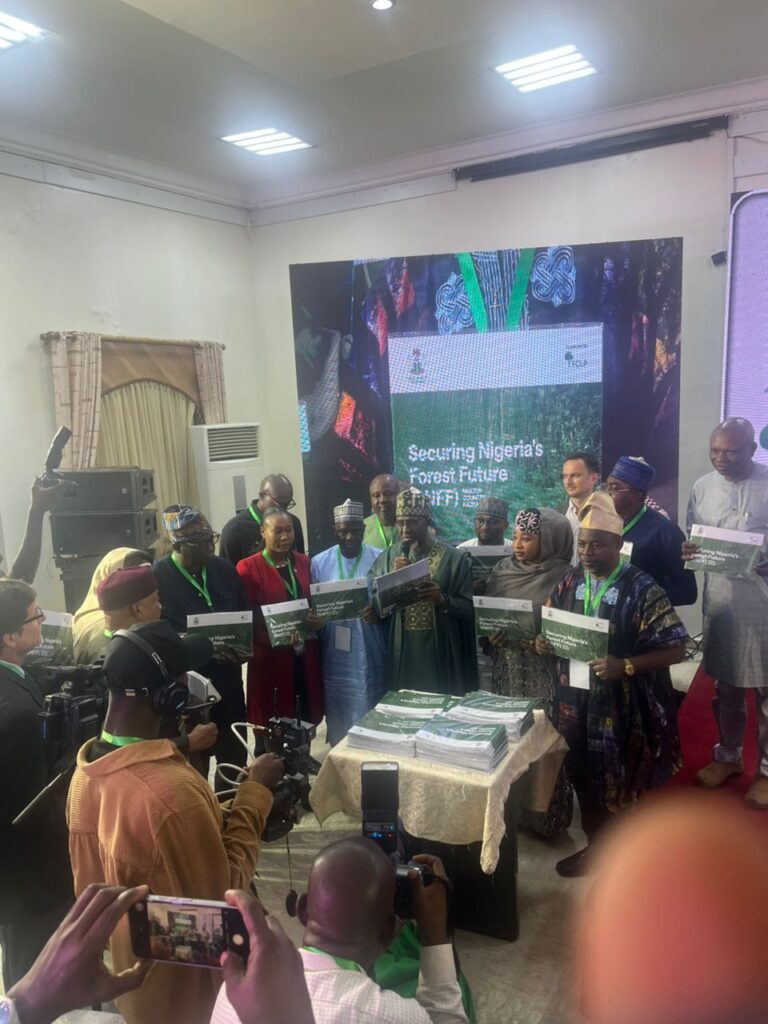
Wildlife trafficking also remains a highly profitable enterprise. The report said trafficking data recorded approximately 4,000 species between 2015 and 2021, while more than 70 per cent of emerging zoonotic diseases are linked to wildlife.
EIA said corruption, weak prosecution of senior criminal actors and the ability to move illicit commodities through legitimate supply chains had helped make environmental crime a “high-reward, low-risk” business.
Gosling said the international community already possessed many of the legal instruments required to respond, including the United Nations Convention against Transnational Organised Crime (UNTOC).
“This is not a failure of available tools — the legal frameworks and cooperation mechanisms needed to act already exist,” he said.
“The failure has been one of political will, resourcing and coordination.”
EIA is therefore calling for the more effective use of UNTOC against environmental crime, stronger cross-border enforcement and renewed political commitment to treating environmental crime as a global security threat.
The agency said failure to act would allow criminal networks to continue exploiting environmental resources while transferring the economic, social and ecological costs to governments, communities and future generations.
Political Failure Fuels Global Environmental Crime, EIA Warns



Army troops rescue retired general’s wife, arrest two kidnappers in Abuja
By: Zagazola Makama
Troops of the Nigerian Army have rescued Mrs Adonkie, wife of retired Brig.-Gen. Basil Adonkie, following a coordinated operation against her abductors in the Federal Capital Territory (FCT).
Mrs Adonkie was reportedly kidnapped from her residence at about 10:30 p.m. on Sept. 1, 2026, prompting an immediate joint search-and-rescue operation by troops from the Army Headquarters Garrison (AHQ GAR) and other Army formations.
Military sources told Zagazola Makama that the troops mobilised rapidly and pursued the kidnappers along three fronts in an effort to prevent the abductors from escaping with the victim.
Troops of AHQ GAR advanced through the ACO Estate-Goza Community axis, where they made contact with the kidnappers.
During the operation, the troops successfully rescued Mrs Adonkie around Angwan-Sabo Village, while another group of troops continued the pursuit of the fleeing kidnappers along the ACO Estate-Angwan Sayawa axis.
The operation continued into the early hours of Sept. 2, as a second group comprising troops of 176 Guards Battalion and 197 Special Forces Battalion was deployed to block and intercept the fleeing members of the kidnap syndicate.
At about 11:09 a.m. on Sept. 2, the troops made contact with the fleeing suspects along Gaube Village in Kuje Area Council.
The troops successfully intercepted and arrested two suspected kidnappers during the encounter.
They also recovered one AK-47 rifle and one AK-47 magazine loaded with 19 rounds of 7.62mm special ammunition.
The rescued victim was subsequently reunited with her family after the operation.
The two arrested suspects are currently in Army custody for profiling and further exploitation, with security personnel expected to use information obtained from them to track other members of the kidnap syndicate still at large.
The Army has also intensified operations in the affected areas to apprehend other suspected members of the criminal group and prevent further kidnapping activities.
The operation demonstrates the importance of rapid mobilisation, coordinated pursuit and intelligence-led action in responding to kidnapping incidents within the FCT.
The military said troops’ morale and fighting efficiency remained satisfactory as operations continue to apprehend the remaining suspects and strengthen security in the area.
Army troops rescue retired general’s wife, arrest two kidnappers in Abuja
Conflict Trauma: 8 in 10 Displaced Nigerian Children Suffer PTSD — FG
By: Michael Mike
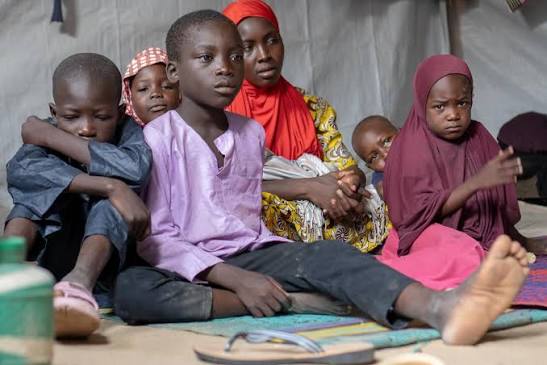
The Federal Government has raised the alarm over a growing mental-health crisis among children displaced by conflict, revealing that nearly eight in every 10 affected children suffer post-traumatic stress disorder, while more than four in five battle depression.
The government said the crisis was no longer only a humanitarian concern but a threat with potential consequences for Nigeria’s education system, public health and national security if the psychological wounds of childhood displacement were left untreated.
Minister of Humanitarian Affairs and Poverty Reduction, Dr Bernard Doro, disclosed this on Wednesday in Maiduguri, Borno State, at the National Dialogue on the Psychosocial Impact of Conflict on Children in Nigeria.
According to the minister, 79.7 per cent of displaced Nigerian children have PTSD, 84.8 per cent experience depression, while 90.7 per cent suffer functional impairments that affect their learning, relationships and sleep.
Doro said the statistics provided measurable evidence of the hidden cost of years of insurgency, terrorism and displacement, arguing that humanitarian interventions could no longer focus exclusively on food, shelter and physical safety.
“A child who has been fed, but not healed in mind, has not truly been rescued,” he said.
He warned that children carrying untreated trauma into adulthood could place a substantial burden on Nigeria’s schools, hospitals and security institutions for years to come.
“None of this is a charity; it is an investment. Untreated trauma in a generation of children is a cost that returns to our schools, our clinics, and our security architecture for decades,” Doro said.
The minister said evidence from Borno further illustrated the severity of the problem, citing a study in Chibok which found that 41.5 per cent of children exposed to Boko Haram insurgency met the clinical threshold for PTSD.
He also referenced a continent-wide analysis that estimated conflict-related PTSD among African children at about 36 per cent.
Doro said mental health had historically received less attention than physical health because its symptoms were often less visible, but insisted that Nigeria could no longer afford to treat psychological wellbeing as a secondary issue.
“Globally, there is a bias towards physical health compared to mental health. Because mental health manifests with subtle symptoms, healthcare professionals and policymakers do most times ignore mental health. This narrative needs to change,” he said.
The minister disclosed that more than one million children in the North-East had been uprooted from their homes by conflict, while more than 7,000 women and girls had been held by Boko Haram.
He said the human consequences were visible in the behaviour of children from communities such as Bama, Konduga, Gwoza and Chibok.
“These are the children of Bama, Konduga, Gwoza, Chibok. Children we have all met, I’m sure, in our interactions. And they go quiet in mid-sentences, manifesting the very symptoms of mental illness,” he said.
To address the crisis, Doro said his ministry would work with the Office of the Special Adviser to the President on Health and other partners to establish stronger community referral systems through which distressed children identified in schools and displacement camps could receive appropriate care.
He also announced plans to incorporate trauma exposure into the National Social Registry, alongside economic vulnerability, to help government identify households and communities with significant psychosocial needs.
The ministry, he added, would support the training of teachers and frontline humanitarian personnel to recognise warning signs among affected children.
“A child spends more hours with a teacher than a therapist,” Doro said.
Earlier, the Special Adviser to the President on Health, Dr Salma Ibrahim Anas, said the decision to hold the dialogue in Maiduguri was deliberate, given Borno’s prolonged exposure to insurgency.
Anas said the gathering was designed to move the discussion from isolated interventions to a national policy response based on research and evidence.
She recalled the case of a woman who escaped from Bama with seven children but arrived at the Dalori Internally Displaced Persons camp with only one, without knowing what had happened to the others.
For Anas, such experiences demonstrate that displacement does not end when a person reaches a camp or another place of safety.
“Some have been born only in this crisis,” she said, warning that children who spend their formative years surrounded by violence may carry its consequences into adulthood and pass unresolved trauma to another generation.
The humanitarian dimension of the crisis was reinforced by the United Nations Office for the Coordination of Humanitarian Affairs.
Representing OCHA, Ballama Mustapha said 7.8 million people required humanitarian assistance across Borno, Adamawa and Yobe under the 2025 Humanitarian Response Plan, including approximately 1.8 million children.
He said the 2026 plan identified 5.9 million people for assistance, but available funding remained insufficient to meet the scale of humanitarian needs.
“The wounds we cannot see must not become the reason we fail to act,” Mustapha said.
The UNICEF representative, Francis Otuochi, said an estimated 270,864 children in Borno, Adamawa and Yobe required mental health and psychosocial support under the 2026 humanitarian needs and response plan.
He added that more than 161,000 adults and over 23,000 persons living with disabilities also required such support.
Otuochi urged government to move psychosocial services from the margins of humanitarian programmes into mainstream child protection, education, healthcare and social welfare systems.
“Conflict continues to cause profound harm on children, including fear, anxiety, family separation, disrupted learning, and exposure to violence and trauma,” he said.
The North East Development Commission also warned that psychological recovery must accompany the physical reconstruction of communities devastated by conflict.
Representing the commission’s Managing Director, Mohammed Goni Alkali, the Borno State Coordinator, Engineer Muhammadu Umaru Maska, said rebuilding schools, hospitals, roads, markets, water systems and homes should be viewed as part of a wider peacebuilding strategy.
He said youth empowerment, livelihood restoration, support for internally displaced persons and social cohesion were equally necessary to prevent communities from sliding back into violence.
“Development should be regarded not as a mere economic activity, but as a powerful instrument of conflict prevention and peacebuilding,” Maska said.
The representative of the National Council of Traditional Rulers of Nigeria, Zanna Lawan Maina, District Head of Damboa, stressed the importance of traditional institutions in rebuilding trust, mobilising communities and supporting reconciliation.
The dialogue was convened by the Office of the Special Adviser to the President on Health in partnership with NEDC and the Borno State Government.
Stakeholders at the meeting agreed that Nigeria’s recovery from years of conflict must go beyond physical reconstruction. Without deliberate investment in the mental wellbeing of children who have grown up amid violence, the country could face a second crisis—one measured not in destroyed buildings, but in a generation struggling with trauma, disrupted development and diminished capacity to build peaceful communities.
Conflict Trauma: 8 in 10 Displaced Nigerian Children Suffer PTSD — FG
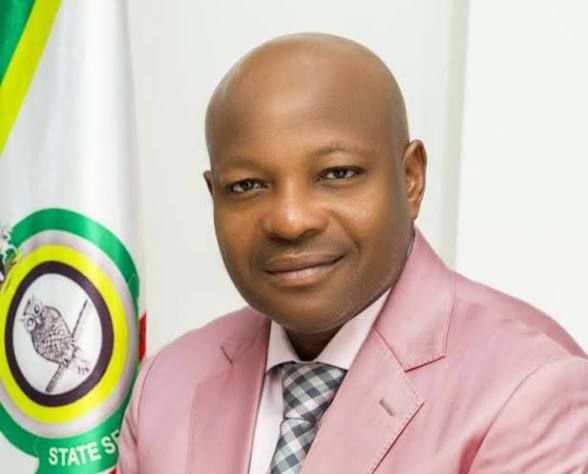
DSS Under Ajayi: Institutional Restraint That Should Earn Applause, By Sufuyan Ojeifo
By: Zagazola Makama
The decision by the Director-General of the Department of State Services (DSS), Oluwatosin Adeola Ajayi, to approach the Federal High Court over the possibility of suspending the prosecution of African Action Congress (AAC) presidential candidate, Omoyele Sowore, until after the 2027 presidential election is one that deserves careful consideration—and, indeed, applause.
At a time when actions involving opposition figures are easily viewed through partisan lenses, Ajayi has demonstrated something often missing in public administration: institutional restraint. More importantly, he has placed a politically sensitive question before the court rather than attempting to resolve it through administrative discretion alone.
The request to pause the proceedings should not be mistaken for weakness, political favouritism or an attempt to place anyone above the law. On the contrary, it reflects an understanding that the rule of law also requires fairness, proportionality and respect for the democratic process.
The DSS is not asking the court to terminate the case. Nor is it asking the court to determine Sowore’s innocence or guilt. It is asking the court to consider whether continuing the prosecution during an election period could unnecessarily complicate the democratic process. That distinction is fundamental.
Sowore, like every other Nigerian, remains subject to the law. A presidential candidacy does not confer immunity from criminal prosecution, just as an allegation does not amount to a conviction. If the court approves a postponement, the allegations do not disappear. The prosecution can resume after the election, allowing the legal process to proceed without creating avoidable controversy around a presidential candidate at a particularly sensitive political moment.
This distinction matters because the credibility of the proposal rests on the fact that it neither extinguishes the case nor predetermines its outcome. It merely asks the judiciary to consider whether timing, in the peculiar circumstances of an electoral contest, warrants a temporary adjustment to the proceedings.
This is precisely where Ajayi’s approach deserves commendation.
Security agencies wield enormous powers, and the manner in which those powers are exercised matters greatly. An institution that knows when to act firmly and when to exercise restraint demonstrates confidence in its own professionalism. The exercise of power is ultimately judged not only by what an institution can do, but by whether it knows the limits of what it should do.
The Foundation for Democracy in Africa (FDA), in commending the DSS leadership, described the decision as consistent with democratic principles, due process, the rule of law and the integrity of elections. That assessment deserves attention.
Nigeria’s democracy does not only depend on elections taking place; it also depends on citizens believing that institutions are not being used to influence electoral outcomes. That confidence can be fragile, particularly when a candidate challenging the political establishment is simultaneously facing prosecution by a security agency. Even where the prosecution is entirely lawful, its timing can become a subject of political contestation.
By placing the matter before the Federal High Court, Ajayi has allowed the judiciary to determine the appropriate course of action. That is a significant point. Rather than unilaterally making a politically sensitive decision, the DSS is seeking judicial guidance. The court remains free to accept, reject or modify the request on the basis of the law and the facts before it. That is how institutional restraint should work in a constitutional democracy. Such an approach reinforces institutional accountability.
Ajayi’s record, as highlighted by the FDA, also provides useful context. Since assuming office in August 2024, he has been credited with efforts to strengthen due process within the service, including the release of persons allegedly detained in error and compensation for affected individuals.
At the same time, the DSS under his leadership has continued to perform its core national-security responsibilities, including operations against terrorism and insurgency and the arrest and prosecution of high-profile suspects.
These two dimensions should not be presented as mutually exclusive. A security service does not become less effective because it respects due process. If anything, a professional security institution should be capable of combining operational effectiveness with a disciplined regard for the law.
This combination of firmness on security and restraint where democratic sensitivities are involved is precisely what Nigerians should expect from a modern security institution.
There is sometimes a mistaken assumption that a strong security agency must always be seen taking the toughest possible position. But strength is not measured solely by arrests, prosecutions or enforcement actions. Sometimes, the greater demonstration of institutional strength is knowing when restraint serves the national interest better. That appears to be the thinking behind the Ajayi initiative.
There is, however, an important caveat. Institutional restraint should not become selective restraint. The credibility of this approach will ultimately depend on whether the same principle can be applied impartially, regardless of the identity, popularity or political affiliation of the person involved.
The 2027 elections will be an important test of Nigeria’s democratic institutions. Political parties will compete vigorously, candidates will make competing claims and public institutions will inevitably come under scrutiny.
In such an environment, every effort to reduce unnecessary institutional tension should be welcomed, provided it remains firmly anchored in law. The judiciary, rather than the DSS or any political actor, must have the final say on whether the proposed postponement is legally and procedurally justified.
The proposed pause in Sowore’s prosecution can therefore be viewed as an attempt to protect the credibility of the electoral process without compromising the justice system.
It is also important to stress that the decision does not create a special legal status for Sowore. It establishes no permanent immunity and does not erase the case. It simply creates the possibility of allowing the election to take place without an ongoing prosecution becoming an additional source of political controversy. That is a reasonable position question for the DSS to place before the court. Whether it is the right remedy is properly a matter for the court to decide.
Indeed, the principle should be bigger than any individual or political party. If Nigeria is serious about building institutions that command public confidence, security agencies must be prepared to demonstrate impartiality, professionalism and respect for judicial authority regardless of the political identity of the person involved. Ajayi’s approach offers an example of how this can be done.
It is worth stressing this because the real value of the episode should not be reduced to whether one candidate benefits from a postponement. The more consequential question is whether Nigeria’s institutions are learning to manage politically sensitive cases in ways that protect both the integrity of the law and public confidence in the democratic process.
The DSS must remain tough against terrorism, violent extremism, threats to national security and other criminal activities. But that firmness must coexist with respect for constitutional rights and democratic institutions. That balance is not a contradiction. It is the hallmark of responsible security leadership.
For that reason, the FDA’s commendation of Ajayi is understandable. His decision to seek judicial consideration rather than simply allowing a politically sensitive prosecution to become another flashpoint demonstrates an appreciation of the bigger picture.
It also sends an important institutional message: that the DSS recognises that its authority is exercised within a constitutional order, not above it.
In the end, democracy is strengthened not only by the enforcement of laws but also by the responsible exercise of institutional power.
The DSS under Ajayi appears to be demonstrating that restraint can be a sign of strength, not weakness. And for that If that restraint is consistently applied, transparently justified and firmly anchored in law, the DSS leadership deserves applause.
● Sufuyan Ojeifo, MNGE, MGOCOP, MNIPR, is a journalist and public affairs analyst.
DSS Under Ajayi: Institutional Restraint That Should Earn Applause, By Sufuyan Ojeifo

Army troops rescue retired general’s wife, arrest two kidnappers in Abuja

Conflict Trauma: 8 in 10 Displaced Nigerian Children Suffer PTSD — FG

DSS Under Ajayi: Institutional Restraint That Should Earn Applause, By Sufuyan Ojeifo

Roger Federer’s Shock as DNA Results Reveal Myla and Charlene Are Not His Biological Children

THE PLIGHT OF FARIDA

FAILED COUP IN BURKINA FASO: HOW TRAORÉ NARROWLY ESCAPED ASSASSINATION PLOT AMID FOREIGN INTERFERENCE CLAIMS
-
 News2 years ago
Roger Federer’s Shock as DNA Results Reveal Myla and Charlene Are Not His Biological Children
-
Opinions5 years ago
THE PLIGHT OF FARIDA
-
 News1 year ago
FAILED COUP IN BURKINA FASO: HOW TRAORÉ NARROWLY ESCAPED ASSASSINATION PLOT AMID FOREIGN INTERFERENCE CLAIMS
-

 News2 years ago
EYN: Rev. Billi, Distortion of History, and The Living Tamarind Tree
-
 Opinions5 years ago
POLICE CHARGE ROOMS, A MINTING PRESS
-

 ACADEMICS3 years ago
A History of Biu” (2015) and The Lingering Bura-Pabir Question (1)
-

 Columns3 years ago
Army University Biu: There is certain interest, but certainly not from Borno.
-

 Politics1 year ago
2027: Why Hon. Midala Balami Must Go, as Youths in Hawul and Asikira/Uba Federal Constituency Reject ₦500,000 as Sallah Gift
