
Politics
Politics: Police takes over APC Secretariat in Abuja


Politics: Police takes over APC Secretariat in Abuja
There was palpable tension at the national secretariat of the All Progressives Congress (APC) early hours of Monday, as policemen, loaded in over five Hillux Patrol Vans took over the recently named Buhari House.
The police team numbering over 30 had strategically positioned themselves within the secretariat along Blantyre street, without harassing passersby and the motorists using the street.
Our correspondent who monitored the situation can report that the gun-wielding, battle-ready policemen did not allow any vehicle park within the secretariat vicinity, including those from the staff, the visitors and the journalists that arrived there early.
Although the presence of the police awakened reminisce of the dark days of the former National Chairman APC National Working Committee (NWC), Comrade Adams Oshiomhole, however, the difference is that they were not subjected to any undue harassment by the security operatives.
Read Also: Borno declares Monday Public Holiday to celebrate Muharram
As at 11 am, the usually bubbling secretariat was still like a ghost town, as the presence of the security agencies was scaring many people, including the staff and visitors.
It was, however, gathered that the security agents acted on security report that certain persons have been mobilized to stage a demonstration at the party secretariat on Monday.
“You don’t expect the party’s national leadership to fold their hands in the face of such threatening security report. They don’t want to take chances or watch the situation degenerate to the days of Oshiomhole when activities in the party were grounded hence the decision to mobilize the security agencies to protect the secretariat against any attack,” the security personnel said when asked by Newsmen


Politics
2027: Ishaya Malgwi does not reflect the sentiments or intentions of northern leadership nor the stance of Vice President Kashim Shettima.

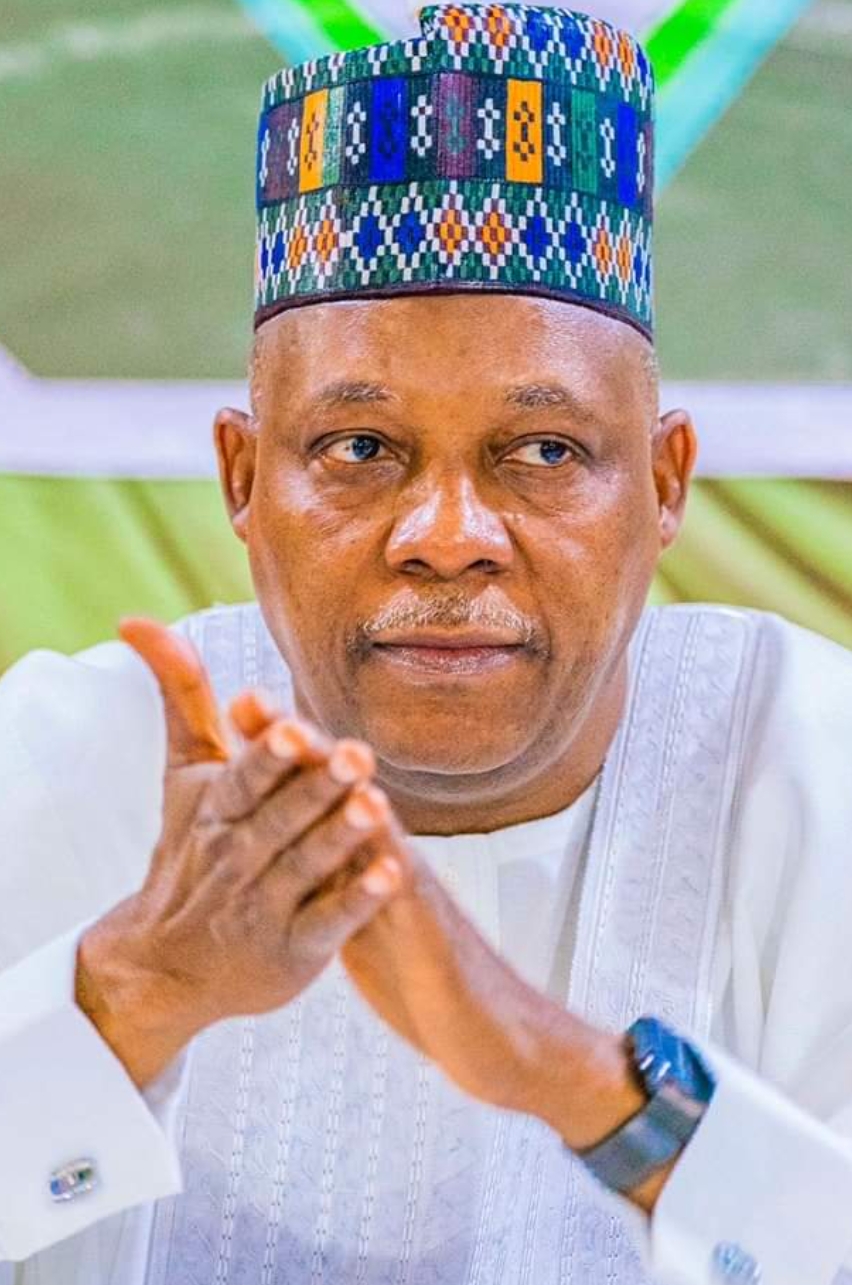
2027: Ishaya Malgwi does not reflect the sentiments or intentions of northern leadership nor the stance of Vice President Kashim Shettima.
By: Dr. James Bwala
Insinuations by one, Mr. Ishaya Malawi, on the political happenings should be seen as the imaginations of his mindset. While he is free to make comments or statements as democratically allowed, there is a need for him to trade with caution, particularly in his attempts to drag the personality of the vice president, Kashim Shettima, into his imaginative sentiments. Recently, Mr. Ishaya Malgwi made an assertion suggesting that northern leaders might consider urging Vice President Kashim Shettima, GCON, to contest against President Bola Ahmed Tinubu, GCFR, under the banner of the All Progressives Congress (APC). This claim has sparked considerable debate and requires a measured response grounded in fact, loyalty, and an understanding of the current political trajectory of Nigeria under the APC administration. It is crucial to address this insinuation with clarity and responsibility to uphold the integrity of our democratic institutions and promote constructive political discourse.
Firstly, it is essential to establish that the suggestion by Mr. Malgwi does not reflect the sentiments or intentions of northern leadership nor the stance of Vice President Kashim Shettima himself. His Excellency, Vice President Kashim Shettima, is unequivocally loyal to President Bola Ahmed Tinubu and firmly committed to the collective vision and mission of the APC government. The relationship between the president and the vice president is founded on mutual respect, shared goals, and a dedication to the welfare of Nigerians. To insinuate otherwise undermines not only their personal integrity but also the unity and progress of the ruling party.
READ ALSO: https://newsng.ng/umth-when-vp-kashim-shettima-acknowledges-ahidjo-and-hospital-staff-for-their-services-to-victims-of-maiduguri-bomb-blasts/
The APC government, since its inception, has been dedicated to fostering good governance, promoting inclusive development, and ensuring security and stability across the nation. Contrary to the portrayal of a fragmented administration, the APC operates as a cohesive entity working tirelessly to address the myriad challenges facing Nigeria. The claim that the APC is running parallel or competing governments within itself is unfounded and detrimental to the image of the administration both domestically and internationally. Such assertions risk sowing discord and confusion among citizens, detracting from the government’s focus on delivering tangible results.
Also, it is important to contextualize the prevailing issues of unrest, insecurity, hunger, and dissatisfaction within a historical framework. These challenges are not novel to the Tinubu administration; rather, they are deep-rooted problems inherited from previous administrations, exacerbated over years by complex socio-economic and political factors. While the current government acknowledges these issues and is actively working toward sustainable solutions, it is misleading to suggest that these problems originated solely with the APC’s leadership. Political discourse should therefore be grounded in reality and aimed at constructive engagement rather than unfounded blame.
READ ALSO: https://newsng.ng/umth-when-vp-kashim-shettima-acknowledges-ahidjo-and-hospital-staff-for-their-services-to-victims-of-maiduguri-bomb-blasts/
Mr. Malgwi’s reputation for disseminating unsubstantiated claims and engaging in provocative rhetoric must also be considered when evaluating his recent comments. Political dialogue in Nigeria demands responsibility, accountability, and a commitment to truth. When individuals like Ishaya Malgwi resort to spreading misinformation or making baseless allegations, they do a disservice to the democratic process and undermine public trust in governance. It is imperative that criticism, when necessary, be based on factual evidence and delivered respectfully to enhance national cohesion.
In dispelling the notion that Vice President Kashim Shettima might run against President Tinubu, it is also pertinent to highlight the Vice President’s demonstrated loyalty and active involvement in advancing the administration’s agenda. Vice President Shettima’s role extends beyond mere symbolism; he is deeply engaged in policymaking, outreach, and implementation of government programs. His efforts have consistently aligned with the president’s policies, reflecting a harmonious partnership aimed at stabilizing and developing the nation. To drag his name into speculative and divisive narratives not only misrepresents his position but also risks damaging the political harmony essential for effective governance.
READ ALSO: https://newsng.ng/umth-when-vp-kashim-shettima-acknowledges-ahidjo-and-hospital-staff-for-their-services-to-victims-of-maiduguri-bomb-blasts/
Mr. Ishaya Malgwi should know that the political unity within the APC is pivotal for Nigeria’s progress. The party’s platform is built on principles of inclusivity, democracy, and national development. Internal cohesion ensures that the party can effectively address pressing national concerns such as economic revitalization, security challenges, infrastructure development, and social welfare. Attempts to insinuate internal contests or rivalries without substantial proof serve no purpose other than to destabilize the party and distract from its governance responsibilities.
The insinuation by Mr. Ishaya Malgwi regarding Vice President Kashim Shettima’s potential opposition to President Bola Ahmed Tinubu within the APC is baseless and misleading. It does not represent the views of northern leaders or reflect the reality of the administration’s internal dynamics. Vice President Shettima remains a loyal and integral part of the Tinubu-led government, which continues to pursue policies aimed at good governance and national development.
The APC is not a house divided; it is a government determined to unify Nigerians and drive the country forward. Political discourse should honor the principles of truth, respect, and constructive criticism to foster an environment conducive to Nigeria’s growth and stability. Mr. Malgwi and others must exercise caution and responsibility in their public statements to avoid unnecessary political agitation and focus instead on supporting efforts that uphold Nigeria’s democratic values and collective prosperity.
* James Bwala, PhD, writes from Abuja.
2027: Ishaya Malgwi does not reflect the sentiments or intentions of northern leadership nor the stance of Vice President Kashim Shettima.


ADC; Coalition Is Not Enough
By Kunle Awosiyan
Sincerely, if you observe the politics of Bola Ahmed Tinubu keenly and critically, you will realise that he is a very thorough politician.
He goes beyond merely spreading his tentacles to bring people into his fold; he deploys every available tool to outmanoeuvre his opponents.
He looks beyond coalition-building, studying his adversaries like a football coach analysing opponents, identifying loopholes and exploiting them to secure victory.
Though trained as an accountant, Tinubu has immersed himself in research, journalism, and law, transforming these disciplines into strategic assets in his political playbook.
This is where many of his opponents have faltered. Rather than studying him, they have focused more on blackmail and rhetoric.
Instead of carefully navigating the legal and institutional frameworks of politics, they appear fixated on hastily dislodging him by jumping into any available political platform without adequately addressing procedural and legal vulnerabilities.
They needed a platform, no doubt, but have shown insufficient patience and diligence to close loopholes that could ultimately undermine their efforts.
Those in the opposition today, particularly within the African Democratic Congress (ADC), appear unprepared for the level of work required to clinch power.
If Tinubu were a football coach, he would lose very few matches and only by slim margins. He would win many more, including major trophies. Any coach hoping to defeat such a team must not only be intelligent but exceptionally thorough.
It is time the opposition understands that democracy, in its modern form, goes beyond the classical definition of government of the people, by the people, and for the people. It now encompasses the strategic deployment of law, not just the accumulation of votes, as a pathway to power.
Interestingly, the purported chairman of the ADC and former Senate President, David Mark, recently criticised the Independent National Electoral Commission, INEC, over its interpretation of the legal principle of status quo ante bellum.
This followed the derecognition of his leadership by the commission.
While the legal jargon may be complex, the implication is clear: those within the ADC understand the power of law in a democracy, yet have failed to deploy it effectively, choosing instead to blame Tinubu for their own strategic missteps.
The ruling party, All Progressives Congress, had swiftly replied ADC that neither the president nor the party is involved in its woe.
Ironically, two prominent figures within the ADC leadership ranks, Peter Obi and Rauf Aregbesola once benefited from judicial victories at different points in their political careers, underscoring the very importance of legal strategy in electoral contests.
Politicians seeking to challenge Tinubu, including Atiku Abubakar, David Mark, Nasir El-Rufai, Aregbesola, and Obi still have significant work to do if they are to mount a serious challenge. It is unfortunate that many appear to interpret democracy primarily through the lens of coalition-building, without deeper strategic grounding.
If Obi does not fully grasp this, one would expect Aregbesola given his political history with Tinubu to understand it better. Over the years, Tinubu has built structured teams: legal, economic, security, and political dedicated to analysing and countering opposition forces.
Among those in the ADC, Aregbesola may be the closest in experience to Tinubu’s model, but he cannot do it alone. One individual cannot match a coordinated network of experts working with a singular objective.
Let it be clear: INEC is not the enemy. However, it is bound by the rule of law and cannot act in defiance of court decisions.
Ultimately, for politicians who believe they can simply assemble themselves and appeal to public emotion through criticism of the ruling party, the reality is stark: modern democracy demands far more. It requires depth, structure, strategy, and above all, smartness.
ADC; Coalition Is Not Enough
Politics
Minister of Agriculture, Senator Abubakar Kyari: The Unassailable Choice for APC Candidate in Borno State
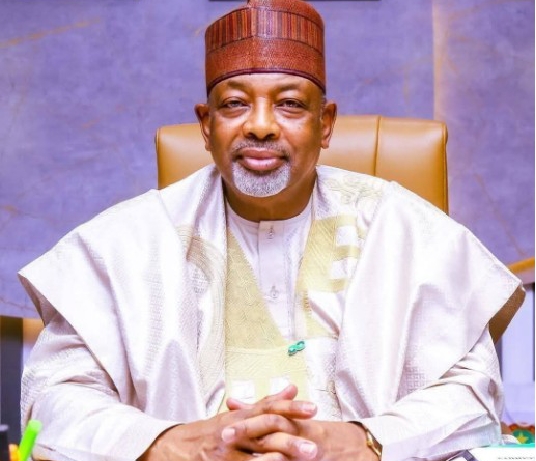
Minister of Agriculture, Senator Abubakar Kyari: The Unassailable Choice for APC Candidate in Borno State
By: Dr. James Bwala
Let me look at this personality as Borno State gears up for the 2027 governorship election, intense speculation surrounds the candidate who will represent the ruling All Progressives Congress (APC). Among the array of contenders, one figure emerges with an unparalleled pedigree, extensive political experience, and strategic alliances that position him as the most compelling choice for the next governor of Borno state— Senator Abubakar Kyari. His distinguished background, formidable political track record, and connections to Nigeria’s top leadership underscore why he is not only the natural front-runner but also the candidate most capable of leading Borno State into a prosperous future.
Senator Abubakar Kyari’s pedigree is arguably unmatched by any other aspirant within Borno State’s political landscape. He hails from a prominent family with a deep tradition of public service. His late father, Brigadier General Abba Kyari, served as military governor of Kaduna State — a position that symbolized trust, responsibility, and leadership during a critical period of Nigeria’s history. This legacy has bestowed on Senator Kyari a foundation of respect and influence that few candidates can claim. History often demonstrates that political acumen and commitment to governance run in families, and if this pattern holds true, Senator Kyari is poised to etch his own name in the annals of Borno State’s political history.
READ ALSO: https://newsng.ng/borno-2027-when-context-speaks-louder-than-words-on-the-road-to-maiduguri-government-house/
Beyond his family’s illustrious background, Senator Kyari is well-educated and grounded in academic excellence. His education equips him with the intellectual rigor required to navigate the complex socio-economic challenges facing Borno State. Being part of the elite groups within Borno further bolsters his legitimacy as a leader who understands the nuances of the state’s diverse communities and their aspirations. This blend of education and elite status places Senator Kyari in a unique position to bridge traditional values and modern governance, a balance that is essential for effective state leadership.
Senator Kyari’s political journey reflects a breadth and depth of experience that distinguishes him from his contemporaries. Prior to his appointment as Minister of Agriculture by President Bola Ahmed Tinubu, he held two of the most significant positions within the APC party structure: Deputy National Chairman and National Chairman. These roles not only underscore his ability to maneuver within high-level political arenas but also demonstrate the confidence that party stakeholders have in his leadership capacities.
READ ALSO: https://newsng.ng/borno-2027-when-context-speaks-louder-than-words-on-the-road-to-maiduguri-government-house/
Moreover, Senator Kyari was elected unopposed as Chairperson of the International Fund for Agricultural Development (IFAD), an achievement that points to his international recognition and competence in addressing agricultural and developmental issues. His current role further reinforces his centrality in party affairs and his relevance in charting the APC’s future direction when subsequently elected as governor Zulum successor.
Crucially, Senator Kyari maintains strong personal and political relationships with key figures in Nigeria’s political hierarchy. He is very close to both President Bola Tinubu and Vice President Kashim Shettima, the latter being his right-hand man. These ties not only underscore his influence but also guarantee strategic support and collaborative governance should he secure the governorship. The importance of such alliances cannot be overstated given the political dynamics in Borno and the broader Nigerian context, where success often hinges on cohesive partnerships and these partnerships, Senator Abubakar Kyari has built since the return of democracy in Nigeria and working with all the governors till now.
READ ALSO: https://newsng.ng/borno-2027-when-context-speaks-louder-than-words-on-the-road-to-maiduguri-government-house/
The challenges facing Borno State are multifaceted—ranging from security issues and infrastructural deficits to agricultural development and economic revitalization. The state needs a governor with a panoramic vision, the capacity to implement policies effectively, and the political clout to attract national attention and resources. Senator Abubakar Kyari embodies all these qualities.
First, his tenure as Minister of Agriculture equips him with insights into sustainable agricultural practices and food security, which are vital sectors for Borno’s predominantly agrarian economy. His understanding of agricultural policies and international fundraising mechanisms through IFAD poises him to drive transformative projects that can revitalize the state’s economy and improve livelihoods.
READ ALSO: https://newsng.ng/borno-2027-when-context-speaks-louder-than-words-on-the-road-to-maiduguri-government-house/
Second, Senator Kyari’s extensive experience in party politics equips him to manage complex stakeholder interests within the state. Political unity within the APC in Borno is critical to securing a decisive victory in the elections and ensuring stable governance afterward. His proven track record in managing party affairs at the national level will translate into effective coalition-building and governance at the state level.
Third, his elite background and education endow him with the credibility to engage with federal institutions and international partners. Given Borno’s history of insurgency and ongoing reconstruction needs, a governor who can effectively mobilize support and resources from the federal government and development agencies is indispensable. Senator Kyari’s established networks put him in an excellent position to do just that.
READ ALSO: https://newsng.ng/borno-2027-when-context-speaks-louder-than-words-on-the-road-to-maiduguri-government-house/
Additionally, the alignment and trust he shares with President Tinubu and Kashim Shettima signal continuity in leadership and policy coherence. With Shettima’s influence and Tinubu’s presidency, Senator Kyari’s governorship would ensure a synchronized approach to development that leverages both federal and state capacities efficiently.
Some may argue that other candidates possess grassroots appeal or that political dynamics in Borno might favor a different figure. While grassroots connection is important, governance demands more than popularity; it requires competence, networks, and strategic vision—all qualities Senator Kyari possesses abundantly. Moreover, his roles in APC leadership and as Minister have undoubtedly enhanced his visibility and rapport across various constituencies in Borno State, thus bridging the gap between elite status and popular support.
READ ALSO: https://newsng.ng/borno-2027-when-context-speaks-louder-than-words-on-the-road-to-maiduguri-government-house/
Another contention might be concerns about political dynasties or nepotism. However, Senator Kyari’s achievements stand on their own merit beyond lineage. His unopposed election to IFAD chairmanship and repeated appointments to key party positions highlight meritocratic recognition rather than mere reliance on pedigree.
Senator Abubakar Kyari stands out as the most qualified, experienced, and strategically positioned candidate for the APC to field in the 2027 Borno State governorship election. His rich family legacy, excellent educational background, remarkable political career, and close relationships with Nigeria’s top leaders make him uniquely suited to lead Borno toward peace, stability, and development. The confluence of these attributes creates a compelling case for his emergence as the APC candidate—a candidacy that promises not only continuity but also robust progress for Borno State.
READ ALSO: https://newsng.ng/borno-2027-when-context-speaks-louder-than-words-on-the-road-to-maiduguri-government-house/
As history has shown, when leadership meets pedigree and capability, lasting legacies are forged. Therefore, supporting Senator Abubakar Kyari’s candidacy is not merely a political choice; it is a strategic imperative for the future prosperity of Borno State. Next I will look at his role as Chief of staff to governor Kashim Shettima, the current VP and what it means to be in that position of trust and loyalty.
Minister of Agriculture, Senator Abubakar Kyari: The Unassailable Choice for APC Candidate in Borno State

Troops rescue kidnap victim in kogi

NDLEA Busts Nationwide Drug Ring, Arrests 93-Year-Old Suspect and Medical Doctor in Sweeping Crackdown

NHRC Confronts Past Challenges, Pushes Digital Overhaul to Fix Broken Complaint System

Roger Federer’s Shock as DNA Results Reveal Myla and Charlene Are Not His Biological Children

THE PLIGHT OF FARIDA

FAILED COUP IN BURKINA FASO: HOW TRAORÉ NARROWLY ESCAPED ASSASSINATION PLOT AMID FOREIGN INTERFERENCE CLAIMS
-
 News2 years ago
Roger Federer’s Shock as DNA Results Reveal Myla and Charlene Are Not His Biological Children
-
Opinions4 years ago
THE PLIGHT OF FARIDA
-
 News12 months ago
FAILED COUP IN BURKINA FASO: HOW TRAORÉ NARROWLY ESCAPED ASSASSINATION PLOT AMID FOREIGN INTERFERENCE CLAIMS
-

 News2 years ago
EYN: Rev. Billi, Distortion of History, and The Living Tamarind Tree
-
 Opinions4 years ago
POLICE CHARGE ROOMS, A MINTING PRESS
-

 ACADEMICS2 years ago
A History of Biu” (2015) and The Lingering Bura-Pabir Question (1)
-

 Columns2 years ago
Army University Biu: There is certain interest, but certainly not from Borno.
-

 Opinions2 years ago
Tinubu,Shettima: The epidemic of economic, insecurity in Nigeria
