
Education
Praises, attestations as tenure of Vice Chancellor, Saadu Zungur University Ends

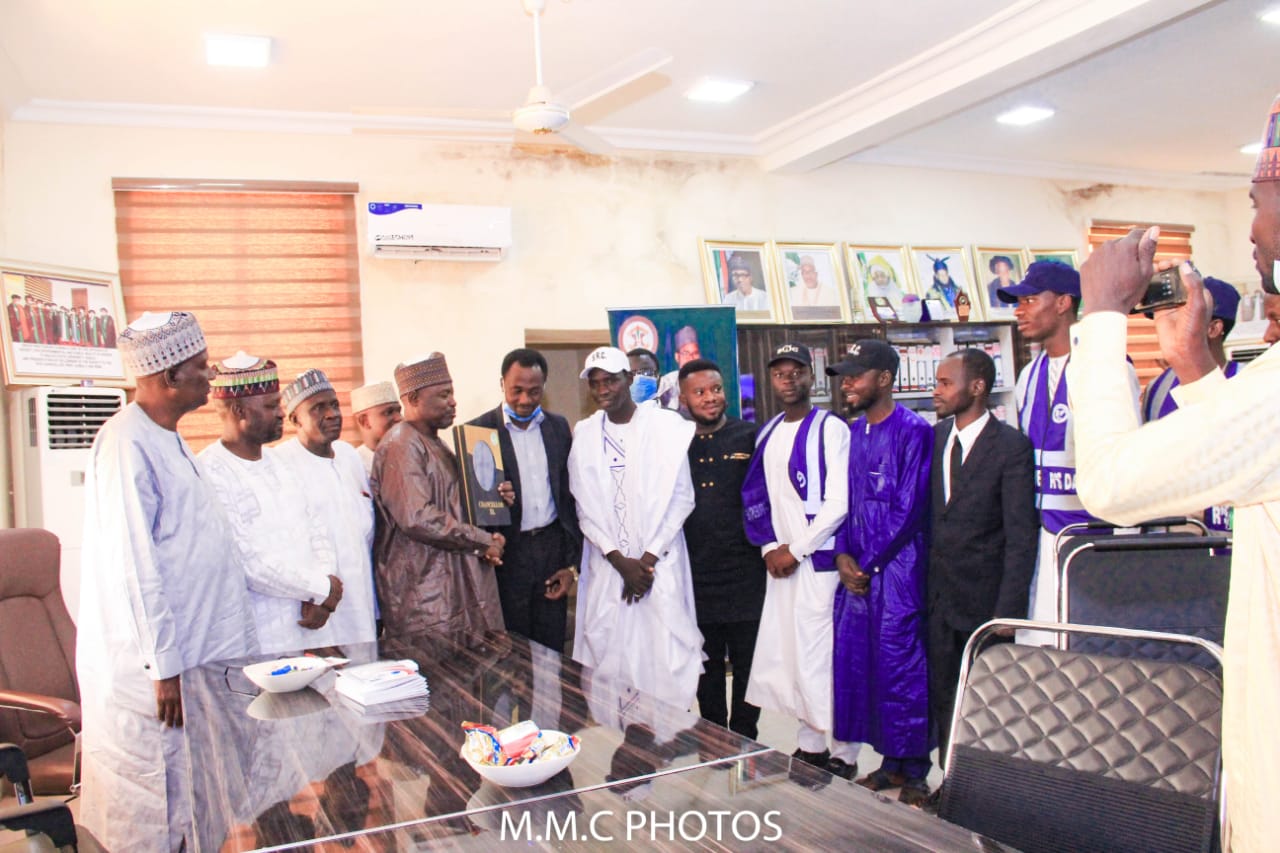
Praises, attestations as tenure of Vice Chancellor, Saadu Zungur University Ends
By: Mohammed Kaka Misau
Professor Auwalu Uba, the Vice Chancellor of Sa’adu Zungur University Gadau, Bauchi state was appointed on 20th December 2017 after serving as the Deputy Vice Chancellor Administration at the Abubakar Tafawa Balewa University (ATBU) Bauchi from 2016 to 2017.
Born in Hardawa, Misau local government area of Bauchi, the young, Auwalu Uba attended Hardawa Government Primary school before he went to Government Secondary School Misau where he spent three years and then transferred to Government Scuence Secondary School Azare. He was among the pioneers of science secondary school Azare during the administration of late Tatari Ali.
He proceeded to School of Basic Studies, Ahmadu Bello University Zaria, got admitted after a year and graduated in 1987 with bachelor’s degree in microbiology.
After graduation, Prof. Uba did his compulsory one year NYSC at General Hospital Katsina in Katsina state, after which he got appointment with the University of Maiduguri teaching hospital where he started his career.
Prof. Uba took up appointment with the University of Maiduguri as a graduate assistant and rose to the rank of lecturer II. From there he transferred his services to the Abubakar Tafawa Balewa University Bauchi where he rose through the ranks up to the rank of Professor in 2007.
Commenting about five years stewardship of the VC, Director, Center of Excellence for Research and Innovation in the University, Dr. Kabiru Ibrahim Karamba described him as an exemplary leader to the core, a Professor of microbiology per excellence.
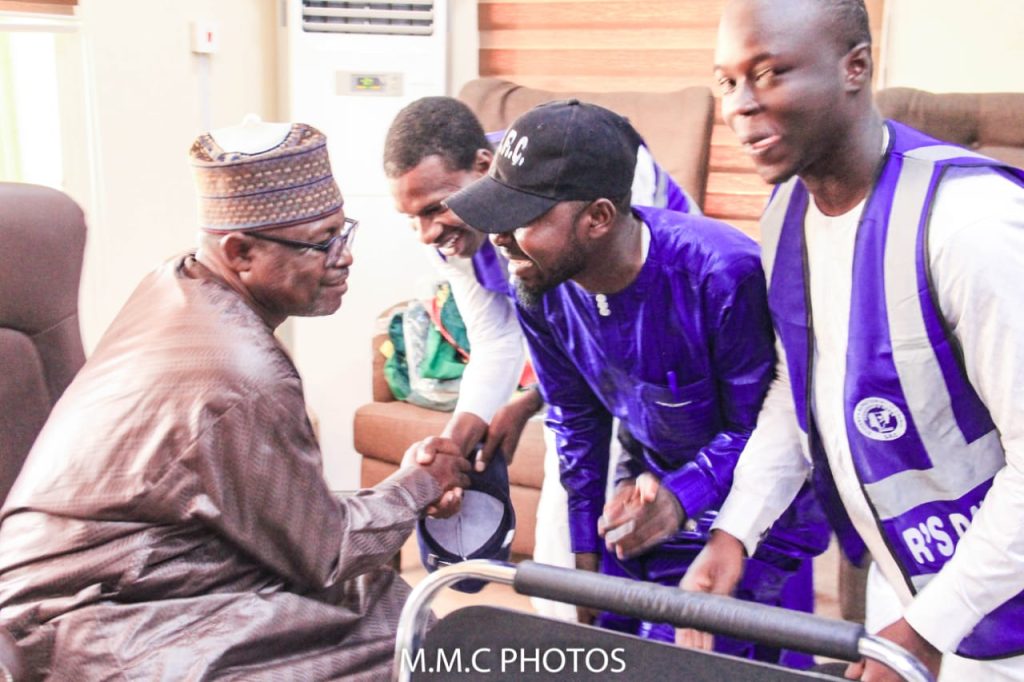
According to him, the vice Chancellor is the architect of the new Bauchi state university who has established an unbreakable system with all strategic committees in place, among others.
On his part, Abubakar Baba Yakubu, a student with the department of Public Health, faculty of basic medical sciences of the University, and president of the students representative council said that the VC is referred to as the modern architect of Bauchi state university Gadau due to his developmental strides in the institution.
“For the whole of my life I have never seen a leader like him, he always consider us, the students as his biological children, we call him Baba (father) because of his kindness and support to everyone of us”, he said.
Also speaking, the Dean School of science of the University, described Professor Auwalu as one of the best VCs in the country, adding that so many positive changes have been recorded since his assumption of office about five years ago.
“He has recorded tremendous successes particularly in the area of accreditation, before now, this faculty of science, we were expecting so many courses to be accredited, luckily enough since he came on board, so many courses such as mathematics, physics, chemistry, botany, zoology, microbiology, science Laboratory, technology, computer science and many other courses were fully accredited.
In an interview with our Corresspondent, the Vice Chancellor whose tenure is elapsing on 20th December, 2022 said just like any Vice Chancellor, the position carried many challenges.
“Just like every other Vice Chancellor in Nigeria, my tenure has been a challenging one because it’s a position that requires a lot of looking inward and outward”, he said.
The other one is the challenge of funding which is not peculiar with Sa’adu Zungur University Gadau alone and the reality is that the service charges we are collecting from the students are grossly inadequate and the govt cannot cater for everything, it is trying its best but the reality is that we are far being where we need to be in terms of funding.
And then, the environment also with this security challenges you have to be highly vigilant, we do face a lot of challenges. And like I said in the beginning of my conversation with you, bringing up a university or overseeing the affairs of a university for staff that are growing you have to grow with everybody, you have to teach almost everybody the job, but Alhamdulillah they are learning and we have gone far. I think these are some of the basic challenges that we faced.
According to him, “you know the problem with the Nigerian university is funding, funding has been a great challenge”, he said.
Professor Auwalu further explained that one of the challenges he encountered was heading the university that was just starting.
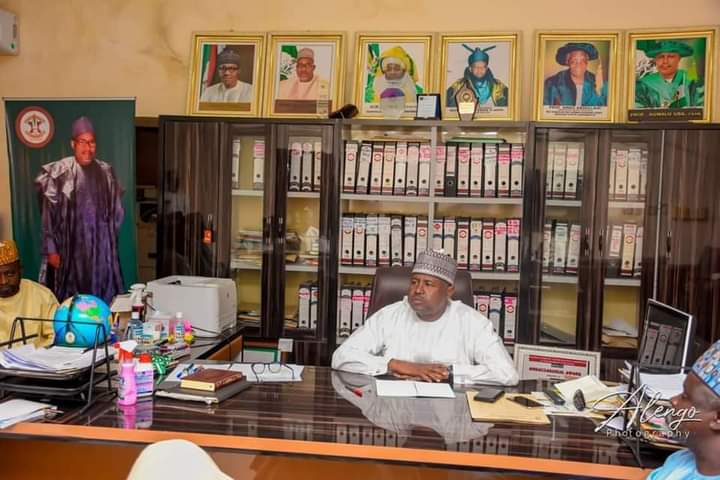
“I took over a university that was just about five years old, so the staff are growing with the university, they are learning the job so you have to be a coach for everybody, trying to bring everybody on board”, he added.
The Vice Chancellor while describing the scenario as a sweet experience, said it has made him learned a lot.
“Because of this position, I have learned a lot about people, I wouldn’t want to say it has not been difficult but Alhamdulillah, this is where we are, by God’s grace my tenure is coming to an end on 20th of December, 2022, but it has been a challenging period”, he confessed
Professor Auwalu who said his assumption was that the deanship of students’ affairs is the most difficult position in the university system not knowing that the VC manages everybody in the university and as such, has the most herculean task.
He said having a large students population living in a campus where there are limited accommodation space has been a challenge that most universities have to live with.
Professor Auwalu expressed delight that the management of the University under his leadership has been able to work harmoniously with the host communities where 80 percent of the students in Gadau lives.
“For Misau we don’t have problem but for Bauchi campus, we have zero campus. So we always have to intervene, this is one of the major challenges”, Professor Auwalu revealed.
He said understaffing has been the problem bedeviling almost every university in Nigeria, adding that over 90 percent of public universities are understaffed.
“Public universities are understaffed, particularly academic staff. That is why for every discipline, whether arts, humanity, science, medicine, engineering there is what we call, the students – teacher ratio and in almost every university, that has been exceeded and we are not different from them”, the University Don said.
He said that the the management of the Bauchi state owned University are striving hard to train many people to occupy those positions but are hindered by the limitation of funds.
“We can’t employ all the compliments of all the academic and non academic staff that we may need but we are managing, we compliment that shortage by what we call visiting lecturers that usually come from other universities and they teach and we pay them on monthly bases”, the Vice Chancellor revealed.
The VC who said that the university has been living harmoniously with its host communities, added that the management has been up and doing regarding its corporate social responsibility.
READ ALSO: https://newsng.ng/nigeria-ingo-forum-expressed-concern-over-killing-of-aid-worker-reiterates-commitment-to-life-saving-in-borno/
The Vice Chancellor who recalled that the university had in 2019, carried out a rehabilitation work on a clinic in Yuli, added that, as a result, the village head of Yuli honored him with the traditional title of Dan-Madamin Yuli.
“In 2020, we purchased and distributed drugs to communities in Gadau, Misau, including the general hospital Misau, in Mada and in Yuli also, we assisted them with drugs and that they appreciated”, he said.
To further cement the relationship between the university and the host Communities, Prof Auwalu said, in most cases youth from the area are given preference in the area of employment as casual workers, most especially security.
“More importantly, when it’s time for admission, they bring their request and whoever that is qualified is given admission and this gesture has created peaceful living with our host communities, they are involved in everything that we do”, he noted.
The Vice Chancellor said he has in 2019, brought on board post graduate programs into the university where it run 19 out of 39 post graduate programs ranging from PGD, masters, Academic masters, professional masters and PhDs.
“As I am talking to you now, I just came back from a seminar presented by one of my PhD student, we have graduated so many masters students, we run 39 masters and PhD programs that cut across the faculties of arts, faculty of science, faculty of management sciences and the faculty of social sciences as well as faculty of education”, he added.
The VC who pointed out that the university is yet to start post graduate program on agriculture because it has not graduated the first set, equally said that the university has not started in the faculty of law but plans are under way.
“We have not started with pharmaceutical sciences because we have not graduated any set, we have not started in basic medical sciences for short of academic staff, so this is the run down of PG academic programs, we have 39 PG programs”, he said.
Professor Auwal who described the relationship between the management, staff and students of the University as very extremely cordial, said 98 percent of the Staff, students and the management are on the same page.
He said that the university has inculcated the idea of peaceful co-existence between the students most especially between different ethnic religious groups.
“Just last week I saw the NUBASS president wrote on his social media handle that he has visited the fellowship of christian students and they received them. I can tell you that the last Quranic recitation competition final that I attended in the university, the Muslim students invited their christian counterpart and they attended and all of us were there and we were very happy, so we live peacefully and cordially here”, the VC said.
Praises, attestations as tenure of Vice Chancellor, Saadu Zungur University Ends



A Time To Read, Reflect, and Learn
By: Our Reporter
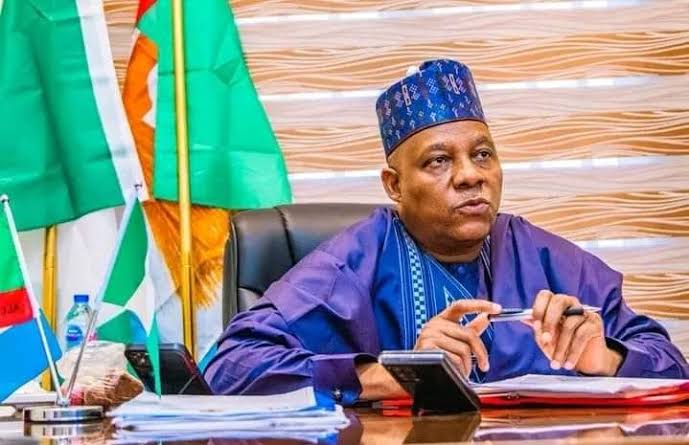
As predicted by many, during his two-week leave, Vice President Kashim Shettima, by custom, takes time for study and reflection.
Leadership is sustained by the willingness to keep learning. Sometimes, stepping away from the daily rush creates the space to examine ideas more carefully and return to responsibility with greater clarity.

For the Vice President, the period is also an opportunity to deepen the knowledge required for continued service to Nigeria.

Learning does not end when responsibility begins. In many ways, greater responsibility makes learning even more necessary.
A Time To Read, Reflect, and Learn
Nigeria’s Education Crisis Now About System Capacity, Not School Enrolment – Report
By: Michael Mike
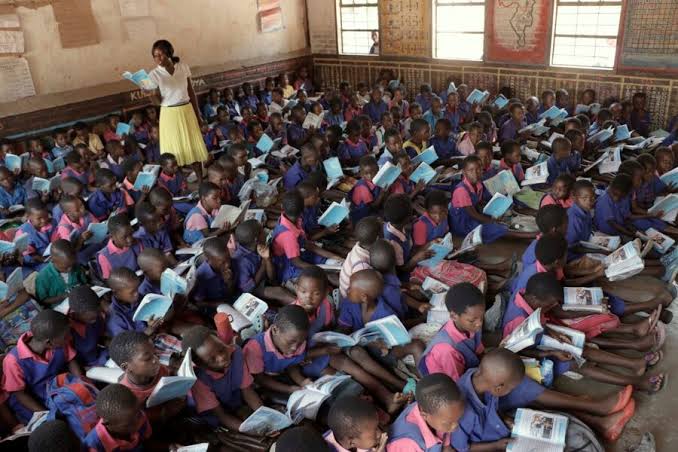
Nigeria’s education challenge has shifted from getting children into school to building an education system capable of delivering quality learning, according to a new policy report by the Athena Centre for Policy and Leadership.
The report, Nigeria’s Education Capacity Crisis: Closing the Gap Between Enrolment Growth and System Capacity, authored by Professor Temitayo Shenkoya and Anita Olatunde, argued that while the country has made remarkable progress in expanding access to education, inadequate investment in classrooms, teachers, infrastructure and governance has left the system overwhelmed and unable to translate rising enrolment into improved learning outcomes.
The publication, released on Wednesday in Abuja, described the situation as a structural capacity crisis rather than a temporary funding challenge, warning that without far-reaching institutional reforms, Nigeria risks undermining its human capital development and long-term economic competitiveness.
According to the report, 40.1 million pupils and students were enrolled in Nigeria’s public basic and secondary education system during the 2024/2025 academic session across 107,042 public schools.
However, the rapid increase in enrolment has far outpaced investments needed to sustain quality education.
The report revealed that an average classroom accommodates about 60 students, while roughly 66 students share a single toilet, highlighting severe overcrowding and poor sanitation in many public schools.
It also noted that Nigeria devoted only 0.3 per cent of its Gross Domestic Product (GDP) to public education in 2025, a figure significantly lower than allocations recorded in several comparable African countries.
The authors argued that the country’s education system is constrained less by enrolment than by weak governance structures, fragmented planning, inadequate teacher deployment, poor instructional quality, weak institutional coordination and limited use of education data for policy decisions.
“Nigeria’s education challenge is no longer defined solely by access; it is increasingly one of system capacity,” the report stated.
Rather than focusing exclusively on expanding school access, the report urged governments at all levels to prioritise strengthening institutional capacity, improving accountability mechanisms and adopting evidence-based planning to enhance learning outcomes.
Central to its recommendations is the development and effective deployment of the Digital Nigeria Education Management Information System (DNEMIS), which it said should serve as the backbone for planning, monitoring and evaluating education performance nationwide.
Among other recommendations, the report called for the establishment of integrated State Education Management Information Systems linked to the national platform, sustained multi-year investments in classrooms, teachers and digital infrastructure, evidence-based teacher deployment, improved instructional quality and stronger school leadership.
It also advocated annual infrastructure and learning-performance scorecards to monitor progress, targeted interventions for vulnerable learners and improved coordination among the Federal Ministry of Education, state governments, State Universal Basic Education Boards (SUBEBs), Teaching Service Commissions (TESCOMs) and Local Government Education Authorities.
The report stressed that future education spending should be guided by verified data and measurable learning outcomes rather than enrolment figures alone.
Drawing lessons from Botswana, South Africa and Namibia, the authors argued that countries achieving better educational outcomes have done so by building institutions capable of continuous planning, performance monitoring and accountability.
According to the report, the true measure of success should no longer be the number of children enrolled in school or classrooms constructed, but the ability of governments to use reliable evidence to improve teaching quality, strengthen school leadership and ensure meaningful learning for every child.
The publication concluded that addressing Nigeria’s education capacity deficit is not only an education sector priority but also a national development imperative with direct implications for economic growth, workforce productivity and global competitiveness.
Nigeria’s Education Crisis Now About System Capacity, Not School Enrolment – Report
Education
Drama at Ogun Student Election as Umpire Allegedly Swallows Ballot Papers, Police Intervene

Drama at Ogun Student Election as Umpire Allegedly Swallows Ballot Papers, Police Intervene
By Zagazola Makama
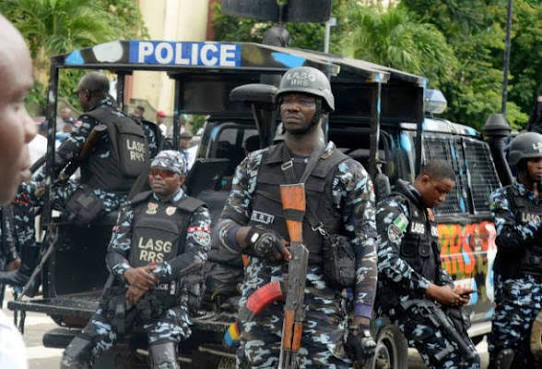
Drama unfolded during the Joint Campus Ogun State Council election held at the Nigeria Labour Congress (NLC) Secretariat in Leme, Abeokuta, after an electoral umpire allegedly swallowed some ballot papers during vote counting.
Police sources said the election, which commenced at about 8:00 a.m., was briefly delayed following a two-hour recess to resolve disputes over the number of accredited institutions.
The sources disclosed that stakeholders later reached a consensus recognising 13 institutions, after which the election proceeded.
According to the sources, tension escalated during the counting of votes when one of the electoral umpires, whose identity is yet to be confirmed, allegedly chewed some ballot papers as participants demanded the announcement of results.
They added that the umpire later fainted, prompting the Divisional Police Officer (DPO) to evacuate him in a Department of State Services (DSS) vehicle for safety and urgent medical attention.
The sources further said the Chairman of the electoral commission, identified as Sileola, was also escorted to safety in a police SWAT vehicle.
They noted that three persons who attempted to cause a breakdown of law and order were arrested, while aggrieved parties were advised to channel their grievances through the appropriate authorities.
The sources said the situation was brought under control, with calm restored at the venue, while further developments are expected.
Drama at Ogun Student Election as Umpire Allegedly Swallows Ballot Papers, Police Intervene

Nigeria, UAE Sign Pact to Crush Drug Trafficking Networks

Cholera outbreak kills two at Kano custodial centre

Herder assaulted over alleged destruction of farm crops in Jos North

Roger Federer’s Shock as DNA Results Reveal Myla and Charlene Are Not His Biological Children

THE PLIGHT OF FARIDA

FAILED COUP IN BURKINA FASO: HOW TRAORÉ NARROWLY ESCAPED ASSASSINATION PLOT AMID FOREIGN INTERFERENCE CLAIMS
-
 News3 years ago
Roger Federer’s Shock as DNA Results Reveal Myla and Charlene Are Not His Biological Children
-
Opinions5 years ago
THE PLIGHT OF FARIDA
-
 News1 year ago
FAILED COUP IN BURKINA FASO: HOW TRAORÉ NARROWLY ESCAPED ASSASSINATION PLOT AMID FOREIGN INTERFERENCE CLAIMS
-

 News3 years ago
EYN: Rev. Billi, Distortion of History, and The Living Tamarind Tree
-
 Opinions5 years ago
POLICE CHARGE ROOMS, A MINTING PRESS
-

 ACADEMICS3 years ago
A History of Biu” (2015) and The Lingering Bura-Pabir Question (1)
-

 Columns3 years ago
Army University Biu: There is certain interest, but certainly not from Borno.
-

 Politics1 year ago
2027: Why Hon. Midala Balami Must Go, as Youths in Hawul and Asikira/Uba Federal Constituency Reject ₦500,000 as Sallah Gift
