
National News
President Tinubu Demands Stiff Enforcement Of Child Protection Laws

President Tinubu Demands Stiff Enforcement Of Child Protection Laws
- Launches national action plan on violence against children
- Hints at creation of child protection and development agency
By: Our Reporter
President Bola Ahmed Tinubu has launched the National Action Plan on Ending Violence Against Children in Nigeria, with a call for stiff enforcement of the Child Rights Act and other child protection laws that guarantee the safety, dignity, and future of Nigerian children.
He outlined practical steps being taken by his administration to achieve this, including the establishment of a dedicated Child Protection and Development Agency, launch of the Universal Child Grant to reduce household poverty and children’s vulnerability; creation of a National Child Protection Database and a Child Well-being Index, to track the government’s progress and uphold accountability.
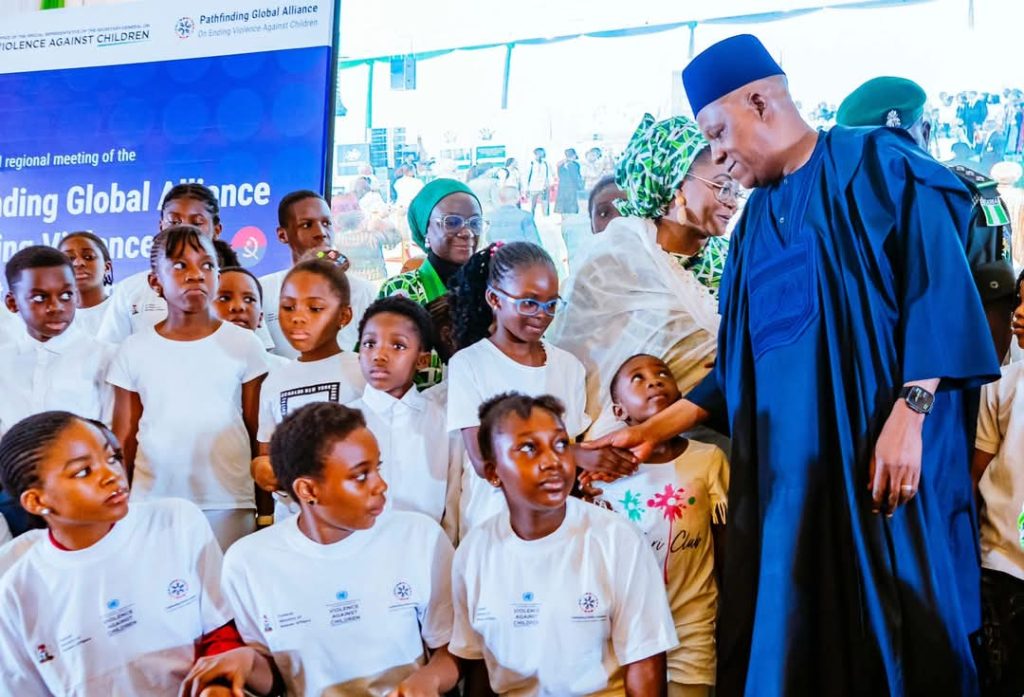
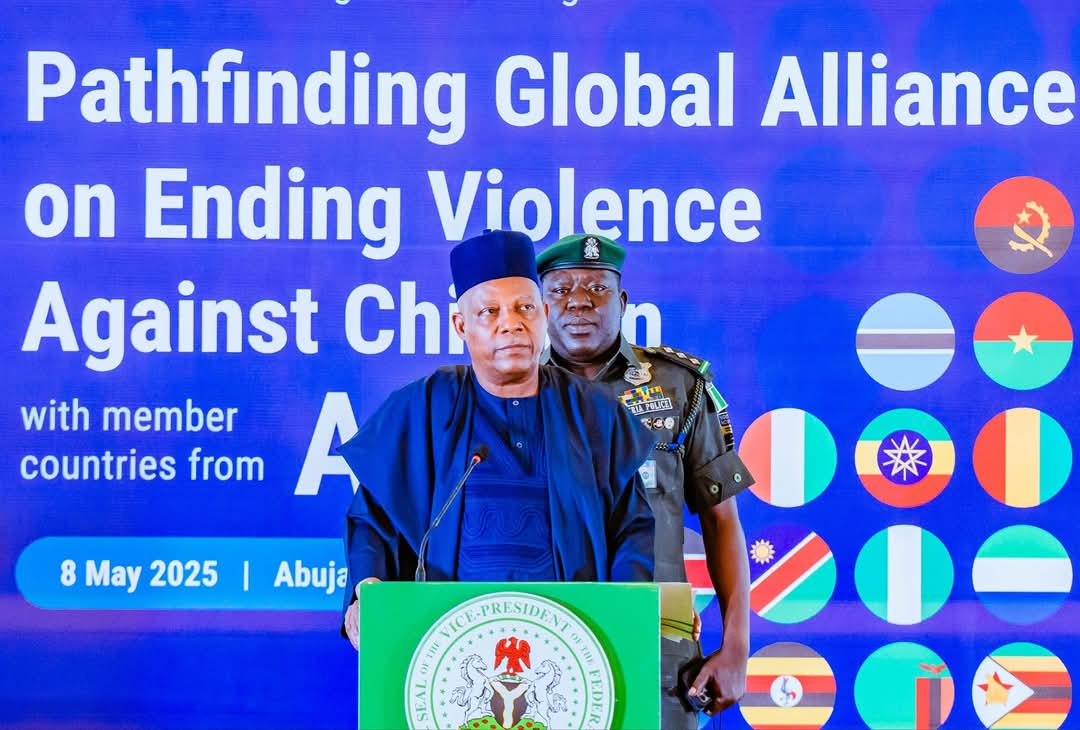
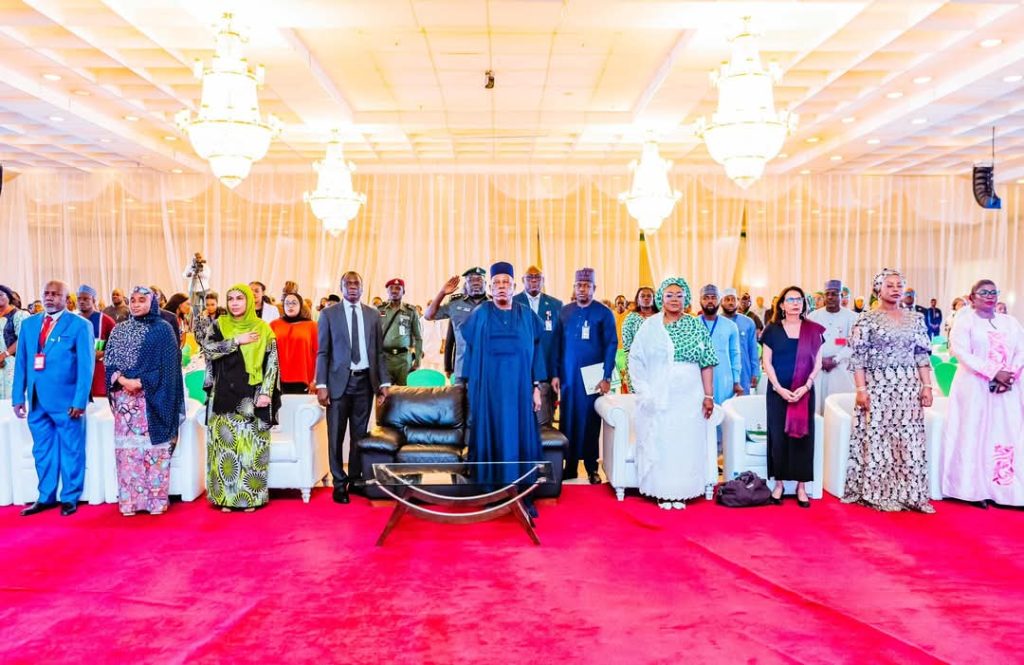
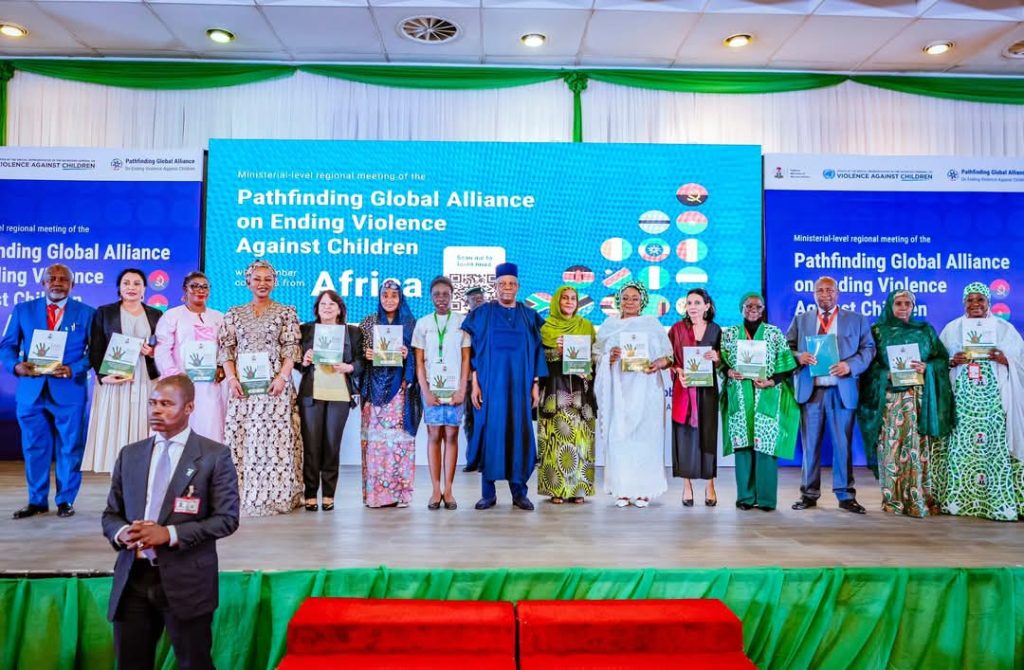
The President stated this on Thursday during the first regional meeting of the Africa Pathfinder Countries of the Global Alliance on Ending Violence Against Children at the Presidential Villa, Abuja.
President Tinubu who was represented at the event by his deputy, Vice President Kashim Shettima, declared his administration’s commitment to “establishing a dedicated Child Protection and Development Agency to ensure coherent coordination of all issues relating to the Nigerian child.”
The president noted that while each day comes with a reminder of the dreams of Nigerian children, the conditions into which they are born, and whether these conditions protect or betray them, are also critical issues to ponder.
He said, “Our legal frameworks reflect our conviction. From the Child Rights Act to the Violence Against Persons (Prohibition) Act, Nigeria has laid down the statutory foundation for the protection of children. But legislation alone does not shield the vulnerable—it is the will behind those laws, and the systems that enforce them, that make the difference.
“That is why our national strategy also embraces prevention and early intervention. We are strengthening families and communities through programmes that promote positive parenting, challenge harmful social norms, and provide targeted support to vulnerable households.”
President Tinubu assured that relevant government institutions, including the Federal Ministry of Women Affairs, are armed with the required training and resources to spearhead the protection of the Nigerian child across all levels of government, even as he maintained that it is a crusade for which sincerity and honesty are required.
“But we must be honest with ourselves. We cannot protect the child by merely reciting the anthems of their struggles or romanticising their vulnerability.
“The real hope lies in action—concrete, deliberate action. Our commitment must run deep, reaching into the very architecture of our education and health systems. This is the soul of our human capital development strategy,” he stated.
To ensure stiff enforcement of child protection laws in Nigeria, President Tinubu said his administration is “strengthening existing institutions and laws, and launching national campaigns to promote awareness and drive behavioural change.”
The President underlined the importance of the first regional meeting of Africa’s Pathfinder Countries under the Global Alliance on Ending Violence Against Children, pointing out that “it breathes new life into the bold declarations made at the First Global Ministerial Conference on Ending Violence Against Children held in Bogotá.”
Earlier, the United Nations Special Representative of the Secretary General on Violence Against Children, Dr Najat Maalla M’jid, urged African leaders to move beyond commitments and implement concrete actions to protect children from violence and exploitation.
Dr M’jid also charged delegates to the meeting and other participants to focus on peer learning, effective strategy sharing, and collective actions in addressing common obstacles to ensure child protection efforts are sustainable in Africa.
On her part, Nigeria’s Minister of Women Affairs, Hon Imaan Sulaiman-Ibrahim, highlighted the country’s commitment and the progress made since the Ministerial Conference in Bogotá, Colombia, in November 2024, noting that the Renewed Hope Agenda of President Tinubu is strengthening legal frameworks, scaling up the Safe Schools Programme, expanding parenting interventions, and increasing budgetary allocations to child protection systems.
“Through our renewed national child policy framework now under review, and our adopted National Strategy and Costed Action Plan to End Child Marriage in Nigeria, we are laying the foundation for more accountable, inclusive, and data-driven action,” she said.
In separate remarks, the heads of delegation to the regional meeting from Zimbabwe, Cote d’Ivoire, Sierra Leone and Burkina Faso, stated the recommitment of their various countries to the global alliance to ending violence against children as declared in Bogota in November 2024.
They presented progress reports from their respective countries, commended the leadership provided by Nigeria and urged all stakeholders to be intentional about ending violence against children and not to pay lip-service to the programmes and policies designed to actualise the objectives.
Also present at the meeting were the wife of the Deputy Senate President, Hajiya Laila Jibrin Barau; Minister of Women, Family and Children from Cote d’Ivoire, Hon Nasseneba Toure; Minister of Public Service, Labour and Social Welfare from Zimbabwe, Edgar Moyo; Minister of Gender and Children Affairs from Sierra Leone, Hon Isata; Permanent Secretary in the Ministry of Women Affairs, Nigeria, Dr Maryam Keshinro, and representatives of development partners and heads of agencies, among others.
President Tinubu Demands Stiff Enforcement Of Child Protection Laws


Chinese Embassy Mourns Buhari
By: Michael Mike
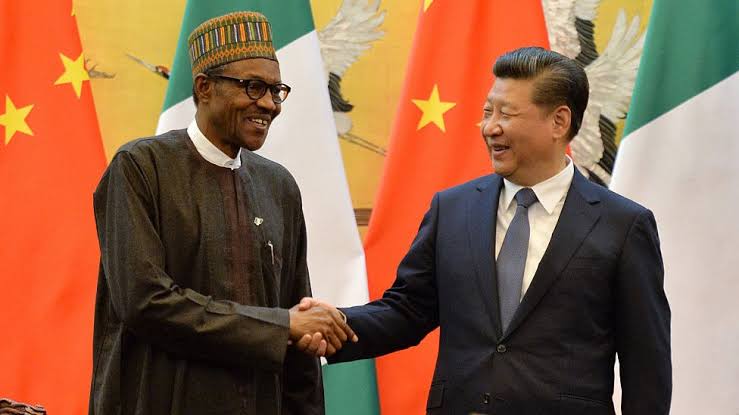
The Chinese Embassy has mourned the passing of former President Muhammadu Buhari.
The Embassy in a message on X commiserate with the government and the people of Nigeria.
The message read: “The Chinese Embassy in Nigeria extends our deepest condolences to the people of Nigeria on the passing of His Excellency, Muhammadu Buhari (Rtd), Former President of Nigeria.
“We mourn a resolute leader whose unwavering dedication to Nigeria’s unity and progress leaves an enduring legacy.
“His pivotal contributions to advancing China-Nigeria relations will forever remain etched in our shared history. Our thoughts are with his family and Nigerian people.”
Chinese Embassy Mourns Buhari
National News
NTAC DG Mourns Former President BuhariAdvocates the Naming of the Federal Secretariat, Abuja, after the Deceased
NTAC DG Mourns Former President Buhari
Advocates the Naming of the Federal Secretariat, Abuja, after the Deceased
By: Michael Mike
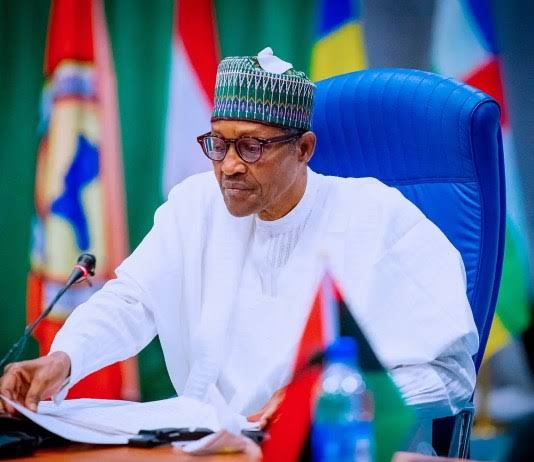
Director General of the Nigerian Technical Aid Corps, Rt. Hon. Yusuf Buba Yakub has joined numerous individuals, groups and countries across the globe to mourn the passing of Nigeria ‘s former President, Gen. Muhammadu Buhari (Retd) who passed away at 82.
In a message he personally signed and made available to the public, late Sunday, the former lawmaker said the entire nation was particularly saddened by the sudden passing of a man who gave his all to Nigeria as a soldier, a politician, a mentor to many as well as a nationalist.
Yakub, who emphasized that the former Nigerian leader, would forever live in the hearts and minds of generations of Nigerians who knew him and those who would, eventually, read about his incorruptibility and altruistic approach to service, conveyed heartfelt sympathies to President Tinubu, the former President’s immediate family and to all Nigerians.
Yakub message read in part: “On behalf of the Nigerian Technical Aid Corps (NTAC) and its Management, I convey our heartfelt condolences to the family, government and good people of Nigeria, under the leadership of President Bola Ahmed Tinubu, on the passing of former President Muhammadu Buhari.
“While we mourn this great soldier, nationalist and Leader, we remember his dedication to democracy, regional stability, and the unity of Nigeria, as well as his unwavering commitment to the anti-corruption crusade, which endeared him to many Nigerians.”
The NTAC boss while praying for the forgiveness of the sins of Buhari, suggested
that a great national monument, like the Federal Secretariat, Abuja, be named after the late leader.
He said: ” May Allah grant him Aljana firdausi and grant his family and entire Nigerians the fortitude to bear the loss.”
Born in Daura, Katsina State in 1942,the former President distinguished himself as a soldier,a politician and a national hero of all time.Having held the position of Nigerian leader twice, a Federal Commissioner of Petroleum,a Military Governor of what is today the Northeast Geopolitical Zone as well as the head of Abacha’s development behemoth,the Petroleum Trust Fund,among others, Buhari in service was acknowledged to have lived above board and held his head high as an incorruptible Nigerian.
He will be remembered more by the principles he espoused in leadership than the monuments he built for self, kith or kin.
NTAC DG Mourns Former President Buhari
Advocates the Naming of the Federal Secretariat, Abuja, after the Deceased
Tuggar: Buhari was a Statesman of Uncommon Integrity
By: Michael Mike
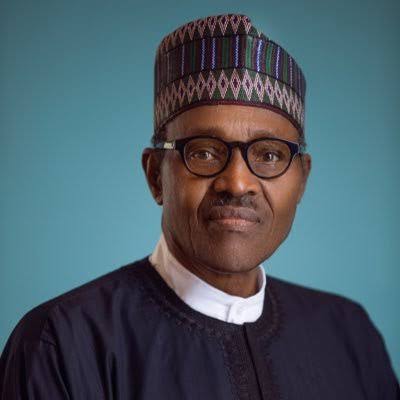
The Minister of Foreign Affairs, Ambassador Yusuf Tuggar has described late President Muhammadu Buhari as a statesman of uncommon integrity, and a towering figure in our nation’s history.
The Minister gave this description in an official condolence message on Sunday.
The message read: “It is with profound sorrow and a deep sense of national loss that I mourn the passing of His Excellency, Muhammadu Buhari, GCFR — former President of the Federal Republic of Nigeria, a statesman of uncommon integrity, and a towering figure in our nation’s history.
“President Buhari served Nigeria with unwavering dedication, both in uniform and in civilian leadership. His legacy is marked by a lifelong commitment to discipline, national unity, and the fight against corruption. His calm resolve in moments of turbulence and his steadfast belief in the promise of Nigeria will continue to inspire generations.
“At home and abroad, he was a symbol of Nigeria’s strength and dignity — a leader who carried the burdens of state with humility and a deep sense of duty.
“When President Muhammadu Buhari spoke at his inauguration in 2015, he said: ‘I belong to everybody and I belong to nobody.’ He was sending a signal not just to Nigerians, but also to the region, to Africa and the world. He was not for sale, Nigeria was not for sale, Africa was not for sale. He was a soldier by training and a patriot by instinct – and a committed champion of democracy: he was instrumental in the peaceful resolution of Gambia’s electoral crisis in 2016, and an unprecedented transfer of power. He worked tirelessly to support regional efforts to roll back the scourge of violent extremism in the Sahel, just as in the 1980s he supported the liberation movements fighting for democracy in South Africa and Namibia.
“He was committed to the rules-based international order and worked to deepen ties between Nigeria and ECOWAS, the AU, UN and Commonwealth, and was a firm advocate of institutional reform. He had friends and allies in the four corners of the globe, but national interest always trumped sentiment: he bought fighter planes from the US, fertiliser from Russia and sealing the gas pipeline deal with Morocco. Nigeria has lost a dedicated patriot; Africa has lost a noble son. We salute you.
“On behalf of the Ministry of Foreign Affairs and Nigeria’s diplomatic community, I extend heartfelt condolences to his family, the Government and People of Nigeria, and all who mourn this irreparable loss.
“May Almighty Allah (SWT) forgive his shortcomings and grant him eternal rest in Aljannatul Firdaus.”
Tuggar: Buhari was a Statesman of Uncommon Integrity

Germany, ActionAid Rehabilitate Hundreds of Nigerian Returnees with Vocational Training

NTAC DG Mourns Buhari, Conveys Sympathies to President Tinubu, Nigerians

Environmental Vanguards Demand Rights of Nature to be given just as Human Rights

Roger Federer’s Shock as DNA Results Reveal Myla and Charlene Are Not His Biological Children

THE PLIGHT OF FARIDA

POLICE CHARGE ROOMS, A MINTING PRESS
-
 News1 year ago
Roger Federer’s Shock as DNA Results Reveal Myla and Charlene Are Not His Biological Children
-
Opinions3 years ago
THE PLIGHT OF FARIDA
-
Opinions4 years ago
POLICE CHARGE ROOMS, A MINTING PRESS
-

 News1 year ago
EYN: Rev. Billi, Distortion of History, and The Living Tamarind Tree
-

 Columns1 year ago
Army University Biu: There is certain interest, but certainly not from Borno.
-

 ACADEMICS1 year ago
A History of Biu” (2015) and The Lingering Bura-Pabir Question (1)
-

 Opinions1 year ago
Tinubu,Shettima: The epidemic of economic, insecurity in Nigeria
-

 Politics1 month ago
2027: Why Hon. Midala Balami Must Go, as Youths in Hawul and Asikira/Uba Federal Constituency Reject ₦500,000 as Sallah Gift
