
Uncategorized
President Tinubu Unveils New Security, Economic Blueprint To Harness Nigeria’s Marine Wealth

President Tinubu Unveils New Security, Economic Blueprint To Harness Nigeria’s Marine Wealth
- Directs NIPSS to conduct nationwide security diagnostic, targets port reform, maritime expansion
By: Our Reporter
President Bola Ahmed Tinubu has announced a new security and economic framework aimed at unlocking Nigeria’s vast marine and aquatic resources under the blue economy as one of the country’s most critical sectors for national transformation.
Accordingly, he directed all relevant ministries, departments, and agencies to immediately review and implement recommendations by the National Institute for Policy and Strategic Studies’ (NIPSS) comprehensive study on blue economy development.
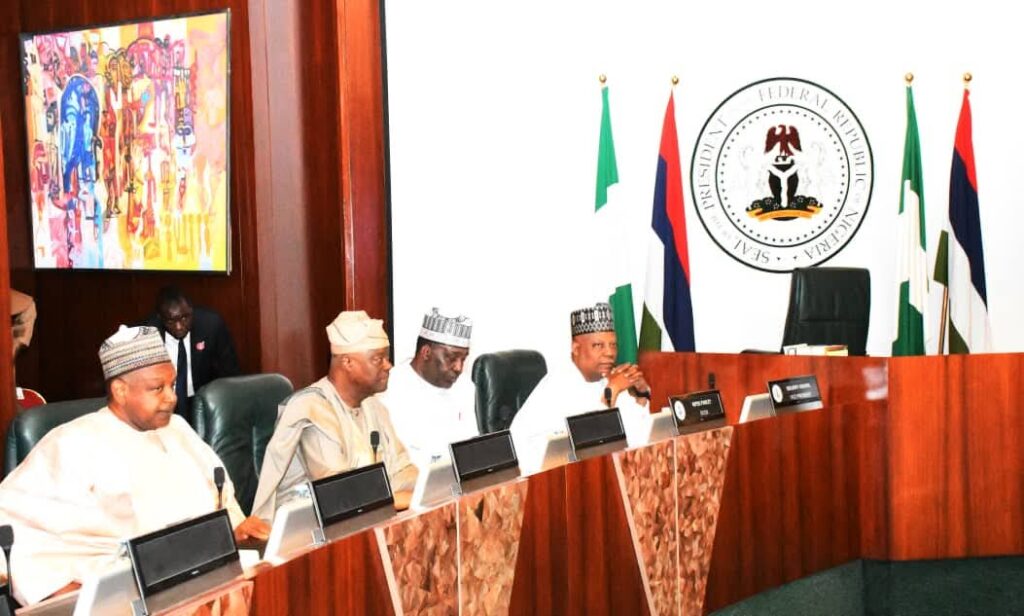
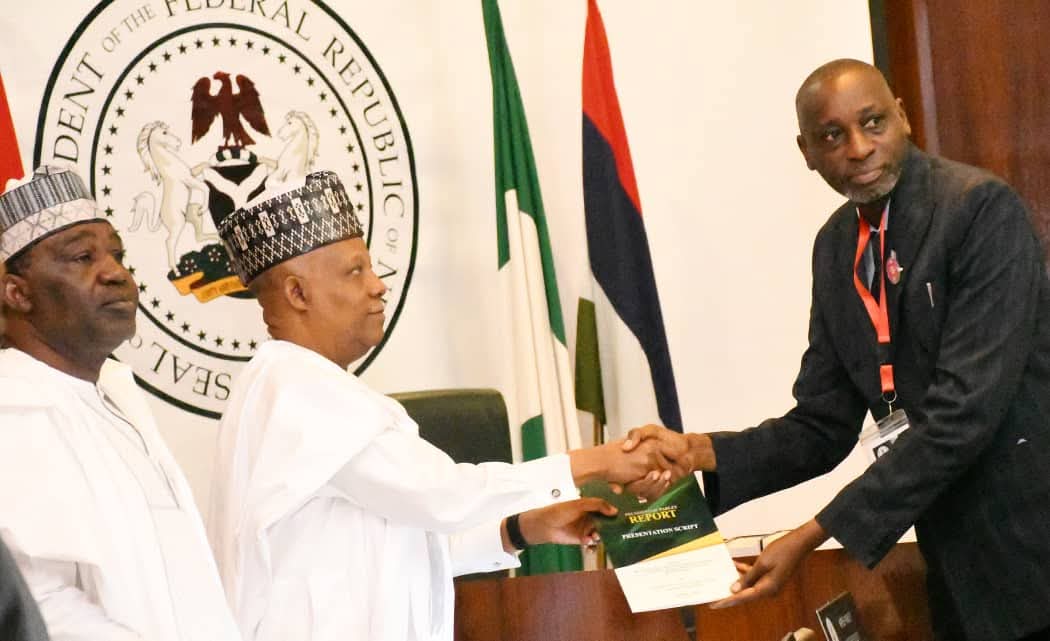
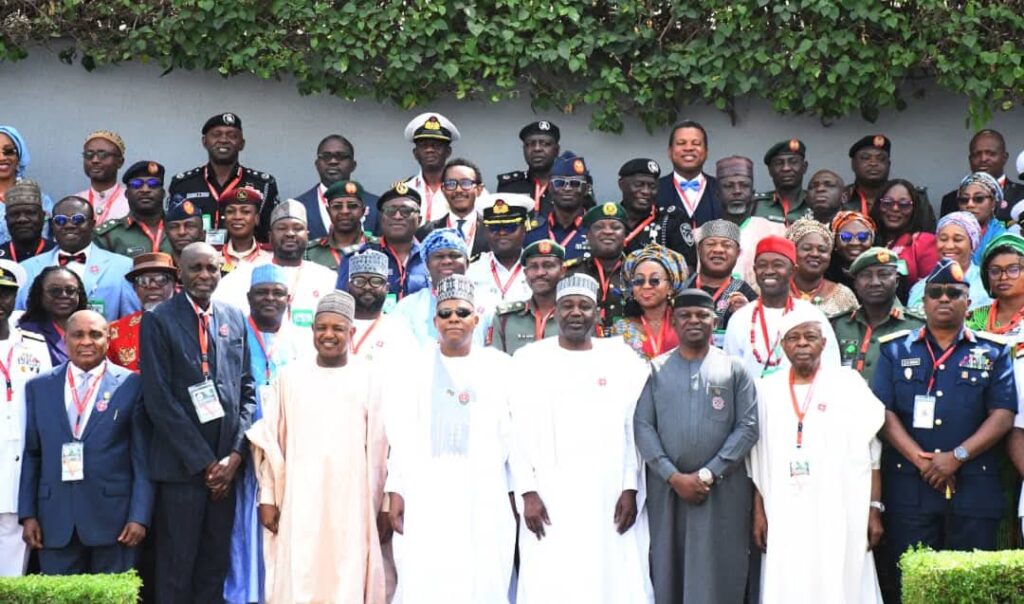
Speaking on Wednesday during a Presidential Parley with participants of Senior Executive Course 47 of the National Institute for Policy and Strategic Studies (NIPSS) at the Presidential Villa, the President, who was represented by his deputy, Vice President Kashim Shettima, said the administration is committed to converting Nigeria’s maritime potential into a major driver of economic diversification, job creation and long-term prosperity.
“The blue economy offers a strategic pathway for diversifying our revenue base, creating sustainable employment and revitalising the ecosystems that sustain national development. If properly harnessed, this sector could become an anchor of shared prosperity for generations,” he said.
President Tinubu welcomed the findings of the NIPSS study on Blue Economy and Sustainable Development in Nigeria, describing it as a timely resource that outlines the “opportunities we must seize, the challenges we must confront and the policies we must refine.”
He praised the institute for sustaining what he called its tradition of analytical rigour, creativity and patriotic duty.
The Nigerian leader noted that Nigeria’s marine endowments, including an 853-kilometre coastline, rich fisheries, extensive inland waterways and a strategic location within the Gulf of Guinea, place the country in a strong position to build new growth avenues.
He said the administration is prioritising aquaculture expansion, port and maritime corridor modernisation, coastal tourism, marine biotechnology and renewable ocean energy.
“These opportunities lie within our grasp if we act with discipline and intentionality,” he said.
Reaffirming his administration’s reform agenda, President Tinubu highlighted the establishment of the Ministry of Marine and Blue Economy as a critical step toward improving port management systems, strengthening maritime security operations and enabling private-sector growth.
He, however, acknowledged that more work lies ahead and directed all relevant ministries, departments and agencies to immediately study and prepare to implement the NIPSS recommendations.
The President stressed that economic ambitions in the blue economy cannot be realised without a safe and stable environment.
While piracy has reduced through the Deep Blue Project, he warned that oil theft, illegal fishing, smuggling, vandalism and kidnapping still undermine national revenues and investor confidence.
“These threats are real, and this Administration is taking decisive steps to address them,” he said.
President Tinubu also assigned NIPSS an expanded national security mandate, ordering the institute to conduct a nationwide security diagnostic and develop actionable recommendations to guide reforms in Nigeria’s security architecture.
“The policy paper shall be submitted to my office within an agreed timeline, and it will receive the utmost attention,” he assured.
The Nigerian leader described NIPSS as the intellectual engine of our national transformation and urged the scholars to remain bold, solution-driven and rooted in the country’s realities.
Earlier, the Director-General of NPISS, Prof. Ayo Omotayo, thanked President Tinubu for the support the institution has received, just as he appreciated the Minister of Finance and Coordinating Minister of the Economy, Wale Edun, for providing funding for SEC 47.
He noted that the team visited several Nigerian states and 14 countries outside Nigeria, and were at the Presidential Villa to present their findings titled “Blue Economy and Sustainable Development in Nigeria: Issues, Challenges and Opportunities.”
Highlighting the content of the report, Colonel Murkar Dauda said the Federal Government was already addressing systemic gaps in the blue economy, while commending the President for his visionary leadership in driving the economy.
Among other issues, the report noted challenges of governance, institutional coordination, and policy coherence, as well as the fact that available infrastructure falls below global standards.
The report further emphasized the opportunities available in Nigeria.
“Fisheries and aquaculture remain strong entry points for Nigeria,” the report added, advising that diversifying revenue sources will unlock new earnings for the country.
In its recommendations, the Federal Government was advised to launch a national fisheries expansion programme, leveraging public-private investments to increase fish production from the current 1.2 metric tonnes to 10 metric tonnes within two years.
The report also recommended expanding the revenue base of the marine and blue economy sector, while developing a comprehensive marine and blue economy financing framework.
Additionally, the report stressed that the Federal Government should review and harmonize all legal, policy, and institutional frameworks on the marine and blue economy; establish an innovative marine and blue economy skills, job creation, and social inclusion framework, as well as enhance the safety and security of inland water bodies, among others.
President Tinubu Unveils New Security, Economic Blueprint To Harness Nigeria’s Marine Wealth


Uncategorized
Army Distributes Fertiliser to Farmers in Jigawa Under Civil-Military Cooperation Programme

Army Distributes Fertiliser to Farmers in Jigawa Under Civil-Military Cooperation Programme
By: Zagazola Makama
The Nigerian Army has distributed 40 bags of fertiliser to selected farmers in Jigawa State as part of its Civil-Military Cooperation (CIMIC) activities aimed at supporting local communities and enhancing agricultural productivity.
Security sources reliably informed that the distribution exercise was carried out on Thursday at Dahuwa Primary School in Chamo District of Dutse Local Government Area.
According to the sources, the Commander of the 26 Armoured Brigade, Brig.-Gen. O.I. Odigie, represented the Chief of Army Staff (COAS) during the event.
The fertiliser was distributed to selected farmers drawn from communities within the brigade’s area of responsibility as part of efforts to strengthen relations between the military and host communities while supporting food production.
The sources said the initiative forms part of the Nigerian Army’s broader commitment to community development and socio-economic support programmes across the country.
The event was conducted peacefully and without any security incident.
Army Distributes Fertiliser to Farmers in Jigawa Under Civil-Military Cooperation Programme
Uncategorized
Fertiliser Supply Stabilised as FG Strengthens Centralised Procurement System Ahead of 2026 Farming Season
Fertiliser Supply Stabilised as FG Strengthens Centralised Procurement System Ahead of 2026 Farming Season
By: Michael Mike
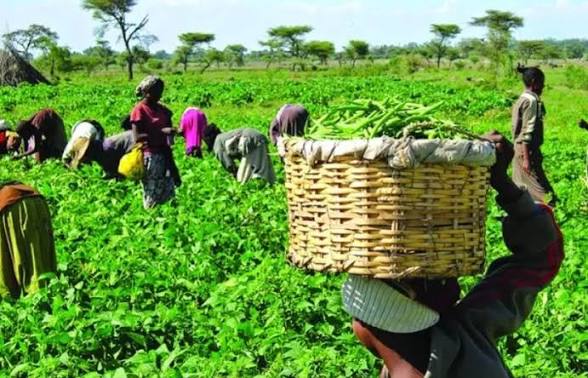
Nigeria has said it has significantly strengthened fertiliser availability and price stability ahead of the 2026 wet season through a tightened central procurement and distribution framework under the Presidential Fertiliser Initiative (PFI NPK), designed to shield farmers from global supply shocks and domestic market volatility.
Under the arrangement, PFI NPK Limited—operating under the Ministry of Finance Incorporated—coordinates bulk purchase of fertiliser raw materials, while distribution and blending activities are executed through a regulated national network of plants and warehouses. The system is structured to ensure that inputs remain under central control until verified sales are completed and financial settlements are concluded.
To reinforce transparency and accountability across the supply chain, independent Collateral Management Agents have been deployed to oversee storage facilities nationwide. Their role includes verifying stock levels, monitoring movements, and ensuring that fertiliser inputs are properly secured throughout the distribution process.
The operational framework is guided by standard procedures developed in collaboration with the Fertiliser Producers and Suppliers Association of Nigeria (FEPSAN), while quality assurance and regulatory enforcement remain under the supervision of the National Agency for Food and Drug Administration and Control (NAFDAC) and the Standards Organisation of Nigeria (SON).
Security and operational clearance from the Office of the National Security Adviser (ONSA) continues to serve as a critical requirement for nationwide logistics coordination and scaling of operations.
Officials said the system has already begun delivering results, with fertiliser raw materials either arriving in-country or currently in transit, while blending plants across the country continue to receive steady supply inputs ahead of peak farming demand.
The government argued that the intervention has reduced exposure to sudden international price spikes and supply chain disruptions that previously affected farmers during critical planting periods.
Dr. Takang, Managing Director of PFI NPK Limited, said the priority is ensuring that farmers are not only able to access fertiliser on time but also at stable and affordable prices that support production rather than undermine it.
“What matters is that the farmer can access fertiliser when needed and at a price that does not undermine production. By stabilising supply and managing cost exposure at the procurement stage, we are supporting that outcome at scale,” he said.
Looking forward, PFI NPK said it is expanding government-to-government sourcing arrangements with international partners to further secure raw material supply lines. It is also developing a digital monitoring platform that will provide real-time tracking of procurement, inventory levels, and nationwide distribution flows.
As the 2026 farming season approaches, authorities said the system is expected to play a key role in improving agricultural productivity by ensuring predictable fertiliser availability, reducing market uncertainty, and strengthening food production capacity across the country.
Fertiliser Supply Stabilised as FG Strengthens Centralised Procurement System Ahead of 2026 Farming Season
Uncategorized
UN Women, TY Danjuma Foundation Boost Rural Women’s Livelihoods with Agro-Processing Centre in Abuja Community
UN Women, TY Danjuma Foundation Boost Rural Women’s Livelihoods with Agro-Processing Centre in Abuja Community
By: Michael Mike
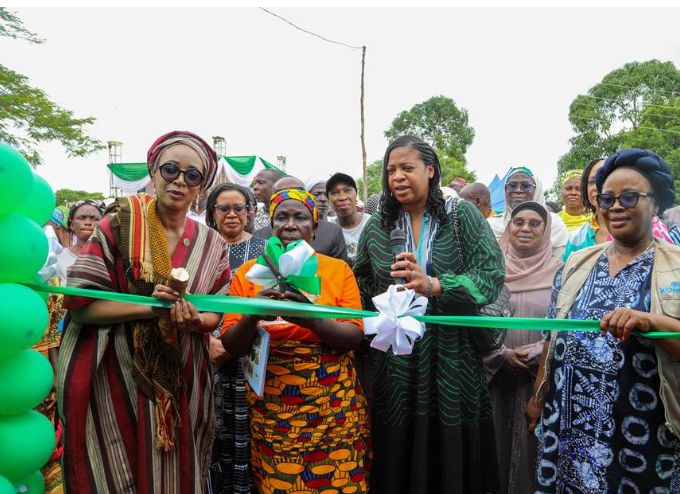
Rural women in Great Sheda Community of Kwali Area Council, Abuja, have received a major economic boost following the inauguration of a modern agro-processing centre designed to ease cassava processing and expand income-generating opportunities for women farmers and processors.
The facility, established through a partnership between UN Women and the TY Danjuma Foundation, was officially launched on Monday in the community, with stakeholders describing the intervention as a significant step toward strengthening women’s economic empowerment and rural development.
At the heart of the project is a cassava peeling and grinding machine that is expected to transform the production of Akpu, a staple food that serves as a major source of livelihood for many women in the area. For years, local processors relied largely on manual methods that demanded long hours of labour and limited production capacity. The new facility is expected to reduce processing time, improve efficiency and enable women to devote more time to other productive ventures.
Speaking during the inauguration, the UN Women Representative to Nigeria and ECOWAS, Beatrice Eyong said the initiative goes beyond providing equipment, stressing that it represents an investment in the productivity and economic future of rural women.
According to her, reducing the burden associated with manual cassava processing would help women increase their earnings, pursue additional economic activities and contribute more effectively to the development of their families and communities.
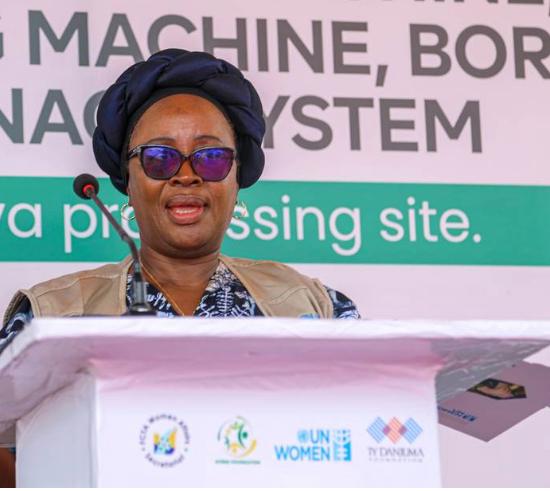
Chairman of the Board of Trustees of the TY Danjuma Foundation, Hannatu Gentles, reaffirmed the foundation’s commitment to supporting underserved communities through strategic interventions in health, education and economic empowerment.
She described women as the backbone of the rural economy and expressed confidence that members of the Akpu Women Association would utilise the facility to expand their businesses and improve the welfare of their households.
Also speaking at the event, former FCT Mandate Secretary and Director-General of the Mariam Babangida Centre, Adedayo Benjamins-Laniyi, noted that access to modern processing tools would not only improve cassava production but also strengthen food security, stimulate economic growth and enhance community resilience.
Residents of Great Sheda welcomed the intervention, describing it as a transformative project capable of increasing productivity, raising household incomes and stimulating economic activities across the community and neighbouring settlements.
The agro-processing centre is expected to serve women processors within Great Sheda and surrounding communities, creating opportunities for improved food processing practices, higher earnings and stronger local economic growth.
The project underscores growing efforts by development partners and philanthropic organisations to support women as key drivers of economic development, food security and sustainable community growth in rural Nigeria.
UN Women, TY Danjuma Foundation Boost Rural Women’s Livelihoods with Agro-Processing Centre in Abuja Community

Troops Recover AK-47 Rifle, Ammunition in Failed ISWAP Reconnaissance Operation in Borno

Troops Foil ISWAP/JAS Attack on Military Position in Borno, Recover UXOs

Katsina Govt Confirms Death of Retired Major General Rabe in Bandits’ Captivity

Roger Federer’s Shock as DNA Results Reveal Myla and Charlene Are Not His Biological Children

THE PLIGHT OF FARIDA

FAILED COUP IN BURKINA FASO: HOW TRAORÉ NARROWLY ESCAPED ASSASSINATION PLOT AMID FOREIGN INTERFERENCE CLAIMS
-
 News2 years ago
Roger Federer’s Shock as DNA Results Reveal Myla and Charlene Are Not His Biological Children
-
Opinions4 years ago
THE PLIGHT OF FARIDA
-
 News1 year ago
FAILED COUP IN BURKINA FASO: HOW TRAORÉ NARROWLY ESCAPED ASSASSINATION PLOT AMID FOREIGN INTERFERENCE CLAIMS
-

 News2 years ago
EYN: Rev. Billi, Distortion of History, and The Living Tamarind Tree
-
 Opinions4 years ago
POLICE CHARGE ROOMS, A MINTING PRESS
-

 ACADEMICS2 years ago
A History of Biu” (2015) and The Lingering Bura-Pabir Question (1)
-

 Columns2 years ago
Army University Biu: There is certain interest, but certainly not from Borno.
-

 Politics1 year ago
2027: Why Hon. Midala Balami Must Go, as Youths in Hawul and Asikira/Uba Federal Constituency Reject ₦500,000 as Sallah Gift
