
News
Rainy Season, Difficult Terrain Now Biggest Challenge as Terrorists Retreat into Remote Forests — Theatre Commander

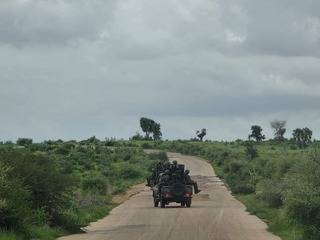
Rainy Season, Difficult Terrain Now Biggest Challenge as Terrorists Retreat into Remote Forests — Theatre Commander
By Zagazola Makama
The Theatre Commander, Joint Task Force North West, Operation FANSAN YAMMA (JTF NW OPFY), Major General W.B. Idris, has said that sustained military offensives have forced terrorists and armed bandits away from major highways into remote forests and isolated rural communities, where difficult terrain and the rainy season have become the principal operational challenges confronting security forces.
Major General Idris made the disclosure on Thursday during an interactive session with defence correspondents at the Headquarters of Operation FANSAN YAMMA in Gusau, Zamfara State, while responding to questions on the security situation across the North-West and the continued attacks on farming communities despite the military’s sustained operations.
The Theatre Commander explained that months of aggressive kinetic operations, intelligence-led raids and area domination patrols have significantly degraded terrorist capabilities along major road corridors, compelling criminal groups to alter their operational tactics.
According to him, the military now exercises effective control over most strategic highways and major transportation routes across the theatre, denying terrorists the freedom to operate openly as they once did.
“Our troops have dominated virtually all the major roads across the theatre. Trunk A and Trunk B roads are well secured through sustained military presence, patrols and offensive operations,” he said.
He noted that between January and April 2026, Operation FANSAN YAMMA consistently recorded significant operational successes on a weekly basis, including the recovery of weapons and the neutralisation of terrorists, forcing armed groups to abandon their traditional areas of operation.
“During that period, we recorded an average weekly recovery of about five weapons and the neutralisation of at least ten terrorists. The sustained pressure has forced them to modify their tactics and avoid direct confrontation with our troops,” he added.
Major General Idris said the terrorists have increasingly withdrawn into remote forests, rocky terrain and isolated settlements where they exploit the vast geographical landscape to evade military patrols.
Rather than attacking motorists on major highways, he explained, the criminals now target vulnerable farmers and rural communities located deep within the hinterland, creating the false impression that security forces are absent from those areas.
“They have realised that the major roads are no longer safe for them. They now move deep into the hinterland, where they attack isolated farmers and vulnerable communities. When such incidents occur, it sometimes creates the impression that security forces are not present, whereas the reality is that these attacks happen in extremely remote locations,” he said.
The commander observed that the current rainy season has further complicated military operations because the difficult terrain restricts the movement of heavy combat vehicles into remote areas where terrorists now seek refuge.
He explained that the Nigerian Army’s operational vehicles, including five-tonne, seven-tonne and ten-tonne tactical vehicles, are designed for demanding military tasks but face mobility challenges on waterlogged rural roads and soft terrain during periods of heavy rainfall.
“Our operational vehicles are heavy military platforms. During the rainy season, movement becomes extremely difficult because the terrain becomes soft and inaccessible. These are not vehicles that can easily traverse flooded or muddy routes leading into remote forests,” he explained.
According to the Theatre Commander, the operational limitations imposed by weather are not restricted to ground forces alone.
He said adverse weather conditions also affect aerial operations by limiting visibility and reducing the effectiveness of surveillance and air support missions, particularly during periods of heavy rainfall and thunderstorms.
“We rely significantly on air support for operations in difficult terrain. However, weather conditions during the rainy season can also limit aerial operations. Nevertheless, we continue to adapt and maximise every available opportunity to sustain pressure on terrorist groups,” he noted.
Despite the seasonal challenges, Major General Idris assured Nigerians that Operation FANSAN YAMMA remains fully committed to maintaining the momentum of ongoing operations and pursuing terrorists wherever they attempt to establish safe havens.
“We are not relenting in our efforts. We shall continue to pursue terrorists wherever they are hiding, irrespective of the terrain or weather conditions,” he said.
The commander stressed that the command has adjusted its operational strategy to respond to the changing tactics adopted by terrorist groups.
He disclosed that increased reliance is now being placed on intelligence-driven operations, aerial surveillance, long-range patrols and modern technology to detect terrorist movements in forests and difficult terrain that are less accessible to conventional ground forces.
Major General Idris also highlighted the importance of unmanned aerial systems and aircraft in monitoring remote locations, noting that the command is expanding the use of technology to deny terrorists the freedom to regroup or launch attacks on farming communities.
He urged the public to appreciate the realities of military operations during the rainy season, explaining that the vast operational environment and changing tactics employed by terrorists require continuous adaptation rather than static deployment.
According to him, isolated attacks in remote villages should not be interpreted as a loss of military control but rather as evidence that sustained pressure has displaced terrorists from major population centres and strategic road networks.
“The terrorists have been denied the ability to operate freely on our highways. What we are witnessing now is their desperate attempt to exploit isolated communities and vulnerable farmers in remote locations. We are responding by adapting our operational approach to ensure they are denied even those remaining spaces,” he said.
The Theatre Commander reaffirmed that the Joint Task Force would continue to intensify long-range patrols, improve intelligence gathering, expand aerial surveillance and sustain offensive operations throughout the rainy season to protect farming communities and prevent terrorists from exploiting difficult terrain.
He added that the command remains focused on restoring normalcy across the North-West by maintaining relentless pressure on terrorist enclaves until they are completely dismantled, while assuring residents that every available operational resource is being deployed to safeguard lives, livelihoods and critical infrastructure across the theatre.
Rainy Season, Difficult Terrain Now Biggest Challenge as Terrorists Retreat into Remote Forests — Theatre Commander



Chad Accuses Sudanese Forces of Crossing Border, Bombing Convoy Deep Inside Chadian Territory
By Zagazola Makama
The Chadian General Staff has accused the warring parties in Sudan of violating Chad’s territorial integrity after aircraft and drones allegedly pursued and bombarded a convoy more than 100 kilometres inside Chadian territory.
The incident reportedly occurred at about 8 p.m. on Thursday, August 20, 2026, near Chad’s common border with Sudan, particularly around the Mourdi Department in the Ennedi-Est Province.
In a communiqué issued to the national and international public, the Chadian General Staff said aerial and ground assessments conducted throughout Friday, August 21, confirmed that the fighting in Sudan had once again spilled into Chadian territory.
According to the military authorities, aircraft and drones identified as belonging to the Sudanese Armed Forces (SAF) and/or forces supporting them were involved in the pursuit of a convoy.
The Chadian military said the operation initially took place on Sudanese territory but subsequently extended deep into Chad, with the convoy reportedly pursued and bombarded more than 100 kilometres inside Chadian territory.
The military authorities did not provide details on the identity of the convoy, the nature of its cargo, or the circumstances that led to the pursuit across the border.
However, the Chadian General Staff described the incident as a fresh violation of the country’s territorial integrity and warned all parties involved in the Sudan conflict against attempting to extend the war into Chad.
“Although no Chadian casualties have been recorded to date,” the military said, it strongly condemned what it described as the latest violation of Chad’s territorial integrity.
The General Staff issued a stern warning to the Sudanese belligerents, saying continued attempts to expand the Sudanese conflict into Chadian territory could have serious consequences.
It described such actions as a “suicidal risk” for those seeking to bring the Sudanese war onto Chadian soil.
The latest incident comes amid the continuing conflict in Sudan between the Sudanese Armed Forces and the paramilitary Rapid Support Forces, which has increasingly generated security concerns for neighbouring countries.
Chad shares a long and porous border with Sudan, particularly along its eastern frontier, where the security situation has remained fragile due to the movement of armed groups, refugees, weapons and combatants fleeing the Sudanese conflict.
The Chadian military said its defence and security forces remain on the highest level of alert to prevent further violations and protect the country’s population.
It further assured citizens that the security forces are prepared to respond forcefully to any threat capable of undermining the peace and security of the Chadian people.
The statement did not indicate whether Chad had identified the specific aircraft or drones involved through direct visual confirmation, radar data or other intelligence means, but said assessments conducted through aerial and physical means established that the operation had crossed into Chadian territory.
The development raises concerns over the potential regionalisation of the Sudan conflict, particularly as fighting and military operations continue to take place close to Sudan’s borders with Chad and other neighbouring countries.
For Chad, the alleged incursion represents a particularly sensitive security issue given the country’s proximity to the conflict and the potential for cross-border military operations to trigger a broader confrontation.
The Chadian authorities have therefore placed their forces on heightened alert while warning the Sudanese belligerents that further violations of its territory could provoke an energetic response.
The Chadian General Staff stressed that its priority remains the protection of the country’s territorial integrity and the safety of its citizens amid the continuing instability along its eastern border.
Chad Accuses Sudanese Forces of Crossing Border, Bombing Convoy Deep Inside Chadian Territory
Troops Arrest 24-Year-Old Hunter With Dane Gun After Gunshots Report in Plateau
By Zagazola Makama
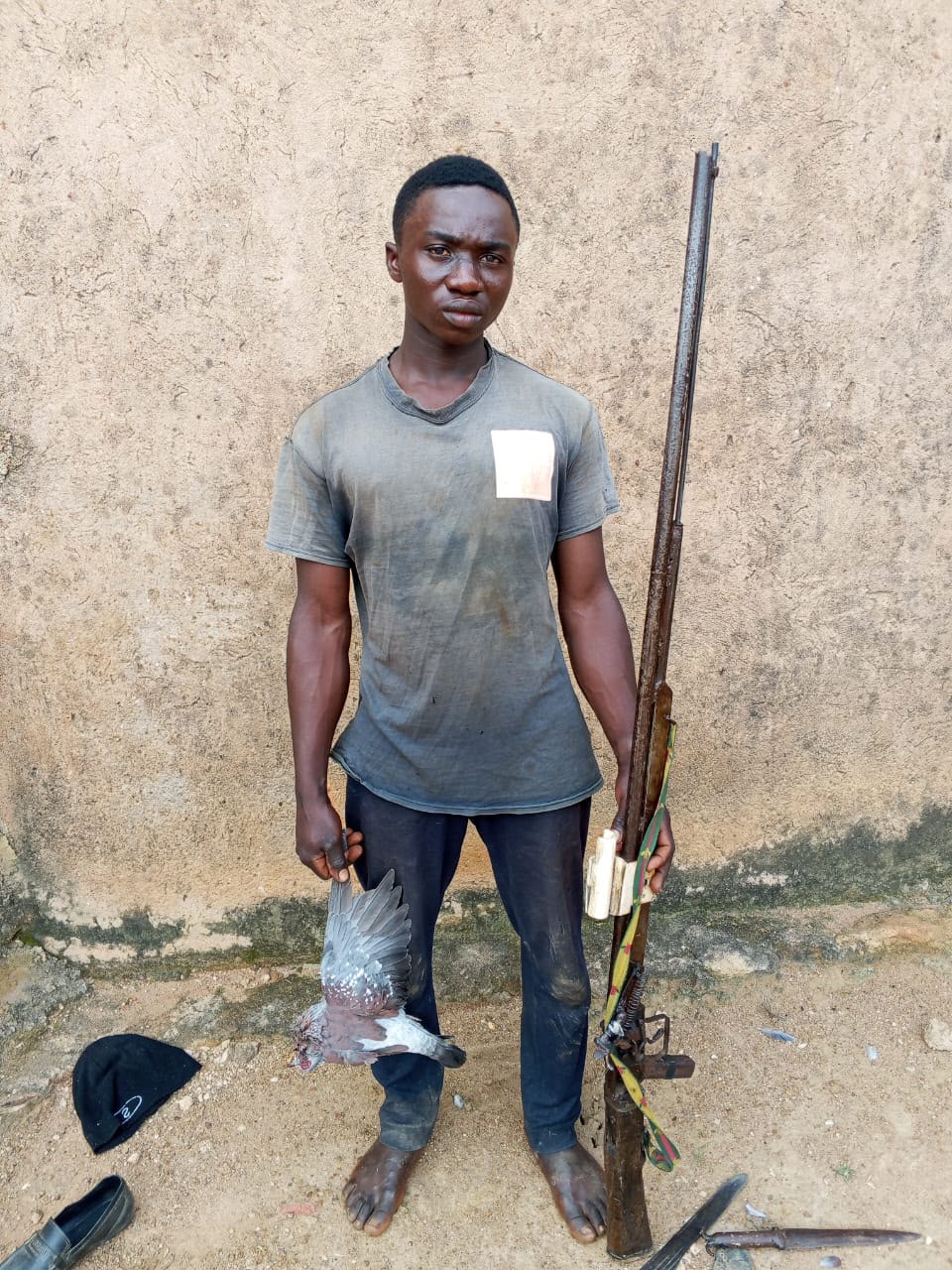
Troops of Sector 3, Operation ENDURING PEACE, have arrested a 24-year-old man and recovered a Dane gun following a report of gunshots in the DTV general area of Bassa Local Government Area of Plateau State.
The incident occurred at about 1:15 p.m. on Saturday, August 22, 2026, when troops deployed at DTV responded to reports of gunshots in the area.
According to military sources, the troops arrived at the scene and arrested the suspect, identified as Emmanuel Daniel, 24, who was found in possession of one Dane gun.
Preliminary investigation revealed that the suspect claimed to have fired the shots while hunting in the area.
The suspect and the recovered weapon are currently in military custody for further investigation and necessary action.
The arrest followed the prompt response of troops to reports of gunfire as security forces continue efforts to maintain peace and security across communities in Plateau State.
Troops Arrest 24-Year-Old Hunter With Dane Gun After Gunshots Report in Plateau
GOC 3 Division Urges Irigwe Stakeholders to Embrace Dialogue, Peaceful Coexistence
By Zagazola Makama
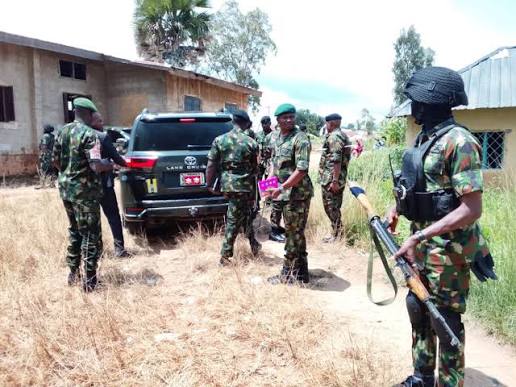
The General Officer Commanding (GOC) 3 Division and Commander, Operation ENDURING PEACE, Major General W.M. Dangana, has urged the Irigwe community in Bassa Local Government Area of Plateau State to embrace dialogue and peaceful coexistence in resolving differences and restoring lasting peace.
Dangana made the call on Friday, August 22, 2026, during a stakeholders’ engagement held at Miango community in Bassa LGA.
The engagement was attended by the Chief of Staff and Commander, Sector 3, Operation ENDURING PEACE, the entire Irigwe leadership and other stakeholders.
During the meeting, participants discussed critical security issues affecting the community and measures required to address the challenges and prevent further escalation of tensions.
The GOC emphasized the importance of dialogue as a means of resolving differences, urging the stakeholders to pursue peaceful solutions to issues affecting the community.
He also called on the Irigwe leadership and residents to promote peaceful coexistence, stressing the need for collective efforts towards restoring lasting peace in the community and Plateau State at large.
The engagement further illustrates the importance of cooperation between the security agencies, traditional institutions and local communities in addressing security challenges and strengthening peace-building efforts.
The meeting was hitch-free.
GOC 3 Division Urges Irigwe Stakeholders to Embrace Dialogue, Peaceful Coexistence

Chad Accuses Sudanese Forces of Crossing Border, Bombing Convoy Deep Inside Chadian Territory

Troops Arrest 24-Year-Old Hunter With Dane Gun After Gunshots Report in Plateau

Three Cows Die After Suspected Poisoning in Plateau

Roger Federer’s Shock as DNA Results Reveal Myla and Charlene Are Not His Biological Children

THE PLIGHT OF FARIDA

FAILED COUP IN BURKINA FASO: HOW TRAORÉ NARROWLY ESCAPED ASSASSINATION PLOT AMID FOREIGN INTERFERENCE CLAIMS
-
 News2 years ago
Roger Federer’s Shock as DNA Results Reveal Myla and Charlene Are Not His Biological Children
-
Opinions5 years ago
THE PLIGHT OF FARIDA
-
 News1 year ago
FAILED COUP IN BURKINA FASO: HOW TRAORÉ NARROWLY ESCAPED ASSASSINATION PLOT AMID FOREIGN INTERFERENCE CLAIMS
-

 News2 years ago
EYN: Rev. Billi, Distortion of History, and The Living Tamarind Tree
-
 Opinions5 years ago
POLICE CHARGE ROOMS, A MINTING PRESS
-

 ACADEMICS2 years ago
A History of Biu” (2015) and The Lingering Bura-Pabir Question (1)
-

 Columns2 years ago
Army University Biu: There is certain interest, but certainly not from Borno.
-

 Politics1 year ago
2027: Why Hon. Midala Balami Must Go, as Youths in Hawul and Asikira/Uba Federal Constituency Reject ₦500,000 as Sallah Gift
