
Columns
RE: SDP ‘now Nigeria’s new bride’?

RE: SDP ‘now Nigeria’s new bride’?
By: Dr. James Bwala
This caption drew my attention as I woke up this morning. “SDP is now Nigeria’s ‘new bride’; we’re ready to unseat Tinubu in 2027.” Mr. Dogara, an official, described the SDP as “the new bride of Nigeria,” claiming the party’s membership is growing rapidly across the country. “I was supposed to be surprised, but I laughed so hilariously knowing the political landscape we are operating in and how some people can turn in their dreams and hold on to a belief that they are still kings as they were in that dreamland.
The metaphor of a “new bride” in political discourse often symbolizes freshness, hope, and transformative potential within a political landscape. In Nigeria, the Social Democratic Party (SDP) emerged as one such entity purported to represent renewal and progressive change. However, despite this symbolic promise, the SDP lacks substantive impact in Nigeria’s complex political environment. The party’s existence does not translate into genuine institutional reform or meaningful democratic consolidation. Instead, Nigerian politics remains marred by entrenched issues such as corruption, ethnic divisions, and electoral malpractice that hinder any new political actor from effecting substantial change.
Moreover, the SDP’s inability to distinguish itself from established parties suggests that it fails to embody the qualities associated with a “new bride.” Rather than offering innovative policies or an alternative governance model, it appears as another participant in Nigeria’s cyclical political stagnation. Consequently, while multiple avenues exist to identify a “new bride” politically—such as ideological novelty or reformist zeal—the SDP conspicuously lacks these attributes in contemporary Nigerian politics.
Despite its initial allure, the SDP’s platform lacks the ideological clarity and policy depth necessary to challenge Nigeria’s entrenched political norms. In essence, the SDP’s failure to articulate a distinct political vision or leverage grassroots support further underscores its inadequacy as an agent of change within Nigeria’s entrenched political system. Furthermore, the SDP’s lack of strategic alliances and failure to galvanize a broad-based coalition further diminishes its potential as a transformative political force in Nigeria.
The party’s lack of a coherent strategy to address Nigeria’s pressing socio-economic challenges further exacerbates its inability to resonate with the electorate and establish itself as a credible alternative. Without a compelling narrative or a robust grassroots engagement strategy, the SDP remains ill-equipped to navigate and influence the complex political terrain of Nigeria, leaving them in stark contrast to what one might expect from a truly revitalizing political entity.
The SDP’s inability to distinguish itself from the existing political framework further limits its capacity to attract voters seeking genuine change. Moreover, the absence of a clear and compelling policy agenda not only hinders the SDP’s ability to differentiate itself from established parties but also limits its appeal to a populace yearning for substantive political reform. Without a clear vision or innovative approach, the SDP’s efforts to engage with Nigeria’s diverse electorate remain superficial and largely ineffective.
READ ALSO: https://newsng.ng/the-plight-of-farida/
The party’s failure to articulate a clear stance on key national issues, such as corruption and electoral reform, further alienates it from voters who are desperate for meaningful progress and accountability in governance. The SDP’s struggle to resonate with the electorate is exacerbated by its lack of charismatic leadership.
Compounding this issue is the party’s inability to effectively leverage grassroots movements or build a robust network of support at the community level. Moreover, the party’s outdated strategies and lack of engagement with Nigeria’s youthful population further diminish its appeal as a viable alternative to the entrenched political entities. This is further compounded by the SDP’s failure to articulate a clear and compelling vision that distinguishes it from established parties, leaving it adrift in a sea of political sameness.
SDP’s inability to leverage its historical significance and past achievements has rendered it almost invisible in a rapidly evolving political environment. Lacking the dynamic qualities and fresh perspectives typically associated with a ‘new bride,’ the SDP struggles to captivate the electorate’s imagination or promise substantial change in Nigeria’s political discourse. In a political landscape where the electorate is increasingly seeking genuine transformation and innovative solutions, the SDP’s inability to adapt and present a forward-thinking agenda leaves it struggling to remain relevant.
Without a strategic overhaul and a willingness to embrace innovation, the SDP risks fading into irrelevance as voters gravitate towards parties that offer tangible solutions and visionary leadership. The SDP’s inability to resonate with the aspirations of a diverse and dynamic electorate underscores its struggle to remain pertinent in Nigeria’s competitive political arena.
Despite these challenges, the SDP continues to participate in elections, albeit with diminishing influence and limited success. Such circumstances underscore the necessity for the SDP to undergo a transformative renewal, one that prioritizes innovative policies and embraces the dynamic energy of Nigeria’s younger generation. Engaging with the youth through meaningful dialogue and showcasing a commitment to addressing their concerns could potentially revitalize the party’s image and reconnect it with a demographic that is pivotal for electoral success.
By fostering an environment that encourages the participation of emerging leaders and by aligning its policies with the progressive aspirations of the populace, the SDP could potentially redefine its role in Nigeria’s political future. By doing so, the SDP may not only rejuvenate its appeal but also position itself as a credible alternative capable of driving meaningful change in Nigeria’s evolving political landscape. For now, contrary to its claims and dreams of unseating President Bola Ahmed Tinubu in 2027, according to Abubakar Dogara, the party’s national vice chairman for the North-Central Zone, the party needs to look inward and look at the vast grounds they are dreaming of breaking to make an impact in 2027.
*James Bwala, PhD, writes from Abuja.
RE: SDP ‘now Nigeria’s new bride’?



Bura Day on the Plateau: When Cultural Heritage Draws the Line
By: Balami Lazarus
I partly grew on the Plateau, Jos in particular. As a young MSN, I knew the presence of the Bura people as a tribal group in Jos was not as much as it is currently. Why did I say this?
The Bura Cultural Day was last held in 1980, if I correctly remember, or thereabouts at the township primary school playground in Jos.
Bura is a language and group of people with ancient ancestral clan names and origins. Is one of the independent ethnic groups of the human race in Nigeria, perhaps the most misunderstood tribal group in Nigeria because of the Babur-Bura concept that is
baseless with no historical foundation but a mere political linkage.
However, the Bura Community in Jos has drawn a line recently when they held their Cultural Day, where they displayed their independent cultures in unique traditional heritage and norms devoid of Pabir (Babur) people, whom they thought were not Bura, which is historically and culturally wrong.
The Bura ethnic nation are people and tribes. The cultural event was a day of cultural traditions and norms where sources of materials of food, music, dresses, and styles, among others that the Bura are known for and with, were colorful displayed.
According to observers and other sources, what stood out and impressed the public was the different modes and styles of dances with changes of musical beats, tones, lyrics, and rhythm in rhyme with the steps of dances during the occasion, including the species of the Bura garden egg (gauta) and how it was sliced, prepared, and garnished, adding color to the day.
Attires of dark blue stripes across White House fabric, known as ‘Bul,’ were among the major cultural identities of the Bura-speaking nation. The ‘bul’ represents the cultural and spiritual heritage of the Bura people; its importance to the people cannot be overemphasized. It symbolizes royalty/nobility. Sadly is used as a shroud for the departed in Buraland.
The day was witnessed by Bura Community leaders, including many of her sons and daughters living in Jos.
Balami, Publisher/Columnist 08036779290
Bura Day on the Plateau: When Cultural Heritage Draws the Line
Shosa: 2026 Reunion, Achievements, Challenges, and the Way Forward
By: Balami Lazarus
Many Sharamites (Platonians) may have refused to understand, accept, or agree with me. However, these are my experiences as one of them, an insider.
From far and near, Sharam Old Students known as Shosa recently came together at Silk Hotel Jos to rekindle memories and reunite as once ex-students of Plato College Sharam in the Kanke Local Government Area of Plateau State.
Associations of old students are known for their contributions to their alma mater, the host community, and, importantly, to their financially committed members, as they can happily go for assistance or associational protection as old students’ fraternities, either as class sets or lifetime friendships that have existed over the years and are still counting.
There is no denying the fact that school reunions rekindled memories, the glaring ambience of the gathering of ex-students. And a time when achievements are reeled out with the gleaning of challenges to move forward. Alas! What I met and saw with Shosa 2026 was nothing to write home about. Only a jamboree. Kallon kowa.
Childhood and secondary school friendships are rooted in time and space, honesty, sincerity, and commitment to purpose. This stage, in one’s life, marked the beginning of lifelong friendship. The Merchant of Venice—William Shakespeare has shown the meaning and essence of true friendship. My Samaru Nostalgia Group (SNG) is another good example.
Shosa Conventions/AGMs, including that of Jos 2026, are filled with challenges with little or no achievements to show as a group of old students who are today men and women, collectively and capable, with the capacity to change or influence matters and bring in developments and progress that will positively impart on us as a group and our community. But these are visibly lacking in Shosa.
I challenged any Sharamites to show me one tangible achievement/project that has been carried out by us as Shosa while our school at Sharam is soon about to be buried.
We are only but concerned and heartily interested in the yearly and meaningless get-together that lacks substance or value.
We have failed to look back to having those that will take over from us as a chain of continuity. And if this is the trend of things, I have no other option than to begin to prepare for peaceful existence.
Therefore, my alma mater, Plato College Sharam and Shosa, is faced with challenges of commitments by her members financially, capped with a lack of seriousness on the part of members of chapters thereof.
I reasonably believed that there are no benefits to why ex-students are to join the body known, called, and addressed as Shosa. As committed Sharamites, I saw that. And the lack of seriousness and commitments among many of us, including the few registered members who are willingly shying away from meetings and financial commitment
For me, the way forward for Shosa is to reorganize herself by amending her constitution and bylaws that will weed out unserious members, making any Sharamite willing to join must be ready to sit up henceforth. The fewer the merrier for chapters, hence the national body.
Let there be proper accountability in Shosa activities at the chapter level and the national level in every aspect, from handing to taking over. Chapters should also inform members of the positions of their finances from time to time.
I suggest Shosa should attract other ex-students with beneficial programs and projects.
Balami, Publisher/Columnist. 08036779290
Shosa: 2026 Reunion, Achievements, Challenges, and the Way Forward
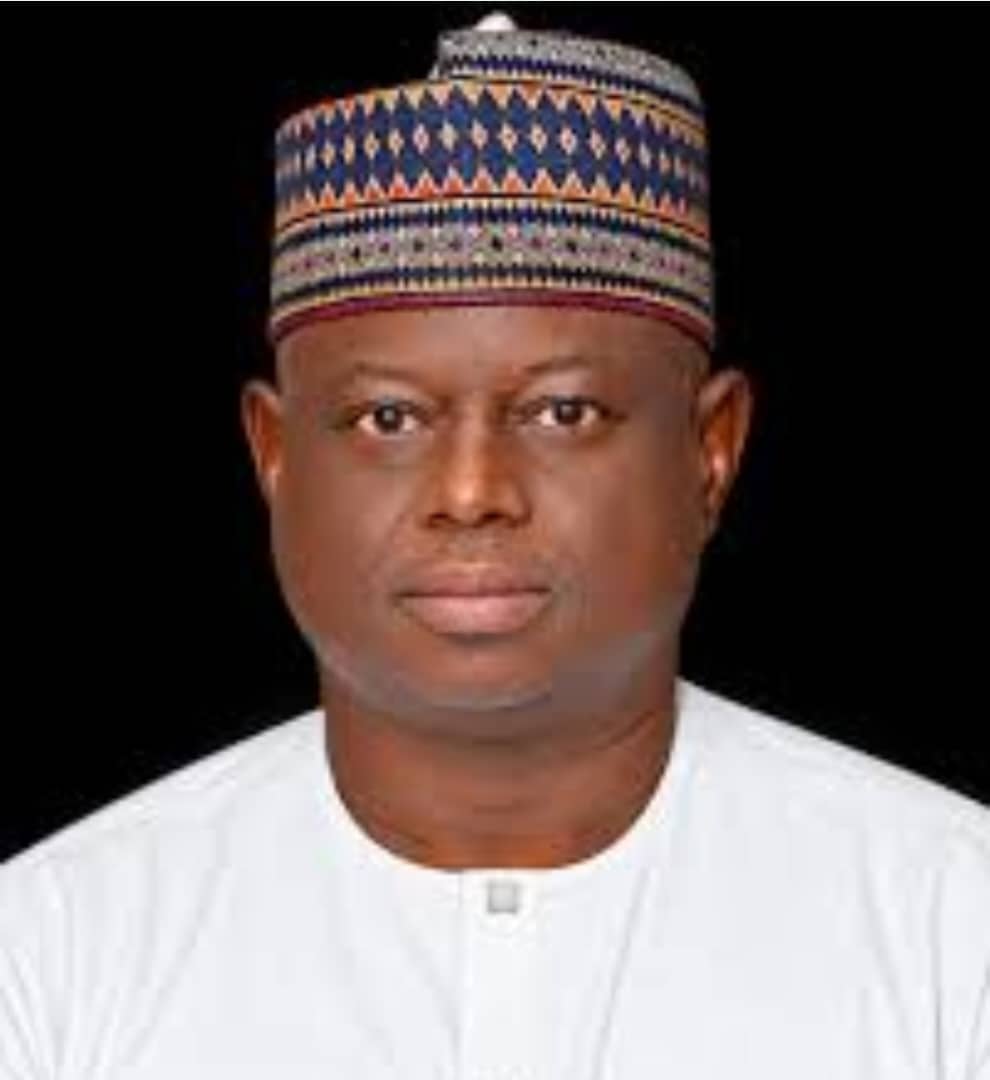
Prof. Faruk Buba is currently leading the affairs at UMTH
By: Balami Lazarus
The health sector has witnessed positive changes, with hospitals serving as agents of healthcare service delivery for patients and those in need of medical services.
Likewise, our health institution, the University of Maiduguri Teaching Hospital (UMTH), contributes to healthcare services, and despite the challenges faced, the CMD Prof. Faruk Buba will no doubt make a difference.
Aside from providing medical and healthcare, UMTH is a training institution for medical students; it also provides space for medical research and development (R&D) in various fields of medicines, which UMTH is long known for.
Whenever an organization or institution has a new chief executive, expectations are always high. The case of UMTH is not exceptional, as Prof. Faruk Buba now takes charge as the 9th Chief Medical Director of UMTH.
The atmosphere presently at UMTH is one of expectations of positive changes and performance to reset and reboot the hospital to engage staff and workers to deliver effective, efficient, and quality healthcare services.
UMTH under the leadership of Prof. Buba shall be better than he met it, going by his medical and administrative experiences/positions he held before: Deputy Chairman Medical Advisory Committee (DCMAC), Chairman Anti-Corruption and Transparency Unit (UMTH), Director of Ahmed Bola Tinubu ICT Centre, among other positions held.
Prof. Faruk Buba was born some 57 years ago. A professor of cardiology/consultant. He attended Ahmadu Bello University Zaria and began his medical career with UMTH and rose to where he is today. He hails from Gombe State.
Balalami, Publisher/Columnist 08036779290
Prof. Faruk Buba is currently leading the affairs at UMTH

Gara-Gombe alleges threat to life, family, petitions IGP

Campaign Train: Zulum Storms Mafa, Dikwa, Gamboru Ngala to Rousing Reception

Troops Destroy Suspected Terrorist Hideout, Recover Motorcycle in Zamfara

Roger Federer’s Shock as DNA Results Reveal Myla and Charlene Are Not His Biological Children

THE PLIGHT OF FARIDA

FAILED COUP IN BURKINA FASO: HOW TRAORÉ NARROWLY ESCAPED ASSASSINATION PLOT AMID FOREIGN INTERFERENCE CLAIMS
-
 News3 years ago
Roger Federer’s Shock as DNA Results Reveal Myla and Charlene Are Not His Biological Children
-
Opinions5 years ago
THE PLIGHT OF FARIDA
-
 News2 years ago
FAILED COUP IN BURKINA FASO: HOW TRAORÉ NARROWLY ESCAPED ASSASSINATION PLOT AMID FOREIGN INTERFERENCE CLAIMS
-
 Opinions5 years ago
POLICE CHARGE ROOMS, A MINTING PRESS
-

 News3 years ago
EYN: Rev. Billi, Distortion of History, and The Living Tamarind Tree
-

 ACADEMICS3 years ago
A History of Biu” (2015) and The Lingering Bura-Pabir Question (1)
-

 Columns3 years ago
Army University Biu: There is certain interest, but certainly not from Borno.
-

 Politics1 year ago
2027: Why Hon. Midala Balami Must Go, as Youths in Hawul and Asikira/Uba Federal Constituency Reject ₦500,000 as Sallah Gift
