
News
Rebuilding Borno via Resettlement and Family Reunification: The Zulum Style

Rebuilding Borno via Resettlement and Family Reunification: The Zulum Style
By Zagazola Makama
For the past five years, families in Maiduguri, the Borno State capital, and other towns across the North-East region have been struggling to rebuild their lives from the devastation caused by the Boko Haram insurgency. This insurgency threatened the social fabric and economic life of the people.
In 2009, Boko Haram terrorists intensified their attacks on people, government officials, and institutions. From 2013 to 2014, at the peak of the insurgency, the terrorists controlled large areas of the North-East region and extended their attacks to border communities in Chad, Cameroon, and Niger Republics.
This caused large-scale displacement and destruction of public infrastructure such as schools, hospitals, markets, businesses, religious places of worship, and financial and government establishments.
The terrorizing effect of Boko Haram’s activities on the social and economic life of the people was so devastating that schools, hospitals, businesses, government, and financial institutions closed down in many areas of Borno State. According to official statistics, the damage caused by the insurgency was over $6 billion as of 2015.
To fast-track recovery, rehabilitation, and reconstruction of the war-torn region, the Federal and Borno State Governments initiated and implemented viable programs, including economic empowerment, reunification of missing persons, and deradicalization of repentant insurgents to foster sustainable social and economic development.
According to official records, the Borno Ministry of Women Affairs and Social Development empowered 325,000 women and girls through its skill acquisition training program across 18 local government areas of the state. The ministry also reunified separated families and provided food and non-food items to 152,000 households in 2023, and 162,000 households in 27 LGAs under its family tracing and reunification scheme.
On reintegration of ex-combatants into their communities, the ministry created forums for peace, reconciliation, and community engagement in 27 LGAs and neighboring countries. Some 66,000 ex-combatants returned to their communities in 2023, and 40,042 transitioned into civilian life in 2024.
In 2023 alone, the ministry created safe and comfortable spaces for 982 victims of Sexual and Gender-Based Violence (SGBV) seeking support in 13 LGAs of the state. To promote child rights and protection, the Borno State Children Parliament was established, with 30 delegates representing the state at national parliament conferences and participating in conferences held in Kenya and Ethiopia.
The state also enacted the Violence Against Persons Prohibition Law (VAPP Law), renovated the International Women Centre in Maiduguri, and extended outreach programs to enhance advocacy for women’s participation in leadership.
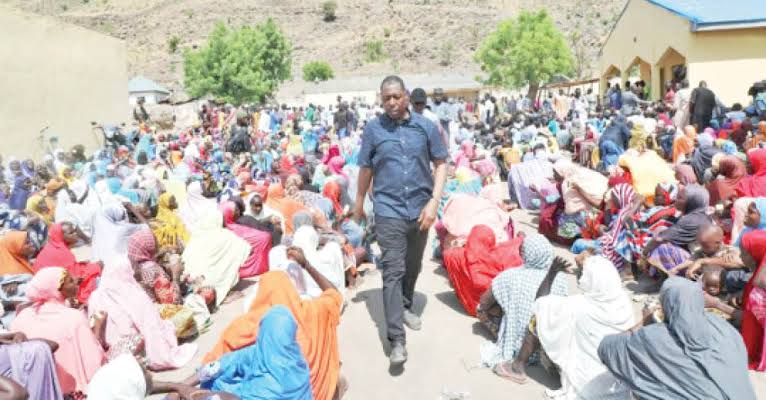
Under the administration of Babagana Zulum, the Borno government has successfully resettled thousands of displaced persons in their ancestral homes to hasten rehabilitation and resettlement of those affected by the insurgency.
Highlighting the extensive rehabilitation project, Zulum said the state government plans to construct 85,000 houses to fast-track the resettlement of two million displaced persons in 66 communities across the state. This statement was made in March during a meeting with the North-East Ambassadors’ Group, chaired by the British High Commissioner, Richard Montgomery. The group comprises High Commissioners, Ambassadors, the UN Humanitarian Coordinator to Nigeria, Defense Attachés, and other humanitarian partners.
Zulum further explained that the state government would construct schools, clinics, police posts, marketplaces, water points, secured farmlands, and vocational training centers in each of the 66 communities. He added that the government would commit 15 percent of its annual budget to fast-track the resettlement of displaced persons while expanding Maiduguri metropolis along six axes to accommodate people who choose to integrate into the city. According to the governor, the state requires about $2.7 billion to achieve sustainable solutions for Internally Displaced Persons (IDPs).
“I am committed to resettling our people into decent homes in secure areas, supporting them to reintegrate into communities or relocate to another place as they wish, respecting their choices and dignity. Implementing the durable solutions pathway for IDPs will also significantly reduce the recruitment of jobless young men by the Islamic State of West Africa Province (ISWAP), which is a threat to national and international security,” Zulum said.
The governor emphasized the importance of his administration’s Rehabilitation, Reconstruction, and Resettlement (RRR) program to mitigate internal displacement and pledged to build on the achievements in security and peace restoration. He praised development partners for their support of the Regional Stabilization Facility and the one UN offer, noting that it has significantly impacted the lives of people affected by insurgency in the Lake Chad region.
For the deradicalization and integration of repentant insurgents and their families into society, the federal government set up a center in Gombe to reform and change the radical mindset of ex-insurgent fighters. Meanwhile, the Borno government established a rehabilitation center for the rehabilitation and skills acquisition training of the clients.
Importantly, more than 160,000 Boko Haram/ISWAP fighters, adherents, and their families have surrendered to Nigerian authorities. Many of them have completed their deradicalization process, rehabilitation, and skills training programs.
Some resettled families praised the initiative for accelerating the recovery and stability program of Borno State and the North-East region in general.
Ms. Adama Ali, one of the resettled family members, expressed joy over the program, saying she was reunited with her son lost in 2014 when insurgents attacked her village in Bama. Ali, a mother of three, said that the insurgents killed her husband and separated her from her son for the past ten years. “I’m happy to be reunited with my son; I have my family now,” she said.
Mr. Bukar Kime, a resettled farmer in Konduga, commended the state government for the support extended to them. He said the government distributed fertilizers, seeds, and inputs to enable them to cultivate their farmlands. “This will enable us to feed ourselves and stop relying on food handouts from the government,” Kime said.
Mr. Ahmed Shuwa, a civil society activist, said the RRR initiative by the Borno government would build resilience, provide livelihoods, and encourage sustainable social and economic development in the state.
Zagazola Makama is a Counter Insurgency Expert and Security Analyst in the Lake Chad Region.
Rebuilding Borno via Resettlement and Family Reunification: The Zulum Style


Troops Arrest Suspected Military Impostor in Katsina
By Zagazola Makama
Troops of 17 Brigade have arrested a suspected military impostor during a fighting patrol in Malumfashi Local Government Area.
Security sources told Zagazola Makama that the suspect was apprehended at about 1:30 p.m. on July 4 by troops deployed at the Forward Operating Base (FOB) Malumfashi while conducting routine patrols within Malumfashi town.
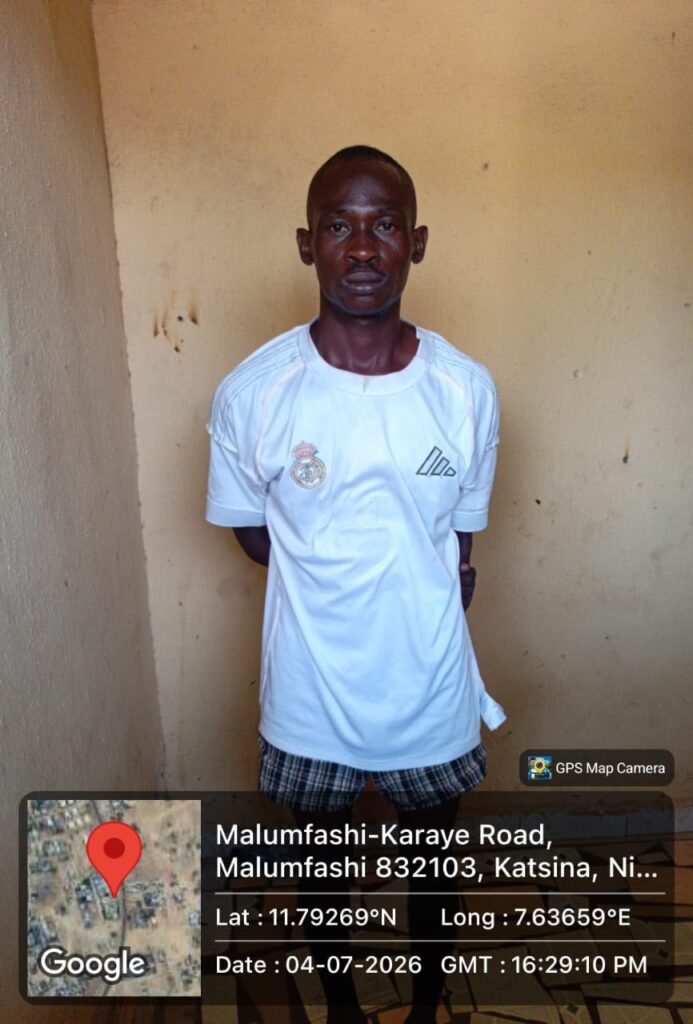
According to the sources, the suspect was intercepted while wearing a woodland camouflage three-quarter short, raising suspicion among the troops.
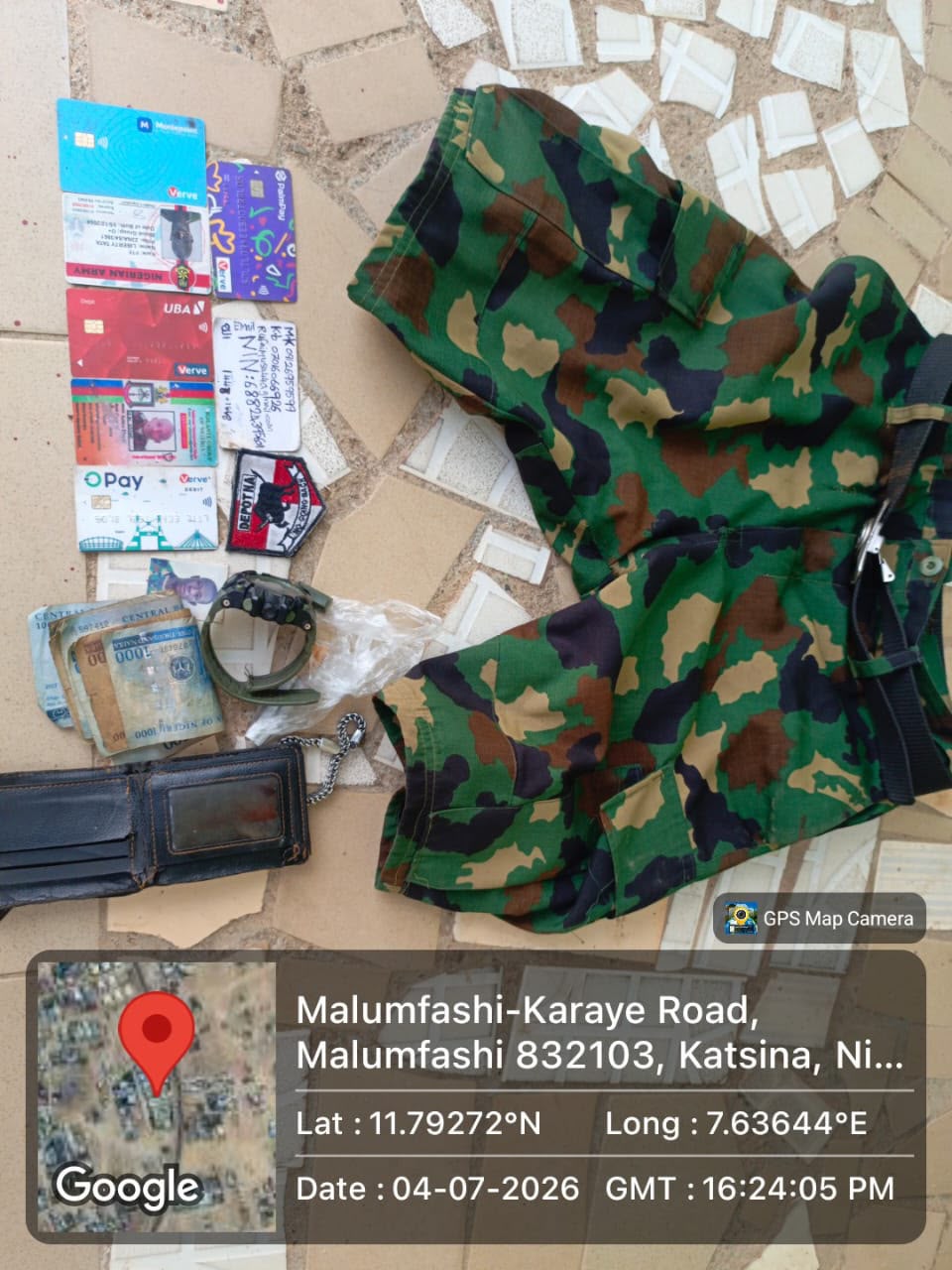
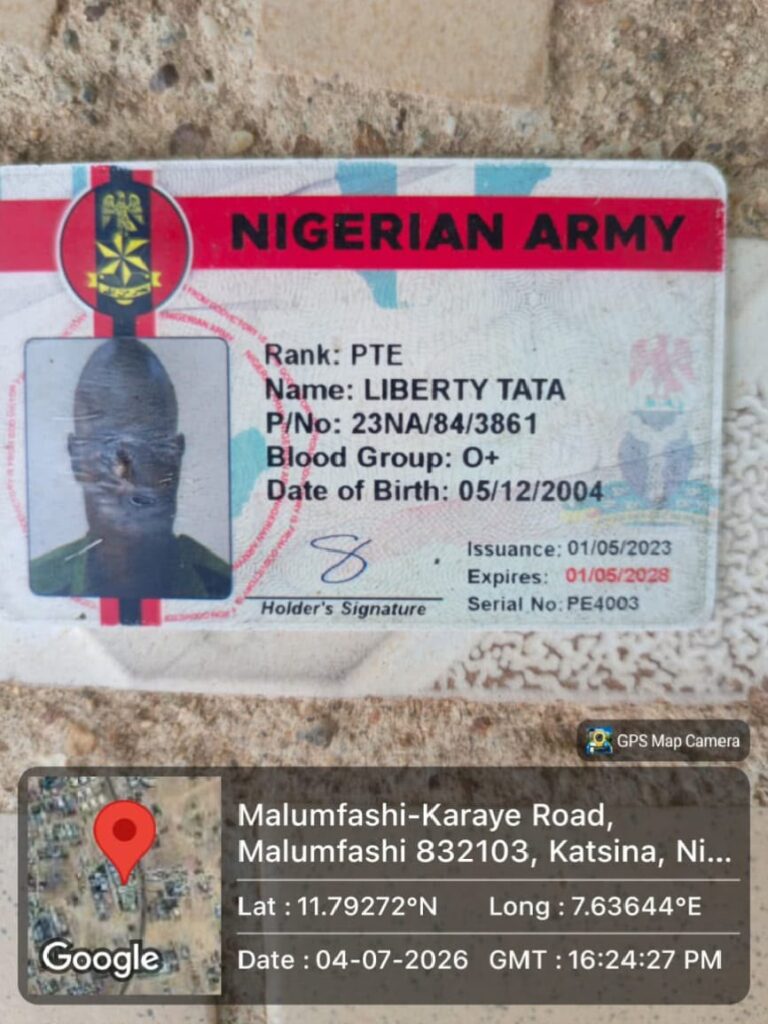
A search conducted on the suspect led to the recovery of a fake Nigerian Army identity card, four Automated Teller Machine (ATM) cards, one woodland camouflage three-quarter short, a wristwatch and the sum of ₦17,000.
The suspect and the recovered exhibits are currently in military custody pending further investigation.
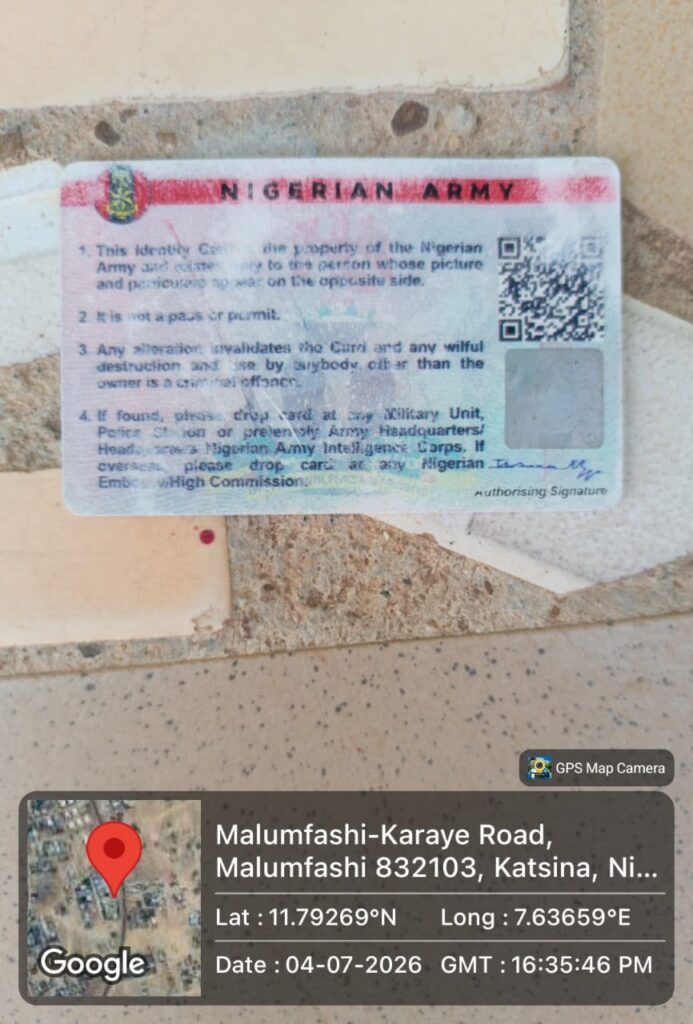
Military sources said the arrest forms part of ongoing efforts to curb impersonation of security personnel and other criminal activities within the area.
Troops Arrest Suspected Military Impostor in Katsina
Troops Recover 50 Rustled Cattle, Repel Suspected Rustlers in Kaduna
By Zagazola Makama
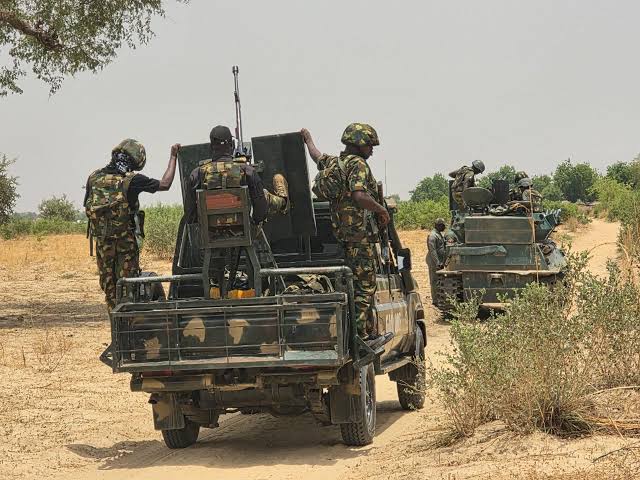
Troops deployed at the Forward Operating Base (FOB) Kankomi have recovered 50 rustled cattle after repelling suspected cattle rustlers during an ambush operation in Chikun Local Government Area.
Security sources told Zagazola Makama that the troops responded to a distress call at about 9:55 a.m. on July 4 over the activities of suspected rustlers at Ungwan Gontu community.
According to the sources, the troops swiftly laid an ambush and made contact with the fleeing suspects, forcing them to abandon the stolen livestock and escape into the surrounding area.
During the operation, the troops recovered 50 rustled cattle, which were subsequently identified and handed over to their rightful owner.
Military sources said efforts are ongoing to track down the fleeing suspects as security operations continue to combat cattle rustling and other criminal activities across Kaduna State.
Troops Recover 50 Rustled Cattle, Repel Suspected Rustlers in Kaduna
Troops Arrest Suspected Terrorist in Kogi, Suspect Confesses to Group Membership
By Zagazola Makama
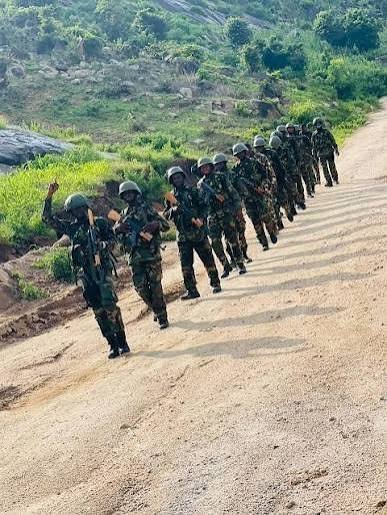
Troops of 12 Brigade, in collaboration with Office of the National Security Adviser (ONSA) Hybrid Forces, have arrested a suspected terrorist during an operation in Lokoja Local Government Area.
Security sources told Zagazola Makama that the troops responded at about 1:00 p.m. on July 4 to reports of a confrontation between local residents and a suspected terrorist at a Ruga settlement behind Obajana community.
According to the sources, the troops swiftly intervened and arrested one suspect at the scene.
During preliminary interrogation, the suspect reportedly confessed to being a member of a terrorist group led by an individual identified as Haruna, which allegedly operates within the Okene general area.
The suspect is currently in military custody and is undergoing further investigation to establish the extent of his involvement and identify other members of the group.
Military sources said the arrest forms part of ongoing security operations aimed at dismantling terrorist and criminal networks across Kogi State.
Troops Arrest Suspected Terrorist in Kogi, Suspect Confesses to Group Membership

Troops Arrest Suspected Military Impostor in Katsina

Troops Recover 50 Rustled Cattle, Repel Suspected Rustlers in Kaduna

Troops Arrest Suspected Terrorist in Kogi, Suspect Confesses to Group Membership

Roger Federer’s Shock as DNA Results Reveal Myla and Charlene Are Not His Biological Children

THE PLIGHT OF FARIDA

FAILED COUP IN BURKINA FASO: HOW TRAORÉ NARROWLY ESCAPED ASSASSINATION PLOT AMID FOREIGN INTERFERENCE CLAIMS
-
 News2 years ago
Roger Federer’s Shock as DNA Results Reveal Myla and Charlene Are Not His Biological Children
-
Opinions4 years ago
THE PLIGHT OF FARIDA
-
 News1 year ago
FAILED COUP IN BURKINA FASO: HOW TRAORÉ NARROWLY ESCAPED ASSASSINATION PLOT AMID FOREIGN INTERFERENCE CLAIMS
-

 News2 years ago
EYN: Rev. Billi, Distortion of History, and The Living Tamarind Tree
-
 Opinions5 years ago
POLICE CHARGE ROOMS, A MINTING PRESS
-

 ACADEMICS2 years ago
A History of Biu” (2015) and The Lingering Bura-Pabir Question (1)
-

 Columns2 years ago
Army University Biu: There is certain interest, but certainly not from Borno.
-

 Politics1 year ago
2027: Why Hon. Midala Balami Must Go, as Youths in Hawul and Asikira/Uba Federal Constituency Reject ₦500,000 as Sallah Gift
