
Military
Remembering a soldier’s soldier: The life and legacy of Lt. Gen. Taoreed Abiodun Lagbaja

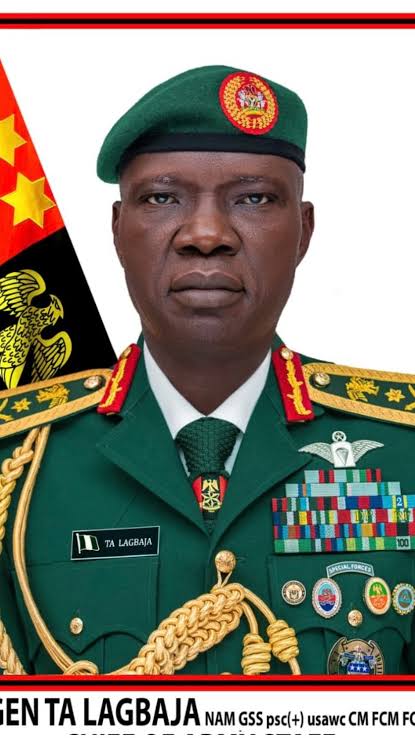
Remembering a soldier’s soldier: The life and legacy of Lt. Gen. Taoreed Abiodun Lagbaja
By: Zagazola Makama
The Nigerian Army on Monday paid tribute to the life, service, and enduring legacy of the late Chief of Army Staff, Lieutenant General Tariq Abdul Abiodun Lagbaja, describing him as a soldier whose courage, dedication, and leadership left an indelible mark on the nation. The homage coincided with the unveiling of his biography, A Life of Service, at the 2025 Chief of Army Staff Annual Conference held in Lagos.
The biography, meticulously compiled by Major General H.G. Wesley (retd.), former Chief of Special Services and Programs, Army, chronicles the extraordinary life of Lt. Gen. Lagbaja, capturing not just his professional achievements, but also the personal values that guided his service.
The project was championed by Professor C.B.N. Ogbogbo, President of the Association of African Historians and Vice-Chancellor of Admiralty University, Delta State, alongside 21 other historians and elder scholars from the Nigerian Army.
The publication was complemented by a documentary produced by the Nigerian Television Authority, providing a visual narration of the former Army Chief’s life.
President Bola Ahmed-Tinubu, described Lt. Gen. Lagbaja as “one of my best appointments.” The President recalled the impact of Lagbaja’s leadership on the Army and the nation, stating, “This nation, our armed forces, the army, and everyone acquainted with him are better for that choice. He embodied courage, dedication, and unyielding loyalty to the nation.”
Born in 1968 in Ilobu, Oshun State, and raised in nearby Oshobo, Lt. Gen. Lagbaja’s discipline and commitment were evident from an early age. He joined the Nigerian Defence Academy, Kaduna, as part of the 39th Regular Course, graduating in 1992 with a Bachelor of Science degree in Geography before commissioning into the Infantry Corps. His first posting as a platoon commander in the 93rd Battalion, Borno State, revealed a leader who was never behind the lines but always at the front, sharing in the hardships and risks faced by his soldiers.
Rising through the ranks, Lagbaja commanded brigades in Lagos and Oyo States, where he tackled urban insecurity and oil bunkering. He later led as General Officer Commanding 82 Division in the South East and 1 Division in the North West, earning the respect and loyalty of his troops for leading by example and demonstrating unwavering commitment to operational success.
In 2022, as Chief of Operations, he consolidated decades of battlefield experience to guide strategy across multiple theatres of operation. His appointment as the 23rd Chief of Army Staff in June 2023 marked the pinnacle of a career defined by integrity, vision, and a leadership philosophy he called the “Six Cs,” emphasizing training, innovation, civil-military engagement, and strategic foresight. Under his guidance, the Nigerian Army strengthened its operational readiness, improved civil-military relations, and projected Nigeria’s stature internationally.
Lt. Gen. Lagbaja received numerous national and international honors, including the Forces Service Star, Meritorious Service Star, Field Command Star, and Grand Service Star. Internationally, he was posthumously inducted into the United States Army War College International Hall of Fame in 2025.
General Christopher Musa, who paid tribute to the late Chief, described him as a courageous, exemplary leader whose significant contributions against terrorism and banditry left a lasting void in the military and nation, urging troops to honor Lagbaja’s sacrifice by defeating state enemies.
Muhammed Badaru, described Lagbaja as a “gallant hardworking officer” and a “warrior” who had served commendably in all theaters of war. He hailed the late general’s courage, leadership, and unwavering dedication to the service of the nation.
The COAS, Lieutenant General Waidi Shuaibu, described the late Army Chief as “a soldier who never asked his men to face danger he would not face himself. He was a commander in the truest sense, walking alongside his soldiers in the theatre of operations, sharing their risks and their burdens.” Shuaibu further praised Lagbaja’s dedication to the welfare of personnel and the strengthening of institutional frameworks, noting that his leadership style blended courage with compassion.
“His legacy is firmly rooted in selfless service and exemplary leadership,”he said.
The biography, A Life of Service, captures the personal values that defined Lt. Gen. Lagbaja unpretentious simplicity, moral courage, empathy for soldiers and their families, loyalty, and patriotism.
The project, General Wesley noted, aimed to ensure that the lessons of his life and leadership could inspire both serving and retired military officers, as well as inform future policy and operational strategies.
Professor Christopher Ogbobo, one of the historians involved, stressed the importance of documenting military experiences for posterity. “Given the quality of training and the diverse experiences of our warriors, it has become imperative to document their lives,” he said. “Those who can, both retired and serving, owe Nigeria that duty. Their experiences are rich and instructive for future generations and policymakers alike.”
The ceremony also highlighted the human dimension of Lt. Gen. Lagbaja’s life. Beyond the battlefield, he was a devoted husband and father, often playing with his children at dawn and supporting his family after long hours in uniform.
His favorite Christian hymn, Only Remembered by What We Have Done, encapsulated the guiding philosophy of his life, emphasizing legacy, service, and tangible contributions.
His story, from the streets of Ilobu to the highest ranks of the Nigerian Army, exemplifies courage, discipline, and visionary leadership, ensuring that his memory will inspire generations to come.
“Before the medals, before the rank, before the history books, there was this man, Lieutenant General Toareed Abiodun Lagbaja. A leader forged in the dust and fire of service,” a speaker remarked. “Nigeria will remember his heart; history will remember his duty.”said the speaker.
The speech ended with an unveiling of a Book on the life and legacy of Lt. Gen. Toareed Abiodun Lagbaja
Remembering a soldier’s soldier: The life and legacy of Lt. Gen. Taoreed Abiodun Lagbaja


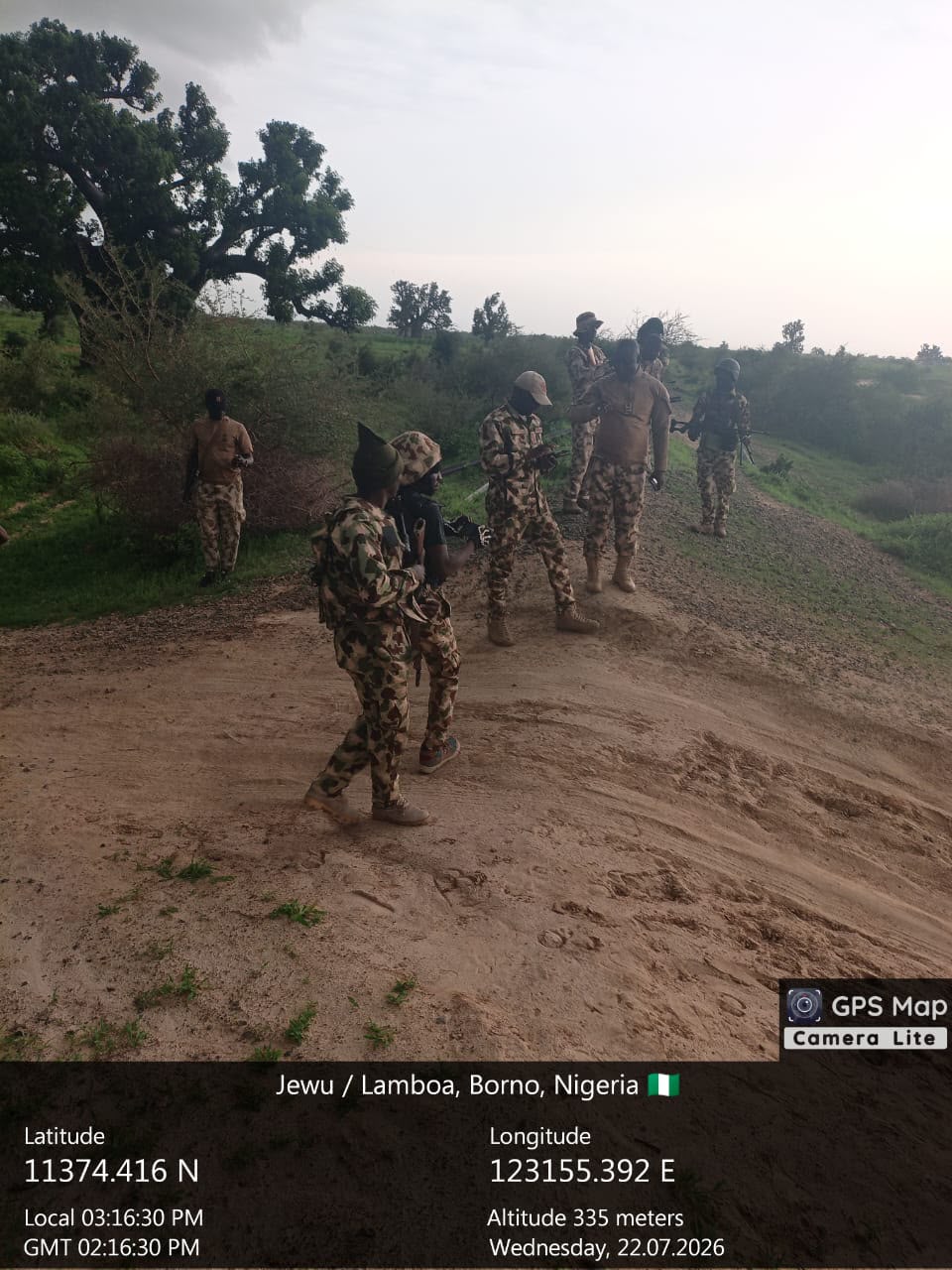
Troops conduct clearance patrol in Borno
By: Our Reporter
Following the clearance mission, the patrol occupied a tactical ambush position along a suspected terrorist route to monitor movement and deter any attempt by insurgents to infiltrate the area.
Military sources described the patrol as hitch-free, adding that troops maintained a high level of vigilance throughout the operation.
The clearance mission forms part of the ongoing Operation Desert Sanity V, which is aimed at sustaining pressure on Boko Haram and ISWAP elements, preventing their return to previously cleared locations, and creating a secure environment for civilian populations to carry out their livelihoods.
Sources added that the general security situation in the area remained calm but fluid, while the morale and fighting efficiency of the troops were reported to be satisfactory.
Troops conduct clearance patrol in Borno
Military
Residents Cheer Troops as Operation FANSAN YAMMA Returns with Captured Terrorists’ Logistics in Zamfara

Residents Cheer Troops as Operation FANSAN YAMMA Returns with Captured Terrorists’ Logistics in Zamfara
By Zagazola Makama
Residents of Gummi town in Zamfara State on Thursday poured into the streets to celebrate troops of the Joint Task Force North West, Operation FANSAN YAMMA, following a major operational success against terrorists in the area.
Eyewitnesses said the jubilant crowd gathered as soldiers arrived in town with logistics recovered from terrorists after a successful counter-ambush operation that reportedly left more than 100 terrorists neutralised.
The recovered items, including eight motorcycles used by the armed groups for movement during attacks on communities, were transported on an Armoured Personnel Carrier (APC) to the Headquarters of Operation FANSAN YAMMA in Gummi.
Residents were seen cheering, waving at the troops and applauding their efforts as the convoy entered the military base, with many expressing appreciation for the soldiers’ courage and sacrifices in the ongoing fight against banditry in the North West.
Security sources told Zagazola Makama that the successful operation dealt a significant blow to the criminal networks operating in the area, disrupting their mobility and logistical capabilities.
The spontaneous celebration by residents is seen as a reflection of growing public confidence in the military’s sustained offensive against terrorists and bandits across Zamfara and neighbouring states.
Military authorities reaffirmed that Operation FANSAN YAMMA remains committed to sustaining offensive operations aimed at dismantling terrorist enclaves, denying criminal elements freedom of movement, and restoring lasting peace across the North West.
The Joint Task Force also acknowledged the continued support and actionable intelligence provided by residents, describing community cooperation as critical to the success of ongoing operations.
Residents Cheer Troops as Operation FANSAN YAMMA Returns with Captured Terrorists’ Logistics in Zamfara
Military
Establishment of Army Depot in South-East Reflects FG’s Commitment to National Unity, Security and inclusiveness– COAS
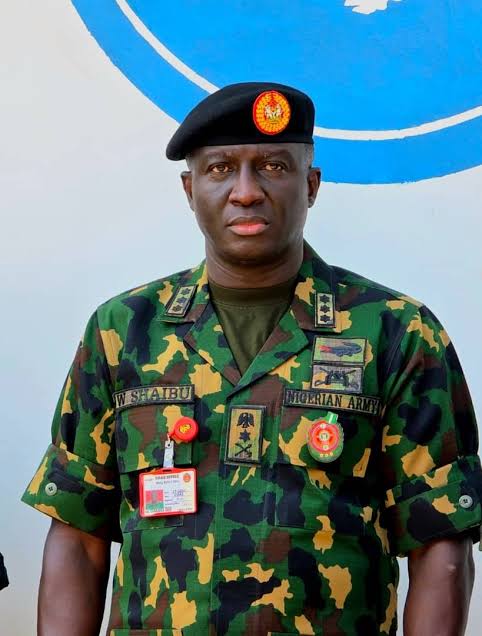
Establishment of Army Depot in South-East Reflects FG’s Commitment to National Unity, Security and inclusiveness– COAS
By Zagazola Makama
The Chief of Army Staff (COAS), Lt.-Gen. Waidi Shaibu, has said that the establishment of the Depot Nigerian Army in Amasiri-Edda, in Ebonyi State is a clear demonstration of the Federal Government’s commitment to national security, inclusiveness, national integration and balanced development across the country.
Shaibu made the remarks while addressing dignitaries during activities marking the inauguration of the newly established military training institution in Abakaliki, Ebonyi State.
According to the Army Chief, the depot, which is the first primary recruit training institution of the Nigerian Army in the South-East geopolitical zone, represents a strategic investment by President Bola Ahmed Tinubu’s administration in strengthening national security and promoting equitable distribution of critical national institutions.
“The establishment of this depot reflects the Federal Government’s commitment to national security, inclusiveness, national integration and balanced development,” Shaibu said.
He described the inauguration of the facility as a landmark achievement in the ongoing transformation of the Nigerian Army under President Tinubu, noting that it would significantly enhance the Army’s capacity to train professionally competent and combat-ready soldiers.
The COAS disclosed that the first set of recruits trained at the new depot would graduate the following day, describing the event as a historic milestone not only for the institution but also for the evolution of recruit training within the Nigerian Army.
“Their graduation will not only mark the successful completion of basic military training but will also usher in a new chapter in the evolution of recruit training in the Nigerian Army,” he said.
Shaibu explained that since its establishment, the depot had steadily developed into a modern recruit training institution designed to produce disciplined, professional and capable soldiers in line with the Nigerian Army’s transformation agenda and long-term strategic vision.
He said the facility forms part of the Federal Government’s broader efforts to modernise the Armed Forces and expand military capacity to address Nigeria’s dynamic security environment.
The Army Chief expressed profound appreciation to President Tinubu for approving the establishment of the institution and providing the necessary resources for its successful implementation.
He noted that the new depot would not only improve military training capacity but also strengthen the strategic importance of the South-East within Nigeria’s security architecture.
According to him, locating the institution in Ebonyi State underscores the government’s determination to ensure that all parts of the country benefit from national development initiatives while fostering greater national cohesion.
Shaibu also commended Ebonyi State Governor Francis Nwifuru for his unwavering support towards the establishment and successful take-off of the depot.
He said the state government provided accommodation, logistics and other essential support that contributed significantly to the successful training of the pioneer batch of recruits.
“From facilitating the historic groundbreaking ceremony to providing sustained support for this institution, the governor has demonstrated remarkable patriotism and an enduring commitment to national security,” he said.
The COAS further described the Government and people of Ebonyi State, as well as the entire South-East, as indispensable partners in the establishment and growth of the institution.
He also acknowledged the contributions of traditional rulers, political leaders, religious leaders, community leaders and residents of the state for creating a peaceful and conducive environment for the depot to thrive.
Shaibu reaffirmed the Nigerian Army’s commitment to deepening its partnership with host communities and stakeholders, stressing that sustained collaboration between the military and the people remains critical to enhancing national security and maintaining lasting peace.
According to him, the state’s sustained support demonstrates a strong commitment to national security, peace and development.
The Army Chief further commended traditional rulers, community leaders, members of the State Development Committee, political and religious leaders, and other stakeholders for fostering a peaceful environment that enabled the successful establishment of the Depot.
He reaffirmed that the Nigerian Army values its partnership with the state and pledged to continue strengthening collaboration in pursuit of improved security and national development.
The COAS also paid tribute to distinguished retired senior military officers from the region for their contributions to the growth and development of the Nigerian Army.
The establishment of the Depot Nigerian Army in Ebonyi is widely regarded as one of the landmark military infrastructure projects under the Tinubu administration, aimed at expanding recruit training capacity while promoting inclusiveness, national integration and balanced development across Nigeria’s six geopolitical zones.
Establishment of Army Depot in South-East Reflects FG’s Commitment to National Unity, Security and inclusiveness– COAS

Police arrest man for allegedly hacking father to death with axe in Benue

Netherlands Donates Equipment to Boost Nigeria Immigration’s Hostmanship Programme

Notorious bandit commander Iliya Mai Rasha killed in Guga battle as death toll among attackers rises

Roger Federer’s Shock as DNA Results Reveal Myla and Charlene Are Not His Biological Children

THE PLIGHT OF FARIDA

FAILED COUP IN BURKINA FASO: HOW TRAORÉ NARROWLY ESCAPED ASSASSINATION PLOT AMID FOREIGN INTERFERENCE CLAIMS
-
 News2 years ago
Roger Federer’s Shock as DNA Results Reveal Myla and Charlene Are Not His Biological Children
-
Opinions4 years ago
THE PLIGHT OF FARIDA
-
 News1 year ago
FAILED COUP IN BURKINA FASO: HOW TRAORÉ NARROWLY ESCAPED ASSASSINATION PLOT AMID FOREIGN INTERFERENCE CLAIMS
-

 News2 years ago
EYN: Rev. Billi, Distortion of History, and The Living Tamarind Tree
-
 Opinions5 years ago
POLICE CHARGE ROOMS, A MINTING PRESS
-

 ACADEMICS2 years ago
A History of Biu” (2015) and The Lingering Bura-Pabir Question (1)
-

 Columns2 years ago
Army University Biu: There is certain interest, but certainly not from Borno.
-

 Politics1 year ago
2027: Why Hon. Midala Balami Must Go, as Youths in Hawul and Asikira/Uba Federal Constituency Reject ₦500,000 as Sallah Gift
