
Opinions
Rwanda’s Lessons for Nigeria’s Future


Rwanda’s Lessons for Nigeria’s Future
By Ndubuisi Ekekwe
In the realm of governance and development, there are few tales as compelling as that of Rwanda, whose journey from the abyss of genocide to becoming a beacon of progress has inspired people across the African continent and beyond. As the Nigeria Governors’ Forum and the United Nations Development Programme (UNDP) recently convened in Kigali, Rwanda, from August 24–26, 2023, it is worth reflecting on the factors that make Rwanda’s journey remarkable and how these lessons could help reshape the course of governance in Nigerian states.
Unyielding commitment to eradicating corruption has been a nagging spectre haunting Nigeria’s progress for decades. It corrodes institutions, siphons resources, and erodes the trust of citizens in their government. Rwanda, on the other hand, has embarked on a relentless mission to eliminate the cancer of corruption that was once plaguing the country. Central to this transformative journey is the meticulous construction of robust institutions designed to function independently, with an unwavering focus on serving the greater good over personal interests.
The Rwanda Development Board, an entity that mirrors the standards set by renowned international financial institutions like Goldman Sachs, is but one testament to this commitment. As someone who has had the privilege of contributing to Rwanda’s technology roadmap, I can attest to their unwavering dedication to eradicating corruption. Rwanda’s playbook for making corruption an inconsequential factor in governance serves as a blueprint for Nigerian states that are ready to prioritize the elimination of corruption by fostering institutions that stand as bastions of integrity and accountability.
Strategic Engagement with the Diaspora Rwanda’s approach to harnessing the potential of its diaspora is nothing short of remarkable. Each Rwandan studying abroad is not just a statistic but a valuable human resource with a well-defined role upon graduation. This strategic engagement has resulted in a significant number of young Rwandans actively shaping their government, allured by the government’s innovative plans for their contribution to the nation.
For Nigerian governors, this prompts a pressing question: What concrete plans exist for the youth of your respective states? Rwanda’s approach underscores the significance of intelligently tapping into the potential of our diaspora. By cultivating a network of skilled individuals abroad and providing them with opportunities to contribute to the development of our states upon their return, we can expedite progress and tap into a vast reservoir of talent and expertise. Accumulation of capabilities
Rwanda’s unique approach to accumulating capabilities from around the world sets it apart on the African continent. The nation actively seeks out and attracts talented individuals, irrespective of nationality, to participate in its development endeavors. Consider the involvement of experts from prestigious institutions such as Carnegie Mellon University in Rwanda’s development initiatives. This strategy underscores the fact that capable individuals are a global resource, and every Nigerian has the potential to be a driving force in their respective state’s development.
READ ALSO: https://newsng.ng/borno-residents-raised-concern-over-plans-to-return-idps-after-iswap-attacked-governor-zulum-convoy-in-malam-fatori/
A Lesser-Known Triumph: Rwanda’s Universal Healthcare System Beyond its remarkable strides in governance and anti-corruption efforts, Rwanda has achieved near-universal healthcare coverage—an accomplishment that deserves attention and emulation in Nigeria—by adopting a comprehensive healthcare system that ensures access to quality medical services for all its citizens, regardless of their socio-economic status. Nigeria, with its vast population, faces a considerable healthcare challenge. Embracing Rwanda’s commitment to universal healthcare could provide a potential solution.
By adopting a system that prioritizes access to quality medical care for all citizens, Nigerian states could make significant strides in improving the health and well-being of their populations. In conclusion, the recent retreat in Rwanda offers an unparalleled opportunity for Nigerian governors to translate the lessons learned into tangible strategies for transformative governance and development within our states.
As they return from this enlightening retreat, let us collectively work toward building corruption-free institutions, intelligently engaging our diaspora, harnessing the capabilities of our people, and prioritizing universal healthcare coverage. By doing so, we can ensure the prosperity and progress of our beloved Nigeria and make our states truly remarkable places for all citizens.
***Ndubuisi Ekekwe, PhD, Chairman of FASMICRO Group, is the Lead Faculty in the Tekedia Mini-MBA. He writes regularly for the Harvard Business Review.
Rwanda’s Lessons for Nigeria’s Future


Opinions
OPINION: The Silence After Risku’s Murder Is Dangerous — Benue Must Speak Before Violence Speaks for It

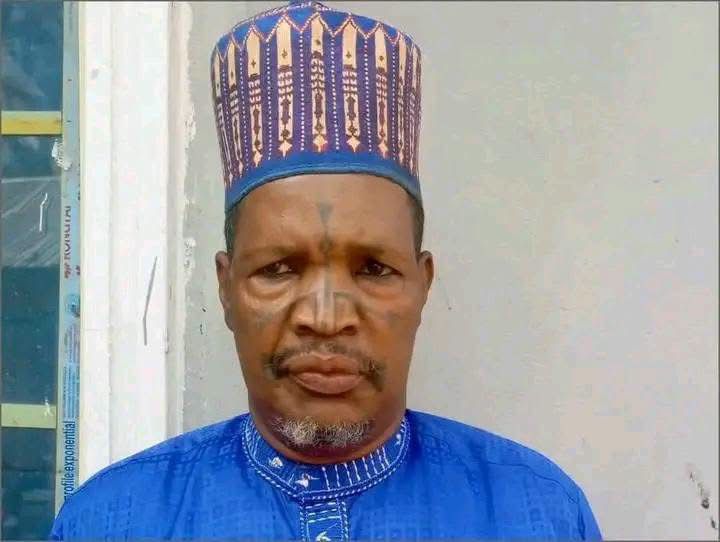
OPINION: The Silence After Risku’s Murder Is Dangerous — Benue Must Speak Before Violence Speaks for It
By Zagazola Makama
Several hours have passed since the brutal murder of the Chairman of the Miyetti Allah Cattle Breeders Association of Nigeria (MACBAN) in Benue State, Alhaji Ardo Risku, and his son, Ibrahim. Yet, what has echoed louder than the gunshots that ended their lives is the deafening silence from the Benue State Government. That silence is troubling.
According to multiple security sources, Risku was not just another community leader. He was widely regarded by security agencies as one of the most peaceful Fulani leaders in Benue State. A man who consistently stood on the side of dialogue rather than violence. He spent years encouraging restraint, persuading communities to embrace peaceful coexistence, and working closely with security agencies to prevent attacks and reprisals.
Ironically, he was murdered while returning from yet another peace meeting.If there is any definition of dying in the service of peace, this is it.Those who worked closely with him say his efforts played a significant role in keeping many parts of Benue relatively calm over the past several months.
At a time when the state had every reason to descend into another cycle of bloodshed, Risku remained one of the bridges connecting deeply divided communities. That bridge has now been targeted to be destroyed by the enemies of the state who benefits from crises.
Even more heartbreaking is the fact that Risku himself had repeatedly expressed fears that enemies of peace were after him. During previous peace engagements, he openly warned that there were individuals determined to eliminate him because of his commitment to reconciliation. On one occasion, he reportedly cancelled a peace meeting organised by a local government chairman in Benue after receiving credible security concerns about threats to his life.
Sadly, those fears became reality. One senior security official who knew Risku described his death as “disturbing, painful and entirely undeserved.” “He was a good man,” the officer said. “Throughout the years, he was never found wanting in any criminal activity. He never encouraged violence. He consistently supported every peace initiative. Ironically, peace became his death sentence,”
“This man spends years preaching peace. He convinces angry communities to embrace dialogue instead of revenge. He works with security agencies. He attends every peace meetings. He risks his own life trying to prevent bloodshed.Then he is murdered on his way home after honouring another invitation for peace talks.
In the end, his fears proved justified. The enemies of peace found him. But where were the voices of leadership? Still searching for the right press release? Or perhaps someone was calculating the political cost of condemning the murder of a Fulani man. Because these days, it appears that condemning the killing of an innocent citizen has become a political risk rather than a moral obligation.
Let’s ask the uncomfortable question. Would the condemnation have taken this long if the victim belonged to another ethnic group? That question alone should trouble every Nigerian.
Since when did ethnicity become the deciding factor in determining whose life deserves immediate sympathy?
Risku had lived in Benue for decades. He invested his energy in promoting peaceful coexistence. Security agencies trusted him enough to involve him in every peace initiatives.
Yet after his murder, official silence became louder than the bullets that killed him. What exactly are we telling other peace advocates?
Infact, hypocrites who tried to justify the killing are saying that he was killed by his own people in order to truncate the relative peace in the state.
The greatest beneficiaries of this silence are not grieving families. They are those who profit from conflict. Every peacemaker removed from the equation creates more room for extremists to recruit, manipulate and divide communities.
This is how wars are sustained, not only by those who pull triggers, but sometimes by those who cannot find the courage to condemn those who do. The murder of Ardo Risku is not simply about one Fulani man. It is about whether governments will speak only when it is politically convenient.
Governor Hyacinth Alia should rise above political calculations. He has an opportunity to demonstrate leadership at this critical moment.
Leadership is not measured by how loudly one speaks during campaign rallies. It is measured by how quickly one stands with every victims, even when doing so attracts criticism. Justice has no tribe. Condemnation has no religion. Empathy should have no ethnicity.
Is every Fulani man now to be judged solely by his ethnicity? If Risku whose record of peaceful engagement was acknowledged even by security agencies could become a victim simply because of who he was, then Nigeria is travelling down a road that no responsible society should ever accept.
Criminals should be identified by their crimes not by their ethnicity. Justice must remain individual. Collective guilt has never solved insecurity anywhere in the world. It only creates new victims and fresh cycles of revenge.
This is precisely why the Benue State Government must act, not tomorrow, not next week, but now. A clear public condemnation, reassurance to all communities, and a transparent investigation would send the message that every innocent life matters equally under the law. More importantly, security agencies must move swiftly to identify and arrest those responsible. There should be no sacred cows, no excuses and no delays.
Every security formation operating in Benue, troops of Operation Wirld Stroke, Police, the Department of State Services, the Nigeria Security and Civil Defence Corps and other relevant agencies, must immediately heighten surveillance in vulnerable communities. Intelligence gathering should be intensified, confidence-building measures strengthened, and every effort made to prevent revenge attacks.
Intelligence operations should be intensified immediately because history has shown that when respected community leaders are murdered, retaliation often follows. Stopping the next killing is just as important as investigating the last one.
Benue has bled enough. If the objective of those behind this killing was to destroy the fragile peace that had held for months, then government silence only risks helping them achieve exactly that.
Zagazola is a Counter Insurgency Expert and Security Analyst in the Lake Chad Region
OPINION: The Silence After Risku’s Murder Is Dangerous — Benue Must Speak Before Violence Speaks for It
Opinions
OPINION: USAID, Elon Musk, and Why Nigeria Must Demand Full Transparency from Foreign-Funded Organizations
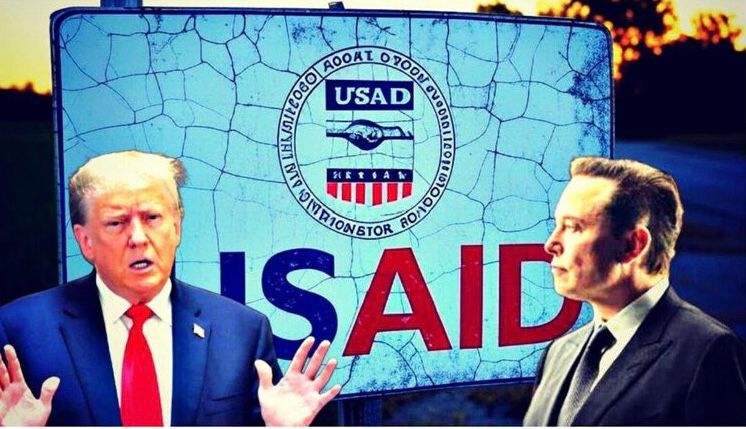
OPINION: USAID, Elon Musk, and Why Nigeria Must Demand Full Transparency from Foreign-Funded Organizations
By: Zagazola Makama
When Elon Musk and President Donald Trump’s administration moved to dismantle large portions of USAID’s operations in February 2025 through the Department of Government Efficiency (DOGE), the reaction across the world was immediate and deeply polarized.
To some, it was an attack on humanitarian assistance and development programmes that support vulnerable populations across Africa, Asia and Latin America. To others, it was a long-overdue attempt to expose what they viewed as an opaque international funding network operating beyond effective public scrutiny.
At the time, many Nigerians rushed to defend USAID and other international development organizations. Critics of the DOGE initiative accused Trump and Musk of targeting political opponents and undermining humanitarian work. Few were willing to entertain questions about how billions of dollars in foreign aid are distributed, monitored and accounted for.
More than a year later, however, the debate has not disappeared. Instead, it has intensified and gained tractions.
In Washington, lawmakers, researchers, journalists and policy analysts continue to debate whether U.S. foreign assistance programmes have, intentionally or unintentionally, financed organizations, projects or networks that later became linked to instability, extremism or political interference in foreign countries.
Supporters of the move argued that DOGE was simply demanding accountability and transparency for billions of dollars in U.S. taxpayer-funded foreign assistance. According to them, legitimate lifesaving programmes were not eliminated but were instead transferred to the U.S. State Department for continued administration. Critics, however, argued that the cuts risked disrupting humanitarian programmes that millions of vulnerable people depended upon around the world.
The controversy quickly expanded beyond budgetary concerns and evolved into a broader debate about the true purpose of USAID and the role of foreign aid in advancing U.S. interests abroad.
One of the most significant allegations came from U.S. Congressman Scott Perry, who claimed during a congressional hearing that some U.S. foreign aid funding had found its way, directly or indirectly, to terrorist organizations including Boko Haram, ISIS, Al-Qaeda and ISIS-K. Perry cited concerns over oversight failures and questioned whether American taxpayers were unknowingly financing extremist networks through aid programmes operating in unstable regions.
The session, titled “The War on Waste: Stamping Out the Scourge of Improper Payments and Fraud,” focused on alleged misappropriations of taxpayer funds.
“Who gets some of that money? Does that name ring a bell to anybody in the room? Because your money, your money, $697 million annually, plus the shipments of cash funds in Madrasas, ISIS, Al-Qaeda, Boko Haram, ISIS Khorasan, terrorist training camps. That’s what it’s funding,” Perry
Perry further cited USAID’s reported funding of $136 million for building 120 schools in Pakistan, alleging that there was “zero evidence” of the schools’ construction.
Perry added, ” If you think that the programme under Operation Enduring Sentinel entitled Women’s Scholarship Endowment, which receives $60 million annually, or the Young Women Lead, which gets about $5 million annually, is going to women who, by the way, if you read the Inspector General’s report, is telling you that the Taliban does not allow women to speak in public, yet somehow you’re believing, and American people are supposed to believe, that this money is going for the betterment of the women in Afghanistan. It is not.
You are funding terrorism, and it’s coming through USAID. And it’s not just Afghanistan, because Pakistan’s right next door.
“USAID spent $840 million in the last year, the last 20 years, on Pakistan’s education-related programme. It includes $136 million to build 120 schools, of which there is zero evidence that any of them were built. Why would there be any evidence? The Inspector General can’t get in to see them.
But you know what? We doubled down and spent $20 million from USAID to create educational television programs for children unable to attend the physical school. Yeah, they can’t attend it, because it doesn’t exist. You paid for it. “Somebody else got the money. You are paying for terrorism. This has got to end.”he said.
The allegations attracted international attention, particularly in Nigeria, where Boko Haram and ISWAP insurgencies have caused widespread devastation over the past decade. However, the allegations remain disputed, and no definitive public investigation has yet established that USAID intentionally funded Boko Haram or other terrorist groups.
The debate also extended to USAID’s involvement in various countries around the world. Critics argued that USAID had long served as a tool of American political influence, pointing to its activities in countries such as Serbia, Georgia, Ukraine, Venezuela, Bolivia, Cuba, Egypt, Tunisia, Lebanon, Haiti and Kyrgyzstan. According to critics, USAID-funded programmes often coincided with political transitions, opposition movements or so-called “color revolutions.”
Documents released over the years, including diplomatic communications and investigative reports, have fueled claims that aid programs sometimes served broader geopolitical objectives beyond humanitarian assistance.
Supporters of USAID reject these claims and maintain that the agency’s programmes were designed to promote democracy, civil society development, governance reforms and economic growth rather than regime change.
Another major controversy involved USAID’s partnership with EcoHealth Alliance and research collaborations involving the Wuhan Institute of Virology in China. Critics alleged that U.S.-funded research contributed to gain-of-function experiments that may have played a role in the emergence of COVID-19. Some commentators have argued that funding routed through EcoHealth Alliance helped support coronavirus research at the Wuhan laboratory.
These allegations gained traction after the COVID-19 pandemic, which killed millions of people globally and caused unprecedented economic disruption. However, the origins of COVID-19 remain the subject of ongoing scientific and political debate, and there is no universally accepted conclusion linking USAID funding directly to the creation of the virus.
Additional allegations raised by critics include claims that USAID funded controversial programmes in several countries, supported organizations later accused of misconduct, and operated projects that aligned closely with broader U.S. foreign policy objectives. Critics have also pointed to reports concerning Afghanistan, Cuba, Venezuela and other countries as evidence that aid programmes sometimes served strategic geopolitical purposes.
This is where Elon Musk’s intervention changed the conversation. Whether one admires him or opposes him, Musk forced public attention onto questions that many institutions preferred to avoid. He challenged long-standing assumptions about foreign aid. He questioned bureaucratic structures that had operated for decades with limited public scrutiny.
Supporters of DOGE and Elon Musk argue that these controversies justified a comprehensive review of USAID operations. They credit Musk with exposing weaknesses in oversight systems and forcing public scrutiny of foreign aid expenditures that had long escaped widespread attention.
In Nigeria, the debate gained further relevance after the House of Representatives established an ad hoc committee to investigate allegations that foreign aid funds may have been diverted to support Boko Haram activities. The committee’s work became controversial after civil society organizations and development partners criticized its demands as excessive and intrusive. Following consultations with stakeholders, the leadership of the House reportedly forced to halt further actions by the committee and encouraged a more collaborative engagement process.
The decision represented a missed opportunity to thoroughly investigate allegations involving aid funding, terrorism funding and national security, even when the civil society organizations sees it as a necessary step to protect legitimate humanitarian actors from undue interference.
Nigeria has suffered enormously from terrorism over the past two decades. Thousands of soldiers have been killed. Thousands of security personnel have been wounded. Entire communities have been displaced. Millions have lost homes, livelihoods and loved ones.
According to various estimates, insurgency-related violence across the Lake Chad Basin has claimed hundreds of thousands of lives either directly or indirectly. Given those realities, no responsible nation can afford to ignore questions about funding networks that may influence security dynamics.
What remains clear is that the controversy surrounding USAID has evolved into a much larger discussion about transparency, accountability and oversight of international aid programmes. While many allegations remain unproven, the debate has prompted renewed calls for stronger monitoring mechanisms, greater disclosure of funding flows and more rigorous auditing of aid programmes operating in conflict-affected regions.
The issue is particularly significant. Regardless of where one stands on the USAID controversy, many Nigerians agree that all organizations operating in conflict zones whether governmental, international or local should be subject to appropriate transparency and accountability measures. This does not mean every NGO is guilty. Far from it.
Many humanitarian organizations operating in Nigeria perform lifesaving work every day. They provide food, healthcare, education, water and protection services to populations that would otherwise face unimaginable hardship. Their contributions should be acknowledged and respected. However, acknowledging their work does not exempt them from scrutiny.
Transparency should not be feared by legitimate organizations. Any organization receiving millions of dollars in foreign funding and operating within Nigerian territory should be prepared to demonstrate where funds originate, how they are spent and who ultimately benefits.
The same standards should be applied to government agencies, private companies, political organizations and international development partners. Nigeria must move beyond the outdated assumption that every organization carrying a humanitarian label automatically deserves immunity from examination.
History has shown that international aid systems are not immune from abuse. Around the world, there have been documented cases of aid diversion, corruption, procurement fraud and programme manipulation. Today in Nigeria, we are witnessing how foreign funding are being used to promote FALSE narratives designed to destabilized the country.
In an age of information warfare and geopolitical competition, money often shapes outcomes long before weapons appear. Nigeria should therefore not wait for foreign governments to determine whether concerns about aid transparency deserve attention.
The ultimate goal should not be to shut down humanitarian assistance. The goal should be to ensure that every dollar, naira or euro entering the country serves the people it was intended to help and never becomes a tool for instability, manipulation or violence.
The lesson from the ongoing USAID debate is not that all aid is bad. The lesson is that all aid must be accountable. Nigeria must wake up to that reality. Our national security, sovereignty and future depend on it.
Zagazola Makama is a Counter Insurgency Expert and Security Analyst in the Lake Chad Region
OPINION: USAID, Elon Musk, and Why Nigeria Must Demand Full Transparency from Foreign-Funded Organizations
Is Zagazola Makama now siding with Plateau people?
By: Our Reporter
It is striking how often Masara Kim’s name has become a recurring point of fixation for certain commentators, serving as a convenient target for extended commentary and attack. Among them is Zagazola Makama, whose interventions on Plateau and broader security issues have increasingly raised concerns about fairness, consistency, and credibility. Rather than offering careful analysis grounded in transparent evidence, his commentary often relies on sweeping assertions, loaded framing, and narratives that appear designed more to influence public perception than to clarify the facts.
For instance, last May, Makama published what critics said were AI-generated images purporting to show Abu Bilal al-Mainuki, reportedly a senior IS commander killed by the Nigerian army. He stated that he had legitimately obtained the image and was praised in some quarters for publishing it first. But the controversy that followed raised broader concerns about verification standards, editorial judgment, and the risks of circulating unverified material in conflict reporting. As one critic put it: “This isn’t reporting; it’s narrative engineering. When those covering security issues choose fabrication, public trust collapses and we’re all in danger.”
The same pattern appeared last March after more than 35 people were killed in a terror attack in Angwan Rukuba, north Jos, on Palm Sunday. Within hours of the incident, Makama reportedly described it as a clash between rival cult gangs. That speed, together with the absence of publicly presented evidence at the time, raised legitimate questions about whether the incident had been characterised prematurely and whether such framing diverted attention from establishing the full facts.
Makama also claimed that my video reporting of an attack on mourners during a mass funeral in Nding Sesut, in Barkin Ladi Local Government Area of Plateau State on May 6, was staged. Yet the incident was associated with four recorded deaths: Pam Gwom, 62; Dayal Davou Gyang, 32; Dadung Julius Gwom, 24; and Ezra Musa Rondong, 38. In the face of those fatalities, dismissing the footage outright raises serious questions about the basis for that denial and about the standards being applied when local accounts of violence are challenged rather than investigated.
Makama has on several occasions dismissed terrorist attacks in Plateau and other Middle Belt states, including incidents in which children and other civilians were killed, as mere clashes between farmers and herders. He has also portrayed civilian guards struggling to protect their homes and families with homemade pipe guns and hunting rifles as terrorists or tribal militias, reinforcing a “clash” narrative that many affected communities view as misleading. More recently, he has sought to position himself as an advocate for the same people whose accounts and suffering he has often downplayed. That contradiction is difficult to ignore.
Mr. Idris Aminu, also known as Zagazola Makama, has entered this debate too late to exploit temporary disagreement within Plateau for his own argument. Commissioner Peter Gwom has already apologised for the remarks captured in the video, and by all indications that issue has begun to settle. What should not be allowed to happen, however, is for outside commentary to weaponise internal tensions in order to present Plateau people as confused, divided, or incapable of recognising what they have lived through. We may disagree among ourselves, as any community does, but that does not mean we are unable to identify harmful narratives when we see them.
Zagazola Makama’s recent statement about the views of the youth leaders tries to present itself as a defence of truth and accountability, but it raises the very questions it seeks to dismiss. A commentary that accuses others of sensationalism must itself be held to the highest standard of accuracy, transparency, and consistency. That standard is not met by broad assertions, selective outrage, or repeated efforts to discredit community voices whenever they challenge official or convenient narratives.
The central problem with the statement is not that it asks for scrutiny. Scrutiny is necessary in every conflict. The problem is that scrutiny appears to flow in only one direction. When victims, youth leaders, or local advocates raise alarm over killings, displacement, or insecurity in Plateau, they are swiftly portrayed as emotional, manipulative, or misinformed. But when the same commentator advances claims that align with official talking points or minimise the scale of attacks, those claims are presented as sober analysis. That is not balance. It is selective credibility.
The statement also relies heavily on a familiar tactic: shifting attention from the substance of people’s concerns to the character of those raising them. Instead of confronting why so many communities feel unheard, unprotected, and repeatedly gaslit after attacks, the article frames dissenting voices as conflict entrepreneurs and social media actors feeding off tragedy. That rhetorical move may be effective propaganda, but it is not evidence. Communities that have buried their dead do not need lectures about tone; they need honesty, protection, and a record of facts that does not change depending on who is being shielded from criticism.
If there are concerns about miscaptioned videos or inaccurate claims, those should be addressed through verifiable facts, transparent sourcing, and consistent correction standards for everyone, not just for activists or community-based reporters. The same burden of proof must apply to commentators who dismiss deadly incidents, recast attacks as ordinary clashes without public evidence, or repeatedly adopt language that appears to downplay organised violence. In a place as traumatised as Plateau, careless framing is not a minor error. It shapes public understanding, influences policy responses, and can deepen mistrust among people who already feel abandoned.
The article further weakens itself by pretending that criticism from within a community automatically settles the matter. It does not. Communities are not monolithic, and no single youth body, government official, or commentator can claim absolute ownership of the truth. What matters is whether the facts presented are complete, independently verifiable, and responsibly framed. That is the standard the public should insist on, especially from anyone claiming expertise in security and conflict reporting.
There is also a deeper issue at stake. When the voices of grieving communities are routinely met with suspicion while official failures are explained away as complexity, the result is not peacebuilding. It is a culture of denial. Plateau has suffered too much for its pain to be filtered through narratives that appear more concerned with managing perception than confronting recurring insecurity. Any commentator who wants to be taken seriously must be willing to apply the same level of suspicion to military briefings, political narratives, and all sides of the conflict, not only to those documenting local suffering.
The public does not need more personality wars. It needs rigorous reporting, transparent methods, and a refusal to weaponise uncertainty against victims. If CNN to command.
Is Zagazola Makama now siding with Plateau people?

OPINION: The Silence After Risku’s Murder Is Dangerous — Benue Must Speak Before Violence Speaks for It

MACBAN Chairman, Son Killed After Peace Meeting in Benue

Tinubu Signs New NIMC Law, Gives Nigeria Single Digital Identity Framework

Roger Federer’s Shock as DNA Results Reveal Myla and Charlene Are Not His Biological Children

THE PLIGHT OF FARIDA

FAILED COUP IN BURKINA FASO: HOW TRAORÉ NARROWLY ESCAPED ASSASSINATION PLOT AMID FOREIGN INTERFERENCE CLAIMS
-
 News2 years ago
Roger Federer’s Shock as DNA Results Reveal Myla and Charlene Are Not His Biological Children
-
Opinions4 years ago
THE PLIGHT OF FARIDA
-
 News1 year ago
FAILED COUP IN BURKINA FASO: HOW TRAORÉ NARROWLY ESCAPED ASSASSINATION PLOT AMID FOREIGN INTERFERENCE CLAIMS
-

 News2 years ago
EYN: Rev. Billi, Distortion of History, and The Living Tamarind Tree
-
 Opinions5 years ago
POLICE CHARGE ROOMS, A MINTING PRESS
-

 ACADEMICS2 years ago
A History of Biu” (2015) and The Lingering Bura-Pabir Question (1)
-

 Columns2 years ago
Army University Biu: There is certain interest, but certainly not from Borno.
-

 Politics1 year ago
2027: Why Hon. Midala Balami Must Go, as Youths in Hawul and Asikira/Uba Federal Constituency Reject ₦500,000 as Sallah Gift
