
News
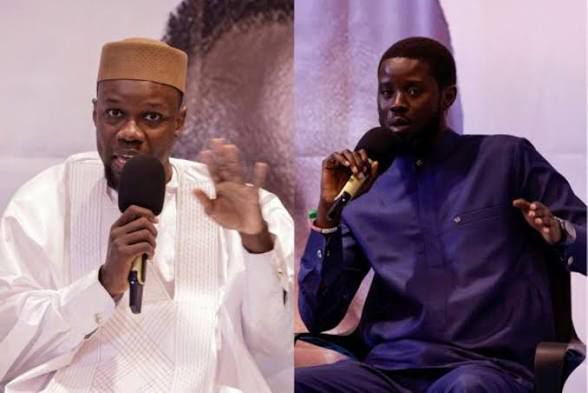
Senegal President sacks Prime Minister Sonko, dissolves government amid growing tensions

Senegal President sacks Prime Minister Sonko, dissolves government amid growing tensions
By: Zagazola Makama
Senegalese President Bassirou Diomaye Faye has dismissed Prime Minister Ousmane Sonko and dissolved the country’s government following months of growing political tensions between the two leaders.
The decision was announced late Friday through a presidential decree broadcast on state television.
According to the decree read by a presidential aide, President Faye “ended the duties of Ousmane Sonko and consequently those of the ministers and secretaries of state who are members of the government.”
No immediate replacement for Sonko was announced as of the time of filing this report.
The dismissal followed a parliamentary session earlier in the week during which Sonko openly criticised President Faye, further exposing divisions within the ruling political establishment.
Political observers said relations between the two leaders had deteriorated in recent months over issues relating to party leadership, governance direction and the management of state affairs.
Analysts noted that the development could introduce fresh political uncertainty in Senegal at a time the country is facing mounting economic pressures, including rising public debt and broader fiscal challenges.
The dissolution of the government is expected to trigger consultations within the ruling coalition ahead of the appointment of a new prime minister and cabinet.
Senegal has long been regarded as one of West Africa’s more stable democracies, but recent political tensions have continued to attract regional and international attention.
Senegal President sacks Prime Minister Sonko, dissolves government amid growing tensions


Nigerian Students Shine in India, Win Eight Medals as University Awards 6,300 Degrees
By: Michael Mike
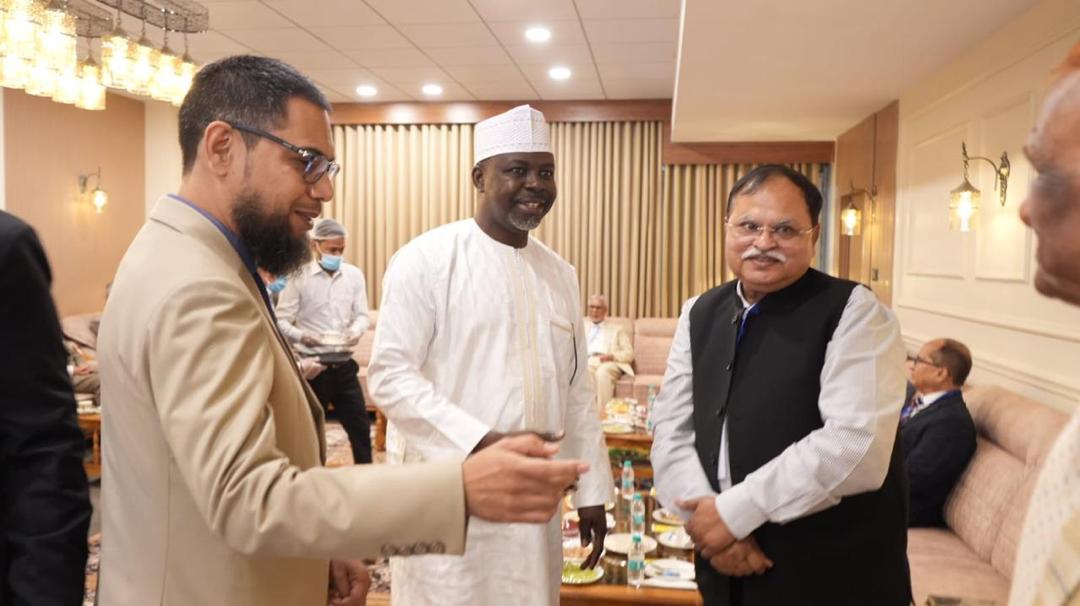
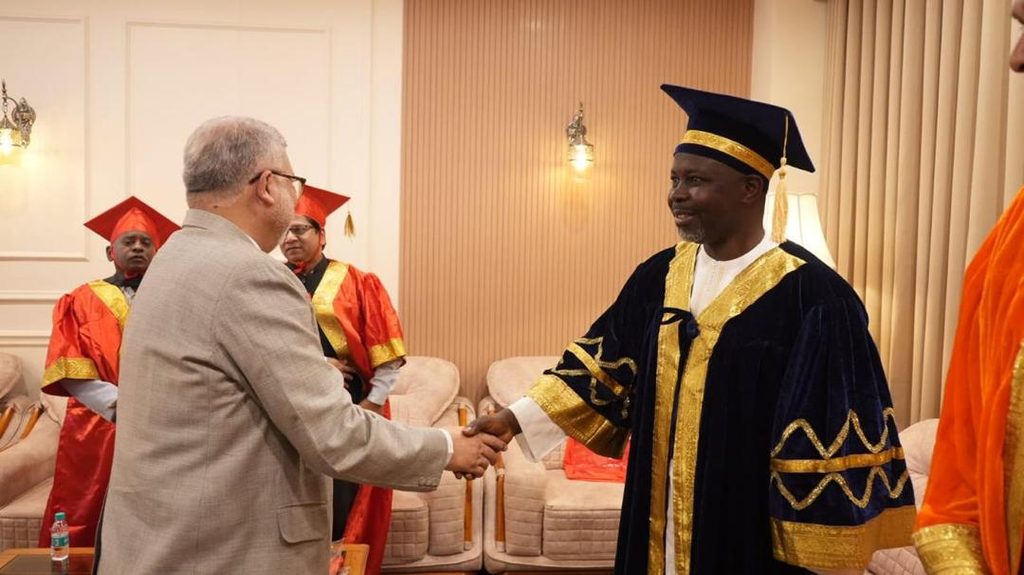
Nigerian students have distinguished themselves academically at Integral University, India, winning eight medals, including four gold, at the institution’s 18th convocation, where 6,300 degrees and diplomas were awarded.
The achievement highlights the growing contribution of Nigerian students to the university’s academic community, which currently has more than 300 Nigerians enrolled, as well as the expanding educational relationship between Nigeria and India.
The Nigerian medal winners were among 295 students recognised for outstanding academic performance at the convocation held on Saturday, which attracted prominent educationists, diplomats and university administrators.
Nigeria’s High Commissioner to India, Ambassador Saidu Dahiru Muhammad, attended the ceremony as Guest of Honour, while Padma Shri Dr Dinesh Singh, Chancellor of K.R. Mangalam University and former Vice-Chancellor of the University of Delhi, was the Chief Guest.
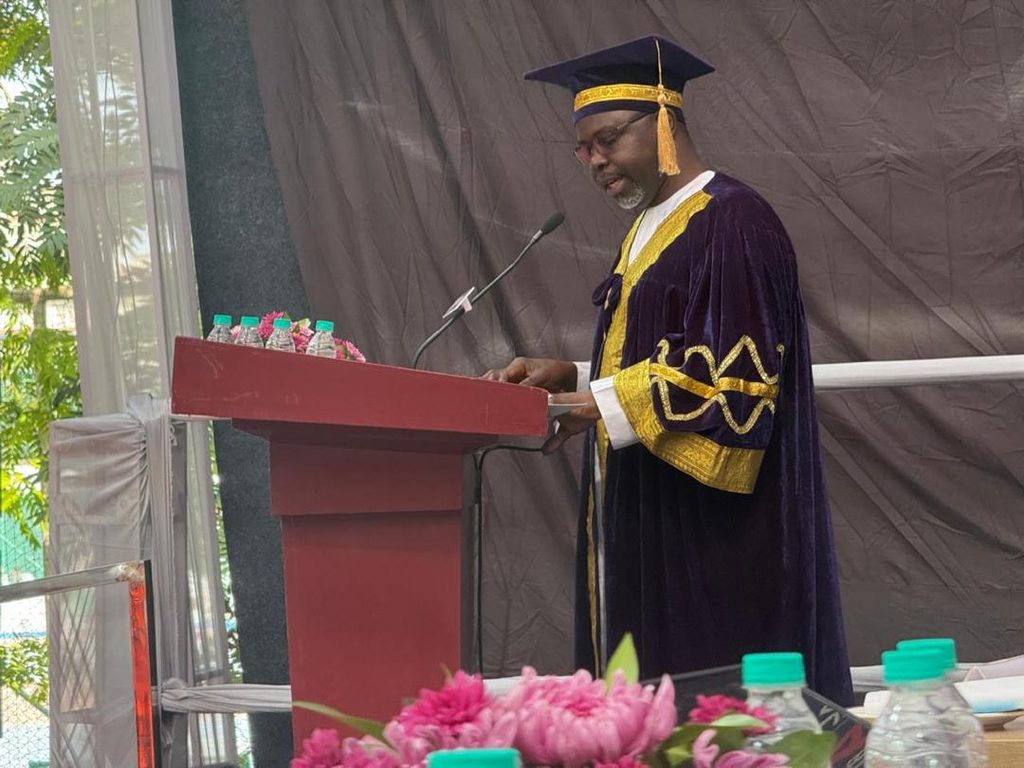
Speaking at the ceremony, Muhammad highlighted the strategic importance of education in deepening Nigeria-India relations, noting the growing areas of cooperation between the two countries in technology, trade and education.
He commended Integral University for its contributions to education, research and innovation, urging the graduating students to deploy their knowledge and skills towards addressing societal challenges and advancing development in their respective countries.
“Uphold integrity and use your knowledge for the welfare of society and your countries,” he told the graduates.
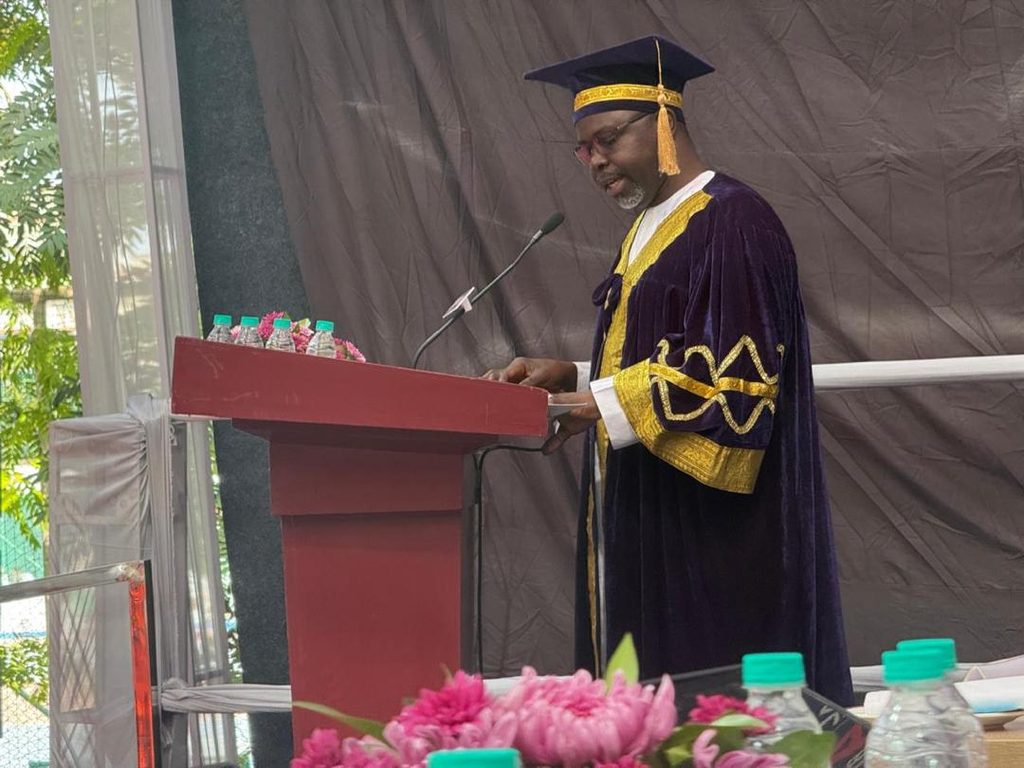
The High Commissioner’s participation also underscored the importance of international academic partnerships in expanding opportunities for Nigerian students and strengthening people-to-people relations between the two countries.
The Chief Guest, Singh, described the convocation as the beginning of a new journey for the graduates, urging them to remain committed to the values acquired during their academic training and make meaningful contributions to society.
“This convocation marks the beginning of a new journey. Remember your alma mater and the values it has imparted, and contribute meaningfully to society and the nation’s progress,” he said.
A major highlight of the ceremony was the conferment of the Doctor of Literature (Honoris Causa) on Dr M.L.B. Bhatt, Director of the Kalyan Singh Super Speciality Cancer Institute and Hospital, Lucknow, in recognition of his contributions to healthcare.
The university disclosed that the 6,300 awards comprised 193 doctoral degrees, 1,365 postgraduate degrees, 3,055 undergraduate degrees and 186 diplomas, alongside 1,354 postgraduate and 147 undergraduate degrees through its online education programmes.
Of the 295 medals presented for academic excellence, 37 went to students enrolled in online education programmes, while other awards recognised university toppers and outstanding performances across faculties and individual programmes.
Presiding over the ceremony, the university’s Chancellor, Prof. Syed Waseem Akhtar, congratulated the graduates and urged them to pursue their ambitions with dedication, discipline and hard work.
The Pro-Chancellor, Dr Syed Nadeem Akhtar, also praised the students for their academic accomplishments and wished them success in their future careers.
Presenting the university’s annual report, Vice-Chancellor Prof. Furqan Qamar outlined its achievements in teaching, research, innovation, industry collaboration, sports and national and international rankings.
The ceremony featured the launch of the university’s convocation magazine, signing of the degree award scroll, administration of the graduates’ oath and presentation of medals to outstanding students.
Nigerian Students Shine in India, Win Eight Medals as University Awards 6,300 Degrees
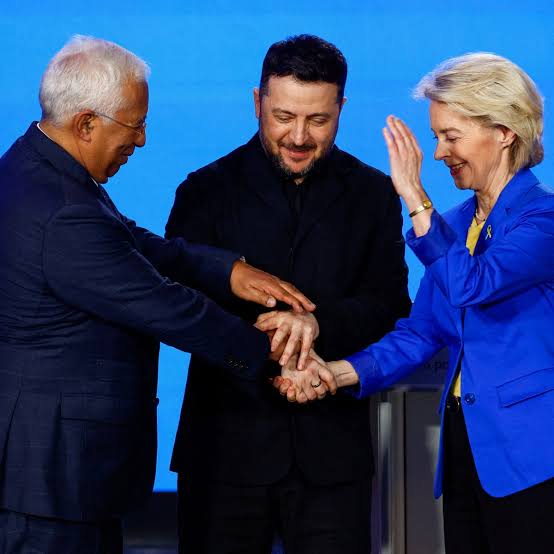
UK, France, Germany Back Ukraine With €90bn, New Security Guarantees, Tougher Russia Sanctions
…Leaders push multinational force, military support and winter energy, Black Sea ceasefires as peace talks gather momentum
By: Michael Mike
The leaders of Germany, France and the United Kingdom have reaffirmed a sweeping commitment to Ukraine’s military defence, economic survival and post-war security, backing €90 billion in European Union assistance, tougher sanctions against Russia and the possible deployment of a European-led multinational force once a ceasefire is reached.
The commitments, contained in a joint statement issued after a meeting of the Coalition of the Willing, Ukraine and the United States in Berlin on Thursday, underscored European determination to prevent Ukraine from being left vulnerable to renewed Russian aggression in any eventual peace settlement.
The leaders said Ukraine must have robust and legally binding security guarantees once a ceasefire takes effect, outlining possible arrangements involving sustained military assistance, ceasefire monitoring and a multinational force supported by the United States.
They also reaffirmed their commitment to providing Ukraine with long-term political, diplomatic, military, financial and civilian assistance, insisting that Russia would not outlast the resolve of its international supporters or Ukraine’s resistance.
Under the European Union’s Ukraine Support Loan, €90 billion is expected to be provided for military and financial assistance by the end of 2027, covering Ukraine’s financial requirements well into that year.
The leaders said they would continue working with Ukraine and international partners, including the Group of Seven, to address its financing needs beyond 2027 while pressing Kyiv to implement agreed reforms, particularly in strengthening the rule of law and combating corruption.
They also reaffirmed a NATO commitment to provide €70 billion in military equipment, assistance and training to Ukraine in 2026, with at least equivalent levels of support expected in 2027.
As winter approaches, the leaders said strengthening Ukraine’s air defence capabilities, particularly systems capable of intercepting ballistic missiles, remained a priority, pledging additional efforts with third countries to provide missile defence equipment to protect civilians and critical infrastructure.
The statement also signalled a tougher economic offensive against Moscow, with the leaders committing to expand sanctions, clamp down on sanctions evasion, target Russian oil and gas revenues, cryptocurrency and illicit financial flows, and disrupt the country’s military-industrial complex.
They further pledged to intensify efforts against Russia’s shadow fleet, which they said facilitates sanctions circumvention, while protecting maritime security and international shipping rules.
On security guarantees, the leaders proposed a framework that could include sustained military, financial and technical assistance to maintain Ukraine’s armed forces, participation in a United States-led ceasefire monitoring and verification mechanism, and a European-led Multinational Force Ukraine comprising willing countries with American support.
The proposed force would provide reassurance measures in the air, at sea and on land, while supporting the rebuilding of Ukraine’s military capacity.
The framework could also include a legally binding commitment, subject to national procedures, to take measures to restore peace and security if Russia launches another armed attack against Ukraine.
The leaders welcomed the ongoing Koalicja-2026 multinational force exercise, held mainly in Poland, describing it as evidence of the proposed force’s credibility, preparedness and capacity to deploy.
On diplomatic efforts, the European leaders reiterated support for a comprehensive, just and lasting peace, commending Ukrainian President Volodymyr Zelenskyy’s willingness to accept an immediate ceasefire and engage in meaningful negotiations.
They backed direct dialogue between Ukraine and Russia with the participation of the United States and Europe, insisting that the immediate priority should be ending hostilities.
However, they stressed that any settlement must respect Ukraine’s sovereignty, territorial integrity and right to choose its own security arrangements and alliances, warning that international borders must not be altered by force.
The leaders also maintained that Russian sovereign assets would remain frozen until Moscow ended its war and compensated Ukraine for the damage caused.
They said broader European security negotiations would not be possible while Russia continued its aggression, adding that discussions involving the European Union and NATO would require the consent of their respective members.
In a push for immediate measures to reduce the impact of the conflict, the leaders called on Russia to agree to an energy ceasefire for the duration of the winter and a separate ceasefire to facilitate food exports through the Black Sea, citing the importance of safe navigation to global food security.
The statement condemned Russia’s continued missile and drone attacks on Ukrainian civilians and infrastructure, as well as alleged sabotage, cyberattacks and information operations across Europe aimed at weakening support for Kyiv.
The leaders insisted that such intimidation would not diminish their backing for Ukraine but would strengthen their resolve to reinforce the defence of Ukraine, Europe and NATO.
News
Plan International, Joining Forces Coalition Push for Policy Reform at Borno Children’s Accountability Forum
Plan International, Joining Forces Coalition Push for Policy Reform at Borno Children’s Accountability Forum
By: Michael Mike
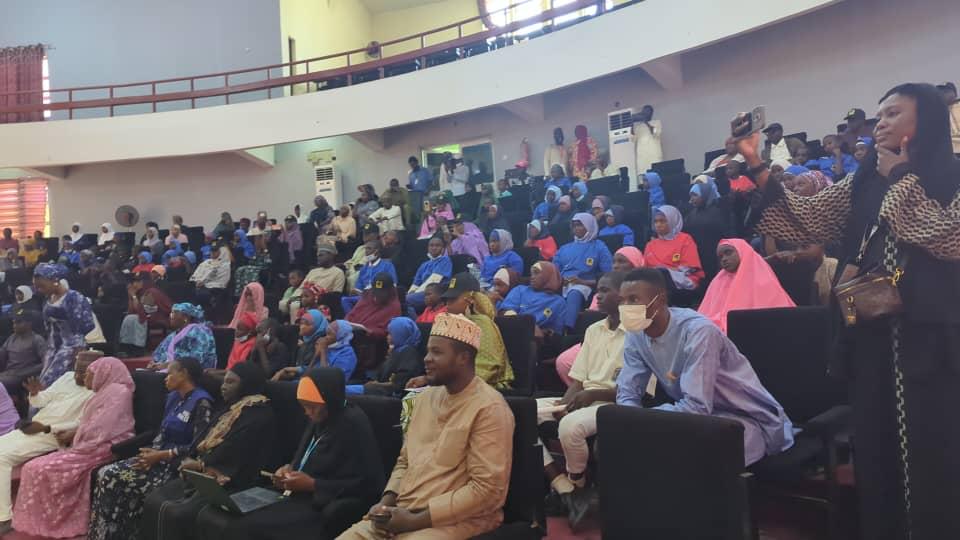
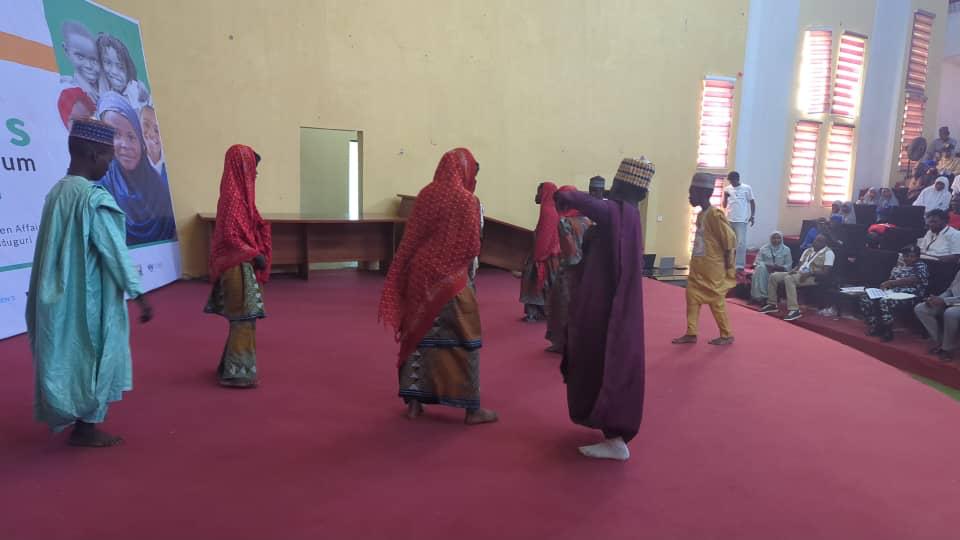
Plan International Nigeria, in partnership with the Borno State Government and members of the Joining Forces coalition, has convened young people, government officials, and humanitarian stakeholders in Maiduguri to commemorate the 2026 World Children’s Day with a renewed call for sustained child protection and institutional accountability.
The event, held on Friday, November 20, 2026, at the auditorium of the Borno State Ministry of Women Affairs and Social Development, brought together approximately 300 participants, comprising 200 children and 100 policymakers, civil society actors, development partners, and journalists. Observed globally every November 20 to mark the adoption of the 1959 Declaration of the Rights of the Child and the 1989 United Nations Convention on the Rights of the Child, this year’s commemoration centred on the global theme, “My day. My rights. My future.”
In Maiduguri, Plan International Nigeria mobilised and supported the participation of 60 children alongside their chaperones, joining fellow Joining Forces coalition members Save the Children, SOS Children’s Villages, and Terre des Hommes.

The commemoration was executed in collaboration with the International Rescue Committee, Life at Best Development Initiative, Unique Care and Support Foundation, and Grow Strong Foundation. Organisers structured the gathering as a safe, inclusive accountability forum designed to allow young people to engage directly with decision makers on issues affecting their survival, education, and future.
Representing the Honourable Commissioner for Women Affairs and Social Development, Hajiya Zuwaira Gambo, the ministry’s Director of Child Protection and Development, Falmata Kaumi Alkali, reaffirmed the state government’s commitment to upholding the rights of every child to quality education and safety both within schools and at home.
Alkali noted that the enforcement of the Borno State Child Protection Law remains the administration’s primary intervention alongside targeted programmes to reintegrate conflict displaced and out of school children into formal classrooms.
She further disclosed that street children, including minors orphaned by insurgency, have been systematically identified, placed under state care, and sponsored through secondary and tertiary institutions, while runaway youths have been traced and reunited with their families.
Alkali also commended the First Lady of Borno State, Dr. Falmata Babagana Zulum, for spearheading livelihood empowerment schemes that equip mothers and widows with tailoring skills and starter kits, thereby curbing child street hawking and keeping children in school.
Delivering a goodwill message on behalf of the Coalition Chair of Joining Forces Nigeria, Eghosa Erhumwunse, the Deputy Director of Advocacy, Media, and Communications at Save the Children, Badar Musa, emphasised that child participation must move beyond ceremonial consultation to measurable policy outcomes.
Musa urged the Borno State Government to review the state Child Protection Law in alignment with the ongoing national review of the Child’s Rights Act, adopt the National Alternative Care Guidelines, and institutionalise the Borno State Children’s Parliament as a permanent channel of engagement with government.
In a separate address, the UNICEF Chief of Maiduguri Field Office, Francis Butichi, commended the state’s Children’s Accountability Forum as clear evidence that young people in Borno are actively shaping their future. While highlighting UNICEF’s ongoing collaborations to combat acute malnutrition, expand immunisation coverage, and deploy alternative learning methodologies, Butichi charged communities to protect humanitarian gains from sabotage.
He called for a halt to the open market sale of lifesaving ready to use therapeutic foods, the diversion of educational materials meant for vulnerable pupils, and the vandalism of public water infrastructure.
Echoing the imperative of safeguarding fundamental human rights amid regional security challenges, the Protection Coordinator for the Unique Care and Support Foundation, Osawa Stephen, stressed that children must be shielded from physical and emotional abuse, neglect, and exploitation while guaranteeing their access to healthcare and education.
Speaking directly on behalf of her peers during a youth panel session, 17 year old Phoebe Musa Dibal appealed to the Federal Government and Borno State authorities to urgently strengthen security around schools and communities, citing recent child abductions as severe threats to learning and regional stability.
“When our security and education are disrupted, there is no way the state is going to continue to prosper, and there is no way the economy is going to grow,” Dibal said, urging President Bola Tinubu, state officials, parents, and community leaders to heed the voices of young people and prioritise the protection of every child.
Throughout the forum, documentation and media engagements were strictly governed by Plan International’s child safeguarding and ethical communication protocols, enforcing prior informed consent and prohibiting the publication of identifiable details capable of exposing participating minors to risk.
Plan International, Joining Forces Coalition Push for Policy Reform at Borno Children’s Accountability Forum

Nigerian Students Shine in India, Win Eight Medals as University Awards 6,300 Degrees

UK, France, Germany Back Ukraine With €90bn, New Security Guarantees, Tougher Russia Sanctions

Plan International, Joining Forces Coalition Push for Policy Reform at Borno Children’s Accountability Forum

Roger Federer’s Shock as DNA Results Reveal Myla and Charlene Are Not His Biological Children

THE PLIGHT OF FARIDA

FAILED COUP IN BURKINA FASO: HOW TRAORÉ NARROWLY ESCAPED ASSASSINATION PLOT AMID FOREIGN INTERFERENCE CLAIMS
-
 News3 years ago
Roger Federer’s Shock as DNA Results Reveal Myla and Charlene Are Not His Biological Children
-
Opinions5 years ago
THE PLIGHT OF FARIDA
-
 News2 years ago
FAILED COUP IN BURKINA FASO: HOW TRAORÉ NARROWLY ESCAPED ASSASSINATION PLOT AMID FOREIGN INTERFERENCE CLAIMS
-
 Opinions5 years ago
POLICE CHARGE ROOMS, A MINTING PRESS
-

 News3 years ago
EYN: Rev. Billi, Distortion of History, and The Living Tamarind Tree
-

 ACADEMICS3 years ago
A History of Biu” (2015) and The Lingering Bura-Pabir Question (1)
-

 Columns3 years ago
Army University Biu: There is certain interest, but certainly not from Borno.
-

 Politics1 year ago
2027: Why Hon. Midala Balami Must Go, as Youths in Hawul and Asikira/Uba Federal Constituency Reject ₦500,000 as Sallah Gift
