
Opinions
SHIITE: CLASHES AND THE HARVEST OF DEATHS

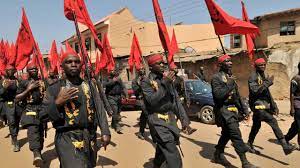
SHIITE: CLASHES AND THE HARVEST OF DEATHS
By: Balami Lazarus
I have never wanted to write about this religious group; Islamic Movement of Nigeria (IMN) popularly called shiite because they were proscriped in 2019 and to my mind it is wrong to do so.
However, as a Columnist my hands etched to write and here I am doing the writing despite there is nothing much worth writing except the too many clashes and the plenty of harvest of deads that is characterised with their activities since their appearance as a religious sect within the Islamic ummah here in Nigeria.
They are looked upon with scorn and disliked among people of their faith for who they are. Islamic Movement of Nigeria (IMN) is one large religious body with estimated membership of over 3 million under which shiite followers belong to. This very large membership consists of men, women, youths and children. The colouration of its members is found in every human endeavour: academia, public service and in the organised private sector.
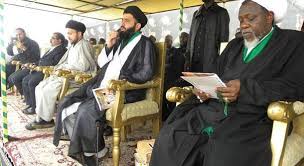
Anyone that might have schooled or grew- up in the Zaria/ Kaduna axis is familiar with the shiite and their activities which has always made people become paranoid and apprehensive to go about their legitimate businesses simply because these activities of theirs has never ended well with the police to be precise.
Shiite through their activities, especially the long processions that they are known with, has always resulted in clashes with road users and the police has brought about too many deaths of their members with pockets of policemen and few innocent members of the public. Why are they known with such public disturbances? This is one big question on the lips of so many people out there.
Also Read: 2023: FFK and APC’s tough time to Nirvana
Additionally, with these errors, shiite have embroiled herself in violent public disturbances and has justified herself to the public as a feared religious group with records of verified disturbances which are systematised and amplified by their clannish activities.
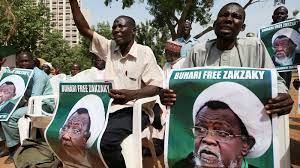
Looking at other Islamic sects like Tijaniyya, Sunni and others are never known with violent public disturbances rather they are known for public preaching and Tafsir. But shiite and their activities are considered retch with no anathema to be in confrontation with the police. The leadership of IMN should kindly go back to the boardroom and look at their challenges to come up with good policies which will help this movement religiously.

Anyone who has been following shiite activities will agree with me that the leadership of this proscribed organisation has never for once called the attention of the wrong doings of her members. Is IMN an organised group at all?
The spiritual leader that most people have come to know as El- Zakzaky, is Mallam Ibrahim Yakubu, his full name from birth. The Zakzaky was coined from his home town Zaria (Zazzau). Ibrahim is well- educated and knowledgeable. A 1979 economic graduate of Ahmadu Bello University (ABU) with first class degree. He is a native of Zaria and lives in Gyellasu.
Balami, a Publisher/ Columnist. 08036779290
SHIITE: CLASHES AND THE HARVEST OF DEATHS


That Phantom Rift Between VP Shettima And Gov. Zulum
By: Inuwa Bwala
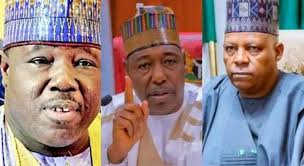
Those who know the kind of fraternity between Vice President Kashim Shettima and Governor Babagana Umara Zulum, also know that, there can never be any disagreement between them over any issue, not even political permutations in Borno between them.
When I read an online analysis atributed to an unknown source, quoting an equally unknown KBC news, I know, that the merchants of mischief are again upto their games.
Overtly or covertly, the duo of Kashim Shettima and Babagana Umara Zulum, have never given anyone reasons to believe, they are in disagrerment, over who becomes the next governor of Borno state.
What has never been in doubt, is their collective belief that, as Muslims, God is the ultimate determinant of who gets what, in the power equations in Borno, now or in the future.
I have had intimate interactions with both of them, and even in my usual speculative mind as a journalist, I never had the incling that there was any friction of some sort, over who succeeds Zulum as Governor.
Rather, at every turn, both leaders have displayed exceptional sense of camaraderie and mutual respect to eachother.
The Vice President, often comes down from his olympian height to tell people, that, once he comes to Borno, the Governor is his boss. Governor Zulum will often tell everybody, that Kashim Shettima remains his mentor and leader, and everytime he goes to Abuja, the Vice President’s house is his first port of call.
Perhaps, those who fabricate such phantom disagreements, between them, are the usual conflict profiteers, who thrive on driving wedges between leaders for fun or for some gains.
Not quite a week ago, Governor Zulum was in the media telling the world that, he will not play god by trying to annoint anybody as his successor, but believes that God is the ultimate decider through the instrumentality of the people of Borno.
The Vice President has never uttered a word about the politics of Borno, rather, he demonstrates statemanly disposition on all matters relating to the state.
As humans, they may have preferences, but as believers in the indispensibility of God, their preferences are at the altar of the almighty.
Bringing in names of people as possible successors could after all be mere promotional gimmicks, which at the end of the day endanger their chances. The person who may succeed Governor Zulum may not even be amongst those mentioned, perhaps a dark horse somewhere, who does not even know that he or she is God’s choice.
Very often, I cite the emergence of our dear Governor himself, in 2019. Nobody gave him a chance and all eyes were focused in other directions, untill God’s calling came.
As for those who manufacture the stories of a dilema surrounding Senator Kashim Shettima’s position as Vice President in the next dispensation, the open expression of confidence in Kashim Shettima by President Bola Ahmed Tinubu alone, should be sufficient.
Those who know the President very well can attest to his bluntness, and his actions have so far given assurance, that, Kashim Shettima is his dependable ally.
Tinubu is not known to play to the gallery and he does not gamble with his passions. Where people get the idea that he may drop Kashim Shettima, as his running mate in 2027 remains as puzzling, as the earlier stories preceeding the 2023 election.
It is not an anathema for people to permutate against 2027, but with more than one year still ahead, I feel people should not be too uncharitable in distracting leaders, fantasizing imaginary scenarios.
I may be right or wrong, but the truth may not be too far away from comming.
Just musing.
That Phantom Rift Between VP Shettima And Gov. Zulum
Opinions
OPINION: Growing ISWAP–ISIS ties in Sahel after Niamey attack threaten Lake Chad and West African security corridor

OPINION: Growing ISWAP–ISIS ties in Sahel after Niamey attack threaten Lake Chad and West African security corridor
By: Zagazola Makama
The Jan. 29 attack on Niger’s Diori Hamani International Airport in Niamey has exposed a dangerous evolution in jihadist cooperation across West Africa: a tightening operational axis between Islamic State West Africa Province (ISWAP) in the Lake Chad Basin and Islamic State affiliates operating across the Sahel.
Beyond the symbolism of striking a capital-city airport, intelligence indicators point to something more consequential, the emergence of a transnational fighting concept that seeks to fuse manpower, logistics and media operations from Lake Chad through Niger, Mali and Burkina Faso.
For years, ISWAP’s Lake Chad network and Sahel-based Islamic State factions operated on largely parallel tracks. That boundary is now blurring. Recent intelligence indicates ISWAP elements are travelling westward from the Lake Chad Basin into Niger, Mali and Burkina Faso for joint missions, while Sahelian militants rotate into Borno and neighboring areas for logistics, training and media coordination.
The signature of this cooperation was first visible in northeastern Nigeria in early 2025, when ISIS released a video showing some foreign fighters training ISWAP fighters in the Lake Chad shores of Marte and Kukawa. In 12 Aug 25, about 200 ISWAP elements, including ISIS affiliated members from BURKINA, MALI, NIGER, CAR and MOZAMBIQUE were sighted near Lake Chad.
To consolidate their cooperations 8 foreign fighters (5 light skinned ARABS, and 3 non-ARAB dark skinned foreigners) infiltrated the LCRBA some months ago. Another top ABU YASIR, an ARAB, later arrived. The foreign fighters are said to have infiltrated unnoticed into the North East to gain access to ISWAP Camps via ungoverned borders of DIFFA (NIGER Republic) into the LCRBA. In November, about 63 foreign fighters arrived the Lake Chad through Kusuri in Cameroon with armed drones.
According to the arrangement, these ISIS-linked ARABs are to be in full control of coordinating major operations like specifying targets, timings for attacks, training on new tactics using armed drones and overseeing conduct of attacks.
Since then, ISWAP had launched a series of attacks involving rudimentary drones, a capability believed to have been supported by technical expertise from Sahel-based ISIS affiliates. Separate intelligence streams also point to the movement of non-African Islamic State fighters into the Lake Chad theatre, particularly around Monguno, Kukawa and the Timbuktu Triangle.
Footage released by Amaq on Jan. 2, showing militants infiltrating Niamey, burning a Bayraktar TB2 drone in a hangar and damaging other air platforms, suggests a coordinated, multi-cell operation. Notably, the cameraman’s use of Kanuri dialect dominant in ISWAP’s Lake Chad heartland, implies ISWAP’s hand in logistics, operational security and media. Most fighters appear to have been Nigerien, but ISWAP’s role in enabling and packaging the attack points to command-and-control integration.
Assailants reportedly entered through Niamey 2000 a critical access node evading layered security and nearby community watch structures. This indicates pre-attack reconnaissance and possible sleeper support.
At least five attackers were neutralised at the scene, while others escaped northwards through the Tiloa area. On the side of Niger’s forces, casualties were heavy. Security sources say 27 personnel were killed, 24 Nigerien soldiers and three African Corps members while 18 others were wounded and evacuated to the Military Garrison and the Referral Hospital in Niamey. Several drones and about five aircraft were destroyed in the attack.
Nigerien authorities initially claimed higher terrorist losses, but sources say the damage appears to have fallen more heavily on government forces and infrastructure. This points to a coordinated, multi-cell operation with ISWAP providing command-and-control functions. It’s no longer just ideological alignment, it’s operational integration.
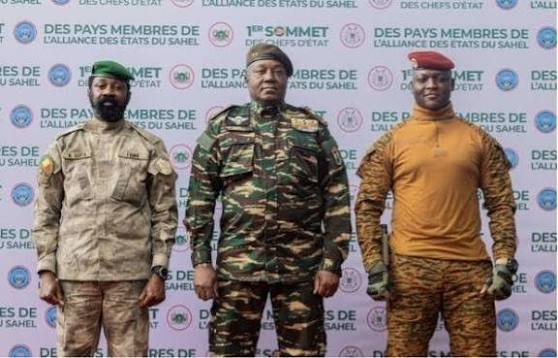
The attack lands amid a widening rift between the Alliance of Sahel States (AES Niger, Mali, Burkina Faso) and ECOWAS. Niamey’s leader, Gen. Abdourahmane Tiani, publicly accused Côte d’Ivoire’s Alassane Ouattara, France’s Emmanuel Macron and Benin’s Patrice Talon of sponsoring the attack charges those governments deny. Abidjan’s summoning of Niger’s ambassador illustrates the rapid diplomatic deterioration.
The raid has brought to the fore the vulnerability of critical infrastructure in Sahelian capitals. The fact that militants could strike an international airport in the heart of Niamey and degrade aviation assets is deeply worrying. Airports are economic lifelines. Attacks like this ripple through tourism, trade, investor confidence and humanitarian logistics.
Given the Islamic State network’s history of targeting high-profile facilities, other airports, military airstrips and energy installations across the Sahel and Lake Chad Basin could be next.
Diplomatic cold war has continued to result in security consequences as counter-terrorism coordination is eroding in the Lake Chad Basin and the Sahel, regional polarisation is deepening while Jihadist narratives are gaining traction. Mutual suspicion between Niger Republic and other countries had reduced intelligence sharing and cross-border security cooperations which is exactly what a mobile jihadist alliance is exploiting. Niger’s pivot toward Russia, and the growing role of the African Corps, also complicate unified regional responses. Accusations of foreign interference feed recruitment and justify attacks on “collaborators.”
Against this backdrop, Washington’s decision to send a senior official to Mali to “reset ties” is telling the U.S. is recalibrating from heavy security conditionality toward pragmatic engagement that emphasises sovereignty, economic development and stability.
Mali has increasingly been viewed as the “COG” (centre of gravity) of the AES. Access to Bamako, therefore, is seen as a gateway to broader engagement with the bloc and a means to counter expanding Russian and China influence while safeguarding interests in critical minerals. Whether this reset can translate into improved regional security cooperation remains uncertain, especially as AES states bristle at Western pressure and ECOWAS sanctions.
For Nigeria, It is clear that the Lake Chad Basin is no longer just a local insurgency theatre; it is becoming a launchpad for Sahel-wide operations. If ISWAP fighters can move westward to Niger, Mali and Burkina Faso for joint missions and Sahelian militants can cycle into Borno for training, logistics and media, then the basin risks becoming the connective tissue of a transnational Islamic State corridor. Nigeria and its Lake Chad partners needs a renewed joint tasking framework that anticipates mixed cells, foreign fighter inflows and media-enabled operations.
For the region, (NIGERIA) the choice is urgent, rebuild cooperative security despite political rifts with NIGER or allow insurgents to exploit the fractures. The cost of delay will be paid across capitals, at airports, bases, regional hubs and cities across West Africa.
Cross-border intelligence must be rebuilt, not just within ECOWAS but with pragmatic channels to AES states. Form a fushion of Information cell with representatives of all controls for prompt intelligence sharing on terrorists activities. Ideological divides should not trump the common threat. If left unchecked, this alliance could stitch together the Lake Chad Basin and the Sahel into a single battle-space, multiplying the reach, resilience and propaganda power of jihadist networks.
Zagazola is a Counter Insurgency Expert and Security Analyst in the Lake Chad region.
OPINION: Growing ISWAP–ISIS ties in Sahel after Niamey attack threaten Lake Chad and West African security corridor
Opinions
Rewriting the Past: Why Repackaging Kemi Adeosun Is a Dangerous Exercise in National Amnesia
Rewriting the Past: Why Repackaging Kemi Adeosun Is a Dangerous Exercise in National Amnesia
By: Michael Mike
Recently, there have been coordinated media efforts to repackage Nigeria’s former Minister of Finance, Mrs. Kemi Adeosun, an exercise which appear less like public enlightenment and more like a calculated attempt at historical revisionism. Through selective recollection and moral posturing, one of the most embarrassing scandals of the Buhari administration is being reframed as an act of personal integrity rather than what it truly was: a case of sustained deception that collapsed only under intense public pressure.
Mrs. Adeosun’s resignation in 2018 did not occur in a vacuum. It followed months of public outrage over the revelation that she possessed a forged National Youth Service Corps (NYSC) exemption certificate, an offence under Nigerian law. Long before her eventual exit, Nigerians demanded a clear and honest explanation. None came. Instead, what unfolded was silence, deflection, blame-shifting, and an unconvincing attempt to wait out public anger.
In a recent interview with Mr. Laolu Akande on Channels Television, Mrs. Adeosun attempted a rhetorical sleight of hand: she portrayed her resignation as a voluntary moral decision while simultaneously admitting that she stepped down only after it became clear that no one within government was willing, or able, to explain away the forgery. This framing insults public intelligence. A resignation tendered after three months of sustained pressure, mounting evidence, and institutional embarrassment cannot reasonably be described as a proactive moral stand.
The facts of the case remain stubborn and inconvenient.
First, Mrs. Adeosun needlessly procured a forged NYSC exemption certificate. Whether by commission or complicity, the document was fake. Second, credible media reports, including TheCable of September 15, 2018, indicated that attempts were made to enlist senior NYSC officials to manage or neutralize the fallout once the forgery became public. Third, rather than confront the issue directly when it emerged, Mrs. Adeosun initially deflected responsibility. Fourth, when the NYSC announced it would probe the matter, it confirmed only that she had applied for an exemption certificate, pointedly declining to state that one was validly issued.
Most tellingly, Mrs. Adeosun waited for three full months before resigning. By then, the evidence was overwhelming and the silence from government deafening. The resignation came not because the truth had been courageously embraced, but because it could no longer be buried. Her justification in that interview with Mr Laolu Akande that she was not a Nigerian citizen at the time she graduated and therefore was not eligible for NYSC service only deepens the puzzle. If that explanation is true, then there was absolutely no need to seek an exemption certificate at all, let alone a forged one. That she did so points to a deeper and more troubling pattern: the normalization of cutting corners among Nigeria’s elite, secure in the belief that consequences are for the poor and powerless.
It is against this background that Mrs. Adeosun’s recent pontification on Nigeria’s economy, including her robust defense of economic policies of the current administration must be viewed. It is difficult to ignore the timing of this renewed visibility amid rumors and permutations within power corridors to bring Mrs Adeosun back to government . Whatever her intentions, the optics are clear: this is an attempt at whitewashing a past misdemeanor that goes to the heart of public trust.
Public office is not merely about technical competence. It demands unimpeachable integrity. Mrs. Adeosun’s record fails that test. A person who falsified credentials, evaded accountability, and resigned only when cornered cannot credibly present herself as fit for high public trust again. Nigeria is not short of competent, qualified people to hold public office. The country boasts several respected professionals with solid credentials and untainted records. The current administration already boasts a number of brilliant hands, shaping the country’s economy.
At a time when Nigeria is grappling with economic hardship and a crisis of confidence in leadership, we must resist the temptation to recycle discredited figures simply because they once held office. National memory must not be so short, nor standards so low.
Mrs. Adeosun’s media tour of repackaging should not be mistaken for redemption. Accountability delayed is accountability denied. Nigeria deserves better, and the future of public service must rest on competence anchored firmly to character.
Rewriting the Past: Why Repackaging Kemi Adeosun Is a Dangerous Exercise in National Amnesia

Berom militia kill Fulani herder in Riyom as tit-for-tat violence escalates in Plateau

Political Landscape Shifts as Yobe South Mobilizes for 2027 Elections Amid Marginalization Concerns

FG Directs MDAs to Halt New Policies Pending Full RIA Compliance

Roger Federer’s Shock as DNA Results Reveal Myla and Charlene Are Not His Biological Children

THE PLIGHT OF FARIDA

FAILED COUP IN BURKINA FASO: HOW TRAORÉ NARROWLY ESCAPED ASSASSINATION PLOT AMID FOREIGN INTERFERENCE CLAIMS
-
 News2 years ago
Roger Federer’s Shock as DNA Results Reveal Myla and Charlene Are Not His Biological Children
-
Opinions4 years ago
THE PLIGHT OF FARIDA
-
 News12 months ago
FAILED COUP IN BURKINA FASO: HOW TRAORÉ NARROWLY ESCAPED ASSASSINATION PLOT AMID FOREIGN INTERFERENCE CLAIMS
-

 News2 years ago
EYN: Rev. Billi, Distortion of History, and The Living Tamarind Tree
-
 Opinions4 years ago
POLICE CHARGE ROOMS, A MINTING PRESS
-

 ACADEMICS2 years ago
A History of Biu” (2015) and The Lingering Bura-Pabir Question (1)
-

 Columns2 years ago
Army University Biu: There is certain interest, but certainly not from Borno.
-

 Opinions2 years ago
Tinubu,Shettima: The epidemic of economic, insecurity in Nigeria
