
Opinions
Simon Lalong: Bridging the gap

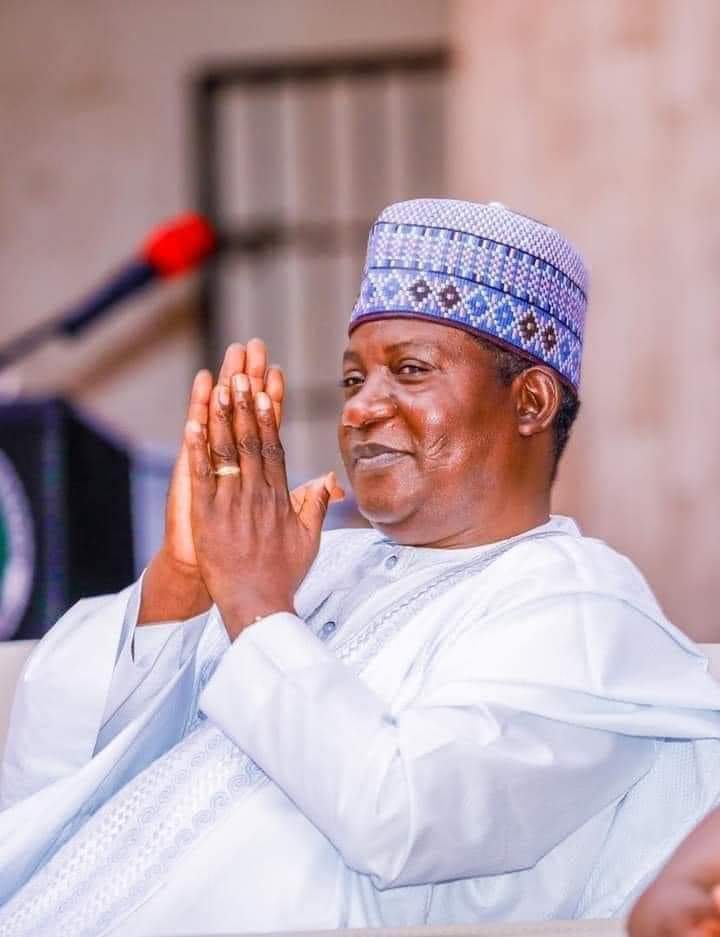
Simon Lalong: Bridging the gap
By: Yakubu Dati
As political activities heighten with the release of the timetable for the 2023 general elections, governance has notably slowed down across the country.
While this may be the case in some states, it is not so on the Plateau as Governor Alert! (a name by which Gov Simon Lalong is fondly referred to by Plateau State workers after he cleared 8- 10 months outstanding salary arrears inherited from the last administration) has not shifted his focus on the goal of working for his people.
With an average monthly commitment of 2 billion naira paid to workers in the state in the last six years, the local economy has received a huge boost with the injection of more than 84 billion naira in the corresponding years of the current administration.
These payments have no doubt stimulated the economy of the state substantially and unleashed additional economic growth for the people thereby closing the gap of inequality and reducing hardship across the board.
While economists are best suited to measure the accompanying leapfrog in economic activities and its concomitant boost in small and medium scale enterprise (SMSEs) along with its social impact, the effect is such that even laymen are testifying of the difference recorded.
Buoyed by passion to uplift urban and rural poor through land which is the physical bedrock for human activities, Gov Lalong is unlocking these resources for the benefit of all and sundry.
The Governor only recently assented to two critical bills on land administration on 14th July 2021 viz The Plateau State Property Land Use Charge Law 2021 and The Plateau State Geographic Information Systems (PLAGIS) Law 2021.
In the bid to unveil the benefits of these laws to the business community, the Plateau State Ministry of Lands, Survey and Town Planning organised a stakeholder’s engagement with support from a major German development agency, GIZ (The Deutsche Gesellschaft für Internationale Zusammenarbeit GmbH).
At the forum, Gov Lalong reiterated the subsisting 50 percent waiver on land transactions to empower the business community in the bid to promote the ease of doing business and empower the populace while the Attorney General and commissioner of justice, Chrysantus Ahmadu, xrayed the benefits of the law to the leadership of the SMSEs.
Chairman of the Plateau State Internal Revenue Service (PSIRS), Dashe Arlat, in his remarks, reaffirmed his agency’s commitment to generate N5 billion monthly as Internally Generated Revenue (IGR).
On the heels of all these positives, Gov Lalong flagged-off the construction of N9.9 billion British-American Junction flyover and the dualization of 1.7 K/m road to Lamingo roundabout in Jos North LGA.
Initial announcement of this landmark legacy project was greeted with mixed reactions by those genuinely concerned about where the funding will be sourced and the opposition who are confined by the walls of pessimism they built around themselves to be blind to positive derivatives of government.
While the former became convinced about its workability and welcomed the realization of the project with a sigh of relief, the latter thought they could harm the project and finding no means of doing so, resorted to lies claiming that the 9.9 billion naira project would cost a whopping 19 billion naira!
Sonya Parker, an author, succinctly captures these naysayers in his treatise when he said, “a hater’s job is to hate you, and they stay on their job 24/7. So, if you’re expecting them to clock out, and leave you alone, think again.”
Unperturbed by these opposition elements however, Gov Lalong is taking the bricks hauled at his administration and is using them to stay the course of leaving Plateau better than he met it.
Underscoring the importance of the event, is the fact that the ground-breaking ceremony was performed by the former Head of State and living legend, Gen Yakubu Gowon.
Governor of Niger State, Sani Bello, his Kwara State counterpart, Abdulrahman Abdulrazaq and Edo State Governor, Godwin Obasaki represented by his Deputy, Philip Shuiabu joined other well-meaning patriots to be part of history by coming to witness the event.
To overcome the stranglehold of funding, which is responsible for many abandoned projects, the Government adopted the Contractor-Financing model which tilts the process in favour of preferred bidders.
Also Read: NSCDC to Collaborate with US, Finance in Personnel Training
A firm, Craneburg Construction Company Ltd, armed with funding from Access Bank, easily distinguished itself amongst several bidders to emerge top.
Commissioner for Works, Pam Botmang, affirmed that the bank has mobilized the contractor and work has commenced in earnest from the preliminary works of the Right of Way from the Federal Ministry of Works, to relocation of public utilities with underpass and roundabout, slip roads and approach, as well as scarification and site clearance.
The scope of work is also huge and includes a 6 – span dual bridge of 15.0m/Span with a total length of 90m as part of the Overpass and erection of four retaining walls on the approaches of various lengths totaling 300m.
The contractor will also carry out earthworks with extensive filling on the bridge approaches with ramps, slip roads and underpasses.
Furthermore the contractors are to build two reinforced concrete single spans of 20m length bridges along the 1.7km British American Junction to Lamingo Junction Roundabout and it is to be dualized and reconstructed with asphaltic binder and wearing coarse which will include pipe and box culverts, reinforced concrete drainages, concrete kerbs, concrete walkways and other auxiliary or ancillary works like street lights, road signages and markings, etc
As an awardee of the internationally recognised Open Governance Partnership ( OGP) the Plateau State Government is adhering to strict financial template that ensures direct disbursement from the bank to the contractor on receipts of Certificates of Valuation (CVs) certified by the Ministry and duly approved by the Governor.
The Performance Monitoring and Results Delivery Office (PMRDO) led by Noel Donjur, Chief of Staff, has put these rigourous process of transparency, accountability, citizen participation and responsiveness in place to ensure the delivery of the project on time.
Gen Yakubu Gowon, at the event, expressed satisfaction with the level of support accorded to Governor Simon Lalong by Plateau people in the last six years and urged him to leave better legacies that would be emulated.
He applauded Governor Lalong for completing projects inherited from the successive administration saying continuity in governance is critical to the development of the society.
The ongoing British/American overhead bridge, for example, is another demonstration of a government in action.
While a majority of patriotic citizens welcome the construction which has commenced in earnest, the few depleting opposition elements are confronted with brickwalls in their failed bid to throw spanners in the works.
Forgetting that the Rescue administration, paid up debts incurred by the last administration including the cost for the dualization project the former governor, Jonah Jang named after himself in a purse case of a self serving attempt at self immortalisation.
The British/American Overhead Bridge which has become a nightmare to road users is a very important artery that serves the city and is an important gateway to travellers transiting the state.
It is pertinent to note that due to the insecurity created by the last administration, states like Bauchi, Gombe and others who were forced to build airports to avoid transiting through Jos, are back to using this artery, following the restoration of peace, thus increasing the vehicular traffic.
For the purpose of emphasis, the British/American flyover with 7 km dual carriage way is contractor financed, meaning that the contractor came with a financing from a reputable bank to fund the project, similar to the model adopted by the Federal Government in financing the rail and airport projects. In simple terms, the bank is funding the contractor directly.
Gov Lalong continues to leverage on innovation to steer up development and entrepreneurship. The automation of land administration has secured land owners, attracting over 7 billion naira in mortgages during his administration.
Little wonder, Plateau youths have continued to shine on the national stage, winning laurels in their stride. At the National SMSE Awards organised by the Muhammadu Buhari administration, Jerry Mallo came tops in 2019, while Luka Bot and Mafeng won in 2020 and 2021 respectively.
Gov Lalong continues to expand the frontiers of possibilities by bridging the gap.
*Yakubu Dati is the Commissioner of Lands in Jos
Simon Lalong: Bridging the gap


Nigeria Is Innovating. But Who Will Ensure No One Is Left Behind?
By: Michael Mike
A wake-up call to Science Journalists as innovation hubs prepare to open new frontiers
Nigeria is building the labs. But an important question remains: who will translate the science?
Across the country, a quiet transformation is underway. Innovation hubs are emerging spaces where ideas are tested, collaboration is nurtured, and solutions are imagined.
Initiatives such as the Mine Tech Innovation Hub, hosted at Nasarawa State University, Keffi and supported by UNDP under the leadership of Ms. Elsie Attafuah, are preparing a new generation to move research beyond theory and into real-world application. These hubs represent more than infrastructure; they embody ambition, creativity, and the promise of inclusive growth.
This is not just progress. It is possibility.
Yet at the heart of this transformation lies a critical challenge: while Nigeria’s innovation ecosystem is expanding, there remains a significant gap in translating scientific knowledge into accessible and actionable understanding. In many cases, solutions remain largely within laboratories and classrooms, while the communities they are meant to serve continue to grapple with persistent challenges.
The issue is not a lack of innovation.
The gap is translation.
Nigeria stands at a crossroads. With growing research capacity, a vibrant youth population, and increasing institutional support, the country has the potential to become a leader in innovation across Africa.
However, innovation in isolation does not guarantee impact. Without deliberate efforts to communicate and contextualize knowledge, breakthroughs risk remaining invisible, inaccessible, and ultimately underutilized.
As these hubs evolve into powerful ecosystems of growth and inclusion, a crucial question emerges: will innovation reach the people it is meant to serve—or will it remain out of reach and without impact?
This challenge directly affects progress toward SDG 9, which emphasizes industry, innovation, and infrastructure. Achieving these goals requires more than generating ideas; it requires ensuring that those ideas are understood, embraced, and applied in ways that improve lives.
This is where science journalism steps in as a gamechanger.
Innovation does not scale through technical language alone. It scales through understanding—through storytelling that connects research to reality. A community cannot engage with what it does not understand. A policymaker cannot act on what is not clearly communicated. An investor cannot support what has not been made visible.
Science journalists are not merely reporters; they are translators of complexity. They serve as bridges between break through and society, transforming abstract concepts into meaningful narratives that people can relate to and act upon.
Without this bridge, innovation risks being admired in principle but ignored in practice.
To close this gap, Nigeria must act deliberately, with all stakeholders treating science journalism as a strategic priority within the innovation ecosystem.
Further efforts to enhance access, training, and engagement for science journalists could significantly strengthen the impact of innovation initiatives
Storytelling is not an add-on or an afterthought—it is infrastructure.
Strengthening science communication within innovation ecosystems can enhance the translation of breakthroughs into accessible knowledge for communities, policymakers, and investors.
Nigeria’s path to innovation is now a reality unfolding.; it is an emerging force in the present. The systems are forming. The ideas are maturing. The opportunities are expanding. Yet progress alone is not enough.
If the story is not told, the impact will not be felt.
Science journalists must rise—not tomorrow, but now.
Because inclusive development is not achieved simply by creating solutions. It is achieved when those solutions are understood, embraced, and allowed to reach every corner of society. Otherwise, we risk building innovations that never leave the lab—and futures that never arrive.
About the Author
Dr. Nelson Okoko is a Geologist, Development Communication Specialist, science journalist, and social and behavioural communication expert based in Abuja. His work focuses on participatory communication and innovation ecosystems for inclusive development. He is the proponent of the Collaborative Sovereign Communication Theory (CSCT), a forward-looking framework redefining communication dynamic in development practice.
Nigeria Is Innovating. But Who Will Ensure No One Is Left Behind?
Opinions
OPINION: Operation Safe Corridor Is Not a Reward for Terrorists — It Is One of Nigeria’s Most Strategic Weapons Against Terrorism

OPINION: Operation Safe Corridor Is Not a Reward for Terrorists — It Is One of Nigeria’s Most Strategic Weapons Against Terrorism
By: Zagazola Makama
For more than a decade, Nigeria’s battle against terrorism has largely been viewed through the lens of military operations, troop deployments, air strikes, and battlefield victories. However, as the conflict evolved, security experts increasingly recognised that military force alone could not permanently end violent extremism.
This reality gave rise to Operation Safe Corridor (OPSC), a Federal Government initiative designed to complement kinetic operations through deradicalisation, rehabilitation, and reintegration of eligible low-risk individuals associated with terrorist groups.
Since its establishment, the programme has generated both support and controversy. While proponents describe it as a strategic security tool that weakens terrorist organisations from within, critics argue that it appears to offer opportunities to former insurgents while victims continue to struggle with the consequences of conflict.
The debate raises a fundamental question: can a country defeat terrorism through force alone, or must it also create pathways for disengagement and rehabilitation?
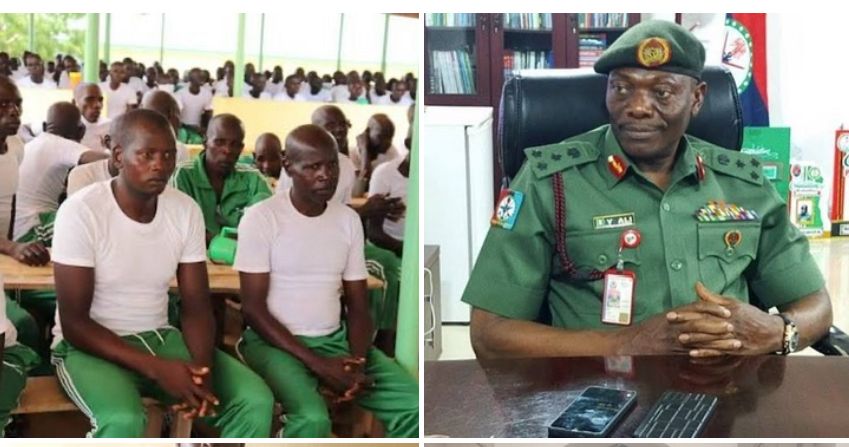
Recent explanations by the Coordinator of OPSC, Brig.-Gen. Yusuf Ali, provide useful insights into the rationale behind the programme and the challenges it seeks to address.
Contemporary counterterrorism strategies across the world increasingly combine military operations with non-kinetic interventions. The reason is simple. Insurgencies are sustained not only by weapons and fighters but also by recruitment networks, ideological indoctrination, economic desperation, coercion, fear, and social dislocation. Even successful military campaigns may struggle to achieve lasting peace if these underlying drivers remain unaddressed. Operation Safe Corridor was established to address this gap.
According to programme officials, it provides a controlled process through which eligible low-risk individuals who voluntarily surrender can be screened, rehabilitated, and prepared for reintegration into society. The underlying logic is that every successful defection reduces the manpower available to terrorist organisations while simultaneously encouraging others to abandon violence.
Perhaps the most persistent misconception surrounding OPSC is the belief that it serves as an open-door policy for all insurgents. Available information suggests otherwise. Officials insist that admission into the programme follows extensive intelligence profiling and legal review. Individuals who voluntarily surrender are subjected to screening by military and civilian intelligence agencies before their cases are reviewed by the Federal Ministry of Justice.
The Ministry determines who qualifies for rehabilitation and who should face prosecution under existing legal frameworks. This distinction is critical because public concerns often stem from fears that individuals responsible for serious crimes are simply being released back into society. The programme coordinator maintains that only individuals assessed as low-risk and legally eligible are admitted into the rehabilitation process.
For years, critics have reduced the complex national security programme into simplistic slogans. They call it “a reward for Boko Haram.” They describe it as “pampering terrorists.” Some even falsely claim it is a recruitment channel into the military. These accusations may generate applause on social media, but they disintegrate when closely examined.
The truth is that most of the loudest critics of Operation Safe Corridor have never visited the centre, studied its structure, legal framework, operational processes, or strategic objectives. They react emotionally to a conflict that has caused immense suffering, but emotion is not a substitute for security policy.
The reality is that Operation Safe Corridor is not an act of sympathy toward terrorists. It is an instrument of war. And it may be one of the most important non-kinetic weapons Nigeria has ever deployed against violent extremism.
Nigerians must understand that it is not an amnesty programme, pardon, compensation scheme, reward for terrorism, or a recruitment pathway into security agencies. It is a voluntary programme.
Contrary to popular belief that only Boko Haram members are rehabilitated, not everybody associated with terrorist organisations who enters Operation Safe Corridor comes from the North-East. There are Igbos from the South-East, Yorubas from the South-West, and individuals from other ethnic groups enrolled in the programme.
Additionally, those captured on the battlefield in the North-East do not automatically qualify. Those with prosecutable offences do not automatically qualify. Those assessed as high-risk do not qualify. Those involved in serious criminal activities can face prosecution.
This distinction is critical. Operation Safe Corridor does not decide who enters the programme. The Federal Ministry of Justice does. That fact alone destroys one of the biggest misconceptions surrounding the initiative.
One of the strongest arguments against Operation Safe Corridor is the claim that terrorists simply walk into the camp and are forgiven. Nothing could be further from the truth.
Before admission, individuals undergo extensive profiling involving military intelligence, civilian intelligence agencies, security services, legal authorities, psychologists, and health professionals. Their backgrounds are examined, their activities are investigated, their risk levels are assessed, and their legal status is reviewed. Only after this process are recommendations made.
The programme operates within a multi-agency framework involving more than seventeen Ministries, Departments, and Agencies. This means decisions are not taken by one commander, one agency, or one institution. They are subjected to scrutiny from multiple stakeholders.
Those found to have prosecutable cases can be sent for trial. Those categorised as low-risk may be referred for rehabilitation. This is not leniency; it is classification, and every serious counterterrorism system in the world relies on classification.
The most important question left unanswered is this: if there is no pathway out of terrorism, why would anyone surrender? One basic reality is that a terrorist organisation is weakened not only when fighters are killed. It is weakened when fighters abandon the organisation, as every surrender reduces its manpower, operational capability, intelligence-gathering capacity, and recruitment potential.
This is where Operation Safe Corridor and the Borno Model, an initiative of Borno state government become strategically important. The programmes creates a credible exit route. And that exit route has helped generate hundreds of thousands of surrenders over the years.
Every surrendered individual represents one less fighter available to conduct attacks, plant IEDs, gather intelligence, transport logistics, recruit new members, or support terrorist operations. In military terms, this is attrition from within.
Based on figures repeatedly cited by military authorities and reports on the deradicalisation programme, the number of Boko Haram/ISWAP members and their families who surrendered through the combined non-kinetic approach involving the Borno Model and Operation Safe Corridor has grown significantly over the years.
In 2018, when the window of opportunity was announced, the military reported that 146 Boko Haram members had voluntarily surrendered under Operation Safe Corridor. By 2019, authorities said over 1,370 fighters had surrendered, with some transferred into rehabilitation programmes.
Following the death of Boko Haram leader Abubakar Shekau in 2021, mass defections accelerated, with thousands of fighters and family members laying down their arms. Thousands of people trapped in the Sambisa Forest were able to escape.
In January 2023, the Chief of Defence Staff disclosed that more than 83,000 insurgents and their family members had surrendered. By 2025, military authorities updated the figure to approximately 120,000–129,000 Boko Haram/ISWAP fighters and family members who had surrendered.
For example, in 2026, Defence Headquarters stated that while over 300,000 terrorists and associated persons had surrendered over a decade across the North-East, only 2,615 ex-combatants had undergone rehabilitation under Operation Safe Corridor, with 2,016 graduating from the programme.
It is impossible to understand Nigeria’s recent gains against insurgency without acknowledging the role played by this mechanism. One of the biggest mistakes made by those opposing Operation Safe Corridor is assuming everyone associated with terrorist groups joined voluntarily. The reality is far more complicated.
It is important to note that those who surrendered include fighters, farmers, women, children, and other trapped populations who emerged from insurgent enclaves, not only active combatants.
Military authorities have consistently explained that only a low-risk fraction of the surrendered population qualifies for the formal Operation Safe Corridor deradicalisation programme after screening, profiling, and legal review.
Thousands of individuals were abducted, forced into service, married against their will, recruited as children, coerced through threats, and trapped by circumstances. Many women found within insurgent camps were themselves victims. Many children born within terrorist-controlled territories never chose that environment.
In the Sambisa Forest, there were dozens of villages with people trapped by terrorists. In Gwoza, there are still thousands of people trapped within terrorist enclaves. In the Lake Chad Tumbuns, many farmers and fishermen were trapped in ISWAP-controlled areas. Sometimes they became collateral victims during attacks on terrorist enclaves. Many foot soldiers were not ideological extremists.
Research cited by programme managers indicates that more than 60 percent of foot soldiers in extremist groups are not primarily driven by ideology. Many were coerced or manipulated, with threats of death if they attempted to escape.
A serious nation cannot treat all these categories identically. That is why modern counterterrorism relies on differentiation.
Another myth is that participants simply spend a few months relaxing before returning home. Again, the facts suggest otherwise.
The clients spend several months undergoing rehabilitation. During this period, extremist interpretations are challenged by trained scholars. Participants are exposed to alternative teachings that reject violence and promote lawful coexistence.
Years of conflict leave deep psychological scars. Counselling addresses trauma, fear, guilt, anxiety, behavioural conditioning, and emotional instability. Participants receive practical skills training designed to support lawful livelihoods.
Clients learn about citizenship, lawful conduct, and responsibilities within society.
The rehabilitation programme increasingly focuses on changing behaviour, addressing trauma, and creating alternatives to violence rather than attempting to achieve ideological transformation alone. Within OPSC, rehabilitation reportedly includes religious reorientation, psychosocial support, vocational training, civic education, behavioural assessment, and skills acquisition.
The objective is to help participants disengage from violence and develop the capacity to function productively within society.
One challenge in evaluating deradicalisation programmes is determining what success actually means. Is success measured by the number of people processed through the programme, by the number who do not return to violence, or by broader security outcomes?
Officials point to several indicators. On the other hand, some high-risk or captured terrorists have been detained for seven to eight years in Giwa Barracks and Kainji while prosecution of their cases continued.
Officials at the Joint Investigation Centre located at Giwa Barracks, Maiduguri, said it has so far investigated about 1,450 terrorism-related cases, while over 500 Boko Haram terrorists were subsequently convicted by the Federal Ministry of Justice in Kainji, Niger State.
The Commander of the facility, Brig.-Gen. Yusuf Audu, who disclosed this while outlining the structure, operations, and reforms of the multi-agency detention and investigation centre supporting counterterrorism efforts in the North-East, said the facility remains central to Nigeria’s fight against Boko Haram and ISWAP insurgents.
He disclosed that “recently, the centre moved over 500 suspects for trial, most of whom were convicted and are serving various jail terms,” adding that the development reflects improved coordination among security and justice institutions handling terrorism cases.
The existence of Operation Safe Corridor and the Borno Model is believed to have contributed to the surrender of over 300,000 individuals to Nigerian troops over time. Some of the rescued or surrendered victims have been reunited with their families by the Borno State Government, while Operation Safe Corridor has so far graduated more than 2,600 individuals from the programme since inception.
From a strategic perspective, these figures suggest that the programmes may be helping to reduce the pool of active fighters available to extremist groups, as every surrender represents not only one less combatant on the battlefield but also a potential source of intelligence and a signal to others that exit options exist.
Nevertheless, experts caution that long-term outcomes remain the most important measure.
The true test lies in whether reintegrated individuals remain peaceful, productive, and accepted within their communities years after completing rehabilitation.
Critics often portray Operation Safe Corridor as some bizarre Nigerian experiment. It is not. Comparable programmes exist worldwide. Somalia has implemented disengagement initiatives for defectors from Al-Shabaab. Colombia developed reintegration systems following the FARC conflict. Many countries facing insurgencies rely on combinations of military pressure and rehabilitation frameworks.
Consequently, acceptance of former associates of terrorist groups is often difficult. Many victims understandably question why resources appear to be directed toward former combatants while communities continue to struggle. This perception has become one of the most significant public relations and policy challenges facing OPSC.
Programme managers acknowledge the concern and argue that sustainable peace requires a balance between supporting victims and rehabilitating eligible returnees.
According to officials, victim-centred initiatives are increasingly being incorporated into broader stabilisation efforts, including psychosocial support and community recovery programmes.
Another major issue is funding. According to OPSC officials, Defence Headquarters and a few non-governmental organisations currently bear much of the financial responsibility for activities within the rehabilitation camp.
However, reintegration, the phase widely regarded as the most important remains significantly underfunded. Successful reintegration requires transportation, livelihood support, community sensitisation, monitoring, mentorship, and follow-up services.
Without adequate resources, there is a risk that individuals may return to environments characterised by unemployment, social rejection, and economic hardship.
Such conditions can undermine rehabilitation gains and increase vulnerability to relapse. Therefore, experts argue that the long-term success of OPSC will depend not only on what happens inside the camp but also on the strength of support systems available after graduation. International experiences also show that weak reintegration systems can undermine otherwise successful rehabilitation efforts.
This lesson appears particularly relevant to Nigeria, where economic challenges and community mistrust remain significant obstacles.
As insecurity continues to evolve, Operation Safe Corridor itself is undergoing transformation. Authorities are expanding deradicalisation infrastructure beyond the North-East, including facilities in Zamfara and planned structures in the North-Central region.
There is also increasing emphasis on victim support, community ownership, strategic communication, and livelihood programmes.
Ultimately, the debate surrounding OPSC reflects a broader question confronting modern counterterrorism efforts worldwide.
Can security be achieved solely through military victories, or does lasting peace require addressing the human dimensions of conflict?
While opinions remain divided, one point appears increasingly clear.
Military operations may remove immediate threats, but sustainable peace often depends on what happens after the guns fall silent. In that regard, Operation Safe Corridor represents Nigeria’s attempt to navigate the difficult balance between security, justice, rehabilitation, and long-term stability.
Whether the programme ultimately achieves its objectives will depend not only on the quality of rehabilitation within the camps but also on the nation’s ability to support victims, strengthen communities, and sustain reintegration long after participants leave the programme.
Zagazola Makama is a Counter-Insurgency Expert and Security Analyst in the Lake Chad Region.
OPINION: Operation Safe Corridor Is Not a Reward for Terrorists — It Is One of Nigeria’s Most Strategic Weapons Against Terrorism
That Phantom Rift Between VP Shettima And Gov. Zulum
By: Inuwa Bwala
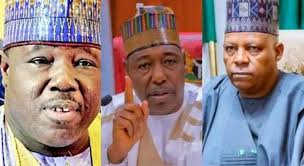
Those who know the kind of fraternity between Vice President Kashim Shettima and Governor Babagana Umara Zulum, also know that, there can never be any disagreement between them over any issue, not even political permutations in Borno between them.
When I read an online analysis atributed to an unknown source, quoting an equally unknown KBC news, I know, that the merchants of mischief are again upto their games.
Overtly or covertly, the duo of Kashim Shettima and Babagana Umara Zulum, have never given anyone reasons to believe, they are in disagrerment, over who becomes the next governor of Borno state.
What has never been in doubt, is their collective belief that, as Muslims, God is the ultimate determinant of who gets what, in the power equations in Borno, now or in the future.
I have had intimate interactions with both of them, and even in my usual speculative mind as a journalist, I never had the incling that there was any friction of some sort, over who succeeds Zulum as Governor.
Rather, at every turn, both leaders have displayed exceptional sense of camaraderie and mutual respect to eachother.
The Vice President, often comes down from his olympian height to tell people, that, once he comes to Borno, the Governor is his boss. Governor Zulum will often tell everybody, that Kashim Shettima remains his mentor and leader, and everytime he goes to Abuja, the Vice President’s house is his first port of call.
Perhaps, those who fabricate such phantom disagreements, between them, are the usual conflict profiteers, who thrive on driving wedges between leaders for fun or for some gains.
Not quite a week ago, Governor Zulum was in the media telling the world that, he will not play god by trying to annoint anybody as his successor, but believes that God is the ultimate decider through the instrumentality of the people of Borno.
The Vice President has never uttered a word about the politics of Borno, rather, he demonstrates statemanly disposition on all matters relating to the state.
As humans, they may have preferences, but as believers in the indispensibility of God, their preferences are at the altar of the almighty.
Bringing in names of people as possible successors could after all be mere promotional gimmicks, which at the end of the day endanger their chances. The person who may succeed Governor Zulum may not even be amongst those mentioned, perhaps a dark horse somewhere, who does not even know that he or she is God’s choice.
Very often, I cite the emergence of our dear Governor himself, in 2019. Nobody gave him a chance and all eyes were focused in other directions, untill God’s calling came.
As for those who manufacture the stories of a dilema surrounding Senator Kashim Shettima’s position as Vice President in the next dispensation, the open expression of confidence in Kashim Shettima by President Bola Ahmed Tinubu alone, should be sufficient.
Those who know the President very well can attest to his bluntness, and his actions have so far given assurance, that, Kashim Shettima is his dependable ally.
Tinubu is not known to play to the gallery and he does not gamble with his passions. Where people get the idea that he may drop Kashim Shettima, as his running mate in 2027 remains as puzzling, as the earlier stories preceeding the 2023 election.
It is not an anathema for people to permutate against 2027, but with more than one year still ahead, I feel people should not be too uncharitable in distracting leaders, fantasizing imaginary scenarios.
I may be right or wrong, but the truth may not be too far away from comming.
Just musing.
That Phantom Rift Between VP Shettima And Gov. Zulum

HOMEF, CAPPA Seek Review of GMO Approvals, Advocate Agroecology as Nigeria’s Food Security Path

Indigenous Arms Production Gains Momentum as DICON Partner Unveils Tactical Shotgun Platform

Israel Reaffirms Commitment to Peace, Deepens Partnership with Nigeria at 78th Independence Anniversary

Roger Federer’s Shock as DNA Results Reveal Myla and Charlene Are Not His Biological Children

THE PLIGHT OF FARIDA

FAILED COUP IN BURKINA FASO: HOW TRAORÉ NARROWLY ESCAPED ASSASSINATION PLOT AMID FOREIGN INTERFERENCE CLAIMS
-
 News2 years ago
Roger Federer’s Shock as DNA Results Reveal Myla and Charlene Are Not His Biological Children
-
Opinions4 years ago
THE PLIGHT OF FARIDA
-
 News1 year ago
FAILED COUP IN BURKINA FASO: HOW TRAORÉ NARROWLY ESCAPED ASSASSINATION PLOT AMID FOREIGN INTERFERENCE CLAIMS
-

 News2 years ago
EYN: Rev. Billi, Distortion of History, and The Living Tamarind Tree
-
 Opinions4 years ago
POLICE CHARGE ROOMS, A MINTING PRESS
-

 ACADEMICS2 years ago
A History of Biu” (2015) and The Lingering Bura-Pabir Question (1)
-

 Columns2 years ago
Army University Biu: There is certain interest, but certainly not from Borno.
-

 Politics12 months ago
2027: Why Hon. Midala Balami Must Go, as Youths in Hawul and Asikira/Uba Federal Constituency Reject ₦500,000 as Sallah Gift
