
News
Stakeholders seek end to ethnic profiling in security discourse


Stakeholders seek end to ethnic profiling in security discourse
By: Zagazola Makama
Security stakeholders have called for the elimination of ethnic profiling in conflict narratives and security operations across West Africa, warning that imprecise language fuels violence and undermines national stability.
Across Nigeria’s conflict-prone regions, words have become as consequential as weapons.
From the North-West to the North-Central, the language used in describing violence, often framed along ethnic or communal lines has increasingly come under scrutiny, with experts warning that such narratives risk deepening divisions and prolonging conflicts.
It was against this backdrop that Beacon Security and Intelligence Limited and Whiteink Institute for Strategy Education and Research, with support from the UKAid-funded Strengthening Peace and Resilience in Nigeria (SPRiNG) project, convened a high-level virtual dialogue to rethink how security conversations are framed in West Africa.
The forum, held on Feb. 10, brought together voices from across the military, academia, civil society and local communities to interrogate a critical question: can better language lead to better security outcomes?
Opening the session, Dr. Ukoha Ukiwo, Team Leader of the SPRiNG project, highlighted findings from recent studies linking hate speech and divisive narratives to the persistence of violence in Nigeria.
He warned that poorly framed terminology especially those that generalise criminal behaviour along ethnic lines can undermine peacebuilding efforts and even trigger further conflict. “Conflict sensitivity is key,” he noted, stressing that language, if not carefully deployed, can cause interventions to “boomerang.” For many participants, this concern is not theoretical. In communities affected by banditry and communal clashes, labels have often blurred the line between perpetrators and innocent civilians.
Dr. Fatima Akilu of the Neem Foundation argued that identity-based labels are rarely neutral, noting that they often flatten complex realities and reinforce marginalisation.
According to her, branding entire groups based on the actions of a few not only fuels resentment but also complicates reconciliation efforts. This position was echoed by Amb. Sarki Usman, who warned that ethnic profiling is not only socially harmful but also strategically counterproductive.
By alienating communities, he said, such narratives weaken trust and reduce the flow of actionable intelligence to security agencies.
From a military perspective, the implications are profound. Retired Maj.-Gen. E.G. Ode called for a shift in operational thinking that integrates cultural awareness and accountability into frontline engagements.
He noted that modern counterinsurgency requires not just firepower but also an understanding of the social environment in which operations are conducted.
Similarly, Brig.-Gen. Sani Kukasheka Usman (Rtd) urged the media to adopt more responsible reporting practices, emphasising the need to focus on criminal acts rather than ethnic identities.
Mr. George Ilyua’a, a community leader from the North-Central, stressed that behaviour-based terminology is essential to protect innocent civilians from being wrongly targeted or stigmatised.
He noted that restoring trust between communities and security agencies depends largely on how conflicts are described and understood.
The dialogue, which attracted about 70 participants, concluded with a consensus on the need for a more precise and conflict-sensitive vocabulary in security operations and public discourse.
Organisers said the insights generated would feed into a broader initiative, including a physical conference scheduled for April 1 and April 2 in Abuja.
The event is expected to produce a policy brief and a practical toolkit aimed at guiding language use across defence, law enforcement, judicial institutions, the media and educational sectors.
According to the conveners, these tools will serve as a foundation for reshaping narratives in ways that enhance human intelligence (HUMINT), reduce tensions and support long-term peacebuilding.
In a joint statement, Dr. Kabir Adamu of Beacon Security and Intelligence Limited and Brig.-Gen. Saleh Bala (Rtd) of Whiteink Institute for Strategy Education and Research called on all stakeholders to support efforts aimed at neutralising ethnic profiling in security discourse.
Stakeholders seek end to ethnic profiling in security discourse


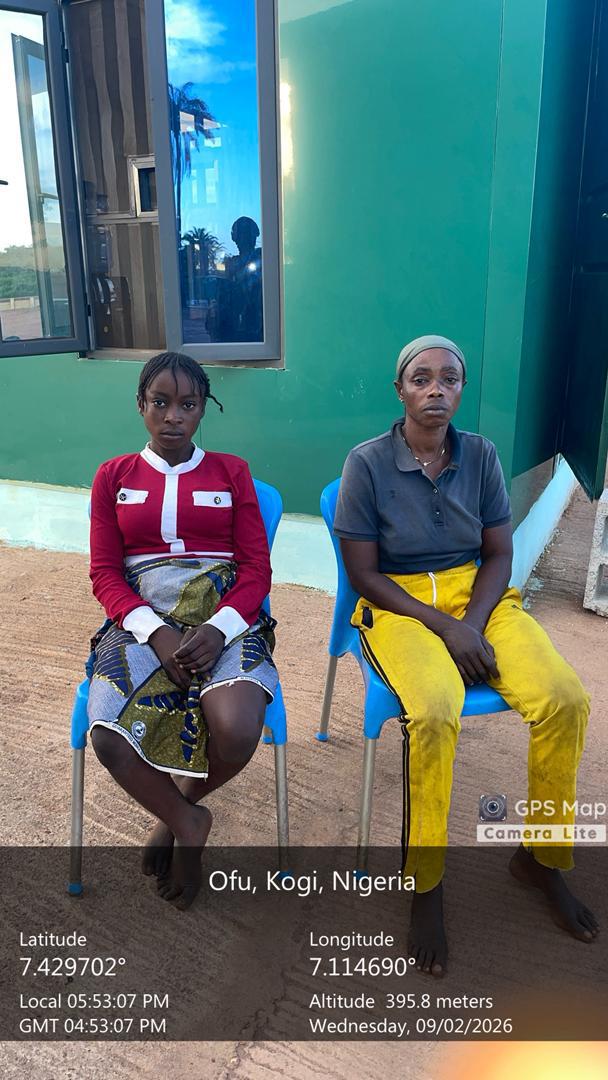
Troops rescue two female kidnap victims in Kogi
By: Zagazola Makama
Troops of the Nigerian Army have rescued two female kidnap victims after suspected bandits invaded a farmland in Ajodomodo Village, Dekina Local Government Area of Kogi State.
The incident occurred at about 10:30 a.m. on Wednesday, Sept. 2, when the suspected bandits reportedly invaded the farmland and abducted the two victims before fleeing the area.
Troops of the 21 Battalion Quick Reaction Force swiftly responded to the incident and pursued the fleeing criminals along their withdrawal route towards Agbodakodo Forest.
According to sources the pressure from the troops forced the abductors to abandon the victims in the forest.
The victims, identified as 15-year-old Miss Mohammed Rahinat and Mrs Hassanatu Mohammed, 30, were subsequently rescued unharmed.
The two women were evacuated to the 21 Battalion Medical Reception Station for medical attention and further assessment.
The military said troops have continued operations in the area to track the fleeing suspects and prevent further attacks on farming communities.
The rescue illustrates the importance of rapid military response and timely information sharing in countering kidnapping and other criminal activities in rural communities.
Troops rescue two female kidnap victims in Kogi
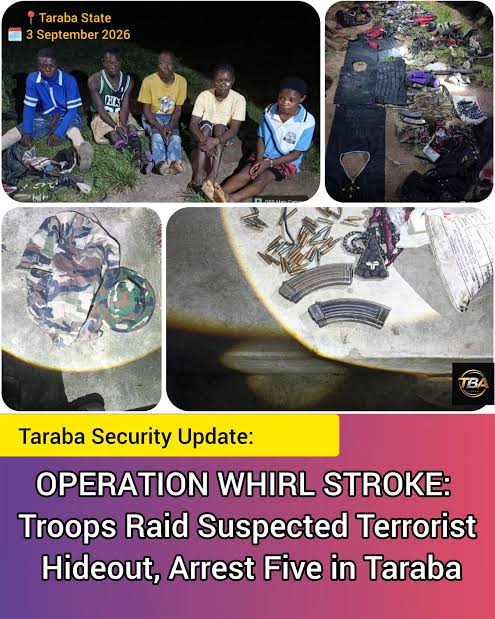
Operation Whirl Stroke troops raid suspected terrorist hideout, arrest five in Taraba
By: Zagazola Makama
Troops of Joint Task Force, Operation Whirl Stroke, have raided a suspected terrorist hideout in Peva, Takum Local Government Area of Taraba State, arresting five persons believed to be associates of a notorious bandit operating in the area.
The operation was conducted in the early hours of Thursday, Sept. 3, following credible intelligence received by the troops at about 12:30 a.m. regarding the location of the suspected criminal hideout.
Acting on the information, troops of Sector 1, in conjunction with personnel of Sector 3, both under Operation Whirl Stroke, swiftly mobilised and launched a raid on the identified location.
However, the suspected terrorists reportedly received information about the advancing troops and fled the hideout before the arrival of the security forces.
Undeterred, the troops conducted a thorough search of the area, leading to the arrest of five persons suspected to be associates of the fleeing criminal.
Items recovered during the operation included two AK-47 rifle magazines, 46 rounds of 7.62mm special ammunition, one woodland camouflage jacket, one jungle hat, four charm vests and assorted charms.
The military said the arrests and recovery of the items had provided useful leads that could support ongoing efforts to identify and apprehend other members of the criminal network.
The arrested suspects are expected to undergo further profiling and interrogation as troops intensify efforts to establish their roles and track the fleeing members of the group.
Operation Whirl Stroke assured residents across Taraba and other parts of its Joint Operations Area of continued intelligence-driven operations aimed at sustaining pressure on terrorists, bandits and other criminal elements.
The task force also urged residents to remain vigilant and provide timely and credible information to security agencies to support ongoing operations and enhance the protection of communities.
Operation Whirl Stroke troops raid suspected terrorist hideout, arrest five in Taraba
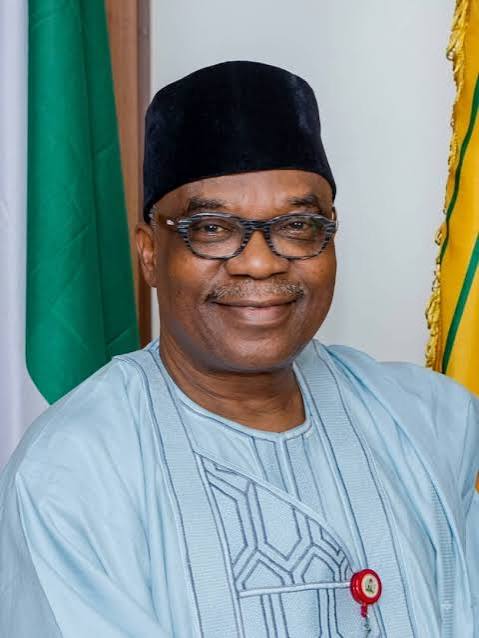
Nigeria Rejects Alleged Support for Niger Coup, Reaffirms Commitment to Democracy
By: Michael Mike
The Federal Government has rejected claims that Nigeria or the Economic Community of West African States (ECOWAS) backed the recent failed coup attempt in Niger Republic, describing the reports circulating on social media as false, mischievous and intended to damage Nigeria’s image.
Minister of State for Foreign Affairs, Ambassador Sola Enikanolaiye, said Nigeria had never supported, and would not support, any military coup or unconstitutional change of government in any country.
In a statement issued on Thursday, Enikanolaiye said Nigeria remained a defender of constitutional order, democracy and regional stability, stressing that the country would not endorse illegality “no matter who is involved or which country is concerned.”
He recalled the ministry’s August 30 statement on the situation in Niger, in which Nigeria expressed concern over developments in the neighbouring country and called for a peaceful, inclusive and participatory return to stability and constitutional order.
According to him, Nigeria’s position on unconstitutional changes of government remains unequivocal, adding that the use of force to resolve political differences was contrary to the country’s longstanding foreign policy.
“While Nigeria is a proud and committed member of ECOWAS, it is unfair, mischievous and entirely false to suggest that Nigeria endorses or condones the military coup,” the minister said.
He urged Nigerians at home and abroad to disregard videos and narratives circulating online which, he said, were aimed at sowing discord and misleading the public.
Enikanolaiye reaffirmed Nigeria’s commitment to the ECOWAS Protocol on Democracy and Good Governance as well as the African Union’s zero-tolerance policy on unconstitutional changes of government.
He said Nigeria would continue to work with ECOWAS, the AU and the international community to defend democracy, uphold the rule of law and promote peace and stability across West Africa, the Sahel and the wider African continent.
Nigeria Rejects Alleged Support for Niger Coup, Reaffirms Commitment to Democracy

Troops rescue two female kidnap victims in Kogi

Operation Whirl Stroke troops raid suspected terrorist hideout, arrest five in Taraba

Nigeria Rejects Alleged Support for Niger Coup, Reaffirms Commitment to Democracy

Roger Federer’s Shock as DNA Results Reveal Myla and Charlene Are Not His Biological Children

THE PLIGHT OF FARIDA

FAILED COUP IN BURKINA FASO: HOW TRAORÉ NARROWLY ESCAPED ASSASSINATION PLOT AMID FOREIGN INTERFERENCE CLAIMS
-
 News2 years ago
Roger Federer’s Shock as DNA Results Reveal Myla and Charlene Are Not His Biological Children
-
Opinions5 years ago
THE PLIGHT OF FARIDA
-
 News1 year ago
FAILED COUP IN BURKINA FASO: HOW TRAORÉ NARROWLY ESCAPED ASSASSINATION PLOT AMID FOREIGN INTERFERENCE CLAIMS
-

 News2 years ago
EYN: Rev. Billi, Distortion of History, and The Living Tamarind Tree
-
 Opinions5 years ago
POLICE CHARGE ROOMS, A MINTING PRESS
-

 ACADEMICS3 years ago
A History of Biu” (2015) and The Lingering Bura-Pabir Question (1)
-

 Columns3 years ago
Army University Biu: There is certain interest, but certainly not from Borno.
-

 Politics1 year ago
2027: Why Hon. Midala Balami Must Go, as Youths in Hawul and Asikira/Uba Federal Constituency Reject ₦500,000 as Sallah Gift
