
News
The Banditry Menace in the North West: Challenges, Kingpins, and the Way Forward

The Banditry Menace in the North West: Challenges, Kingpins, and the Way Forward
By: Zagazola Makama
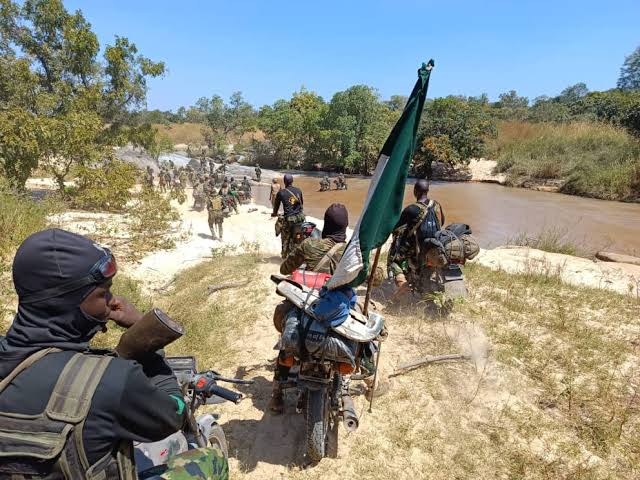
Banditry has become a persistent and deadly problem in the North West and North Central regions of Nigeria. Unlike the insurgency in the North East, where Boko Haram and the Islamic State in West Africa Province (ISWAP) operate based on an ideological drive, the violence in the North West is mainly criminal in nature. This criminality, often referred to as “BARAYIN JEJI” (forest bandits), has terrorized local communities through raids, cattle rustling, kidnappings for ransom, killings, and the imposition of illegal levies on farming communities.
Despite ongoing military operations by the Nigerian Security Forces, bandits continue to engage in these sinister activities, creating a seemingly unending cycle of violence and terror in the region. Military campaigns, including Operation Hadarin Daji and other special operations led by the Defence Headquarters’ Joint Task Force (JTF) and ad-hoc military formations such as the 1st, 3rd, and 8th Divisions, have made significant progress. Hundreds of bandits, including top kingpins, have been neutralized in the past year. Yet, banditry continues to plague the region, as new criminal leaders quickly rise to replace those who are taken down.
Notable Kingpins Neutralized
In the last twelve months, the Nigerian military, in collaboration with local militias and security forces, has killed several high-profile bandit leaders, including Kachalla Ali Kawaje, the mastermind behind the abduction of students from Federal University Gusau.
Others include; Kachalla Jafaru, Kachalla Barume, Kachalla Shehu, Tsoho, Kachalla Yellow Mai Buhu, Yellow Sirajo, Kachalla Dan Muhammadu, Kachalla Makasko, Sanda, Abdulbasiru Ibrahim, Mai Wagumbe, Kachalla Begu, Kwalfa, Ma’aikaci, Yellow Hassan, Umaru Na Bugala, Isyaka Gwarnon Daji, Iliya Babban Kashi, Auta Dan Mai Jan Ido, and Yahaya Dan Shama.
Those that were recently nutrialised include; Kacalla Ɗan Baleri, Kacalla Dogo Kwaɗɗi, Lawalli Dodo, Kacalla Naguru, Kacalla Ɗan-Babirki, Kacalla Hana-Zuwa, Kacalla Adamu and the most recently was Kachallah Buzu aka Sububu.
One of the most recent and high-profile deaths was that of Kachalla Buzu, also known as Sububu, a notorious bandit leader. This success, attributed to the intensified efforts of Operation Hadarin Daji in collaboration with Zamfara State’s government-backed militia, has sent ripples through the criminal underworld.
However, despite these victories, the fight is far from over as the bandits continued to engage in hit and run as well as pockets of attacks in vulnerable communities. Rivalries and power struggles between bandit groups have further complicated the situation, leading to violent clashes between factions. For example, since April 2024, a violent feud has broken out between bandit leaders Sani Dangote and Dankarami (also known as Gwaska), leading to the deaths of dozens of bandits. These internal struggles for dominance among the criminal factions, though deadly, only serve to destabilize the region further.
The Rising Threat of Gwaska Dankarami
Gwaska Dankarami, who has emerged as one of the most dangerous and influential bandit leaders in the North West, is currently at the center of the power struggle. His recent attacks on rival bandit factions, including the killing of Sani Dangote’s associates, have positioned him as a major threat not only to the bandits themselves but also to security forces and local communities. Dankarami’s growing power highlights a disturbing reality: as long as one bandit leader is killed, another, often more dangerous, will rise to take their place.
The Turji Question
For many Nigerians, the hope is that the death of Bello Turji, one of the most infamous bandit leaders, would be the turning point in the fight against banditry. Turji’s terror campaign has left a trail of destruction and anguish across the North West, and his demise would undoubtedly bring relief to the families of his many victims.
However, experts warn that the killing of Bello Turji would not mark the end of banditry in the region. There are other bandit leaders, such as Alhaji Shingi, Alhaji Nashama, Ado Allero, Dogo Gide, and Dankarami, who are just as dangerous, if not more so. While Turji’s approach is driven by youthful aggression, older bandits like Nashama command respect and loyalty from other bandit factions, making them even harder to defeat.
Beyond Military Solutions: A Multi-Dimensional Approach
Ending banditry in the North West requires more than just military operations. Although the military has achieved significant victories, their efforts only address a portion of the problem. Banditry is deeply rooted in socio-economic issues such as illiteracy, poverty, and poor governance. The government must address these root causes if there is to be any lasting solution to the conflict.
The Nigerian government has made some efforts to engage local communities in the fight against banditry, notably through initiatives such as the Zamfara State Security Watch, which involves local youth in community security efforts. While this has yielded some positive results, more needs to be done. Authorities must adopt a deliberate and targeted approach, going after the key sponsors of banditry, who operate behind the scenes, often involved in illegal mining and other illicit activities. These sponsors are the true drivers of the conflict, using bandits as pawns to achieve their broader criminal objectives.
The government must also invest in long-term solutions such as education, job creation, and poverty alleviation. These efforts would help to prevent young people from being drawn into banditry in the first place. Furthermore, there must be a political will to tackle corruption and impunity, ensuring that those who support or profit from banditry are brought to justice.
Conclusion
While the military has made significant strides in combating banditry in the North West, the problem remains far from solved. As long as socio-economic issues persist and criminal sponsors continue to operate with impunity, banditry will remain a serious threat to the region’s stability. A multi-dimensional approach, combining military action with governance reforms, community engagement, and economic development, is the only way to ensure long-term peace and security in the North West.
The Banditry Menace in the North West: Challenges, Kingpins, and the Way Forward


NCYP Seeks Probe of Viral Video Allegedly Threatening Christians in Jos, Enugu
By: Michael Mike
The Northern Christian Youth Professionals (NCYP) has called for an urgent security investigation into a viral video allegedly showing members of the JIBWIS First Aid Youth Group calling for Christians to be killed in Jos and Enugu with AK-47 rifles.
The organisation warned that inflammatory religious rhetoric could trigger another crisis in Northern Nigeria, urging security agencies to establish the authenticity and circumstances of the video and prosecute anyone found culpable.
In a press statement issued on Tuesday, the National Chairman of NCYP, Isaac Abrak, condemned the alleged incitement, describing the development as disturbing and calling for a lawful response to prevent an escalation of religious tensions.
Abrak said religious extremism, hate speech and incitement to violence had contributed to the insecurity affecting Northern Nigeria, where Christians and Muslims continued to suffer deaths and displacement from terrorism and banditry.
He urged security agencies to investigate the video, identify those responsible for any unlawful statements and ensure that appropriate legal action was taken where necessary.
The NCYP chairman also called on Islamic scholars, Muslim leaders and traditional rulers to condemn attempts to exploit religion to promote hatred, intolerance and violence.
He stressed, however, that Christian leaders and communities must resist provocation, reject reprisals and allow the authorities to handle the matter through established legal channels.
According to him, failure to address inflammatory rhetoric could undermine efforts to rebuild peaceful coexistence between Christians and Muslims after years of religious and communal tensions.
Beyond its security implications, Abrak said persistent insecurity had inflicted severe damage on Northern Nigeria’s economy, contributing to the decline of once-thriving textile factories, confectionery industries, tanneries and other businesses.
He said the resulting business closures and economic disruption had contributed to job losses and deepening poverty across the region.
The organisation maintained that lasting peace and economic recovery would remain difficult to achieve without mutual respect, religious tolerance and accountability for those who promote violence.
It warned against allowing the alleged actions of individuals to undermine the future of communities whose livelihoods and development depend on peaceful coexistence.
“Northern Nigeria cannot achieve lasting peace, security or economic prosperity without mutual respect and religious tolerance,” the statement said.
The NCYP urged residents to remain calm as the authorities investigate the matter, warning that retaliatory actions could further endanger lives and worsen existing religious divisions.
It reiterated that anyone found to have engaged in unlawful incitement should be held accountable under the law, stressing that the protection of lives and the preservation of peace must take precedence over religious or communal differences.
The statement did not independently establish the authenticity of the viral video or whether the people featured in it were acting on behalf of the JIBWIS First Aid Youth Group.
NCYP Seeks Probe of Viral Video Allegedly Threatening Christians in Jos, Enugu
ECOWAS: E-commerce Can Raise West African Trade to 35%, Boost Small Businesses
By: Michael Mike
The Economic Community of West African States (ECOWAS) is looking to digital commerce to increase intra-regional trade from its historically low level of below 15 per cent to between 30 and 35 per cent, while expanding market access for women, young people, persons with disabilities and small businesses.
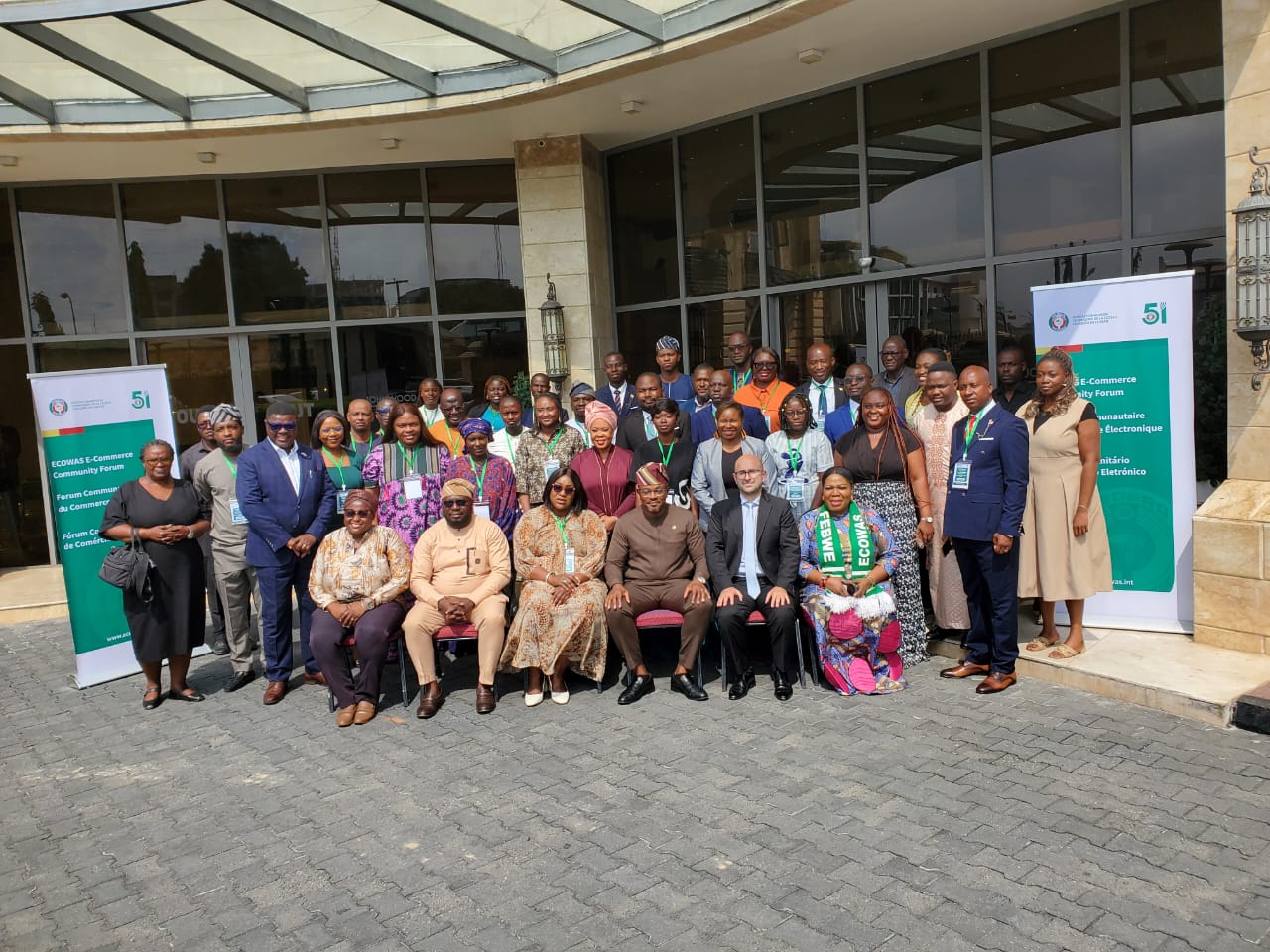
The Director, Directorate of Trade, Kolawole Sofola made this revelation on Tuesday, during the meeting of the E-Commerce Community Forum organized by ECOWAS Commission in Abuja, said e-commerce could dismantle longstanding barriers to trade by enabling entrepreneurs to sell goods across borders without the cost of renting physical shops or maintaining conventional business premises.
He said the meeting was called for the implementation of the region’s e-commerce strategy and identifying additional interventions to make digital trade more inclusive.
The meeting brought together economic stakeholders to assess progress in implementing the strategy and develop recommendations to expand participation in the digital economy, particularly among groups that face barriers to accessing markets.
“We believe e-commerce will open up many doors. It will certainly bring the barriers to trade down,” Sofola said.
According to the official, digital platforms could enable entrepreneurs to operate from their homes, reach customers beyond their immediate communities and access markets across the region without incurring the substantial costs associated with conventional retail businesses.
The approach is expected to create opportunities for micro and small enterprises, which often struggle to compete with larger businesses because of limited capital, inadequate infrastructure and restricted access to customers.
By connecting buyers and sellers through digital platforms, e-commerce could also improve access to information about products, facilitate business connections and enable traders to identify commercial opportunities beyond their national borders.
Sofola, however, acknowledged that the benefits of digital commerce would remain limited unless governments and regional institutions addressed the infrastructure and affordability challenges preventing many people from participating.
Access to reliable internet services and the cost of digital facilities remain significant obstacles, particularly for entrepreneurs and communities in rural areas.
He said regional programmes aimed at improving broadband connectivity and extending internet access would be important to ensuring that e-commerce reached ordinary citizens rather than remaining the preserve of businesses and individuals with better digital resources.
The emphasis on inclusivity is also intended to ensure that women, young people and persons with disabilities can benefit from the opportunities offered by digital trade.
For these groups, online platforms could provide alternative routes into business by reducing the need for expensive commercial premises and making it easier to connect with customers and suppliers.
He noted that the stakeholders’ meeting would examine the progress made under the existing e-commerce strategy, identify gaps in implementation and generate further recommendations for improving participation.
Beyond expanding individual businesses, ECOWAS sees digital commerce as a potential instrument for strengthening regional economic integration by enabling traders to connect more easily across national boundaries.
He also noted that intra-regional trade had historically remained below 15 per cent, although the figure did not fully reflect informal cross-border transactions, which account for a significant share of commercial activity in West Africa.
He expressed optimism that e-commerce could help improve the situation by connecting traders with buyers across the region, making product information more readily available and opening up new channels for commercial transactions.
The region’s longer-term ambition, the official said, was to increase intra-regional trade to between 30 and 35 per cent in the coming years, with targets for 2035 and 2050 expected to guide its broader development objectives.
Sofola also stressed the need to assess the progress made over the past 50 years of regional development while identifying additional measures needed to deepen economic cooperation.
However, achieving the proposed trade expansion will require more than the adoption of digital platforms. Reliable internet connectivity, affordable access, effective implementation of regional policies and the capacity of small businesses to use digital tools will be critical to translating the strategy into measurable economic gains.
The ongoing review is therefore expected to help determine how regional interventions can make e-commerce more accessible, strengthen commercial links among member states and enable a broader section of West African society to participate in the regional economy.
ECOWAS: E-commerce Can Raise West African Trade to 35%, Boost Small Businesses

37 Miners Suffocated in NSCDC Custody, Panel Recommends N1.4bn Compensation
By: Michael Mike
A Federal Government investigative panel has found that 37 suspected illegal miners who died in the custody of the Nigeria Security and Civil Defence Corps (NSCDC) in Niger State died from asphyxiation, recommending N1.4 billion in compensation for affected families and survivors.
The panel also recommended the summary dismissal of the Niger State NSCDC Commandant and other officers found to have been directly involved in the incident, describing the deaths as avoidable and calling for measures to prevent a recurrence.
The chairman of the 10-member independent investigative committee, Jonathan Kure, a retired Deputy Director-General of the Department of State Services, disclosed the findings on Tuesday while presenting the panel’s report to the Minister of Interior, Olubunmi Tunji-Ojo, in Abuja.
The recommendations followed investigations into the deaths of 37 suspected illegal miners who died on September 17, 2026, while being detained by the NSCDC in Minna, the Niger State capital.
The victims were among dozens of people arrested during anti-illegal mining operations in the M.I. Wushishi and Lukoto areas of the state.
According to reports on the panel’s findings, the committee recommended N1.4 billion in compensation for the families of 33 deceased victims and 44 survivors affected by the incident.
The panel also called for the dismissal of the state commandant and officers whose involvement in the arrests, detention and circumstances surrounding the deaths was established.
Fourteen of the deceased were reportedly minors, raising further concerns about the treatment of young people detained during the operation.
The Federal Government constituted the independent committee following public outrage over the deaths and President Bola Tinubu’s directive for a comprehensive, transparent and unhindered investigation.
The committee was mandated to establish the circumstances surrounding the arrests and detention, determine the cause of death, identify possible negligence or misconduct and recommend appropriate sanctions and compensation.
The incident had earlier triggered protests in Minna, with residents and relatives of the deceased demanding answers over how so many detainees could die while in government custody.
Initial accounts from the authorities suggested a possible disease outbreak, while survivors subsequently described overcrowded and poorly ventilated detention conditions.
Some survivors also alleged that an unidentified substance was sprayed into the cell before detainees began experiencing breathing difficulties and other unusual symptoms.
Those accounts raised questions about the conditions in which the suspects were held and whether security personnel responded adequately to their distress.
The allegations, however, required independent verification, including forensic examinations, before responsibility for the deaths could be conclusively established.
In September, the Minister of Interior announced the suspension of the Niger State NSCDC Commandant and 20 other officers pending the outcome of the investigation.
The committee subsequently inspected the detention facility, visited relevant locations, conducted autopsies and obtained statements from NSCDC personnel, survivors, relatives of the deceased and other witnesses.
It also reviewed documentary and forensic evidence as part of efforts to reconstruct the events leading to the deaths.
Before the submission of its final report, the panel had identified institutional weaknesses, alleged overzealousness among personnel and inadequate training as issues requiring attention.
The committee had sought additional time to complete its work, citing the volume of evidence and the need to obtain and review medical and forensic reports while allowing persons implicated in the incident to respond.
The latest findings and recommendations now place the responsibility on the relevant authorities to determine and implement appropriate disciplinary measures, address compensation for affected families and survivors, and strengthen safeguards against deaths in custody.
Receiving the report, Tunji-Ojo pledged that the Federal Government would implement the committee’s recommendations to ensure justice for the victims and prevent a recurrence.
The minister also directed the NSCDC leadership to suspend officers allegedly involved in cleaning the detention facility in an attempt to destroy evidence, according to reports on the presentation of the panel’s findings.
The circumstances surrounding the deaths have renewed concerns about accountability within Nigeria’s security agencies and the protection of the rights of people held in detention.
The implementation of the panel’s recommendations, particularly the proposed compensation, disciplinary sanctions and institutional reforms, will be a key test of the government’s commitment to accountability in the case.

NCYP Seeks Probe of Viral Video Allegedly Threatening Christians in Jos, Enugu

ECOWAS: E-commerce Can Raise West African Trade to 35%, Boost Small Businesses

37 Miners Suffocated in NSCDC Custody, Panel Recommends N1.4bn Compensation

Roger Federer’s Shock as DNA Results Reveal Myla and Charlene Are Not His Biological Children

THE PLIGHT OF FARIDA

FAILED COUP IN BURKINA FASO: HOW TRAORÉ NARROWLY ESCAPED ASSASSINATION PLOT AMID FOREIGN INTERFERENCE CLAIMS
-
 News3 years ago
Roger Federer’s Shock as DNA Results Reveal Myla and Charlene Are Not His Biological Children
-
Opinions5 years ago
THE PLIGHT OF FARIDA
-
 News2 years ago
FAILED COUP IN BURKINA FASO: HOW TRAORÉ NARROWLY ESCAPED ASSASSINATION PLOT AMID FOREIGN INTERFERENCE CLAIMS
-
 Opinions5 years ago
POLICE CHARGE ROOMS, A MINTING PRESS
-

 News3 years ago
EYN: Rev. Billi, Distortion of History, and The Living Tamarind Tree
-

 ACADEMICS3 years ago
A History of Biu” (2015) and The Lingering Bura-Pabir Question (1)
-

 Columns3 years ago
Army University Biu: There is certain interest, but certainly not from Borno.
-

 Politics1 year ago
2027: Why Hon. Midala Balami Must Go, as Youths in Hawul and Asikira/Uba Federal Constituency Reject ₦500,000 as Sallah Gift
