
News
The High Cost of Silence: Why President Tinubu Must Sign the Federal Audit Service Bill


The High Cost of Silence: Why President Tinubu Must Sign the Federal Audit Service Bill
By Paul Dasimeokuma
Nigeria currently manages a staggering ₦68.32 trillion budget through an audit framework that is effectively a colonial relic.
The Audit Ordinance of 1956, which remains the primary reference for federal audit reports, technically ceased to be part of Nigerian law in 1990 and is conspicuously absent from the 2004 Laws of the Federation of Nigeria (LFN).
This creates a legal lacuna, a dangerous, silent void where the nation’s financial watchdog is forced to bark using the authority of an obsolete law that has no place in a modern republic. As President Bola Ahmed Tinubu navigates the Renewed Hope agenda, the Federal Audit Service Bill, already passed by the National Assembly, represents a low-hanging fruit for structural reform that can no longer be ignored.
The current auditing function in Nigeria has devolved into a frustrating exercise in report writing without consequence. Under the present system, the Auditor-General for the Federation (AuGF) produces an annual report, which is then sent to the Public Accounts Committees (PACs) of the National Assembly.
The PACs conduct hearings, invite heads of agencies, and eventually produce their own recommendations. Yet, despite this high-level activity, the cycle of financial felonies and misdemeanors continues unabated.
Evidence shows that audit recommendations are treated with levity by Ministries, Departments, and Agencies (MDAs), and follow-ups are virtually non-existent despite clear Financial Regulations.
The result is a culture of impunity where the same infractions: unvouched expenditures, missing assets, and unremitted revenues—appear in reports decade after decade.
This Bill is the structural answer to this stagnation. It seeks to move Nigeria from a limited, department-based audit model to a modern Supreme Audit Institution (SAI) structure, consistent with global best practices. By transforming the office into a Service, the Bill ensures that auditing is a core pillar of national economic security.
The Bill provides for the establishment of an autonomous Federal Audit Service and a Federal Audit Board. This Board will fundamentally strengthen the independence of the AuGF, particularly concerning recruitment, promotion, and discipline.
Currently, the AuGF relies on the Federal Civil Service Commission for staffing, which often leads to a mismatch in specialised skills. An independent Board ensures the office is shielded from political interference and staffed by professionals answering only to the standards of their craft.
For the first time, the Bill explicitly empowers the AuGF with the power of the purse and the power of sanction. It authorises the AuGF to surcharge public officers for expenditures not duly brought into account and, more importantly, to withhold the emoluments of any person who refuses to reply to audit queries within 30 days. This closes the long-standing accountability gap where audit findings were merely advisory.
In the past, an MDA could simply ignore a query with no personal consequence. Under the new Bill, silence carries a direct financial penalty, providing the legal teeth necessary to compel compliance with financial discipline.
Beyond internal accountability, the Bill is a crucial signal to the international community.
Nigeria was successfully removed from the Financial Action Task Force (FATF) grey list in October 2025, a hard-won victory for the nation’s financial reputation. However, this victory must be protected. The FATF framework explicitly monitors audit oversight of public funds as part of its financial integrity assessments. Maintaining a 70-year-old framework that technically does not exist in our current laws risks signaling to global monitors that Nigeria’s anti-corruption reforms are superficial.
Similarly, the International Monetary Fund (IMF), in its June 2025 Article IV Consultation, called for strong expenditure management and transparent reporting. Assenting to this Bill is an act of economic diplomacy. It tells the World Bank and foreign investors that Nigeria is serious about the transparent implementation of its record-breaking budget.
It aligns the country with the Lima Declaration, which mandates that Supreme Audit Institutions must have the functional independence necessary to perform duties without executive overreach.
The reform window is rapidly closing. With the 2027 election cycle approaching, administrative bandwidth for such structural changes will contract. Transitioning from the 1956 framework and constituting the Federal Audit Board requires significant lead time.
Assent in 2026 gives this implementation a fighting chance to take root. President Tinubu has frequently spoken about the need for courage in governance. Signing the Federal Audit Service Bill is an act of such courage. Nigeria cannot build a 21st-century economy on 1950s paperwork. The time for the Audit Act is now.
Paul Dasimeokuma – Centre for Social Justice
The High Cost of Silence: Why President Tinubu Must Sign the Federal Audit Service Bill


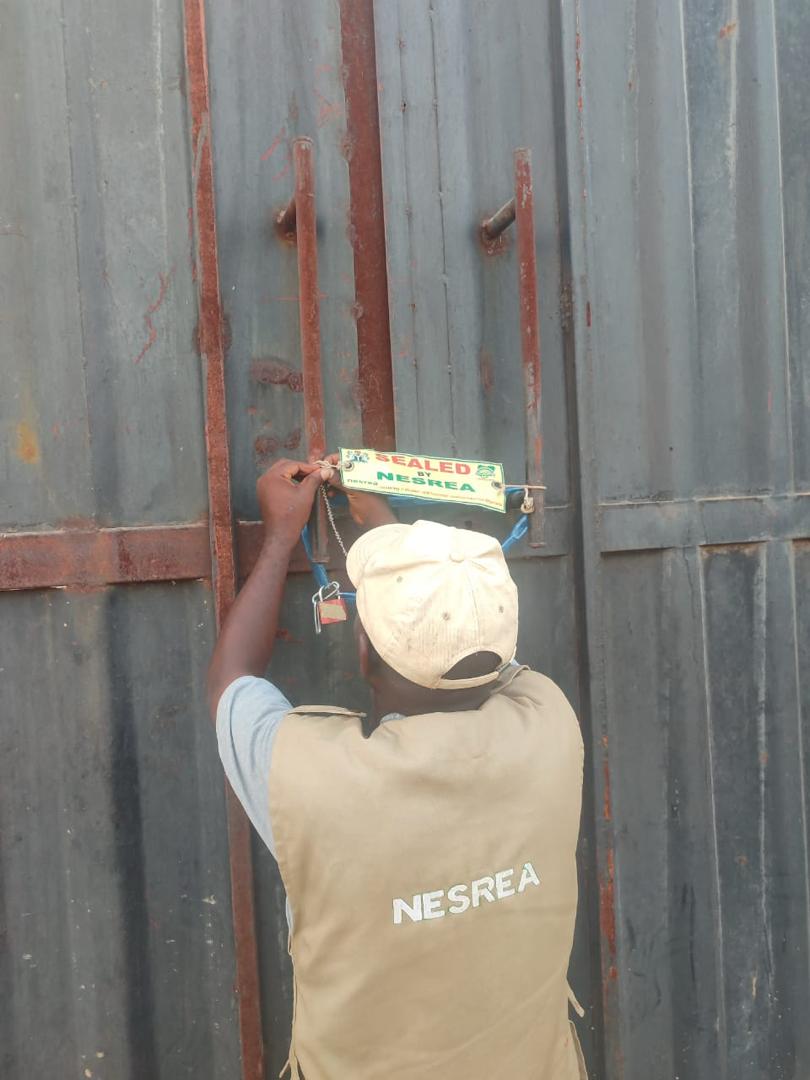
NESREA Shuts Kano Rice Plant Over Environmental Violations
By: Michael Mike
The National Environmental Standards and Regulations Enforcement Agency (NESREA) has sealed off a rice processing facility in Kano State, Fortune Rice Mills Limited, over alleged violations of environmental regulations relating to air pollution and offensive emissions.
The enforcement action, carried out on Monday, was led by the agency’s North-West Zonal Director, Dr. Mudashiru Raheem, following investigations into public complaints against the company.
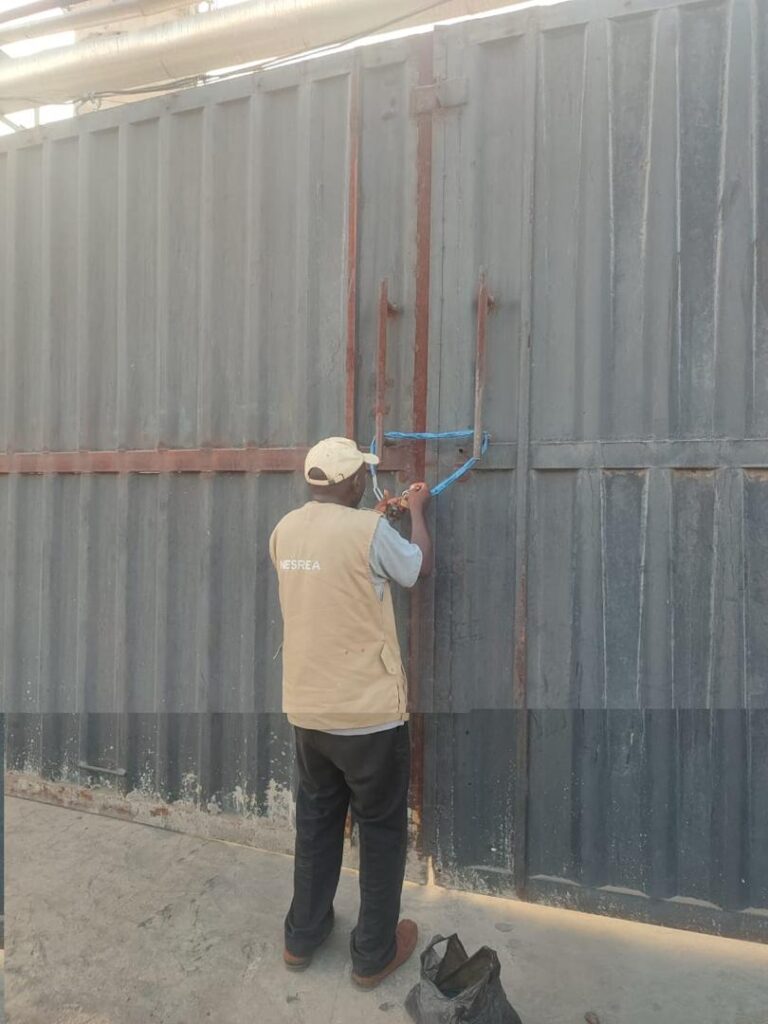
According to NESREA, residents had raised concerns over persistent dust emissions and offensive odour emanating from the facility despite earlier compliance notices issued to the company.
The agency said investigations established that the rice mill violated provisions of the National Environmental (Air Quality Control) Regulations 2014 as well as the National Environmental (Food, Beverages and Tobacco Sector) Regulations 2023, prompting the sealing of the plant.
Director-General of National Environmental Standards and Regulations Enforcement Agency, Innocent Barikor, who authorised the shutdown, condemned what he described as the “reckless attitude” of some industrial facilities towards public health and environmental safety.
Barikor stressed that economic interests must not come at the expense of citizens’ wellbeing and environmental sustainability, warning that the agency would continue to enforce compliance with environmental laws across the country.
“The health of citizens and the environment must not be sacrificed on the altar of economic gain,” he said.
He also called on Nigerians to take greater responsibility for environmental protection by reporting environmental infractions and pollution incidents to the agency for prompt action.
The latest enforcement underscores renewed regulatory scrutiny on industrial operators amid growing concerns over environmental pollution and public health risks in several parts of the country.
NESREA Shuts Kano Rice Plant Over Environmental Violations
Troops Arrest Suspected Gunrunner in Taraba Over Alleged Sale of 23 Rifles
By: Zagazola Makama
Troops of the Nigerian Army have arrested a suspected gunrunner in Taraba State over the alleged sale of 23 AK-47 rifles to a rogue vigilante leader.
Security sources said the suspect was apprehended at about 3:30 a.m. on May 17, 2026, during a joint intelligence-led operation conducted by troops of the 20 Model Battalion and operatives of the Defence Intelligence Agency.
According to the sources, the operatives raided the suspect’s residence at Sabon Gida village in Gassol Local Government Area of the state following actionable intelligence.
The sources disclosed that preliminary findings linked the suspect to the supply of 23 AK-47 rifles to a suspected rogue vigilante commander operating within the area.
The suspect has since been taken into custody by the Defence Intelligence Agency for further investigation and possible prosecution.
Security authorities said efforts were ongoing to uncover the wider arms trafficking network connected to the suspect.
Troops Arrest Suspected Gunrunner in Taraba Over Alleged Sale of 23 Rifles
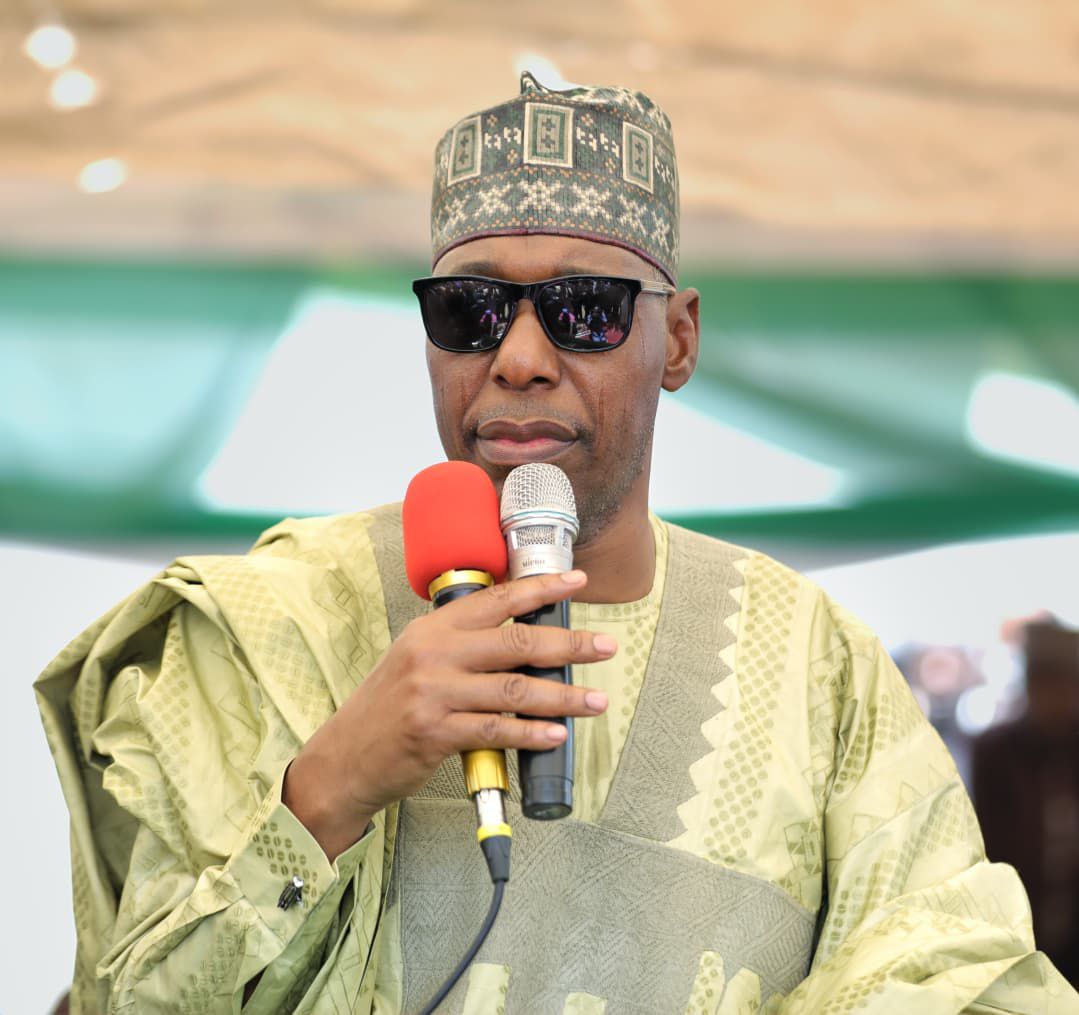
Zulum: Borno Will Deliver Tinubu, APC Candidates in 2027 Elections
By: Our Reporter
Borno State Governor, Professor Babagana Umara Zulum, has reaffirmed the commitment of the people of the state to support President Bola Ahmed Tinubu and all candidates of the All Progressives Congress (APC) in the forthcoming 2027 general elections.
Governor Zulum made the commitment on Monday during the All Progressives Congress, APC, Senatorial District Primary Election for Borno Central, in Maiduguri.
The governor also commended President Tinubu for choosing Senator Kashim Shettima as Vice President of the Federal Republic of Nigeria, describing the decision as a great honor to the people of the state.
“Let me begin by extending a profound appreciation to the President of the Federal Republic of Nigeria, President Bola Ahmed Tinubu, GCFR, for all the support that he has been rendering to our great party and indeed the government and people of the state and for him to choose one of our own, Senator Kashim Shettima, as the Vice President, we remain eternally grateful to him,” Zulum stated.
He assured the President of overwhelming support from Borno State ahead of the next presidential election.
“Insha Allah, the people of Borno State will vote for President Bola Ahmed Tinubu for a second term,” the governor declared.
Zulum also endorsed Senator Kaka Shehu Lawan for another term as Senator representing Borno Central Senatorial District in 2027.
“Today, it has been affirmed that Senator Kaka Shehu Lawan will return as Senator for Borno Central come 2027, Insha Allah,” he said.
The governor called on party supporters and the electorate to remain united and to support APC candidates at all levels.
Chairman of Borno State Senatorial District Primary Elections Committee, Jones Ode Erue, hailed the rancor-free process of all the primary elections conducted in the state.
He commended Governor Babagana Umara Zulum for providing a level playing field and ensuring the exercise was conducted smoothly.
According to him, since the candidate for Borno Central senatorial district, Senator Kaka Shehu Lawan, is unopposed, his candidacy was affirmed by voice vote.
“We have a single candidate, so what we will do is affirmation in compliance with the electoral Act and the APC Constitution,” Esue said.
“By the powers vested in me as Chairman of Borno State Senatorial District Primary Election Committee, I,
Prophet Jones Ode Erue, hereby declare, affirm, and present Senator Kaka Shehu Lawan, having satisfied the constitution of the APC, as the duly returned candidate for Borno Central District,” he declared.
Senator representing Borno Central and APC Senatorial candidate, Senator Kaka Shehu Lawan, SAN, accepted the party’s candidacy and promised his constituents that he would serve diligently.
He thanked Governor Babagana Umara Zulum for the tremendous support and for allowing him to be the party’s sole candidate.
“I hereby accept the candidacy bestowed on me by the party and promised to serve my constituents without affection or ill will,” Kaka Shehu stated.
Officials from INEC and the Security Agencies monitored the exercise.
The event was attended by the APC Deputy National Chairman North, Hon. Ali Bukar Dalori; serving and newly elected candidates for the House of Representatives; the APC state chairman; APC National and State officials; the Secretary to the State Government; the Acting Chief of Staff; Commissioners; and other senior government officials.
Zulum: Borno Will Deliver Tinubu, APC Candidates in 2027 Elections

NESREA Shuts Kano Rice Plant Over Environmental Violations

Troops Arrest Suspected Gunrunner in Taraba Over Alleged Sale of 23 Rifles

Troops Foil Cattle Rustling Attempt in Plateau Border Community

Roger Federer’s Shock as DNA Results Reveal Myla and Charlene Are Not His Biological Children

THE PLIGHT OF FARIDA

FAILED COUP IN BURKINA FASO: HOW TRAORÉ NARROWLY ESCAPED ASSASSINATION PLOT AMID FOREIGN INTERFERENCE CLAIMS
-
 News2 years ago
Roger Federer’s Shock as DNA Results Reveal Myla and Charlene Are Not His Biological Children
-
Opinions4 years ago
THE PLIGHT OF FARIDA
-
 News1 year ago
FAILED COUP IN BURKINA FASO: HOW TRAORÉ NARROWLY ESCAPED ASSASSINATION PLOT AMID FOREIGN INTERFERENCE CLAIMS
-

 News2 years ago
EYN: Rev. Billi, Distortion of History, and The Living Tamarind Tree
-
 Opinions4 years ago
POLICE CHARGE ROOMS, A MINTING PRESS
-

 ACADEMICS2 years ago
A History of Biu” (2015) and The Lingering Bura-Pabir Question (1)
-

 Columns2 years ago
Army University Biu: There is certain interest, but certainly not from Borno.
-

 Opinions2 years ago
Tinubu,Shettima: The epidemic of economic, insecurity in Nigeria
