
News
The Kano Model Comes of Age: Faith Leaders Become Africa’s Firewall Against Disinformation

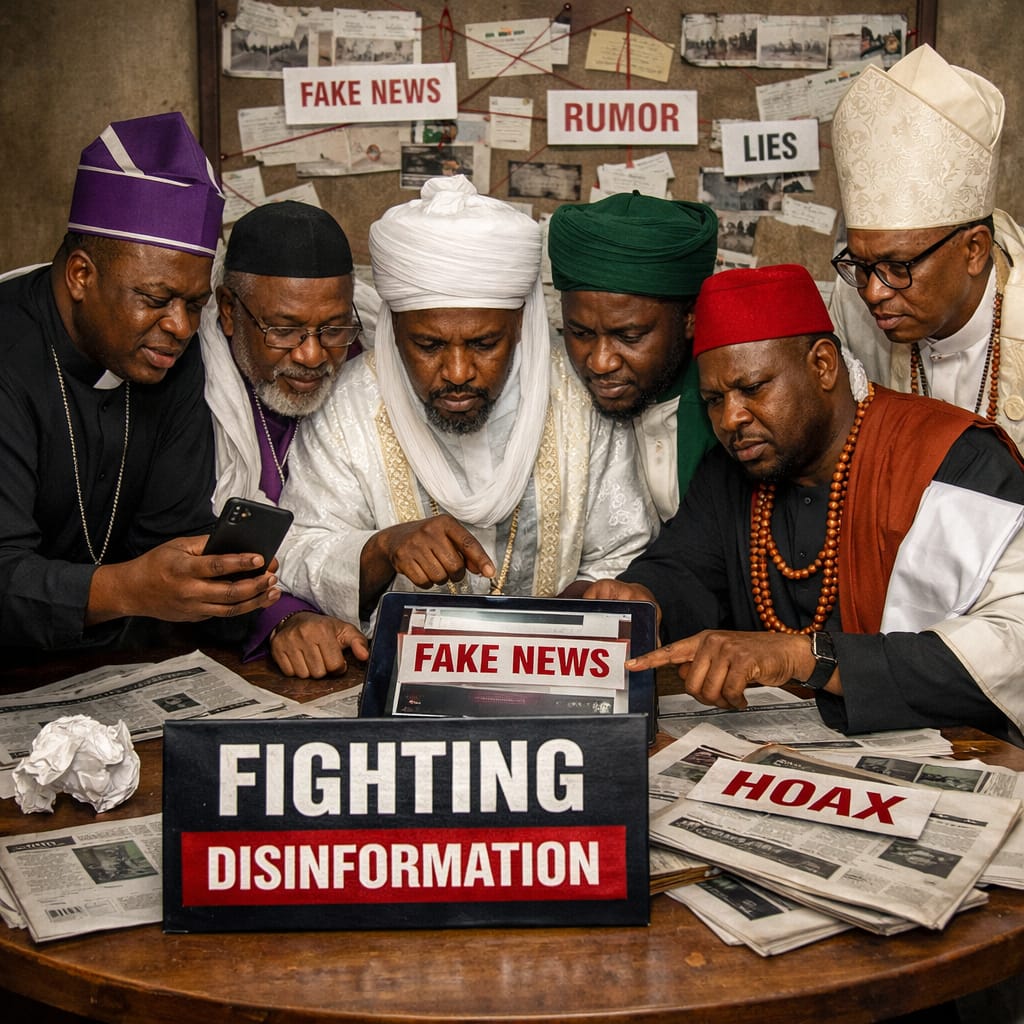
The Kano Model Comes of Age: Faith Leaders Become Africa’s Firewall Against Disinformation
By Senator Iroegbu
Months ago, these pages made an argument that ran counter to conventional wisdom. Nigeria’s most effective answer to disinformation may not be found inside government ministries or technology companies, but in an unlikely place: the mosque, the church and the traditional palace. That idea was named the Kano Model, a simple but powerful proposition that places religious and traditional leaders at the centre of the fight to build public resilience against misinformation, disinformation and information manipulation.
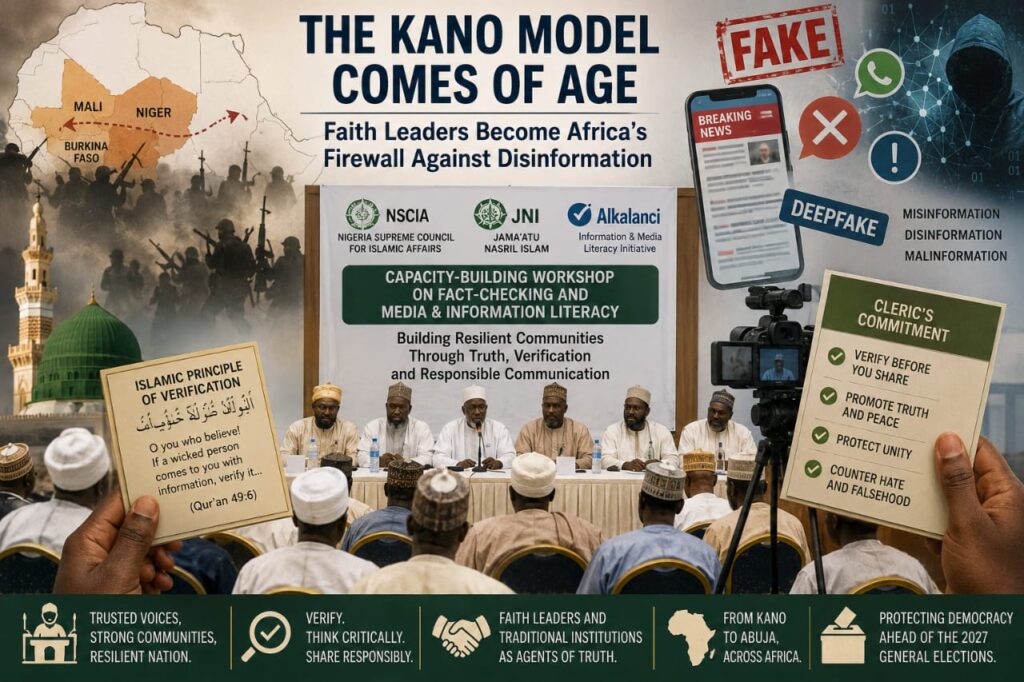
Today, that idea has taken a decisive step forward. In Abuja, between 24 and 25 June 2026, Alkalanci, the Hausa language verification platform, convened the largest edition yet of its fact-checking and media literacy training. Supported by the MacArthur Foundation and in collaboration with the Centre for Democracy and Development, the workshop gathered Islamic clerics and scholars from across Northern Nigeria under a single roof for the first time. It followed earlier sessions in Kano, Sokoto, Gombe, Kaduna and Maradi in neighbouring Niger Republic. More than 120 clerics and teachers have now passed through the programme, across six cities and two countries. What began as a modest experiment in one emirate has matured into a movement.
The timing could hardly be more consequential. Nigeria is moving steadily towards the 2027 general elections, a season when domestic misinformation predictably surges. Across the Sahel, military governments battle violent extremism while geopolitical rivalries intensify and foreign powers compete for influence through information operations as much as through diplomacy or arms. Artificial intelligence now allows fabricated videos, cloned voices and manipulated images to circulate at alarming speed. This is no longer merely a media challenge. It is a national security challenge.
The significance of Abuja lies not only in scale but in institutional weight. The two most authoritative bodies in Nigerian Islam lent their voices to the cause. The Nigerian Supreme Council for Islamic Affairs (NSCIA), led by the Sultan of Sokoto, and Jama’atu Nasril Islam (JNI) both charged clerics with becoming guardians of truth. Speaking through its Secretary-General, Professor Is-haq Oloyede, the NSCIA grounded the appeal in scripture, recalling that Surah Al-Hujurat instructs believers to verify information before acting upon it. Verification, the Council argued, is not an import but a divine injunction.
That moral framing changes the conversation entirely. For decades, governments have tried to combat disinformation through regulation, censorship and technology. Each has a role, yet none reaches the deeper question of trust. People do not always believe institutions. They believe people they know. Across Northern Nigeria and much of Africa, few voices command greater trust than religious leaders and traditional rulers. Every Friday, every Sunday, and at countless community gatherings, millions receive guidance from imams, pastors, scholars, and emirs. When those trusted voices urge citizens to pause before forwarding a message, verify a viral clip or question an inflammatory rumour, they build a social firewall no algorithm can match.
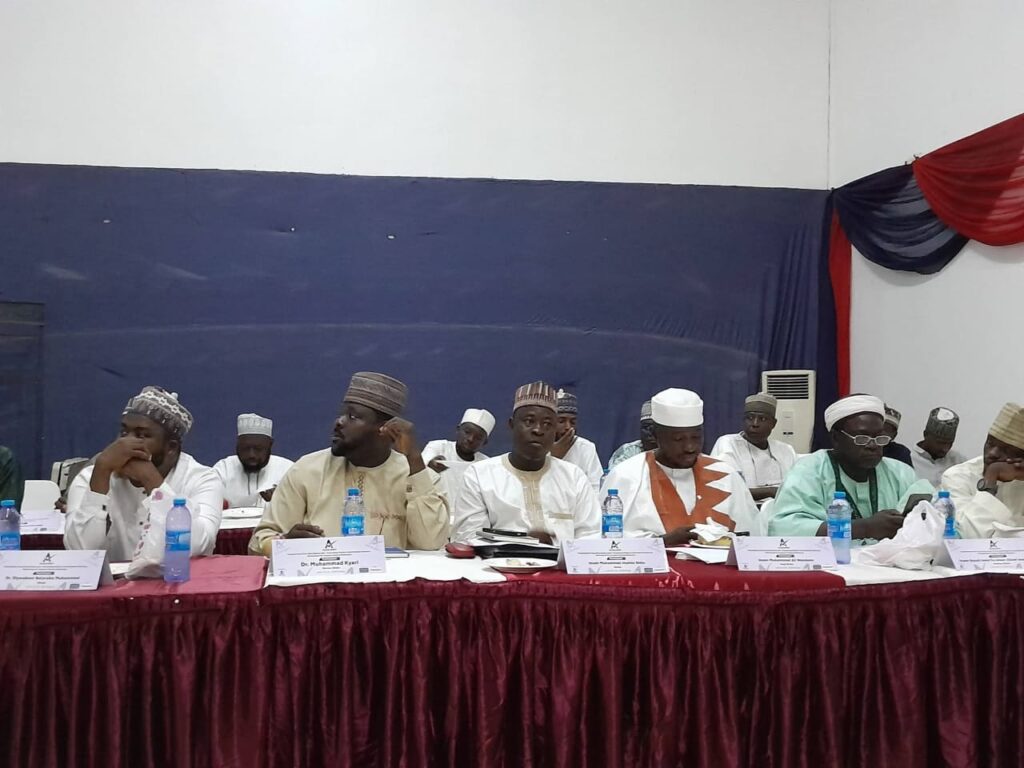
This is precisely where traditional institutions become decisive. The programme has drawn consistent endorsement from the emirates. The Emir of Kano was represented at the pioneering session, the Sultan of Sokoto at another, the Emirate of Gombe at a third. When a Sarkin Alkali speaks for the Sultan, or a royal envoy addresses assembled imams, the message carries an authority no government circular can rival. As the Emir of Gombe’s representative reminded an earlier gathering, truthfulness is not merely an ethical duty. It is an act of faith.
The threats, meanwhile, are evolving. Alkalanci’s Editor, Alhassan Bala, warned that the coming election season will bring a surge of misinformation from domestic actors, alongside foreign information manipulation and interference. Deepfakes, the synthetic speeches, videos and audio, are now cheap enough to flood any campaign, adding a dangerous new layer. The JNI’s Secretary-General, Professor Khalid Abubakar Aliyu, went further still, urging clerics to remain resolutely apolitical, to verify before they speak, and cautioning politicians against enticing religious leaders into partisan corners. In a country where a single doctored clip can inflame a community overnight, a clergy trained to pause and verify is a national security asset.
The Sahel makes the stakes plainer. In Mali, Burkina Faso and Niger, disinformation has become an instrument of war, deployed to justify coups, discredit democratic institutions and turn populations against their neighbours and regional bodies. Much of it is amplified by networks tied to external powers seeking leverage on African soil. That the Alkalanci training has already crossed into Maradi is therefore no small detail. It carries the model into the very theatre where information warfare is fiercest, and through the one channel foreign propagandists struggle to capture: the trusted local voice speaking a local language.
Equally telling is what this reveals about civil society. The programme is not a state project. It is a local organisation building long-term societal resilience, empowering trusted leaders to become educators, validators and defenders of truth. Every such effort is, in plain terms, an investment in peace.
The lesson from Kano and now Abuja is remarkably simple. The fight against disinformation cannot be won by governments alone, nor outsourced entirely to journalists, fact-checkers or technology companies. It must become a societal responsibility, one that reaches beyond the North and beyond a single faith, drawing in Christian clergy, women and youth networks and traditional rulers nationwide.
At a time when falsehood travels faster than truth, Africa’s greatest advantage may not lie in more sophisticated technology, but in its enduring institutions of faith and tradition. The warriors for truth are multiplying. The task before Nigeria, the Sahel and Africa is to keep their ranks growing.
Senator Iroegbu is a security, geopolitics and development analyst. Email: senator.iroegbu@yahoo.co.uk
The Kano Model Comes of Age: Faith Leaders Become Africa’s Firewall Against Disinformation


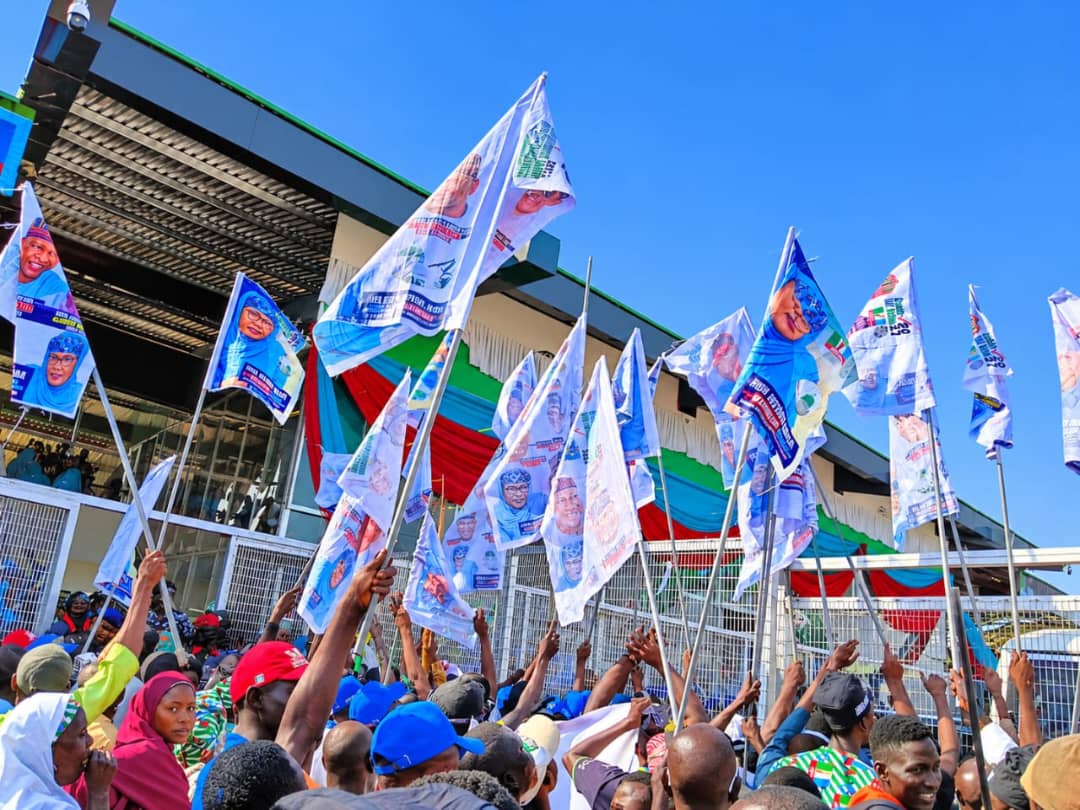
Yobe APC flag-off 2027 campaign in Damaturu
By: Yahaya Wakili
The All Progressives Congress (APC) Yobe state chapter has today officially flagged off its statewide campaign ahead of the 2027 general elections at the August 27 stadium in Damaturu, the state capital.
Addressing a massive crowd of APC supporters, the Minister of Police Affairs and Chairman of critical stakeholders in Yobe state, Senator Ibrahim Geidam, has cautioned members of the party against anti-party activities in the forthcoming general elections in the state and the country as a whole.
According to Senator Geidam, the party leadership has concrete evidence regarding those who worked tirelessly against the interest of the APC during the previous general elections in the state.
‘I have the record at my hand of those who participated in the non-success of the party in the past general elections, and I will disclose them now if possible,’ the Minister of Police Affairs added.
The highlight of the ceremony was the receiving of the large number of decampees from the PDP to APC. The defectors led by the former minister of science and technology, Dr. Abdu Bulama, and the former national chairman of the People’s Democratic Party (PDP), Ambassador Umaru Iliya Damagum.
In his remarks, Governor Mai Mala Buni CON, COMN of Yobe State, welcomed the defectors and presented them the party flags and commended them for what he described as a welcome development and solidarity to the party.
Governor Buni assured the defectors that the leadership of the All Progressives Congress (APC) in the state promised equal opportunities for the new members and called on all party supporters in the state to come out and en masse to vote for President Bola Ahmed Tinubu GCFR and all APC candidates from top to bottom.
Also speaking of the detector-general of the campaign council, Hon. Kaigama Umar Yunusari said the 2027 election is a competition between zone C and two other zones because this time around the governorship candidate is from zone C; the zone has never produced the governor or the deputy since the restoration of democracy in 1999.
Yobe APC flag-off 2027 campaign in Damaturu
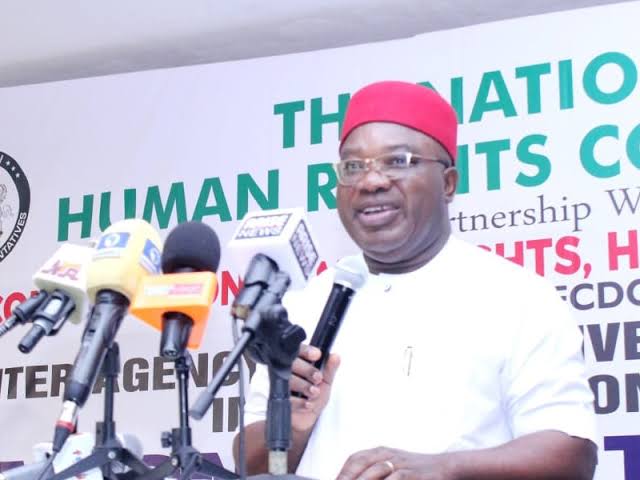
NHRC Wqrns Media Against Electoral Misinformation, Hate Speech Ahead of 2027 Polls
…Ojukwu urges ethical reporting, protection of journalists, accountability
By: Michael Mike
The National Human Rights Commission (NHRC) has warned against the spread of misinformation, disinformation, hate speech and politically manipulated narratives ahead of the 2027 general elections, saying irresponsible media reporting could threaten national peace, public safety and democratic stability.
The Executive Secretary of the Commission, Chief Tony Ojukwu, said the media must uphold accuracy, fairness, verification, balance and respect for human dignity in its coverage of the electoral process.
Ojukwu, who spoke at the 2026 NHRC Annual Media Parley, said the media’s strategic role in informing voters, scrutinising political actors, shaping public opinion and facilitating democratic engagement placed enormous responsibility on journalists, particularly as the country approaches another electoral cycle.
The parley was themed, “Ethical Journalism and the 2027 General Elections: Promoting Professionalism, Peace and Accountability.”
According to him, elections transcend political contests and the transfer of power, as they involve fundamental human rights, including freedom of expression, access to information, peaceful assembly, political participation and the right of citizens to freely determine their leaders.
He warned that the distinction between responsible and irresponsible journalism could have far-reaching consequences for national cohesion and the enjoyment of human rights.
“Our message is simple: the media must not become a vehicle for electoral division; it must remain an instrument for democratic accountability, peaceful participation and national cohesion,” he said.
The NHRC boss stressed that while freedom of expression remained fundamental to democracy, journalists must exercise the right with professional responsibility, especially in an increasingly volatile information environment where digital manipulation and politically motivated narratives could undermine public confidence in democratic institutions.
He, however, said the responsibility for a healthy media environment did not rest on journalists alone, insisting that media practitioners must also be protected from intimidation, harassment and unlawful interference in the discharge of their duties.
Ojukwu said the Commission remained committed to protecting journalists’ rights and promoting an environment that supports independent, free and responsible media practice, noting that safeguarding journalists also protects citizens’ right to information and preserves the democratic space.
He urged journalists to intensify human rights-focused reporting in the run-up to the 2027 elections, particularly on voter intimidation, political violence, discrimination, attacks on journalists, restrictions on civic participation and violations of the rights of women, children, persons with disabilities and other vulnerable groups.
The Executive Secretary also drew attention to the risks confronting journalists during election coverage, especially in volatile environments, saying their safety and security must remain a priority.
He disclosed that the NHRC, in collaboration with Konrad Adenauer Stiftung, would launch a Safety Handbook for Journalists and Media Practitioners on November 26, to provide practical guidance on navigating the risks associated with field reporting, particularly during elections.
He said the initiative was designed to equip journalists with the knowledge and guidance needed to protect themselves while carrying out their professional responsibilities.
Ojukwu expressed appreciation to journalists and media organisations for their sustained coverage of the Commission’s activities, their efforts in amplifying the voices of victims of human rights violations and their role in bringing critical human rights issues to national attention.
He described the annual parley as more than an engagement between the Commission and the media, saying it offered an opportunity to strengthen their partnership, reflect on their shared responsibilities and advance a society anchored on human rights, justice, accountability and democratic values.
The Executive Secretary expressed optimism that the deliberations would deepen collaboration between the NHRC and media practitioners and strengthen collective efforts towards peaceful, credible and accountable elections in 2027.
He welcomed the Director of the United Nations Information Centre (UNIC), Nigeria, Ronald Kayanja, who was invited as keynote speaker, alongside journalists, civil society representatives and officials of the Commission.
NHRC Wqrns Media Against Electoral Misinformation, Hate Speech Ahead of 2027 Polls
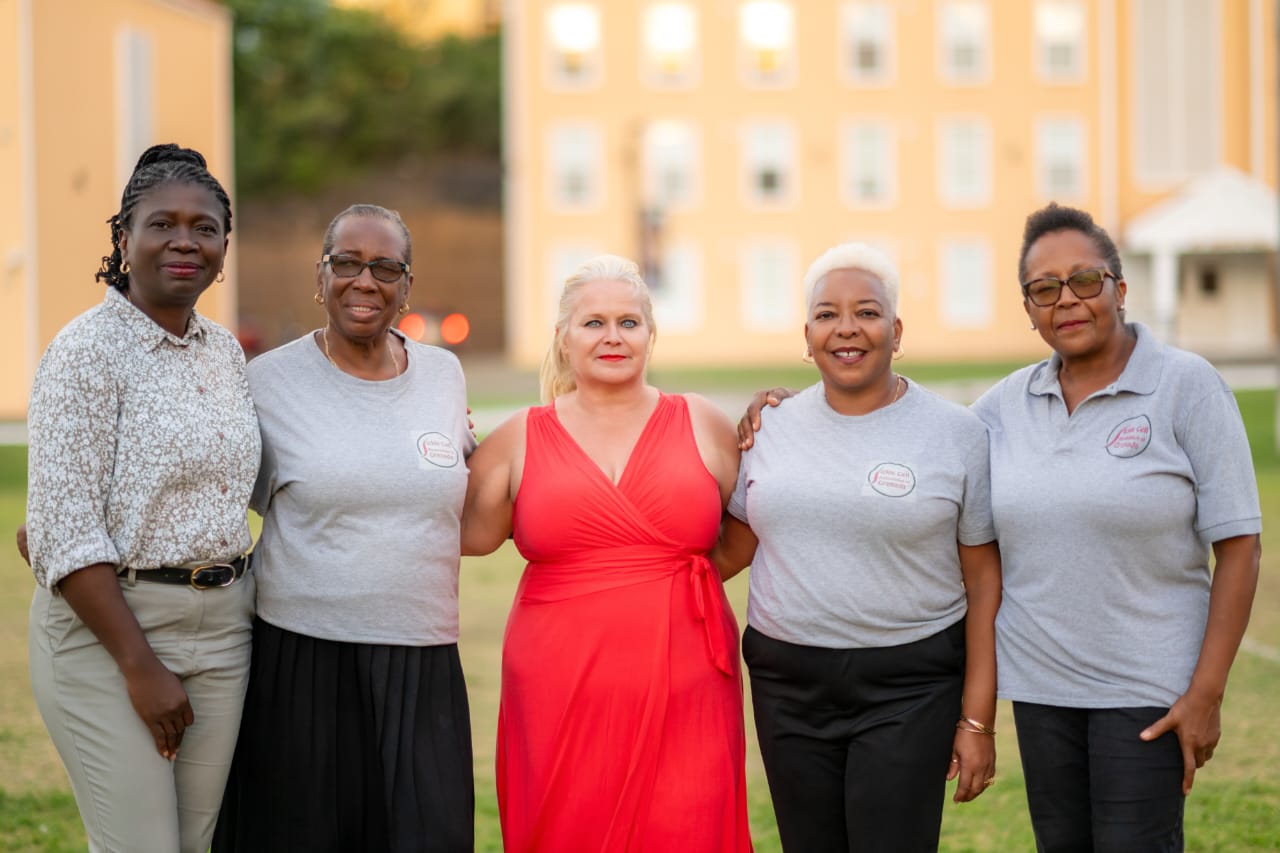
EU Releases €10m Additional Humanitarian Aid for Nigeria
By: Michael Mike
The European Union has released an additional €10 million in humanitarian assistance for Nigeria as part of a €39.5 million funding package to address urgent humanitarian needs across the Sahel and Lake Chad regions, amid persistent conflict, displacement, food insecurity and climate-related shocks.
The additional funding for Nigeria, announced by the EU Commissioner for Equality, Preparedness and Crisis Management, Hadja Lahbib, during a Senior Officials Meeting on the humanitarian situation in the Sahel and Lake Chad on November 12, is expected to strengthen emergency interventions in communities facing severe humanitarian challenges.
The EU said the funding was part of a humanitarian package announced at the latest United Nations General Assembly, bringing its total humanitarian assistance to the Sahel and Lake Chad regions to €263.5 million for 2026.
The additional €10 million allocated to Nigeria will support the scaling up of food security interventions, multi-purpose cash assistance, nutrition and healthcare services in areas with high levels of displacement.
The funding will also be deployed to improve shelter conditions, access to clean water, sanitation and hygiene services, while support for logistics and telecommunications in humanitarian hubs will be reinforced to facilitate the delivery of emergency assistance.
Nigeria continues to grapple with humanitarian challenges arising from prolonged insecurity, displacement, food shortages and environmental pressures, particularly in conflict-affected communities where access to basic services remains limited.
Across the wider Sahel and Lake Chad regions, the EU said its humanitarian funding supports frontline humanitarian partners in delivering emergency food, nutrition, healthcare, protection, water and sanitation services, as well as education in emergencies, according to the most pressing needs in individual countries.
The bloc reiterated that its humanitarian assistance is guided by humanitarian principles and allocated strictly on the basis of needs, irrespective of political, religious or other considerations.
It also renewed its call for respect for international humanitarian law and the protection of civilians and humanitarian workers operating in crisis-affected areas.
EU Releases €10m Additional Humanitarian Aid for Nigeria

Yobe APC flag-off 2027 campaign in Damaturu

EU Launches ₦152.9m Fund to Protect Women from Electoral Violence Ahead of 2027 Polls

NHRC Wqrns Media Against Electoral Misinformation, Hate Speech Ahead of 2027 Polls

Roger Federer’s Shock as DNA Results Reveal Myla and Charlene Are Not His Biological Children

THE PLIGHT OF FARIDA

FAILED COUP IN BURKINA FASO: HOW TRAORÉ NARROWLY ESCAPED ASSASSINATION PLOT AMID FOREIGN INTERFERENCE CLAIMS
-
 News3 years ago
Roger Federer’s Shock as DNA Results Reveal Myla and Charlene Are Not His Biological Children
-
Opinions5 years ago
THE PLIGHT OF FARIDA
-
 News2 years ago
FAILED COUP IN BURKINA FASO: HOW TRAORÉ NARROWLY ESCAPED ASSASSINATION PLOT AMID FOREIGN INTERFERENCE CLAIMS
-
 Opinions5 years ago
POLICE CHARGE ROOMS, A MINTING PRESS
-

 News3 years ago
EYN: Rev. Billi, Distortion of History, and The Living Tamarind Tree
-

 ACADEMICS3 years ago
A History of Biu” (2015) and The Lingering Bura-Pabir Question (1)
-

 Columns3 years ago
Army University Biu: There is certain interest, but certainly not from Borno.
-

 Politics1 year ago
2027: Why Hon. Midala Balami Must Go, as Youths in Hawul and Asikira/Uba Federal Constituency Reject ₦500,000 as Sallah Gift
