
Politics
The Perils of Preconceived Notions: General Musa, Seun Okinbaloye, and Channels Interview


The Perils of Preconceived Notions: General Musa, Seun Okinbaloye, and Channels Interview
By: Dr. James Bwala
Recently, a significant conversation has sparked around an interview that the Minister of Defense, General Christopher Musa (retired), had with Channels Television anchor Seun Okinbaloye. This exchange has become a focal point for criticism, as many commentators, including media figures and some religious scholars, interpret his responses in ways that appear to deviate from their true context and intent. Growing up in Kaduna and having a profound understanding of the political scene, I find this widespread misrepresentation quite troubling. A closer look at the interview shows that the criticisms directed at the former Defense Chief often arise from a selective reading and a lack of appreciation for the nuanced layers of his statements.
At the heart of the controversy is General Musa’s reaction to a specific question from the Channels Television anchor. While the exact wording and context of the question are vital, it’s clear from the ensuing commentary that many observers zeroed in on a particular part of his response, pulling it out of the broader conversation. The narrative that has taken hold suggests a dismissive or inappropriate reaction from the minister. However, if we take the time to thoroughly review the interview, especially the context leading up to the question and General Musa’s subsequent elaborations, we see a different story. It’s crucial to recognize the immense pressure and the complex nature of the role held by the Minister of Defense. This position requires constant vigilance and a careful balance in public statements, particularly when dealing with sensitive security matters. The argument here is that General Musa’s response, when viewed in its entirety, was a pragmatic effort to navigate these complexities rather than a sign of insensitivity.
READ ALSO: https://newsng.ng/kashim-shettima-dirty-datti-and-his-tinubu-cap-theory/
The political landscape in Nigeria, especially in places like Kaduna where I grew up, is strong, and emotions and historical grievances often characterize the political landscape in Nigeria, In such a charged atmosphere, public figures, particularly those in high-ranking roles like the Minister of Defense, need to be very careful with their words. Everything they say is closely examined, often exaggerated, and sometimes twisted to fit certain narratives. Those who quickly criticized General Musa’s comments might have missed the point that his seemingly blunt response could have been a calculated move, aimed at preventing further escalation of sensitive issues or maintaining a necessary level of official discretion.
For example, when it comes to national security, sharing too much information or getting into lengthy explanations can actually be risky. So, a brief answer, even if it comes off as abrupt, might just be a strategic choice to protect national interests. One major reason for the misunderstanding is the common habit of consuming information in bite-sized pieces, especially in today’s social media-driven world. Short clips and quick quotes can easily be taken out of context and spread around, creating echo chambers that don’t really capture the full picture. Many of the commentators who have criticized General Musa haven’t taken the time to watch the entire interview or consider his extensive background and responsibilities as minister. His military career, which has led him to high-ranking positions, suggests he has a solid grasp of strategic communication and understands the significance of official statements. It’s hard to believe that a seasoned military leader would make a statement that lacks substance or context.
READ ALSO: https://newsng.ng/kashim-shettima-dirty-datti-and-his-tinubu-cap-theory/
It’s worth noting that many religious scholars who express their disapproval often do so through a particular theological perspective. While their insights can enrich public discussions, it’s crucial to ensure that their interpretations are rooted in a well-rounded grasp of the issues, including the secular duties of government officials. The Minister of Defense operates within a national security and governance framework that demands a practical and often nuanced approach, which might not always align with every religious or moral viewpoint.
Therefore, the interaction with the Channels Television anchor should be examined not just for its immediate emotional resonance but also for its strategic implications and the deeper reasoning behind it, even if that reasoning isn’t clearly stated. The goal here isn’t to dismiss all criticism but to encourage a more thoughtful and less reactive way of assessing public statements from those in power. Nigeria’s political landscape is ever-changing and often filled with challenges. Leaders are tasked with making decisions and communicating in ways that tackle urgent issues while also keeping an eye on long-term stability. When we look at General Musa’s response through this lens, it appears to be an effort to navigate a complicated situation with the limited resources available in a public interview. The tendency for some observers to jump to conclusions can undermine effective leadership and foster unnecessary divisions based on partial understandings.
The political scene in Nigeria is often marked by passionate debates, strong loyalties, and a curious tendency to elevate certain leaders to almost god-like status, while others face relentless criticism. This dynamic is particularly evident in the ongoing discussions about public figures like Malam Nasir El Rufai and General Musa. What stands out is a troubling trend: the uneven application of criticism, where some individuals seem to be immune from accountability thanks to their loyal supporters, while others are quickly condemned for even mildly controversial statements. Recently, it became clear that some people show an almost fanatical devotion to figures like El Rufai, to the extent that they refuse to acknowledge any faults.
READ ALSO: https://newsng.ng/kashim-shettima-dirty-datti-and-his-tinubu-cap-theory/
This kind of blind loyalty poses a serious barrier to constructive political dialogue. When political allies are treated like saints, it creates an environment where differing opinions are not just unwelcome but actively silenced. Once a politician is deemed untouchable, any critique—no matter how valid—is brushed off as an attack from opponents. This was particularly noticeable in the reactions to General Musa’s comments, which, while uncomfortable for some, drew an exaggerated backlash from those who staunchly defend El Rufai. Interestingly, these same defenders are well aware of El Rufai’s past actions and statements, yet their loyalty seems to cloud their judgment about his potential flaws. This selective memory or intentional ignorance serves to shield their favored leaders, ultimately hindering meaningful discussion and the chance for growth within the political landscape.
The story of El Rufai tends to stir up quite a bit of passion. During his time as governor of Kaduna State, he rolled out some initiatives that many praised, but he also implemented policies that sparked controversy. Supporters often highlight his achievements in development, infrastructure, and administrative reforms. On the flip side, critics point to moments where they feel he was too heavy-handed, used divisive language, or enacted policies that worsened societal divides. What’s particularly striking is the difference in how these two figures are perceived. General Musa faces a storm of criticism for his remarks, while El Rufai, despite having a more complicated public record, seems to enjoy a protective bubble from the same level of scrutiny thanks to his loyal supporters. This difference hints at how political loyalties and personal feelings can cloud objective judgment.
READ ALSO: https://newsng.ng/kashim-shettima-dirty-datti-and-his-tinubu-cap-theory/
My conversations with those eager to “crucify General Musa” while claiming to “know El Rufai very well” really highlight this double standard. It shows just how powerful established narratives can be and how we often cling to our beliefs, even when faced with evidence that contradicts them. Public figures, given their roles, hold a lot of sway and are naturally under a microscope. Their actions and words can shape public opinion, influence policy, and steer national conversations. General Musa’s comments, regardless of what he meant, have clearly struck a chord with some people, leading to discomfort and calls for him to be held accountable. This kind of engagement is a vital part of a healthy democracy. However, it’s disheartening to see that this level of accountability isn’t consistently applied across the board. What frustrates me is that the same people who are quick to criticize General Musa often go quiet when it comes to examining the actions of those they admire. This selective outrage is not only disingenuous but also undermines the very principles of fairness and justice that a democratic society should uphold.
While there’s often a lot of passion in discussions, it can quickly turn into unhelpful attacks. The real challenge is finding a way to direct that energy into more thoughtful and evidence-based critiques. Instead of simply condemning or idolizing, we need a space for reasoned debate where policies and statements are assessed based on their actual merits and flaws. I truly believe that Nigeria needs a more mature political discourse—one where people are evaluated by their actions and words, rather than the size of their following or the fervor of their critics.
READ ALSO: https://newsng.ng/kashim-shettima-dirty-datti-and-his-tinubu-cap-theory/
Public figures, no matter their past achievements or current affiliations, should be held to a consistent standard of accountability. In this digital age, while we enjoy unprecedented connectivity and access to information, we also face a major challenge: the spread of misinformation and the deepening of biased viewpoints. This situation reflects a wider societal trend where conclusions are drawn without engaging with primary sources, leading to the misrepresentation of individuals. These snap judgments often stem from pre-existing biases or outside influences, making it difficult to assess situations fairly and rationally.
Over the past few days, I’ve noticed something interesting from my conversations with various people: it seems like “none of them actually watched that interview with Seun Okinbaloye before jumping to conclusions.” This really highlights a troubling trend of intellectual laziness or, perhaps, willful ignorance. In the realm of public opinion, especially when it comes to politics, many folks tend to latch onto popular narratives without bothering to verify the facts for themselves. There are a few reasons for this. For one, the sheer amount of information out there can be downright overwhelming, which often leads people to rely on quick summaries or the interpretations of sources they trust—even if those sources might have their own biases. Then there’s confirmation bias, which is a big player here; people tend to seek out information that backs up their existing beliefs while ignoring anything that contradicts them. Take the Minister of Defense, for example. It’s likely that negative views, fueled by political rivals or media stories, set the stage for quick condemnation, making the details of the Seun Okinbaloye interview irrelevant to those who were already convinced.
READ ALSO: https://newsng.ng/kashim-shettima-dirty-datti-and-his-tinubu-cap-theory/
This creates an echo chamber where differing opinions are pushed aside, allowing a single, often skewed, narrative to take hold. Those who “kick in the dark” without fully engaging with the interview’s context might not be acting out of true conviction; they could be either unwitting or willing players in a larger scheme. Their statements, while appearing independent, might actually be part of a strategy to serve the interests of those who gain from a specific portrayal of the Minister of Defense. This situation underscores the need for media literacy and critical thinking skills in a world where narratives can be crafted for political advantage. Without these essential skills, the public can easily fall prey to manufactured outrage or sympathy, clouding the truth.
I truly believe that if we approach the interview with an open mind, it can lead to a whole new understanding. The suggestion to watch it “more than three times,” as I did with some friends, really highlights how important the nuances, context, and specific arguments are for a fair evaluation. It’s striking that “all Muslims of fair and sound mind” who took the time to watch the interview felt that the general was “rather misrepresented when considering the context.” This really calls into question the rush to judgment that many had. It seems clear that the interview might have included parts that were taken out of context, selectively edited, or even misinterpreted by those with their own agendas.
READ ALSO: https://newsng.ng/kashim-shettima-dirty-datti-and-his-tinubu-cap-theory/
When we dig into the original material, we might uncover the true meaning and the speaker’s actual stance, which could expose how shallow the initial criticisms were. This really emphasizes the ethical responsibility of both content creators and consumers to focus on context and resist the temptation of oversimplified narratives. The notion of “misrepresentation” hints at a deliberate distortion, where the original message was twisted to fit a pre-existing negative narrative. While constructive criticism can be a great way to foster improvement, malicious or politically driven opposition can really hinder effective governance. By openly supporting initiatives that encourage reconciliation and inclusivity, the minister is showing a real commitment to tackling the systemic issues that our nation faces. The critics’ failure to recognize Governor Sani’s positive contributions, or the minister’s backing of those efforts, reveals a potential bias or an agenda that seems more focused on dissent than on acknowledging real progress. This kind of selective criticism suggests that their opposition isn’t about wanting better governance; it might just be rooted in a political rivalry against the minister or the administration they represent.
By supporting Governor Sani’s initiatives to mend religious rifts in Kaduna, the minister is playing an active role in the broader mission of national unity. This approach is more about taking initiative than simply reacting to circumstances. It marks a shift away from the divisive politics that can often overshadow Nigerian public life. The critics’ reluctance to acknowledge this positive strategy highlights just how challenging it can be to bring about change in such a polarized atmosphere. Yet, for the minister, the encouragement from people all over the country, along with the potential for meaningful progress in places like Kaduna, should be a strong source of motivation. Their leadership, in this light, is not defined by the absence of dissenters but by the real steps taken towards unity and the warm reception from a diverse range of citizens. It’s a rallying cry for all Nigerians to adopt this spirit of national togetherness, understanding that our shared advancement depends on our willingness to recognize and support efforts that promote understanding and bridge our divides.
* James Bwala, PhD, writes from Abuja
The Perils of Preconceived Notions: General Musa, Seun Okinbaloye, and Channels Interview


Politics
Building Beyond His Tenure: Why Zulum’s Transformative Footprints Will Outlive His Government
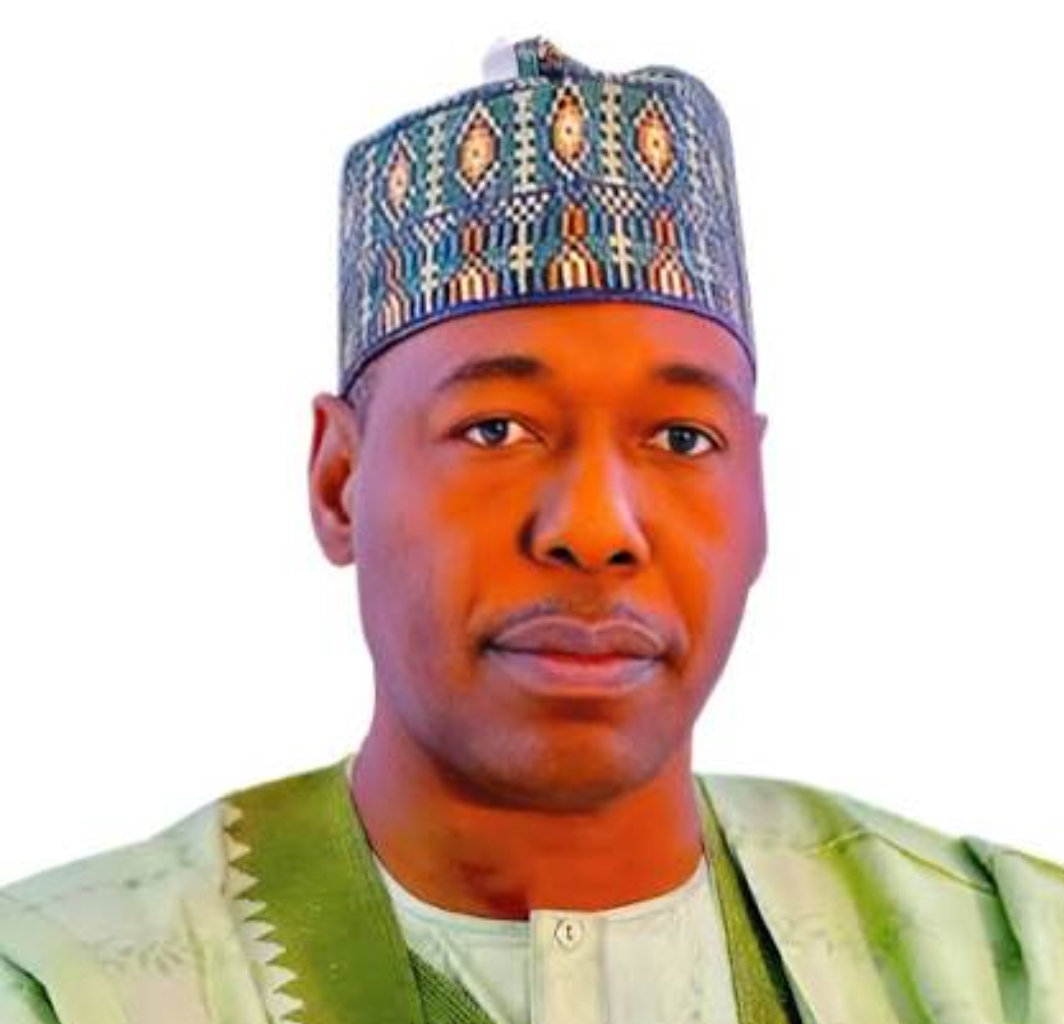
Building Beyond His Tenure: Why Zulum’s Transformative Footprints Will Outlive His Government
By: Dr. James Bwala
Public leadership is often criticized. In a democratic society, citizens have the right to question government policies, challenge official decisions, and demand accountability from those entrusted with public resources. Such scrutiny is not only legitimate but necessary. However, criticism becomes destructive when it is driven by personal hostility, political bitterness, misinformation, or the use of unprintable names against public officials. In the case of Professor Babagana Umara Zulum, Governor of Borno State, the intensity of some attacks cannot erase the visible transformation taking place across the state.
Regardless of the negative opinions expressed by certain individuals, one fact remains difficult to dispute: Governor Zulum’s administration has made significant investments in healthcare, education, roads, bridges, flyovers, reconstruction, human capital development, and the restoration of hope among citizens affected by years of insecurity. These accomplishments are not merely political claims or campaign slogans. They are physical and institutional developments that can be seen, assessed, used, and remembered. While political arguments may fade with time, projects that improve people’s lives often become enduring evidence of a leader’s contribution to society.
Borno State has faced extraordinary challenges. For more than a decade, the state has endured terrorism, displacement, destruction of public infrastructure, economic disruption, and the trauma of communities separated from their homes. In such an environment, governance requires more than routine administration. It demands courage, vision, compassion, and the ability to rebuild amid uncertainty. Governor Zulum inherited a state in which many citizens were not only seeking employment or better roads but also struggling to return safely to their communities, access healthcare, educate their children, and rebuild their livelihoods.
The scale of these challenges makes the progress recorded under his administration especially important. Leadership should be judged within context. It is reasonable to ask whether every problem has been solved, because no administration can solve all problems at once. However, it is unfair to ignore meaningful progress simply because difficulties remain. The existence of unfinished work does not invalidate completed work. Instead, it emphasizes the value of continuity, constructive criticism, and collective responsibility.
One of the most important areas in which Governor Zulum’s administration has made an impact is healthcare. In a state affected by conflict and displacement, healthcare is not a luxury; it is a basic necessity and a foundation for survival and recovery. Hospitals and primary healthcare centers require buildings, equipment, medicines, trained personnel, and reliable access for rural populations. The administration’s efforts to improve healthcare infrastructure and expand access demonstrate an understanding that rebuilding Borno must include rebuilding its health system.
Renovated and newly constructed health facilities provide citizens with a closer and safer means of receiving treatment. They also support maternal and child healthcare, emergency services, disease prevention, and general medical care. In communities where people previously travelled long distances to seek treatment, the presence of functional healthcare centers can make the difference between life and death. Such projects may not always attract the same public attention as political speeches, but their effect on families is profound.
Healthcare development also contributes to the return and resettlement of displaced persons. People are more likely to return to their communities when they know that essential services are available. A rebuilt community without hospitals, schools, roads, and clean water cannot easily become a stable home. Therefore, investment in healthcare forms part of a broader strategy for peacebuilding and recovery. It restores not only buildings but also confidence in the future.
Education is another area in which the governor’s contribution deserves recognition. No society can achieve sustainable development without educating its children and young people. In Borno, years of insurgency disrupted schooling, destroyed educational facilities, displaced teachers, and forced thousands of children out of the classroom. Addressing this crisis requires the construction and rehabilitation of schools, the recruitment and training of teachers, the provision of learning materials, and policies that encourage children to return to school.
Governor Zulum’s emphasis on education reflects the understanding that insecurity thrives where ignorance, poverty, and hopelessness are allowed to grow. Every classroom restored is an investment in peace. Every child brought back to school represents a reduction in the risk of a lost generation. Education equips young people with knowledge, skills, discipline, and the ability to contribute positively to society. It also gives families a reason to believe that their children can build lives beyond conflict and displacement.
The importance of educational development cannot be measured only by the number of buildings constructed. Its deeper value lies in the opportunities it creates. Schools shape future teachers, doctors, engineers, civil servants, entrepreneurs, and community leaders. Years from now, many people who benefit from today’s educational investments may occupy positions that influence Borno and Nigeria as a whole. When that happens, the facilities and policies that helped them will remain part of the state’s historical story.
Infrastructure is another visible area of transformation. Good roads connect communities, support commerce, reduce transportation costs, improve access to schools and hospitals, and strengthen security operations. In a state with vast rural areas and communities affected by conflict, road construction and rehabilitation are essential to economic recovery. Farmers need roads to transport produce to markets. Patients need roads to reach hospitals. Students and teachers need reliable routes to schools. Businesses need efficient transportation networks to grow.
The development of roads, bridges, and flyovers represents more than the construction of concrete and asphalt. It reflects the restoration of movement, connection, and confidence. A well-designed road can reconnect communities that were previously isolated. A bridge can open access to markets and social services. A flyover can improve traffic flow, reduce congestion, and modernize an urban environment. These projects may be criticized on the basis of design, cost, or priority, and such questions should be answered transparently. Nevertheless, their practical benefits should not be dismissed merely because some people oppose the governor politically.
Urban development also sends a powerful message about the identity of Borno State. For years, public discussion about Borno was dominated by insecurity and destruction. While the security situation remains a serious concern, the development of roads, flyovers, public buildings, and other infrastructure presents a different image: a state determined to rebuild and move forward. Development does not mean pretending that problems no longer exist. Rather, it means refusing to allow those problems to define the state permanently.
Another notable aspect of Governor Zulum’s administration is the focus on reconstruction and the return of displaced persons. Displacement is not solved simply by transporting people back to their communities. Returnees require housing, security, schools, healthcare, water, electricity, roads, and economic opportunities. They need to feel that their return is not temporary or unsafe. The rebuilding of communities therefore demands coordination, patience, and sustained investment.
By supporting reconstruction and resettlement, the administration has contributed to restoring dignity to people who were forced to leave their homes. A house is more than a structure; it is a place of belonging. A community is more than a collection of buildings; it is a network of relationships, memories, markets, schools, and places of worship. Rebuilding these communities helps heal the psychological and social wounds caused by conflict.
Of course, no responsible assessment should portray the administration as perfect. Borno still faces security challenges, unemployment, poverty, humanitarian needs, and demands for greater accountability. Public officials must remain open to criticism and must explain how public funds are spent. Projects should be completed according to quality standards, and citizens should be able to ask legitimate questions without intimidation. Constructive criticism strengthens governance, while blind praise can conceal weaknesses.
However, criticism must be distinguished from abuse. Calling a public official unprintable names does not constitute a meaningful evaluation of policy. Insults do not improve hospitals, repair roads, educate children, or create employment. They merely lower the quality of public discourse. Those who disagree with the governor should present evidence, propose alternatives, and identify areas requiring improvement. Political opposition has value when it helps government perform better; it becomes harmful when it seeks only to destroy reputations and deny visible achievements.
The ultimate test of leadership is not whether everyone offers praise. No leader can satisfy every individual or group. The more important question is whether policies produce meaningful results for ordinary people. Are communities receiving services? Are schools being restored? Are roads improving movement? Are hospitals becoming more accessible? Are displaced families returning with greater dignity and hope? Are young people gaining opportunities? These are the questions that history will ask.
History is not written only through social media arguments, political slogans, or temporary controversies. It is written through institutions, infrastructure, public records, human experiences, and the memories of citizens. A person who receives medical attention in a renovated facility may remember the administration differently from someone who only follows political debates online. A student who returns to a rebuilt school may understand the value of government investment in a deeply personal way. A farmer who transports produce more easily because of an improved road may care less about insults and more about practical results.
This is why Governor Zulum’s transformative works will remain relevant beyond the present political moment. Governments change, politicians come and go, and public arguments eventually lose their urgency. But schools continue to educate children, hospitals continue to serve patients, roads continue to connect communities, and flyovers continue to shape urban movement. These physical and social assets become part of the permanent development record of the state.
The people of Borno therefore have a responsibility to protect the gains made and demand even greater progress. Development should not be treated as the personal property of one political party or one individual. Public projects belong to the people. Citizens should use them responsibly, monitor their quality, and insist that future administrations build upon them rather than abandon them. In the same way, supporters of the governor should avoid responding to criticism with abuse. The strongest defense of good governance is evidence, not aggression.
* James Bwala, PhD, writes from Abuja
Building Beyond His Tenure: Why Zulum’s Transformative Footprints Will Outlive His Government
2027: Opposition Politics Must Not Distort Nigeria’s Food Security Crisis
By: Dr. James Bwala
The claim that Nigeria’s Federal Minister of Agriculture has released a report warning citizens against re-electing President Bola Tinubu in 2027 is misleading. It turns a serious food-security assessment into an opposition campaign message and attaches a political conclusion to a report that does not make such a conclusion. While Nigeria’s worsening food crisis demands urgent government action and accountability, it is wrong to manipulate statistics or attribute partisan statements to the Federal Ministry of Agriculture or international food-security institutions.
The facts must be separated from political interpretation. The October 2026 Cadre Harmonisé assessment reportedly projects that approximately 33.5 million Nigerians could face acute food insecurity between June and August 2027. This is an alarming figure. It represents a serious threat to the welfare, health, and stability of millions of Nigerians. However, nowhere in the reported assessment does it state that this outcome will occur if President Bola Tinubu wins the 2027 presidential election. That political condition was added by the authors of the viral message. It is not an established finding of the report.
This distinction is important because reports produced by professional food security institutions are designed to assess hunger, food availability, household vulnerability, and related risks. They are not election manifestos. The Cadre Harmonisé does not endorse one candidate, oppose another, or predict the result of a presidential election. Presenting it as a warning against re-electing President Tinubu is therefore an abuse of the report’s purpose and a distortion of its content.
READ ALSO: https://newsng.ng/2027-tinubu-shettima-uba-sani-and-the-apc-flag-off-campaign-in-kaduna/
The issue is not whether the Tinubu administration should be criticized. It should be held accountable for its management of the economy, food prices, agricultural productivity, fuel costs, insecurity, and social welfare. The issue is whether such criticism should be based on evidence. A democratic society requires strong scrutiny of government, but political accountability loses its value when it depends on fabricated quotations, invented conditions, or misleading comparisons.
One of the most important distortions in the circulating claim is the comparison between 26.8 million people projected to face acute food insecurity between October and December 2026 and 33.5 million projected between June and August 2027. At first glance, these figures may appear to demonstrate a sharp and direct deterioration under the Tinubu administration. However, the two numbers relate to different seasonal periods. Comparing them without explaining the seasonal context can mislead the public.
June to August is traditionally a difficult lean season in many parts of Nigeria. During this period, household food stocks from the previous harvest often decline, while the next major harvest may not yet have arrived. Food prices can rise, rural households may become more dependent on markets, and poor families can experience greater difficulty meeting their basic needs. By contrast, October to December generally overlaps with harvest and post-harvest periods in many areas, when food availability may improve. Therefore, an increase between these two periods does not automatically prove that the entire difference was caused by a new government policy or a presidential election outcome.
READ ALSO: https://newsng.ng/2027-tinubu-shettima-uba-sani-and-the-apc-flag-off-campaign-in-kaduna/
This does not mean that the projected 33.5 million figure should be dismissed. Seasonal patterns explain part of the difference, but they do not remove the need for urgent intervention. A projection of this scale indicates that millions of Nigerians may face inadequate access to food and may be unable to meet their minimum nutritional requirements. The government must treat the warning as an emergency planning signal. It should strengthen food production, improve market access, reduce post-harvest losses, protect vulnerable households, and address the insecurity that prevents farmers from cultivating their land.
It is also inaccurate to suggest that Nigeria’s food-insecurity crisis began with President Tinubu. Food insecurity has been a persistent national challenge for many years, caused by poverty, unemployment, conflict, climate shocks, weak infrastructure, inflation, poor storage systems, and limited access to agricultural finance and inputs. According to earlier assessments, the Food and Agriculture Organization projected that 30.6 million Nigerians could face acute food insecurity in 2025 and that 34.7 million could be at risk in 2026. These figures demonstrate that the problem predates the current administration.
Recognizing the history of the crisis, however, does not absolve the Tinubu government of responsibility. Every administration inherits national problems, but it is judged by how it responds to them. President Tinubu’s government must therefore explain what it is doing to reduce food inflation, support farmers, stabilize transport and energy costs, improve rural security, and protect consumers from the loss of purchasing power. Nigerians cannot eat explanations about inherited problems. They need effective policies that produce measurable improvements in their lives.
READ ALSO: https://newsng.ng/2027-tinubu-shettima-uba-sani-and-the-apc-flag-off-campaign-in-kaduna/
The removal of fuel subsidies, for example, has had broad consequences for food prices because transportation and agricultural production depend heavily on fuel. Farmers face higher costs for transporting inputs and produce. Traders spend more to move food from rural areas to urban markets. Consumers then pay more for basic staples. Although the government may argue that subsidy reform is necessary for long-term economic stability, it also has a responsibility to manage the immediate social consequences. Reform without adequate protection for poor households can deepen hunger and increase vulnerability.
Insecurity is another major factor. Farmers in several parts of the country have faced attacks, displacement, kidnapping, and restricted access to farmland. When agricultural communities cannot safely plant, harvest, or transport their produce, the effects extend beyond the affected villages. Production falls, supply chains weaken, and food prices rise. An effective food-security policy must therefore include protection for farming communities, early-warning systems, conflict prevention, and improved rural infrastructure. Food security cannot be separated from national security.
The government must also address agricultural productivity. Nigeria has significant agricultural potential, but many farmers still lack reliable access to quality seeds, fertilizer, irrigation, extension services, credit, storage, and modern equipment. Climate change adds further pressure through irregular rainfall, flooding, drought, and changing planting seasons. Government programs should be assessed according to their actual results rather than the size of their announcements. Nigerians need transparent information about how much support reaches farmers, which regions benefit, and whether production and household incomes are improving.
READ ALSO: https://newsng.ng/2027-tinubu-shettima-uba-sani-and-the-apc-flag-off-campaign-in-kaduna/
At the same time, political parties and opposition groups have a duty to communicate responsibly. Opposition is essential in a democracy. It is legitimate to question the government’s record, challenge official statistics, expose policy failures, and propose alternatives. However, opposition politics should not rely on misinformation. Turning a technical assessment into an electoral slogan may generate attention, but it damages public understanding and weakens confidence in institutions.
The consequences of this type of manipulation are serious. When citizens discover that a viral political claim has misrepresented an official report, they may become suspicious of all information, including accurate warnings about hunger. This creates a dangerous situation. Food-security assessments depend on public trust because governments, humanitarian agencies, and communities must use them to plan interventions. If such reports are repeatedly presented as partisan documents, their credibility can be damaged.
The public should therefore ask basic questions before accepting or sharing politically charged claims. What exactly does the original report say? Is the quotation verifiable? Are the compared periods the same? Does the report identify a cause, or does it merely present a projection? Has an institution actually made the political statement being attributed to it? These questions are especially important during election periods, when facts are often selected or rearranged to support campaign narratives.
READ ALSO: https://newsng.ng/2027-tinubu-shettima-uba-sani-and-the-apc-flag-off-campaign-in-kaduna/
The projected figure of 33.5 million Nigerians facing acute food insecurity between June and August 2027 should be treated as a warning, not as an election prophecy. It is a call for immediate planning and action. The Federal Government should work with state governments, farmers’ organizations, humanitarian agencies, researchers, and community leaders to prepare for the lean season. Intervention should include targeted social protection, food assistance for the most vulnerable, support for smallholder farmers, investment in irrigation and storage, and measures to improve market stability.
Civil society and the media also have an important role. Journalists should verify reports before publishing sensational political interpretations. Fact-checking organizations should identify manipulated statistics and provide the public with the relevant context. Political actors should be challenged when they present institutional findings inaccurately, regardless of their party affiliation. Fair standards must apply to both government supporters and opponents.
Ultimately, Nigerians deserve two things at the same time: honest criticism and accurate information. It is possible to acknowledge that food insecurity predates President Tinubu while also holding his administration responsible for its present response. It is possible to reject a misleading campaign claim without defending every government policy. It is possible to insist that the government must do more without inventing conclusions that do not appear in an official assessment.
READ ALSO: https://newsng.ng/2027-tinubu-shettima-uba-sani-and-the-apc-flag-off-campaign-in-kaduna/
The warning is serious. Millions of Nigerians may face acute food insecurity, and the projected increase requires urgent attention. Food inflation, insecurity, weak agricultural productivity, high fuel costs, and declining household purchasing power are real problems. The Tinubu administration must be judged by the effectiveness, transparency, and speed of its response. But that judgment must be based on evidence rather than fabricated quotations or political additions.
The Cadre Harmonisé is a food-security assessment, not an opposition campaign document. It does not endorse Atiku, oppose Tinubu, or predict the outcome of the 2027 election. Nigerians should criticize the president where the facts justify criticism and defend him where the facts justify defense. Above all, political debate must not be built on manufactured conclusions. Nigeria’s food crisis is too serious to be reduced to propaganda. The country needs truth, accountability, and practical action—not manipulated statistics presented as institutional warnings.
*James Bwala, PhD, writes from Abuja
2027: Opposition Politics Must Not Distort Nigeria’s Food Security Crisis

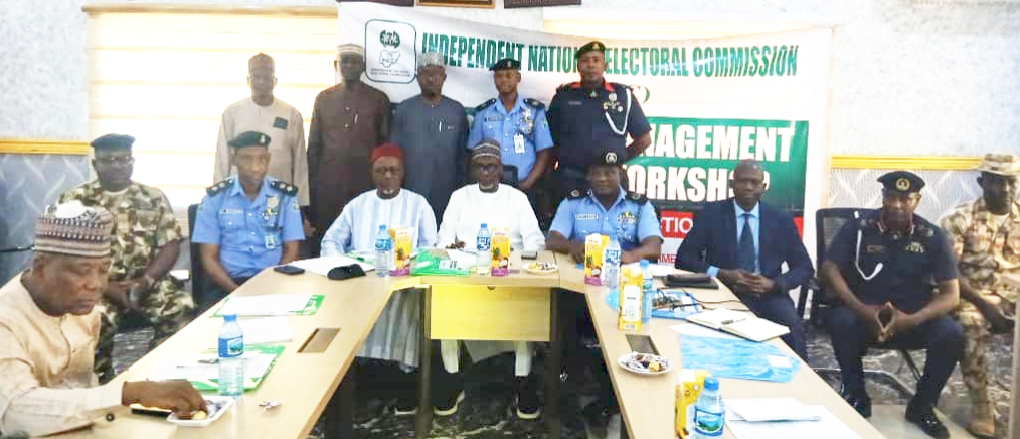
INEC engages Adamawa stakeholders on electoral risk management sensitisation
By Mohammed Ibrahim
The Independent National Electoral Commission (INEC) in Adamawa has engaged stakeholders on risk management sensitisation to improve preparedness towards ensuring a peaceful, credible and successful electoral process.
Speaking at the one day workshop in Yola, the state Residents Electoral Commissioner (REC), Muhammad Nura said, the workshop is important as the commission intensifies preparations for the 2027 General Election.
He said the engagement would provide an opportunity for participants to exchange experiences, clarify expectations, and strengthen the channels of communication and cooperation necessary for effective electoral planning.
“It also reinforces the need for all stakeholders to remain proactive, responsive, and committed to their various responsibilities.
“I encourage participants to approach the sessions with an open mind and a willingness to learn from one another”, he said.
According to him, the experiences and insights shared will enrich collective understanding and help ensure that the objectives of the workshop are achieved.
Mr Sa’ad Sadik, Head of Department, planning and monitoring INEC Adamawa
listed some of the objectives of the engagement to include; identify State-Specific Electoral Risks.
“Deepen participants’ understanding of the Electoral risk management framework, its application, and its importance in preparing for the 2027 General Election.
“Taking into account local circumstances and emerging threats that may affect the electoral process and promote stakeholder collaboration”, he said.
He also called on the stakeholders to strengthen information sharing in the effective management of electoral risks.
The Commissioner of Police (CP) Kabir Hassan represented ACP Ibrahim Kambra in charge of operations, appreciated the INEC for the engagement at the right time.
He assured of effective collaboration and deployment of sufficient security personnel to all identify risk areas for peaceful election.
Aminat Terry, Department of Planning and Monitoring INEC, Abuja said, the commission would commence data analysis at the security thread Local Government Areas towards ensuring peaceful electoral.
Some of the risks factors identified by challenges the Electoral Office (EOs) include insurgency, kidnapping, communal clashes, hard to reach areas, ballot snatching and huggery.
According to her, the commission will conduct data analysis in all the identified risks areas between Nov. 1st and 6th.
Terry said the commission had been upgraded to new technology to ease some of the challenges faced in the past.
The Commissioner of Police (CP) Kabir Hassan appreciates INEC for the engagement at the right time.
The CP who was represented by ACP Ibrahim Kambra in charge of operations,
assured of effective collaboration and deployment of sufficient security personnel to all identified risk areas for peaceful conduct of the elections.
INEC engages Adamawa stakeholders on electoral risk management sensitisation

Zulum Appoints Ali Baware Pioneer DG of Rural Access Road Authority

Troops Intervene in Farm Destruction Dispute in Jos East, Invite Farmer and Suspected Herder for Settlement

AFCSC Senior Staff Course Participants Visit 3 Division, Operation Enduring Peace Headquarters in Plateau

Roger Federer’s Shock as DNA Results Reveal Myla and Charlene Are Not His Biological Children

THE PLIGHT OF FARIDA

FAILED COUP IN BURKINA FASO: HOW TRAORÉ NARROWLY ESCAPED ASSASSINATION PLOT AMID FOREIGN INTERFERENCE CLAIMS
-
 News3 years ago
Roger Federer’s Shock as DNA Results Reveal Myla and Charlene Are Not His Biological Children
-
Opinions5 years ago
THE PLIGHT OF FARIDA
-
 News2 years ago
FAILED COUP IN BURKINA FASO: HOW TRAORÉ NARROWLY ESCAPED ASSASSINATION PLOT AMID FOREIGN INTERFERENCE CLAIMS
-
 Opinions5 years ago
POLICE CHARGE ROOMS, A MINTING PRESS
-

 News3 years ago
EYN: Rev. Billi, Distortion of History, and The Living Tamarind Tree
-

 ACADEMICS3 years ago
A History of Biu” (2015) and The Lingering Bura-Pabir Question (1)
-

 Columns3 years ago
Army University Biu: There is certain interest, but certainly not from Borno.
-

 Politics1 year ago
2027: Why Hon. Midala Balami Must Go, as Youths in Hawul and Asikira/Uba Federal Constituency Reject ₦500,000 as Sallah Gift
