
Opinions
The Renewed Hope Partnership: How Tinubu, Shettima Are Changing Narratives In Governance

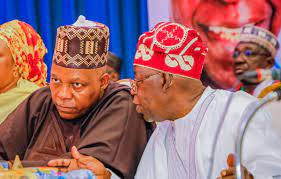
The Renewed Hope Partnership: How Tinubu, Shettima Are Changing Narratives In Governance
By: James Bwala
Unquestionable leadership deficiencies, criminal activity, widespread political corruption, poor governance, incompetent leadership, and state failure to address a number of issues have all contributed to Nigeria’s loss of regional leadership and its negative image around the world. As a result, its hegemonic clout on the continent has been steadily declining.
Nigeria continues to rank poorly on all global indices, including the Corruption Perception Index, Global Poverty Index, Global Terrorism Index, Global Peace Index, and the Corruption Perception Index, despite numerous attempts to reverse this decline. Nigeria’s international reputation has also been damaged by the participation of Nigerians abroad in cyber fraud and drug-related crimes, as well as the low rating of the Nigerian passport, which exposes citizens traveling with the regular green passport to harassment by border guards around the world. Thanks to the absence of leadership collaboration.
Many Nigerians think that new corruption always emerges after a change in leadership. However, it appeared that the new leadership was pursuing its goal of giving the populace new hope. The Tinubu-Shettima presidency is viewed as the answer to prayers, even though there are still plenty of doubters with their ideas.
While historically the vice president has lagged behind the president in making decisions, President Bola Ahmed Tinubu made it clear to anyone who wanted to stick with the old myths that the vice president is just a spare tire that in the administration of renewed hope, the relationship between the two is one of partnership. Gbam! So, take note, all you “Gulmati.”
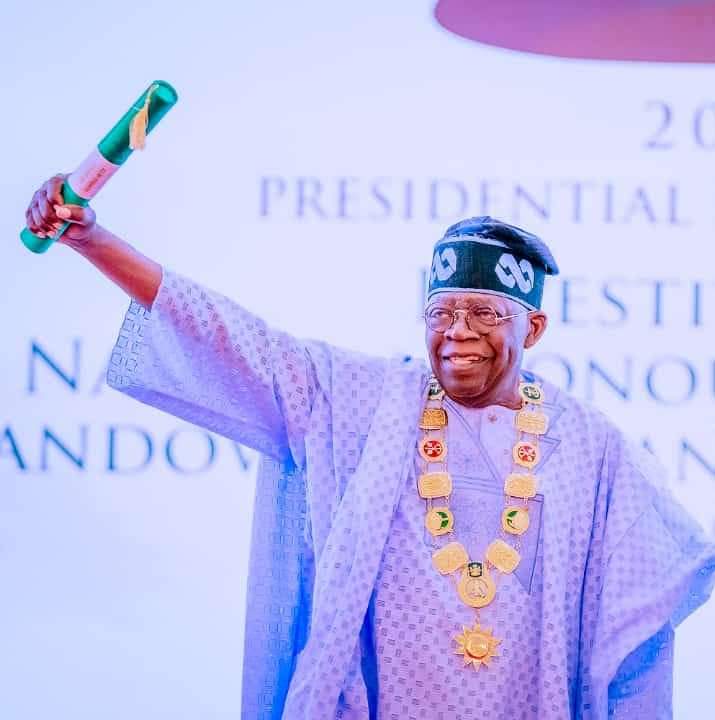
President Bola Tinubu
In fact, this government is meeting its commitment to get things done right away, and we have seen that it has done so less than 30 days after taking the oath of office.
It should be recalled that Eniola Ehinafe, the director general of the Conference of Bola Ahmed Tinubu and Kashim Shettima National Support Groups, predicted that the incoming administration would disappoint its detractors by boosting the economy of the country more than was anticipated. According to Ehinafe, the president and his vice president are both politicians and technocrats with the knowledge and skills necessary to help the nation overcome its current problems.
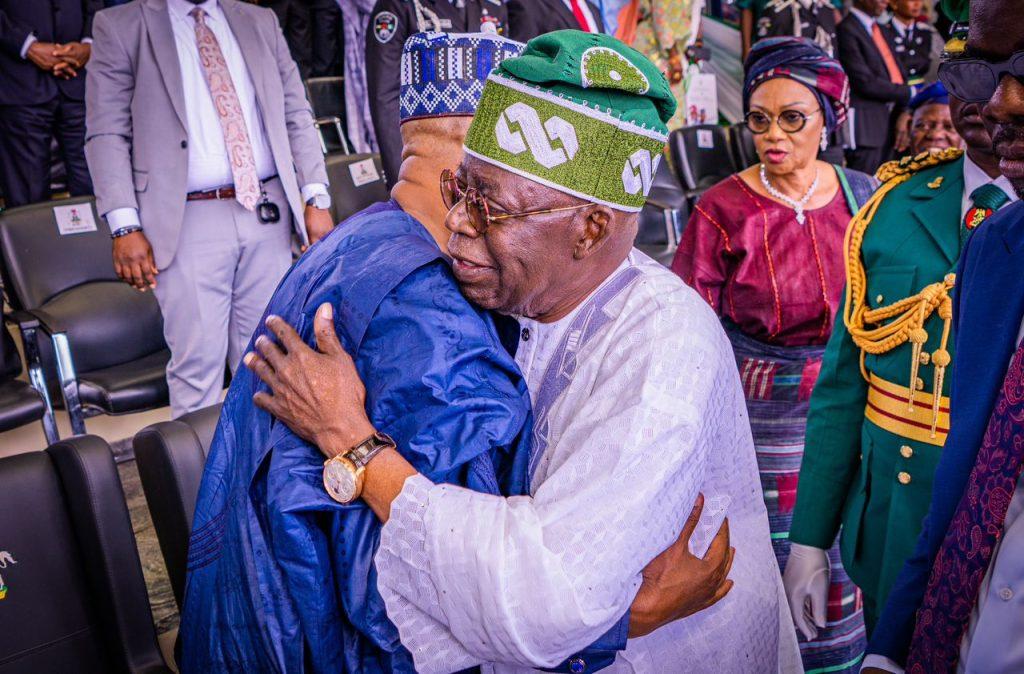
The Renewed Hope Partnership: How Tinubu, Shettima Are Changing Narratives In Governance
With the appointments made thus far under the Tinubu and Shettima administrations, we can see that Ehinafe’s statements were accurate. Nobody has criticized the President’s selections. Many Nigerians also thought that this was the best thing to have happened to their country in a long-time following independence.
Many people have also noted that the Tinubu administration has arrived to repair the scars left by the previous administration on Nigerians. They noted that the selection of the service chief has brought about balance in Nigerians’ expectations, who felt shortchanged by previous appointments of the past era that were lopsided.
READ ALSO:https://dailypost.ng/2023/06/21/afd-commits-75m-to-kano-city-urban-water-project/
Yesterday, a colleague asked for my opinion on his reports on the new service chiefs. “How do you see their capability to continue where their predecessors stopped and to end the security challenges in the country?” was the question he posed. I informed him that they are men of honor because I had researched their backgrounds, notably CDS Gen. Musa, whom I knew as Maiduguri’s Theatre Commander for Operation Hadin Kai.
I assured him that I had no reason to question their ability to manage the security issues facing the nation. They are familiar with the system and the accomplishments of their forebears, so I am convinced they have what it takes to make a difference.
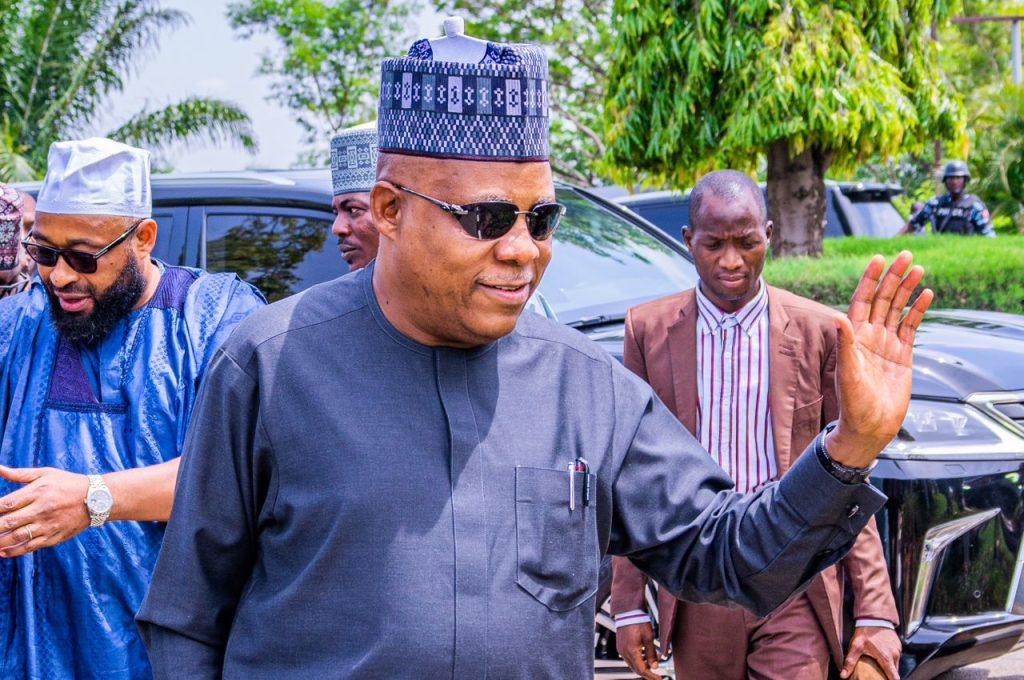
Vice President, Kashim Shettima
Nearly all Nigerians who took the time to evaluate the personalities of the new service chiefs agreed with that response. Both the president and the vice president in this partnership have recognized the need to alter the narratives around administration; as a result, in their wisdom, they have created something special for Nigerians, known as the leadership that listened.
To take a course and use it effectively, you need leadership with experience. The administration of Tinubu and Shettima is properly prepared. As the administration brings optimism to the people’s doorsteps, every action taken is a huge step toward releasing Nigeria and Nigerians from the bonds of poverty. I read the summaries of all the appointments that have been made thus far, and I can say with confidence that this is very unusual.
President Tinubu, an accountant and financial wizard, is the president of Nigeria. He may have a governance plan in place, and his actions to date have shown that he is certain that Nigeria will become even more powerful under his leadership.
The vice president, Shettima, remains a man of honor with such a unique leadership quality. His intelligence always confuses negative people with the facts of reality, and they often misunderstand him, but they cannot deny the fact that Shettima is simple, experienced, and very calculative when delivering his massages.
The upcoming appointments will further position this government on the path to prosperity even as it continues to make orderly progress. The reorganization that is currently taking place in certain top government organizations, formerly thought of as a floating pool for the sons and daughters of the high and mighty in society, has given many Nigerians who spoke about the administration newfound optimism.
The Renewed Hope Partnership: How Tinubu, Shettima Are Changing Narratives In Governance


Opinions
OPINION: Seven Terror Commanders Returned from Hajj. The Bigger Question Is: Who Cleared Them?

OPINION: Seven Terror Commanders Returned from Hajj. The Bigger Question Is: Who Cleared Them?
By Zagazola Makama
Seven suspected Boko Haram and ISWAP commanders reportedly completed one of the world’s most scrutinised international pilgrimages, boarded aircraft, travelled across international borders, landed at an international airport in Nigeria, and were only arrested upon arrival.
Pause for a moment. This is not merely another counterterrorism success story. It is also a frightening story about possible institutional failure. The obvious question should not only be how they were arrested. The more important question is: how did they get there in the first place?
Somewhere between the forests and the holy city of Makkah, somebody processed documents. Somebody approved travel. Somebody verified identities.
Somebody stamped passports. Somebody issued clearances. Somebody looked away.
And unless those “somebodies” are identified, arresting seven commanders may only scratch the surface of a much bigger security problem.
Last week, another controversy emerged when security analyst and Convener of the Katsina Security Community Initiative, Dr. Bashir Kurfi, alleged that the Katsina State Government sponsored some bandit leaders to Saudi Arabia as part of peace initiatives, claiming they received travel packages worth about ₦10 million each.
The Katsina State Government has categorically denied the allegation, describing it as false, baseless and politically motivated. Fair enough.
A denial is expected. But is a denial the end of the matter? Or should it be the beginning of a thorough investigation? That is the real issue.
When allegations of this magnitude are made by a known security advocate and they intersect with the later arrest of seven suspected terrorist commanders returning from Hajj, responsible institutions should not simply trade statements.
They should establish facts. Because Nigerians deserve answers. Were any suspected terrorists able to obtain Nigerian passport and other travel documents? If yes, how? Who verified their identities? Were aliases used? Did anyone inside any government institution facilitate the process?were there collaborators?
For years, Nigerians have focused almost exclusively on terrorists carrying rifles in the forests. Perhaps it is time to pay equal attention to insiders in offices. Terrorism rarely survives on guns alone. It also survives on compromised officials. It survives on insiders willing to replace patriotism with profit.
A terrorist cannot manufacture an international passport.He cannot approve immigration records.He cannot clear himself through airport procedures.He cannot erase himself from watchlists without help.Somewhere, someone opens the door.That person is just as dangerous as the man carrying the gun.
If the Interior Minister’s revelation is accurate, then this development should trigger one of the most comprehensive internal investigations Nigeria has conducted in recent years.
Nigeria has spent billions fighting Boko Haram and ISWAP.Thousands of soldiers have paid the ultimate price.Entire communities have been destroyed. Families have been displaced.
To then discover that suspected terrorist commanders were able to complete an international pilgrimage before being intercepted should concern every Nigerian.
OPINION: Seven Terror Commanders Returned from Hajj. The Bigger Question Is: Who Cleared Them?
Opinions
OPINION: The Silence After Risku’s Murder Is Dangerous — Benue Must Speak Before Violence Speaks for It
OPINION: The Silence After Risku’s Murder Is Dangerous — Benue Must Speak Before Violence Speaks for It
By Zagazola Makama
Several hours have passed since the brutal murder of the Chairman of the Miyetti Allah Cattle Breeders Association of Nigeria (MACBAN) in Benue State, Alhaji Ardo Risku, and his son, Ibrahim. Yet, what has echoed louder than the gunshots that ended their lives is the deafening silence from the Benue State Government. That silence is troubling.
According to multiple security sources, Risku was not just another community leader. He was widely regarded by security agencies as one of the most peaceful Fulani leaders in Benue State. A man who consistently stood on the side of dialogue rather than violence. He spent years encouraging restraint, persuading communities to embrace peaceful coexistence, and working closely with security agencies to prevent attacks and reprisals.
Ironically, he was murdered while returning from yet another peace meeting.If there is any definition of dying in the service of peace, this is it.Those who worked closely with him say his efforts played a significant role in keeping many parts of Benue relatively calm over the past several months.
At a time when the state had every reason to descend into another cycle of bloodshed, Risku remained one of the bridges connecting deeply divided communities. That bridge has now been targeted to be destroyed by the enemies of the state who benefits from crises.
Even more heartbreaking is the fact that Risku himself had repeatedly expressed fears that enemies of peace were after him. During previous peace engagements, he openly warned that there were individuals determined to eliminate him because of his commitment to reconciliation. On one occasion, he reportedly cancelled a peace meeting organised by a local government chairman in Benue after receiving credible security concerns about threats to his life.
Sadly, those fears became reality. One senior security official who knew Risku described his death as “disturbing, painful and entirely undeserved.” “He was a good man,” the officer said. “Throughout the years, he was never found wanting in any criminal activity. He never encouraged violence. He consistently supported every peace initiative. Ironically, peace became his death sentence,”
“This man spends years preaching peace. He convinces angry communities to embrace dialogue instead of revenge. He works with security agencies. He attends every peace meetings. He risks his own life trying to prevent bloodshed.Then he is murdered on his way home after honouring another invitation for peace talks.
In the end, his fears proved justified. The enemies of peace found him. But where were the voices of leadership? Still searching for the right press release? Or perhaps someone was calculating the political cost of condemning the murder of a Fulani man. Because these days, it appears that condemning the killing of an innocent citizen has become a political risk rather than a moral obligation.
Let’s ask the uncomfortable question. Would the condemnation have taken this long if the victim belonged to another ethnic group? That question alone should trouble every Nigerian.
Since when did ethnicity become the deciding factor in determining whose life deserves immediate sympathy?
Risku had lived in Benue for decades. He invested his energy in promoting peaceful coexistence. Security agencies trusted him enough to involve him in every peace initiatives.
Yet after his murder, official silence became louder than the bullets that killed him. What exactly are we telling other peace advocates?
Infact, hypocrites who tried to justify the killing are saying that he was killed by his own people in order to truncate the relative peace in the state.
The greatest beneficiaries of this silence are not grieving families. They are those who profit from conflict. Every peacemaker removed from the equation creates more room for extremists to recruit, manipulate and divide communities.
This is how wars are sustained, not only by those who pull triggers, but sometimes by those who cannot find the courage to condemn those who do. The murder of Ardo Risku is not simply about one Fulani man. It is about whether governments will speak only when it is politically convenient.
Governor Hyacinth Alia should rise above political calculations. He has an opportunity to demonstrate leadership at this critical moment.
Leadership is not measured by how loudly one speaks during campaign rallies. It is measured by how quickly one stands with every victims, even when doing so attracts criticism. Justice has no tribe. Condemnation has no religion. Empathy should have no ethnicity.
Is every Fulani man now to be judged solely by his ethnicity? If Risku whose record of peaceful engagement was acknowledged even by security agencies could become a victim simply because of who he was, then Nigeria is travelling down a road that no responsible society should ever accept.
Criminals should be identified by their crimes not by their ethnicity. Justice must remain individual. Collective guilt has never solved insecurity anywhere in the world. It only creates new victims and fresh cycles of revenge.
This is precisely why the Benue State Government must act, not tomorrow, not next week, but now. A clear public condemnation, reassurance to all communities, and a transparent investigation would send the message that every innocent life matters equally under the law. More importantly, security agencies must move swiftly to identify and arrest those responsible. There should be no sacred cows, no excuses and no delays.
Every security formation operating in Benue, troops of Operation Wirld Stroke, Police, the Department of State Services, the Nigeria Security and Civil Defence Corps and other relevant agencies, must immediately heighten surveillance in vulnerable communities. Intelligence gathering should be intensified, confidence-building measures strengthened, and every effort made to prevent revenge attacks.
Intelligence operations should be intensified immediately because history has shown that when respected community leaders are murdered, retaliation often follows. Stopping the next killing is just as important as investigating the last one.
Benue has bled enough. If the objective of those behind this killing was to destroy the fragile peace that had held for months, then government silence only risks helping them achieve exactly that.
Zagazola is a Counter Insurgency Expert and Security Analyst in the Lake Chad Region
OPINION: The Silence After Risku’s Murder Is Dangerous — Benue Must Speak Before Violence Speaks for It
Opinions
OPINION: USAID, Elon Musk, and Why Nigeria Must Demand Full Transparency from Foreign-Funded Organizations
OPINION: USAID, Elon Musk, and Why Nigeria Must Demand Full Transparency from Foreign-Funded Organizations
By: Zagazola Makama
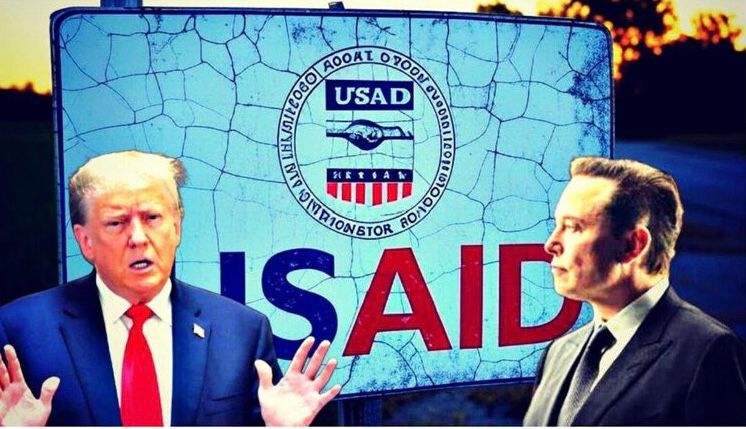
When Elon Musk and President Donald Trump’s administration moved to dismantle large portions of USAID’s operations in February 2025 through the Department of Government Efficiency (DOGE), the reaction across the world was immediate and deeply polarized.
To some, it was an attack on humanitarian assistance and development programmes that support vulnerable populations across Africa, Asia and Latin America. To others, it was a long-overdue attempt to expose what they viewed as an opaque international funding network operating beyond effective public scrutiny.
At the time, many Nigerians rushed to defend USAID and other international development organizations. Critics of the DOGE initiative accused Trump and Musk of targeting political opponents and undermining humanitarian work. Few were willing to entertain questions about how billions of dollars in foreign aid are distributed, monitored and accounted for.
More than a year later, however, the debate has not disappeared. Instead, it has intensified and gained tractions.
In Washington, lawmakers, researchers, journalists and policy analysts continue to debate whether U.S. foreign assistance programmes have, intentionally or unintentionally, financed organizations, projects or networks that later became linked to instability, extremism or political interference in foreign countries.
Supporters of the move argued that DOGE was simply demanding accountability and transparency for billions of dollars in U.S. taxpayer-funded foreign assistance. According to them, legitimate lifesaving programmes were not eliminated but were instead transferred to the U.S. State Department for continued administration. Critics, however, argued that the cuts risked disrupting humanitarian programmes that millions of vulnerable people depended upon around the world.
The controversy quickly expanded beyond budgetary concerns and evolved into a broader debate about the true purpose of USAID and the role of foreign aid in advancing U.S. interests abroad.
One of the most significant allegations came from U.S. Congressman Scott Perry, who claimed during a congressional hearing that some U.S. foreign aid funding had found its way, directly or indirectly, to terrorist organizations including Boko Haram, ISIS, Al-Qaeda and ISIS-K. Perry cited concerns over oversight failures and questioned whether American taxpayers were unknowingly financing extremist networks through aid programmes operating in unstable regions.
The session, titled “The War on Waste: Stamping Out the Scourge of Improper Payments and Fraud,” focused on alleged misappropriations of taxpayer funds.
“Who gets some of that money? Does that name ring a bell to anybody in the room? Because your money, your money, $697 million annually, plus the shipments of cash funds in Madrasas, ISIS, Al-Qaeda, Boko Haram, ISIS Khorasan, terrorist training camps. That’s what it’s funding,” Perry
Perry further cited USAID’s reported funding of $136 million for building 120 schools in Pakistan, alleging that there was “zero evidence” of the schools’ construction.
Perry added, ” If you think that the programme under Operation Enduring Sentinel entitled Women’s Scholarship Endowment, which receives $60 million annually, or the Young Women Lead, which gets about $5 million annually, is going to women who, by the way, if you read the Inspector General’s report, is telling you that the Taliban does not allow women to speak in public, yet somehow you’re believing, and American people are supposed to believe, that this money is going for the betterment of the women in Afghanistan. It is not.
You are funding terrorism, and it’s coming through USAID. And it’s not just Afghanistan, because Pakistan’s right next door.
“USAID spent $840 million in the last year, the last 20 years, on Pakistan’s education-related programme. It includes $136 million to build 120 schools, of which there is zero evidence that any of them were built. Why would there be any evidence? The Inspector General can’t get in to see them.
But you know what? We doubled down and spent $20 million from USAID to create educational television programs for children unable to attend the physical school. Yeah, they can’t attend it, because it doesn’t exist. You paid for it. “Somebody else got the money. You are paying for terrorism. This has got to end.”he said.
The allegations attracted international attention, particularly in Nigeria, where Boko Haram and ISWAP insurgencies have caused widespread devastation over the past decade. However, the allegations remain disputed, and no definitive public investigation has yet established that USAID intentionally funded Boko Haram or other terrorist groups.
The debate also extended to USAID’s involvement in various countries around the world. Critics argued that USAID had long served as a tool of American political influence, pointing to its activities in countries such as Serbia, Georgia, Ukraine, Venezuela, Bolivia, Cuba, Egypt, Tunisia, Lebanon, Haiti and Kyrgyzstan. According to critics, USAID-funded programmes often coincided with political transitions, opposition movements or so-called “color revolutions.”
Documents released over the years, including diplomatic communications and investigative reports, have fueled claims that aid programs sometimes served broader geopolitical objectives beyond humanitarian assistance.
Supporters of USAID reject these claims and maintain that the agency’s programmes were designed to promote democracy, civil society development, governance reforms and economic growth rather than regime change.
Another major controversy involved USAID’s partnership with EcoHealth Alliance and research collaborations involving the Wuhan Institute of Virology in China. Critics alleged that U.S.-funded research contributed to gain-of-function experiments that may have played a role in the emergence of COVID-19. Some commentators have argued that funding routed through EcoHealth Alliance helped support coronavirus research at the Wuhan laboratory.
These allegations gained traction after the COVID-19 pandemic, which killed millions of people globally and caused unprecedented economic disruption. However, the origins of COVID-19 remain the subject of ongoing scientific and political debate, and there is no universally accepted conclusion linking USAID funding directly to the creation of the virus.
Additional allegations raised by critics include claims that USAID funded controversial programmes in several countries, supported organizations later accused of misconduct, and operated projects that aligned closely with broader U.S. foreign policy objectives. Critics have also pointed to reports concerning Afghanistan, Cuba, Venezuela and other countries as evidence that aid programmes sometimes served strategic geopolitical purposes.
This is where Elon Musk’s intervention changed the conversation. Whether one admires him or opposes him, Musk forced public attention onto questions that many institutions preferred to avoid. He challenged long-standing assumptions about foreign aid. He questioned bureaucratic structures that had operated for decades with limited public scrutiny.
Supporters of DOGE and Elon Musk argue that these controversies justified a comprehensive review of USAID operations. They credit Musk with exposing weaknesses in oversight systems and forcing public scrutiny of foreign aid expenditures that had long escaped widespread attention.
In Nigeria, the debate gained further relevance after the House of Representatives established an ad hoc committee to investigate allegations that foreign aid funds may have been diverted to support Boko Haram activities. The committee’s work became controversial after civil society organizations and development partners criticized its demands as excessive and intrusive. Following consultations with stakeholders, the leadership of the House reportedly forced to halt further actions by the committee and encouraged a more collaborative engagement process.
The decision represented a missed opportunity to thoroughly investigate allegations involving aid funding, terrorism funding and national security, even when the civil society organizations sees it as a necessary step to protect legitimate humanitarian actors from undue interference.
Nigeria has suffered enormously from terrorism over the past two decades. Thousands of soldiers have been killed. Thousands of security personnel have been wounded. Entire communities have been displaced. Millions have lost homes, livelihoods and loved ones.
According to various estimates, insurgency-related violence across the Lake Chad Basin has claimed hundreds of thousands of lives either directly or indirectly. Given those realities, no responsible nation can afford to ignore questions about funding networks that may influence security dynamics.
What remains clear is that the controversy surrounding USAID has evolved into a much larger discussion about transparency, accountability and oversight of international aid programmes. While many allegations remain unproven, the debate has prompted renewed calls for stronger monitoring mechanisms, greater disclosure of funding flows and more rigorous auditing of aid programmes operating in conflict-affected regions.
The issue is particularly significant. Regardless of where one stands on the USAID controversy, many Nigerians agree that all organizations operating in conflict zones whether governmental, international or local should be subject to appropriate transparency and accountability measures. This does not mean every NGO is guilty. Far from it.
Many humanitarian organizations operating in Nigeria perform lifesaving work every day. They provide food, healthcare, education, water and protection services to populations that would otherwise face unimaginable hardship. Their contributions should be acknowledged and respected. However, acknowledging their work does not exempt them from scrutiny.
Transparency should not be feared by legitimate organizations. Any organization receiving millions of dollars in foreign funding and operating within Nigerian territory should be prepared to demonstrate where funds originate, how they are spent and who ultimately benefits.
The same standards should be applied to government agencies, private companies, political organizations and international development partners. Nigeria must move beyond the outdated assumption that every organization carrying a humanitarian label automatically deserves immunity from examination.
History has shown that international aid systems are not immune from abuse. Around the world, there have been documented cases of aid diversion, corruption, procurement fraud and programme manipulation. Today in Nigeria, we are witnessing how foreign funding are being used to promote FALSE narratives designed to destabilized the country.
In an age of information warfare and geopolitical competition, money often shapes outcomes long before weapons appear. Nigeria should therefore not wait for foreign governments to determine whether concerns about aid transparency deserve attention.
The ultimate goal should not be to shut down humanitarian assistance. The goal should be to ensure that every dollar, naira or euro entering the country serves the people it was intended to help and never becomes a tool for instability, manipulation or violence.
The lesson from the ongoing USAID debate is not that all aid is bad. The lesson is that all aid must be accountable. Nigeria must wake up to that reality. Our national security, sovereignty and future depend on it.
Zagazola Makama is a Counter Insurgency Expert and Security Analyst in the Lake Chad Region
OPINION: USAID, Elon Musk, and Why Nigeria Must Demand Full Transparency from Foreign-Funded Organizations

Late Community Leader Daniel Pulle Laid to Rest Amid Tears as Killing Continues to Stir Questions in Plateau

The Plateau Narrative War: Why Naming Criminals Should Not Be Mistaken for Profiling Communities

COAS commissions 6 Division RSM House, reaffirms frontline leadership role of regimental sergeant majors

Roger Federer’s Shock as DNA Results Reveal Myla and Charlene Are Not His Biological Children

THE PLIGHT OF FARIDA

FAILED COUP IN BURKINA FASO: HOW TRAORÉ NARROWLY ESCAPED ASSASSINATION PLOT AMID FOREIGN INTERFERENCE CLAIMS
-
 News2 years ago
Roger Federer’s Shock as DNA Results Reveal Myla and Charlene Are Not His Biological Children
-
Opinions4 years ago
THE PLIGHT OF FARIDA
-
 News1 year ago
FAILED COUP IN BURKINA FASO: HOW TRAORÉ NARROWLY ESCAPED ASSASSINATION PLOT AMID FOREIGN INTERFERENCE CLAIMS
-

 News2 years ago
EYN: Rev. Billi, Distortion of History, and The Living Tamarind Tree
-
 Opinions5 years ago
POLICE CHARGE ROOMS, A MINTING PRESS
-

 ACADEMICS2 years ago
A History of Biu” (2015) and The Lingering Bura-Pabir Question (1)
-

 Columns2 years ago
Army University Biu: There is certain interest, but certainly not from Borno.
-

 Politics1 year ago
2027: Why Hon. Midala Balami Must Go, as Youths in Hawul and Asikira/Uba Federal Constituency Reject ₦500,000 as Sallah Gift
