
News
The Sahel Descent: Illusion of Russian Mercenaries-Lessons for Nigeria and Africa

The Sahel Descent: Illusion of Russian Mercenaries-Lessons for Nigeria and Africa
•Why Wagner betrayed Africa—and what Nigeria must learn fast.
•Russia’s mercenaries promised security. They delivered bloodshed, racism, and catastrophic failure. Now the jihadists are at the gates—and Nigeria could be next.
By Oumarou Sanou
Bamako is burning—again, and the African Union, the regional body tasked with promoting peace and security, is panicking. The capital of Mali, once a proud symbol of West African resilience, now teeters on the brink of collapse, not from foreign invasion but from jihadists who have outlasted coups, crushed alliances, and exposed the hollowness of the “sovereign security” promised by military juntas and their Russian backers. What began as a bold pledge to “restore stability and reclaim dignity” has descended into chaos, bloodshed, racism, and betrayal—the tragic proof that mercenaries cannot buy peace, and juntas cannot govern by force. The Sahel’s descent is not just Mali’s tragedy—it is a warning to Nigeria and the entire region.
When Mali’s coup leaders expelled French and UN forces and turned to Russia’s Wagner Group in 2021, they sold their citizens a dangerous illusion: that imported soldiers of fortune would succeed where legitimate institutions had failed. Three years later, the results are catastrophic. Jihadist groups are advancing toward Bamako, civilians are dying in record numbers, and the mercenaries once paraded as “liberators” have turned Mali’s soil into a graveyard of false hope.
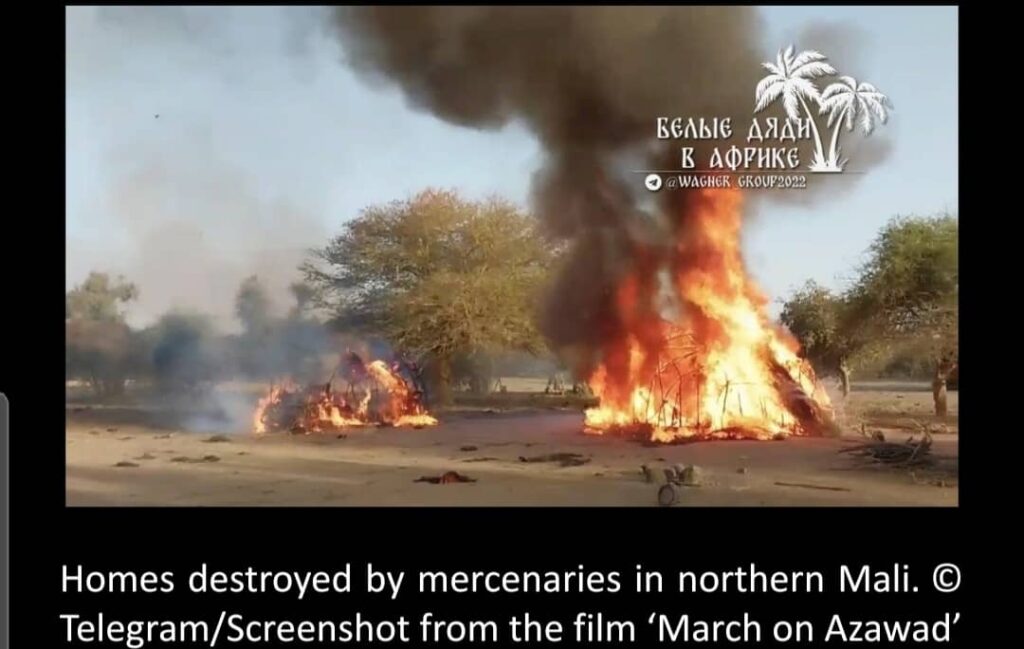
According to conflict monitors, nearly 3,000 civilians have been killed since Wagner’s arrival—many at the hands of their supposed protectors. Entire communities have been wiped out, markets torched, and villages erased under the pretext of “counterterrorism operations.”
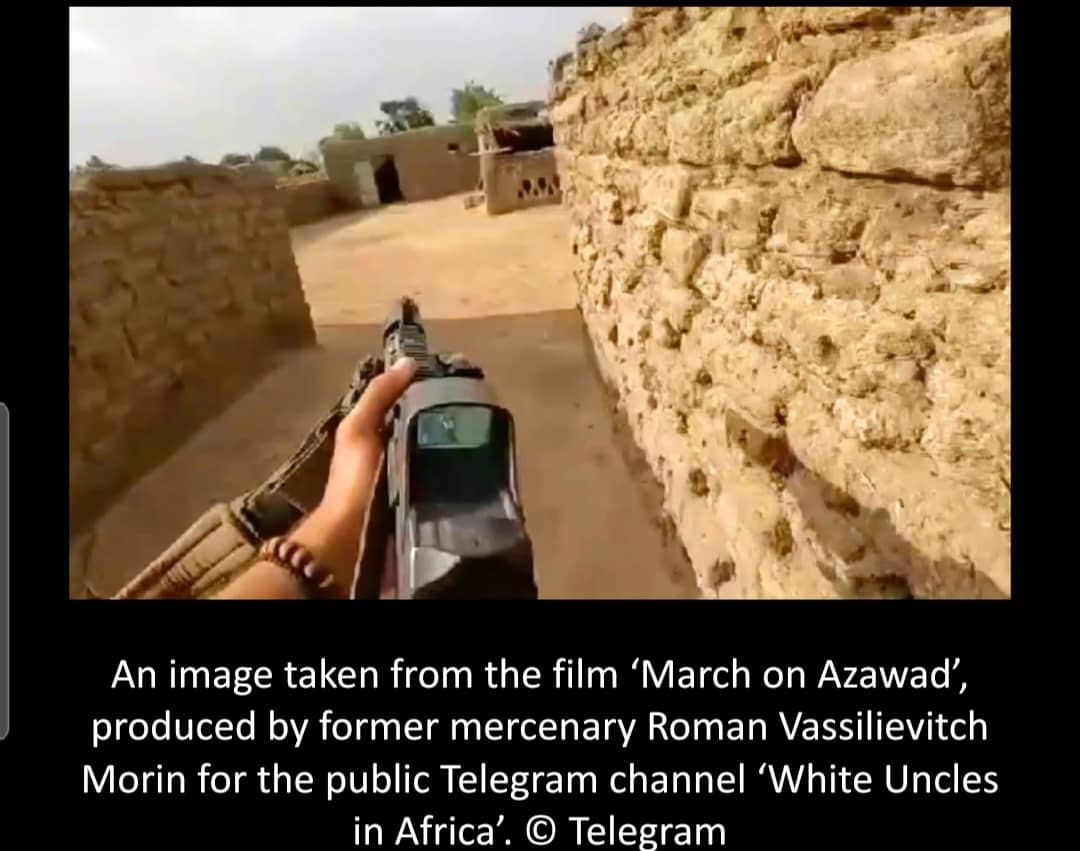
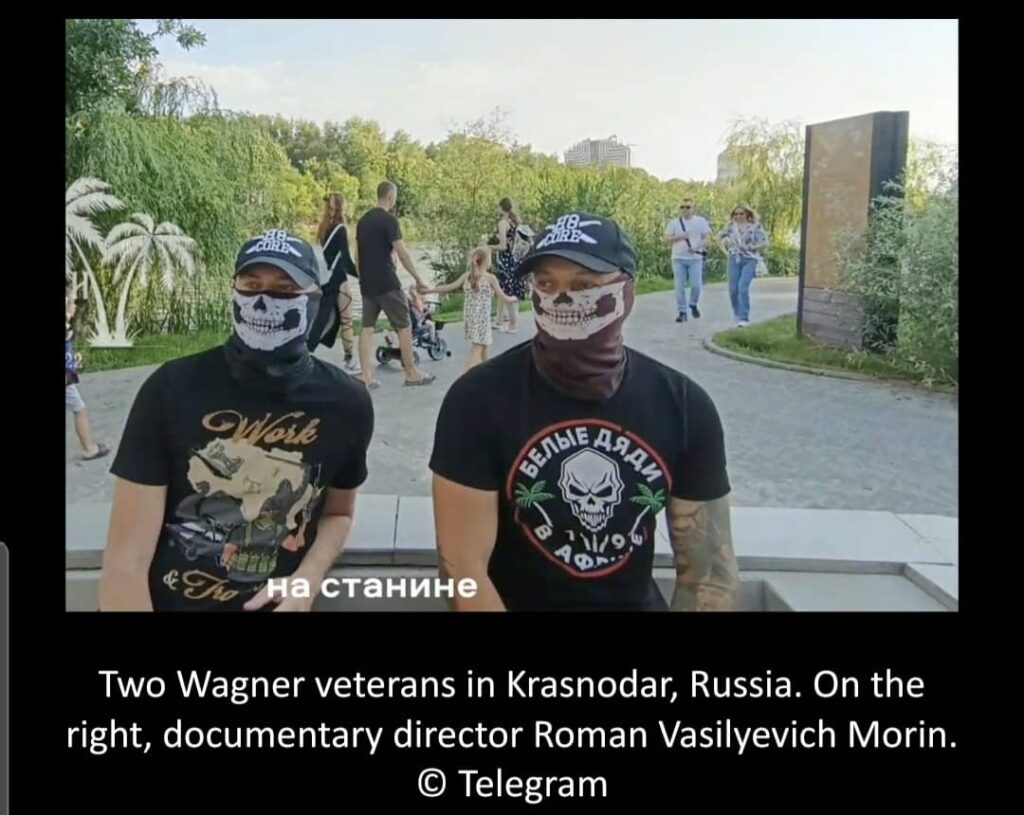
The recently leaked documentary March on Azawad—a chilling self-portrait of Russian mercenaries—reveals the futility and racism embedded in their operations. Wagner veterans, now safely back in Russia, describe Malian soldiers as “cowards” and “thieves,” mocking the very people they were paid to defend. Their disdain echoes the systemic racism of Russian society, where ethnic minorities are treated as expendable cannon fodder. These mercenaries, steeped in bigotry and violence, brought to Africa not solidarity, but supremacy — the same dehumanising ideology that drives their atrocities in Ukraine, Libya, and now the Sahel.
The brutality Wagner displays toward African civilians is not aberrational—it is a feature, not a bug. These mercenaries carry to Africa the same racism they practice at home against ethnic minorities in Russia’s own territories. In Chechnya, Dagestan, and other non-Russian regions, minorities face systemic discrimination, violence, and marginalisation. When these fighters arrive in Mali, Burkina Faso, and Niger, they bring that contempt with them.
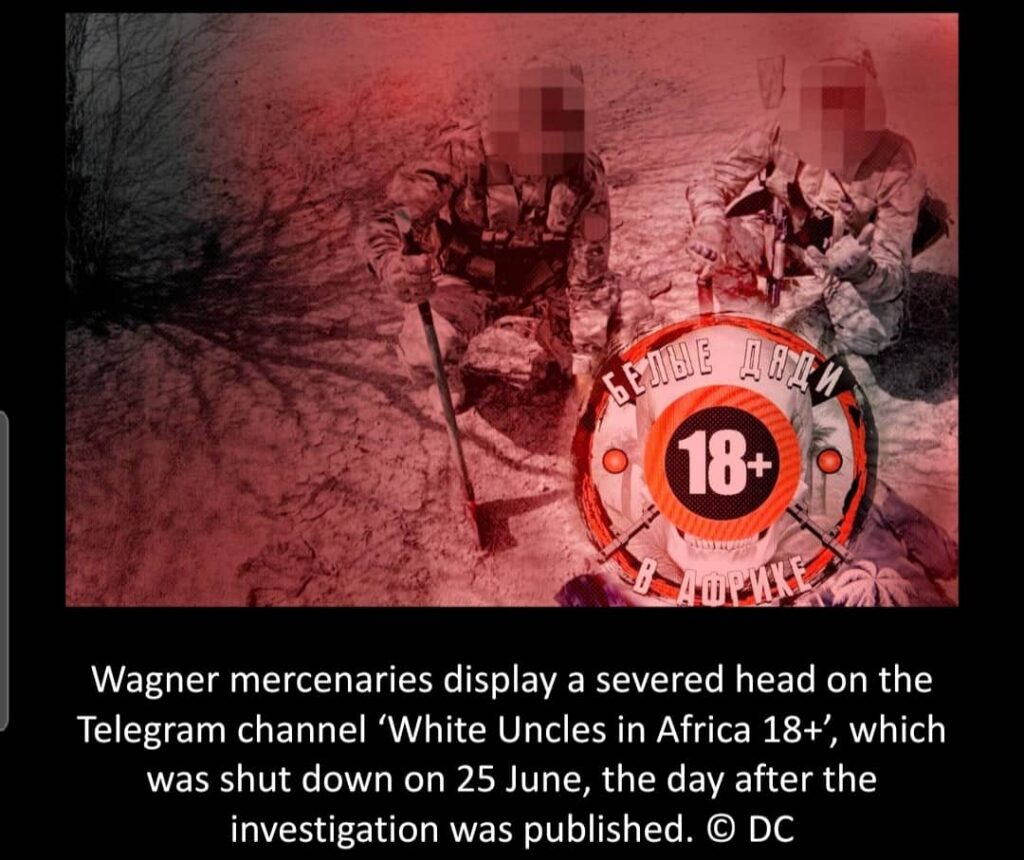
Their crimes are well-documented. In Moura, central Mali, at least 500 civilians were massacred in a single operation in March 2022. Men were executed, women assaulted, and children mutilated—atrocities gleefully shared in private Wagner Telegram channels like “White Uncles in Africa +18”, where mercenaries celebrated their brutality with the depraved language of white supremacy. To them, African civilians and terrorists were indistinguishable—both expendable, both “sand people.” This is not counterterrorism. It is a campaign of dehumanisation.
Behind Wagner’s bloody record lies a simple motive: profit. The mercenaries did not come for Pan-African solidarity; they came for gold. Mali pays Wagner not only in cash but in mineral concessions—trading sovereignty for survival. One mercenary admits in the documentary that recovering and seizing gold mines was part of their operational “successes.” They looted everything: motorcycles, trucks, excavation equipment. Mali’s resources now flow to Moscow, while its people bleed in silence.
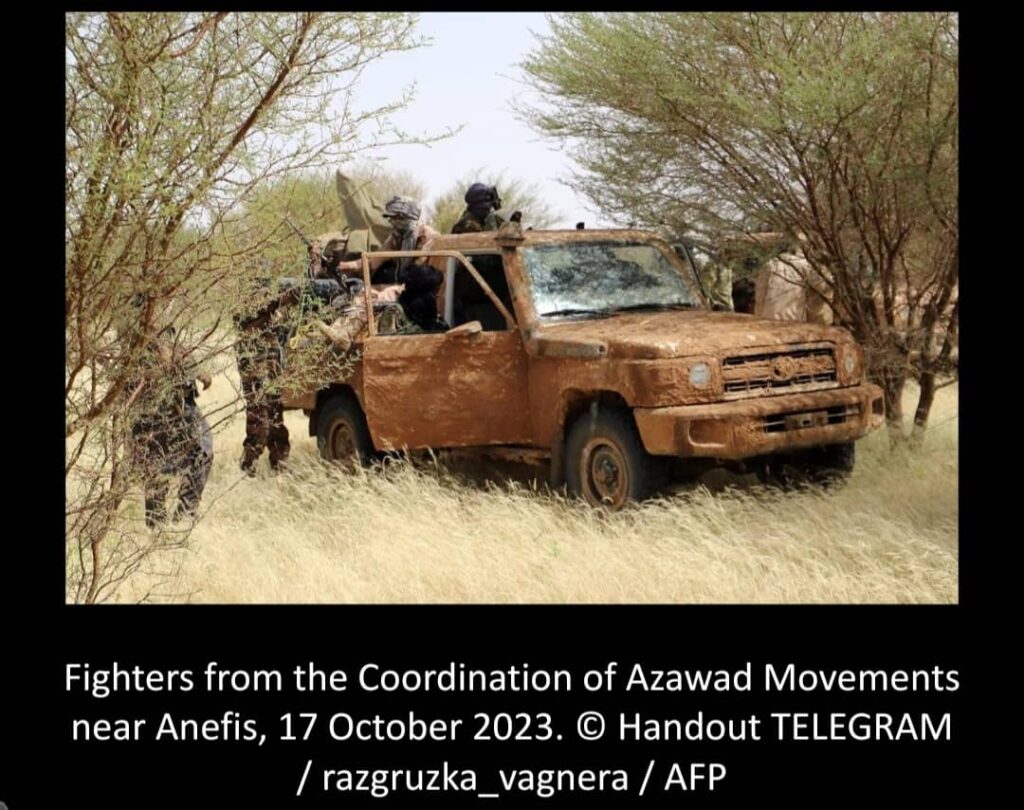
What began as a “security partnership” quickly degenerated into an extractive occupation. Wagner’s recklessness and racial contempt alienated communities, fractured the Malian army, and emboldened jihadists. The July 2024 defeat at Tinzawaten, where 84 Russian mercenaries died alongside dozens of Malian troops, was not an exception—it was the predictable outcome of arrogance and incompetence. The withdrawal of Wagner and its rebranding as “Africa Corps” in 2025 has done little to stem the tide. Today, Bamako stands at the edge of jihadist capture.
The implications for West Africa—and especially Nigeria—are profound. Insecurity in Mali, Burkina Faso, and Niger does not remain contained; it metastasises. Jihadist groups like JNIM and ISGS have expanded their operations southward, exploiting porous borders, ungoverned spaces, and weak regional coordination. Refugees fleeing the Sahel are already straining Nigeria’s northern communities, while arms trafficking and extremist propaganda infiltrate the hinterland and towns. The possible fall of Bamako would open another corridor of terror stretching from the Maghreb to the Gulf of Guinea—an arc of instability that could engulf the entire subregion. This underscores the need for robust international collaboration in addressing the crisis.
Nigeria must heed this warning with urgency and clarity.
Unlike Mali’s junta, Nigeria has—so far—resisted the temptation of outsourcing its sovereignty to foreign mercenaries. This path has been slow, imperfect, and riddled with challenges, but it is fundamentally different. They have so far relied on their national forces, accountable—however imperfectly—to the constitution, and also engage regional structures such as ECOWAS and the Multinational Joint Task Force, a collaborative security initiative involving several African countries. Nigeria collaborate internationally while preserving national agency.
This is the only sustainable route to lasting peace.
But Nigeria must not grow complacent. Their military architecture still faces serious weaknesses—underfunding, corruption, rights abuses, and inadequate intelligence coordination. Reform is not optional; it is urgent. The country needs a people-centred security strategy built on trust, legitimacy, and professionalism. That means investing in their troops, strengthening community-based intelligence, enhancing regional cooperation, and tackling the root causes that jihadists exploit: poverty, exclusion, and bad governance.
For the rest of Africa, the lesson from the Sahel is brutally clear: mercenaries do not save nations—they strip them bare. Authoritarian juntas that cloak repression in “sovereignty” only invite further collapse. Imported guns or imperial contracts cannot secure Africa’s stability. It must be built through accountable institutions, regional solidarity, and the courage to confront our internal failings head-on.
Mali’s tragedy is a mirror. It shows what happens when desperation replaces strategy, and when sovereignty becomes a slogan for repression. The fall of Bamako—if it happens—will not just be Mali’s failure; it will be a continental warning. Nigeria must learn, act, and lead—because in today’s Sahel, those who chase shortcuts to security end up losing both peace and power.
Oumarou Sanou is a social critic, Pan-African observer and researcher focusing on governance, security, and political transitions in the Sahel. He writes on geopolitics, regional stability, and the evolving dynamics of African leadership. Contact: sanououmarou386@gmail.com
The Sahel Descent: Illusion of Russian Mercenaries-Lessons for Nigeria and Africa


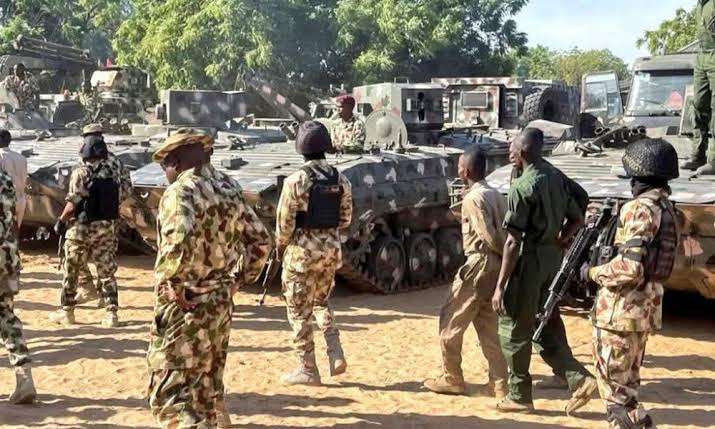
Troops arrest suspected foreign national along Azir–Damboa road in Borno
By Zagazola Makama
Troops of 25 Brigade, in collaboration with the Civilian Joint Task Force (CJTF), have arrested a suspected foreign national along the Azir–Damboa road in Borno State.
Military sources told Zagazola Makama that the suspect was apprehended at about 5:55 p.m. on Sept. 5 following a tip-off from local residents about the movement of a suspected foreigner along the route.
During preliminary questioning, the suspect reportedly identified himself as a national of the Republic of Cameroon.
He told the troops that he entered Nigeria through Taraba State and was travelling towards Niger State in search of artisanal work but lost his way.
The suspect remains in military custody for further investigation and necessary action, while authorities work to establish his identity, travel history and circumstances surrounding his presence in the area.
Troops arrest suspected foreign national along Azir–Damboa road in Borno
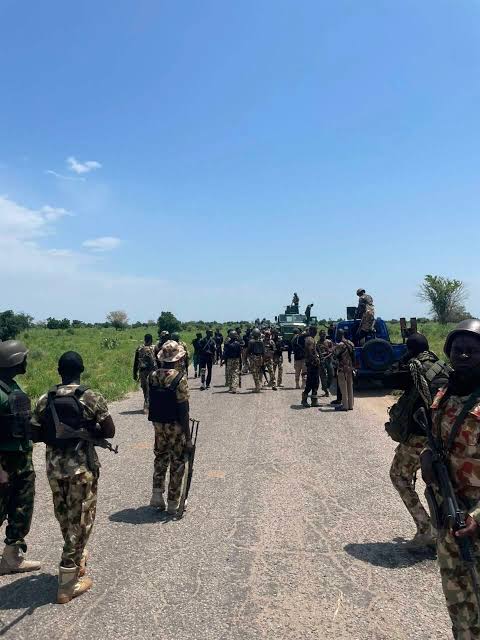
Troops arrest suspected ISWAP member with gunshot wound in Borno
By Zagazola Makama
Troops of 82 Division Task Force Battalion have arrested a suspected ISWAP member who was found loitering around Papa 7 location in Borno State.
Military sources told Zagazola Makama that the suspect was apprehended at about 9:35 a.m. on Sept. 6 while troops were conducting picketing duties in the area.
The suspect was found with a gunshot wound and was taken into custody for questioning.
Preliminary interrogation reportedly indicated that the suspect had descended from Gava in the Mandara Mountains in search of medical attention.
Sources attributed his movement to the effects of sustained military pressure and psychological operations targeting terrorist enclaves in the area.
The suspect remains in military custody for further investigation, while security forces continue operations aimed at degrading terrorist groups and disrupting their activities in the Mandara Mountains.
Troops arrest suspected ISWAP member with gunshot wound in Borno
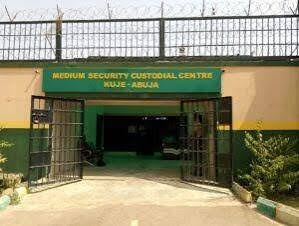
Investigation begins as SNCO dies after shooting incident at Kuje custodial centre
By Zagazola Makama
Authorities have commenced an investigation into a shooting incident involving a senior non-commissioned officer at the Kuje Medium Security Custodial Centre in the Federal Capital Territory.
Sources told Zagazola Makama that the incident occurred at about 9:37 a.m. on Sept. 7 while the personnel was on duty at the facility.
According to the sources, the SNCO fired at his commanding officer, but the shot missed after the officer moved away.
The SNCO subsequently died from a self-inflicted gunshot wound.
The circumstances surrounding the incident remain unclear, and an investigation has been launched to establish what led to the shooting.
The remains of the deceased personnel were evacuated to the University of Abuja Teaching Hospital (UATH) for further action.
Authorities are expected to provide additional details as the investigation progresses.
Investigation begins as SNCO dies after shooting incident at Kuje custodial centre

Troops arrest suspected foreign national along Azir–Damboa road in Borno

Troops arrest suspected ISWAP member with gunshot wound in Borno

Investigation begins as SNCO dies after shooting incident at Kuje custodial centre

Roger Federer’s Shock as DNA Results Reveal Myla and Charlene Are Not His Biological Children

THE PLIGHT OF FARIDA

FAILED COUP IN BURKINA FASO: HOW TRAORÉ NARROWLY ESCAPED ASSASSINATION PLOT AMID FOREIGN INTERFERENCE CLAIMS
-
 News2 years ago
Roger Federer’s Shock as DNA Results Reveal Myla and Charlene Are Not His Biological Children
-
Opinions5 years ago
THE PLIGHT OF FARIDA
-
 News1 year ago
FAILED COUP IN BURKINA FASO: HOW TRAORÉ NARROWLY ESCAPED ASSASSINATION PLOT AMID FOREIGN INTERFERENCE CLAIMS
-

 News2 years ago
EYN: Rev. Billi, Distortion of History, and The Living Tamarind Tree
-
 Opinions5 years ago
POLICE CHARGE ROOMS, A MINTING PRESS
-

 ACADEMICS3 years ago
A History of Biu” (2015) and The Lingering Bura-Pabir Question (1)
-

 Columns3 years ago
Army University Biu: There is certain interest, but certainly not from Borno.
-

 Politics1 year ago
2027: Why Hon. Midala Balami Must Go, as Youths in Hawul and Asikira/Uba Federal Constituency Reject ₦500,000 as Sallah Gift
