
News
Troops Repel Boko Haram attack in Banki

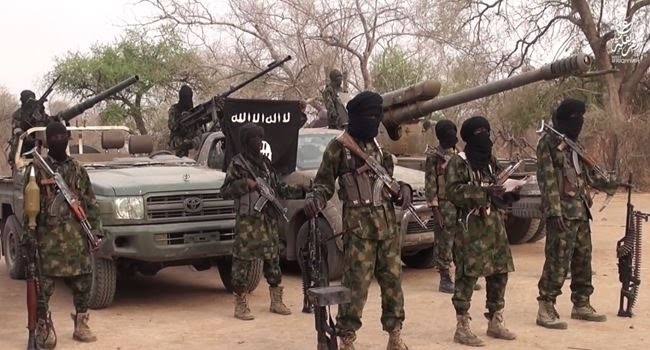
Troops Repel Boko Haram attack in Banki
By: Zagalola Makama
The troops of 152 Battallion, Operation Hadin Kai in Banki have successfully repelled attacks by the Boko Haram in Banki, Borno State, northeast Nigeria.
Banki is about 127 kilometers to Maiduguri the restive capital of Borno State.
It was gathered that the insurgents made an attempt to attack the populous town bordering Cameroun with heavy weapons at about 4 a.m on Tuesday.
NEWSng learnt that The troops swiftly engaged the terrorists in a fierce gun battle.
The sources said the troops later overwhelmed the terrorists with superior firepower, forcing them to abandon their mission and took to their heels.
The troops, however, chased the retreating terrorists towards the forest where they engaged them in another gun battle.
NEWSng could not be ascertain the numbers of fatalities on the side of the adversaries but no casualties on the side of the troops.
Troops Repel Boko Haram attack in Banki


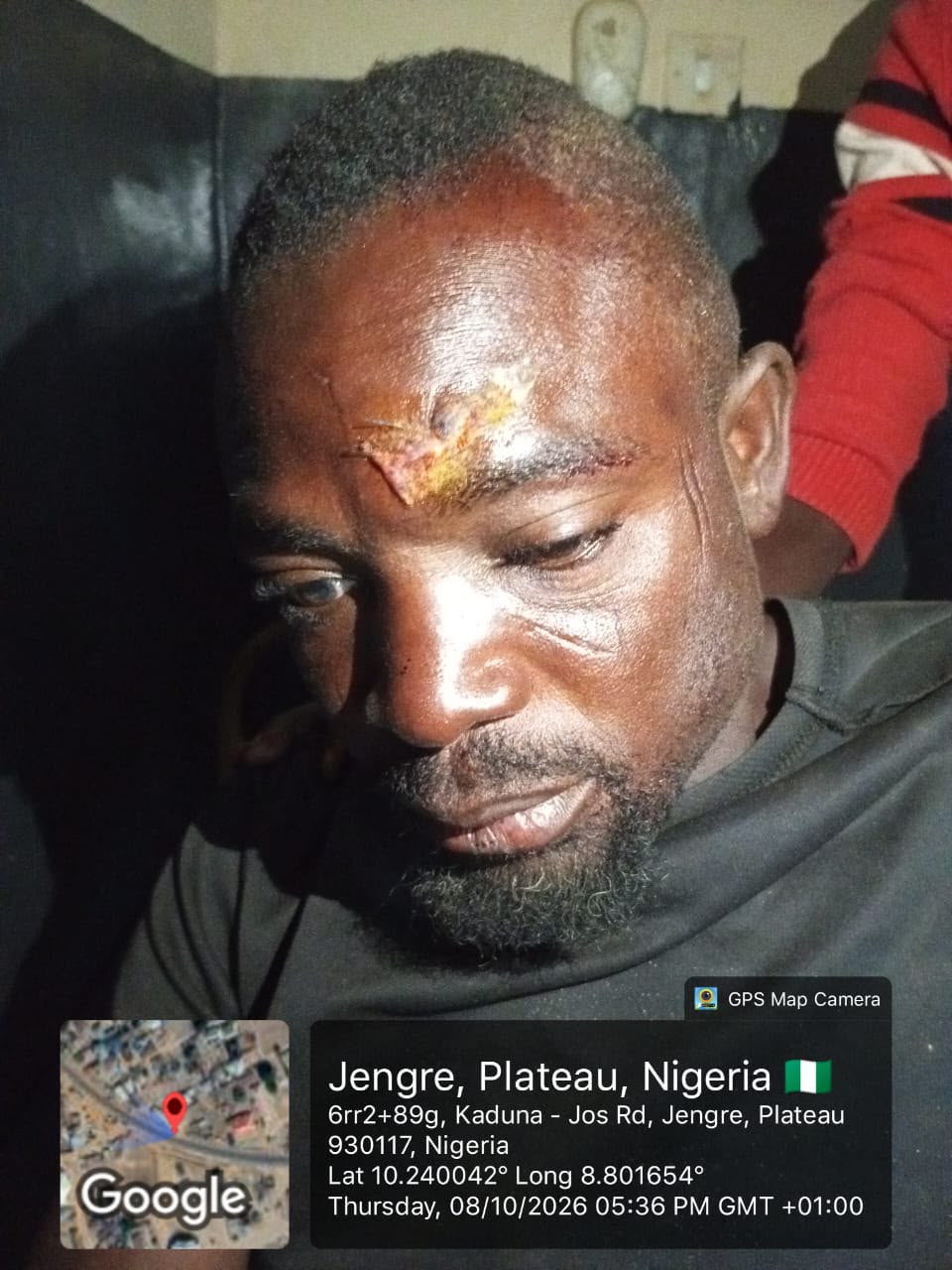
Farmer Injured in Machete Attack Allegedly by Herdsmen in Plateau
By Zagazola Makama
A farmer, identified as Babangida Atah, has been injured in a machete attack allegedly carried out by Fulani herders at Rafi Katako village in Bassa Local Government Area of Plateau State.
Security sources said the incident occurred at about 1 p.m. on Thursday, Oct. 8, when troops of Sector 1, Operation Enduring Peace (OPEP), deployed in Jengre, responded to a report of an assault on the farmer at his farm.
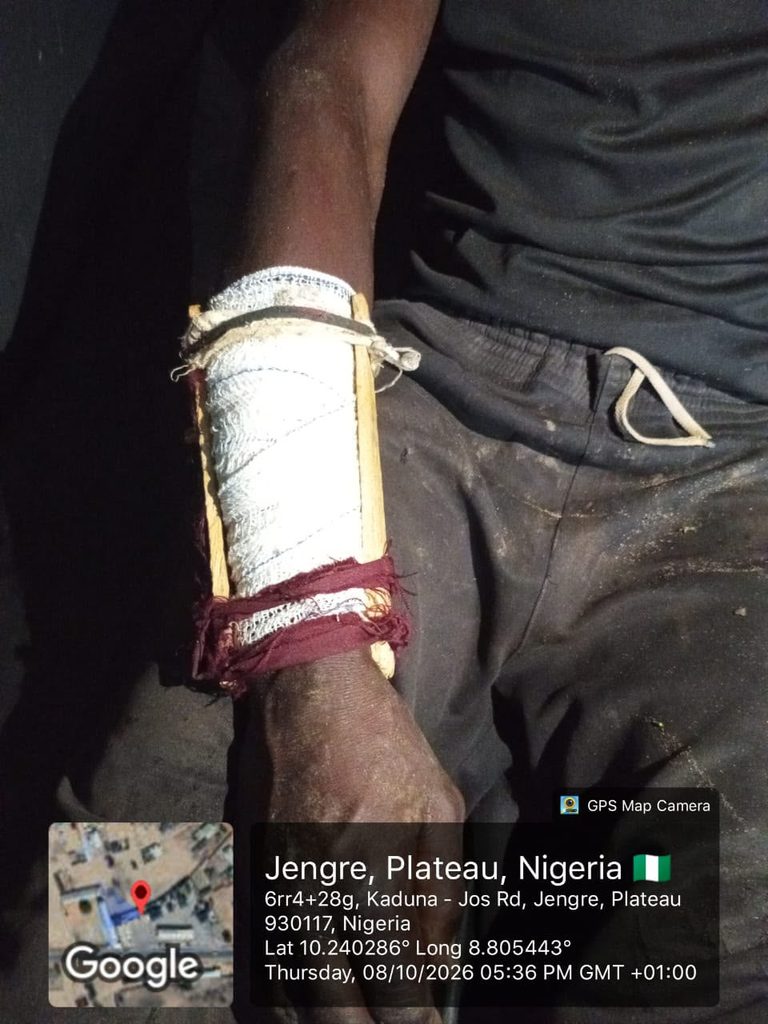
The sources said the troops, upon arrival at the scene, found Atah with machete wounds, while the suspected attackers had fled before their arrival.
The victim was evacuated to a nearby hospital for medical attention.
Security personnel have commenced efforts to track down and apprehend the fleeing suspects for further investigation and necessary legal action.
Further details are expected as efforts to identify and arrest those responsible continue.
Farmer Injured in Machete Attack Allegedly by Herdsmen in Plateau

Suspected Fulani bandits Kill Man, Block Road in Plateau Community
By Zagazola Makama
Suspected Fulani bandits members have reportedly killed a man identified as Zubairu Danirai after blocking the Manja–Mpili road in Mangu Local Government Area of Plateau State.
Security sources said the incident occurred at about 4:30 p.m. on Thursday, Oct. 8, when troops of Sector 8, Operation Enduring Peace (OPEP), deployed at Manja, responded to a report of the roadblock and killing of a native returning from the market.
The sources said the troops, upon arriving at the scene, made contact with the suspected assailants, who fled into the surrounding mountains following an exchange of fire.
The troops subsequently searched the area and discovered the victim’s body.
A manhunt has been launched to track down the fleeing suspects, while security personnel continue efforts to prevent further attacks and restore safety along the affected route.
The incident adds to security concerns in parts of Mangu Local Government Area, where attacks on residents and road users have heightened fears over the safety of local communities.
Further details are expected as investigations continue.
Suspected Fulani bandits Kill Man, Block Road in Plateau Community
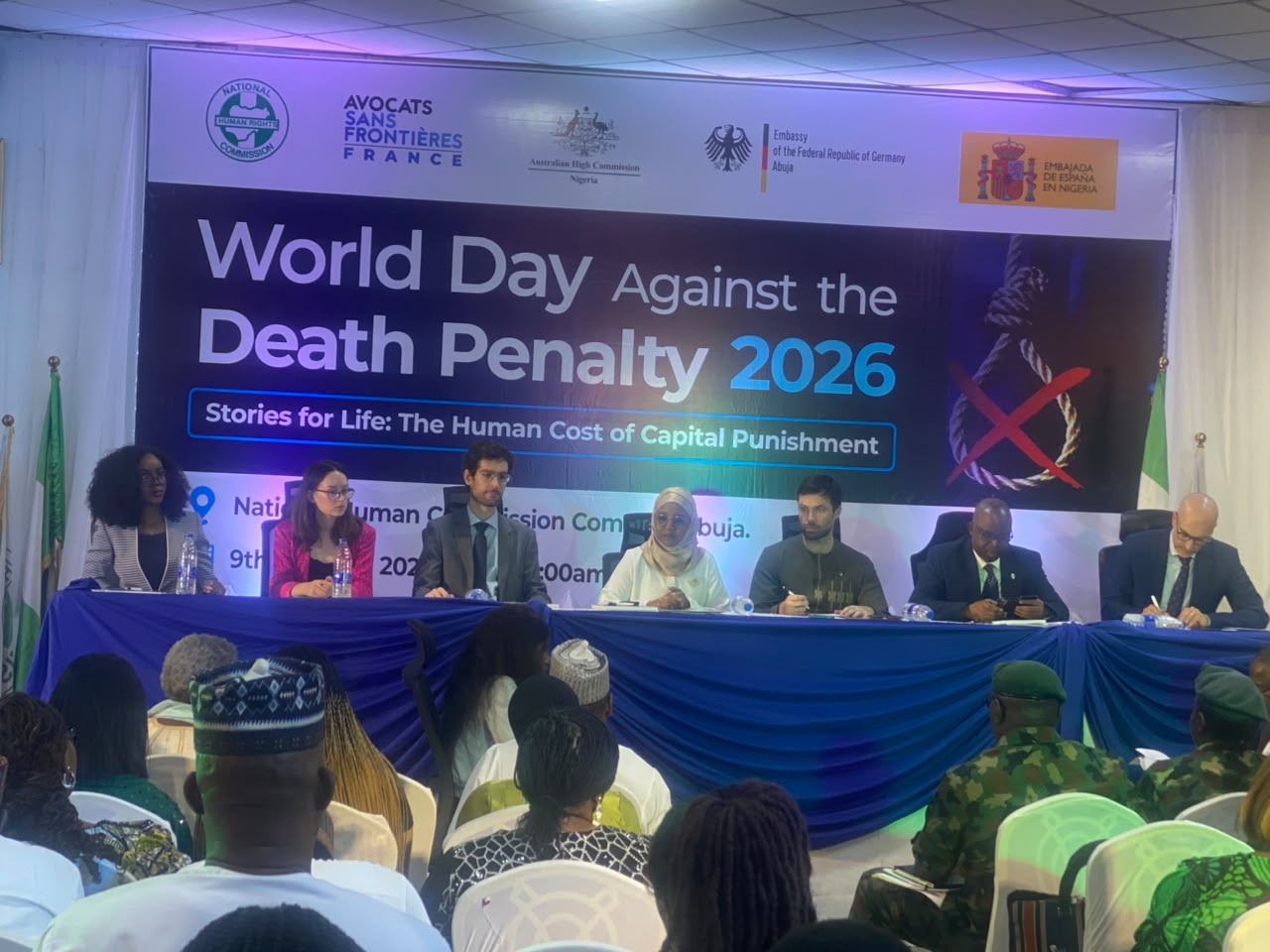
NHRC seeks death penalty moratorium as 3,000 inmates languish on death row
…Commission urges governors to commute sentences, calls for review of mandatory capital punishment laws
By: Michael Mike
The National Human Rights Commission (NHRC) has called on the Federal Government to declare an official moratorium on executions and state governors to commute eligible death sentences to life imprisonment, amid concerns that more than 3,000 inmates remain on death row across Nigeria.
The commission said Nigeria was approaching 10 consecutive years without a state execution, a development it described as meeting the international standard for a de facto moratorium, despite the continued imposition of death sentences and the prolonged detention of condemned inmates.
The Executive Secretary of the NHRC, Chief Tony Ojukwu, made the call on Friday in Abuja during the commemoration of the 2026 World Day Against the Death Penalty at the commission’s headquarters.
Ojukwu urged the Federal Government to formalise the suspension of executions, while calling on state governors to exercise their constitutional prerogative of mercy to commute death sentences, particularly in cases where inmates had exhausted their appeals but remained on death row.
He also advocated a review of laws prescribing mandatory death sentences, arguing that judges should have the discretion to consider mitigating circumstances and systemic vulnerabilities before determining appropriate punishment.
Although capital punishment remains constitutionally valid in Nigeria, the NHRC chief stressed that its administration must be consistent with the country’s human rights obligations and the fundamental principles of fair trial and due process.
He expressed concern that inadequate access to pro bono legal representation, forced confessions and delays in bringing suspects to trial continued to undermine procedural justice, raising questions about the fairness of proceedings in capital cases.
According to him, the protection of human rights requires more than the existence of legal provisions, insisting that the justice system must guarantee fair hearings and ensure that the death penalty is restricted to the most serious crimes in line with applicable international standards.
The commission outlined three immediate policy measures: an official moratorium on executions, the commutation of eligible death sentences to life imprisonment, and a comprehensive review of laws prescribing mandatory capital punishment.
Ojukwu’s appeal places renewed focus on the position of condemned inmates who have exhausted their legal options but remain in custody, as well as the wider implications of prolonged confinement on the administration of criminal justice.
A formal moratorium, the commission argued, would provide an immediate policy framework for suspending executions while the country considers broader reforms to its capital punishment regime.
The proposed review of mandatory death penalty provisions would also allow courts to take individual circumstances into account when sentencing offenders, rather than being compelled by law to impose the same punishment regardless of relevant mitigating factors.
The commemoration was organised by the NHRC in partnership with Avocats Sans Frontières (ASF) France, the Australian High Commission and the Embassy of Germany, with support from the Royal Norwegian Embassy.
Ojukwu expressed hope that deliberations at the event would produce a joint call-to-action communiqué to advance sustainable reforms in Nigeria’s justice sector.
The commission’s position comes amid continuing debates over capital punishment, the protection of the rights of accused persons and the need to strengthen safeguards against miscarriages of justice.
NHRC seeks death penalty moratorium as 3,000 inmates languish on death row

Farmer Injured in Machete Attack Allegedly by Herdsmen in Plateau

Suspected Fulani bandits Kill Man, Block Road in Plateau Community

NHRC seeks death penalty moratorium as 3,000 inmates languish on death row

Roger Federer’s Shock as DNA Results Reveal Myla and Charlene Are Not His Biological Children

THE PLIGHT OF FARIDA

FAILED COUP IN BURKINA FASO: HOW TRAORÉ NARROWLY ESCAPED ASSASSINATION PLOT AMID FOREIGN INTERFERENCE CLAIMS
-
 News3 years ago
Roger Federer’s Shock as DNA Results Reveal Myla and Charlene Are Not His Biological Children
-
Opinions5 years ago
THE PLIGHT OF FARIDA
-
 News1 year ago
FAILED COUP IN BURKINA FASO: HOW TRAORÉ NARROWLY ESCAPED ASSASSINATION PLOT AMID FOREIGN INTERFERENCE CLAIMS
-

 News3 years ago
EYN: Rev. Billi, Distortion of History, and The Living Tamarind Tree
-
 Opinions5 years ago
POLICE CHARGE ROOMS, A MINTING PRESS
-

 ACADEMICS3 years ago
A History of Biu” (2015) and The Lingering Bura-Pabir Question (1)
-

 Columns3 years ago
Army University Biu: There is certain interest, but certainly not from Borno.
-

 Politics1 year ago
2027: Why Hon. Midala Balami Must Go, as Youths in Hawul and Asikira/Uba Federal Constituency Reject ₦500,000 as Sallah Gift
