
News
Suspected Fulani bandits Kill Man, Block Road in Plateau Community


Suspected Fulani bandits Kill Man, Block Road in Plateau Community
By Zagazola Makama
Suspected Fulani bandits members have reportedly killed a man identified as Zubairu Danirai after blocking the Manja–Mpili road in Mangu Local Government Area of Plateau State.
Security sources said the incident occurred at about 4:30 p.m. on Thursday, Oct. 8, when troops of Sector 8, Operation Enduring Peace (OPEP), deployed at Manja, responded to a report of the roadblock and killing of a native returning from the market.
The sources said the troops, upon arriving at the scene, made contact with the suspected assailants, who fled into the surrounding mountains following an exchange of fire.
The troops subsequently searched the area and discovered the victim’s body.
A manhunt has been launched to track down the fleeing suspects, while security personnel continue efforts to prevent further attacks and restore safety along the affected route.
The incident adds to security concerns in parts of Mangu Local Government Area, where attacks on residents and road users have heightened fears over the safety of local communities.
Further details are expected as investigations continue.
Suspected Fulani bandits Kill Man, Block Road in Plateau Community


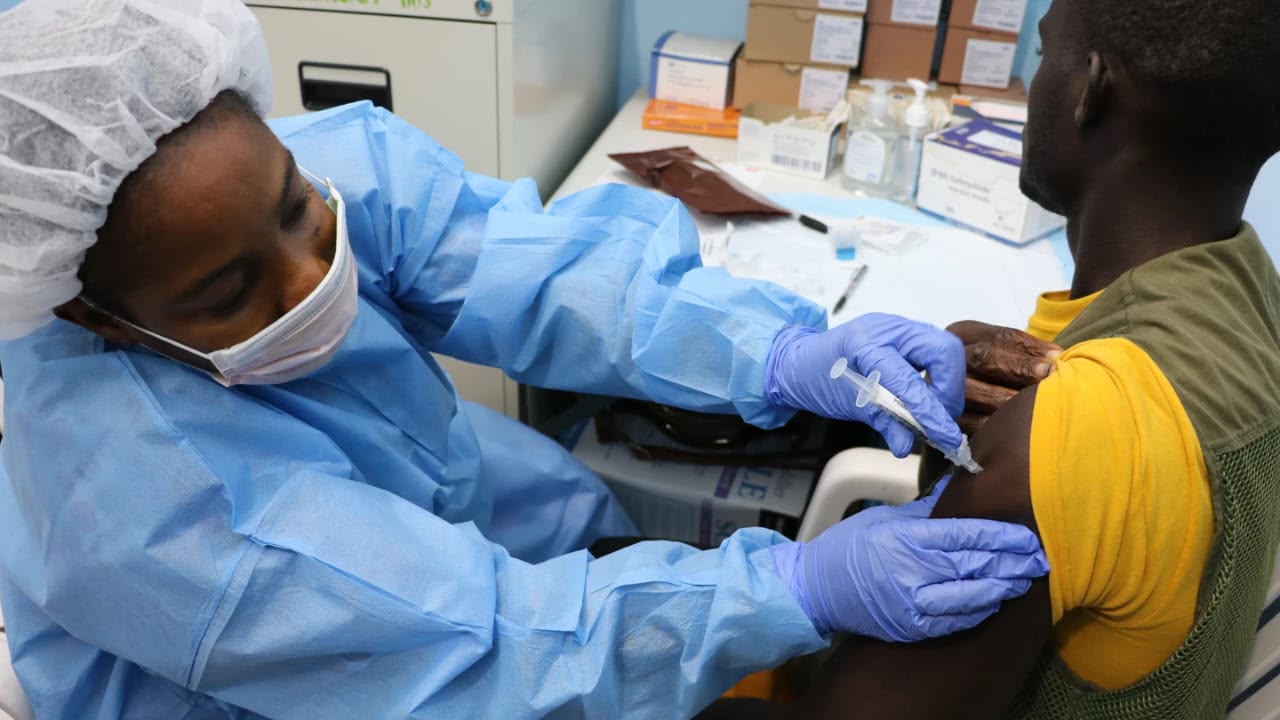
WAHO, Global Partners Seek Funding Framework for Lassa Fever Vaccine
By: Michael Mike
The West African Health Organisation (WAHO) and international health partners will meet in Berlin on Sunday to advance a collaborative financing framework for Lassa fever vaccine development, as efforts intensify to strengthen the region’s preparedness for epidemic threats.
The high-level roundtable, scheduled for October 11 on the sidelines of the World Health Summit, will explore funding commitments for vaccine research, late-stage clinical development, research readiness and regional manufacturing capacity.
The initiative comes amid persistent concerns over Lassa fever, a major public health threat in West Africa, and the limited commercial incentives for developing vaccines against epidemic diseases.
Convened by IAVI, MedAccess and the Coalition for Epidemic Preparedness Innovations (CEPI), the meeting is being organised with support from WAHO and the German development agency, Deutsche Gesellschaft für Internationale Zusammenarbeit (GIZ), with funding from Germany’s Federal Ministry for Economic Cooperation and Development (BMZ).
The roundtable is expected to bring together regional and international partners to review progress on the proposed financing framework, clarify their respective roles and identify concrete next steps, including potential financial commitments.
WAHO said it would use the meeting to advance the priorities of member states of the Economic Community of West African States (ECOWAS), with emphasis on regional ownership, coordinated investment and sustainable financing for Lassa fever vaccine preparedness.
The organisation will be represented by its Director of Healthcare Services, Dr Virgil Lokossou, who is expected to highlight how investments in vaccine development could strengthen clinical research, laboratory capacity, disease surveillance, regulatory systems and regional preparedness for future epidemics.
The discussions build on the September 2025 ministerial roundtable in Abidjan, Côte d’Ivoire, convened by WAHO in collaboration with the governments of Côte d’Ivoire and Nigeria.
The meeting brought together health ministers or their representatives from 11 West African countries, culminating in a communiqué that supported the advancement of IAVI’s recombinant vesicular stomatitis virus (rVSV) Lassa fever vaccine candidate as a regional pathfinder.
The communiqué also committed participating countries to mobilising national, regional and international resources through a collaborative co-funding approach.
Building on the commitments, WAHO has led a regional Demand Forecasting Working Group to develop projections that could inform the vaccine investment case.
The projections draw on country consultations, expert interviews, key informant inputs and contributions from national Lassa fever task forces.
The proposed financing framework is expected to combine contributions from governments, philanthropic organisations and other financing partners to support the advancement of Lassa fever vaccines.
IAVI’s investigational rVSV Lassa fever vaccine candidate, supported by CEPI and the European and Developing Countries Clinical Trials Partnership (EDCTP), underscores the need for sustained investment in vaccine research alongside stronger regional clinical research and manufacturing capabilities.
Beyond Lassa fever, the partners believe the financing approach could provide a model for supporting the development of vaccines against other priority epidemic diseases.
The closed-door roundtable will hold from 4.30 p.m. to 6 p.m. Central European Summer Time at the Pullman Berlin Schweizerhof in Germany.
WAHO, Global Partners Seek Funding Framework for Lassa Fever Vaccine

ActionAid Raises Alarm as 33.4% of Nigerian Women Married Before 18
…Group urges governments to enforce child marriage laws, boost girls’ education
By: Michael Mike
ActionAid Nigeria has called on federal and state governments to strengthen enforcement of laws against child marriage and increase investment in girls’ education and rights, warning that early marriage continues to deprive millions of Nigerian girls of opportunities to determine their futures.
The organisation, in a statement issued on Saturday ahead of the 2026 International Day of the Girl, said 33.4 per cent of young Nigerian women aged 20 to 24 were married before the age of 18, with the prevalence approaching 50 per cent in the North-east and North-west.
The statement, signed by its Country Director, Andrew Mamedu, cited an analysis of the 2024 Demographic and Health Survey, alongside UNICEF estimates that more than 3.7 million women aged 20 to 24 were married before turning 18.
The International Day of the Girl, marked on October 11, is being observed this year under the theme, “End child marriage and invest in girls’ rights.”
ActionAid said child marriage was not merely a cultural practice or a family matter but a violation of girls’ rights that could disrupt their education, restrict their economic prospects and expose them to violence and early pregnancy.
It added that more than 12 million girls globally were married before adulthood every year, underscoring the need for sustained action by governments, communities and development partners.
The organisation identified poverty and limited access to education as major factors contributing to early marriage, noting that girls from poorer households and those with lower levels of education faced greater risks.
According to the statement, UNICEF analysis indicates that ensuring every girl in Northern Nigeria completes secondary education could reduce child marriage by as much as two-thirds, while also lowering adolescent pregnancy and improving economic productivity.
To illustrate the impact of interventions that empower girls, ActionAid recounted the experience of Aisha Aliyu, who was 16 when her family began preparing for her marriage to her cousin.
Aisha, who participated in the organisation’s Girl-led Research and Action Project, learnt about girls’ rights, the importance of education and the risks associated with early marriage.
Armed with that knowledge, she found the confidence to speak to her parents about her desire to continue her education. Her parents eventually called off the marriage, allowing her to return to school.
She now hopes to become a businesswoman and mentor other girls in her community.
ActionAid said her experience demonstrated how access to information, safe spaces and opportunities for participation could help girls challenge practices that threatened their futures.
Through its Girl-led Research and Action initiative, the organisation supports girls to investigate issues affecting their lives, generate evidence and use their findings to advocate for change.
It also works with women’s rights organisations and communities through its Local Rights Programme to address harmful gender norms, violence, barriers to education and the exclusion of girls from decision-making.
The organisation said its Renewed Women’s Voice and Leadership Nigeria Project, funded by Global Affairs Canada, also supports locally led initiatives to advance gender equality and strengthen women’s and girls’ leadership.
Mamedu said investment in girls must go beyond protecting them from abuse to recognising their rights and enabling them to participate in decisions affecting their lives.
“Investing in girls is not simply about protecting them from harm; it is about recognising their rights, supporting their leadership and creating the opportunities they need to shape their own lives and contribute meaningfully to society,” he said.
He urged governments to ensure that the systems and resources required to protect girls’ rights were available and effective.
ActionAid called on federal and state governments, the National and State Assemblies, and justice and law-enforcement institutions to ensure that laws protecting girls against child marriage and other harmful practices were effectively implemented, with clear accountability for violations.
It also urged the Federal Ministry of Education, the Universal Basic Education Commission, state ministries of education and state universal basic education boards to increase investment in safe, quality and inclusive education, particularly for girls in rural, conflict-affected and marginalised communities.
The organisation further called for expanded social protection and livelihood support for vulnerable households to ease the economic pressures that push girls into early marriage and school dropout.
It urged ministries responsible for women’s affairs and youth development, local governments, schools, legislators and community institutions to establish safe spaces where girls could participate meaningfully in research, policy discussions and decisions affecting their lives.
Parents, traditional and religious leaders, civil society organisations, schools and the media were also urged to challenge social norms that restrict girls’ choices and support their right to education and leadership.
ActionAid said ending child marriage required coordinated action to address its underlying causes, protect girls from harmful practices and ensure that every girl had the opportunity to learn, thrive and shape her future.
ActionAid Raises Alarm as 33.4% of Nigerian Women Married Before 18
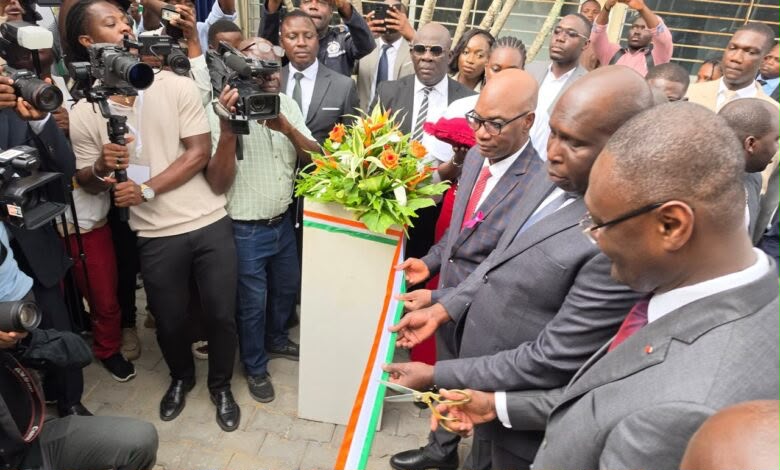
WAHO Receives Keys to Temporary Headquarters in Côte d’Ivoire
…Move to Grand-Bassam marks new chapter for West African health cooperation
By: Michael Mike
The West African Health Organisation (WAHO), the health institution of the Economic Community of West African States (ECOWAS), has received the keys to its temporary headquarters in Grand-Bassam, Côte d’Ivoire, marking a major step in its relocation to the country.
The handover ceremony, held at the Village of Information Technology and Biotechnology (VITIB), followed the decision by ECOWAS Heads of State and Government on December 14, 2025, in Abuja, to establish the organisation in Côte d’Ivoire.
The relocation opens a new chapter for the regional health institution as it seeks to strengthen cooperation among West African countries in tackling epidemics, improving access to quality healthcare and medicines, and developing coordinated responses to public health emergencies.
The ceremony brought together senior Ivorian government officials, representatives of ECOWAS and its institutions, WAHO leadership, VITIB officials and partner organisations.
Speaking at the event, Minister Delegate Adama Dosso said the handover demonstrated the Ivorian government’s commitment to providing the necessary conditions for WAHO’s establishment.
He said the decision to host the organisation reflected the confidence reposed in Côte d’Ivoire by ECOWAS leaders and the country’s commitment to regional integration.
Dosso commended the national institutions involved in preparing the facilities within a short period, particularly the National State Property Management Company (SONAPIE) and VITIB.
Also speaking, Minister Delegate in charge of Technical Education and Mayor of Grand-Bassam, Jean Louis Moulot, described WAHO’s arrival as an important development for the city and its growing profile as a centre for technology and healthcare.
He highlighted investments in health infrastructure, the development of VITIB and the construction of the National Oncology and Radiotherapy Centre, noting that WAHO’s presence would create further opportunities for cooperation and innovation.
Moulot said the establishment of the organisation also demonstrated West African countries’ determination to pool expertise and develop common solutions to shared health challenges.
The Director-General of WAHO, Professor Palokinam T. Pitche, expressed appreciation to the government and people of Côte d’Ivoire for their hospitality and the measures taken to facilitate the relocation.
He also paid tribute to Burkina Faso and the people of Bobo-Dioulasso for hosting and supporting the organisation for several decades, while acknowledging the ECOWAS Commission and other stakeholders involved in the transition.
Describing the handover as a significant institutional milestone, Pitche said: “It marks a decisive step in WAHO’s effective establishment in the Republic of Côte d’Ivoire and opens a new chapter in the institutional life of our Organisation.”
He said WAHO’s location within VITIB offered an opportunity to link public health expertise with technological innovation, digital solutions and biotechnology.
“Our presence at VITIB should be an invitation to build bridges between health, innovation, digital technologies and biotechnology, for the benefit of West African populations,” he said.
The WAHO chief identified access to quality healthcare, epidemic prevention and response, preparedness for other health emergencies, access to quality medicines and vaccines, and stronger regional health initiatives as priority areas for cooperation with Ivorian health authorities.
He expressed the hope that the new headquarters would become a centre for consultation, coordination and innovation, enabling member states to develop common responses to health challenges across the region.
In his remarks, the Director-General of VITIB, Mebeti Dosso, welcomed WAHO to the technology park, saying its presence would strengthen the facility’s scientific, technological and regional significance.
He identified digital health, training and innovation as areas offering opportunities for collaboration and reaffirmed VITIB’s readiness to support WAHO’s operations and develop joint initiatives.
WAHO’s establishment in Grand-Bassam is expected to deepen its cooperation with Côte d’Ivoire while providing a platform for connecting national expertise with regional health priorities.
The organisation will continue to pursue its mandate of harmonising health policies and strategies, strengthening regional cooperation and promoting solidarity among ECOWAS member states to improve the health and well-being of West African populations.
WAHO Receives Keys to Temporary Headquarters in Côte d’Ivoire

WAHO, Global Partners Seek Funding Framework for Lassa Fever Vaccine

2027: We’ll reset Nigeria, make life easy for citizens, says Makinde

PCC: Malam Bashir’s pace, determination, and commitment to repositioning the Commission

Roger Federer’s Shock as DNA Results Reveal Myla and Charlene Are Not His Biological Children

THE PLIGHT OF FARIDA

FAILED COUP IN BURKINA FASO: HOW TRAORÉ NARROWLY ESCAPED ASSASSINATION PLOT AMID FOREIGN INTERFERENCE CLAIMS
-
 News3 years ago
Roger Federer’s Shock as DNA Results Reveal Myla and Charlene Are Not His Biological Children
-
Opinions5 years ago
THE PLIGHT OF FARIDA
-
 News1 year ago
FAILED COUP IN BURKINA FASO: HOW TRAORÉ NARROWLY ESCAPED ASSASSINATION PLOT AMID FOREIGN INTERFERENCE CLAIMS
-

 News3 years ago
EYN: Rev. Billi, Distortion of History, and The Living Tamarind Tree
-
 Opinions5 years ago
POLICE CHARGE ROOMS, A MINTING PRESS
-

 ACADEMICS3 years ago
A History of Biu” (2015) and The Lingering Bura-Pabir Question (1)
-

 Columns3 years ago
Army University Biu: There is certain interest, but certainly not from Borno.
-

 Politics1 year ago
2027: Why Hon. Midala Balami Must Go, as Youths in Hawul and Asikira/Uba Federal Constituency Reject ₦500,000 as Sallah Gift
