
News
Two killed, one injured in IED explosion in Chikuba in Niger

Two killed, one injured in IED explosion in Chikuba in Niger
By: Zagazola Makama
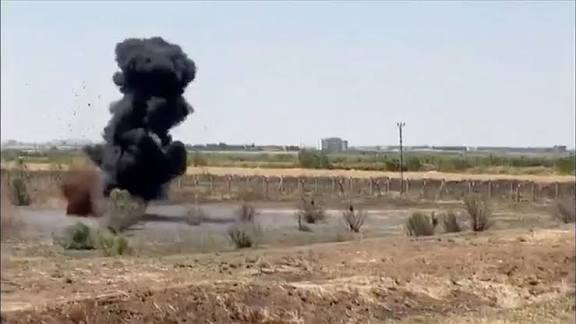
Two persons were killed and another injured following the explosion of an improvised explosive device (IED) along Kudodo–Kampani Community Road.
Zagazola learnt that the incident occurred on Feb. 7 at about 7:30 p.m., when three men – Haruna, 40; Ishayaku, 36; and Sunday Joshua, 35, all of Chikuba village – riding a motorcycle ran into the device, triggering the explosion.
Haruna and Ishayaku died on the spot, while Sunday Joshua sustained injuries and was rushed to Shekwoiyha Divine Primary Health Care Center, Erena, for treatment.
The scene was visited by police, and the case has been referred to the Bomb Disposal Unit for further investigation and necessary action.
Two killed, one injured in IED explosion in Chikuba in Niger


Ughelli North: Egbo Responds To Transparency Call, Showcases Projects Across Council
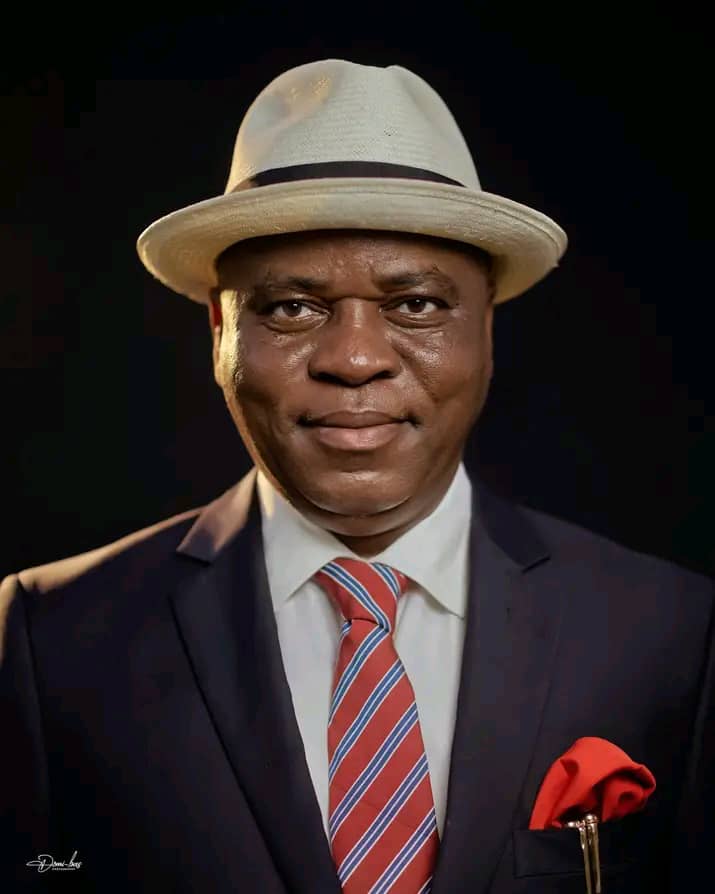
The Executive Chairman of Ughelli North Local Government Area, Olorogun (Barr.) Jaro Movudu Egbo, KSC, has responded to the transparency demands raised by the New Order Movement (NOM), highlighting a number of infrastructure and development projects executed or ongoing under his administration across the local government.
NOM had called on the council chairman to provide greater transparency and accountability on the utilisation of funds allocated to Ughelli North in 2026, particularly against the backdrop of the local government’s reported ₦18.29 billion budget.
The group had also demanded a detailed account of allocations received by the council, an update on projects being executed and greater engagement with stakeholders, insisting that residents deserved to see tangible benefits from public resources.
Responding to the concerns, Egbo pointed to what his administration described as “visible and measurable” achievements in infrastructure, healthcare, security, education, electricity, environmental sanitation and staff welfare.
According to him, the interventions are being implemented in line with the M.O.R.E. Agenda of Delta State Governor, Rt. Hon. Sheriff Oborevwori.
One of the major projects highlighted by the chairman is the ongoing construction of an ultra-modern Ughelli North Local Government Secretariat Complex, designed to improve administrative efficiency and provide a conducive working environment for council workers.
He also noted that the construction of a modern gatehouse for the secretariat was nearing completion, while the Legislative Assembly Complex had been rehabilitated with executive furniture, modern cooling systems and dedicated electricity supply.
In the health sector, Egbo’s administration highlighted the ongoing construction of the Tobore Oborevwori Cottage Hospital and Maternal Health Centre, which is expected to include doctors’ and nurses’ quarters.
The council said the facility was part of efforts to improve access to quality healthcare services within the local government.
The administration also cited the development of organised multi-storey market stalls for traders and the construction of the Ughelli Court dual-court complex as part of its interventions to support commerce and strengthen access to justice.
On road infrastructure, the council disclosed that rehabilitation of the long-neglected Post Office Road was ongoing, involving concrete and asphalt overlay as well as improved drainage around the Ughelli High Court.
The chairman also highlighted interventions in the power sector, saying three 11/33 KVA transformers had been procured and installed in strategic communities to improve electricity supply.
Power was also restored to the council secretariat through extensive electrical rewiring, while solar energy systems, including daytime solar panels and solar-powered streetlights, were deployed, according to the council.
On security, Egbo said collaboration with security agencies had helped improve safety along previously troubled sections of the East-West Highway.
The council stated that security operations around the Ogor, Evwreni and Ohoror axis had significantly reduced incidents of kidnapping and armed robbery along the Evwreni-Uwheru and Uvwiamuge-Agbarho corridors.
The administration further disclosed that it donated a fully equipped patrol vehicle to the Police Mobile Force and constructed a new police post to strengthen security operations.
In education, the council said more than 300 school desks, uniforms, textbooks and writing materials had been distributed to pupils in public primary schools.
It added that the administration had partnered with the Delta State Universal Basic Education Board (SUBEB) to support teacher retraining and classroom rehabilitation.
On environmental sanitation, the council said it carried out extensive desilting and clearing of drainage channels along the East-West Road in Agbarho to reduce flooding, while also reviving the monthly environmental sanitation exercise.
The administration further pointed to improvements in staff welfare, including the settlement of outstanding financial claims and regular welfare incentives for members of the Nigeria Union of Local Government Employees (NULGE).
Several key offices within the council secretariat have also been renovated and furnished, while the council expanded its operational fleet with official vehicles for principal officers, a Toyota Hilux for the Chief Security Officer and an 18-seater bus for the council’s Press Unit.
Assembly Committee, Auditor-General Commend Council
Egbo further stated that the council’s financial records had been subjected to scrutiny by the Delta State House of Assembly Public Accounts Committee and the Auditor-General for Local Governments in the state.
According to him, following the scrutiny of the council’s accounts and financial activities, both the Public Accounts Committee and the Auditor-General for Local Governments commended the council for what they described as prudence and transparency in the management of its finances.
He said the commendations from the statutory oversight bodies further demonstrated his administration’s commitment to accountability and responsible management of public resources.
Egbo said the council had nothing to hide and remained prepared to subject its financial records and activities to appropriate oversight in accordance with the law.
Egbo Alleges NDC-Sponsored Negative Campaign
Egbo also alleged that the New Order Movement’s campaign against his administration was politically motivated, describing it as a negative campaign allegedly sponsored by Omoragbege, the National Democratic Congress (NDC) senatorial candidate for Delta Central.
According to Egbo, the objective of the alleged campaign was to discredit his administration and weaken the political standing of the All Progressives Congress (APC) in Ughelli North ahead of the next general election.
He alleged that those behind the campaign believe that sustained attacks on his administration would erode public support for the APC and create an advantage for the NDC at the polls.
The council chairman, however, said he would not be distracted by what he described as politically motivated attacks, insisting that his administration would continue to focus on projects and programmes capable of improving the lives of residents.
He maintained that the achievements recorded by his administration were visible across various sectors and should speak for themselves, rather than being overshadowed by political campaigns.
The projects and interventions listed by the administration constitute its response to concerns over development and the utilisation of public resources in Ughelli North, with Egbo maintaining that his administration has continued to channel resources into projects and services with direct impact on residents.
Meanwhile, he reaffirmed his commitment to consolidating the achievements recorded so far through sustained investment in infrastructure, healthcare, education, security, youth empowerment and economic development.
Egbo pledged to continue providing transparent, responsive and people-centred governance, with the objective of positioning Ughelli North as a model of grassroots development in Delta State.
Ughelli North: Egbo Responds To Transparency Call, Showcases Projects Across Council
Army troops rescue retired general’s wife, arrest two kidnappers in Abuja
By: Zagazola Makama
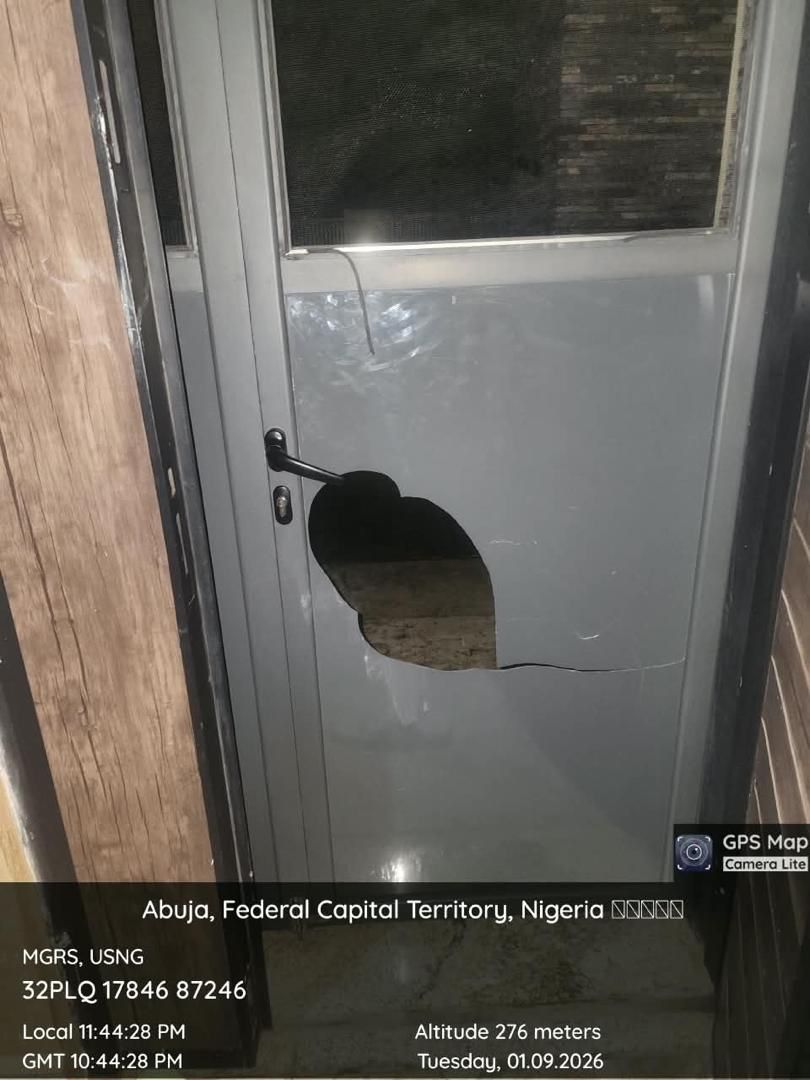
Troops of the Nigerian Army have rescued Mrs Adonkie, wife of retired Brig.-Gen. Basil Adonkie, following a coordinated operation against her abductors in the Federal Capital Territory (FCT).
Mrs Adonkie was reportedly kidnapped from her residence at about 10:30 p.m. on Sept. 1, 2026, prompting an immediate joint search-and-rescue operation by troops from the Army Headquarters Garrison (AHQ GAR) and other Army formations.
Military sources told Zagazola Makama that the troops mobilised rapidly and pursued the kidnappers along three fronts in an effort to prevent the abductors from escaping with the victim.
Troops of AHQ GAR advanced through the ACO Estate-Goza Community axis, where they made contact with the kidnappers.
During the operation, the troops successfully rescued Mrs Adonkie around Angwan-Sabo Village, while another group of troops continued the pursuit of the fleeing kidnappers along the ACO Estate-Angwan Sayawa axis.
The operation continued into the early hours of Sept. 2, as a second group comprising troops of 176 Guards Battalion and 197 Special Forces Battalion was deployed to block and intercept the fleeing members of the kidnap syndicate.
At about 11:09 a.m. on Sept. 2, the troops made contact with the fleeing suspects along Gaube Village in Kuje Area Council.
The troops successfully intercepted and arrested two suspected kidnappers during the encounter.
They also recovered one AK-47 rifle and one AK-47 magazine loaded with 19 rounds of 7.62mm special ammunition.
The rescued victim was subsequently reunited with her family after the operation.
The two arrested suspects are currently in Army custody for profiling and further exploitation, with security personnel expected to use information obtained from them to track other members of the kidnap syndicate still at large.
The Army has also intensified operations in the affected areas to apprehend other suspected members of the criminal group and prevent further kidnapping activities.
The operation demonstrates the importance of rapid mobilisation, coordinated pursuit and intelligence-led action in responding to kidnapping incidents within the FCT.
The military said troops’ morale and fighting efficiency remained satisfactory as operations continue to apprehend the remaining suspects and strengthen security in the area.
Army troops rescue retired general’s wife, arrest two kidnappers in Abuja
Conflict Trauma: 8 in 10 Displaced Nigerian Children Suffer PTSD — FG
By: Michael Mike
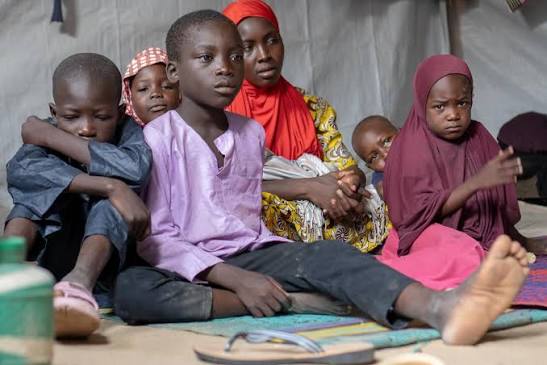
The Federal Government has raised the alarm over a growing mental-health crisis among children displaced by conflict, revealing that nearly eight in every 10 affected children suffer post-traumatic stress disorder, while more than four in five battle depression.
The government said the crisis was no longer only a humanitarian concern but a threat with potential consequences for Nigeria’s education system, public health and national security if the psychological wounds of childhood displacement were left untreated.
Minister of Humanitarian Affairs and Poverty Reduction, Dr Bernard Doro, disclosed this on Wednesday in Maiduguri, Borno State, at the National Dialogue on the Psychosocial Impact of Conflict on Children in Nigeria.
According to the minister, 79.7 per cent of displaced Nigerian children have PTSD, 84.8 per cent experience depression, while 90.7 per cent suffer functional impairments that affect their learning, relationships and sleep.
Doro said the statistics provided measurable evidence of the hidden cost of years of insurgency, terrorism and displacement, arguing that humanitarian interventions could no longer focus exclusively on food, shelter and physical safety.
“A child who has been fed, but not healed in mind, has not truly been rescued,” he said.
He warned that children carrying untreated trauma into adulthood could place a substantial burden on Nigeria’s schools, hospitals and security institutions for years to come.
“None of this is a charity; it is an investment. Untreated trauma in a generation of children is a cost that returns to our schools, our clinics, and our security architecture for decades,” Doro said.
The minister said evidence from Borno further illustrated the severity of the problem, citing a study in Chibok which found that 41.5 per cent of children exposed to Boko Haram insurgency met the clinical threshold for PTSD.
He also referenced a continent-wide analysis that estimated conflict-related PTSD among African children at about 36 per cent.
Doro said mental health had historically received less attention than physical health because its symptoms were often less visible, but insisted that Nigeria could no longer afford to treat psychological wellbeing as a secondary issue.
“Globally, there is a bias towards physical health compared to mental health. Because mental health manifests with subtle symptoms, healthcare professionals and policymakers do most times ignore mental health. This narrative needs to change,” he said.
The minister disclosed that more than one million children in the North-East had been uprooted from their homes by conflict, while more than 7,000 women and girls had been held by Boko Haram.
He said the human consequences were visible in the behaviour of children from communities such as Bama, Konduga, Gwoza and Chibok.
“These are the children of Bama, Konduga, Gwoza, Chibok. Children we have all met, I’m sure, in our interactions. And they go quiet in mid-sentences, manifesting the very symptoms of mental illness,” he said.
To address the crisis, Doro said his ministry would work with the Office of the Special Adviser to the President on Health and other partners to establish stronger community referral systems through which distressed children identified in schools and displacement camps could receive appropriate care.
He also announced plans to incorporate trauma exposure into the National Social Registry, alongside economic vulnerability, to help government identify households and communities with significant psychosocial needs.
The ministry, he added, would support the training of teachers and frontline humanitarian personnel to recognise warning signs among affected children.
“A child spends more hours with a teacher than a therapist,” Doro said.
Earlier, the Special Adviser to the President on Health, Dr Salma Ibrahim Anas, said the decision to hold the dialogue in Maiduguri was deliberate, given Borno’s prolonged exposure to insurgency.
Anas said the gathering was designed to move the discussion from isolated interventions to a national policy response based on research and evidence.
She recalled the case of a woman who escaped from Bama with seven children but arrived at the Dalori Internally Displaced Persons camp with only one, without knowing what had happened to the others.
For Anas, such experiences demonstrate that displacement does not end when a person reaches a camp or another place of safety.
“Some have been born only in this crisis,” she said, warning that children who spend their formative years surrounded by violence may carry its consequences into adulthood and pass unresolved trauma to another generation.
The humanitarian dimension of the crisis was reinforced by the United Nations Office for the Coordination of Humanitarian Affairs.
Representing OCHA, Ballama Mustapha said 7.8 million people required humanitarian assistance across Borno, Adamawa and Yobe under the 2025 Humanitarian Response Plan, including approximately 1.8 million children.
He said the 2026 plan identified 5.9 million people for assistance, but available funding remained insufficient to meet the scale of humanitarian needs.
“The wounds we cannot see must not become the reason we fail to act,” Mustapha said.
The UNICEF representative, Francis Otuochi, said an estimated 270,864 children in Borno, Adamawa and Yobe required mental health and psychosocial support under the 2026 humanitarian needs and response plan.
He added that more than 161,000 adults and over 23,000 persons living with disabilities also required such support.
Otuochi urged government to move psychosocial services from the margins of humanitarian programmes into mainstream child protection, education, healthcare and social welfare systems.
“Conflict continues to cause profound harm on children, including fear, anxiety, family separation, disrupted learning, and exposure to violence and trauma,” he said.
The North East Development Commission also warned that psychological recovery must accompany the physical reconstruction of communities devastated by conflict.
Representing the commission’s Managing Director, Mohammed Goni Alkali, the Borno State Coordinator, Engineer Muhammadu Umaru Maska, said rebuilding schools, hospitals, roads, markets, water systems and homes should be viewed as part of a wider peacebuilding strategy.
He said youth empowerment, livelihood restoration, support for internally displaced persons and social cohesion were equally necessary to prevent communities from sliding back into violence.
“Development should be regarded not as a mere economic activity, but as a powerful instrument of conflict prevention and peacebuilding,” Maska said.
The representative of the National Council of Traditional Rulers of Nigeria, Zanna Lawan Maina, District Head of Damboa, stressed the importance of traditional institutions in rebuilding trust, mobilising communities and supporting reconciliation.
The dialogue was convened by the Office of the Special Adviser to the President on Health in partnership with NEDC and the Borno State Government.
Stakeholders at the meeting agreed that Nigeria’s recovery from years of conflict must go beyond physical reconstruction. Without deliberate investment in the mental wellbeing of children who have grown up amid violence, the country could face a second crisis—one measured not in destroyed buildings, but in a generation struggling with trauma, disrupted development and diminished capacity to build peaceful communities.
Conflict Trauma: 8 in 10 Displaced Nigerian Children Suffer PTSD — FG

Ughelli North: Egbo Responds To Transparency Call, Showcases Projects Across Council

Army troops rescue retired general’s wife, arrest two kidnappers in Abuja

Conflict Trauma: 8 in 10 Displaced Nigerian Children Suffer PTSD — FG

Roger Federer’s Shock as DNA Results Reveal Myla and Charlene Are Not His Biological Children

THE PLIGHT OF FARIDA

FAILED COUP IN BURKINA FASO: HOW TRAORÉ NARROWLY ESCAPED ASSASSINATION PLOT AMID FOREIGN INTERFERENCE CLAIMS
-
 News2 years ago
Roger Federer’s Shock as DNA Results Reveal Myla and Charlene Are Not His Biological Children
-
Opinions5 years ago
THE PLIGHT OF FARIDA
-
 News1 year ago
FAILED COUP IN BURKINA FASO: HOW TRAORÉ NARROWLY ESCAPED ASSASSINATION PLOT AMID FOREIGN INTERFERENCE CLAIMS
-

 News2 years ago
EYN: Rev. Billi, Distortion of History, and The Living Tamarind Tree
-
 Opinions5 years ago
POLICE CHARGE ROOMS, A MINTING PRESS
-

 ACADEMICS3 years ago
A History of Biu” (2015) and The Lingering Bura-Pabir Question (1)
-

 Columns3 years ago
Army University Biu: There is certain interest, but certainly not from Borno.
-

 Politics1 year ago
2027: Why Hon. Midala Balami Must Go, as Youths in Hawul and Asikira/Uba Federal Constituency Reject ₦500,000 as Sallah Gift
