
News
UMTH now largest hospital in nigeria

UMTH now largest hospital in nigeria
By: Bodunrin Kayode
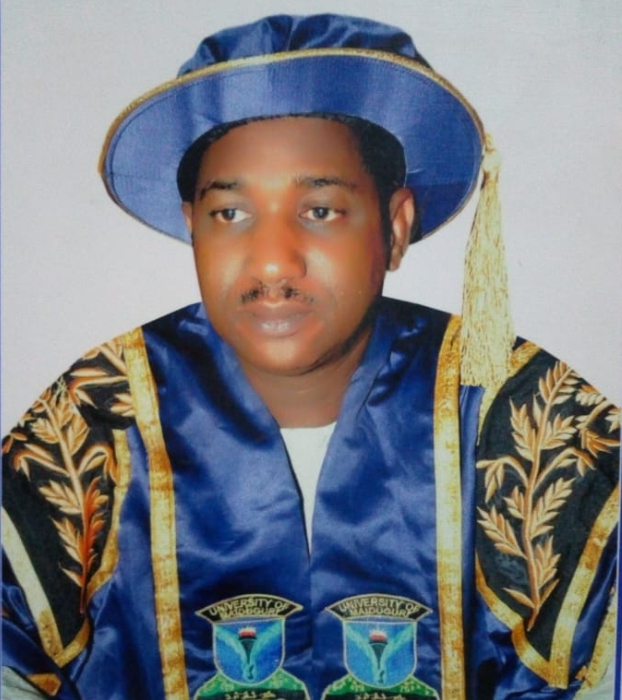
In an era where demands for bed spaces in some Government Hospitals have become a major challenge in Nigeria, the University of Maiduguri Teaching Hospital (UMTH) has added 272 more beds to its centres to become the largest in the country.
While making this assertion recently, Professor Ahidjo noted that the drive to accommodate more patients is meant to meet the growing demands for affordable admission of patients who need special care from the region.
He told the gathering of the committee of 72 Chief Medical Directors and Medical Directors of Federal Tertiary Hospitals in Nigeria (CCMDFTH) who came to attend their 110th regular meeting in Maiduguri that the UMTH now has 1,577 bed spaces scattered in all the new ans old centres of the facility and may add more when the three new proposed centres come to existence.
Reeling out a breakdown of the bed spaces available for in-patients and referrals, Ahidjo said that in 2023, the bed spaces were about 1,305 but as at this week, it has risen to 1,577 making it the largest in Nigeria in terms of in-patients admission capacity.
The CMD commended the Minister of Health and social welfare Professor Mohammad Pate for supporting the steady growth of the hospital which suffered a terrible flood tragedy last year adding that his “team spirit” aimed at targeting goals is exemplary as it has helped in the recovery process from the water due to the collapsed Alau dam..
The CMD equally commended Governor Zulum for the N500m support he gave the hospital last year during the tragedy of the flood which devastated the Borno state capital damaging key infrastructures like the UMTH.
” We are grateful to the Governor for coming to our aid at a time when all our oxygen plants were damaged by the flood. We used that fund to repair one of them and we are using it now. Other facilities damaged include the kidney centre, fire service, our fence and many more including the tarred road in front of the administrative block which were repaired from that fund.” said Prof Ahidjo.
While welcoming his colleagues from all over the federation, Ahidjo announced that the Bola Ahmed Tinubu ICT centre commissioned in the Hospital is the “first medical ICT” facility in the country because of its unique nature.
Other facilities commissioned include: the Professor Jibril Aminu heart care centre which has the capacity to accommodate open heart surgeries and the largest interventional radiology centre in Nigeria.
Additionally, the 150 bed Dr Abubakar Umar Garbai stroke centre meant to handle all manner of strokes was commissioned to light up the occasion for many seniors present at the celebration of another set of new projects at UMTH.
Also in a bid to ease the stress of relatives of patients, the guests witnessed the sod turning ceremony of a hospital guest house where residents can pass the night while waiting for their loved ones on admission get better.
Zulum, relieves first 50 kidney patients from the burden of paying for kidney operations
Addressing the gathering, Borno State Governor Babagana Zulum announced a donation of N250m for 50 patients with kidney challenges awaiting transplant.
This is part of a proposed one billion naira the Governor announced to support the handling of the challenge to be spread across the year to keep about 200 residents with the problem alive..
This amount will be renewed after three months to ensure that more patients receive the needed support for consumables during such operations until the remaining N500 million is disbursed in two more separate instalments.
“I am pleased to announce that the Borno State government will deposit the sum of N250 million to support kidney transplants for 50 patients. I am ready to contribute N1 billion as the government’s contribution towards supporting the less privileged indigene of the State ,” Zulum stated.
“The Borno State government therefore pledges to support this initiative and is ready to provide all the partnership required to sustain the provision of kidney transplant to less privileged patients at UMTH. This is only the beginning—I promise to do even more,” he added.
Governor Zulum commended UMTH for its strides in specialised healthcare, particularly its recent successful kidney transplants stating that “I was told both the patients and donors are doing very well. Indeed this is a landmark achievement and a great relief to patients most importantly to those who cannot afford the cost of transplant,” he remarked.
Speaking on the State Emergency Medical and Ambulance Services (SEMAS), the Governor confirmed that ten new fully equipped ambulances would be deployed across health facilities by the week’s end. This, he stressed, would bolster the Maternal and Newborn Mortality Reduction Innovation Initiative.
“As a Government, we pledge our full support for the sustenance and scale-up of the Maternal and Newborns Mortality Reduction Innovation Initiative programme. We view it not as a stand alone initiative, but as a critical complement to our broader health reform agenda,”.
“We are committed to ensuring that the Maternal and Newborn Mortality Reduction Innovation Initiative succeeds in providing comprehensive antenatal care, emergency obstetric services, skilled birth attendance, postnatal follow-up and routine immunisation to protect our children from preventable diseases,” he stressed.
Also present at the occasion were National Assembly members, Elder statesman Ambassador Babagana Kingibe, the Shehu of Borno, Dr. Abubakar Ibn Umar Garbai El-Kanemi, Head of Civil Service of the Federation, Dr. Esther Didi Walson-Jack, permanent secretary federal ministry of Health kachollom Daju, former Deputy Governor of Borno, Usman Durkwa, Chair of the committee of CCMDFTH Prof Emem Bassey and over 70 of his colleagues and the represented of several health partners of the UMTH.
UMTH now largest hospital in nigeria


Strike: Gombe tertiary institutions issue 14-Day ultimatum over unpaid entitlements
By Hajara Usman
The Joint Union of Gombe State Tertiary Institutions (JOUGTIN) has issued a 14-day ultimatum to the Gombe State Government to address outstanding staff welfare entitlements and implement agreed conditions of service across public tertiary institutions in the state.
The union, comprising the Colleges of Education Academic Staff Union (COEASU), Academic Staff Union of Polytechnics (ASUP), Senior Staff Union of Colleges of Education in Nigeria (SSUCOEN), Senior Staff Association of Nigerian Polytechnics (SSANIP), and Non-Academic Staff Union of Educational and Associated Institutions (NASU), issued the ultimatum in a communiqué dated August 17, 2026.
According to the unions, the outstanding issues have persisted despite several engagements with relevant government authorities.
JOUGTIN acknowledged the efforts of Governor Muhammadu Inuwa Yahaya in supporting tertiary education in the state, but said several critical staff welfare matters remain unresolved.
Among the issues raised are the non-implementation of the consolidated ₦70,000 national minimum wage and its consequential adjustments for staff of public tertiary institutions.
The unions also demanded the implementation of approved 25 per cent and 35 per cent CONPCASS/CONTISS salary adjustments, payment of outstanding consequential adjustments arising from the ₦30,000 minimum wage, and payment of approved wage awards, palliatives and other relief measures introduced in response to economic hardship.
Other demands include the implementation of outstanding staff promotions, payment of promotion arrears, some of which the unions said date back several years, annual salary increments, and the implementation of approved CATA and CONTTA allowances.
JOUGTIN said the continued failure to address the issues had placed a heavy financial burden on workers and their families, while negatively affecting staff morale, productivity and industrial relations in the tertiary education sector.
The union said it had exhausted various avenues of dialogue and constructive engagement before resorting to the 14-day ultimatum.
It therefore called on the state government to take “concrete, verifiable and meaningful steps” towards resolving the outstanding demands within the stipulated period.
JOUGTIN warned that failure to secure satisfactory action within 14 days would compel the unions to commence further legitimate industrial action, including an indefinite strike, without further notice.
The unions, however, said they remained committed to dialogue, mutual respect and peaceful engagement, stressing that the ultimatum was not intended to undermine their relationship with the government.
They appealed to parents, students, traditional and community leaders, civil society organisations and members of the public to understand the circumstances behind their action and support efforts to achieve a lasting resolution.
The unions expressed hope that the government would respond positively to their demands in the interest of industrial harmony, staff welfare, uninterrupted academic activities and the sustainable development of tertiary education in Gombe State.
Strike: Gombe tertiary institutions issue 14-Day ultimatum over unpaid entitlements

Buni calls on emirs to lead peace missions in Yobe
By: Yahaya Wakili
The Executive Governor of Yobe State, Hon. Mai Mala Buni, CON, COMN, has called on the traditional rulers in the state to remain custodians of our heritage and to lead prayers for peace and unity among the citizens of the state.
He said our traditional institutions must continue to promote mutual respect, brotherhood, and peaceful coexistence, noting that the peace and stability we enjoy in Yobe State today must be protected by all of us.
The governor stated this today at Potiskum, the headquarters of the Fika emirate council, while attending a special prayer session marking the 70th birthday anniversary of the Emir of Fika and Chairman of the Yobe State Council of Traditional Rulers, HRH Alhaji Dr. Muhammadu Abali Ibn Muhammadu Idrissa, CON, CFR.
The Yobe State APC gubernatorial candidate, Alhaji Baba Mallam Wali MNI, FCAN, ably represented the governor. The emirate offered prayers for the continued peace, unity, and prosperity of Yobe State and the success of Governor Buni and the incoming governor, inshallah, Alhaji Baba Malam Wali MNI FCAN.
In his remarks, His Royal Father, the emir of Fika, Alhaji Dr. Muhammadu Abali Ibn Muhammadu Idrissa, CON, CFR, thanked His Excellency, Governor Mai Mala Buni, CON, COMN, for his support and called on citizens to be law-abiding, adding that there is no wealth greater than peace.
The emir also called on the people to pray for a bumper harvest this year’s farming season, as well as charged them to love one another and always promote peace in all their endeavors.
Buni calls on emirs to lead peace missions in Yobe

Buni urged youths in Yobe to actively participate in elections for competent candidates
By: Yahaya Wakili
Yobe State Governor Hon. Mai Mala Buni CON, COMN, has charged the youth in the state to participate actively in all the elections of competent persons for various political offices in the state and Nigeria.
He also assured the youth in the state that they have a prosperous future in their lives.
Governor Buni stated this at a two-day retreat organized by the Coalition of All Progressives Congress (APC) Political Organizations (COYAPO).
According to him, the youth constitute the larger population of the state; therefore, you must be actively involved to shape the politics and leadership of the state.
In his earlier address, the Director General of COYAPO, Alhaji Babagana Modu alias Bature Goniri, commended Governor Mai Mala Buni for the opportunity extended to youth in the state to participate in governance.
Buni urged youths in Yobe to actively participate in elections for competent candidates

Strike: Gombe tertiary institutions issue 14-Day ultimatum over unpaid entitlements

Buni calls on emirs to lead peace missions in Yobe

Buni urged youths in Yobe to actively participate in elections for competent candidates

Roger Federer’s Shock as DNA Results Reveal Myla and Charlene Are Not His Biological Children

THE PLIGHT OF FARIDA

FAILED COUP IN BURKINA FASO: HOW TRAORÉ NARROWLY ESCAPED ASSASSINATION PLOT AMID FOREIGN INTERFERENCE CLAIMS
-
 News2 years ago
Roger Federer’s Shock as DNA Results Reveal Myla and Charlene Are Not His Biological Children
-
Opinions5 years ago
THE PLIGHT OF FARIDA
-
 News1 year ago
FAILED COUP IN BURKINA FASO: HOW TRAORÉ NARROWLY ESCAPED ASSASSINATION PLOT AMID FOREIGN INTERFERENCE CLAIMS
-

 News2 years ago
EYN: Rev. Billi, Distortion of History, and The Living Tamarind Tree
-
 Opinions5 years ago
POLICE CHARGE ROOMS, A MINTING PRESS
-

 ACADEMICS2 years ago
A History of Biu” (2015) and The Lingering Bura-Pabir Question (1)
-

 Columns2 years ago
Army University Biu: There is certain interest, but certainly not from Borno.
-

 Politics1 year ago
2027: Why Hon. Midala Balami Must Go, as Youths in Hawul and Asikira/Uba Federal Constituency Reject ₦500,000 as Sallah Gift
