
News
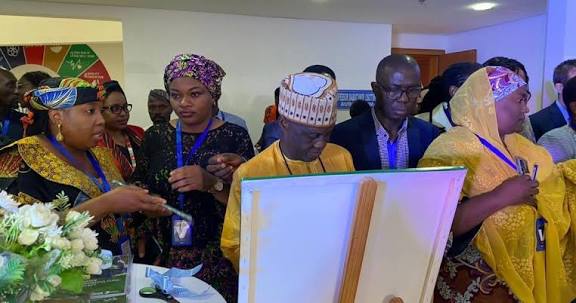
UN Women, NCCC Call for Gender Inclusion in Climate Policies

UN Women, NCCC Call for Gender Inclusion in Climate Policies
By: Michael Mike
UN Women Nigeria, in partnership with the National Council on Climate Change (NCCC), has launched the Gender Integration Toolkit and Strategy for Nigeria’s Nationally Determined Contributions (NDCs), calling for the inclusion of gender in climate policies.
The toolkit is designed to include gender considerations into climate planning, financing, implementation, and monitoring across all levels of governance. It provides practical guidance to ensure that climate policies, projects, and investments are not only effective but also gender-responsive.
Delivering the keynote address, Director-General of the NCCC, Bar. Mrs. Tenioye Majekodunmi, underscored the urgency of embedding gender considerations into climate policy.
“Gender equality is not just a social imperative -it is a climate imperative,” she declared.
She added: “When women have equal access to resources, farm yields rise, household resilience improves, and communities become more sustainable.”
The launch comes amid Nigeria’s efforts to implement its updated NDC 3.0, guided by the Climate Change Act of 2021 and the Long-Term Low Emission Development Strategy (LT-LEDS).
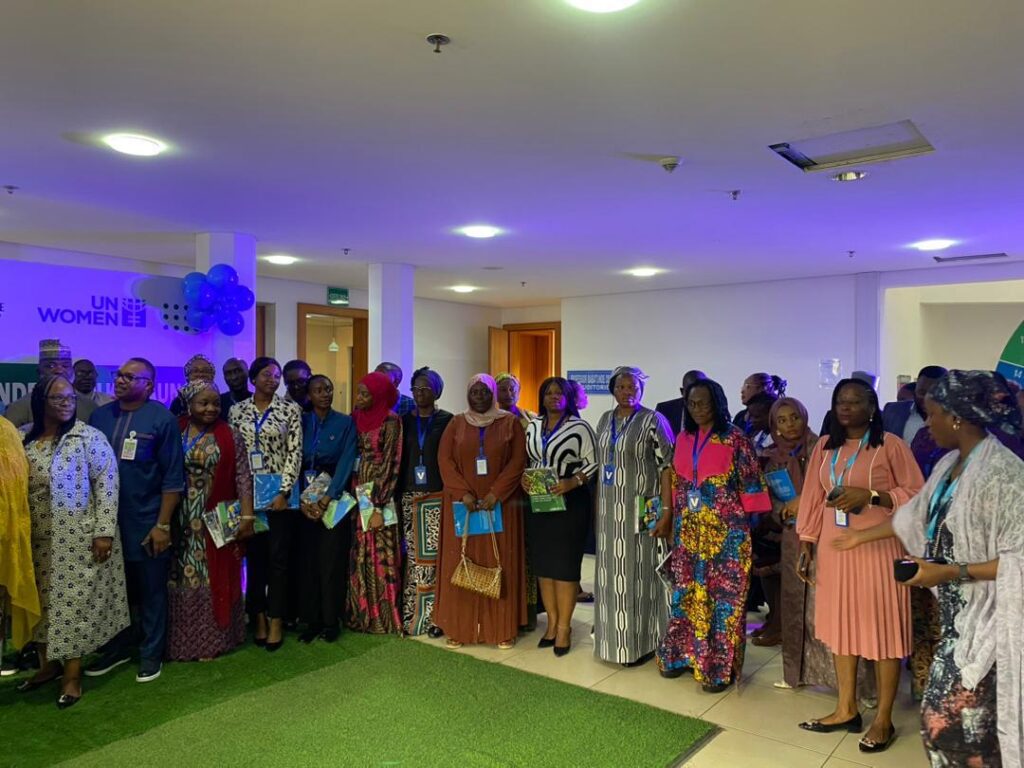
Majekodunmi noted that the new toolkit aligns with these frameworks and helps institutionalize gender-responsive approaches across key sectors, including energy, agriculture, transport, industry, and waste.
“We are building an institutional architecture that integrates gender considerations across all sectors,” she said.
“The NDC Gender Integration Toolkit we launched today is a cornerstone of that effort.”
The toolkit, developed by UN Women Nigeria, is designed to equip national, state, and local institutions with tools to identify gender gaps, integrate gender-sensitive approaches in project design, and monitor results through MRE-ready (Monitoring, Reporting and Evaluation) and sex-disaggregated indicators.
“If you’re not tracking, you’re just wasting time,” Majekodunmi noted.
“That’s what I love the most about this toolkit ,the ability to track these results and make adjustments based on evidence.”
She stressed that gender equality must become a standard of performance, not an afterthought.
“No policy, no investment, and no decision on climate change should be made without considering its gender implications,”
“This is about institutionalising gender-responsive budgeting and ensuring that women are part of the decision-making process — from the local to the national level.” She said.
The DG praised the collaborative effort behind the toolkit’s development, crediting the support of key government ministries and agencies.
“I wish to commend the UN Women Nigeria Country Office, the Federal Ministry of Agriculture and Food Security, the Federal Ministry of Environment, and the Federal Ministry of Women Affairs,” she said.
“This type of resource is only possible through strong technical partnerships and shared commitment.”
Majekodunmi called on all stakeholders to treat the toolkit not as a final product, but as a dynamic, evolving tool for lasting change.
“Let us use this toolkit not as an end in itself, but as a living guide, a framework for shared accountability, a catalyst for innovation, and a bridge between national ambition and local impact.”
She concluded her remarks with a powerful message that captured the spirit of the event:
“When gender equality drives climate action, sustainability flows naturally.”
Speaking at the launch of Nigeria’s NDC Gender Integration Toolkit and Strategy, Beatrice Eyong, UN Women Country Representative to ECOWAS, stressed the urgent need to center gender equality in climate policy.
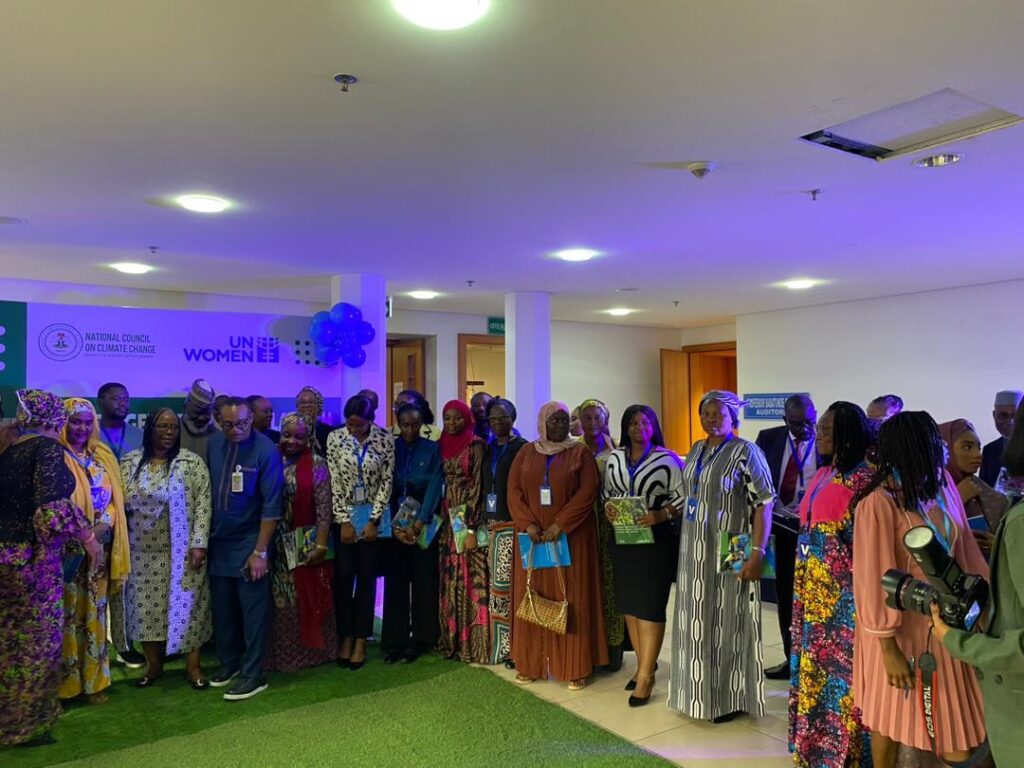
She highlighted the unequal impact of climate change on women, their central role in climate-sensitive sectors, and the importance of turning tools into tangible action.
Eyong revealed the gendered impacts of climate change, noting that women bear the brunt of its consequences, particularly in vulnerable regions.
“According to the UN, 80% of people displaced by climate change are women and children,”
“Climate-related disruptions directly undermine food security, household incomes, and national economies. Nigeria is no exception.” She said
Second, she emphasized the vital but often overlooked contributions of women to climate adaptation, particularly in agriculture, food systems, and local environmental knowledge.
“Women have a unique knowledge of the environment about medicinal plants, animals, and sustainable practices,”
“They have something to bring to the table to make sure that whatever we are doing is inclusive, rich, and equitable.” Eyong explained .
Eyong called on ministries, departments, and agencies to take ownership of the newly launched toolkit, translating it into real-world policy and programmatic change.
“Tools alone are not enough. They depend on strong ownership and active application,”
“Mainstreaming gender in the energy sector, for example, is not only about including women in renewable projects, but ensuring equitable access to training, finance, and technology.” She urged.
National Consultant on Gender Mainstreaming for NDC 3.0 and LT-LED, Ms. Ogochukwu Ukemezia made a compelling case for translating the toolkit into real, system-wide change.
She emphasized the importance of action, the societal value of gender equality, and the power of inclusive development planning.
Ukemezia stressed that the event was not merely symbolic but a practical rallying point for all actors ,from government ministries to development partners ,to apply the toolkit in their daily work.
“Today’s event is more than a launch ,it is a call for action, a call for every government institution, every development partner, and every stakeholder to embrace these tools and apply them meaningfully in their work.”
She reframed gender equality as a driver of national progress, innovation, and sustainable development, not just a moral concern.
“Gender equality is not just a moral advantage it is a societal advantage. When we empower women and girls, we unlock innovation, resilience, and sustainable development for all.”
Drawing on Nigeria’s development planning history, she urged planners to move beyond token gender chapters and fully integrate gender data and needs across all sectors.
“Before now, what we did in the National Development Plan was to have a chapter for gender and we said ‘leave power out of it, leave works out of it.’ Now, we are putting gender in power, gender in agriculture, gender in energy, and gender in employment.” She stated .
Social Development Director at the Federal Ministry of Budget and Economic Planning, Grace Obi Ukpabi emphasized the urgent need to move beyond generic national planning and instead use gender-sensitive data to design policies that respond to the diverse realities of Nigerians.
She also reveal the shift from sidelining gender to making it central to development planning.
Ukpabi called for an intentional, data-driven approach to planning that recognizes how different groups especially women and children experience policy differently.
She urged planners to break the habit of treating the population as one homogenous block.
“When we are done, we must begin to decide by gender, by vulnerability, by originality and then intentionally prioritise what each section of it needs to truly resolve issues.”
She reflected on how past national plans relegated gender to a side chapter, but praised the current shift to fully integrate gender concerns into power, infrastructure, energy, and other key sectors.
“Before now, we said ‘leave gender out of this, leave power out of this.’ But now we are putting gender in power, gender in works, gender in employment. It’s making it more real.”
UN Women, NCCC Call for Gender Inclusion in Climate Policies


Katsina Tops Sub-national Climate Governance Ranking
By: Michael Mike
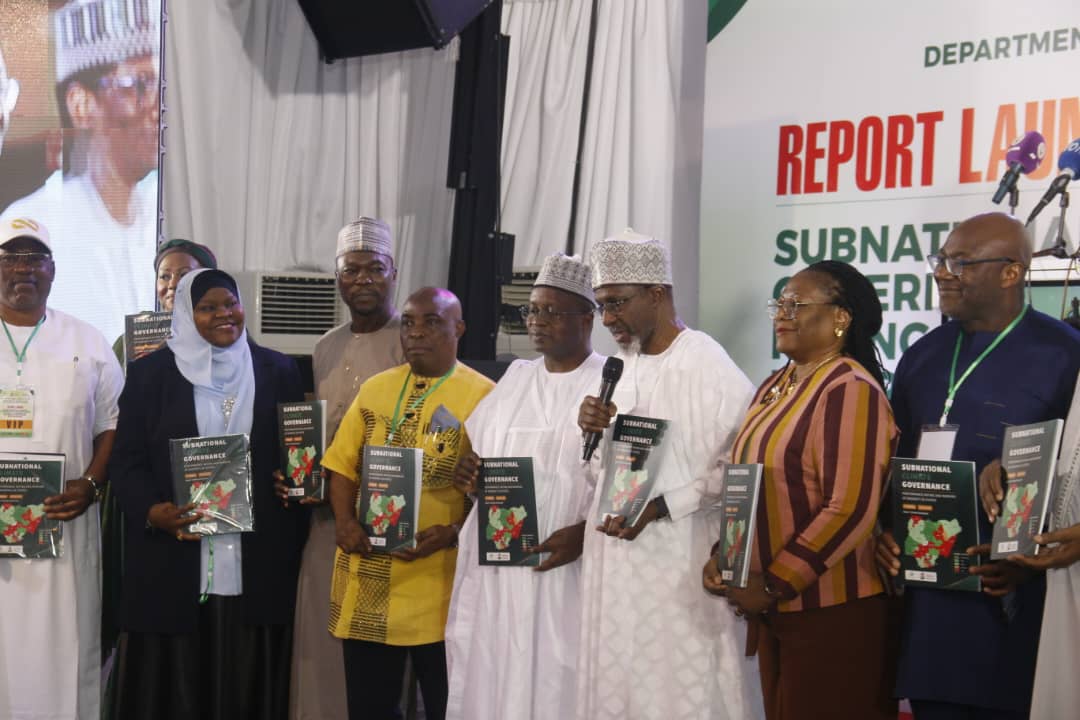
The Society for Planet & Prosperity (SPP), in collaboration with the Federal Ministry of Environment, has launched the third edition of the Sub-national Climate Governance Performance Rating and Ranking, with Katsina State emerging as the top-performing state.
The annual assessment evaluates how effectively Nigeria’s 36 states and the Federal Capital Territory (FCT) govern and implement climate action, environmental sustainability and related policies at the sub-national level.
Speaking at the launch in Abuja, the Minister of Environment, Balarabe Lawal, urged state governors to make climate action an integral part of their development and investment priorities.
Lawal said the Federal Government, under President Bola Tinubu’s Renewed Hope Agenda, remained committed to providing technical assistance, capacity development and collaboration to enable states strengthen their climate governance frameworks.
“Let us use this Third Edition to transform competition into constructive learning, rankings into accountability, and commitments into tangible outcomes,” he said.
The minister commended the 36 states and the FCT for participating in the assessment, urging them to use the initiative to strengthen climate governance, build resilience and promote sustainable development.
He added that with stronger commitment from state governments, Nigeria could build a resilient, low-carbon and prosperous nation while ensuring that no state or community was left behind.
Presenting the assessment, the President of SPP, Prof. Chukwumerije Okereke, said the ranking was not merely a measure of a state’s climate record or vulnerability to climate change, but an assessment of how effectively states were governing and implementing climate action.
He said the assessment covered five major areas: climate institutions and governance; climate policy and action plans; climate project implementation and monitoring; climate budget and finance; and online visibility of climate activities.
Okereke said states were required to provide evidence of five major climate projects, from which the three best-performing projects were selected for scoring.
He added that the assessment also considered budgeting, access to climate finance, stakeholder participation, monitoring and evaluation, and online visibility.
“The ranking was based on evidence submitted by the states, followed by verification, with strict emphasis on transparency and integrity,” he said.
According to him, the latest results showed substantial improvement in climate action at the sub-national level, while stronger collaboration, peer learning, improved implementation and better access to climate finance could further enhance Nigeria’s response to climate change.
The latest ranking represents a significant reshuffling of the leading states since the exercise began in 2024.
The first edition, launched in July 2024, was topped by Lagos State, followed by Gombe and Ebonyi states, while Borno and Ekiti shared the fourth position. At the bottom of the inaugural ranking were Oyo, Kano and Zamfara, which occupied 34th, 35th and 36th positions respectively.
Lagos retained the number-one position in the second edition released in October 2025, scoring 315 points out of 365. Katsina made one of the most dramatic improvements, jumping from 25th position in 2024 to second place with 310 points, while Kaduna moved from 16th to third.
Kano also recorded a particularly striking improvement in the second edition, moving from 35th position in 2024 to fourth in 2025. The state’s performance was attributed to improvements in climate institutions, policy, implementation and other areas covered by the assessment.
The second edition therefore saw Lagos, Katsina and Kaduna occupy the top three positions, while Kano and Enugu broke into the top five after significant improvements from their previous performances.
The third edition has now produced another major change, with Katsina displacing Lagos from the top position. Abia moved into second place, Kano climbed to third, Lagos dropped to fourth, while Kwara entered the top five in fifth position.
The result is particularly significant for Katsina, which has moved from 25th in the inaugural ranking, to second in the 2025 edition and now first in the latest assessment. SPP had previously described the state’s 23-place rise between the first and second editions as one of the most significant improvements recorded under the ranking initiative.
In his acceptance speech, Katsina State Commissioner of Environment and Special Adviser on Climate Change, Prof. Mohammed Alamin, said the state viewed climate action as both a development and security issue.
He said Katsina was particularly concerned about the effects of desertification, resource pressure and climate variability on agriculture, livelihoods and communities.
Alamin said the administration of Governor Dikko Radda had prioritised the participation of young people and women in climate action, alongside initiatives such as the Katsina One-Person-One-Tree programme.
He said the programme targets the planting of two million trees in 2026 and 11 million trees by 2030.
He added that Katsina was positioning its climate, agriculture, renewable energy and carbon-market opportunities for international engagement, describing the ranking as both recognition of the state’s climate governance efforts and an opportunity to showcase its broader green-development agenda.
The third edition thus marks a further evolution of the annual assessment, which SPP says has increasingly placed emphasis on evidence, verification and actual implementation rather than policy commitments alone. The second edition introduced stronger evidence requirements, including supporting.
Katsina Tops Sub-national Climate Governance Ranking
Nigeria, Bangladesh deepen strategic defence cooperation
By: Zagazola Makama
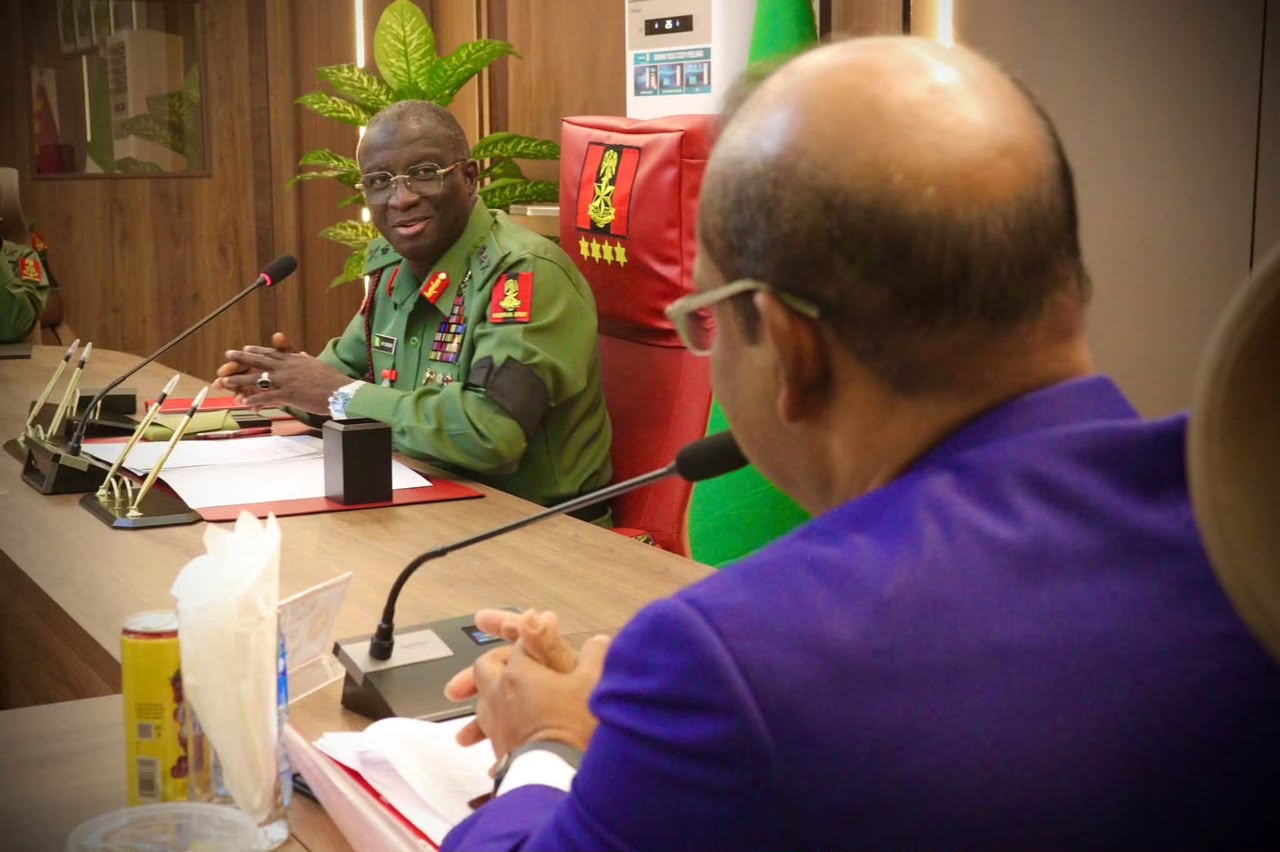
ABUJA — The Nigerian Army and Bangladesh are strengthening strategic defence cooperation focused on military capacity building, professional military education, operational effectiveness and institutional partnerships.
The Chief of Army Staff (COAS), Lieutenant General Waidi Shaibu, disclosed this on Thursday, October 8, 2026, when he received the Bangladesh High Commissioner to Nigeria, His Excellency Miah Md Mainul Kabir, on a courtesy visit to Army Headquarters, Abuja.
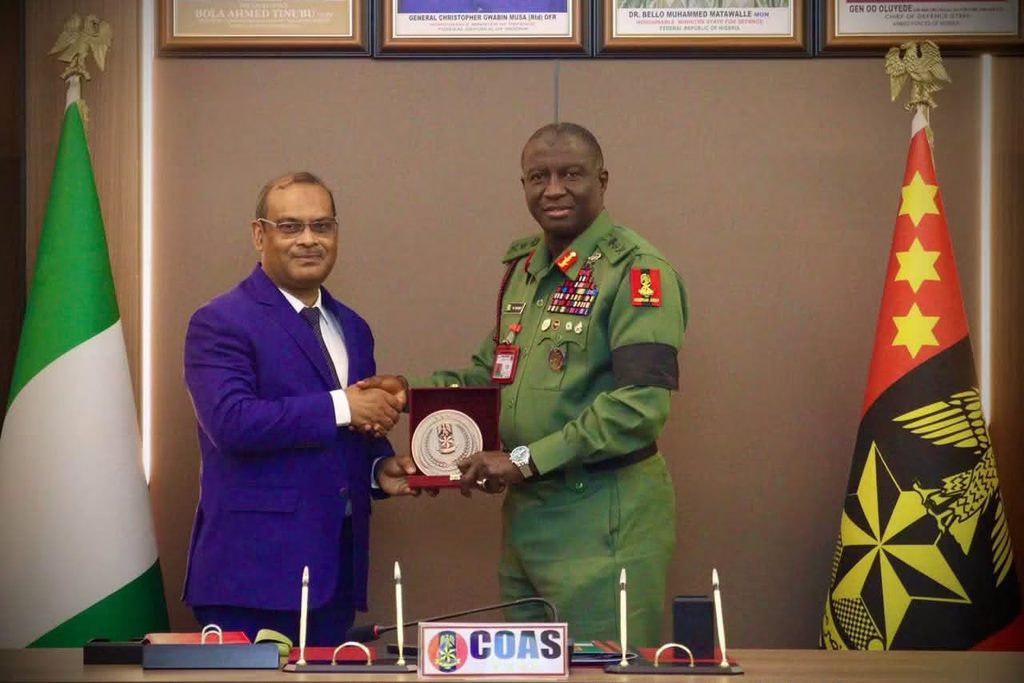
Shaibu said the Nigerian Army was ready to share its operational experiences in counter-terrorism, counter-insurgency and drone warfare, as well as its expertise in the humanitarian management of internally displaced persons.
He directed relevant departments at Army Headquarters to engage their counterparts in the defence sector to develop joint training programmes and strategic frameworks aimed at strengthening the operational capabilities of both countries.
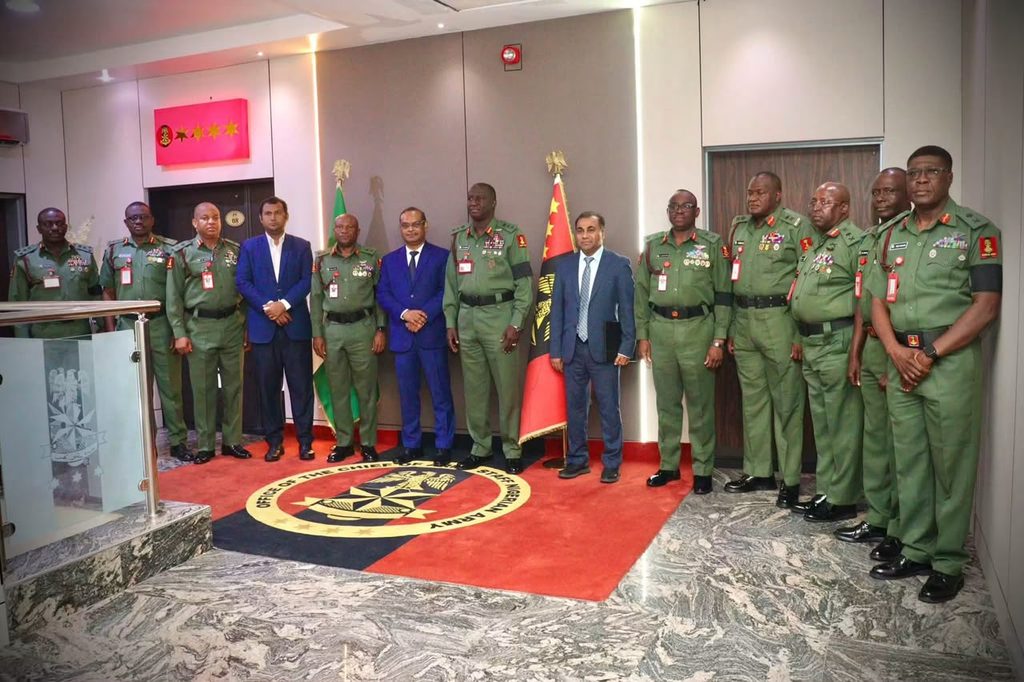
The COAS also approved the establishment of the National Defence College Bangladesh Alumni Association to bring together Nigerian military personnel who have completed strategic courses in Bangladesh.
He noted that the Chief of Military Intelligence (Army) and the General Officer Commanding 1 Division are among Nigerian military officers who have undergone training at Bangladeshi military institutions.
According to him, the alumni association would provide an institutional platform for sustained collaboration, training exchanges, technical cooperation and stronger military-to-military relations between Nigeria and Bangladesh.
Responding, the Bangladesh High Commissioner expressed condolences to the Nigerian Army over the recent military aircraft crash in Ondo State.
Kabir also commended Nigeria’s contributions to United Nations peacekeeping operations and disclosed that 154 Nigerian officers have participated in courses at the Bangladesh National Defence College.
He advocated expanded institutional exchanges involving foreign service academies and military training programmes to strengthen strategic leadership development and deepen bilateral cooperation.
The engagement is expected to provide a broader framework for professional military exchanges and the sharing of operational and institutional experiences between the two countries.
Nigeria, Bangladesh deepen strategic defence cooperation
Moscow Jamboree: If Russia Cannot Protect Itself, Why Must Africa Keep Coming to It?
By Oumarou Sanou
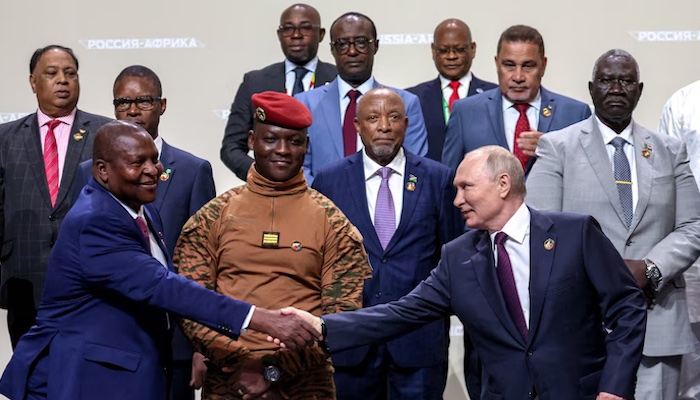
With barely a month to go before the Third Russia-Africa Summit, scheduled for 28–29 October in Moscow, African delegations face a question that has nothing to do with diplomacy and everything to do with arithmetic: is it worth the risk of flying into a capital that Ukrainian drones now reach with uncomfortable regularity, and what, precisely, does Africa get for making the trip at all?
The security question answers itself first. On 6 October, roughly 650 drones struck the Moscow region in one of the largest such attacks of the war, killing two people and setting a warehouse ablaze; it followed a 20 September assault in which some 450 drones were aimed at the capital specifically, part of a wider barrage of 1,600 launched across Russia that day. These are not isolated incidents but a pattern, and one that has already reached African carriers directly. In early September, Air Tanzania suspended its Dar es Salaam-Moscow route following a risk assessment, resuming it only days later under commercial and diplomatic pressure. “If Air Tanzania judged it necessary to temporarily suspend its flights, it was not without reason,” a Tanzanian official close to the matter is reported to have said. “But what happens if Moscow is struck again during the summit, or if air defences are activated while we are there?”
That question deserves more than Moscow’s choreography will allow. The danger is not that Ukraine would deliberately target an African delegation; it is that civilian aviation and live air defence operations now share the same airspace over the same city, with precedents that should concentrate minds. In 2014, flight MH17 was shot down over eastern Ukraine, killing all 298 people aboard. In December 2024, Azerbaijan Airlines flight J2-8243 crashed after apparently being struck during Russian air defence operations against drones, killing 38. Neither involved an African carrier, but both show what happens when commercial aircraft fly through contested skies.
“If Russia cannot secure its own capital, what exactly is it offering the African governments that have come to treat it as a security guarantor?”
Moscow’s pitch to Africa rests on a narrower premise than its rhetoric suggests, not development, not shared prosperity, but protection, delivered through private military contractors and now the state-run Africa Corps in Mali, the Central African Republic and beyond. Putin said in 2023 that Russia had military-technical cooperation agreements with more than 40 African states; US congressional research has identified regime protection, not institution-building, as the principal attraction. That comparative advantage is strongest precisely where African institutions are weakest, which is a different business from development entirely.
The economic case is no sturdier. At the inaugural Sochi summit in 2019, Putin set a target of roughly doubling Russia-Africa trade within four to five years, implying a figure near $40bn. By Lavrov’s own account, 2025 turnover came in at just over $27bn, and Russia still accounts for less than 1% of foreign direct investment into Africa. That gap has not gone unnoticed inside the delegations themselves. “It would be interesting to discuss the ‘win-win’ aspect of this partnership. For now, that is not the case,” a source close to Ghana’s delegation said, adding pointedly: “AI can wait, political stability cannot,” a rejoinder aimed squarely at Lavrov’s own list of summit priorities, artificial intelligence, digital payments, alternative currencies, which reads less like an African agenda than one exported wholesale from Moscow. Gabon has reportedly settled the matter outright, declining to send its president or his inner circle to a summit held far from its borders and further still from its citizens’ concerns.
More troubling than the shortfall is what increasingly fills it. A US Congressional Research Service assessment notes reports that African gold and other resources have helped Russia cushion sanctions pressure. Now another resource appears increasingly relevant: people. Amnesty International’s September investigation documented deceptive and coercive recruitment of foreign nationals, disproportionately from poorer Global South countries, into Russia’s armed forces, concluding that in many cases the practices amounted to human trafficking. A partnership cannot credibly be called mutually beneficial if Africans searching for ordinary jobs end up supplying manpower for someone else’s war.
This is also why the summit’s location deserves scrutiny, not just its agenda. Russia has now held three summits with Africa, Sochi in 2019, St Petersburg in 2023, Moscow in 2026, and has never once brought the gathering to African soil.
Compare that with France’s Africa Forward Summit, held in Nairobi on 11–12 May 2026 and co-chaired jointly by Macron and Kenya’s president, the first such summit in Africa, with African hosts, African protocol and African convening power. Whatever one thinks of France’s own record on the continent, the choice of venue signalled something Moscow has never offered: treating African leaders as co-chairs of their own partnership rather than invitees to someone else’s capital. If Russia’s engagement with Africa is genuinely a partnership of equals rather than a demonstration of whose capital commands the guest list, there is no structural reason the next summit could not be held in Addis Ababa, Nairobi or Abuja, co-chaired by an African head of state. That it has not been, after three editions, says as much about the relationship as any communiqué will.
None of this argues for severing ties with Moscow. Russia remains a significant arms supplier and a useful counterweight for states diversifying away from former colonial patrons, and strategic autonomy means keeping options open, not foreclosing them. But engagement is not deference, and a summit is not evidence that a partnership is working. As one official close to the preparations put it: “For three years now we have been discussing a summit held in Africa; it remains a dead letter. But on top of that, we now run the risk of being bombed.” Before African leaders sign on to another round of declarations in a city that cannot fully guarantee their physical safety, the least they owe their own citizens is an honest answer: if Russia cannot protect itself, and will not even meet Africa halfway on its own soil, what exactly is this partnership protecting?
Oumarou Sanou is a social critic, Pan-African observer and researcher focusing on governance, security and political transitions in the Sahel. He writes on geopolitics, regional stability and African leadership dynamics. Contact: sanououmarou386@gmail.com
Moscow Jamboree: If Russia Cannot Protect Itself, Why Must Africa Keep Coming to It?

Katsina Tops Sub-national Climate Governance Ranking

Nigeria, Bangladesh deepen strategic defence cooperation

Troops raid suspected robbers’ hideout in Nasarawa, recover motorcycle

Roger Federer’s Shock as DNA Results Reveal Myla and Charlene Are Not His Biological Children

THE PLIGHT OF FARIDA

FAILED COUP IN BURKINA FASO: HOW TRAORÉ NARROWLY ESCAPED ASSASSINATION PLOT AMID FOREIGN INTERFERENCE CLAIMS
-
 News3 years ago
Roger Federer’s Shock as DNA Results Reveal Myla and Charlene Are Not His Biological Children
-
Opinions5 years ago
THE PLIGHT OF FARIDA
-
 News1 year ago
FAILED COUP IN BURKINA FASO: HOW TRAORÉ NARROWLY ESCAPED ASSASSINATION PLOT AMID FOREIGN INTERFERENCE CLAIMS
-

 News3 years ago
EYN: Rev. Billi, Distortion of History, and The Living Tamarind Tree
-
 Opinions5 years ago
POLICE CHARGE ROOMS, A MINTING PRESS
-

 ACADEMICS3 years ago
A History of Biu” (2015) and The Lingering Bura-Pabir Question (1)
-

 Columns3 years ago
Army University Biu: There is certain interest, but certainly not from Borno.
-

 Politics1 year ago
2027: Why Hon. Midala Balami Must Go, as Youths in Hawul and Asikira/Uba Federal Constituency Reject ₦500,000 as Sallah Gift
