
Uncategorized
VP Shettima Attributes Nigeria’s New Growth Trajectory To President Tinubu’s Bold Leadership, Policies

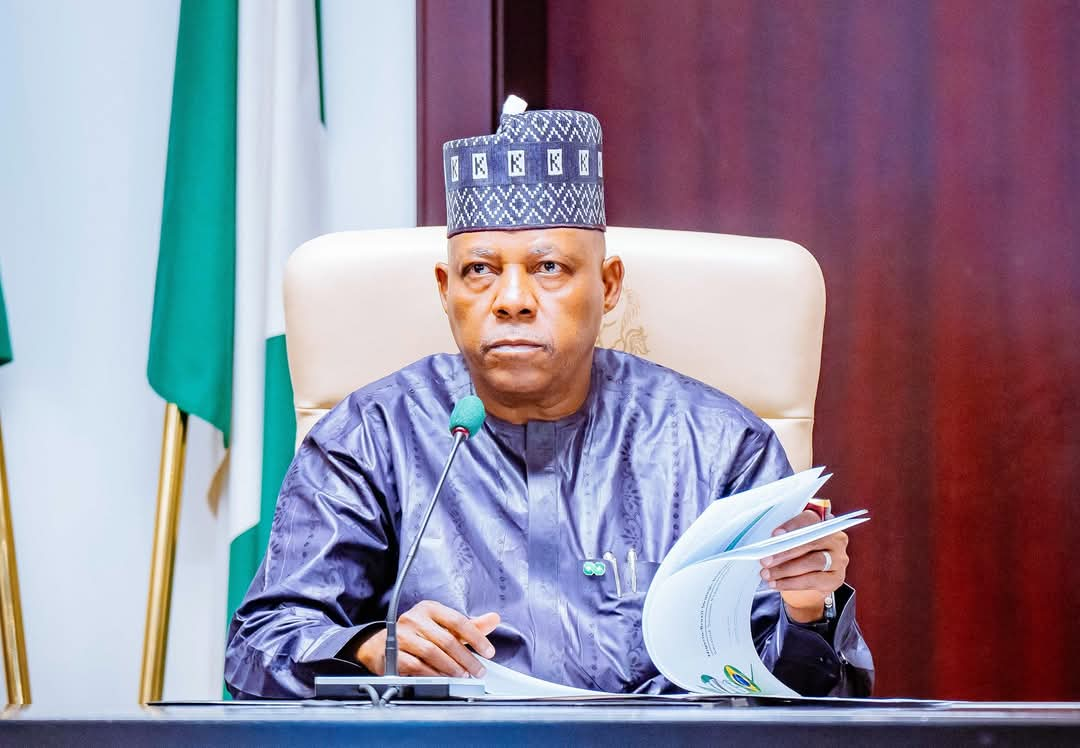
VP Shettima Attributes Nigeria’s New Growth Trajectory To President Tinubu’s Bold Leadership, Policies
** As Nigeria-Brazil Strategic Dialogue to resume after decade-long break
By: Our Reporter
Ahead of the forthcoming Nigeria-Brazil Strategic Dialogue Mechanism, Vice President Kashim Shettima has said due to President Bola Ahmed Tinubu’s bold, courageous leadership and well-thought-out policies, Nigeria is now on a new growth trajectory, ready for investments across different sectors.
This is just as Brazil’s Vice President, Geraldo Alckmin, is set to lead a delegation of top executives in the country’s public and private sectors on a state visit to Nigeria for the second session of the Brazil-Nigeria Mechanism for Strategic Dialogue, after over a decade-long break.
Speaking on Tuesday during an update meeting with relevant ministers and heads of agencies at the Presidential Villa, Vice President Shettima noted that “in President Bola Tinubu, we have a leader who has shown that dexterity, that audacity to hope for a better tomorrow.”
Senator Shettima expressed satisfaction with the firm grasp of the real issues by ministers in the key sectors targeted for deliberations during the Nigeria-Brazil Strategic Dialogue Mechanism slated for the later part of the year.
He called on all the key actors on the Nigerian side to make adequate preparations for the meeting, noting that there has to be some clarity, strategic coherence and a deep understanding of issues that will be tabled for discussion.
He said, “I want to urge all Ministers involved in this Nigeria-Brazil strategic dialogue to take charge of the initiative of the discussions so that we can take it to the next level, let’s walk the talk. Please, drive the process, engage with the different strategic focus groups to give you weekly updates to prepare us for the visit of the Brazilian Vice President and his delegation.
“The most important thing at this moment is for us to actualize the dreams of our nation’s development. We have the resources and institutional knowledge to make this work for our country.”
On the similarities between Nigeria and Brazil, the Vice President stressed the need to leverage the huge opportunities inherent in the partnership between both countries to actualize Nigeria’s vision across agriculture, culture and tourism, livestock production and military technology, among others.
Earlier in his speech, the Minister of Agriculture and Food Security, Abubakar Kyari, said the dialogue presents a renewed opportunity for Nigeria to revitalise the nation’s agricultural sector to attain the food sovereign goals of the administration.
“On behalf of the agriculture sector, it is time for us to walk the talk. It is a good day for Nigeria because agriculture will play a major role in the partnership. We have an opportunity to catch up with the rest of the world and be on our way to food sovereignty,” the Minister said.
Minister of Art, Culture, Tourism and Creative Economy, Hannatu Musawa spoke on the cultural significance of the partnership, saying, “There is a huge population in Brazil of Nigerian descent who have a lot of interest in Nigeria.
“What we have done in the Ministry is to engage Brazil actively in working together. Already, we have an MoU, but we want to expand that beyond cultural diplomacy. Brazilians have a lot of interest in tapping into our creative industry,” she added.
The Minister hinted on plans to rebuild the Nigerian House in Brazil as well as host an annual Orisha Festival soon.
On defence cooperation, Minister of Defence, Muhammad Badaru, stated: “All is set for signing of a defence agreement with Brazil. We are also engaging with them on defence industry development to start production centres in Nigeria.”
Also, Coordinating Minister of Health and Social Welfare, Mohammed Ali Pate, highlighted healthcare opportunities that dialogue presents to Nigeria, noting that the platform is an important relationship for Nigeria.
He said, “Brazil is able to produce almost everything they need, including pharmaceuticals and vaccines. We are keen on turning things around and with the efforts of President Bola Ahmed Tinubu, we are unlocking the healthcare value chain. Manufacturing vaccines, diagnostics and pharmaceuticals is on the agenda, but it’s a very long journey and we are determined to walk through it.”
Also, Technical Assistant to the President on Agriculture (Office of the Vice President), Ms. Marion Moon, said, “Brazil’s agricultural expertise—from their successful cropland expansion to their global leadership in key commodities—offers invaluable insights for our development. The upcoming $1.1 billion Green Imperative Project exemplifies the depth of our relationship and its potential to revolutionize Nigerian agriculture through modernization and technology transfer.”
She explained that the Strategic Dialogue will be preceded by a Trade and Investment Forum coinciding with the anticipated visit of Brazil’s Vice President and Minister of Development, Industry, Trade, and Services, H.E. Geraldo Alckmin.
Others who spoke at the meeting included the Minister of Livestock Development, Alhaji Idi Mukhtar Maiha, and a representative of the Minister of State for the Environment, Balarabe Lawal, among many others.
VP Shettima Attributes Nigeria’s New Growth Trajectory To President Tinubu’s Bold Leadership, Policies



Herder assaulted over alleged destruction of farm crops in Jos North
By: Zagazola Makama
A herder, identified as Abubakar Abdullahi, has been assaulted by a farmer, Mr Caleb Bulus, following an alleged dispute over the destruction of farm crops in Kwanga village, Jos North Local Government Area of Plateau State.
Security sources told Zagazola Makama that the incident occurred at about 4:45 p.m. on Sept. 25, 2026, when troops of Sector 1, Sub-Sector 12, responded to a report of the assault.
The herder reportedly sustained injuries during the incident and was evacuated to the Jos University Teaching Hospital (JUTH) for medical attention.
The suspect, Bulus, was arrested and handed over to Keystone Authority, Jos, for further investigation and appropriate action.
Security sources said the incident was being monitored to prevent the dispute from escalating into further communal tension in the area.
Herder assaulted over alleged destruction of farm crops in Jos North
Uncategorized
COAS unveils Nigerian Army Airborne School, tasks troops on special operations readiness
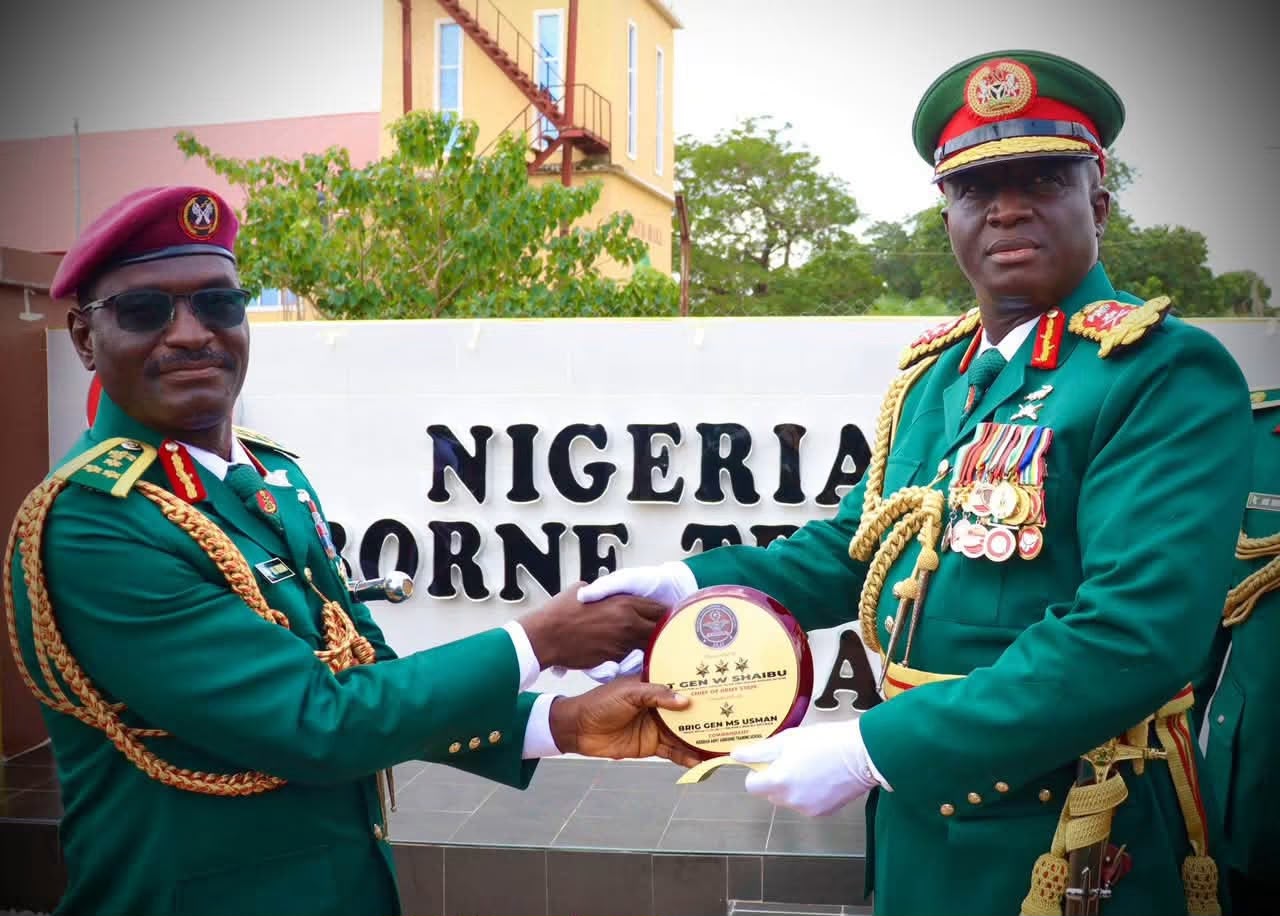
COAS unveils Nigerian Army Airborne School, tasks troops on special operations readiness
By: Zagazola Makama
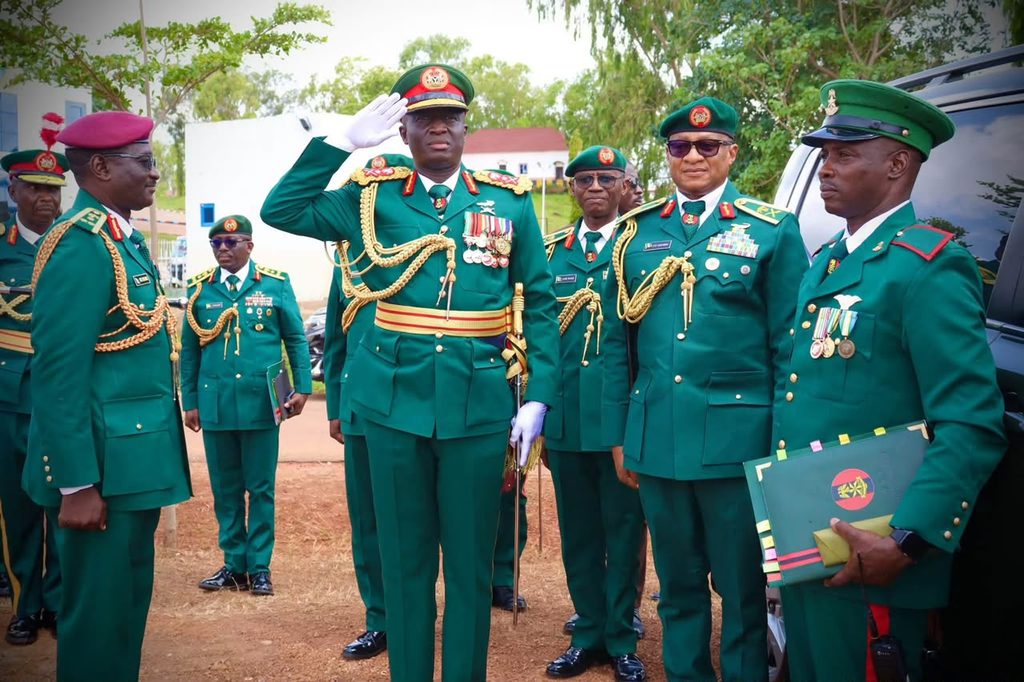
The Chief of Army Staff (COAS), Lt. Gen. Waidi Shaibu, has unveiled the Nigerian Army Airborne Training School at Jaji Military Cantonment, Kaduna State, with a charge to personnel to attain the highest standards of specialised training and operational readiness.
Shaibu, who unveiled the School on Friday, September 25, 2026, said the establishment of the institution represents a strategic investment in developing highly skilled, agile and mission-ready personnel capable of undertaking complex airborne and special operations.
He said the changing character of warfare and the increasing sophistication of asymmetric threats require a force that is highly trained, adaptable and capable of operating effectively across difficult and diverse operational environments.
According to him, airborne and special operations capabilities are increasingly important to contemporary military operations, particularly in counter-terrorism, counter-insurgency and other asymmetric security environments.
The COAS therefore tasked the Commandant and instructors of the new School to develop and continually refine rigorous, operationally relevant training programmes that reflect global best practices while addressing Nigeria’s peculiar security challenges.
He said the School would serve as a centre of excellence for airborne operations, parachuting, air assault and other specialised military skills.
Shaibu explained that the initiative would enhance combat readiness and operational flexibility, while strengthening the Army’s ability to rapidly deploy appropriately trained personnel in support of joint and multi-agency operations.
The Army Chief assured the institution of continued support from Army Headquarters through the provision of necessary infrastructure, equipment and manpower required to fulfil its mandate.
He said the initiative formed part of ongoing efforts to build a more professional, adaptable, combat-ready and resilient Nigerian Army capable of effectively discharging its constitutional responsibilities.
Earlier, the Commandant of the Nigerian Army Airborne School, Brig. Gen. Muhammed Sani Usman, said the institution had been upgraded from a wing of the Nigerian Army School of Infantry, Jaji, into a full-fledged school.
Usman explained that the upgrade was driven by the Army’s continuing force-development efforts and the need to strengthen specialised capabilities, particularly those required to complement the operational employment of Nigerian Army Aviation.
The establishment of the School is expected to provide a dedicated institutional framework for developing personnel with specialised airborne capabilities and improving the Army’s capacity to generate forces for rapidly evolving operational requirements.
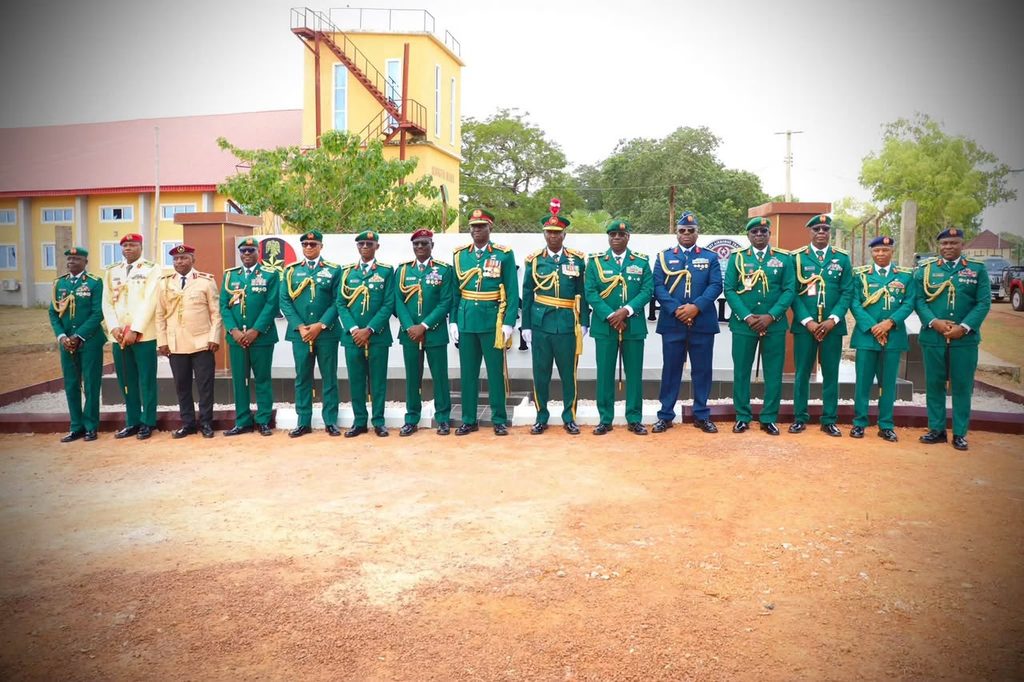
The event underscores the Army’s broader emphasis on specialised force development as it confronts increasingly complex security challenges requiring speed, mobility, precision and interoperability across conventional and asymmetric operational environments.
COAS unveils Nigerian Army Airborne School, tasks troops on special operations readiness
Uncategorized
Three Locals killed in Kassa in Reprisal to killing of fulani herder, rustling of 30 livestock, 10 sheep along Barkin Ladi–Mangu axis

Three Locals killed in Kassa in Reprisal to killing of fulani herder, rustling of 30 livestock, 10 sheep along Barkin Ladi–Mangu axis
By: Zagazola Makama
The security situation along the Barkin Ladi–Mangu axis of Plateau State has escalated following a fresh attack in Kassa village that left three locals dead, coming hours after a Fulani herder was killed by Berom Militia and 40 animals were reportedly rustled in the area.
Security sources told Zagazola Makama that the latest incident occurred at about 12:40 a.m. on Sept. 25, when troops of Sector 4, Operation Enduring Peace (OPEP), responded to reports of sporadic shootings in Kassa, Barkin Ladi Local Government Area.
The troops’ swift intervention reportedly forced the gunmen, suspected by security sources to be Fulani militias, to flee the area.
A search of the location led to the recovery of three bodies identified as Ishaya Pam, 48; Barnabas Gyang, 27; and Daniel Mutuwal, 30.
The troops also recovered an abandoned AK-47 rifle loaded with nine rounds of 7.62mm Special ammunition at the scene.
The Kassa attack occurred shortly after another incident around the boundary between Barkin Ladi and Mangu Local Government Areas, where a Fulani herder was killed and livestock were reportedly rustled by Berom Militiamen.
In that earlier incident, troops of Sector 8, Sub-Sector 81, Gyambwas, responded at about 3:55 p.m. on Sept. 24 to a report of cattle rustling and an attack on a herder.
On arrival at the location, the troops discovered the body of a 24-year-old herder identified as Abubakar Mudi, who had sustained gunshot wounds.
Other herders told the troops that about 30 cows and 10 sheep were suspected to have been taken by the attackers during the incident.
Security sources said the attackers were suspected to be members of a Berom militia group, although investigations are ongoing to establish the identities and motives of those responsible.
The troops have since commenced tracking operations to locate the suspected rustlers, recover the stolen livestock and arrest the perpetrators.
Security personnel and local vigilantes have also intensified patrols and offensive operations across the affected areas following the two incidents.
The sequence of attacks highlights the retaliatory nature of violence along parts of the Barkin Ladi–Mangu corridor, where attacks on communities and herders, livestock rustling and reprisal killings can rapidly trigger further violence.
Troops said they are intensifying efforts to prevent further retaliatory attacks.
Three Locals killed in Kassa in Reprisal to killing of fulani herder, rustling of 30 livestock, 10 sheep along Barkin Ladi–Mangu axis

Beyond farmer-herder clashes: how armed groups, criminality and misinformation are tearing Mangu apart

VP Shettima: Security Council Exclusion Of Africa Subverts Global Governance Legitimacy

The British Massacres and Lugard’s Punitive Expeditions in Nigerian History

Roger Federer’s Shock as DNA Results Reveal Myla and Charlene Are Not His Biological Children

THE PLIGHT OF FARIDA

FAILED COUP IN BURKINA FASO: HOW TRAORÉ NARROWLY ESCAPED ASSASSINATION PLOT AMID FOREIGN INTERFERENCE CLAIMS
-
 News3 years ago
Roger Federer’s Shock as DNA Results Reveal Myla and Charlene Are Not His Biological Children
-
Opinions5 years ago
THE PLIGHT OF FARIDA
-
 News1 year ago
FAILED COUP IN BURKINA FASO: HOW TRAORÉ NARROWLY ESCAPED ASSASSINATION PLOT AMID FOREIGN INTERFERENCE CLAIMS
-

 News3 years ago
EYN: Rev. Billi, Distortion of History, and The Living Tamarind Tree
-
 Opinions5 years ago
POLICE CHARGE ROOMS, A MINTING PRESS
-

 ACADEMICS3 years ago
A History of Biu” (2015) and The Lingering Bura-Pabir Question (1)
-

 Columns3 years ago
Army University Biu: There is certain interest, but certainly not from Borno.
-

 Politics1 year ago
2027: Why Hon. Midala Balami Must Go, as Youths in Hawul and Asikira/Uba Federal Constituency Reject ₦500,000 as Sallah Gift
