
Uncategorized
With Nowhere Else to Turn, Niger Begs Nigeria for Fuel Amid Severe Shortages


With Nowhere Else to Turn, Niger Begs Nigeria for Fuel Amid Severe Shortages
By: Zagazola Makama
For nearly two weeks, Niger Republic has been crippled by a severe fuel crisis, bringing vehicular movement and economic activity to a grinding halt. Long queues stretched across cities, with desperate motorists and businesses struggling to obtain a few liters of petrol. The situation was so dire that the military junta, which once prided itself on rejecting external influence, had no choice but to swallow its pride and turn to Nigeria for help.
Despite months of hostile rhetoric and diplomatic friction, Niger’s rulers quietly dispatched their Minister of Petroleum and Renewable Energy, along with top officials from the Niger Petroleum Company (SONIDEP), to beg Abuja for urgent fuel supplies. Nigeria, ever the regional big brother, obliged, approving the immediate delivery of 300 fuel trucks across the border to Niamey.
Niger’s fuel crisis didn’t happen overnight. It was the direct consequence of a disastrous confrontation between the ruling junta and Chinese oil companies, which have long dominated Niger’s petroleum sector. The trouble began in March 2024, when China National Petroleum Corporation (CNPC) granted the Nigerien government a $400 million advance, using future crude oil deliveries as collateral. This deal was meant to help Niger cope with the crippling economic sanctions imposed by ECOWAS following the July 2023 coup. However, when it came time to repay the debt, the junta found itself strapped for cash.
Rather than negotiating, the military rulers decided to strong-arm China. In a move that stunned industry insiders, they slapped an $80 billion tax demand on SORAZ (Zinder Refinery Company) despite the state-owned Sonidep already owing SORAZ a staggering $250 billion. When China refused to provide additional loans, the junta retaliated by expelling Chinese oil executives from the country and seizing SORAZ’s bank accounts.
A Self-Inflicted Crisis
This reckless decision backfired almost immediately. Niger’s entire petroleum sector which is heavily reliant on Chinese expertise and investment began to collapse. The SORAZ refinery, the lifeline of Niger’s fuel supply, ground to a halt, and fuel shortages spread like wildfire.
This crisis could not have come at a worse time. The Niger-Benin oil pipeline, a project designed to boost Niger’s crude exports to 100,000 barrels per day by 2025, was also at risk. With Chinese engineers gone and no viable alternative in place, the junta’s decision plunged the country into economic uncertainty.
Turning to Nigeria for Help
For weeks, the military leadership refused to acknowledge the crisis publicly. State-controlled media was ordered to stay silent about the fuel shortage and the growing unrest among Nigeriens, who were forced to buy petrol at sky-high black-market prices.
But as the situation worsened, the junta had no choice but to seek external help even if it meant approaching Nigeria, the very country they had repeatedly criticized since the coup.
Without any public announcement, Niger quietly sent a delegation to Abuja, appealing for an emergency fuel supply. The irony was lost on no one this was the same junta that had openly defied ECOWAS sanctions, severed ties with France and the West, and aligned itself with Russia. Yet when faced with economic collapse, it was Nigeria that they turned to for salvation.
Nigeria Plays the Good Neighbor Again
Despite months of insults, false accusations, name calling, diplomatic snubs, and hostility, Nigeria once again stepped in to help. It was gathered that the Nigerian Government approved the release of 300 fuel trucks, which immediately began crossing into Niger to ease the crisis.
The junta, however, remains too proud to admit its dependency. While fuel shipments from Nigeria have already started alleviating the crisis, Niger’s state media has deliberately avoided reporting where the fuel is coming from. Instead, the government has attempted to portray the fuel availability as a result of its own internal measures a claim that many Nigeriens are beginning to question.
Will Nigeria Gain Diplomatic Leverage?
While Nigeria’s generosity is commendable, the real question remains: What does Nigeria get in return? Will this act of goodwill translate into improved diplomatic relations? Will Niger’s military rulers rethink their hostility toward ECOWAS? Or will they simply take the fuel and continue their defiance once the crisis subsides?
Only time will tell. But one thing is certain: when Niger was on the brink of disaster, it was Nigeria not Russia, not China, not any of its new allies that stepped up to provide relief.
For now, Niger has been forced to acknowledge an uncomfortable truth: no matter how much they try to distance themselves from Nigeria, they remain dependent on their bigger neighbor.
And whether the junta admits it or not, Nigeria remains the lifeline Niger cannot afford to sever.
Zagazola Makama is a Counter Insurgency Expert and Security Analyst in the Lake Chad Region
With Nowhere Else to Turn, Niger Begs Nigeria for Fuel Amid Severe Shortages



Herder assaulted over alleged destruction of farm crops in Jos North
By: Zagazola Makama
A herder, identified as Abubakar Abdullahi, has been assaulted by a farmer, Mr Caleb Bulus, following an alleged dispute over the destruction of farm crops in Kwanga village, Jos North Local Government Area of Plateau State.
Security sources told Zagazola Makama that the incident occurred at about 4:45 p.m. on Sept. 25, 2026, when troops of Sector 1, Sub-Sector 12, responded to a report of the assault.
The herder reportedly sustained injuries during the incident and was evacuated to the Jos University Teaching Hospital (JUTH) for medical attention.
The suspect, Bulus, was arrested and handed over to Keystone Authority, Jos, for further investigation and appropriate action.
Security sources said the incident was being monitored to prevent the dispute from escalating into further communal tension in the area.
Herder assaulted over alleged destruction of farm crops in Jos North
Uncategorized
COAS unveils Nigerian Army Airborne School, tasks troops on special operations readiness
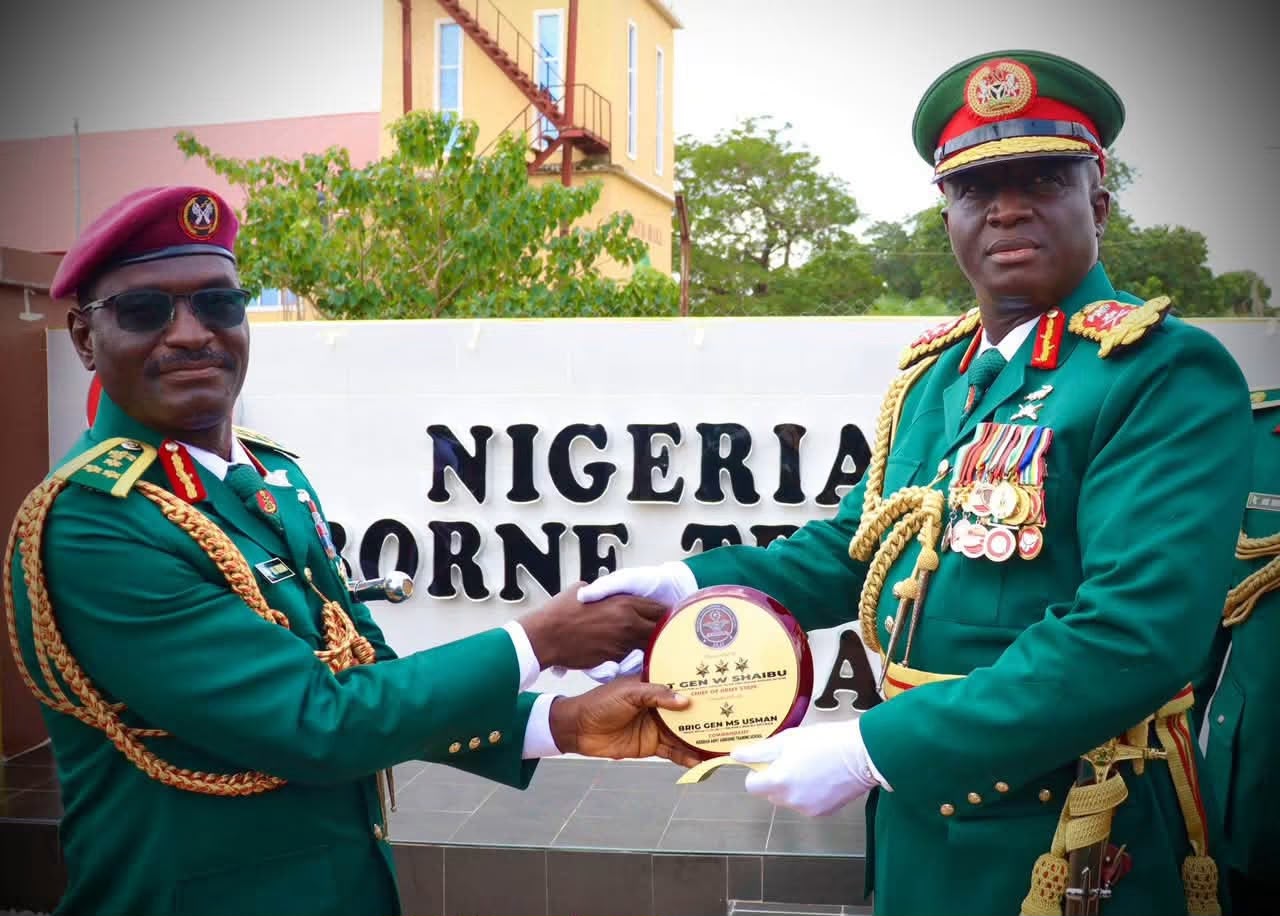
COAS unveils Nigerian Army Airborne School, tasks troops on special operations readiness
By: Zagazola Makama
The Chief of Army Staff (COAS), Lt. Gen. Waidi Shaibu, has unveiled the Nigerian Army Airborne Training School at Jaji Military Cantonment, Kaduna State, with a charge to personnel to attain the highest standards of specialised training and operational readiness.
Shaibu, who unveiled the School on Friday, September 25, 2026, said the establishment of the institution represents a strategic investment in developing highly skilled, agile and mission-ready personnel capable of undertaking complex airborne and special operations.
He said the changing character of warfare and the increasing sophistication of asymmetric threats require a force that is highly trained, adaptable and capable of operating effectively across difficult and diverse operational environments.
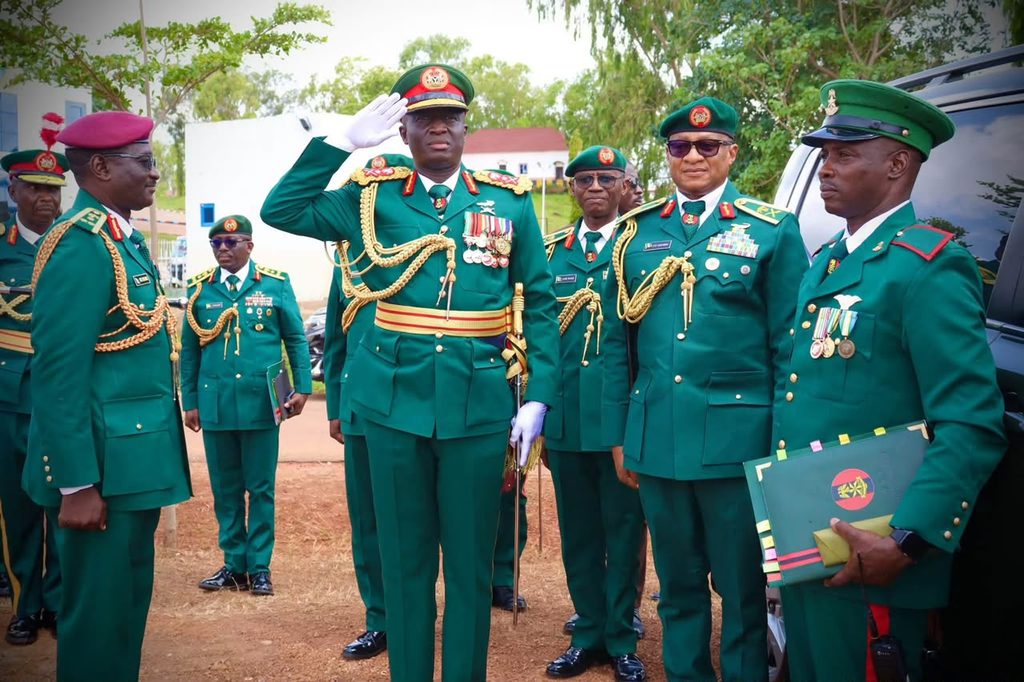
According to him, airborne and special operations capabilities are increasingly important to contemporary military operations, particularly in counter-terrorism, counter-insurgency and other asymmetric security environments.
The COAS therefore tasked the Commandant and instructors of the new School to develop and continually refine rigorous, operationally relevant training programmes that reflect global best practices while addressing Nigeria’s peculiar security challenges.
He said the School would serve as a centre of excellence for airborne operations, parachuting, air assault and other specialised military skills.
Shaibu explained that the initiative would enhance combat readiness and operational flexibility, while strengthening the Army’s ability to rapidly deploy appropriately trained personnel in support of joint and multi-agency operations.
The Army Chief assured the institution of continued support from Army Headquarters through the provision of necessary infrastructure, equipment and manpower required to fulfil its mandate.
He said the initiative formed part of ongoing efforts to build a more professional, adaptable, combat-ready and resilient Nigerian Army capable of effectively discharging its constitutional responsibilities.
Earlier, the Commandant of the Nigerian Army Airborne School, Brig. Gen. Muhammed Sani Usman, said the institution had been upgraded from a wing of the Nigerian Army School of Infantry, Jaji, into a full-fledged school.
Usman explained that the upgrade was driven by the Army’s continuing force-development efforts and the need to strengthen specialised capabilities, particularly those required to complement the operational employment of Nigerian Army Aviation.
The establishment of the School is expected to provide a dedicated institutional framework for developing personnel with specialised airborne capabilities and improving the Army’s capacity to generate forces for rapidly evolving operational requirements.
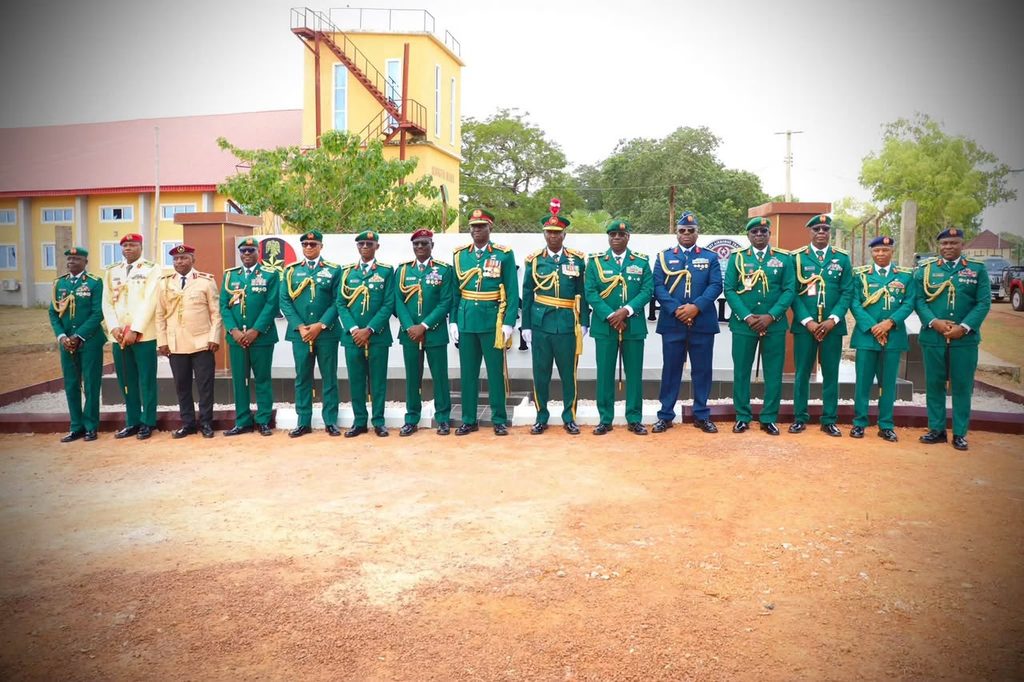
The event underscores the Army’s broader emphasis on specialised force development as it confronts increasingly complex security challenges requiring speed, mobility, precision and interoperability across conventional and asymmetric operational environments.
COAS unveils Nigerian Army Airborne School, tasks troops on special operations readiness
Uncategorized
Three Locals killed in Kassa in Reprisal to killing of fulani herder, rustling of 30 livestock, 10 sheep along Barkin Ladi–Mangu axis

Three Locals killed in Kassa in Reprisal to killing of fulani herder, rustling of 30 livestock, 10 sheep along Barkin Ladi–Mangu axis
By: Zagazola Makama
The security situation along the Barkin Ladi–Mangu axis of Plateau State has escalated following a fresh attack in Kassa village that left three locals dead, coming hours after a Fulani herder was killed by Berom Militia and 40 animals were reportedly rustled in the area.
Security sources told Zagazola Makama that the latest incident occurred at about 12:40 a.m. on Sept. 25, when troops of Sector 4, Operation Enduring Peace (OPEP), responded to reports of sporadic shootings in Kassa, Barkin Ladi Local Government Area.
The troops’ swift intervention reportedly forced the gunmen, suspected by security sources to be Fulani militias, to flee the area.
A search of the location led to the recovery of three bodies identified as Ishaya Pam, 48; Barnabas Gyang, 27; and Daniel Mutuwal, 30.
The troops also recovered an abandoned AK-47 rifle loaded with nine rounds of 7.62mm Special ammunition at the scene.
The Kassa attack occurred shortly after another incident around the boundary between Barkin Ladi and Mangu Local Government Areas, where a Fulani herder was killed and livestock were reportedly rustled by Berom Militiamen.
In that earlier incident, troops of Sector 8, Sub-Sector 81, Gyambwas, responded at about 3:55 p.m. on Sept. 24 to a report of cattle rustling and an attack on a herder.
On arrival at the location, the troops discovered the body of a 24-year-old herder identified as Abubakar Mudi, who had sustained gunshot wounds.
Other herders told the troops that about 30 cows and 10 sheep were suspected to have been taken by the attackers during the incident.
Security sources said the attackers were suspected to be members of a Berom militia group, although investigations are ongoing to establish the identities and motives of those responsible.
The troops have since commenced tracking operations to locate the suspected rustlers, recover the stolen livestock and arrest the perpetrators.
Security personnel and local vigilantes have also intensified patrols and offensive operations across the affected areas following the two incidents.
The sequence of attacks highlights the retaliatory nature of violence along parts of the Barkin Ladi–Mangu corridor, where attacks on communities and herders, livestock rustling and reprisal killings can rapidly trigger further violence.
Troops said they are intensifying efforts to prevent further retaliatory attacks.
Three Locals killed in Kassa in Reprisal to killing of fulani herder, rustling of 30 livestock, 10 sheep along Barkin Ladi–Mangu axis

Beyond farmer-herder clashes: how armed groups, criminality and misinformation are tearing Mangu apart

VP Shettima: Security Council Exclusion Of Africa Subverts Global Governance Legitimacy

The British Massacres and Lugard’s Punitive Expeditions in Nigerian History

Roger Federer’s Shock as DNA Results Reveal Myla and Charlene Are Not His Biological Children

THE PLIGHT OF FARIDA

FAILED COUP IN BURKINA FASO: HOW TRAORÉ NARROWLY ESCAPED ASSASSINATION PLOT AMID FOREIGN INTERFERENCE CLAIMS
-
 News3 years ago
Roger Federer’s Shock as DNA Results Reveal Myla and Charlene Are Not His Biological Children
-
Opinions5 years ago
THE PLIGHT OF FARIDA
-
 News1 year ago
FAILED COUP IN BURKINA FASO: HOW TRAORÉ NARROWLY ESCAPED ASSASSINATION PLOT AMID FOREIGN INTERFERENCE CLAIMS
-

 News3 years ago
EYN: Rev. Billi, Distortion of History, and The Living Tamarind Tree
-
 Opinions5 years ago
POLICE CHARGE ROOMS, A MINTING PRESS
-

 ACADEMICS3 years ago
A History of Biu” (2015) and The Lingering Bura-Pabir Question (1)
-

 Columns3 years ago
Army University Biu: There is certain interest, but certainly not from Borno.
-

 Politics1 year ago
2027: Why Hon. Midala Balami Must Go, as Youths in Hawul and Asikira/Uba Federal Constituency Reject ₦500,000 as Sallah Gift
