Uncategorized
VP Shettima: Nigeria, Determined To Promote, Protect Human Rights

VP Shettima: Nigeria, Determined To Promote, Protect Human Rights
Says FG had adopted proactive approach to implementation of International Humanitarian Law
By: Our Reporter
The Vice President, Senator Kashim Shettima, has reaffirmed Nigeria’s resolve to promote and protect human rights through constitutional guarantees and embedding the rights into security operations.
According to him, the nation is fully committed to international cooperation and to the universal application of International Humanitarian Law in every theatre of conflict.

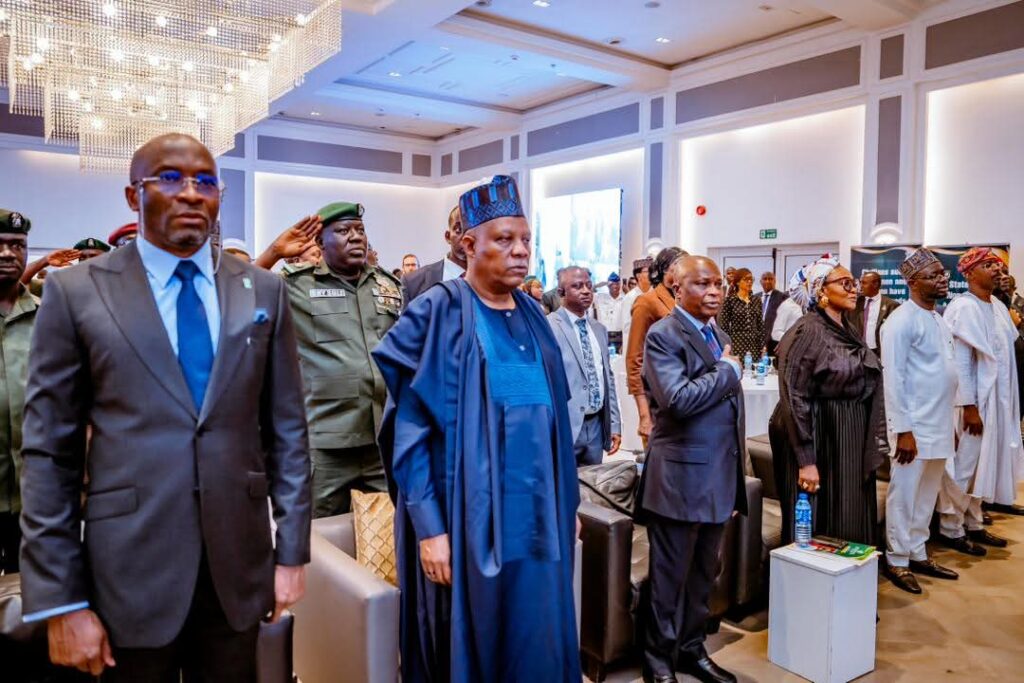
Senator Shettima, who stated this on Thursday in Abuja when he declared open the 2026 High-Level International Humanitarian Law Dialogue, said the administration of President Bola Ahmed Tinubu has adopted a comprehensive response to tackle insecurity and address conflicts, including the combination of kinetic and non-kinetic measures.
“I wish to emphasize Nigeria’s unwavering determination to promote and protect human rights, while ensuring the effective implementation of International Humanitarian Law treaties. His Excellency, President Bola Ahmed Tinubu, GCFR, recognizes that insecurity remains the greatest threat to peace and development.
“Accordingly, our government accords the highest priority to a comprehensive response that combines both kinetic and non-kinetic measures in addressing conflict,” he declared, pointing out that in achieving, the administration has continued to evolve the nation’s legal frameworks in response to emerging realities.
As part of the evolution, VP Shettima recalled that President Tinubu recently appended his assent to the domestication of the African Union Kampala Convention in a bid to establish “a robust and context-specific legal framework for the protection and assistance of Internally Displaced Persons in Nigeria.”
The Vice President observed that the dialogue came at a more defining moment when Nigeria’s “shared humanity is under immense strain, and when the very laws meant to uphold order are too often treated as expendable inconveniences.”
Senator Shettima noted that the realities have not spared Nigeria either, as the nation has continued to “confront persistent insurgency, terrorism, and other forms of violent conflict.
“Beyond the immediate toll of these hostilities, we are also managing the deeper, long-term strain they impose on our communities and institutions. It is precisely because of these experiences that Nigeria stands resolute in championing this global movement,” he added.
The VP further observed that while the dialogue was “convened as part of deliberate efforts to reinforce the enduring principles that govern the conduct of armed conflict, particularly the imperative of limiting harm in contemporary warfare,” it is also a moment to reflection and return “to the moral centre of International Humanitarian Law.”
The IHL, he said, exists to provide critical safeguards for human life when it is most vulnerable, just as he identified the approach, which he said is anchored in three non-negotiable pillars, including “the protection of civilian populations, the humane treatment of all persons affected by conflict, and the preservation of human dignity even in the most difficult circumstances.”
The Vice President noted that Nigeria has adopted a proactive approach to the implementation of International Humanitarian Law “through sustained military training, strengthened child protection protocols, the integration of IHL into academic curricula, accountability mechanisms for sexual violence, improved arms control systems, and comprehensive displacement frameworks.
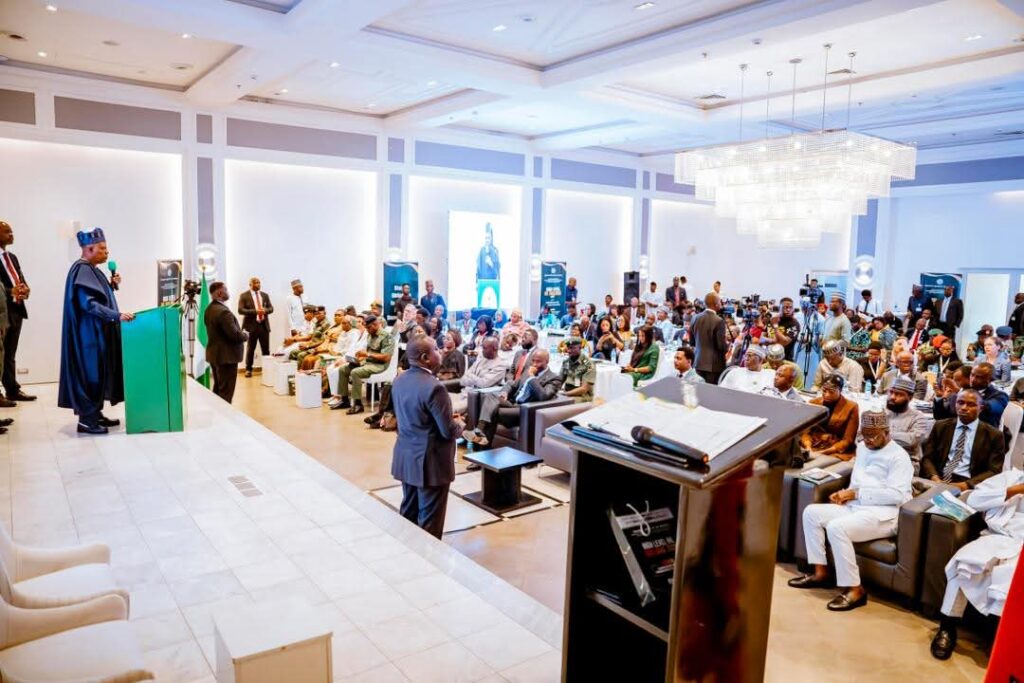
“These efforts reflect a simple but powerful truth: humanitarian law must be lived, not merely legislated. At the heart of this national agenda lies our recognition that meaningful progress depends on strong partnerships across government, civil society, and international stakeholders, ensuring that IHL is translated from principle into practice,” he added.
He commended the United Nations, the International Committee of the Red Cross, the Office of the Prosecutor of the ICC, and other Nigeria’s development partners for their “continued collaboration and technical support in advancing the implementation of International Humanitarian Law.”
Specifically, the VP lauded their efforts, saying they have contributed to a greater extent in building systems that respond to local realities while remaining aligned with global standards.
He also commended the organisers of this dialogue and the participants for their commitment to strengthening Nigeria’s compliance with the International Humanitarian Law.
Earlier, the Attorney General of the Federation (AGF) and Minister of Justice, Chief Lateef Fagbemi (SAN), underscored government efforts towards domesticating humanitarian law treaties as well as transform the nation’s justice system.
He said new laws and investments in correctional facilities are aimed at ensuring humane treatment, rehabilitation, and adherence to global human rights standards.
Fagbemi added that Nigeria is strengthening the capacity of its military and law enforcement agencies by embedding International Humanitarian Law principles into training and operations.
He noted that the country is also translating these laws into local languages to ensure accessibility in conflict-affected areas.
In her welcome address, the Solicitor General of the Federation and Permanent Secretary in Ministry of Justice, Mrs Beatrice Jeddy-Agba, said the dialogue was an opportunity for the judiciary to further maintain its stand on the promotion of the rule of law within the nation’s security architecture.
The Permanent Secretary said Nigeria will continue to identify with the Geneva Convention on warfare.
“We are today reminded that our work is a vital checkpoint in embedding the rule of law within our national security architecture. The importance of the International Humanitarian Law has never been more critical, as we witness heightened disregard for civilian protection in contemporary global warfare.
“Nigeria recognizes that as conflict dynamics evolve, particularly in asymmetric environment, our political will must be the engine that drives compliance from the negotiating tables in Geneva to our own frontlines,” she said.
The event drew participation from key international bodies, including the United Nations and the International Committee of the Red Cross, among others.
VP Shettima: Nigeria, Determined To Promote, Protect Human Rights