
Uncategorized
VP Shettima: Nigeria, Determined To Promote, Protect Human Rights

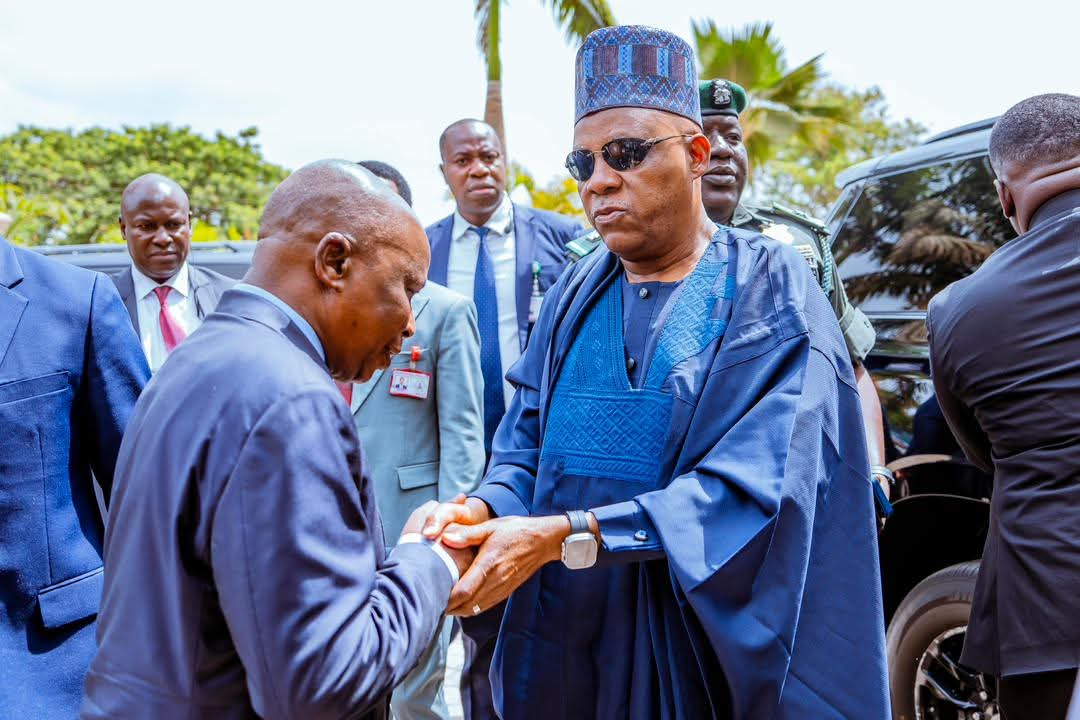
VP Shettima: Nigeria, Determined To Promote, Protect Human Rights
Says FG had adopted proactive approach to implementation of International Humanitarian Law
By: Our Reporter
The Vice President, Senator Kashim Shettima, has reaffirmed Nigeria’s resolve to promote and protect human rights through constitutional guarantees and embedding the rights into security operations.
According to him, the nation is fully committed to international cooperation and to the universal application of International Humanitarian Law in every theatre of conflict.
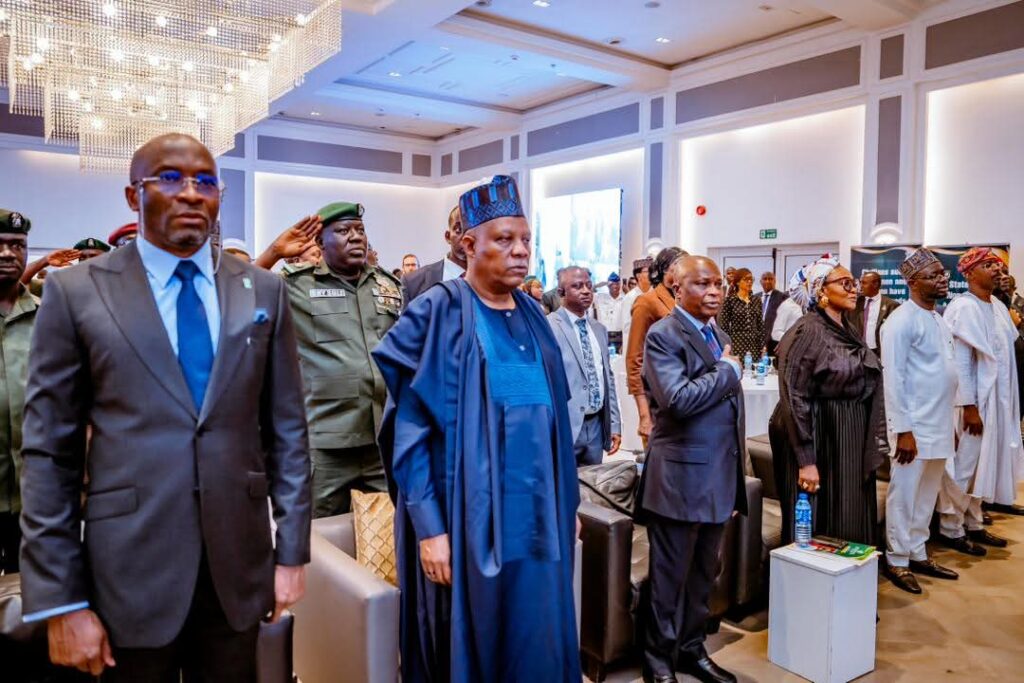
Senator Shettima, who stated this on Thursday in Abuja when he declared open the 2026 High-Level International Humanitarian Law Dialogue, said the administration of President Bola Ahmed Tinubu has adopted a comprehensive response to tackle insecurity and address conflicts, including the combination of kinetic and non-kinetic measures.
“I wish to emphasize Nigeria’s unwavering determination to promote and protect human rights, while ensuring the effective implementation of International Humanitarian Law treaties. His Excellency, President Bola Ahmed Tinubu, GCFR, recognizes that insecurity remains the greatest threat to peace and development.
“Accordingly, our government accords the highest priority to a comprehensive response that combines both kinetic and non-kinetic measures in addressing conflict,” he declared, pointing out that in achieving, the administration has continued to evolve the nation’s legal frameworks in response to emerging realities.
As part of the evolution, VP Shettima recalled that President Tinubu recently appended his assent to the domestication of the African Union Kampala Convention in a bid to establish “a robust and context-specific legal framework for the protection and assistance of Internally Displaced Persons in Nigeria.”
The Vice President observed that the dialogue came at a more defining moment when Nigeria’s “shared humanity is under immense strain, and when the very laws meant to uphold order are too often treated as expendable inconveniences.”
Senator Shettima noted that the realities have not spared Nigeria either, as the nation has continued to “confront persistent insurgency, terrorism, and other forms of violent conflict.
“Beyond the immediate toll of these hostilities, we are also managing the deeper, long-term strain they impose on our communities and institutions. It is precisely because of these experiences that Nigeria stands resolute in championing this global movement,” he added.
The VP further observed that while the dialogue was “convened as part of deliberate efforts to reinforce the enduring principles that govern the conduct of armed conflict, particularly the imperative of limiting harm in contemporary warfare,” it is also a moment to reflection and return “to the moral centre of International Humanitarian Law.”
The IHL, he said, exists to provide critical safeguards for human life when it is most vulnerable, just as he identified the approach, which he said is anchored in three non-negotiable pillars, including “the protection of civilian populations, the humane treatment of all persons affected by conflict, and the preservation of human dignity even in the most difficult circumstances.”
The Vice President noted that Nigeria has adopted a proactive approach to the implementation of International Humanitarian Law “through sustained military training, strengthened child protection protocols, the integration of IHL into academic curricula, accountability mechanisms for sexual violence, improved arms control systems, and comprehensive displacement frameworks.

“These efforts reflect a simple but powerful truth: humanitarian law must be lived, not merely legislated. At the heart of this national agenda lies our recognition that meaningful progress depends on strong partnerships across government, civil society, and international stakeholders, ensuring that IHL is translated from principle into practice,” he added.
He commended the United Nations, the International Committee of the Red Cross, the Office of the Prosecutor of the ICC, and other Nigeria’s development partners for their “continued collaboration and technical support in advancing the implementation of International Humanitarian Law.”
Specifically, the VP lauded their efforts, saying they have contributed to a greater extent in building systems that respond to local realities while remaining aligned with global standards.
He also commended the organisers of this dialogue and the participants for their commitment to strengthening Nigeria’s compliance with the International Humanitarian Law.
Earlier, the Attorney General of the Federation (AGF) and Minister of Justice, Chief Lateef Fagbemi (SAN), underscored government efforts towards domesticating humanitarian law treaties as well as transform the nation’s justice system.
He said new laws and investments in correctional facilities are aimed at ensuring humane treatment, rehabilitation, and adherence to global human rights standards.
Fagbemi added that Nigeria is strengthening the capacity of its military and law enforcement agencies by embedding International Humanitarian Law principles into training and operations.
He noted that the country is also translating these laws into local languages to ensure accessibility in conflict-affected areas.
In her welcome address, the Solicitor General of the Federation and Permanent Secretary in Ministry of Justice, Mrs Beatrice Jeddy-Agba, said the dialogue was an opportunity for the judiciary to further maintain its stand on the promotion of the rule of law within the nation’s security architecture.
The Permanent Secretary said Nigeria will continue to identify with the Geneva Convention on warfare.
“We are today reminded that our work is a vital checkpoint in embedding the rule of law within our national security architecture. The importance of the International Humanitarian Law has never been more critical, as we witness heightened disregard for civilian protection in contemporary global warfare.
“Nigeria recognizes that as conflict dynamics evolve, particularly in asymmetric environment, our political will must be the engine that drives compliance from the negotiating tables in Geneva to our own frontlines,” she said.
The event drew participation from key international bodies, including the United Nations and the International Committee of the Red Cross, among others.
VP Shettima: Nigeria, Determined To Promote, Protect Human Rights


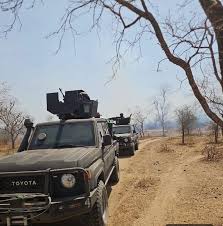
Troops Repel Terrorists’ Attempted Attack on Forward Operating Base in Zamfara
By: Zagazola Makama
Troops of the 1 Brigade have successfully repelled an attempted terrorist infiltration and attack on a Forward Operating Base (FOB) in Bukuyyum Local Government Area of Zamfara State.
Intelligence sources told Zagazola Makama that the incident occurred at about 2:45 p.m. on July 2, when suspected terrorists attempted to infiltrate and attack troops stationed at FOB Gwashi.
According to the sources, the troops responded with superior firepower, engaging the attackers in a fierce exchange of gunfire and forcing them to abandon the assault and retreat from the area.
Following the failed attack, reinforcement troops from the Forward Operating Bases at Gummi and Bukuyyum were immediately deployed to strengthen the position and support ongoing clearance operations.
The sources said troops have since intensified surveillance and domination of the general area while reinforcing defensive positions to prevent the terrorists from regrouping or launching further attacks.
No casualty was reported among the troops during the encounter.
Military sources described the swift response as a demonstration of the troops’ operational readiness and determination to deny terrorist groups freedom of action across the operational area.
They added that aggressive patrols and intelligence-driven operations are continuing to track the fleeing terrorists and sustain pressure on criminal elements operating in the state.
Troops Repel Terrorists’ Attempted Attack on Forward Operating Base in Zamfara
Uncategorized
Three Killed, Two Injured in Attack by Fulani Bandits Near Illegal Mining Site in Plateau
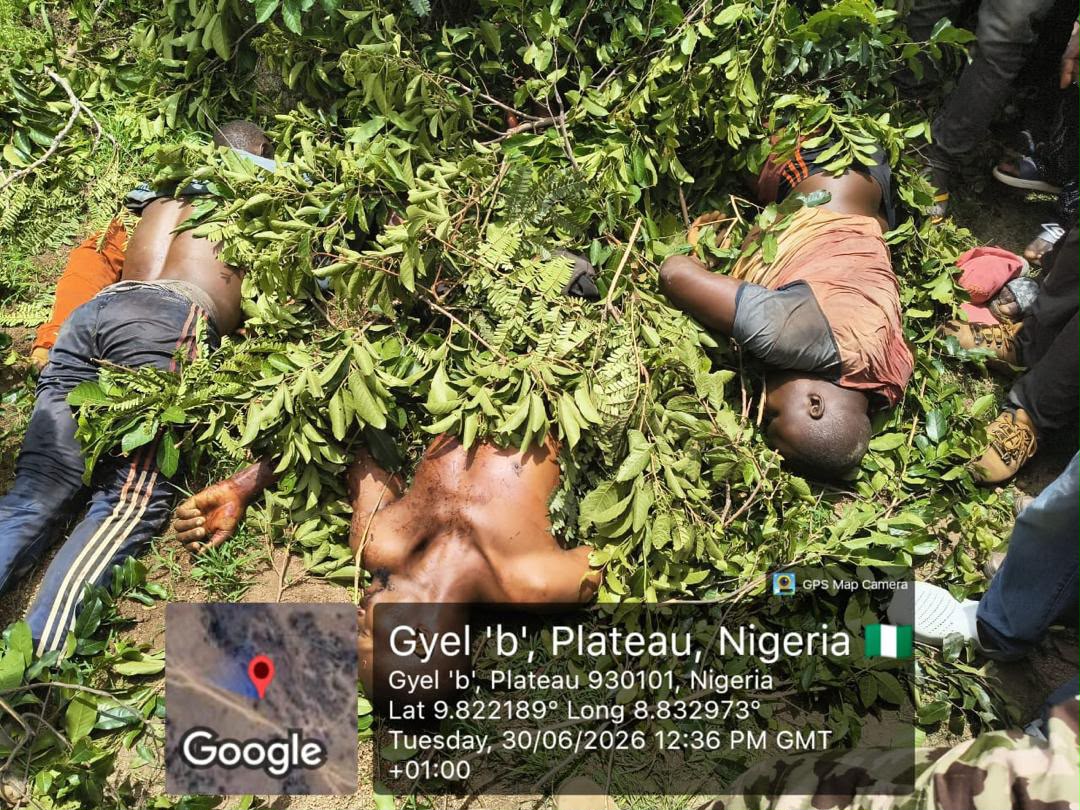
Three Killed, Two Injured in Attack by Fulani Bandits Near Illegal Mining Site in Plateau
By: Zagazola Makama
Three persons have been killed and two others injured following an attack by suspected armed Fulani bandits near an illegal mining site in Jos South Local Government Area of Plateau State.
Security sources said the incident occurred at about 10:00 a.m. on June 30 around the border communities of Tsoho Gero and Nyango, where armed assailants ambushed local residents before fleeing the scene.
The sources said troops of Sector 6, Operation Enduring Peace (OPEP), under Operation Safe Haven (OPSH), responded to a distress call and, in conjunction with members of the Vigilante Group of Nigeria (VGN), moved to the area.
On arrival, the troops made contact with the fleeing attackers, who escaped towards the Dutse Kura axis in neighbouring Bassa Local Government Area.
However, security personnel confirmed that the attackers had already killed three local residents and injured two others before the troops arrived.
The deceased were identified as Mr. Chung Davou, Gyang Gwaha and Pam Chung.
Following the incident, troops carried out exploitation and clearance operations from Tsoho Gero to the Gero High Grounds in search of the fleeing assailants.
During the operation, Fulani community leaders alleged that four Fulani men had also been killed in the violence. However, security personnel said no bodies were found to substantiate the claim.
Tension later escalated at Gyel, where a group of aggrieved women blocked the troops’ route and threw stones at security personnel, accusing them of failing to prevent the attack.
The troops fired warning shots into the air to disperse the crowd and restore access before continuing the operation.
Security sources said clearance operations were ongoing in the area to track down the perpetrators and prevent further attacks.
Three Killed, Two Injured in Attack by Fulani Bandits Near Illegal Mining Site in Plateau
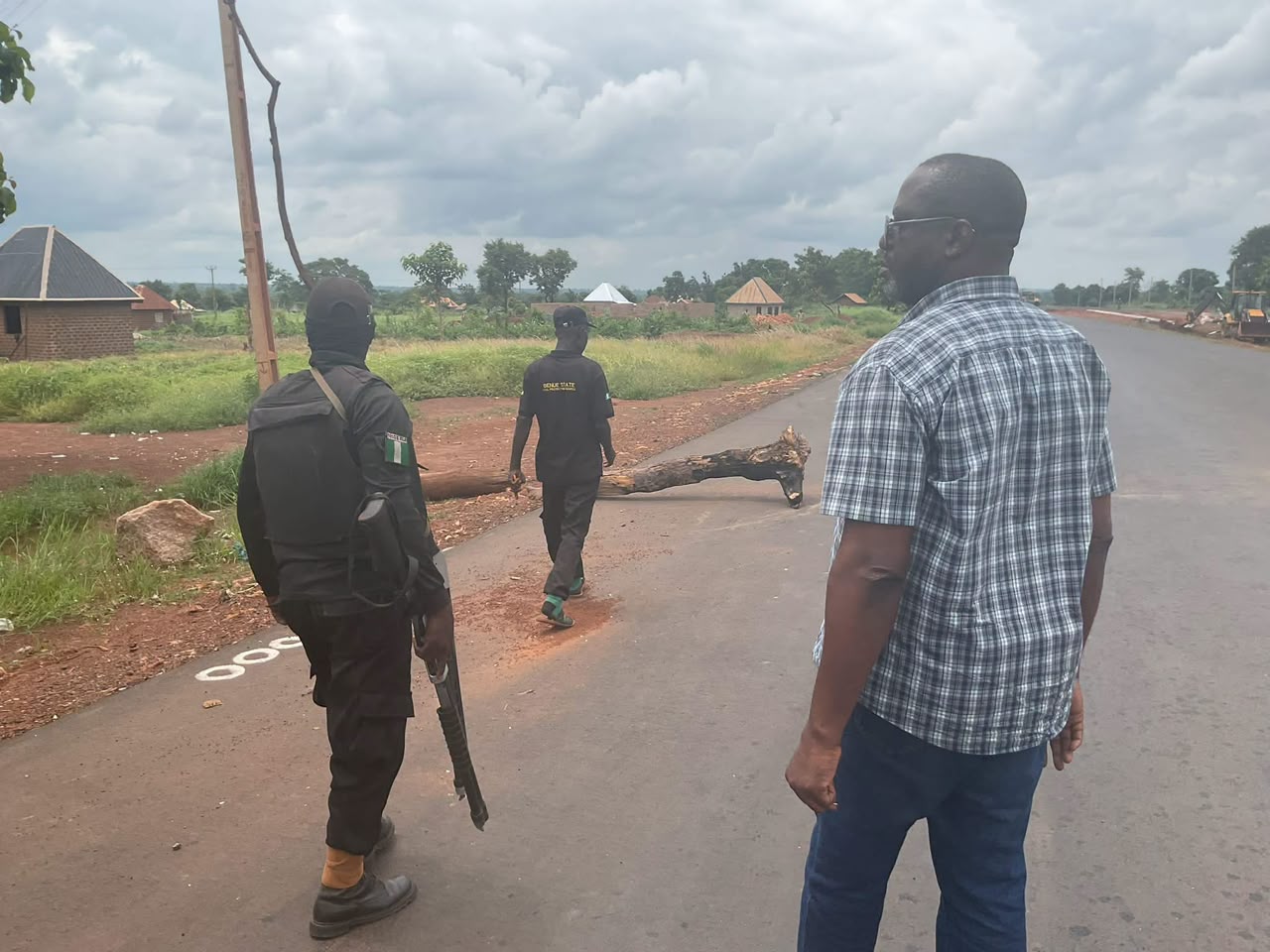
Benue Govt. Dismantles Illegal Checkpoints, Arrests Civil Protection Guards
By: Zagazola Makama
The Special Adviser to the Benue State Governor on Security and Internal Affairs has dismantled several illegal checkpoints along the Makurdi–Otukpo Road and ordered the arrest of members of the Benue State Civil Protection Guards (BSCPG) found manning them.
The operation, carried out on Tuesday, was conducted alongside the State Commander and other senior officers of the BSCPG as part of efforts to enforce compliance with security directives and ensure the free flow of traffic across the state.
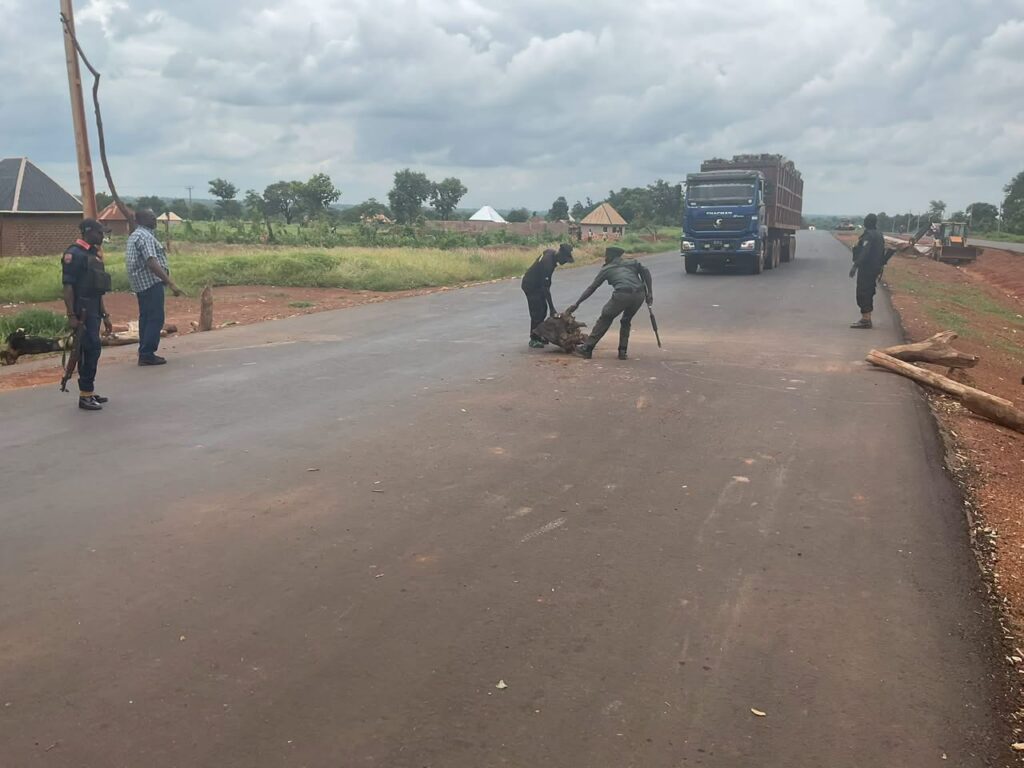
According to a statement issued by the Media Aide to the Special Adviser, Comrade Mfa A. Igirgi Jr., the operation followed concerns over the increasing number of unauthorized roadblocks mounted by security volunteers along the highway.
The Special Adviser said the exercise was in line with the directive of the Benue State Commissioner of Police that roads should not be obstructed except at officially approved security checkpoints.
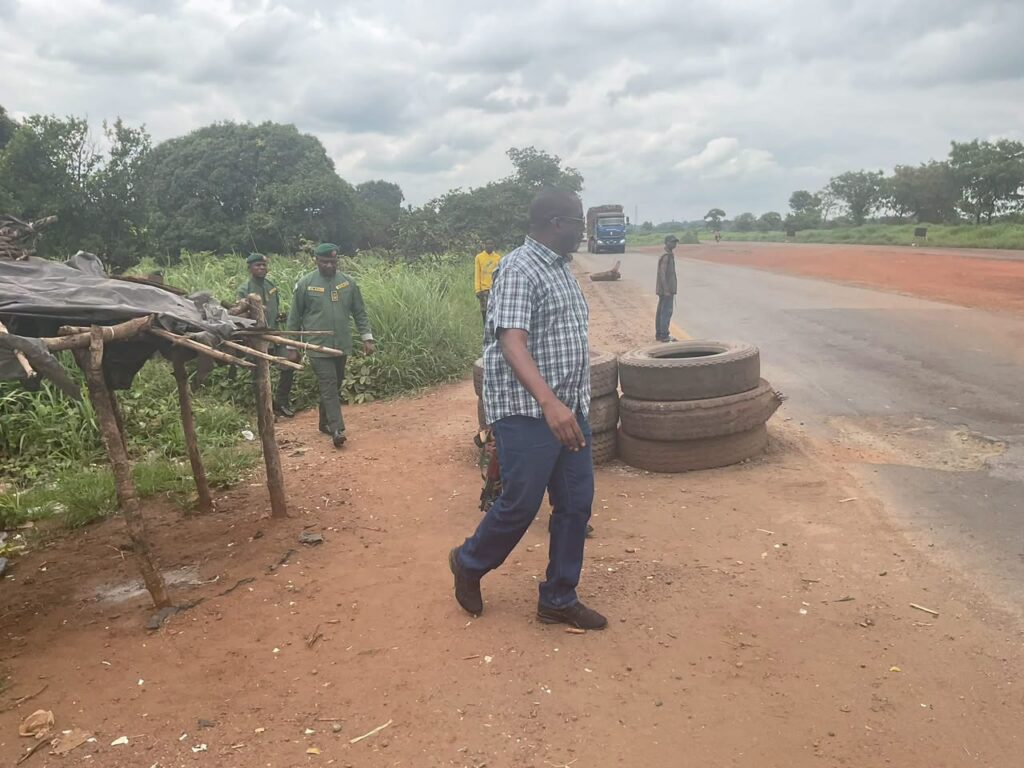
During the operation, two illegal checkpoints in Aliade were dismantled, while BSCPG personnel found operating them were disarmed and taken into custody for further administrative action.
The team also visited Howe, where soldiers had mounted a checkpoint near the premises of a Chinese construction company. The soldiers explained that they were providing security for the Chinese Harbor Company and its expatriate staff.
The Special Adviser, however, directed that the roadblock be removed and instructed the soldiers to concentrate on securing the company’s premises rather than occupying the highway.
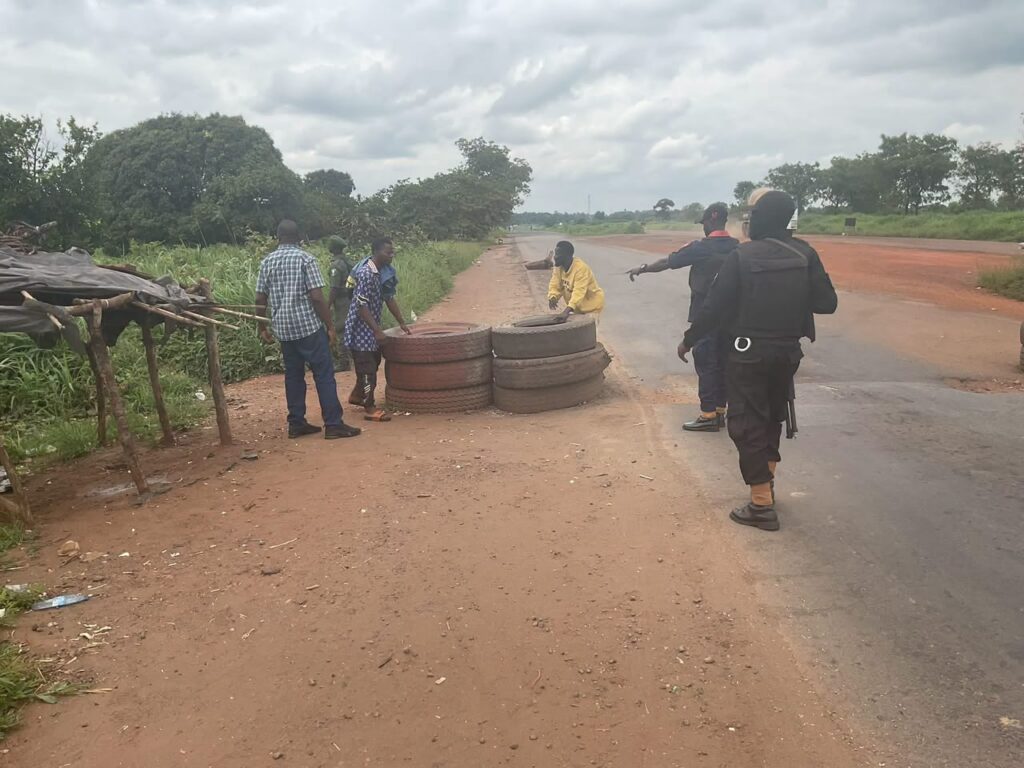
He noted that unnecessary checkpoints impede the free movement of motorists and could create security vulnerabilities, particularly when left unmanned.
Reiterating the operational mandate of the Benue State Civil Protection Guards, the Special Adviser said members of the outfit are expected to patrol their communities, provide early warning on security threats and serve as first responders, rather than establish checkpoints on public highways.
He stressed that BSCPG personnel are only permitted to participate in checkpoint operations when working jointly with the Nigeria Police Force or other authorized security agencies.
The Special Adviser urged residents to report any BSCPG personnel operating unauthorized checkpoints to the office of the State Commander or his office for prompt disciplinary action.
He reaffirmed the Benue State Government’s commitment to promoting lawful security operations while ensuring that measures put in place to protect lives and property do not inconvenience law-abiding citizens or create opportunities for criminal activities.
Benue Govt. Dismantles Illegal Checkpoints, Arrests Civil Protection Guards

Fubara: Nigeria Needs God-Fearing Leaders to Tackle Corruption, Drive National Progress

Interior Minister Seeks Stronger Federal-State Partnership on Security, Governance

VP Shettima Commisions Nigeria’s Largest Lithium Processing Plant InU Nasarawa

Roger Federer’s Shock as DNA Results Reveal Myla and Charlene Are Not His Biological Children

THE PLIGHT OF FARIDA

FAILED COUP IN BURKINA FASO: HOW TRAORÉ NARROWLY ESCAPED ASSASSINATION PLOT AMID FOREIGN INTERFERENCE CLAIMS
-
 News2 years ago
Roger Federer’s Shock as DNA Results Reveal Myla and Charlene Are Not His Biological Children
-
Opinions4 years ago
THE PLIGHT OF FARIDA
-
 News1 year ago
FAILED COUP IN BURKINA FASO: HOW TRAORÉ NARROWLY ESCAPED ASSASSINATION PLOT AMID FOREIGN INTERFERENCE CLAIMS
-

 News2 years ago
EYN: Rev. Billi, Distortion of History, and The Living Tamarind Tree
-
 Opinions5 years ago
POLICE CHARGE ROOMS, A MINTING PRESS
-

 ACADEMICS2 years ago
A History of Biu” (2015) and The Lingering Bura-Pabir Question (1)
-

 Columns2 years ago
Army University Biu: There is certain interest, but certainly not from Borno.
-

 Politics1 year ago
2027: Why Hon. Midala Balami Must Go, as Youths in Hawul and Asikira/Uba Federal Constituency Reject ₦500,000 as Sallah Gift
