
News
VP Shettima Restates FG’s Dedication To Workers’ Welfare, Wage Reforms

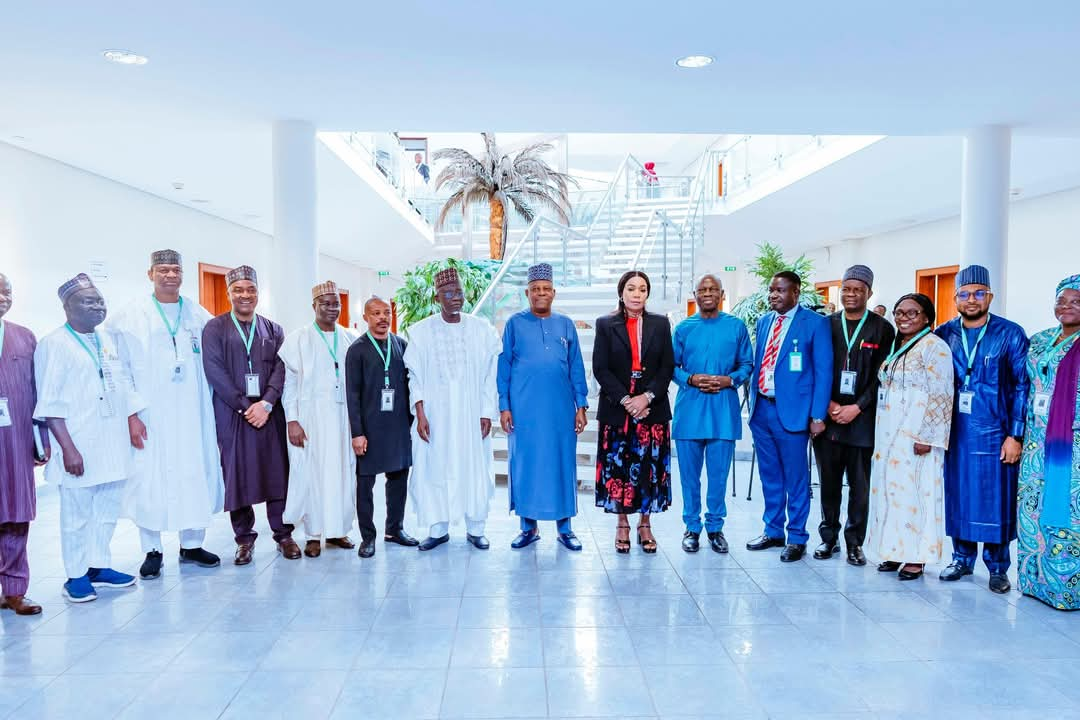
VP Shettima Restates FG’s Dedication To Workers’ Welfare, Wage Reforms
** Applauds Nigeria’s Labour Movement, assures ILO chief of nation’s inclusive labour policies
By: Our Reporter
Vice President Kashim Shettima has reaffirmed the Nigerian government’s dedication to the welfare of members of the organised labour, inclusive economic policies, and wage reforms.
According to the Vice President, President Bola Ahmed Tinubu is committed to a thriving workforce and an efficient labour ecosystem.
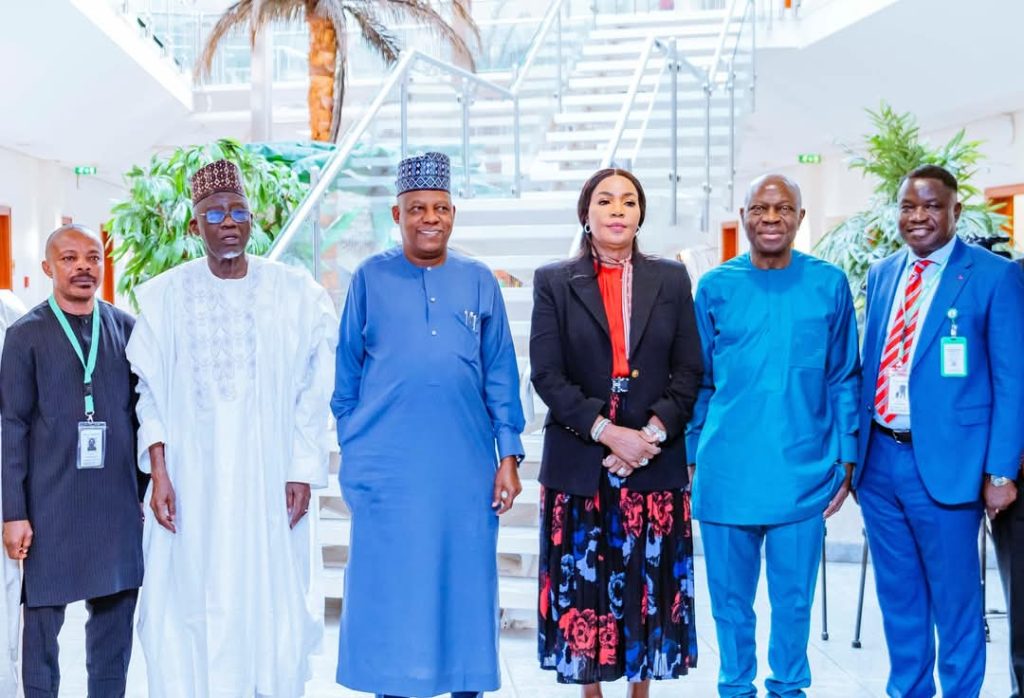
Speaking on Thursday during a meeting with a delegation led by the visiting Director-General of the International Labour Organisation (ILO), Mr Gilbert Houngbo, and the Minister of Labour and Employment, Alhaji Muhammad Dingyadi, VP Shettima lauded what he described as Nigeria’s vibrant labour movement and its role in national development.
He said, “We have a very vibrant labour movement, led by a competent and patriotic Nigerian. President Tinubu is deeply passionate about the welfare of Nigerian workers. We raised the minimum wage, and most states have started implementing it.
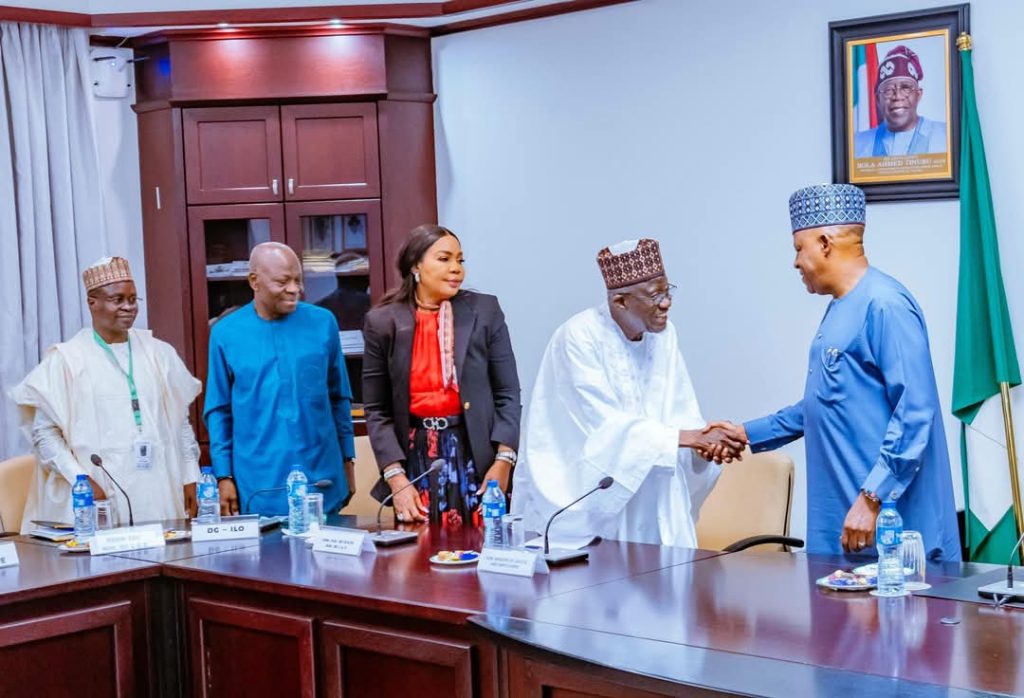
“Some have even gone beyond the N70,000 agreed at the national level. I commend the Nigeria Labour Congress (NLC) for their statesmanship and commitment to workers’ rights.”
The Vice President noted the global workforce transformation and Nigeria’s potential to bridge talent gaps, citing the country’s youthful population as a major advantage.
“One in four black men is a Nigerian, and by 2050, we will surpass the United States to become the third most populous nation on earth. The average age in Nigeria is 16.9 years. We have a demographic bulge, but with the right policies, we can transform it into a demographic dividend rather than a demographic disaster,” VP Shettima said.
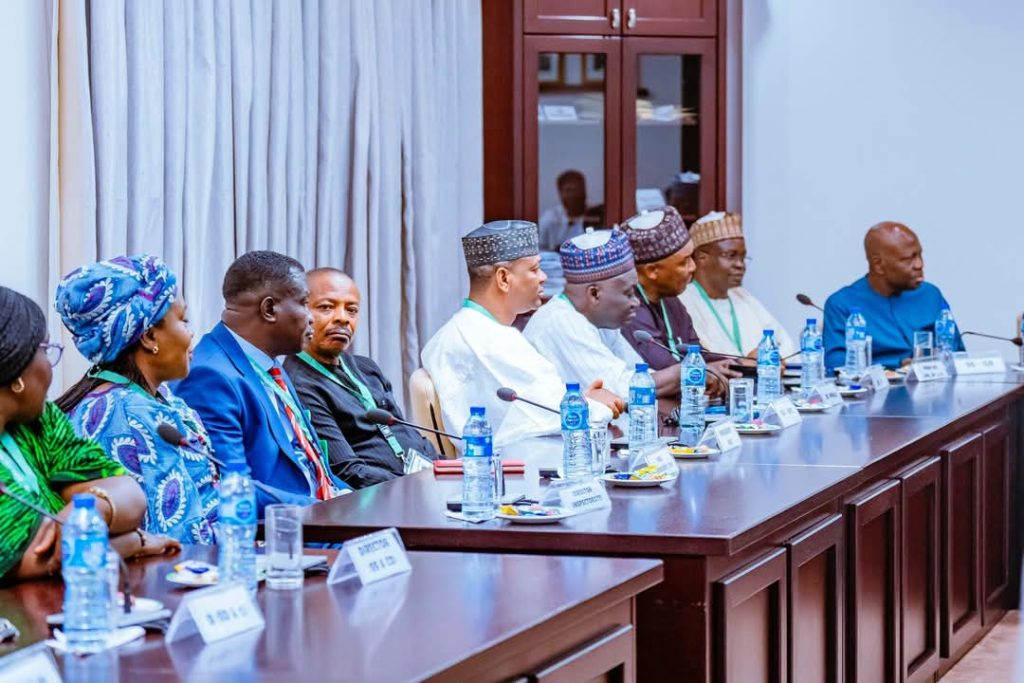
Senator Shettima expressed confidence in the country’s future workforce, saying, “Our young people are digitally more literate than us. While some traditional jobs may disappear, new opportunities will emerge, and we will equip our youth with the skills to thrive in the evolving global economy.”
The Vice President told the ILO chief that the Nigerian government remains committed to inclusive labour policies, fair wages, and economic growth.
“We will continue to engage with our friends in the labour movement to ensure progress. We are all patriots and partners in building a stronger Nigeria,” he stated.
VP Shettima assured the ILO delegation that President Tinubu, whom he described as an activist himself, would be briefed on their requests upon his return to the country.
“We are all patriots and partners in progress. The President is very much at home with the labour ecosystem,” he said.
Earlier in his remarks, the ILO DG, Mr Houngbo, thanked the Vice President for receiving him and the delegation, noting that his visit to the country as DG was long overdue, particularly given the strategic importance of Nigeria in the ILO, including the period between June 2023 and June 2024 when it presided over the affairs of the ILO Board of Directors.
Recalling and appreciating Nigeria’s support for his election, Mr Houngbo said, “Without the mobilisation of the government of Nigeria and social partners in the country, my election would have been very difficult. Nigeria mobilised a lot of the African constituents in ensuring my election as DG.”
He further said his visit had afforded him the opportunity to interact with ILO’s social partners in Nigeria, including the Nigerian Labour Congress (NLC), the Trade Union Congress (TUC) and others, noting that their discussions were fruitful.
He appealed to the Federal Government to speed up the finalisation of the reform of the labour code, even as he sought the support of the Vice President for the revival of the National Labour Advisory Council (NLAC), a forum for social dialogue amongst the tripartite constituents.
“We believe that, given the dynamism of the labour market in Nigeria, its population, ambition and role in Africa, having the NLAC revived will really be beneficial to all,” he added.
Other dignitaries present at the meeting included the Minister of State, Labour and Employment, Mrs Nkiruka Onyejeocha; Permanent Secretary in the Ministry of Labour and Employment, Dr. Salihu Usman; Director General, National Directorate of Employment, Mr Silas Agara; Director General, National Productivity Centre, Hon. Baffa Dan Agundi; the Director General, Michael Imoudu Institute for Labour Studies, Comrade Isa Aremu; President, Nigeria Labour Congress, Comrade Joe Ajaero, and the 1st National Deputy President of the Trade Union Congress, Dr Tommy Etim-Okon, among others.
VP Shettima Restates FG’s Dedication To Workers’ Welfare, Wage Reforms



Suspected militia kill motorcyclist along Nyong-Bodel road in Plateau
By Zagazola Makama
An unidentified person was killed by suspected militias along the Nyong-Bodel road in Bokkos Local Government Area of Plateau State.
Security sources told Zagazola Makama that the incident occurred at about 3:50 p.m. on Sept. 4, 2026.
According to the sources, troops of Sector 5, Operation Enduring Peace, deployed at Bodel, responded to a report of an attack and killing of the victim along the road.
The troops arrived at the scene and discovered the victim’s corpse alongside his motorcycle, while the suspected attackers fled after sighting the troops.
The corpse was evacuated to a mortuary, while efforts are ongoing to establish the identity of the victim and apprehend the assailants.
Security agencies are also intensifying patrols and surveillance along the route to prevent further attacks and restore confidence among residents and road users.
Suspected militia kill motorcyclist along Nyong-Bodel road in Plateau

Troops launch rescue operation after hospital matron kidnapped in Plateau
By Zagazola Makama
Troops of Sector 5, Operation Enduring Peace, have launched a rescue operation following the abduction of Mrs Sarah Dalang, a matron at Cottage Hospital, Bokkos, Plateau State.
Security sources told Zagazola Makama that the incident occurred at about 2:20 p.m. on Sept. 4, 2026.
According to the sources, the troops responded to a report of the kidnapping and mobilised alongside other security agencies to commence search and rescue operations.
The security personnel conducted operations around suspected hideouts of the kidnappers but no contact was established with the criminals.
Efforts are ongoing to track the kidnappers, locate the victim and secure her safe release.
Security agencies have continued to intensify operations across Bokkos and adjoining areas to disrupt criminal activities and protect residents.
Troops launch rescue operation after hospital matron kidnapped in Plateau
Troops neutralise terrorist, recover four motorcycles in Katsina
By Zagazola Makama
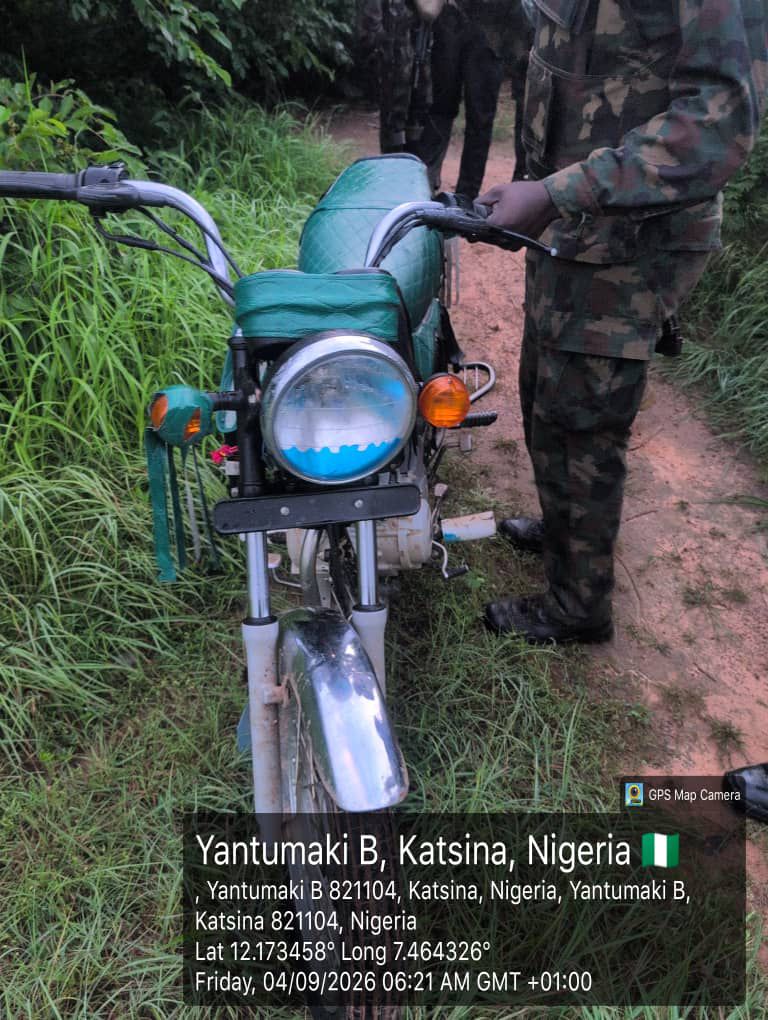
Troops of Sector 1, Joint Task Force North West, Operation Fansan Yamma, have neutralised a terrorist and recovered four motorcycles and other items during a dawn offensive operation in Dan Musa Local Government Area of Katsina State.
The operation was conducted on Sept. 4, 2026, following credible intelligence on the presence of terrorists around the Yantumaki Forest area.
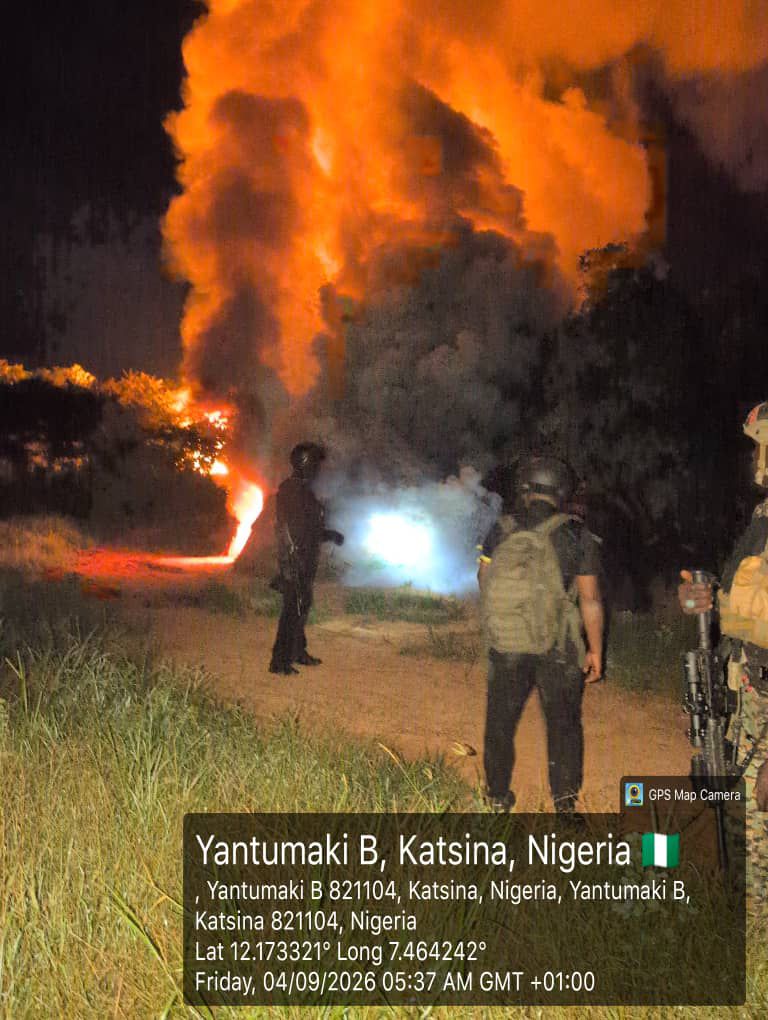
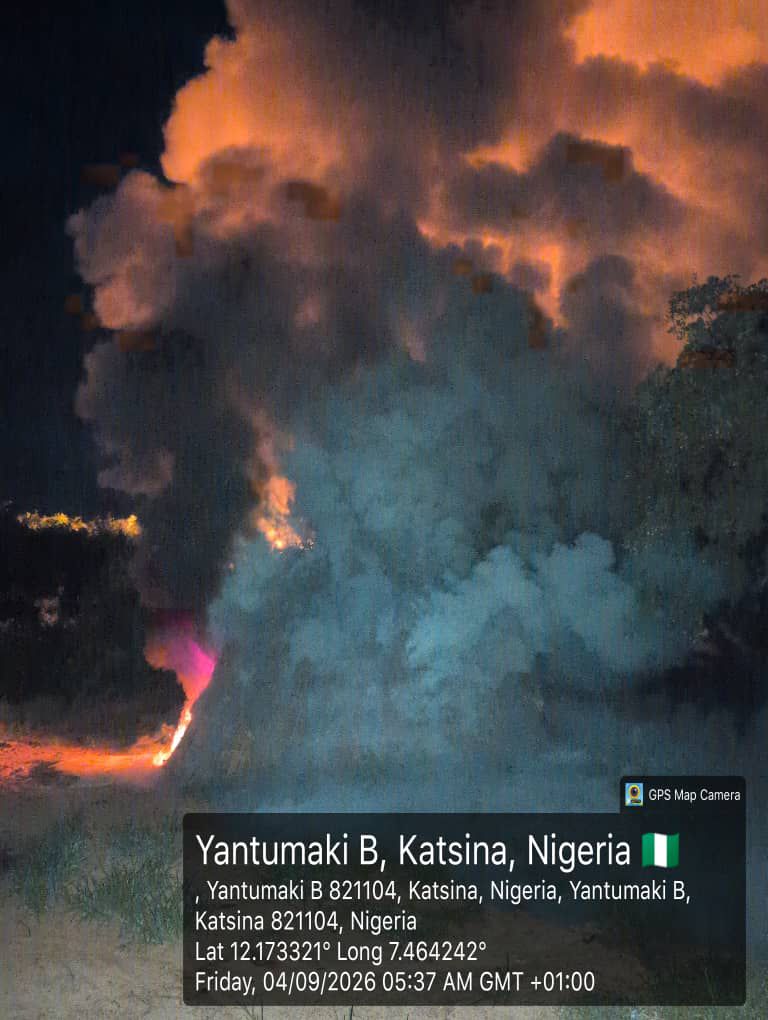
According to security sources, the troops launched a coordinated offensive against the terrorists and engaged them with superior firepower, forcing the surviving elements to flee into the surrounding bushes.
During the subsequent exploitation of the area, the troops confirmed the neutralisation of one terrorist and recovered four motorcycles, one mobile phone and five empty intravenous drip containers.
The recovered medical containers were suspected to have been used in treating wounded terrorists operating in the area.
The operation is part of ongoing efforts by Operation Fansan Yamma to sustain pressure on terrorist networks, degrade their operational capabilities and deny them freedom of movement within the Joint Operations Area.
The theatre has also urged members of the public to continue providing credible and timely information to security agencies to support ongoing operations and facilitate the eradication of terrorist elements across the Joint Operations Area.
Troops neutralise terrorist, recover four motorcycles in Katsina

Suspected militia kill motorcyclist along Nyong-Bodel road in Plateau

Troops launch rescue operation after hospital matron kidnapped in Plateau

Troops neutralise terrorist, recover four motorcycles in Katsina

Roger Federer’s Shock as DNA Results Reveal Myla and Charlene Are Not His Biological Children

THE PLIGHT OF FARIDA

FAILED COUP IN BURKINA FASO: HOW TRAORÉ NARROWLY ESCAPED ASSASSINATION PLOT AMID FOREIGN INTERFERENCE CLAIMS
-
 News2 years ago
Roger Federer’s Shock as DNA Results Reveal Myla and Charlene Are Not His Biological Children
-
Opinions5 years ago
THE PLIGHT OF FARIDA
-
 News1 year ago
FAILED COUP IN BURKINA FASO: HOW TRAORÉ NARROWLY ESCAPED ASSASSINATION PLOT AMID FOREIGN INTERFERENCE CLAIMS
-

 News2 years ago
EYN: Rev. Billi, Distortion of History, and The Living Tamarind Tree
-
 Opinions5 years ago
POLICE CHARGE ROOMS, A MINTING PRESS
-

 ACADEMICS3 years ago
A History of Biu” (2015) and The Lingering Bura-Pabir Question (1)
-

 Columns3 years ago
Army University Biu: There is certain interest, but certainly not from Borno.
-

 Politics1 year ago
2027: Why Hon. Midala Balami Must Go, as Youths in Hawul and Asikira/Uba Federal Constituency Reject ₦500,000 as Sallah Gift
