
News
We are Not at War with Niger, Nigeriens- ECOWAS


We are Not at War with Niger, Nigeriens- ECOWAS
By: Michael Mike
The Economic Community of West African States (ECOWAS) has said the plan military action in Niger is not a war on the country or its people but to give them back the good they deserved.
Speaking at a press conference on Friday, the President of the ECOWAS Commission, Omar Alieu Touray said that the regional bloc has not taken and would never take any action against the interest of Niger.
He said: “We would like to use the opportunity to reassure the good people of Niger Republic that our major concern is for their welfare as we work assiduously to restore civilian rule and political stability in the country, and indeed in the other ECOWAS Member States currently under military rule, in the spirit of solidarity and collective security which is at the heart of our integration agenda.”
Touray lamented that: “Coup d’etat is a tragedy for our regional efforts at consolidating democracy after the political crises of the 90’s exemplified by the civil wars in Liberia and Sierra Leone. Through collective efforts of our community, the region was stabilized and the foundation for democracy and the rule of law restored.
“Indeed, until about three years ago, all leaders in the ECOWAS region were democratically elected. Unfortunately, the ill winds of coups started blowing again recently and the region has experienced three successful coups and two failed coups. The current development in the Republic of Niger adds to the list of attempted coups d’état in the region. So, you can understand why the Heads of State and Government have decided that this is one coup too many and resolved that it was time to end the contagion. The situation in the Republic of Niger is particularly unfortunate as it comes at a time the country is doing comparatively well in terms of security and economic growth.”
Justifying the decision on the planned deployment of the standby force, Touray said: “The ECOWAS security architecture, which has informed other security arrangements within and outside the region, is anchored on a number of instruments. These include the 1991 ECOWAS Declaration of Political Principles; the Revised ECOWAS Treaty of 1993, the 1999 ECOWAS Protocol relating to the Mechanism for Conflict Prevention, Management, Resolution, Peacekeeping and Security as well as the 2001 Supplementary Protocol on Democracy and Good Governance.
“The deployment of the ECOWAS Standby force is provided for in the 1999 Mechanism. Specifically, Article 25 expressly stipulates the conditions for the deployment of such a force. Among other conditions, the article provides that the force can be deployed ‘in the event of… an overthrow or an attempted overthrow of a democratically elected government.’ Furthermore, the Supplementary Act of 2012 also provides for sanctions to be invoked against members that fail to honour their obligations to ECOWAS. It also provides for the use of legitimate force in the restoration of constitutional order. Niger Republic is a signatory to all these instruments. Those who challenge the legality of the decision of ECOWAS Heads of State need to do more research.”
He explained that: “In taking its decision of 30th July and 10th August 2023, the Authority of Heads of State and government was only activating these provisions. Unfortunately, this decision has been taken out of context and repeatedly misrepresented in the media as a declaration of war against Niger Republic or a planned invasion of the country. It is even tragic that some influential persons in the Community have promoted this narrative which has been hyped in the social media as the gospel truth. These persons have conveniently ignored the strenuous efforts of the community to engage with the junta to reverse the attempted coup.”
He added that: “For the avoidance of doubt, let me state unequivocally that ECOWAS has neither declared war on the people of Niger nor is there a plan, as it is being purported, to ‘invade’ the country. The ECOWAS Authority of Heads of State and Government has only activated a full-scale application of sanctions which includes the use of legitimate force to restore constitutional order.”
He said: “In the interim, the region is employing other elements of its instruments and engaging with the military authorities as can be attested to by the several missions that have been fielded to the country and our joint efforts with our partners, including the African Union and the UN. We are hopeful that these diplomatic efforts will yield the desired outcome and make it unnecessary for the deployment of the force.”
Touray while stating that there is no specified date for the use of force to return democratic governance back to Niger, said the military option is still on the table.
He said: “Nonetheless, preparations continue towards making the force ready for deployment. Consequently, the technical arms of the decision-making organs, which include the Committee of Chiefs of Defence Staff have also been directed to prepare the community enforcement mechanism in case it becomes compelling to deploy the force.”
He however said: “We believe that even now it is not too late for the military to reconsider its action and listen to the voice of reason as the regional leaders will not condone a coup d’état. ECOWAS also wishes to remind them of their responsibility for the security and safety of President Bazoum, members of his family and government.
“At this juncture let me reiterate that the real issue is the determination of the community to halt the spiral of coups d’etat in the region. We are all brothers irrespective of the artificial borders but the rule of law has to be upheld.
“The uncontitutional action of the military has plunged the people of Niger into serious socio-economic crises. In other words, Nigeriens are suffering today because a section of the military, which should be focused on its constitutional role, decided to hijack the political institutions and subvert democracy.
“The truth is, neither Niger nor the West African sub region needs such a major distraction at this time and we would all like to see the defence and security forces of Niger Republic immediately return to their constitutional role, a role in which they have performed creditably as exemplified in their fight against terrorism and sterling performance in the Multinational Joint Tasks Force in the Lake Chad Basin Area, and in many areas within the Liptako-Gourma region.
“The decision of the Heads of State and Government to activate the clause providing for the application of legitimate force in Niger was reached only after due consideration of how political dialogue alone has unfortunately failed to deter coup plotters in the region. The precedents in Mali, Guinea and Burkina Faso are unsettling and underline the reason why the Community was obliged to take such a hard but legitimate stance, backed by the ‘ECOWAS Community law which I must stress again was subscribed to by all the Member States, including Niger Republic.
“The actions of the Community have been guided by a recognition of the Community’s obligation within the context of the spirit of solidarity and collective responsibility that underlines the ECOWAS integration arrangement. We recognize Republic of Niger as an important member of the ECOWAS family, and it remains so to date. It is not a target for destruction by ECOWAS, and ECOWAS will never allow the people of Niger to suffer in the hands of enemies within or without.
We are deeply concerned about the wellbeing of the people and the country. Historically, military administrations have not demonstrated any capacity to better deal with complex political, social and security challenges. The security situation in countries under military government have rather deteriorated, as national territories are being lost to terrorists under their administration even though this has become the main justification for their intervention.
“In most cases, the rights and freedom of the citizens are also inevitably curtailed, with arbitrary arrests, detentions, and use of excessive force becoming the order of the day. The social cohesion in these countries is weakening by the day and it will take years to restore. We do not want this in Niger Republic.
He however lamented that “fifth columnists have unfortunately been misrepresenting our decisions and actions, deriding regional authorities as being tele-guided by foreign powers with nefarious intentions. Let me remind everyone that ECOWAS is a community of rules and regulations, norms, and values.
“These principles, which have been accumulated over the 48 years of its existence, and they underpin its actions. It is undeniable that these admirable principles have made the region an exemplar among Regional Economic Communities within and outside Africa, and many look up to it for inspiration. We are therefore not under the dictate of any extra-regional power or interests. Our interest is rather the protection of the rights of our people with the objective of building a rules-based community and fostering peace and prosperity for all in our region.”
He added that: “So, while we are determined to bend over backwards to accommodate diplomatic efforts, we are not unaware of the true intentions of some of the members of the Niger junta. At first, they snubbed our diplomatic efforts but recently began to show signs of being amenable, only for them to take a dangerous path by putting in place a government, and an unacceptable transition timeline.
He said that “the decision of the ECOWAS Authority of Heads of State and Government, which is currently chaired by HE Bola Ahmed Tinubu, the President of the Federal Republic of Nigeria, is to work for the peaceful restoration of civilian rule in Niger Republic without any delay and to use all the instruments at the disposal of ECOWAS towards the attainment of this goal.
“As for the other countries in transition, namely Mali, Burkina Faso and Guinea, ECOWAS will continue to support their transition processes, as directed by
the ECOWAS Authority of Heads of State and Government. We will continue to support their fight against terrorism to ensure the restoration of democracy, peace, and security in our community. We will also continue to work with them on their agreed transition timetables.”
He said: “Regarding the mercenaries, let me say this, ECOWAS and the African continent as a whole stand against the use of private military contractors and again, we have continental instruments as against the use of private military contractors on the continent.”
We are Not at War with Niger, Nigeriens- ECOWAS


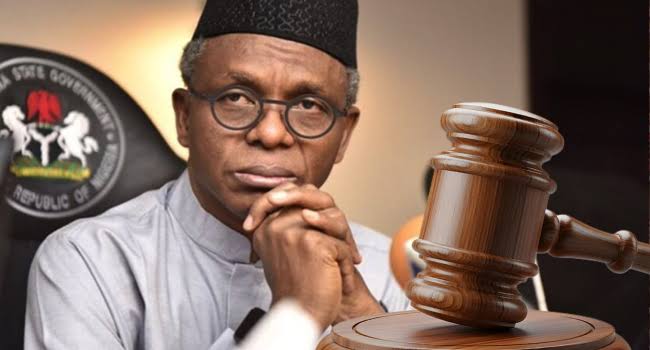
Alleged Wire Tapping: Court Reserves Ruling on El-Rufai’s No Case Submission
By: Zagazola Makama
The Federal High Court sitting in Abuja has reserved ruling on a no case submission by a former governor of Kaduna State, Mallam Nasir El’Rufai, on a charge of alleged wiretapping brought against him by the Department of State Services (DSS).
The DSS filed an amended five-count charge against el-Rufai following a February 13, 2026, Arise TV interview where he stated that associates had listened to the phone communications of National Security Adviser (NSA) Nuhu Ribadu.
The secret police had told the court that El’Rufai’s actions breached the Cybercrimes and Nigerian Communications laws.
At the resumed hearing, on Tuesday, counsel to El’Rufai, Paul Erokoro, SAN, informed the court that they filed a no case application on 26th August 2026.
A. K. Ekere who held brief for Erokoro, urged the Court to discharge the case filed against El’Rufai and award penalties against the DSS, arguing that no prima-facie evidence was before the court to warrant a defence.
Responding, the prosecuting lawyer, Oluwole Aladedoye, SAN, informed the court that the prosecution filed its reply to the no-case submission on 6th September, 2026. He urged the court to overrule the no case submission filed by the defence and order El’Rufai to begin his defence.
He added that as there was evidence of El’Rufai’s confession which was tendered as evidence in court. That it duly established a case against the former governor.
After listening to lawyer to the DSS, and to the former governor, the presiding judge, Justice Joyce Abdullmalik adjourned the matter to October 26, 2026.
Alleged Wire Tapping: Court Reserves Ruling on El-Rufai’s No Case Submission
News
HOMEF Links Deaths of 37 Young Miners to Nigeria’s Extractive Economy, Demands Independent Probe

HOMEF Links Deaths of 37 Young Miners to Nigeria’s Extractive Economy, Demands Independent Probe
By: Michael Mike
Health of Mother Earth Foundation (HOMEF) has called for an independent investigation into the reported deaths of 37 young miners in Niger State, warning that the incident highlights the human and environmental consequences of Nigeria’s reliance on mineral extraction.
The environmental advocacy organisation said the deaths, involving young people reportedly aged between 14 and 20, should trigger a broader examination of the economic conditions pushing youths into hazardous mining and the environmental costs of the country’s extractive development model.
The miners reportedly died while in the custody of the Nigeria Security and Civil Defence Corps (NSCDC) after security operations targeting suspected illegal mining activities in the Wushishi-Lukoto area of Niger State.
Although the circumstances and causes of the deaths remain subject to investigation, HOMEF said the incident raises critical questions about the treatment of detainees, youth unemployment, livelihood insecurity and the sustainability of mining activities.
In a statement, HOMEF Executive Director, Dr Nnimmo Bassey, said the tragedy should not be viewed exclusively as a matter of illegal mining and security enforcement, but as part of a wider crisis associated with destructive extractivism.
“We must stop treating extraction as the pathway to development while ignoring the lives, lands and ecosystems sacrificed in the process,” Bassey said.
He warned against replacing the country’s dependence on oil with mineral extraction without addressing the environmental degradation and community displacement associated with resource exploitation.
Bassey specifically cited the experience of the Niger Delta as a warning against pursuing mineral wealth at the expense of local communities and their environments.
He said Nigeria risked reproducing the problems associated with oil extraction if the expansion of mining activities was not accompanied by adequate environmental protection, community participation and safeguards for livelihoods.
“The deaths underscore the urgent need to address the poverty, livelihood insecurity and economic exclusion that push people into dangerous and informal mining, while confronting the environmental destruction associated with unregulated extraction,” he added.
The HOMEF director also cautioned that efforts to curb illegal mining should not simply pave the way for large-scale industrial operations that could create further environmental damage.
He called for a shift towards economic activities that protect ecosystems, restore damaged environments and provide sustainable livelihood opportunities for communities.
HOMEF urged the Federal Government and the Niger State Government to establish the circumstances surrounding the reported deaths and ensure accountability for any violations, negligence or other wrongdoing uncovered.
The organisation also called for measures to address the economic vulnerabilities that expose young people to dangerous mining activities, particularly poverty, unemployment and the loss of sustainable livelihood opportunities.
It demanded stronger environmental monitoring and enforcement in mining-affected communities, alongside restoration programmes and measures to hold mining operators and polluters responsible for ecological damage.
The group further called for restrictions on destructive mining practices affecting forests, farmlands, water bodies and other ecologically sensitive areas.
It said communities whose territories are targeted for mineral extraction should have meaningful opportunities to participate in decisions affecting their land and livelihoods, including determining what happens within their territories.
HOMEF also advocated investment in sustainable, non-extractive economic activities capable of reducing dependence on hazardous mining and strengthening local economies.
The incident has brought renewed attention to the challenges of regulating informal mining while protecting vulnerable workers and communities.
Illegal mining enforcement addresses one aspect of the problem, but HOMEF argued that lasting solutions must also consider the economic circumstances that drive people, including young people, into the sector.
The organisation maintained that environmental protection, decent livelihood opportunities and accountability must form part of any strategy to manage Nigeria’s mineral resources.
It said the reported deaths should serve as a reminder that economic development cannot be measured solely by the volume or value of resources extracted, particularly when communities face risks to their lives, land, water and livelihoods.
HOMEF called for a fundamental departure from what it described as an “extract, exploit and abandon” approach, advocating instead a development pathway centred on ecological protection, environmental restoration and sustainable livelihoods.
The organisation maintained that addressing illegal mining without confronting the wider consequences of extractivism would leave the underlying crisis unresolved.
HOMEF Links Deaths of 37 Young Miners to Nigeria’s Extractive Economy, Demands Independent Probe

OPEP troops foil suspected Fulani bandits reprisal attack on Jwerk Kargung village in Plateau
By: Zagazola Makama
Troops of Sector 8, Sub-Sector 81, Operation Hakorin Damisa (OPEP), have foiled an attempted reprisal attack on Jwerk Kargung Village in Mangu Local Government Area of Plateau State.
The incident occurred at about 8:35 p.m. on Sept. 20, 2026, following reports of sporadic gunshots around the community.
Troops deployed at Mangu Halle, alongside personnel of Operation Rainbow and Keystone Mangu Division, swiftly responded to the report and moved to the affected area.
According to military sources, the quick intervention of the troops forced the gunmen, suspected to be Fulani militias, who were allegedly attempting to attack the village, to withdraw into the bush.
The troops subsequently dominated the general area and commenced offensive operations to frustrate further criminal activities and prevent the attackers from regrouping.
Security forces are maintaining patrols around the community as efforts continue to safeguard residents and prevent further attacks.
OPEP troops foil suspected Fulani bandits reprisal attack on Jwerk Kargung village in Plateau

Alleged Wire Tapping: Court Reserves Ruling on El-Rufai’s No Case Submission

AT 3RD AFRICA MINERALS STRATEGY GROUP HIGH-LEVEL ROUNDTABLE

Terrorists rustle 120 cattle, kill two herders in Wase, Plateau

Roger Federer’s Shock as DNA Results Reveal Myla and Charlene Are Not His Biological Children

THE PLIGHT OF FARIDA

FAILED COUP IN BURKINA FASO: HOW TRAORÉ NARROWLY ESCAPED ASSASSINATION PLOT AMID FOREIGN INTERFERENCE CLAIMS
-
 News3 years ago
Roger Federer’s Shock as DNA Results Reveal Myla and Charlene Are Not His Biological Children
-
Opinions5 years ago
THE PLIGHT OF FARIDA
-
 News1 year ago
FAILED COUP IN BURKINA FASO: HOW TRAORÉ NARROWLY ESCAPED ASSASSINATION PLOT AMID FOREIGN INTERFERENCE CLAIMS
-

 News3 years ago
EYN: Rev. Billi, Distortion of History, and The Living Tamarind Tree
-
 Opinions5 years ago
POLICE CHARGE ROOMS, A MINTING PRESS
-

 ACADEMICS3 years ago
A History of Biu” (2015) and The Lingering Bura-Pabir Question (1)
-

 Columns3 years ago
Army University Biu: There is certain interest, but certainly not from Borno.
-

 Politics1 year ago
2027: Why Hon. Midala Balami Must Go, as Youths in Hawul and Asikira/Uba Federal Constituency Reject ₦500,000 as Sallah Gift
