
News
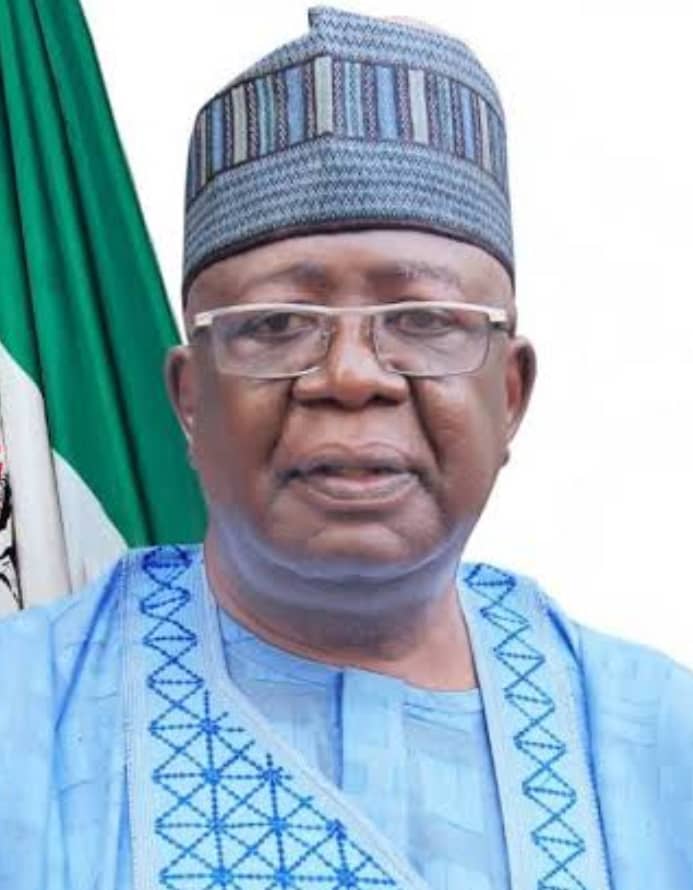
Why Borno must celebrate Governor Zulum

Why Borno must celebrate Governor Zulum
By: Hon. Yusuf Adamu
Four years ago, my friend Asiwaju Folawuyo Bello visited Maiduguri to condole me over the demise of my wife. After the condolences, we discussed issues. Bello is from Oyo State but has done a lot of business with our people in the North, so he understands Hausa and communicates well. Drawing from our discussion, I came to agree with the school of thought that public officials must be held accountable for the resources entrusted to them. However, I also disagree with the position of some individuals regarding our governor, Professor Babagana Zulum, and his achievements over the years. I noticed that some people are now painting a picture that appeals to fictions rather than facts. In a democracy, citizens have the right to ask how public funds are received, allocated, and spent. Activists, journalists, and civil society organizations also have an important role in exposing waste, corruption, and abuse of office. However, accountability must be based on verifiable facts, sound calculations, and a fair assessment of circumstances. For Asiwaju, Professor Babagana Umara Zulum has done well and deserved commendation. This is coming from a personality from far Oyo State, and I wonder why some people in Borno State are not seeing that part of Zulum’s efforts.
I personally feel that a serious review of allegations must consider the sources of government revenue, the cost of security operations, public infrastructure, social interventions, workers’ salaries, local government responsibilities, and the general economic conditions under which Borno State has been governed. When this broader context is considered, the claim by people with negative thoughts about Borno State and Governor Zulum’s administration appears incomplete and potentially misleading. The physical development of Borno, the scale of its security challenges, and the range of services provided by the government raise important questions that defend all the resources coming into the state, as Falawuyo Bello reviewed it again when he returns to Maiduguri for a visit sometime this year.
Professor Babagana Umara Zulum assumed office in a state facing extraordinary difficulties. Borno has endured more than a decade of insurgency, resulting in widespread displacement, destruction of infrastructure, disruption of economic activity, and the loss of lives and livelihoods. Many communities had been cut off from government services, while schools, hospitals, roads, markets, and public buildings were damaged or abandoned. Governing such a state is fundamentally different from governing a peaceful and economically stable environment. A large portion of government expenditure must go towards security, reconstruction, humanitarian support, and the restoration of basic services.
The governor’s performance should therefore be judged against the realities he inherited. Since taking office, his administration has pursued projects that are visible not only in Maiduguri but also in several local government areas. These include roads, flyovers, schools, hospitals, housing projects, public buildings, water infrastructure, markets, and other urban renewal programs. Such development has contributed to a noticeable change in the appearance and functionality of parts of the state capital. Areas that previously reflected neglect and insecurity have increasingly shown signs of reconstruction and organized growth.
Another friend of mine, Alhaji Yakubu Ahmed BK, who is currently the commissioner for information in Kebbi State, was in Maiduguri recently. While discussing issues about the North generally, he made examples with Governor Zulum’s landmarks and achievements in Borno State. One of the most significant areas of the administration’s intervention as he observed was healthcare. The establishment or development of major health facilities, including a state teaching hospital and other specialist institutions, requires substantial funding. The cost involves not merely the construction of buildings but also the provision of medical equipment, laboratories, theaters, staff accommodation, electricity, water supply, maintenance, and personnel, which are key triggers in expenses. He said a hospital cannot be assessed only by the cost of its external structure. Its sustainability depends on the wider system of healthcare delivery surrounding it.
He applied the same reasoning to the educational projects. He observed that rebuilding schools in communities affected by insurgency requires more than putting up classrooms. It involves security considerations, teachers’ accommodation, furniture, learning materials, water and sanitation facilities, and sometimes the construction of entirely new school networks for displaced populations. Universities and other tertiary institutions similarly require lecture halls, laboratories, administrative buildings, libraries, hostels, roads, electricity, and information technology infrastructure. When these expenses are added together, the financial demands become considerable.
On road construction and urban transportation projects, he said this also represents major commitments. The construction of flyovers, dual carriageways, drainage systems, bridges, and intercity roads is expensive even in states with relatively favorable terrain and stable economic conditions; this is something to look at. In Borno, the challenges are more severe because projects must often be implemented in areas affected by insecurity, inflation, difficult logistics, and damaged infrastructure. Contractors may require additional security arrangements, transportation costs may be higher, and the supply of materials may be disrupted. Yakubu Ahmed Bk knows Maiduguri and Borno State very well, having lived here.
He observed that the Zulum administration’s transportation policy further illustrates the scale of its social commitments. A fare of ₦50 per trip, reportedly one of the lowest in Nigeria, provides relief to students, workers, traders, and other residents at a time when transportation costs have risen sharply nationwide. Such a program cannot be evaluated only from the perspective of what passengers pay. The government may be subsidising fuel, vehicle maintenance, personnel, spare parts, and operational costs. The difference between the commercial cost of transportation and the amount paid by passengers must be funded from public resources.
These are observations by people outside the state. Many others have made similar comments, and the majority of these people are from outside the state. Dr. James Bwala, a son of the soil, has been reporting good things happening in the state recently. He stated that poverty alleviation and support for vulnerable citizens require substantial expenditure. According to him, in a state like Borno, where insurgency has displaced communities and weakened household income, government interventions may include food distribution, cash assistance, skills acquisition, agricultural support, youth empowerment, assistance to widows, support for internally displaced persons, and reintegration programs. These interventions are not always as visible as roads or buildings, but they are essential to social stability. A government that spends money on security and infrastructure while ignoring hunger and unemployment would fail in its responsibility. Conversely, a government that provides social support must be assessed within the context of the resources required to sustain it.
He observed that security is perhaps the most important factor that must be considered in evaluating Borno State’s finances. The fight against insurgency involves enormous direct and indirect costs. The government may support the procurement of vehicles, communications equipment, protective gear, patrol logistics, community security initiatives, and welfare packages for security personnel. It may also provide emergency assistance to communities affected by attacks, support displaced citizens, and participate in the reconstruction of liberated areas. Even when security is primarily a federal responsibility, state governments often bear significant costs because they are closest to the people and are expected to respond immediately to crises. Zulum has been doing that, he said.
From these credible views and comments, those condemning the Zulum administration based on their own positions are doing so to satisfy the negative intentions. Some are calling and whispering about the amount received but could not help to interpret the figures they are mentioning. Does the amount refer to statutory allocations alone? Does it include intervention funds? Are federal grants, loans, refunds, ecological funds, and special reconstruction allocations included? Does it represent gross receipts or actual money available for discretionary spending? Were local government allocations counted as part of the state government’s funds? Were salaries, pensions, debt servicing, security expenditure, and recurrent costs deducted? Without answers to these questions, the figure remains an assertion rather than a complete financial analysis.
It is also important to distinguish between funds received by a state and funds personally controlled by a governor. Federal allocations may be transferred to state and local government accounts under constitutional and statutory arrangements. Some funds are earmarked for specific purposes. Intervention funds may be tied to particular projects, while loans often come with repayment obligations. Capital receipts cannot automatically be treated as free money available for any project. A proper audit must therefore classify every source of revenue and match it with the expenditure for which it was intended.
The allegation also appears to raise a question about what the state has achieved with its resources. Yet the visible transformation across Borno creates a need for more precise investigation. If a state has constructed major roads and flyovers, established or upgraded hospitals, built schools, provided subsidized transportation, supported security operations, funded poverty reduction programs, and reconstructed communities, then the total value of these activities must be included in the assessment. It is not sufficient to mention an aggregate revenue figure and imply that the entire amount should remain available after eight years. Governor Babagana Umara Zulum has done for Borno State what generations to come will continue to praise.
- Hon. Yusuf Adamu writes from Maiduguri.
- Why Borno must celebrate Governor Zulum









Gara-Gombe alleges threat to life, family, petitions IGP
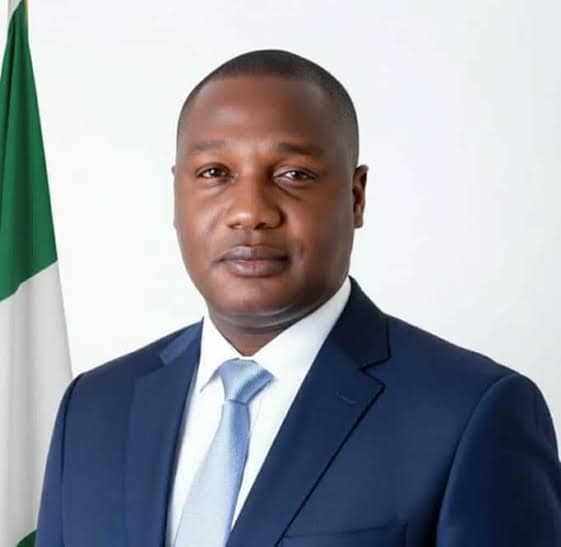
The Peoples Democratic Party (PDP) 2027 Campaign Director of Media and Publicity, Ahmed Gara-Gombe, has petitioned the Inspector-General of Police over the alleged presence of suspected security operatives in plain clothes around his family residences in Gombe State.
Gara-Gombe disclosed this in a press statement issued to journalists in Gombe by his media aide, Mr Azubuike Nathaniel.
He said that the suspected operatives had been sighted around two family residences in the state which included the house his mother lives and another occupied by members of his immediate family.
He said the development had raised concerns about the safety of his family and himself which prompted him to petition the Inspector-General of Police as well as notify relevant security agencies in Gombe State.
The PDP chieftain said the party’s 2027 Campaign Council was aware of the development, noting that its legal and security committees were consulting on the matter and would advise the council on the appropriate course of action.
Gara-Gombe further stated that he might “reinforce his personal security arrangements if the situation warranted it”.
He, however, dismissed suggestions that he should avoid visiting Gombe State due to the security concerns, insisting that he would not be intimidated or prevented from exercising his political rights.
“Nobody will stop me from coming to Gombe. I will come. Some people have advised me not to come, but nobody will stop me from visiting my state,” he declared.
He called on the relevant security agencies to investigate the alleged surveillance and take necessary measures to guarantee the safety of his family and prevent any breach of peace.
Gara-Gombe reaffirmed his commitment to participating in legitimate political activities in Gombe State, stressing that security concerns would not hinder him from exercising his political rights.
Gara-Gombe alleges threat to life, family, petitions IGP
Troops Destroy Suspected Terrorist Hideout, Recover Motorcycle in Zamfara
By: Zagazola Makama
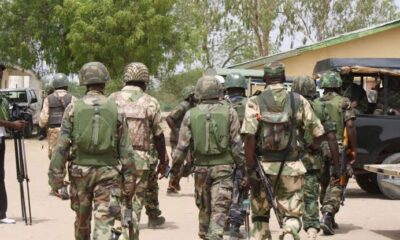
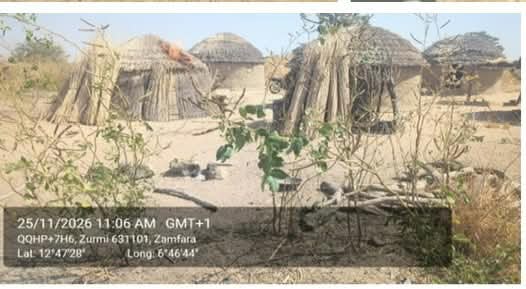
Troops of 1 Brigade, Joint Task Force, Operation Fasan Yamma (OPFY), have destroyed a suspected terrorist hideout in Zurmi Local Government Area of Zamfara State.
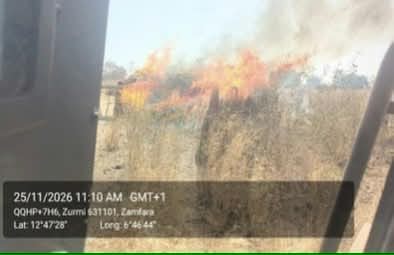
Security sources told Zagazola Makama that the operation was conducted at about 7:30 a.m. on Nov. 25, 2026, when troops discovered and destroyed the hideout.
The troops also recovered one motorcycle during the operation.
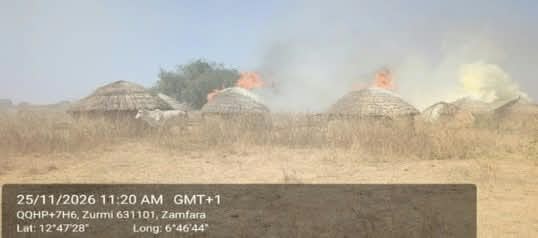
The recovery is expected to support ongoing efforts to disrupt the movement and activities of armed groups operating in the area.
Troops Destroy Suspected Terrorist Hideout, Recover Motorcycle in Zamfara
Tinubu fulfils forest guard promise as 2,000 graduate in Plateau, Zamfara – NCYP
By: Michael Mike
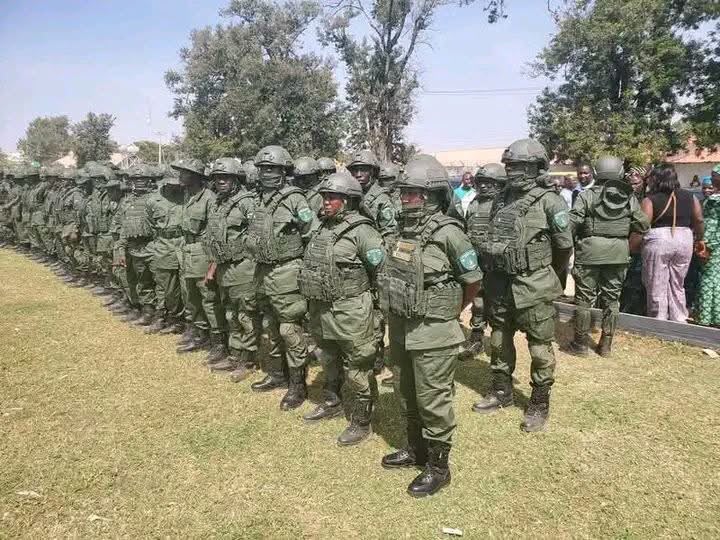
The Northern Christian Youth Professionals (NCYP) has commended President Bola Tinubu for fulfilling his campaign promise to establish Forest Guards, following the graduation of 2,000 personnel in Plateau and Zamfara States.
The group described the development as evidence of Tinubu’s commitment to translating campaign promises into concrete action, describing him as a “talk-and-do” leader.
In a statement on Saturday signed by NCYP National Chairman, Isaac Abrak, the group said the graduation and passing-out parades of 1,000 Forest Guards each in Plateau and Zamfara marked another step towards implementing the security commitments contained in the President’s Renewed Hope Manifesto.
It recalled that the establishment of Forest Guards was captured on page nine of the manifesto, which outlined plans to reclaim and secure Nigeria’s forests from terrorists, bandits, kidnappers and other violent criminal groups.
The group said the initiative was particularly important because criminal groups had continued to exploit forest hideouts to launch attacks on vulnerable communities.
“As one of the leading advocates for the establishment of Forest Guards, NCYP has consistently championed the initiative, recognising that securing Nigeria’s forests is fundamental to addressing the country’s security challenges,” the statement said.
It expressed optimism that deploying the newly trained personnel would strengthen the country’s capacity to deny criminal elements access to forest hideouts.
The organisation urged the graduates to discharge their responsibilities with courage, discipline, professionalism and patriotism, stressing that their assignment extended beyond protecting forests to safeguarding families, communities, farmlands and livelihoods.
NCYP, however, called on Tinubu to extend the initiative to Oyo State, where it said the President had also made a commitment to establish Forest Guards.
It also urged governors of other states yet to establish their Forest Guard units to collaborate with the Federal Government and take concrete steps towards implementing the programme.
The group maintained that establishing Forest Guard units across all states, including the Federal Capital Territory (FCT), would improve security coverage and deny terrorists, bandits and other criminal elements safe havens.
It also commended the governors of Plateau and Zamfara for collaborating with the Federal Government towards the successful establishment of the units in their respective states.
Reaffirming its confidence in the President’s commitment to the initiative, NCYP cited his 2026 Independence Day address, in which he said the next phase of the administration’s reforms would focus on translating economic adjustments into tangible improvements in Nigerians’ lives.
“We have made the difficult decisions, corrected the course of our economy and laid the foundations for lasting prosperity. The next phase is to translate these reforms into tangible improvements in the lives of Nigerians,” Tinubu was quoted as saying.
Tinubu fulfils forest guard promise as 2,000 graduate in Plateau, Zamfara – NCYP

Gara-Gombe alleges threat to life, family, petitions IGP

Campaign Train: Zulum Storms Mafa, Dikwa, Gamboru Ngala to Rousing Reception

Troops Destroy Suspected Terrorist Hideout, Recover Motorcycle in Zamfara

Roger Federer’s Shock as DNA Results Reveal Myla and Charlene Are Not His Biological Children

THE PLIGHT OF FARIDA

FAILED COUP IN BURKINA FASO: HOW TRAORÉ NARROWLY ESCAPED ASSASSINATION PLOT AMID FOREIGN INTERFERENCE CLAIMS
-
 News3 years ago
Roger Federer’s Shock as DNA Results Reveal Myla and Charlene Are Not His Biological Children
-
Opinions5 years ago
THE PLIGHT OF FARIDA
-
 News2 years ago
FAILED COUP IN BURKINA FASO: HOW TRAORÉ NARROWLY ESCAPED ASSASSINATION PLOT AMID FOREIGN INTERFERENCE CLAIMS
-
 Opinions5 years ago
POLICE CHARGE ROOMS, A MINTING PRESS
-

 News3 years ago
EYN: Rev. Billi, Distortion of History, and The Living Tamarind Tree
-

 ACADEMICS3 years ago
A History of Biu” (2015) and The Lingering Bura-Pabir Question (1)
-

 Columns3 years ago
Army University Biu: There is certain interest, but certainly not from Borno.
-

 Politics1 year ago
2027: Why Hon. Midala Balami Must Go, as Youths in Hawul and Asikira/Uba Federal Constituency Reject ₦500,000 as Sallah Gift
