
News
Zulum Consolidates 5th Year with 238 Projects

Zulum Consolidates 5th Year with 238 Projects
…Delivers 1,195 Developmental Projects, Programmes and Policies in 5 Years
By: Our Reporter
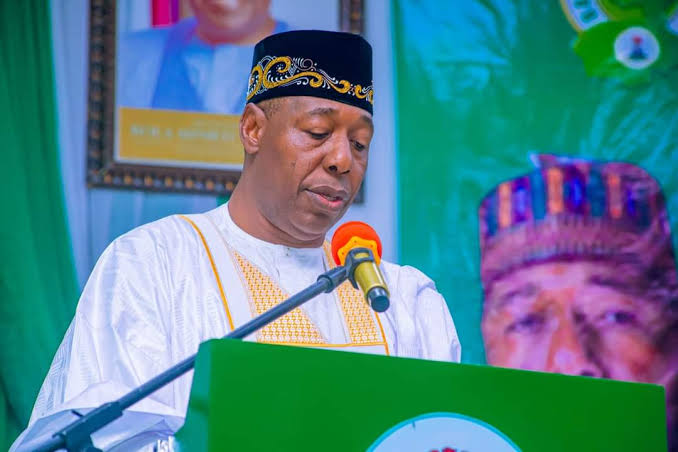
Governor Babagana Umara Zulum of Borno State continued his commitment towards transforming the state in the first year of his second tenure of office. He consolidated on democratic gains by delivering 238 additional projects in the First Year of his Second Tenure, from May 29, 2023 to May 29, 2024. In 5 Years, Zulum has cumulatively accomplished no less than 1,195 developmental projects and capital-intensive programmes and policies that are people oriented.
It would be recalled that over 900 projects, programmes and policies were delivered during Zulum’s First Tenure [May 29, 2019 to May 29, 2023].
The 238 projects delivered in the first 365 days of his Second Tenure comprise of 220 capital projects and 18 capital-intensive programmes and policies, most of which were completed.
The achievements included 54 projects on Education, across 23 Local Government Areas, including 36 new Mega and Regular Senior/Junior Secondary and Primary Schools, High Islamic College and Integrated Tsangaya schools, including admin blocks, teachers’ quarters, laboratories, sporting facilities, solar systems, new ICT laboratories and 88 science laboratories in 22 schools, 58 vehicles for monitoring and evaluation of schools, 6,529 furniture sets for schools and education offices, among others.
In the Health sector, Zulum delivered 19 projects in 10 LGAs across all the 3 Senatorial Zones, including 6 new primary healthcare centers (PHCs), new General Hospital, 2 new Eye and Dental Hospitals, block of classrooms at a Nursing School, construction of 2 new Colleges of Nursing, the rehabilitation of 3 General Hospitals, and state-wide initiatives [solar systems in 22 PHCs and a General Hospital, supply of medical equipment, essential drugs, and consumables, etc]. Works and Housing got 20 projects across 6 LGAs, transforming urban and rural landscapes.
On Works, Zulum constructed Borno’s second flyover and an underpass pedestrian bridge, while the third flyover is under construction.
The construction of 32.77km urban and rural roads, including dual carriage ways, drainages, and road networks are under way, procured tracked paver, bulldozer to facilitate direct labour works in the state and ensure judicious utilisation of scarce resources.
On Housing, government has constructed 2 separate estates, comprising of 500-units; and 72-units 3-bedroom flats with road networks delivered for civil servants and residents.
On Security, Zulum supported the post-insurgency operations with 94 brand new Hilux, 62 Toyota Land Cruiser (Samsara) patrol vehicles, assorted security gadgets, equipment and logistics; procured 300 new motorcycles; repaired/upgraded 49 vehicles; and built a new office complex with support facilities for the Borno State Security Trust Fund to support security architecture and operations.
On Vocational and Entrepreneurship skills, government has completed and equipped 5 vocational institutes across Borno’s 3 Senatorial Zones in 10 LGAs, it has also constructed 3 ICT centres, trained 832 youths and empowered them with start-up kits, as well as training of 200 youths as agricultural extension workers and 400 farming households.
On Trade, Investment and Tourism 4 capital-intensive projects in 3 LGAs, including the complete reconstruction and rehabilitation of Maiduguri Monday market, which was razed by fire in February 2023 were carried out. He also constructed 176 shops [8-blocks of 22 open shops] with solar power at new Tashan Bama market [Phase II], established a new Agro Logistics Hub; rehabilitated the Gamboru Ngala cattle market; and remodelled the Borno State Hotel to boost revenue and tourism.
There were also 7 projects on Transportation and Energy in 4 LGAs, to cushion the effects of the fuel subsidy removal, comprising 150 vehicles [50 buses and 100 E-Star hatchback electric cars.
To subsidise metro city transport, the administration procured 500 electric tricycles, 300 electric and 10,000 manual bicycles.
He also procured and installed electricity transformers [across 14 locations] and 7,675 solar streetlights for roads in 9 locations in 2 LGAs. To support and boost economic livelihoods, Zulum’s government purchased five J5 vehicles, 30 tricycles and 10 Golf Wagon for Baga’s resettled communities.
In Agriculture, Zulum initiated 29 new projects and resuscitated moribund ones in 13 LGAs, including the procurement and distribution of 2 swamp buggies for waterway desilting, typer grass clearing, hundreds of water pumps, about 2,000 assorted irrigation/hand pumps and tube wells, irrigation farm inputs, hundreds of assorted fertilizer trucks, assorted agro-chemicals, spray equipment, improved seedlings, livestock feeds and vaccines],
Improvement of 225 hectares solar surface and sprinkler irrigation systems; 2,060 irrigation tube wells/wash boreholes and solar/petrol tube wells; 10 hectares drip irrigation scheme, agro logistics hub, livestock investigation/breeding, poultry demonstration and holding centres, and poultry production unit. He also resuscitated about 100 hectares Jaffi and Ngulayi irrigation schemes, among others.
Governor Zulum has continuously ensured food and nutrition security for the whole Borno population while supporting farmers to return to farming as part of livelihood restoration
Other sectoral achievements include 26 new, rehabilitated and upgraded projects in the Urban and Rural Water Supply sectors; 6 new and rehabilitated Rural and Urban Electrification projects; 35 newly completed and rehabilitated projects on Reconstruction, Resettlement and Civil Authority Restoration; and 8 new and ongoing projects on the Environment.
18 capital-intensive programmes and policies executed on investments in human capital development, Education and Public Service, providing Humanitarian Support and Social Protection to vulnerable population, as well as the payment of gratuity to retirees.
Government is poised to support the return of its indigenes’ from Niger, Tchad and Cameroun. while it concentrate the voluntary resettlement of IDPs in their ancestral homes in a dignified manner following the Kampala Convention.
Governor Zulum is also working tirelessly to actualize the Borno Model, applauded even by the United Nations to find Durable and sustainable for Borno Communities in his quest for reconstruction, resettlement and rehabilitation thus “Building Borno Back and Better”
Zulum Consolidates 5th Year with 238 Projects


News
Miyetti Allah President Bello Bodejo Pleads Not Guilty to $2.63 Million Money Laundering, Terrorism Financing Charges
Miyetti Allah President Bello Bodejo Pleads Not Guilty to $2.63 Million Money Laundering, Terrorism Financing Charges
By Zagazola Makama
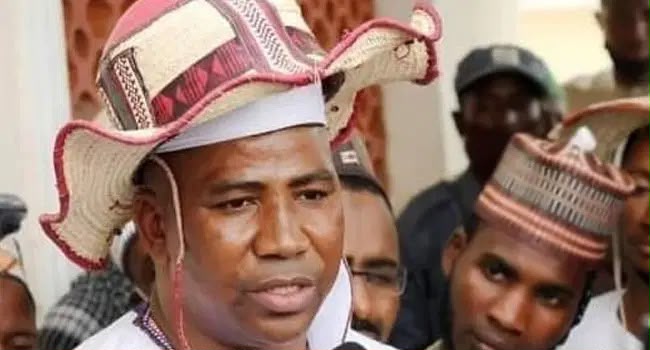
The National President of Miyetti Allah Kautal Hore, Bello Bodejo, on Thursday pleaded not guilty to a 12-count charge bordering on alleged money laundering and terrorism financing before the Federal High Court in Abuja.
Bodejo was arraigned by the Economic and Financial Crimes Commission (EFCC) before Justice Inyang Ekwo over allegations involving the laundering of 2.63 million dollars.
The anti-graft agency also accused the Miyetti Allah leader of financing terrorism.
At the commencement of proceedings, EFCC counsel informed the court that the matter was scheduled for the defendant to take his plea on the charges.
Counsel to the defendant, Ahmed Raji, SAN, did not oppose the application.
After the 12-count charge was read to him, Bodejo pleaded not guilty to all the counts.
Following the plea, the court adjourned the matter for further proceedings in accordance with the law.
Miyetti Allah President Bello Bodejo Pleads Not Guilty to $2.63 Million Money Laundering, Terrorism Financing Charges
News
Africa Moves to Capture Trillions in Carbon Finance, Trains Diplomats for Global Climate Market Negotiations
Africa Moves to Capture Trillions in Carbon Finance, Trains Diplomats for Global Climate Market Negotiations
…AU, ACBF equip over 80 ambassadors and senior diplomats as continent pushes for bigger share of carbon trading under Paris Agreement
By: Michael Mike
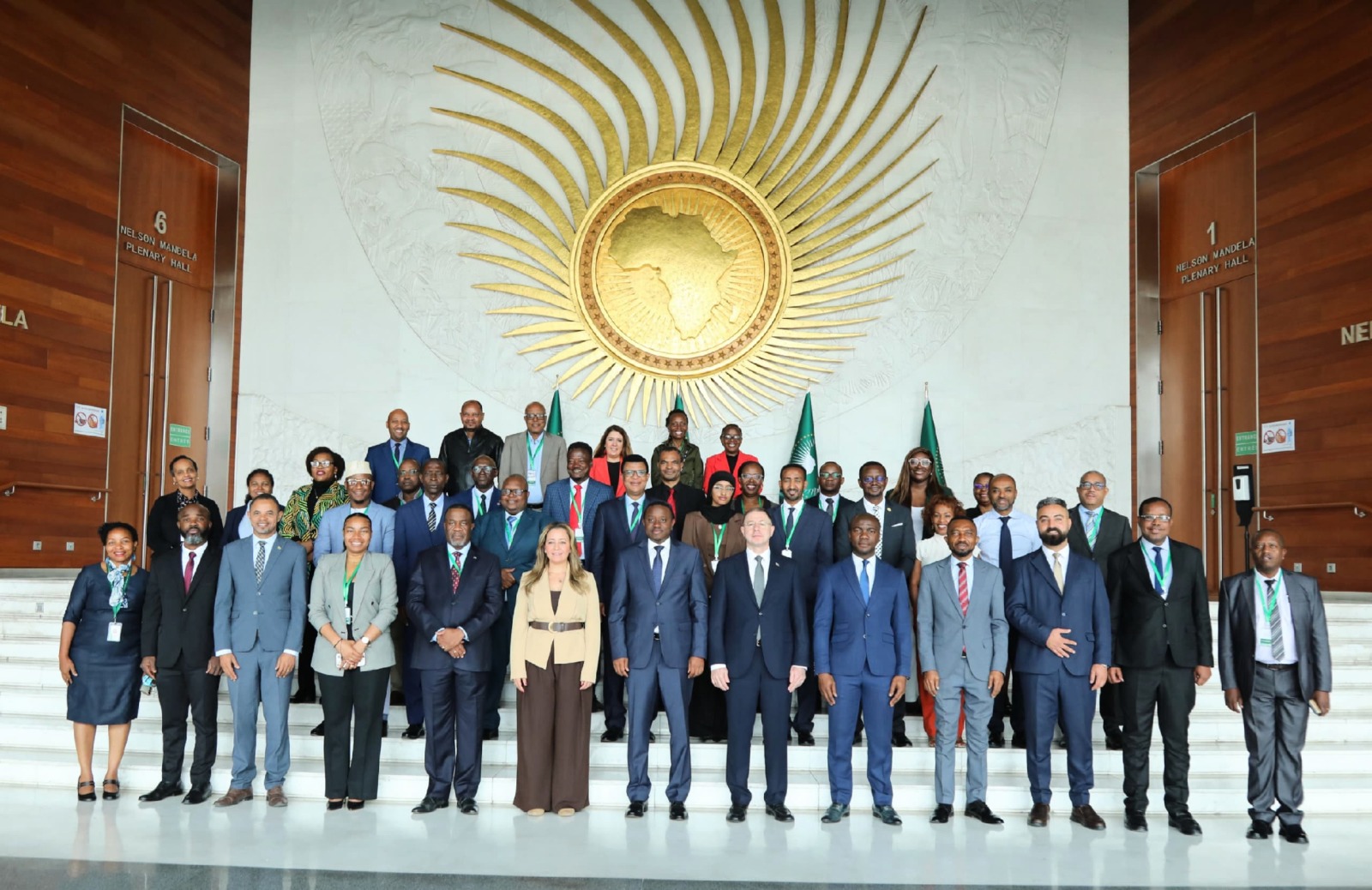
The African Union (AU) and the African Capacity Building Foundation (ACBF) have begun preparing African diplomats for what could become one of the continent’s biggest climate financing opportunities, training more than 80 ambassadors, senior diplomats and policy experts to negotiate a stronger African position in the rapidly expanding global carbon market.
The high-level training, held at the AU headquarters in Addis Ababa, Ethiopia, marks a major step in implementing the Africa Action Plan on Carbon Markets, adopted by the AU Assembly in 2025 to ensure African countries derive greater economic and environmental benefits from international carbon trading.
The initiative comes as decisions reached under Article 6 of the Paris Agreement at the COP29 climate conference in Baku, Azerbaijan, are expected to significantly expand global carbon markets, potentially unlocking billions of dollars in climate finance for developing countries, including those in Africa.
According to a statement signed by Fatou Diouf, Head of Communications and Influencing at the African Capacity Building Foundation, the seminar aimed to strengthen the technical and negotiating capacity of African diplomats ahead of increasingly complex international climate negotiations.
Speaking during the programme, AU Commissioner for Agriculture, Rural Development, Blue Economy and Sustainable Environment, Moses Vilakati, stressed that Africa must pursue a coordinated continental strategy.
“Our collective approach must continue to be guided by our continental frameworks,” Vilakati said.
He emphasised that strong governance, transparency, free, prior and informed consent, and legally enforceable benefit-sharing mechanisms are critical to ensuring carbon markets generate tangible benefits for African countries and local communities rather than external investors alone.
Participants explored African-led carbon credit projects, examined the differences between compliance and voluntary carbon markets, and studied international regulatory models, including the European Union’s Emissions Trading System, to identify best practices adaptable across the continent.
Discussions also focused on safeguarding community rights, ensuring environmental integrity and directing carbon revenues towards climate adaptation, sustainable development and local economic growth.
Special Adviser to the ACBF Executive Secretary and Head of the Foundation’s AU Liaison Office, Ambassador Laho Bangoura, said Africa must invest in human capacity if it is to maximise emerging opportunities in climate finance.
“As climate finance becomes increasingly central to Africa’s development agenda, capacity development must remain at the heart of our response,” Bangoura said.
Organisers noted that a better-equipped diplomatic corps would enable African countries to negotiate more effectively, speak with one voice and secure fairer outcomes as global demand for high-quality carbon credits continues to rise.
The training received support from the Government of Azerbaijan through the Azerbaijan International Development Agency (AIDA), reflecting growing international collaboration on climate action and sustainable development.
Carbon markets allow countries and companies to buy and sell carbon credits generated from activities that reduce or remove greenhouse gas emissions, such as forest conservation, renewable energy projects and sustainable land management. Africa possesses vast carbon sequestration potential through its forests, wetlands and renewable energy resources but currently accounts for only a small fraction of the global carbon market.
Experts believe that with stronger regulatory frameworks, improved governance and enhanced negotiating capacity, African countries could attract billions of dollars annually in climate finance while advancing environmental protection, job creation and sustainable development. The AU’s Action Plan seeks to ensure that Africa is not merely a supplier of carbon credits but a key beneficiary of the growing global carbon economy.
Africa Moves to Capture Trillions in Carbon Finance, Trains Diplomats for Global Climate Market Negotiations

Centre lauds Kaduna Govt over life skills, gender education policies approval
By Aisha Gambo
The Centre for Girls’ Education (CGE) has commended the Kaduna State Executive Council for approving the Kaduna State Life Skills Policy and the State Policy on Gender in Education (SPGE 2026–2030).
The Executive Director of the organisation, Habiba Mohammed, made this known in a statement issued on Wednesday in Kaduna.
She said the approval marked a transition from donor-supported, time-bound interventions to a sustainable, government-led framework for delivering life skills education and promoting gender equity in schools.
According to her, the Life Skills Policy will equip young people with the knowledge, skills, attitudes and values required to succeed in education, employment and life, while the Gender in Education Policy providzbves a framework to promote equity, inclusion, participation, retention, completion and improved learning outcomes.
“The approval moves life skills and gender equity from the margins of the classroom into the core of Kaduna State’s education system,” she said.
Mohammed said CGE contributed to the development and validation of the policies through its system-strengthening project supported by Co-Impact, OASIS Initiative and the Malala Fund, in collaboration with the Adolescent Girls Initiative for Learning and Empowerment (AGILE) and the Kaduna State Ministry of Education.
She said the policies built on more than 18 years of the organisation’s Safe Space model, which independent evaluations showed had helped reduce child marriage, increase school enrolment and delay early marriage.
According to her, the AGILE programme in Kaduna has reached more than 127,319 girls and 6,250 boys between the ages of 14 and 18, while over 1,400 female and male teachers have been trained as mentors.
She added that institutionalising the model through public policy would ensure that life skills education became a permanent component of the state’s education system.
Mohammed said the policies would address barriers to school access, retention and completion, particularly for girls and other vulnerable learners.
She added that they would also institutionalise life skills as a co-curricular programme, strengthen evidence-based decision-making across the state’s 23 local government areas and guarantee continuity beyond donor-funded programmes.
The executive director commended Gov. Uba Sani for providing the leadership that made the policy approval possible.
She also appreciated the Commissioner for Education, Prof. Abubakar Sani Sambo, the Kaduna State Ministry of Education, the AGILE State Project Implementation Unit, the World Bank and other stakeholders for their contributions to the process.
Mohammed reaffirmed CGE’s commitment to supporting the Kaduna State Government with technical assistance during the implementation phase, including teacher training, gender-responsive education sector budgeting and monitoring.
She said the ultimate goal was to ensure that every girl and boy in Kaduna State had the opportunity to learn, develop and thrive.
Centre lauds Kaduna Govt over life skills, gender education policies approval

Miyetti Allah President Bello Bodejo Pleads Not Guilty to $2.63 Million Money Laundering, Terrorism Financing Charges

Africa Moves to Capture Trillions in Carbon Finance, Trains Diplomats for Global Climate Market Negotiations

Centre lauds Kaduna Govt over life skills, gender education policies approval

Roger Federer’s Shock as DNA Results Reveal Myla and Charlene Are Not His Biological Children

THE PLIGHT OF FARIDA

FAILED COUP IN BURKINA FASO: HOW TRAORÉ NARROWLY ESCAPED ASSASSINATION PLOT AMID FOREIGN INTERFERENCE CLAIMS
-
 News2 years ago
Roger Federer’s Shock as DNA Results Reveal Myla and Charlene Are Not His Biological Children
-
Opinions4 years ago
THE PLIGHT OF FARIDA
-
 News1 year ago
FAILED COUP IN BURKINA FASO: HOW TRAORÉ NARROWLY ESCAPED ASSASSINATION PLOT AMID FOREIGN INTERFERENCE CLAIMS
-

 News2 years ago
EYN: Rev. Billi, Distortion of History, and The Living Tamarind Tree
-
 Opinions5 years ago
POLICE CHARGE ROOMS, A MINTING PRESS
-

 ACADEMICS2 years ago
A History of Biu” (2015) and The Lingering Bura-Pabir Question (1)
-

 Columns2 years ago
Army University Biu: There is certain interest, but certainly not from Borno.
-

 Politics1 year ago
2027: Why Hon. Midala Balami Must Go, as Youths in Hawul and Asikira/Uba Federal Constituency Reject ₦500,000 as Sallah Gift
