
News
Zulum Targets Closure of Borno’s Largest IDP Camp as Resettlement Drive Enters Final Phase

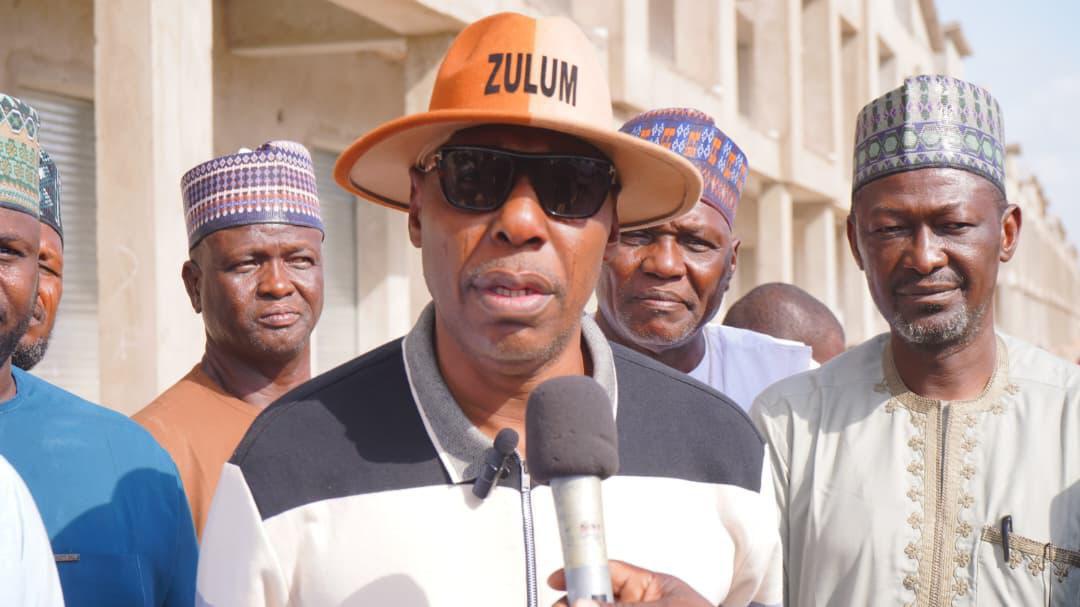
Zulum Targets Closure of Borno’s Largest IDP Camp as Resettlement Drive Enters Final Phase
By: Michael Mike
Borno State Governor, Prof. Babagana Zulum has announced plans to shut down the Bama Internally Displaced Persons (IDP) Camp, the largest displacement facility in Borno outside Maiduguri, within the next month, marking a major milestone in the state’s efforts to end years of mass displacement caused by insurgency.
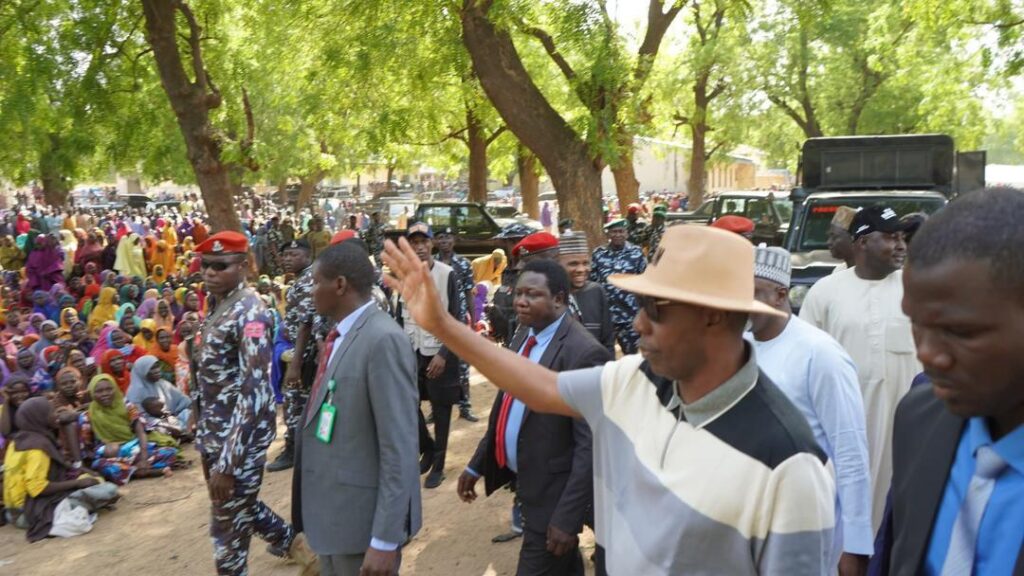
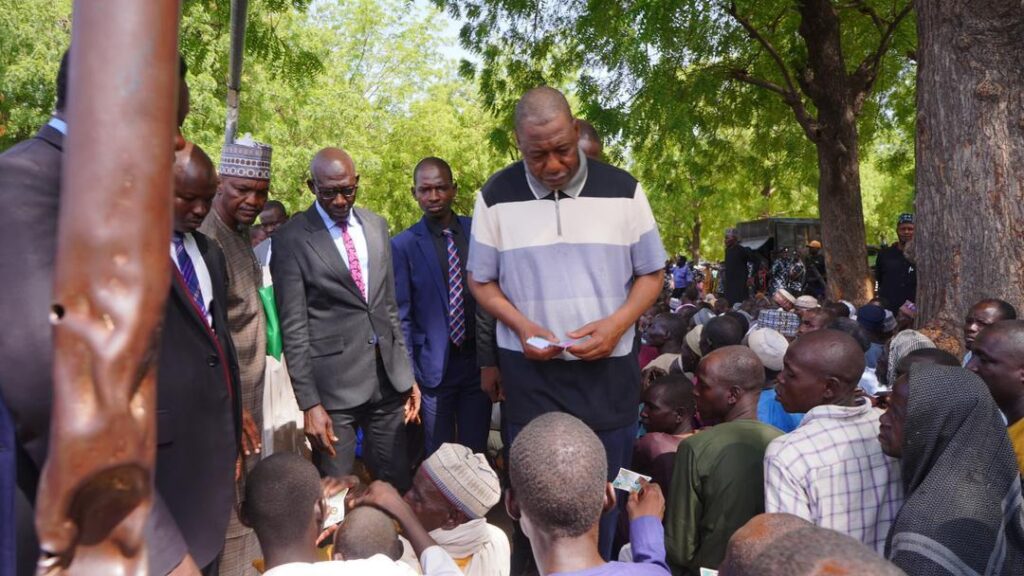
The governor made the declaration on Thursday after personally supervising a screening exercise for displaced families at the Government Science Secondary School IDP Camp in Bama, where he spent more than three hours verifying beneficiaries eligible for the state’s resettlement programme.
Zulum said the exercise was aimed at ensuring that only genuine households are captured as the government moves to complete the return of displaced residents to their ancestral communities.
“We are here to examine the remaining displaced people that are living in the IDP camp with a view to ensuring the closure of Bama IDP camp,” the governor stated.
The planned closure represents another significant step in Borno State’s post-insurgency recovery programme, which has seen thousands of displaced persons return to their communities after years of conflict triggered by the activities of the terrorist group Boko Haram.
Over the last seven years, the state government has facilitated the resettlement of residents in several communities across Bama Local Government Area, including Darajamal, Nguro Soye, Goniri, Banki and Abbaram. Bama remains one of the areas most devastated by the insurgency, with large-scale destruction of infrastructure and prolonged displacement of residents.
According to Zulum, only three communities—Mayanti, Goniri and Bula Kuriye—remain to be fully resettled before the camp can be permanently shut down.
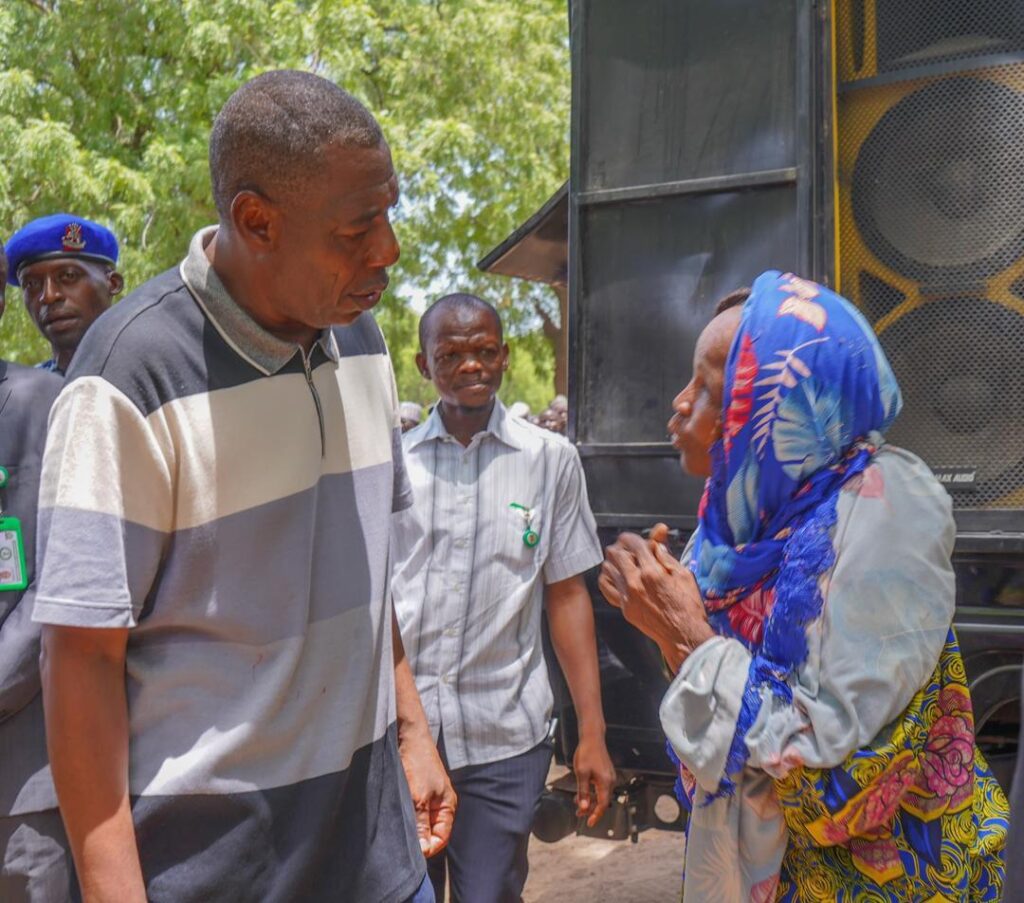
“We have three communities that are left to be resettled, namely, communities from Mayanti, Goniri, and Bula Kuriye. By the next one month, the Bama IDP camp, which is the largest camp in the state outside the state capital, will be closed,” he said.
The governor’s visit also featured inspections of major infrastructure projects underway in Bama as part of the administration’s reconstruction and urban renewal agenda.
Among the projects inspected were the construction of a modern shopping complex and the dualisation of the Bama township road. Zulum praised the quality of work being executed, describing the projects as critical to restoring economic activities and modernising the town after years of devastation.
He recalled that the historic Bama Market was destroyed during insurgent attacks about 15 years ago before being rehabilitated under the administration of Nigeria’s current Vice President, Kashim Shettima.
To further strengthen commercial activities, the state government is constructing a modern shopping complex with 156 shops in front of the market while simultaneously remodelling the entire facility.
“We are trying to provide a befitting shopping mall in front of the market, totaling 156 shops, while also remodeling the market as part of our urban renewal programme,” Zulum said.
He noted that the market redevelopment is designed to stimulate economic growth, improve livelihoods and provide a more conducive environment for businesses and traders.
The governor also disclosed plans to ease traffic congestion and improve connectivity through the dualisation of major roads within Bama, particularly the strategic township road linking Maiduguri, Bama and Gwoza. Existing roads across the town, he added, would be rehabilitated before the end of his tenure.
The inspection tour extended to High Islamic College and teachers’ quarters in Konduga, underscoring the administration’s continued focus on rebuilding educational infrastructure and improving public services in communities affected by conflict.
Zulum was accompanied by senior government officials, lawmakers and community leaders during the visit. The move to close the Bama camp is expected to signal a new phase in Borno’s recovery efforts as authorities push to transition displaced families from temporary shelters to permanent community-based resettlement
Zulum Targets Closure of Borno’s Largest IDP Camp as Resettlement Drive Enters Final Phase



Troops Raid Illegal Shanties, Clear Criminal Hideouts in Abuja
By Zagazola Makama
Troops of Army Headquarters Garrison, in conjunction with Operation SWEEP, have conducted a clearance operation across several areas of the Federal Capital Territory, dismantling illegal shanties and structures suspected of providing cover for criminal activities.
The operation was conducted at about 4:00 p.m. on August 23, 2026, across Karshi, Jeje, Kurape and Nyanya areas of the Abuja Municipal Area Council (AMAC).
Security personnel raided and dismantled several illegal shanties and structures during the operation as part of efforts to deny criminal elements safe havens within the capital.
The operation is part of ongoing security efforts to improve surveillance and maintain control over vulnerable areas that could be exploited by criminals.
The Mai-Anguwa of Nyanya commended the troops for the operation and pledged to sustain effective communication with Army Headquarters Garrison and other security agencies by providing credible information on suspicious activities.
Security personnel are expected to sustain the operation and continue intelligence-led patrols in the affected areas to prevent criminal elements from re-establishing their presence.
The development highlights the importance of sustained community-security collaboration in identifying emerging threats and preventing criminal networks from exploiting informal settlements and unregulated structures.
Troops Raid Illegal Shanties, Clear Criminal Hideouts in Abuja

Troops Arrest Suspected Terrorist, Courier in Kogi
By Zagazola Makama
Troops of 12 Brigade have arrested two suspected terrorists, including an alleged terrorist courier linked to kidnapping activities along the Okene–Auchi road in Kogi State.
The suspects were apprehended at about 1:15 p.m. on August 23, 2026, around the Okene axis of Okene Local Government Area, following an intelligence report on the movement of suspected terrorist elements.
According to security sources, one of the suspects was allegedly involved in kidnapping operations along the Okene–Auchi road and adjoining areas.
Troops recovered two mobile phones with charging cords, a power bank, four litres of palm oil, portions of cow meat, clothing and ₦901,080 in cash from the suspects.
The suspects and recovered items are currently in military custody for further investigation and necessary action.
Security sources said the arrests provide an opportunity to investigate the logistics and support networks sustaining criminal activities along the Okene–Auchi corridor.
The military is expected to intensify intelligence-led operations in the area to identify other members of the suspected network and disrupt their movement and supply channels.
Troops Arrest Suspected Terrorist, Courier in Kogi

Troops Repel Terrorist Attack, Recover AK-47 and Communication Devices in Niger
By Zagazola Makama
Troops of Operation SAVANNAH SHIELD have repelled an attack by suspected terrorists on their position at Dekara in Borgu Local Government Area of Niger State.
The attack occurred at about 8:24 a.m. on August 23, 2026, when suspected terrorists engaged troops deployed in the area.
The troops responded and successfully repelled the attackers, forcing them to withdraw towards the surrounding forest.
During subsequent exploitation of the area, troops recovered one AK-47 rifle loaded with four rounds of 7.62mm special ammunition.
Security personnel also recovered six motorcycles, 49 mobile phones, nine batteries and 10 memory cards reportedly abandoned by the fleeing terrorists.
Drone surveillance subsequently captured two suspected injured terrorists being evacuated on motorcycles towards the Kainji Lake National Park.
Troops have continued to dominate the area and maintain pressure on the fleeing terrorists to deny them freedom of action and prevent them from regrouping.
The recovery of the weapons and communication devices is expected to provide valuable intelligence for ongoing operations, particularly in identifying terrorist networks, their communication channels and movement corridors around the Kainji Lake National Park.
The operation comes amid intensified security efforts to prevent terrorist elements from exploiting the forested areas along the Nigeria–Benin border as safe havens and mobility corridors.
Troops Repel Terrorist Attack, Recover AK-47 and Communication Devices in Niger

Troops Raid Illegal Shanties, Clear Criminal Hideouts in Abuja

Troops Arrest Suspected Terrorist, Courier in Kogi

Troops Repel Terrorist Attack, Recover AK-47 and Communication Devices in Niger

Roger Federer’s Shock as DNA Results Reveal Myla and Charlene Are Not His Biological Children

THE PLIGHT OF FARIDA

FAILED COUP IN BURKINA FASO: HOW TRAORÉ NARROWLY ESCAPED ASSASSINATION PLOT AMID FOREIGN INTERFERENCE CLAIMS
-
 News2 years ago
Roger Federer’s Shock as DNA Results Reveal Myla and Charlene Are Not His Biological Children
-
Opinions5 years ago
THE PLIGHT OF FARIDA
-
 News1 year ago
FAILED COUP IN BURKINA FASO: HOW TRAORÉ NARROWLY ESCAPED ASSASSINATION PLOT AMID FOREIGN INTERFERENCE CLAIMS
-

 News2 years ago
EYN: Rev. Billi, Distortion of History, and The Living Tamarind Tree
-
 Opinions5 years ago
POLICE CHARGE ROOMS, A MINTING PRESS
-

 ACADEMICS2 years ago
A History of Biu” (2015) and The Lingering Bura-Pabir Question (1)
-

 Columns2 years ago
Army University Biu: There is certain interest, but certainly not from Borno.
-

 Politics1 year ago
2027: Why Hon. Midala Balami Must Go, as Youths in Hawul and Asikira/Uba Federal Constituency Reject ₦500,000 as Sallah Gift
