
Opinions
Opinion: Building Community Resilience to Flood

Opinion: Building Community Resilience to Flood
By: Manzo Ezekiel and Abdulkadir Ibrahim
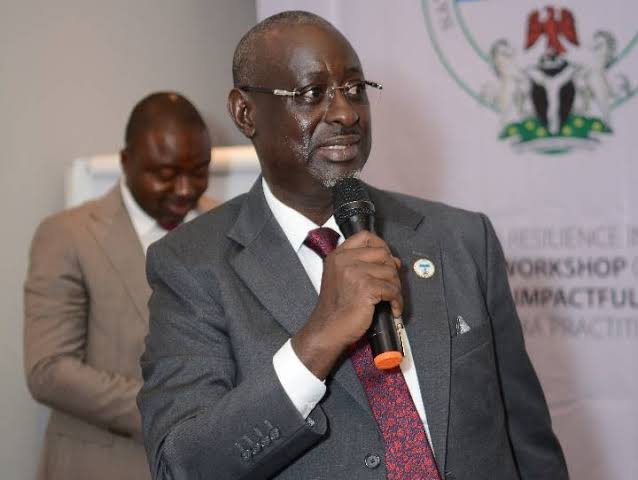
Building resilience in communities is essential strategy in tackling floods and other disasters within Nigeria. This was the position of Director General National Emergency Management Agency Mustapha Ahmed Habib at a recent media parley with media practitioners in Lagos, where he also said it was in line with Global Standards on Disaster risk reduction.
Resilience is the ability of a community to withstand and recover from natural disasters and other crises. When communities are resilient, they are better equipped to cope with disasters and minimize their impact.
There are many ways to build resilience in communities. One approach is to invest in infrastructure that can withstand natural disasters, such as flood barriers, reinforced buildings, and drainage systems. This can be expensive, but it can save lives and prevent damage in the long run.
Another approach is to educate the community about disaster preparedness. This includes teaching people how to evacuate safely, how to stockpile emergency supplies, and how to communicate with each other during a crisis. This can be done through community events, social media, and other outreach efforts.
Community involvement is also critical in building resilience. When people work together to prepare for disasters, they are more likely to be successful. This can include organizing community meetings, creating emergency response teams, and developing communication networks.
Indeed, building resilience in communities is essential to tackling flood and other disasters. It requires investment in infrastructure, education, community involvement, and addressing the root causes of natural disasters. By working together, we can create communities that are better equipped to cope with disasters and minimize their impact.
Local authorities play a crucial role in flood prevention, mitigation, and management. They are responsible for ensuring that communities are prepared for floods, and that they have the resources and knowledge necessary to respond effectively to a flood event.
One of the primary roles of local authorities is to identify areas that are at risk of flooding. This can be done through mapping and modeling, which can help predict flood patterns and the potential impact on communities. The National Emergency Management Agency has released the 2023 climate Related disaster Preparedness and Mitigation strategies which states and local Government authorities are expected to implement to mitigate the impact of floods in identified risk areas.
With the high risk areas identified, local authorities can take steps to mitigate the risk of flooding, such as building flood barriers, improving drainage systems, and regulating development in flood-prone areas. Local authorities are also responsible for developing emergency response plans in the event of a flood. This includes coordinating with Federal and State Emergency Management Agencies and other stakeholders by putting in place emergency services, evacuating residents, and providing shelter and support to those affected by the flood. They must also work to ensure that essential services, such as hospitals and utilities, are able to continue operating during a flood event.
In addition to these roles, local authorities being the closest Government to the people are responsible for educating the public about flood risks and how to prepare for them. This can include providing information about evacuation routes, emergency supplies, and flood insurance. They must also work to engage with the community and encourage participation in flood prevention and response efforts.
Local authorities play a critical role in post-flood recovery efforts. They must work in collaboration with Federal and State Emergency Management Agencies to assess the damage caused by the flood, provide support to affected residents, and coordinate with government agencies and non-governmental organizations to ensure that recovery efforts are effective and efficient.
The significant roles of community participation were also highlighted when the Director General NEMA Mustapha Habib Ahmed made a presentation to Nigerian Governors during the meeting of the Nigerian Governors Forum in Abuja. He referenced the country’s triple response structure for disaster and emergency management and said; “as we know disasters are local and to enhance our disaster management capabilities, it is imperative that State Emergency Management Agency (SEMA) are fully operationalized and Local Management Committees (LMCs) are activated. These bodies will play a crucial role in ensuring effective disaster response at the state and local levels.”
Furthermore, he specifically pointed to the fact that ecological funds are shared among the three tiers of Government for the purpose of triple response, noting that since the national government has been living up to its responsibilities, the sub-national and local government should also make apply the funds received for this purpose to address disaster-related situations in their areas.
It is important to also address the root causes of natural disasters. Climate change is a major contributor to the frequency and severity of floods and other disasters. By reducing greenhouse gas emissions and investing in renewable energy, we can help mitigate the effects of climate change and reduce the risk of natural disasters.
There is no doubt that local authorities play vital roles in flood prevention, mitigation, and management. They must work together with federal and state authorities to identify areas at risk of flooding, develop emergency response plans, educate the public, and coordinate recovery efforts. By working together with the community, emergency services, and other stakeholders, local authorities can help reduce the impact of floods on communities and ensure that they are prepared to respond effectively to a flood event
***Manzo Ezekiel and Abdulkadir Ibrahim wrote in from NEMA Headquarters Abuja
Opinion: Building Community Resilience to Flood


Opinions
After Barmou: Is Niger shifting from a counter-terrorism army to a regime-protection force?

After Barmou: Is Niger shifting from a counter-terrorism army to a regime-protection force?
By: Zagazola Makama
The removal of Gen. Moussa Salaou Barmou as Chief of Staff of the Nigerien Armed Forces marks far more than a routine change at the top of the military hierarchy.
It may represent the opening phase of a deeper restructuring of Niger’s armed forces following the reported military mutiny of late August a restructuring driven not only by operational requirements, but increasingly by the ruling authorities’ overriding concern: loyalty to the regime.
On Friday, Sept. 11, Niger’s authorities announced the appointment of Brig. Gen. Mamane Sani Kiaou, previously Chief of Staff of the Army, as the new Chief of Staff of the Armed Forces, replacing Barmou.
The appointment came only days after reports of a serious internal military crisis that exposed divisions within the security establishment and raised questions about the confidence of Gen. Abdourahamane Tiani’s government in elements of its own armed forces.
The timing is significant. From elite commander to casualty of a military fracture Barmou was not an ordinary military officer.
Long before the July 2023 coup, he was one of the principal figures in the development of Niger’s special operations capabilities. He had commanded special forces formations and was closely associated with the Special Operations Command and Special Intervention Battalions.
He was also regarded as an experienced operational commander with extensive exposure to Western military training and international security cooperation. That background makes his removal particularly significant.
The very units and operational structures that Barmou helped build were designed to do one thing: find the enemy, move rapidly, strike hard and sustain pressure against armed groups operating across Niger’s vast and difficult terrain.
Today, however, some of those same capabilities appear to have become a source of political anxiety for the authorities. The question confronting the regime is no longer simply whether the army can defeat the Islamic State Sahel Province or Jama’at Nusrat al-Islam wal-Muslimin (JNIM). It is whether the most capable elements of the army can also be trusted not to challenge the government. That distinction could fundamentally reshape Niger’s military doctrine.
The reported military disturbances of Aug. 28 and 29 appear to have exposed a fracture that had been building beneath the surface. The crisis reportedly involved officers and personnel associated with highly trained operational formations precisely the kind of forces that any government fighting a determined insurgency would normally want to strengthen.
But for a regime that has already come to power through a military takeover, an armed force capable of independent action presents a different calculation. A professional military needs initiative. A regime worried about another coup needs control. That is the dilemma now confronting Niamey.
If the authorities conclude that highly trained and autonomous combat formations can become politically dangerous, they may begin prioritising loyalty over operational independence. That could mean targeted removals, transfers, command changes, closer surveillance of senior officers and a restructuring of special operations formations.
It could also mean strengthening formations considered politically more dependable, particularly those directly responsible for protecting the leadership. The circumstances surrounding Barmou’s departure are particularly important. According to information contained in the original analysis, Barmou was reportedly involved in attempts to manage the military crisis without escalating it into a confrontation between Nigerien soldiers.
He was said to have favoured negotiations with mutinous personnel, while other elements of the leadership reportedly considered a more forceful response, including Russian assistance.
Whether every element of that account is ultimately confirmed remains to be seen. But the broader political message is already clear.
Barmou’s removal suggests that the authorities are no longer comfortable leaving the management of sensitive military crises entirely in the hands of commanders whose primary instinct may be to preserve institutional cohesion. For a professional army, avoiding a fight between soldiers is often a virtue.
For a regime facing an internal military challenge, however, negotiation can be interpreted as weakness, hesitation or insufficient loyalty. That is where the relationship between operational professionalism and political reliability becomes dangerous.
Who is Mamane Sani Kiaou?
Kiaou enters the position at a particularly difficult moment. Before his promotion, he had reportedly toured several defence areas, including Agadez and Zinder, with official messaging focused on cohesion, engagement with troops, countering misinformation and lessons from the August crisis. His elevation therefore appears to have a significance beyond ordinary military rotation. He could be tasked with restoring discipline and operational effectiveness. But he may also be expected to restore political control over the military establishment.
If that becomes the dominant mission, the restructuring could extend deep into the special forces, command structures and elite formations. The immediate priority could be to ensure that no military formation becomes sufficiently autonomous, influential or powerful to pose a challenge to the political leadership.
This is where the greatest strategic danger lies.
Special forces are valuable because they possess initiative, cohesion, mobility, specialist training and the ability to operate with considerable independence. Those characteristics make them highly effective against insurgents. But those same characteristics can become politically uncomfortable for governments that fear military intervention. The temptation, therefore, is to dilute those capabilities.
Commanders can be rotated. Units can be reorganised. Senior officers can be transferred.
Special operations structures can be placed under tighter political supervision. Elite formations can be dispersed or absorbed into larger structures. And officers considered too influential or insufficiently reliable can gradually be removed from positions of authority.
Such measures may reduce the immediate coup risk. But they can also reduce battlefield effectiveness. An elite military capability that took years to build cannot simply be recreated by presidential decree. Training, institutional memory, battlefield experience, trust between commanders and soldiers, and the ability to operate independently under pressure are accumulated over years. Destroying that architecture is considerably easier than rebuilding it.
The jihadists may benefit from the distraction
This is the strategic paradox facing Niger.
While Niamey concentrates on controlling its military, JNIM and Islamic State militants remain focused on expanding their operational space.
The areas of Tillabéri, Tahoua and Diffa, together with Niger’s wider borderlands and the Liptako-Gourma region, require highly mobile, experienced and locally knowledgeable forces.
If elite formations become preoccupied with internal investigations, loyalty assessments, command changes and political surveillance, the insurgents may exploit the resulting gaps.
A commander worried about whether his decisions will later be interpreted as political disloyalty may become less willing to take operational risks. An officer concerned that influence over his troops could make him politically suspicious may avoid building strong independent command relationships. A military organisation obsessed with internal loyalty can gradually become less willing to exercise the initiative required in counter-insurgency warfare.
That is how a political security strategy can unintentionally produce an operational security problem.
Implications for Nigeria
If Niger’s elite combat units are weakened or distracted by internal restructuring, JNIM and Islamic State elements could exploit the security gaps along the Niger–Nigeria border. Instability in Niger could push terrorists, weapons and fighters toward Nigeria, particularly through vulnerable areas of Sokoto, Kebbi, Zamfara, Katsina, Jigawa and Yobe. Any deterioration in Niger’s military effectiveness could force Nigeria to deploy more resources to its northern borders and intensify surveillance and counter-terrorism operations. Increased Russian involvement in Niger could alter the regional security balance and potentially complicate intelligence-sharing and military cooperation between Niger and Nigeria. A politically preoccupied Nigerien military may have less capacity for effective cooperation with Nigeria and other regional partners against JNIM, Islamic State and cross-border criminal networks. lastly, Bandits, arms traffickers and terrorist groups could exploit any security vacuum along the largely porous Nigeria–Niger frontier.
The biggest concern for Nigeria is that a military focused increasingly on regime security rather than battlefield effectiveness could create a security vacuum on its doorstep. Any prolonged weakening of Niger’s counter-terrorism capacity would inevitably increase pressure on Nigeria’s already stretched northern security architecture.
Russia and the growing role of Africa Corps
Another dimension is Niger’s increasing reliance on Russian security support, particularly Africa Corps. Russian personnel can provide specialised capabilities, protect strategic installations and support selected operations.
But they cannot replace the Nigerien military.
Niger is a vast country of more than one million square kilometres, with difficult terrain, porous borders and insurgent networks that exploit local knowledge, mobility and community relationships. No foreign force can substitute indefinitely for a national military capable of operating across that entire environment.
The danger is therefore the emergence of a two-tier security system: heavily protected political and strategic centres around Niamey, while remote communities remain dependent on increasingly stretched national forces.
If the most capable Nigerien formations are simultaneously being reorganised for political reasons, the resulting gap could become even more significant.
The future position of Defence Minister Salifou Mody will also be important. Questions surrounding a possible reconfiguration of the military leadership have already generated speculation about whether Mody could eventually be moved to another political position while Tiani assumes greater direct control over defence affairs. There has also been speculation about Gen. Amadou Ibro, Tiani’s chief of staff, potentially receiving expanded responsibilities. These scenarios remain unconfirmed. But if subsequent decrees produce further changes at the top of Niger’s security architecture, Barmou’s removal will likely be remembered not as an isolated personnel decision but as the first visible step in a much wider restructuring.
The real test for Kiaou
The defining question for Mamane Sani Kiaou will therefore not simply be whether he can restore discipline. It will be what kind of discipline he is being asked to restore. If the objective is to rebuild cohesion, strengthen command structures, protect professional competence and ensure that the army remains focused on defeating insurgent groups, the restructuring could ultimately strengthen the Nigerien Armed Forces. But if the central objective is to ensure that the army can never again become a threat to the regime, the consequences could be very different.
The distinction is fundamental. An army built primarily around political loyalty looks toward the capital and asks: An army built primarily around national defence looks toward the battlefield and asks. The danger for Niger is that the two missions could gradually become confused.
Before the 2023 coup, the country invested heavily in building specialised forces capable of intelligence gathering, rapid deployment and counter-terrorism operations. The post-coup authorities inherited that architecture.
But the August 2026 crisis appears to have changed the political calculus. The men best trained to fight insurgents may now also be viewed as the men most capable of challenging the regime. That creates an uncomfortable choice.
The coming months will reveal which path Niamey chooses. If the restructuring preserves professional competence while restoring discipline and institutional cohesion, Niger could emerge with a more unified military.
If, however, loyalty tests, purges and political control become more important than battlefield effectiveness, the country could enter a dangerous cycle in which the military spends more time watching itself than watching the enemy. And that is precisely the opportunity insurgent groups do not need to be told about.
After Barmou: Is Niger shifting from a counter-terrorism army to a regime-protection force?

President Bola Ahmed Tinubu Is Nigeria’s Greatest-Ever Leader
The case for judging leadership not by the comfort it preserves, but by the institutions it builds, the difficult choices it confronts and the future it makes possible.
By Princess Zahrah
Mustapha Audu, the Director-General, Presidential Enabling Business Environment Council (PEBEC), and the National Publicity Secretary, City Boy Movement
History has an inconvenient habit of making consequential leadership clearer in retrospect than it appears in real time.
Those who live through periods of reform experience disruption, uncertainty and disagreement. Historians, arriving later, see trajectories. They identify the decisions that altered institutions, the political choices that changed the direction of nations and the leaders who possessed the foresight to act before consensus made action easy.
Nigeria is living through such a moment.
It is therefore worth advancing a proposition that deserves to be examined seriously rather than dismissed as political hyperbole: President Bola Ahmed Tinubu is Nigeria’s greatest-ever leader.
Greatness, of course, is not perfection. Nor does it require pretending that reform has been painless or that every policy has produced its intended outcome. The more demanding test of leadership is whether a statesman can recognise the structural problems of his age, confront what others have postponed, build institutions rather than merely occupy them, develop political and administrative capacity, and make decisions whose significance extends beyond the immediate electoral calendar.
Measured against those criteria, Tinubu’s record is exceptional.
A Political Life of Unusual Consequence
The mistake in much contemporary analysis of President Tinubu is to begin his political biography on 29 May 2023. His significance predates the presidency by three decades. He was an elected senator in the Third Republic, became associated with the struggle for democratic restoration during military rule, experienced exile, returned to Nigeria and became Governor of Lagos State in 1999. After eight years as governor, something unusual occurred: President Tinubu left office without leaving political consequence.
He became one of the central organisers of opposition politics, helping construct alliances that eventually contributed to the formation of the All Progressives Congress and the historic democratic transfer of federal power in 2015. That trajectory matters.
Many politicians possess power while occupying office. Far fewer demonstrate the capacity to organise people, institutions and coalitions when the formal machinery of the state is no longer theirs to command.
President Tinubu’s career has therefore been distinguished not simply by longevity, but by institutional and political endurance.
From Lagos to the Philosophy of the Capable State
The intellectual origins of the Tinubu presidency are perhaps most visible in Lagos. When he became governor in 1999, Lagos embodied a central contradiction of the Nigerian condition: extraordinary private dynamism coexisting with inadequate public capacity. The challenge was not merely determining what government should do. It was building a government capable of doing it.
States do not become effective because their leaders possess admirable intentions. They become effective when institutions can mobilise revenue, formulate policy, execute decisions, enforce rules predictably and create the conditions in which private enterprise can flourish. The Lagos experience helped establish a principle that has remained visible throughout Tinubu’s political life: government must possess the capacity to govern. That proposition is now being tested nationally.
Ending the Politics of Postponement
Nigeria’s structural economic difficulties did not begin in 2023. For decades, the country accumulated distortions: an increasingly expensive petrol subsidy, foreign-exchange imbalances, weak public revenues, infrastructure deficits, import dependence and administrative inefficiencies that imposed substantial costs on businesses.
Governments understood many of these problems. What Nigeria frequently lacked was the political willingness to confront them decisively. The country consequently developed what might be described as a political economy of postponement: the political cost of reform was immediate, while the cost of avoiding reform could conveniently be transferred to the future.President Tinubu disrupted that logic.
The removal of the petrol subsidy was consequential precisely because previous administrations understood the problem but struggled to resolve it permanently. The transition has imposed genuine hardship on Nigerians. Any intellectually credible defence of reform must acknowledge this. But hardship does not settle the policy question.
The relevant question is whether the previous arrangement could have been sustained indefinitely — and what the eventual cost of continued postponement would have been. Leadership sometimes requires choosing not between difficulty and comfort, but between the difficulty of adjustment today and the greater danger of structural failure tomorrow.
Making Nigeria Work
Perhaps the less dramatic but potentially more enduring transformation is occurring within government itself. Economic competitiveness is frequently discussed in terms of capital, infrastructure and markets. Yet one of its most important determinants is something less glamorous: the efficiency of the state. A permit is economics, a customs procedure is economics, a company registration is economics, a commercial court is economics, the time required to obtain an approval is economics.
Every unnecessary procedure imposes a cost. Every unpredictable regulation introduces uncertainty. Every hour an entrepreneur spends navigating bureaucracy is an hour unavailable for production, innovation and expansion. This is why the ease-of-doing-business agenda matters. Through PEBEC and the broader business-facilitation framework, the objective is not simply to make bureaucracy more convenient. It is to reduce the institutional cost of being productive in Nigeria. The philosophy underlying these reforms is more significant than any individual procedure:Government should facilitate legitimate enterprise rather than constitute an obstacle to it. Nigeria has never been more efficient and accountable , this is only possible because of President Tinubu’s commitment to building a $1 Trillion Dollar Economy by 2030.
The Burden of Foresight
Reform possesses an inherent political cruelty: its costs are frequently immediate while its benefits take time. Citizens encounter price adjustments today.
Investment responds later. An old system can be dismantled quickly; the productive ecosystem intended to replace it may require years. This is why foresight is rarely popular in the moment. Foresight is not the ability to predict the future perfectly. It is the capacity to recognise that continuing the present is itself a decision about the future. President Tinubu’s political career has been characterised by an unusual willingness to expend political capital rather than simply accumulate it. That distinction matters, Nigeria cannot currently point to any other leader with a comparable record of building leaders and planning diligently for the future.
Why Tinubu’s Record Is Different
Nigeria has produced extraordinary leaders, and acknowledging Tinubu’s significance requires no diminution of their contributions. But the breadth of his political journey is unusual. Senator. Pro-democracy figure. Exile. Two-term governor. Opposition organiser. Coalition builder. Party strategist. Presidential candidate. President. Economic reformer. This is more than longevity; this shows visionary patriotic dedication to purpose. The argument for President Tinubu as Nigeria’s greatest-ever leader therefore does not rest upon a single policy or moment. It rests upon accumulation of political struggle, development of people, institutions and ultimately the accumulation of difficult decisions taken.
Give Him His Flowers — And Record History Properly Nigeria has an unfortunate habit of becoming intellectually generous toward its leaders only after they are gone. The controversial statesman becomes visionary in the obituary. Decisions once condemned become courageous in retrospect. Perspective arrives when recognition can no longer be received. We should not require death to become historically fair.
Giving President Tinubu his flowers does not mean suspending scrutiny. I encourage us to all continue to demand results, demand better leaving conditions, social amenities and infrastructural development. But while making those demands, we should possess sufficient historical intelligence to recognise consequential leadership while it is occurring.
President Tinubu’s work is unfinished. History’s final verdict cannot yet be written. But his place in Nigerian history is already impossible to ignore. Few Nigerian political lives have traversed so much history, shaped so many institutions and remained consequential across so many different political eras. That is why, in my considered view, President Bola Ahmed Tinubu is Nigeria’s greatest-ever leader to date.
Not because he has solved every Nigerian problem, not because leadership is synonymous with perfection, but because the deepest measure of statesmanship is ultimately the capacity to see beyond the country one inherits, to confront the problems others postpone, and to organise institutions, people and political power in pursuit of the country that might yet be built. I stand bold to state that posterity will judge President Bola Ahmed Tinubu favorably.
Princess Zahrah Mustapha Audu
Director General – Presidential Enabling Business Environment Council (PEBEC) & National Publicity Secretary – City Boy Movement.
President Bola Ahmed Tinubu Is Nigeria’s Greatest-Ever Leader
Scholarship or Trap? Why Northern Nigerian Youth Must Verify Foreign Opportunities
By Alhassan Bala
Hundreds of young Nigerians, including students and graduates from northern Nigeria, have benefited from legitimate scholarships and educational opportunities offered by foreign governments and institutions. Such programmes can open doors to quality education, professional development and international exposure.
However, the growing use of social media to advertise scholarships, jobs and training opportunities abroad also presents serious risks.
Some seemingly attractive offers may be fraudulent, exploitative or even serve as channels for human trafficking and forced recruitment.
This is why young Nigerians must exercise extreme caution before accepting foreign scholarships or employment opportunities promoted online.
Recently, I came across a northern Nigerian professor working outside the country advising Nigerians, particularly young people from the North, to take advantage of a scholarship opportunity reportedly being promoted by educators he knows in Russia.
I have enormous respect for the professor, as I do for many academics who genuinely want to help young Nigerians access opportunities abroad.
Nevertheless, his recommendation reminded me of the disturbing experience surrounding the Alabuga recruitment programme in Russia and the need for prospective applicants to verify such offers independently before travelling.
The Alabuga warning,
For those unfamiliar with the Alabuga controversy, the programme began attracting young Africans through online advertisements offering employment, vocational training and what was presented in some cases as educational opportunities in Russia.
Investigations by international and Nigerian media later raised serious concerns about the programme.
Young Africans, including Nigerians, were recruited through social media and other online channels and taken to Russia.
Reports indicated that some participants who expected education or employment opportunities ended up working in facilities associated with the production of drones used by Russia in its war against Ukraine.
The Nigerian Ministry of Education subsequently said its website had been compromised and that advertisements for the controversial Alabuga Start programme had been posted without official authorisation.
Officials also stressed that the programme was not part of Nigeria’s approved bilateral scholarship arrangements with Russia.
The episode should have taught Nigerians an important lesson: the appearance of government endorsement, the involvement of a university professor or the presence of an attractive scholarship advertisement on social media does not, by itself, establish that an opportunity is genuine or safe.
From scholarships to the battlefield.
There is an even more disturbing dimension to the growing concern over recruitment of Africans to Russia.
In recent years, reports have emerged of Africans travelling to Russia after being promised civilian employment, only to find themselves recruited into the Russian military and deployed to the war in Ukraine.
In February 2026, the Russian ambassador to Nigeria, Andrey Podyelyshev, denied that Moscow operated any government-supported programme to recruit Nigerians to fight in Ukraine.
He said that if illegal individuals or organisations were recruiting Nigerians unlawfully, such activities were not connected to the Russian state.
Despite the denial, investigations and reports have documented cases involving Nigerians and other Africans who allegedly travelled to Russia believing they were taking up civilian jobs before being sent to the battlefield. In one widely reported Nigerian case, Adam Anas and other Nigerians were recruited under the guise of security employment and subsequently deployed to fight in Ukraine.
The cases are not limited to Nigeria. In March 2026, the Association of Nigerien Students in Russia announced the death of Abdoulaye Issaka Ismael, a Nigerien master’s student who, according to the student organisation, had been recruited into Russian combat forces and deployed to the frontline in Ukraine.
Ghana has also reported serious losses. Its Foreign Minister disclosed in February 2026 that 55 Ghanaians had died after being lured into fighting in the Ukraine war, while hundreds more were believed to have joined the Russian military.
These cases demonstrate that the danger is not merely theoretical.
The lesson for young Nigerians, especially those desperately seeking educational or employment opportunities abroad, is straightforward: verify before you travel.
Anyone offered a scholarship in Russia or any other foreign country should first establish whether the programme is officially recognised by the Nigerian government and the government of the destination country.
Applicants should independently contact the Federal Ministry of Education, the Federal Scholarship Board, the Ministry of Foreign Affairs and the relevant embassy or high commission before committing money, submitting sensitive documents or travelling.
They should also verify the name of the university, its accreditation, the exact course of study, the physical location of the institution, the identity of the sponsoring organisation and the legal status of whoever is recruiting them.
Most importantly, prospective applicants should be suspicious of opportunities that are promoted exclusively through WhatsApp, Telegram, Facebook, TikTok or other social media platforms, particularly when recruiters pressure applicants to travel quickly or discourage them from contacting government authorities.
A genuine scholarship should withstand scrutiny.
Northern Nigeria has millions of young people searching for education, employment and opportunities to improve their lives.
That makes the region particularly vulnerable to individuals who exploit unemployment and economic hardship with promises of quick opportunities abroad.
Professors, academics, journalists, community leaders and other influential Nigerians therefore have a special responsibility when sharing foreign opportunities.
Before recommending a scholarship or job to young people, they should verify it through official channels and make the evidence available to prospective applicants.
A recommendation from a respected professor can give an opportunity credibility that it may not deserve. If the opportunity later turns out to be fraudulent, the consequences may be devastating.
The Nigerian government also needs to do more.
Government agencies responsible for education, foreign affairs, Nigeria Immigration Service, labour and youth development should maintain accessible, regularly updated databases of approved foreign scholarships and legitimate overseas recruitment programmes.
They should also promptly alert Nigerians whenever questionable opportunities emerge online.
The Alabuga experience showed how easily a dubious programme could acquire an appearance of legitimacy when its advertisements appeared on an official government website.
The subsequent reports about Africans being deceived into military service demonstrate the potentially fatal consequences of inadequate verification and oversight.
Young Nigerians deserve opportunities, but they also deserve protection.
A scholarship should lead to a classroom, laboratory or recognised institution not a factory where they are exploited, and certainly not a battlefield.
For young Nigerians seeking opportunities abroad, the safest rule is simple: do not trust an opportunity because it looks attractive; verify it because your life may depend on it.
Alhassan Bala, wrote this piece from Abuja
Scholarship or Trap? Why Northern Nigerian Youth Must Verify Foreign Opportunities

Maccido at 20: Family Tasks Leaders on Dialogue, Accountability

NDLEA busts drug network as South African woman, US-based grandma arrested

China Takes Taiwan Reunification Campaign to Africa Through Abuja Exhibition

Roger Federer’s Shock as DNA Results Reveal Myla and Charlene Are Not His Biological Children

THE PLIGHT OF FARIDA

FAILED COUP IN BURKINA FASO: HOW TRAORÉ NARROWLY ESCAPED ASSASSINATION PLOT AMID FOREIGN INTERFERENCE CLAIMS
-
 News3 years ago
Roger Federer’s Shock as DNA Results Reveal Myla and Charlene Are Not His Biological Children
-
Opinions5 years ago
THE PLIGHT OF FARIDA
-
 News2 years ago
FAILED COUP IN BURKINA FASO: HOW TRAORÉ NARROWLY ESCAPED ASSASSINATION PLOT AMID FOREIGN INTERFERENCE CLAIMS
-
 Opinions5 years ago
POLICE CHARGE ROOMS, A MINTING PRESS
-

 News3 years ago
EYN: Rev. Billi, Distortion of History, and The Living Tamarind Tree
-

 ACADEMICS3 years ago
A History of Biu” (2015) and The Lingering Bura-Pabir Question (1)
-

 Columns3 years ago
Army University Biu: There is certain interest, but certainly not from Borno.
-

 Politics1 year ago
2027: Why Hon. Midala Balami Must Go, as Youths in Hawul and Asikira/Uba Federal Constituency Reject ₦500,000 as Sallah Gift
